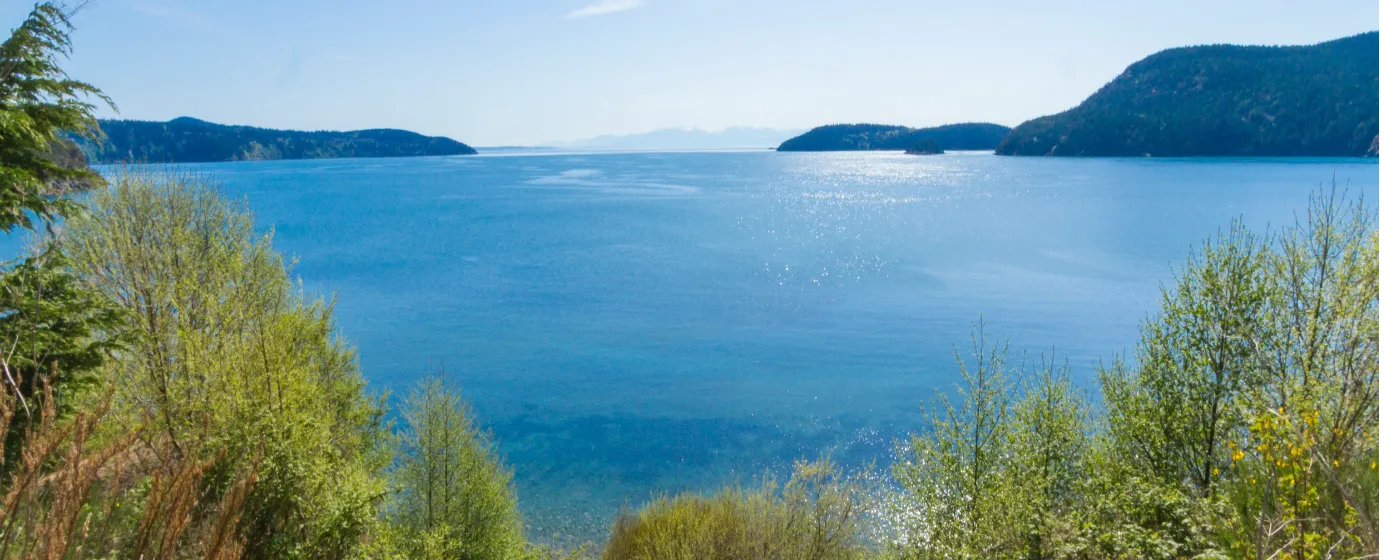
Puget Sound · Washington
Cost of Living in Anacortes: Housing, Taxes, Utilities & Lifestyle (2026)
Most people who start researching Anacortes arrive with one of two misconceptions: either they assume it's an affordable small-town escape from Seattle prices, or they've seen a waterfront listing that made them think the entire market is out of reach. The reality sits in a more specific middle ground. The median sold price in Anacortes is $740,000 — 76% above the national average, yet meaningfully below what comparable waterfront access costs in Seattle or Bellingham's western neighborhoods.
What drives the cost picture here is geography. Anacortes sits on Fidalgo Island, surrounded by the Salish Sea and connected to the mainland by bridge. That island setting creates a hard ceiling on developable land, which keeps inventory perpetually tight and supports prices even during broader market softening. The island's refinery economy also sustains a segment of high-income earners who put upward pressure on housing while keeping local unemployment low.
This guide breaks down what it actually costs to live in Anacortes in 2026 — from mortgage math on the median home to what a gallon of milk costs, from property tax reality to how the city stacks up against Mount Vernon, Oak Harbor, and Bellingham. If you're trying to decide whether your budget fits this market, the numbers below will tell you.
The median sold price in Anacortes as of early 2026 sits at $740,000, which in practical terms means a three-bedroom single-family home on a modest lot with no water view. That price point puts buyers in older construction — think 1970s to 1990s ranches and split-levels — with updated kitchens in some cases but original windows and aging roofs in others. Move into the condo market and that figure drops to roughly $512,500, which typically gets you a two-bedroom unit in a complex near the marina district or out in the Skyline area.
The entry point for a detached home with any kind of view — even a partial channel glimpse from a second-story window — generally starts around $850,000 and climbs quickly toward the $1.1 million range once you're looking at genuine waterfront. Single-family homes across the city average closer to $779,000, and in neighborhoods like Old Town and Fidalgo Bay, that average pulls well north of $900,000. The sale-to-list ratio runs around 96.6%, meaning most buyers are negotiating modest discounts, though roughly half of homes still sell at or above asking in competitive price ranges. Homes are sitting on market for about 62 days on average — a meaningful slowdown from the frenzy of 2022 and 2023, which gives buyers more time to evaluate without the same pressure.
What that $740,000 buys depends almost entirely on which side of the water-view line you're shopping. Away from the waterfront — neighborhoods like Rock Ridge, Central Anacortes, and the eastern residential pockets — the same budget can stretch to four bedrooms, a two-car garage, and a real yard. Closer to Cap Sante or along the Fidalgo Bay corridor, that number may get you into the neighborhood but not necessarily into the home you'd hoped for.
| Budget Range | What You're Likely to Find |
|---|---|
| Under $500,000 | Condos, townhomes, or fixer-uppers in Central Anacortes; limited inventory |
| $500,000–$700,000 | Older single-family homes, 2–3 bed, no water view; Rock Ridge, Central Anacortes |
| $700,000–$900,000 | Updated single-family homes, Skyline area condos, entry-level Cap Sante |
| $900,000–$1.5M+ | Waterfront proximity, Old Town Craftsmans, Fidalgo Bay and San Juan Passage |
Skagit County applies an effective property tax rate of approximately 0.70%, which on a $740,000 home translates to roughly $5,180 per year — or about $432 per month added to your housing cost. Washington State's levy limit system caps annual increases at 1% unless voters approve a higher levy, which provides meaningful long-term predictability for homeowners. One program that often goes overlooked is the senior exemption available to homeowners 61 and older who meet income thresholds — qualifying seniors can see significant reductions in their assessed tax obligation, making Anacortes genuinely competitive for retirees on fixed incomes.
The rental market in Anacortes is tight in a way that isn't immediately obvious from a distance. With a relatively small population and a housing stock that skews heavily toward owner-occupied single-family homes, the number of available rentals at any given moment is limited. What's on the market tends to move quickly, and landlords rarely need to discount.
| Unit Type | Approximate Monthly Rent |
|---|---|
| Studio / 1-bed apartment | $1,400–$1,800 |
| 2-bedroom apartment or condo | $1,900–$2,500 |
| 3-bedroom house | $2,400–$3,200 |
| 4-bedroom house | $2,900–$3,800+ |
One genuine cost-of-living advantage in Anacortes is what you'll pay to keep the lights on and the water running. Utilities run roughly 16% below the national average — a meaningful offset against higher housing and grocery costs. Puget Sound Energy serves the area for electricity and natural gas, and a typical household pays in the range of $130 to $170 per month for electricity depending on the season and whether the home uses gas heat or electric. Internet service through Comcast Xfinity is the dominant provider, with standard broadband packages running $70–$90 per month.
Transportation is almost entirely car-dependent. Anacortes does not have meaningful transit infrastructure — the Skagit Transit system provides limited routes, but for most residents, having two cars is a practical necessity rather than a luxury. Gas prices in Skagit County generally track 10–15 cents above the national average due to the regional refinery dynamic and limited competition. The commute to Seattle via I-5 and SR-20 runs approximately 85 minutes under normal conditions, though anyone who's driven that corridor during summer ferry traffic knows that "normal" is seasonal. Mount Vernon and Burlington are 20–25 minutes east, where big-box retail and Costco runs concentrate most of the practical shopping.
Groceries in Anacortes cost roughly 9% above the national average. The primary options within city limits are the Haggen grocery store on Commercial Avenue and a Safeway — both competent but not extensive. Serious meal-prep shoppers make regular runs to Burlington or Mount Vernon for better selection and lower prices on bulk items. Dining out in Anacortes trends toward casual maritime fare, with prices reflecting the tourist and weekend visitor traffic that flows through town from spring through fall. Healthcare costs run approximately 17% above the national average, with Island Hospital serving as the primary local facility.

| City | Median Home Price | Property Tax Rate | Seattle Commute | Notes |
|---|---|---|---|---|
| Anacortes | $740,000 | 0.70% | ~85 min | Island geography, waterfront premium, limited inventory |
| Mount Vernon | ~$510,000 | ~0.95% | ~70 min | Skagit County seat; larger retail base; no water views |
| Burlington | ~$490,000 | ~0.92% | ~65 min | Strong retail corridor; less character, more convenience |
| Oak Harbor | ~$480,000 | ~0.89% | ~95 min | NAS Whidbey Island; military community; Island County |
| La Conner | ~$560,000 | ~0.88% | ~75 min | Charming but very small; limited services; Swinomish area |
| Sedro-Woolley | ~$420,000 | ~0.97% | ~80 min | Most affordable in region; further from coast; rural feel |
| Bellingham | ~$590,000 | ~0.91% | ~90 min | University town; broader amenities; Whatcom County |

Anacortes has some genuinely distinct neighborhoods, and where you buy matters a lot for long-term value. Waterfront and marina-adjacent areas like Cap Sante and Skyline tend to hold value well — demand stays steady because the lifestyle is hard to replicate. Old Town attracts buyers who want walkability and character, and those homes move quickly when priced right. For many buyers, finding something under $750,000 in the more desirable pockets requires real preparation, because well-positioned homes don't sit long.
That preparation starts with talking to a lender before you ever schedule a tour. Your approval amount and your comfortable budget are two different numbers, and the gap matters more than most buyers expect. Property taxes, homeowner's insurance, and any HOA dues all fold into your actual monthly obligation — and in a waterfront community like Anacortes, those carrying costs can be meaningful. Knowing your full payment picture ahead of time means you're not scrambling when the right home appears, and in a market that moves this fast, being ready is the difference between getting the house and watching someone else close on it.
This table reflects a household purchasing at the $740,000 median, with a 10% down payment ($74,000), financed over 30 years at approximately 6.75% interest.
| Expense Category | Monthly Cost |
|---|---|
| Mortgage (principal + interest) | ~$4,310 |
| Property taxes (0.70% annual) | ~$432 |
| Homeowner's insurance | ~$140 |
| HOA fees (if applicable) | $0–$300 |
| Electricity + gas | ~$150 |
| Internet + cable/streaming | ~$110 |
| Groceries (household of 2–3) | ~$800–$1,000 |
| Transportation (2 vehicles, gas + maintenance) | ~$700–$900 |
| Dining out / entertainment | ~$400–$600 |
| Healthcare (premiums + out-of-pocket) | ~$400–$600 |
| Total estimated monthly | ~$7,400–$8,500 |
Washington State has no personal income tax — a structural advantage that benefits Anacortes residents on every paycheck. Unlike Oregon, where state income tax can reach 9.9% on higher incomes, Washington earners keep that money. The tradeoff is a sales tax rate of approximately 8.5% in Skagit County, applied to most retail goods but not to groceries or prescription medications.
For buyers coming from California, Oregon, or other high-income-tax states, the math often surprises them favorably. A household earning $150,000 in Oregon pays roughly $10,000–$13,000 in state income tax annually. Moving that same income to Anacortes eliminates that liability entirely, which functionally offsets a meaningful portion of the higher housing cost. Washington also offers a senior property tax deferral program — distinct from the exemption — that allows qualifying homeowners to defer property taxes until the home is sold, with the state essentially acting as a lender. For retirees on fixed incomes managing cash flow, this program can be significant.
The one state-level tax worth knowing about is Washington's capital gains tax, enacted in 2022 and upheld by the state Supreme Court in 2023, which applies a 7% tax on long-term capital gains above $262,000. This affects a relatively narrow group — primarily investors with large stock or business asset sales — but it's worth factoring into financial planning if you have substantial investment assets changing hands around the time of your move.

Local Expert Takeaway: The buyers who get the most out of Anacortes's cost structure are those who come in understanding the island premium isn't a flaw — it's the product. If your priority is maximizing square footage per dollar, Burlington or Sedro-Woolley will serve you better. But if you're buying a lifestyle that includes ferry access to the San Juans, a walkable historic downtown, and a hard cap on how much development can crowd the island over the next 20 years, the $740,000 entry point looks different. One move I'd specifically suggest: look at the Central Anacortes corridor first — it's currently sitting below the citywide median at around $583,000, it's minutes from everything, and it hasn't had the same appreciation run as Old Town or Fidalgo Bay yet.
Looking to buy in Anacortes? Estimate your payment.
Enter your numbers to see an estimated monthly mortgage payment.
Estimate only. Excludes HOA fees and mortgage insurance.
Is Anacortes affordable compared to Seattle?
Anacortes is substantially more affordable than Seattle on the housing front — the median sold price here is considerably lower than Seattle's core market, and Seattle is roughly 27% more expensive overall. However, Anacortes runs about 20% above the national average, so buyers shouldn't mistake "less than Seattle" for "a bargain." The island geography and finite land supply create a structural price floor that keeps values elevated relative to mainland Skagit County communities.
What are property taxes like in Anacortes?
Skagit County's effective rate of approximately 0.70% is among the lower property tax rates in the Puget Sound region. On the $740,000 median home, that works out to roughly $5,180 annually. Washington's levy limit system caps annual increases at 1% without a voter-approved measure, which provides long-term predictability. Homeowners 61 and older who meet income thresholds may qualify for the state's senior exemption program, which can reduce that figure significantly.
How does the cost of living in Anacortes compare to other Skagit County cities?
Anacortes is noticeably more expensive than its Skagit County neighbors. Mount Vernon and Burlington both offer median home prices closer to $490,000–$510,000 — roughly $230,000–$250,000 below Anacortes — along with slightly higher property tax rates. What buyers receive in Anacortes for that premium is the island setting, ferry access to the San Juan Islands, and a downtown and waterfront character that Burlington and Mount Vernon simply don't replicate. Whether that premium makes financial sense depends entirely on which of those features matters to your household.
Explore the full Anacortes series: Living in Anacortes · Is Anacortes Safe? · Cost of Living · Best Neighborhoods · Schools & Family Life · Youth Sports · Parks & Rec · Retiring in Anacortes