
Southwest Washington · Washington
Living in Camas: The Ultimate Relocation Guide (2026)
Maybe your company is relocating you to the Portland metro and someone mentioned Camas as the alternative to Vancouver — quieter, better schools, still close enough to the city. Maybe you've been watching Clark County home prices and noticed that Camas comes in noticeably higher than its neighbors and you're trying to figure out if the premium is justified. Or maybe you've driven through downtown on a Saturday morning, seen the brick storefronts and the coffee line spilling onto the sidewalk, and wondered what it would actually be like to live here rather than just pass through.
The central tension in Camas is this: it is a genuinely small town that has become genuinely expensive. The median sold price now sits at roughly $839,000 to $861,000 depending on the month — a figure that would have seemed improbable a decade ago for a former paper mill town of fewer than 30,000 people on the east edge of Clark County. What drove that appreciation is a combination of factors that are hard to replicate: one of the top-ranked school districts in Washington, a location that gives you both Columbia River scenery and a 29-minute commute to Portland, and a downtown corridor that locals have fiercely protected from big-box sprawl. The result is a city that feels like it should cost less but doesn't, and for most buyers who move here, that turns out to be fine.
This guide will help you figure out whether Camas actually fits your life — not just your spreadsheet. We'll walk through the commute reality, the neighborhoods worth understanding, the genuine downsides that don't make it into the chamber of commerce brochure, and the specific reasons why people who move here tend to stay.
| Best For | Why |
|---|---|
| Families with school-age children | Camas School District ranks among the top 10 in Washington; test scores and graduation rates consistently outperform state averages |
| Portland commuters | 29-minute drive to Portland under normal conditions; close enough for daily commuting without paying Portland property taxes |
| Remote workers and tech professionals | High incomes, strong infrastructure, walkable downtown for midday breaks, proximity to WaferTech and Fisher Investments campuses |
| Outdoor lifestyle buyers | Lacamas Lake, Lacamas Park, and the Lacamas Heritage Trail system are minutes from most neighborhoods |
| Move-up buyers from Vancouver | The step up from Vancouver pricing lands buyers in a materially different school district and neighborhood quality |
| Retirees with equity | Downtown walkability, medical access via Vancouver hospitals, and a civic culture that keeps older residents engaged |
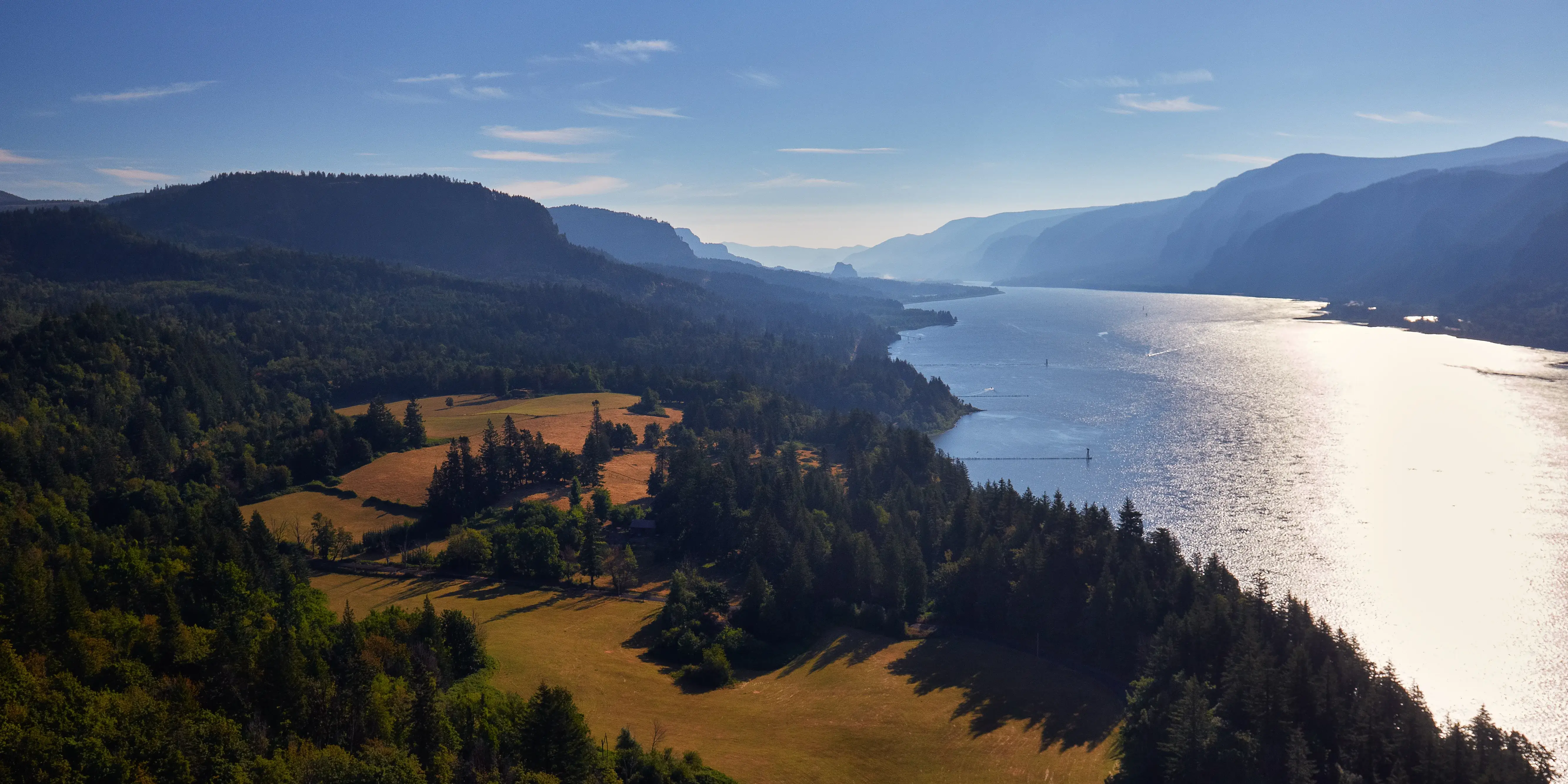
Camas sits at the eastern edge of Clark County, tucked between the Columbia River to the south and a ridge of forested hills to the north. The geography shapes everything: the Lacamas Lake watershed gives the city its recreational identity, the downtown corridor on Fourth Avenue gives it a social center, and SR-14 running along the river gives Portland commuters their daily lifeline. Understanding which part of Camas you're buying into — the flat western sections near Fisher's Landing, the hillside neighborhoods around Prune Hill and Green Mountain, or the historic core near Crown Park — matters more than the city boundary itself.
The commute on SR-14 is manageable but not frictionless. The 29-minute Portland drive works on a good Tuesday morning. On a Friday afternoon or during a winter weather event, the SR-14/I-205 interchange becomes a legitimate chokepoint, and what should take half an hour can stretch to 55 minutes. Buyers who choose western Camas neighborhoods near Fisher's Landing shave five to eight minutes off that timeline compared to the eastern hillside neighborhoods — something worth considering if you're in the office three or more days a week.
Day-to-day life in Camas has an unusual quality for a suburb its size: people actually use the downtown. Fourth Avenue hosts a Saturday farmers market that draws consistent crowds from spring through fall, the old Camas Theater anchors a block that still feels like a genuine town center, and the restaurants and coffee shops that line the corridor have real regulars. The city is intentional about keeping large-format retail out of downtown, which means for your Target run you're heading to Vancouver or Fisher's Landing — but it also means the core of the city hasn't been hollowed out the way many comparable suburbs have been.
What surprises most people after six months of living here is the degree to which Camas functions as a self-contained community rather than a bedroom suburb. The school events, the youth sports programs, the lake access, the hiking trails — residents find themselves staying in Camas on weekends more often than they expected. The flip side is that the city can feel insular. If you move here without kids in the school system or a pre-existing social network, breaking into the community takes more deliberate effort than in a more transient suburb.
The school district is the most frequently cited reason, and the data backs up the reputation. Camas School District ranks in the top 10 among Washington's 247 districts, with math proficiency rates roughly 25 percentage points above the state average at the elementary level. Camas High School's four-year graduation rate hovers around 95%, compared to the state average closer to 80%. The district also runs genuinely differentiated programs — the MST Magnet at Camas High, the CamTech pathway, and Discovery High School's project-based curriculum — which matters for families with kids who don't thrive in a traditional classroom model.
The outdoor access is relentless in the best way. Lacamas Park's trail network connects directly to the lake, offering kayaking and paddleboarding in summer and muddy trail runs in winter without driving anywhere. Fallen Leaf Lake and Round Lake provide additional quiet-water options within a few miles of most neighborhoods. Green Mountain Golf Course gives golfers a legitimate municipal option without the private club price tag. For a city of 28,000 people, the recreational infrastructure punches well above its weight class.
Washington's income tax situation is worth naming plainly. For professionals earning above $200,000 — a realistic income bracket for dual-earner households in this zip code — living in Washington versus Oregon represents real annual savings. Clark County captures a meaningful share of Portland workers precisely for this reason, and Camas captures the share of that group willing to pay for the school premium on top of the tax advantage.
The civic character of Camas is harder to quantify but consistently mentioned by long-term residents. The city has an active historic preservation community, a downtown association that keeps the Fourth Avenue corridor curated, and a genuine local identity that predates the tech-suburb reputation. The Camas Days festival in late July — running for decades — draws residents who have been attending since childhood alongside families who moved here last year. That cultural continuity is unusual in fast-growing suburbs and contributes to a stability that newer residents often find unexpectedly appealing.
The price point is the most obvious catch. At a median sold price in the $839,000–$861,000 range, Camas asks buyers to commit at a level that leaves limited margin for error. Buyers stretching to make the mortgage work often find that the same budget in Battle Ground or east Vancouver delivers meaningfully more square footage — the compromise is the school district and the lake access, which matters enormously to some buyers and barely at all to others. Attached housing and townhomes bring the entry point closer to $598,000, but detached single-family homes below $700,000 are rare and tend to require significant updating.
The property tax situation deserves honest attention. While Washington carries no income tax, Camas has the highest effective property tax rate in Clark County — closer to 1.09% on actual market-value homes rather than the median effective rate. On an $839,000 home, annual property taxes run in the range of $8,000–$9,000, which adds meaningfully to the carrying cost compared to nearby cities in the county.
Walkability is limited outside of downtown and a handful of adjacent neighborhoods. If you're buying in Prune Hill, Green Mountain, or the eastern hillside developments, you are car-dependent for groceries, restaurants, and most daily errands. The gap between downtown Camas's walkable corridor and the rest of the city is significant, and buyers who prioritize daily on-foot access need to be specific about which streets they're considering — not just which city.
Why some people leave Camas: the combination of high home prices, limited dining and retail variety compared to Vancouver's 162nd Avenue corridor, and the sense that the city can feel small over time leads some residents — particularly those without school-age children — to reassess after five to seven years. The commute also wears on people who underestimated SR-14's limitations when they bought. If you need to be in downtown Portland before 8 a.m. multiple days per week, the reality of the drive tests the romantic version of the commute that prospective buyers often imagine.
Prune Hill is the neighborhood that most people picture when they think of Camas real estate — established hillside streets with territorial views, a mix of 1990s and 2000s construction, and proximity to highly rated Prune Hill Elementary. City-wide median pricing applies broadly here, with higher-end view lots pushing into the $900,000s. The catch is that virtually every errand requires a car, and the streets weren't designed with walking in mind.
Best for: Families prioritizing school quality and neighborhood stability who are comfortable with full car dependency.
Green Mountain sits in the southeastern portion of Camas with a quieter, more rural character than Prune Hill despite similar price positioning. The neighborhood surrounds Green Mountain Golf Course and backs up to forested terrain, attracting buyers who want privacy and outdoor access over convenience. Larger lot sizes are common, and the area skews toward buyers who work remotely or have flexible schedules given its distance from SR-14.
Best for: Remote workers and outdoor-focused buyers who prioritize space and quiet over commute efficiency.
Lacamas Shores is the neighborhood that tends to move fastest in the current market — direct or near-direct access to Lacamas Lake, a cohesive planned community feel, and consistent demand from buyers who want the lake lifestyle without owning acreage. Pricing here frequently runs above the city median, with waterfront-adjacent homes in the $950,000–$1.2 million range. Inventory turns quickly in the $800,000–$950,000 tier specifically.
Best for: Buyers who want the lake as a daily amenity and are willing to pay the premium for proximity.
The blocks surrounding Fourth Avenue and the Crown Park area represent the most walkable pocket in the city — coffee shops, restaurants, and the farmers market all within a short walk of 1920s and mid-century homes. Prices here reflect the walkability premium and the historic character, typically running from the mid-$600,000s for smaller cottages to well above $1 million for renovated craftsman homes. Lot sizes are smaller than newer developments, and parking is tighter.
Best for: Buyers who genuinely want urban walkability within a small-town frame and value character over square footage.
Fisher's Landing straddles the Camas-Vancouver border and offers the most accessible entry into the Camas school district zone without paying the full hillside premium. The area is flat, suburban, and practical — good for buyers prioritizing commute efficiency and access to retail along SE 192nd Avenue. Construction is predominantly 1990s to 2010s suburban tract housing, and the neighborhood lacks the distinctive character of Prune Hill or downtown.
Best for: Commuters and first-time buyers who want Camas schools without the full Prune Hill price tag.
Columbia Summit Estates occupies elevated terrain with sweeping Columbia River views, and the homes here reflect that positioning — larger lots, executive-scale construction, and pricing that frequently exceeds $1.1 million. It's among the quieter and more private neighborhoods in the city, attracting established professionals and buyers relocating from higher-cost California and Seattle markets. The commute to Portland is manageable from here but not the shortest in Camas.
Best for: Buyers seeking privacy, views, and larger homes who aren't commuting daily to Portland.
Grass Valley sits in the central-northern portion of Camas and is anchored by Grass Valley Elementary, which posts some of the highest academic performance numbers in the district. The neighborhood has a newer feel than downtown but more mature landscaping than the hillside developments, and it attracts families specifically chasing the elementary school assignment. Pricing is broadly in line with the city median, though well-maintained homes on larger lots trend above it.
Best for: Families with elementary-age children who want strong school assignment without committing to the hillside price tier.
Deerhaven is a quieter residential neighborhood that appeals to buyers looking for a lower-density feel within Camas city limits. Homes here tend to be well-maintained single-family construction from the 1990s forward, with less of the view-premium pricing that drives up neighboring hillside areas. It's not a neighborhood with a strong amenity identity of its own, but it benefits from Camas School District assignment and the overall civic quality of the city.
Best for: Buyers prioritizing neighborhood calm and value within the Camas school zone over distinctive character or views.

Camas consistently holds its value well, and where you land within the city can make a real difference in your long-term investment. Neighborhoods like Prune Hill and Lacamas Shores tend to attract strong buyer demand, partly because of the views, the walkability, and the overall lifestyle they offer. Columbia Summit Estates draws buyers looking for a quieter, more established feel while still being close to everything. In these more sought-after pockets, well-priced homes under $750,000 can move within days, sometimes before they ever feel like they've hit the market. Knowing your financing is squared away before you fall in love with a property is what separates buyers who land the home from those who watch someone else get it.
Before you start touring homes, sit down with a lender and talk through the full picture — not just the loan amount you qualify for, but what the complete monthly payment looks like when you fold in property taxes, homeowners insurance, and any HOA dues. Maximum approval and comfortable budget are two very different numbers, and building your search around the right one makes the whole process less stressful and more sustainable.
| City | Best For | Median Home Price | Commute to Portland | Vibe |
|---|---|---|---|---|
| Camas, WA | Families, top schools, lake access | ~$839,000–$861,000 | 29 min | Small-town civic pride with tech suburb income levels |
| Vancouver, WA | Budget-conscious buyers, urban access | ~$450,000–$520,000 | 20–25 min | Mid-size city with suburban sprawl and growing amenities |
| Washougal, WA | Outdoor lifestyle, lower price point | ~$430,000–$480,000 | 35 min | Rural-adjacent, Columbia River access, fewer services |
| Battle Ground, WA | Space and affordability, slower pace | ~$480,000–$540,000 | 45 min | Small-town Pacific Northwest, agricultural roots |
| Gresham, OR | Oregon proximity, budget buyers | ~$380,000–$440,000 | 25 min | Transitional suburb with urban grit, improving amenities |
| Troutdale, OR | Gorge access, lower entry price | ~$380,000–$430,000 | 30 min | Gateway to the Gorge, limited services, improving slowly |
| Category | Data |
|---|---|
| Population (2026 est.) | Approximately 28,000 |
| Median Sold Home Price | ~$839,000–$861,000 (Jan–Mar 2026) |
| Median Household Income | $141,126 |
| Property Tax Rate | ~0.96%–1.09% effective (highest in Clark County) |
| School District | Camas School District (Top 10 in Washington) |
| Commute to Portland | ~29 minutes (SR-14 to I-205) |
| Violent Crime per 1,000 | 2.3 |
| Property Crime per 1,000 | 17 |
| Cost of Living Index | ~130 (30% above national average) |
Camas Days is the real test of whether you belong here. Held each July on Fourth Avenue, the multi-day festival has been running long enough that long-term residents can name the year they moved to town based on their first Camas Days memory. The parade, street food, and carnival atmosphere make it feel less like a civic marketing exercise and more like a genuine community reunion — the kind of thing you either love immediately or find overwhelmingly quaint depending on your personality.
The paper mill smell is real. The Georgia-Pacific mill has operated on the south end of the city for well over a century, and on certain wind directions, particularly in the evening, residents in parts of downtown and Crown Park can smell it. Long-term residents don't notice anymore. New arrivals sometimes do, briefly. It's worth a Tuesday evening drive-by before committing to a downtown home specifically.
The "no big-box" downtown ethos has a practical cost. Camas residents genuinely celebrate the fact that Fourth Avenue doesn't have a chain pharmacy or a big grocery anchor. The tradeoff is that weekly grocery runs happen in Vancouver or at the Fred Meyer in Fisher's Landing. This is not a minor inconvenience for households with two working parents and three school-aged kids — it adds up over time, and buyers should factor it into how they evaluate the downtown neighborhood premium.
What I would not do if moving to Camas: I would not buy on the SR-14 corridor east of downtown without driving the commute at 7:45 a.m. on a Wednesday in March. The route looks clean on Google Maps at 10 a.m. on a Sunday. The reality of SR-14 through Camas and onto I-205 during a rainy February rush hour is a materially different experience, and more than a few buyers have reported that the commute they test-drove once on a clear afternoon doesn't hold up as a daily reality.

Local Expert Takeaway: If you are choosing between Prune Hill and Fisher's Landing on a $750,000 budget, consider which school assignment you actually need and test both commute routes at the same time of day you'll be doing them. Fisher's Landing buyers often save $50,000–$80,000 for a home in the same school district with a meaningfully shorter drive to I-205. On the other hand, if you have children entering middle school and want Camas High School as a four-year experience, buying closer to the core neighborhoods on the hill — and accepting the premium — tends to feel worth it by year two.
✅ Camas delivers one of the strongest public school districts in Washington, genuine outdoor recreation, and a downtown corridor with more authentic character than most suburbs its size — at a price point that reflects all of it.
⚠️ The SR-14 commute to Portland has real friction during peak hours, the property tax rate is the highest in Clark County, and walkability outside of downtown is limited regardless of what the overall city description implies.
📍 The $700,000–$900,000 price tier near Lacamas Shores, Prune Hill, and Grass Valley is currently the most active segment of the market — well-priced homes here are moving faster than the $1M+ bracket, where buyers have significantly more negotiating room.
Is Camas a good place to raise a family?
Camas consistently ranks among the strongest family destinations in the Portland metro for buyers who prioritize school quality and outdoor access. The Camas School District's graduation rates, test scores, and specialized program offerings are consistently above state averages, and the combination of Lacamas Lake, established parks, and a walkable downtown gives families a recreational and social infrastructure that most comparable suburbs can't match.
What is the crime rate in Camas?
Camas reports a violent crime rate of approximately 2.3 per 1,000 residents — well below national averages and among the lower figures in Clark County. Property crime runs at about 17 per 1,000, which is also relatively modest for a suburb of its size. Most residents describe the city as one of the safer communities in the region, and this perception generally matches the reported data.
How does Camas compare to Vancouver, Washington?
Vancouver offers meaningfully lower home prices — roughly $350,000–$400,000 below Camas's current median sold price — along with faster access to Portland via I-5 and more retail and dining variety. Camas delivers a stronger school district, a more distinctive downtown, and Lacamas Lake access. The decision typically comes down to whether the school premium and the community character are worth the additional carrying cost, and for families with children in the system for six or more years, many buyers report that it is.
Explore the full Camas series: Living in Camas · Is Camas Safe? · Cost of Living · Best Neighborhoods · Schools & Family Life · Youth Sports · Parks & Rec · Retiring in Camas