Olympic Peninsula · Washington
Living in Aberdeen: The Ultimate Relocation Guide (2026)
Maybe you've been priced out of Seattle or Olympia and someone in a Facebook group dropped Aberdeen's name alongside a median home price that stopped you mid-scroll. Maybe you're a remote worker who's done the math and realized you could own a house — actually own it, not just qualify for a mortgage that terrifies you — for what you're currently paying in rent. Or maybe you stumbled across a documentary about Kurt Cobain, noticed the town looked raw and real and completely unbothered by its own reputation, and started wondering if that kind of place still has room for people looking to build something. Aberdeen is the kind of city that sparks exactly that kind of curiosity — and rewards the people who do the research before dismissing it or romanticizing it.
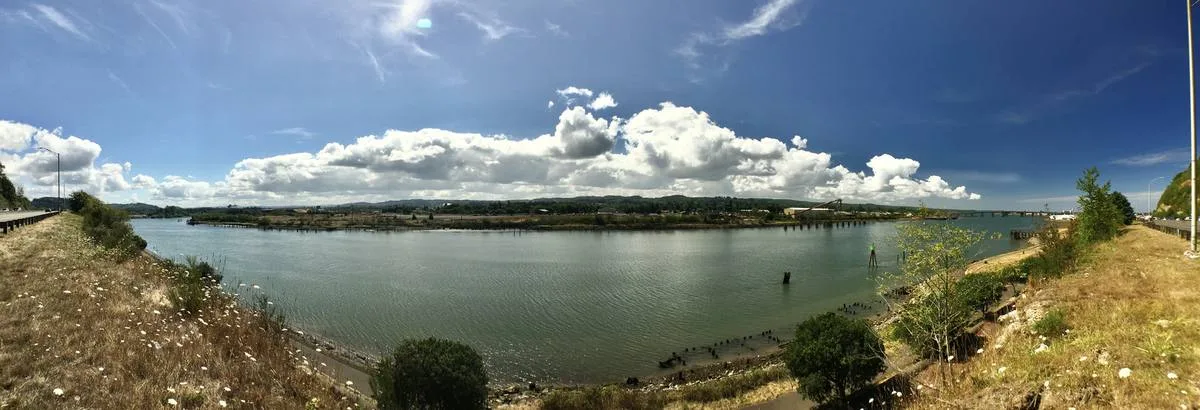
What shapes daily life here is the geography of southwest Washington's coast. Aberdeen sits at the confluence of the Chehalis and Wishkah Rivers at the southern edge of Grays Harbor, about 113 miles southwest of Seattle and 48 miles west of Olympia. The Olympic Peninsula's famous rain is not a rumor — Aberdeen averages around 80–90 inches annually, and residents learn early that waterproof everything is a lifestyle category, not an accessory. The city anchors Grays Harbor County as its economic center, neighboring Hoquiam to the west, Cosmopolis to the south, and Ocean Shores about 30 miles out on the coast. The Port of Grays Harbor, Grays Harbor Community Hospital, and Grays Harbor College form the backbone of the local economy, alongside manufacturing and timber interests that have defined this region for more than a century.
This guide is written for people who want the honest version — not the promotional brochure and not the Reddit doom-spiral. You'll find a clear-eyed look at Aberdeen's real housing market, the neighborhoods worth understanding before you write an offer, the legitimate reasons people love living here, the equally legitimate reasons some people leave, and what a relocation here actually looks like compared to the alternatives along the I-5 corridor and the coast.
Not every city works for every buyer. Aberdeen has a specific profile of people who thrive here — and a profile of those who tend to struggle. The table below cuts through the ambiguity.
| Best For | Why |
|---|---|
| Remote workers from Seattle | Housing costs roughly 75% below Seattle median; broadband expanding in the region |
| First-time homebuyers | Median sold prices around $229,000 make ownership achievable on modest incomes |
| Retirees on fixed incomes | Below-average cost of living index (88.4 vs. 100 national), plus proximity to coast |
| Families prioritizing affordability | Low housing costs offset tighter school district ratings for value-focused households |
| Outdoor and nature enthusiasts | Grays Harbor National Wildlife Refuge, Pacific beaches within 30 minutes, Olympic Peninsula access |
| Healthcare and trades workers | Grays Harbor Community Hospital, Port operations, and manufacturing sector offer stable local employment |
Aberdeen is a working-class city that has never pretended otherwise. The downtown core along Wishkah Street and Heron Street carries the particular texture of a Pacific Northwest timber town that's been through a long economic cycle — some storefronts active, some waiting, murals on walls that reference Cobain and the harbor and the river in the same breath. The waterfront trail along the Chehalis connects the Morrison Riverfront Park area to the broader city, giving walkers and cyclists a genuinely pleasant ribbon of green that surprises people on their first visit.
Daily errands are manageable but not effortless. Fred Meyer on Simpson Avenue handles most grocery runs. For anything specialty — a particular cut from a butcher, a broader wine selection, a specific hardware item — residents typically make the 8-minute run to Hoquiam or occasionally the drive toward Olympia. The lack of a Trader Joe's or Whole Foods within reasonable distance is mentioned in nearly every newcomer conversation, and it's worth knowing before you move.
The commute reality is the single biggest factor for anyone considering Aberdeen who isn't working locally. Driving to Olympia takes about 50 minutes on US-101 North and US-12 East — manageable for a few days a week. Seattle is a different story: typically 1 hour and 54 minutes under normal conditions, which in practice can stretch longer with Tacoma Narrows traffic. People who make that drive daily rarely stay long. Those who drive it once or twice a week report that the trade-off feels worth it, especially on a Sunday evening return when the views coming back into the valley are genuinely beautiful.
The community vibe is tight-knit in a way that takes some adjusting for people coming from larger cities. Aberdeen has roughly 17,000 residents, and the same faces cycle through the same coffee shops, the same community events, the same school board conversations. That intimacy is exactly what some people move here seeking — and exactly what drives others toward Olympia or Tacoma after a few years.
Ownership is actually possible here. In a state where the median home price in the Puget Sound region has pushed most first-time buyers toward longer commutes or extended rental situations, Aberdeen's sold median of approximately $229,000 represents something increasingly rare: a path to equity without a combined six-figure household income. A household earning Aberdeen's median of $52,195 can qualify for conventional financing on a starter home here — a statement that cannot be made about Olympia, Tacoma, or anything within 90 minutes of Seattle.
The natural environment surrounding Aberdeen is legitimately spectacular. The Grays Harbor National Wildlife Refuge — one of the most significant shorebird stopover sites on the Pacific Flyway — sits within the city's broader footprint. In late April and early May, the annual shorebird migration brings tens of thousands of western sandpipers and dunlins through the area, drawing birders from across the Pacific Northwest. The Aberdeen Waterfront Trail and Morrison Riverfront Park make the river's edge accessible for casual walkers, and Sam Benn Park in East Aberdeen gives families a proper neighborhood park with sports courts and picnic facilities.
Aberdeen's cost of living index of 88.4 — meaningfully below the national baseline of 100 — stretches dollars in ways beyond housing. Groceries, fuel, and everyday services run cheaper here than in virtually any comparably sized city in western Washington. Retirees on fixed incomes and remote workers earning Seattle wages find that the income gap closes quickly once housing, food, and utilities are factored together.
The culture, admittedly niche, is real. Aberdeen's connection to Kurt Cobain draws a specific type of visitor and resident — people who value authenticity over polish, who are skeptical of carefully curated neighborhood aesthetics, and who find something honest in a city that hasn't been gentrified smooth. The Kurt Cobain Memorial Park at Young Street Bridge, the Music Project in downtown Aberdeen, and the Aberdeen Museum of History give the city a cultural identity that's distinct from every other small city in western Washington.
Grays Harbor College provides a stable educational anchor and a source of community events, continuing education, and healthcare workforce training that benefits the entire region. For retirees and career-changers, the college's proximity at the edge of Aberdeen offers practical value beyond its symbolic role.
Aberdeen's schools are the most significant challenge for families with school-age children. The Aberdeen School District serves approximately 3,274 students across 13 schools, with a graduation rate that has declined to around 68% — a figure that matters to parents evaluating long-term outcomes. Math and reading proficiency rates on state assessments run significantly below state averages. Families who move here committed to public education should understand what that means practically: supplemental tutoring, active parent involvement, and realistic conversations with district staff about individual school quality within the system. Some families find that the savings on housing free up budget for private alternatives; others prioritize proximity to stronger districts and choose Montesano or Elma instead.
The crime picture requires honest acknowledgment. Aberdeen's property crime rate runs high relative to state averages — approximately 33 per 1,000 residents — and the downtown core has blocks that feel less settled than the residential neighborhoods to the east and north. East Aberdeen is consistently cited by residents as the most comfortable area. The practical guidance most locals give newcomers: choose your neighborhood carefully, and don't assume that a low purchase price on a downtown property automatically represents good value once the full context is understood.
The rain is real, and it is relentless for roughly eight months of the year. This is not Seattle rain, which gets overstated. Aberdeen's 80-plus inches annually means prolonged gray stretches from October through May that test people who haven't lived in a true Pacific Northwest maritime climate. People who move here from California, Arizona, or the Midwest and don't have a solid indoor life — hobbies, social rhythms, a place that feels like home when it's dark at 4:30 PM — often struggle by their second winter.
Why people leave. The three most consistent reasons Aberdeen residents move on are employment ceilings, school quality, and the creeping desire for more urban amenity. The local job market is limited outside healthcare, education, port operations, and manufacturing. Remote workers who lose their jobs find few comparable local options. Parents whose children approach high school age sometimes decide the district's graduation rate doesn't reflect the trajectory they want for their family. And after several years, some residents find that the trade-off between affordability and access — to restaurants, concerts, specialized medical care, cultural events — tips toward access. None of these are criticisms; they're patterns worth understanding before committing.
East Aberdeen is consistently the neighborhood residents point to first when asked where they'd tell a newcomer to look. The housing stock is a mix of older single-family homes and more recently updated properties, with Sam Benn Park anchoring the neighborhood's recreational identity. Prices here track closely to the city-wide sold median, generally in the $220,000–$250,000 range depending on condition and lot size. The proximity to Grays Harbor National Wildlife Refuge adds a genuine lifestyle bonus that most buyers don't price in until after they've moved.
Best for: First-time buyers, remote workers, and outdoor-focused households who want Aberdeen's most settled residential character.
South Aberdeen's sold median sits around $225,000, with price-per-square-foot numbers that have shown positive movement over the past year. Homes here take slightly longer to sell than the city average — closer to 83 days — which gives buyers a bit more negotiating room than in East Aberdeen. The neighborhood connects to the city's southern commercial corridors and Highway 12 access points. It's practical without being particularly distinctive.
Best for: Value-focused buyers who want easy highway access and don't need a walkable neighborhood center.
North Aberdeen borders the city's main commercial spine and benefits from direct Highway 101 connectivity, making it the most logistically practical neighborhood for residents who make regular runs toward Olympia or points north. Housing here ranges from modest starter homes to slightly larger family properties. The commercial access is genuine — groceries, services, and fuel are all close — though the neighborhood trades some residential quiet for that convenience.
Best for: Commuters and practical buyers who prioritize access over neighborhood character.
Paradise Harbor consistently ranks as one of Aberdeen's highest buyer-search neighborhoods on MLS and Redfin data, which reflects genuine demand rather than just marketing. The name suggests something more dramatic than the neighborhood delivers in person, but the residential character is solid and the location offers reasonable access to both the waterfront and the city's core. Buyers looking here should expect competition to be slightly more active than the city average.
Best for: Buyers who want a recognized neighborhood with above-average demand and resale liquidity.
Pinewild carries a more suburban and wooded character than Aberdeen's closer-in neighborhoods — the name is accurate in feel. Homes here tend to sit on larger lots with more tree coverage, which appeals to buyers coming from more rural or semi-rural settings. It's a quieter option in a city that already runs quiet by regional standards. Redfin and Walk Score data consistently flag it as a neighborhood with meaningful buyer awareness.
Best for: Buyers who want more space, privacy, and a wooded setting within Aberdeen's city limits.
Downtown Aberdeen is the neighborhood to understand before dismissing — and also the neighborhood to understand before over-romanticizing. The Music Project, dedicated to Kurt Cobain's life and legacy, anchors the cultural identity of the core. The Aberdeen Waterfront Trail and Morrison Riverfront Park make the river's edge genuinely accessible. What downtown doesn't yet offer is the density of active retail and dining that makes a downtown neighborhood feel fully alive. Purchase prices here can be attractive, but the gap between list and livability is real and should factor into any offer.
Best for: Culture-focused buyers, investors with a long time horizon, and buyers who prioritize proximity to waterfront trails over neighborhood amenities.
Herbig Heights appears alongside Paradise Harbor and East Aberdeen in buyer-awareness data consistently enough to merit attention. Specific sold price data for the neighborhood tracks near the city-wide range. It's a residential neighborhood without a single standout characteristic — which is sometimes exactly what buyers want: a quiet, established place to own a home without complications.
Best for: Buyers who want established residential character with no particular trade-offs in either direction.
Bel-Aire is one of Aberdeen's recognized MLS neighborhoods with a primarily residential identity and a buyer profile similar to Pinewild — people who want established, quiet streets within the city footprint. The housing stock is generally older single-family construction in the city's accessible price range. It doesn't generate the search volume of East Aberdeen or Paradise Harbor, which can mean less competition on individual listings.
Best for: Patient buyers looking for value with less competition than Aberdeen's most-searched neighborhoods.

When relocating to Aberdeen, where you land within the city can genuinely shape your long-term equity story. Waterfront-adjacent areas like Paradise Harbor tend to hold value well and attract consistent buyer interest, while established pockets in North Aberdeen and Uptown Aberdeen offer a mix of price points — many quality homes come in under $250,000, which surprises people relocating from larger markets. What I tell clients is that desirable, move-in-ready homes in these neighborhoods don't sit long. I've seen good properties receive multiple offers within days of listing, so hesitation can be costly.
That's exactly why I encourage anyone serious about relocating to Aberdeen to connect with a lender before they ever walk through a front door. Your approval amount and your comfortable budget are rarely the same number, and the full monthly picture — property taxes, homeowner's insurance, any HOA dues, and your actual loan structure — can shift what feels affordable in a meaningful way. Knowing all of that before you fall in love with a home keeps you in a position to move confidently when the right one appears.
| City | Best For | Median Home Price | Seattle Commute | Vibe |
|---|---|---|---|---|
| Aberdeen | Affordability, ownership, coastal access | ~$229,000 | ~114 min | Working-class, authentic, rain-soaked Pacific NW |
| Hoquiam | Similar affordability, slightly quieter | ~$200,000s | ~115 min | Adjacent twin city; shares most of Aberdeen's character |
| Montesano | Families prioritizing school quality | ~$290,000s | ~105 min | Small-town, county seat, stronger school ratings |
| Ocean Shores | Coastal lifestyle, retirement | ~$320,000s | ~135 min | Resort-adjacent, tourist economy, seasonal variation |
| Elma | Rural quiet, more land per dollar | ~$280,000s | ~100 min | Small, very rural, fewer services |
| Olympia | Urban amenities, stronger job market | ~$450,000s | ~65 min | State capital, significantly higher cost |
| Category | Data |
|---|---|
| Population (2026) | Approximately 17,089 |
| Median Sold Home Price | ~$229,000 (Redfin, Dec 2025) |
| Median Household Income | ~$52,195 |
| Property Tax Rate | Approximately 0.92% |
| Cost of Living Index | 88.4 (U.S. average = 100) |
| Commute to Seattle | Approximately 114 minutes |
| School District Rating | C+ (Aberdeen School District) |
| Violent Crime Rate | Approximately 6 per 1,000 residents |
| Property Crime Rate | Approximately 33 per 1,000 residents |
| Average Days on Market | ~71 days |
| Median Gross Rent | ~$1,113/month |
| Major Employers | Grays Harbor Community Hospital, Port of Grays Harbor, Aberdeen School District, Grays Harbor College |
Aberdeen takes its Cobain connection seriously, and in a way that feels earned rather than exploitative. The Kurt Cobain Memorial Park at the Young Street Bridge is a pilgrimage site for visitors from across the world — and for locals, it's simply part of the landscape. The memorial sits where a young Cobain reportedly spent nights, and the city's relationship with that history is genuinely complicated and genuinely interesting. If you move here, you will eventually have a conversation about it with a neighbor who grew up in the same era, and those conversations tend to be worth having.
The Grays Harbor Shorebird Festival each spring — typically held in late April — is one of the Pacific Northwest's most legitimate wildlife events. The shorebird migration through the Grays Harbor National Wildlife Refuge draws serious birders and curious newcomers alike, and it gives Aberdeen a moment each year when the natural environment takes center stage in a way that surprises people who only knew the city by its reputation. It's the kind of thing locals mention casually that visitors remember for years.
Aberdeen's rain culture has its own social grammar. Locals don't apologize for the weather, don't pretend to be cheerful about eight months of gray, and don't particularly trust newcomers who arrive in summer and make sweeping lifestyle claims before they've experienced November. The adjustment is real, and the people who stay long-term tend to be the ones who build specific indoor rhythms — a regular coffee spot, a community group, a home workshop habit — rather than waiting for the weather to cooperate.
What I would not do if moving to Aberdeen: I would not buy a downtown property without spending several evenings walking those blocks at different times of day. The distance between a promising list price and a comfortable daily living experience varies significantly within just a few blocks of the core. The Wishkah Street corridor has genuine energy in pockets; other blocks require more patience than most buyers realize when they're looking at photos on a screen.

Local Expert Takeaway: If you're relocating to Aberdeen with homeownership as the primary goal, focus your search on East Aberdeen and Paradise Harbor first — these neighborhoods combine Aberdeen's most settled residential character with the best long-term resale liquidity in the market. Budget for the Seattle commute only if you're working remotely at least three days per week; the daily drive is a different lifestyle commitment than occasional trips. And give yourself one full winter before deciding whether Aberdeen is permanent — the people who stay are the ones who made peace with the rain before spring arrived.
✅ Aberdeen offers genuine homeownership access at a price point that has largely disappeared from western Washington — a sold median around $229,000 puts ownership within reach for households earning well below six figures.
⚠️ The school district requires honest evaluation before committing if you have children — a graduation rate in the 68% range and below-average proficiency scores are real factors that active parents should plan around, not minimize.
📍 East Aberdeen and Paradise Harbor are the neighborhoods most consistently cited by local residents and buyer-search data as the strongest starting points for relocating buyers who want residential stability and reasonable resale prospects.
Is Aberdeen a good place to live for remote workers?
Aberdeen has become genuinely compelling for remote workers earning Pacific Northwest or coastal city wages. The median sold price of around $229,000 means that someone earning $80,000–$90,000 remotely can own a detached home with a yard — a scenario that's theoretical in Seattle and increasingly difficult even in Olympia. The trade-off is real: broadband infrastructure is improving but not uniformly excellent across all neighborhoods, and the nearest major airport (SEA-TAC) is approximately two hours away. For workers who travel occasionally rather than weekly, those trade-offs tend to be manageable.
What is the crime situation in Aberdeen?
Property crime is the primary concern — running at approximately 33 per 1,000 residents, which is elevated relative to state averages. Violent crime at approximately 6 per 1,000 is more modest. The practical reality locals emphasize is that crime is not uniformly distributed across the city: East Aberdeen is consistently considered the most comfortable residential area, while parts of the downtown core require more awareness. Neighborhood selection matters significantly more in Aberdeen than in cities with more uniform safety profiles.
How does Aberdeen compare to Montesano for families?
Montesano, about 18 miles east on US-12, is the comparison most relevant for families with school-age children. Montesano's school district carries stronger ratings, its downtown has a small-town cohesion that Aberdeen's core is still working toward, and its violent and property crime rates run meaningfully lower. The trade-off is price — Montesano homes typically list and sell at a premium to Aberdeen's sold median — and the loss of Aberdeen's hospital, college, and broader commercial infrastructure. Families who land on Montesano typically prioritize school environment above all else; those who choose Aberdeen are usually prioritizing affordability and accepting the school district as a known variable they intend to manage actively.
Explore the full Aberdeen series: The Ultimate Aberdeen Relocation Guide · Is Aberdeen Safe? · Cost of Living in Aberdeen · Best Neighborhoods in Aberdeen · Aberdeen Schools & Family Life · Aberdeen Youth Sports · Aberdeen Parks & Recreation · Retiring in Aberdeen · 1031 Tax-Deferred Exchange in Aberdeen · Aberdeen First-Time Homebuyers Guide · Aberdeen Down Payment Assistance Guide · Moving to Aberdeen from California