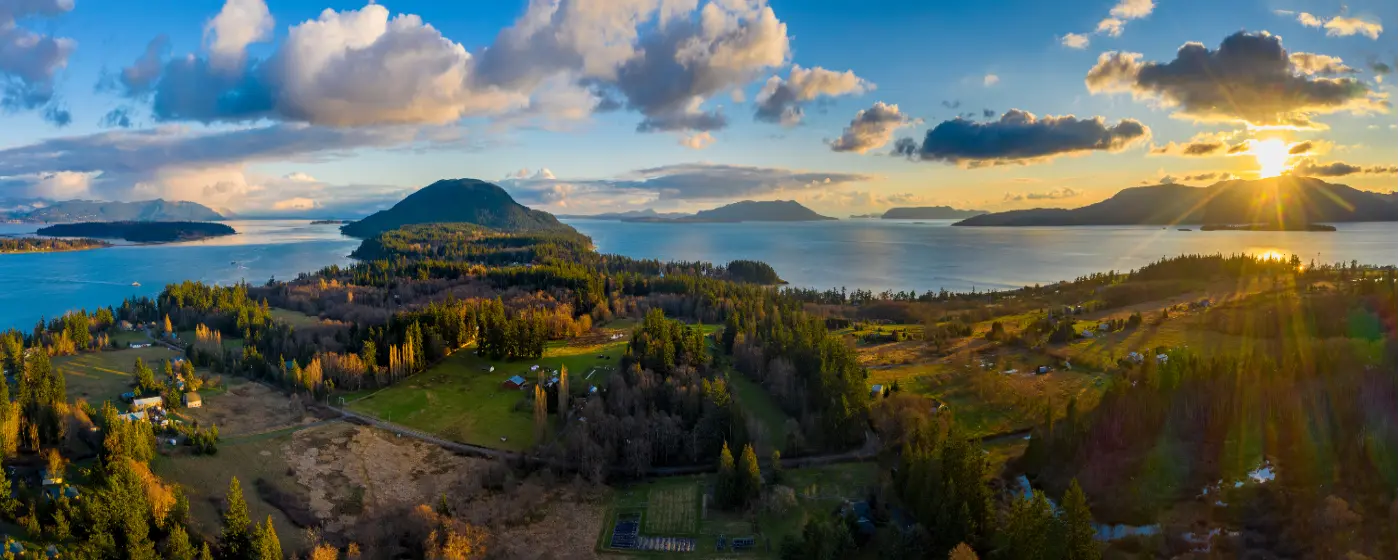
Puget Sound · Washington
Living in Bellingham: The Ultimate Relocation Guide (2026)
Maybe your company announced it was moving operations north of Seattle and someone in HR mentioned Bellingham like it was an obvious choice. Maybe you've been watching home prices in the greater Seattle metro climb past a million dollars and you've started drawing concentric circles outward on a map, wondering what you'd actually give up. Maybe you drove through on your way to the San Juan Islands ferry, caught a glimpse of the waterfront, the university buildings rising into the hills, the snow-capped peaks in the distance, and thought: wait, people actually live here? They do — nearly 97,000 of them — and the central tension of moving to Bellingham is this: it offers a genuinely beautiful, walkable, culturally alive small city, and in exchange it asks you to accept a 90-minute commute to Seattle, a gray-sky reality for most of the year, and a housing market that has grown well past what its median household income of around $67,000 can comfortably support.
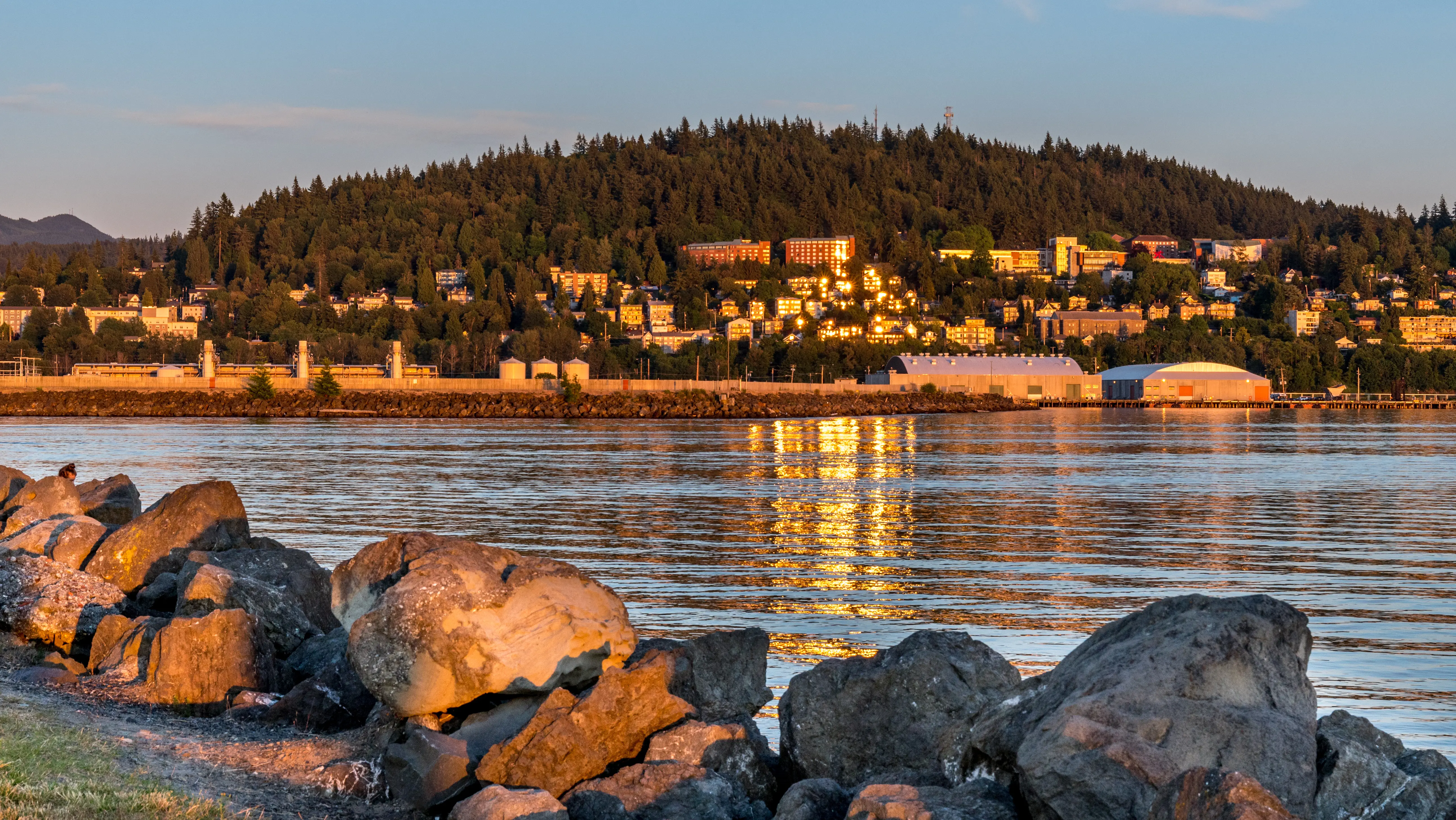
Geographically, Bellingham occupies a striking pocket of the Pacific Northwest. It sits on the eastern shore of Bellingham Bay, 18 miles south of the U.S.-Canada border and roughly equidistant between Seattle and Vancouver, BC — a location that sounds enviable until you actually need to get somewhere. The city climbs from sea level at the waterfront up through forested hillside neighborhoods, with Western Washington University anchoring the Sehome ridge and Lake Whatcom defining the eastern boundary. Whatcom Creek bisects the city, the Chuckanut Mountains frame it from the south, and the whole thing is compressed into just 27 square miles, which gives Bellingham a density and walkability unusual for a Pacific Northwest city of its size.
This guide is built for the person seriously weighing a move here — not a weekend visit. It will tell you which neighborhoods actually suit your life stage and budget, what the commute reality looks like on a Tuesday in November, where housing prices have actually landed in 2026, and the specific reasons some people love it for decades while others quietly list their house after two winters. Read it before you make an offer.
| Best For | Why |
|---|---|
| Remote workers | Freedom from the Seattle commute unlocks Bellingham's full value — access to outdoor recreation, walkable neighborhoods, and a college-town energy without big-city pricing |
| Families with kids | Strong school district, abundant parks, and a manageable pace of life make this an appealing alternative to suburban sprawl south of Seattle |
| Retirees | PeaceHealth St. Joseph Medical Center provides serious healthcare infrastructure; mild summers, walkable districts, and ferry access to the San Juans suit active retirees well |
| Outdoor enthusiasts | Mt. Baker ski area, Chuckanut trails, Lake Padden, and Bellingham Bay kayaking are all within 30 minutes — this is a legitimate outdoor lifestyle city |
| First-time buyers (regionally) | Compared to Seattle or Kirkland, Bellingham's median sold price of approximately $650,000–$700,000 is more approachable — though it's still a stretch on local wages |
| College-town culture seekers | WWU's 16,000-student campus keeps the arts, music, and restaurant scene more vibrant than you'd expect from a city this size |
You will not confuse this for a suburb. That's one of the first things relocating buyers notice — Bellingham has an identity, and it's not defined by the nearest highway interchange. Downtown has genuine foot traffic, independent restaurants that actually survive, and a waterfront redevelopment that's been adding life to the bay-side corridor steadily for the past decade. The city feels compact and navigable in a way that larger Pacific Northwest cities don't; you can park once and accomplish most of your day on foot if you're based near the right neighborhoods.
The commute reality deserves an honest look. The 90-minute drive to Seattle sounds acceptable in the abstract. On a clear summer Tuesday, it sometimes is. On a rainy Wednesday in January with a backup near Marysville, it can push past two hours. Most locals who need to be in Seattle daily have made their peace with the WA-20 ferry option, or they've built jobs that allow for two or three days in the office rather than five. The city's own employment base — WWU, PeaceHealth St. Joseph Medical Center, the BP Cherry Point Refinery in neighboring Ferndale, and the school district — keeps a meaningful portion of residents working within 20 minutes of home. The average local commute sits around 15 to 18 minutes, which is one of the more underappreciated quality-of-life advantages for people who work locally.
The community vibe runs through a specific set of contradictions: it's a college town that also has serious boat owners; a liberal-leaning city that abuts conservative Whatcom County farmland; a place where you can catch world-class ski conditions at Mt. Baker on Saturday and be back for a gallery opening in Fairhaven by Saturday night. WWU's 16,000 students give the city a creative, younger energy that keeps the arts calendar surprisingly full. What surprises most newcomers after six months is how small the social circles actually are — you run into the same people at Bayou on Bay, at the Saturday farmers market at the Depot Market Square, and on the trails at Whatcom Falls Park. That intimacy is either the best thing about living here or the thing that sends people back to a city where they can disappear into a crowd.
The gray skies are real and they are persistent. Bellingham logs more than 150 rainy days a year, with fewer than 160 sunny days annually. The summers — mild, green, genuinely spectacular, with daylight stretching past nine in the evening — convert almost everyone. The October-through-April stretch is what separates people who stay from people who don't.
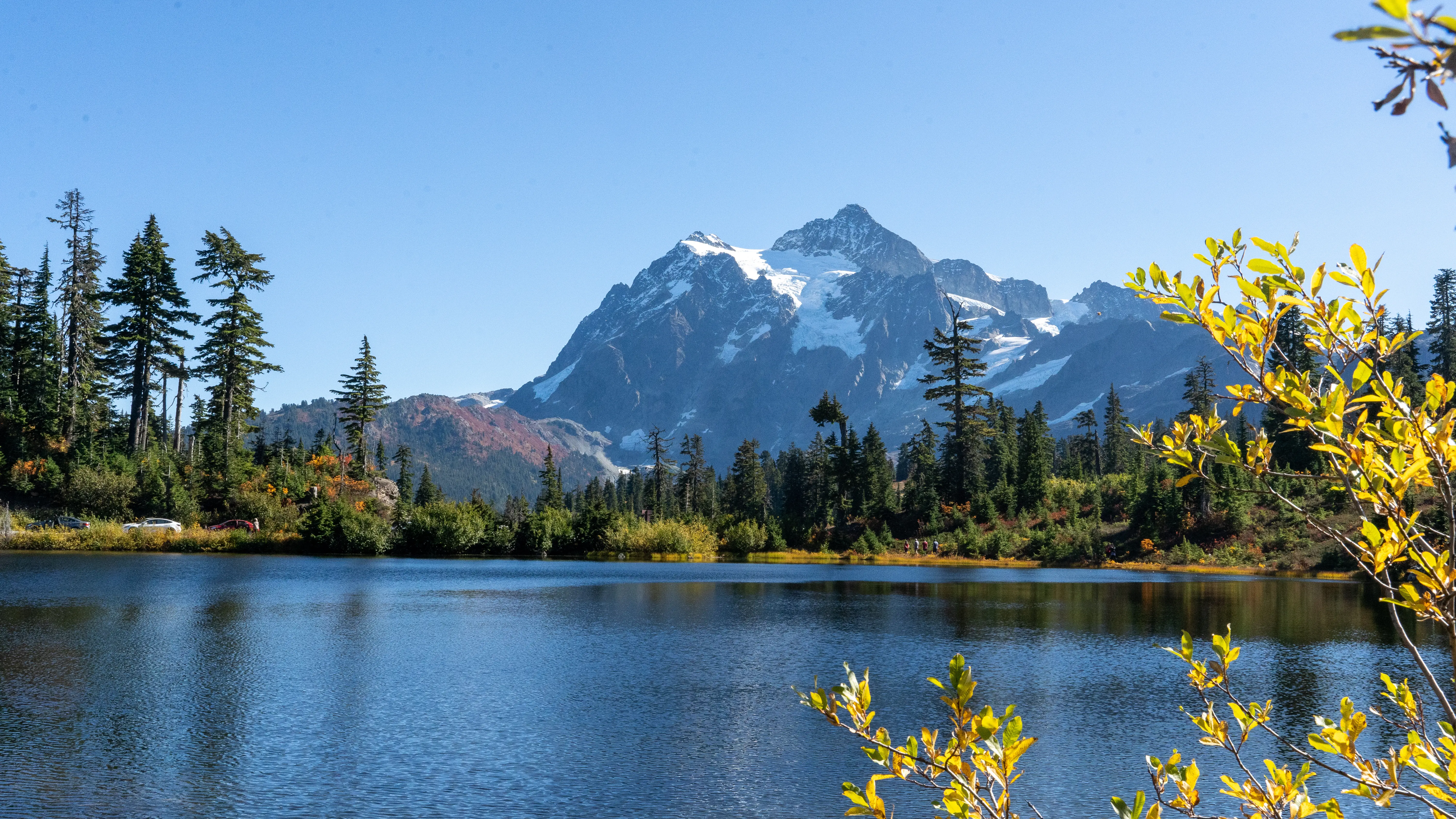
The outdoor access is genuinely exceptional. Mt. Baker Ski Area sits 57 miles east, and it holds world records for snowfall — serious skiers move here specifically for that proximity. Lake Padden Park offers 10 miles of trail just inside the city, Whatcom Falls Park delivers old-growth forest and waterfall views five minutes from downtown, and Sehome Hill Arboretum gives the university neighborhood a forested ridge with views of the bay. Chuckanut Drive south toward Skagit County is one of the more beautiful stretches of road in the state, and it's someone's daily commute.
The air quality stands as one of Bellingham's most undersold advantages. Ranked among the top 25 cleanest-air cities in the country by the EPA and American Lung Association, this is not a throwaway statistic for families with children or anyone with respiratory concerns. The same geography that delivers the marine climate also delivers consistently clean air — a meaningful point of difference from the wildfire-smoke summers now common further south and east.
Fairhaven, Bellingham's Victorian-era southern district, functions as the city's most visually cohesive neighborhood and a genuine daily destination. The commercial core along Harris Avenue has independent bookstores, coffee roasters, and restaurants that have been there for decades — not because they can't afford to move, but because the customer base is loyal and the streetscape rewards foot traffic. It's the kind of neighborhood that makes people feel the move was worth it on the first warm Saturday they spend wandering through it.
Healthcare infrastructure matters more than people think when they're in their 30s and becomes non-negotiable by their 50s. PeaceHealth St. Joseph Medical Center is a Level II Trauma Center — the only one in Whatcom County — which means serious medical care without an immediate helicopter transport to Seattle. For families and particularly for retirees, that institutional anchor changes the calculus of living this far from a major metropolitan center.
The absence of a Washington state income tax compounds over time in a way that buyers from California or Oregon often underestimate. Combined with a property tax rate of approximately 0.81% — relatively modest by Pacific Northwest standards — the tax picture in Bellingham is one of its quietly significant financial advantages. On a $675,000 home, that property tax rate means approximately $5,470 annually, which is lower than comparable homes in many Oregon cities with both income and property tax obligations.
The housing cost-to-income gap is the defining tension of living in Bellingham for anyone relying on local employment. The median household income of around $67,000 is lower than most other Washington cities of comparable size, yet the median sold price has climbed to approximately $650,000 to $700,000 in early 2026 — a ratio that requires either significant equity from a prior sale, a dual income, or a remote job with out-of-market pay. The homeownership rate sits at roughly 45%, meaning more than half the city rents — a signal that the ownership market is genuinely out of reach for many people working Bellingham-wage jobs.
The Seattle commute is a lifestyle choice, not just a drive. Treating Bellingham as a bedroom community for Seattle employment is possible, but it requires accepting that 3 hours of your day — on a good day — will be spent on I-5. Buyers who've made this work typically structure remote or hybrid arrangements, use the time for audiobooks or podcasts they'd otherwise never finish, or made the calculation that the quality of life between commutes justifies the hours spent. Buyers who arrive expecting the commute to feel fine after a few weeks often find the opposite.
The rain is predictable and it is long. The period from October through April delivers overcast skies with such consistency that some people develop genuine seasonal mood challenges. Bellingham doesn't have Seattle's sheer population mass of distractions to push through those months — the antidote here is outdoor activity (trail running, skiing, kayaking even in the rain) or an active social life deliberately cultivated. People who move here for the summers without planning for the winters often find themselves listing after year two.
Why some people leave: The most common reasons given for departing Bellingham are the income ceiling — advancing your career in many fields simply requires eventually moving to a larger city — the commute fatigue for anyone tied to Seattle employment, and the social insularity that comes with a small city where everyone knows everyone. A meaningful share of WWU graduates who love the city leave after a few years simply because the job market doesn't have room for them at the level they want to reach.
Fairhaven is Bellingham's most architecturally cohesive neighborhood, built around a Victorian commercial core that genuinely earns its historic district designation. Homes range from bungalows and craftsmen to larger Victorians, with typical prices in the $800,000 to $1.2 million range for anything with character and proximity to the village center. The honest tradeoff is that parking is imperfect, the neighborhood is separated from the rest of the city by geography, and entry-level buyers are largely priced out.
Best for: Buyers prioritizing walkability, character architecture, and a village-scale commercial district — and who have the budget to match.
Sehome sits on the ridge above Western Washington University, a neighborhood of forested streets, mid-century homes, and direct access to the Sehome Hill Arboretum's 165 acres of hiking trails. The proximity to WWU keeps the neighborhood intellectually active but also means occasional competition for parking and a rental-heavy segment of the housing stock. Prices here typically run in a similar range to Sunnyland, with homes in the $650,000 to $800,000 territory depending on lot size and condition.
Best for: Faculty, university employees, and outdoor-focused buyers who want forested access without leaving the city.
Sunnyland is among the more livable middle-ground options in the city — established without being stagnant, with homes largely in the $650,000 to $800,000 range and a neighborhood character that reflects working families more than the premium-waterfront crowd. It's close enough to downtown and Whatcom Falls Park to feel connected without the full Fairhaven premium. The catch is that the housing stock varies significantly in condition and era, so due diligence on individual properties matters more here than in newer subdivisions.
Best for: Families with school-age children who want proximity to parks and downtown without stretching into Fairhaven pricing.
York is one of Bellingham's older residential neighborhoods, sitting north of downtown with a mix of Craftsman bungalows, Victorian-era homes, and the kind of mature tree canopy that takes decades to grow. It's more affordable than Fairhaven but has been climbing — investors and buyers priced out of pricier neighborhoods have pushed York values upward over the past several years. The neighborhood's proximity to Whatcom Creek and its trail network is a genuine asset that many buyers don't discover until they've toured the area.
Best for: Buyers who want historic character and walkable streets at a price point below Fairhaven.
Barkley sits in the northeast quadrant of the city and functions more like a traditional Pacific Northwest suburb than much of Bellingham — newer construction, commercial amenity clusters along Barkley Boulevard, and an overall feel that prioritizes convenience over character. That's not a criticism; for families who want predictable square footage, newer systems, and proximity to Barkley Village's restaurants and services, it delivers exactly what it promises. Prices here align roughly with the city-wide median range.
Best for: Families prioritizing newer construction and suburban convenience over historic character or walkability.
Edgemoor is Bellingham's established high-end residential corridor, a neighborhood of larger lots, mature landscaping, and waterfront or water-view properties that consistently command some of the highest prices per square foot in the city. Turnover here is limited — owners tend to hold for decades — which keeps inventory tight and prices firm well above the city median. It's the kind of neighborhood where a significant portion of the real estate activity never formally hits the open market.
Best for: Buyers seeking established prestige, lot size, and proximity to Bellingham Bay in an ownership-stable community.
South Hill occupies the southern hillside above Lake Padden, a neighborhood defined by its elevation, its views toward Chuckanut Mountain, and a housing stock that skews toward larger lots and more recent construction than many central neighborhoods. Access to Lake Padden Park and its 10 miles of trails is essentially immediate for most South Hill residents — that amenity adds lifestyle value that's hard to price but consistently mentioned by longtime owners. The neighborhood is more car-dependent than central Bellingham.
Best for: Outdoor-focused buyers who prioritize trail access and larger lots over urban walkability.
Alabama Hill is a quieter residential neighborhood that often gets passed over by buyers focused on the more prominent districts, which has historically kept its pricing more accessible relative to comparable neighborhoods. It sits in a comfortable position between downtown and the southern neighborhoods, with a mix of housing eras and a low-key community feel. Buyers who are priced out of Fairhaven or Sehome sometimes discover Alabama Hill as a practical alternative with genuine neighborhood character.
Best for: Buyers looking for established residential character at prices that tend to run below the Fairhaven-Sehome tier.

Bellingham's neighborhoods each tell a different story when it comes to long-term value. Fairhaven's walkable village character and waterfront proximity have made it consistently competitive, with well-maintained homes often receiving offers within days of listing. Sehome attracts buyers drawn to its proximity to Western Washington University and established tree-lined streets, while Sunnyland has quietly become a target for buyers who want character homes under $750,000 before that window closes. If you're relocating from a larger metro, the pace here can feel slower, but desirable properties in these neighborhoods move fast when they're priced right.
Before you fall in love with a home on your first tour, sit down with a lender. Your approval amount and your comfortable budget are rarely the same number, and that gap matters in a market where you may need to move quickly. The full monthly payment — loan principal and interest, property taxes, homeowner's insurance, and any HOA dues — often surprises buyers who only focused on purchase price. Getting pre-approved early means you understand the complete picture, and when the right home in Bellingham appears, you're ready to act without hesitation.
| City | Best For | Home Price (approx.) | Commute to Seattle | Vibe |
|---|---|---|---|---|
| Bellingham | Outdoor access, college-town energy, remote workers | $650K–$700K median sold | ~90 min | Urban-adjacent, walkable, artistic |
| Ferndale | Affordability, families, industrial employment | $490K–$540K | ~95 min | Suburban, working-class, growing fast |
| Lynden | Rural character, strong schools, conservative community culture | $550K–$600K | ~100 min | Agricultural, tight-knit, family-oriented |
| Blaine | Border access, waterfront, slower pace | $450K–$520K | ~110 min | Small-town, maritime, border-town quirk |
| Mount Vernon | Skagit County affordability, Hwy 20 access | $490K–$550K | ~75 min | Regional commercial hub, more commutable |
| Sedro-Woolley | Budget buyers, rural access, North Cascades proximity | $420K–$480K | ~80 min | Rural-suburban, small-town pace |
| Category | Detail |
|---|---|
| Population | ~97,346 (2026 estimate) |
| Median Sold Home Price | $630,000 (CSV baseline); active market tracking $650K–$700K (early 2026) |
| Median Household Income | ~$67,000 |
| Property Tax Rate | ~0.81% |
| School District | Bellingham School District (B+ rating) |
| Major Employers | Western Washington University, PeaceHealth St. Joseph Medical Center, BP Cherry Point Refinery, Bellingham School District |
| Commute to Seattle | ~90 minutes (I-5, variable with traffic) |
| Violent Crime Rate | 3.5 per 1,000 residents |
| Property Crime Rate | 38 per 1,000 residents |
| Climate | 150+ rainy days/year; mild summers; 157 sunny days annually |
| Cost of Living | ~20% above national average; housing 40%+ above national average |
| No State Income Tax | Yes — Washington state |
Bellingham observes its relationship with Mt. Baker Ski Area the way other cities observe their NBA team — it's a civic identity, a season-opening ritual, and a constant reference point in daily conversation. When Baker gets a big early-season dump, you'll know it before you check your phone because half the city mentions it at the coffee counter. The ski area holds the world record for measurable snowfall in a single season (1,140 inches in 1998–99), and locals bring that up with a pride that's completely disproportionate to whether any individual resident actually skis.
The Bellingham Farmers Market at the Depot Market Square runs Saturdays from April through December and functions as one of the city's most reliable community gathering points. It's not a tourist attraction — it's where people actually shop, run into neighbors, and spend an unhurried Saturday morning in a way that's harder to do in cities four times the size. The market's combination of local produce, prepared food vendors, and live music makes it something residents reference when explaining why they chose to stay.
The Ski to Sea Race, held annually in late May, is one of the region's more distinctive sporting traditions — a multi-stage relay race running from the Mt. Baker ski area down to Bellingham Bay, covering skiing, running, road cycling, canoeing, mountain biking, and sea kayaking across a single route. Teams of seven pass a baton across more than 90 miles of terrain in a race that draws serious competitors and enthusiastic amateurs in equal measure.
What I would not do if moving to Bellingham: I would not buy in the downtown core without walking the neighborhood on a weekday evening first. The property crime rate of 38 per 1,000 is elevated compared to Ferndale or Lynden, and the concentration of transient activity near certain downtown corridors can feel dissonant after a visit to the waterfront during daytime hours. Buyers drawn to the urban energy of downtown Bellingham often find the tradeoffs acceptable — but they should see it at 8pm on a Thursday, not just at noon on a Saturday, before they decide.
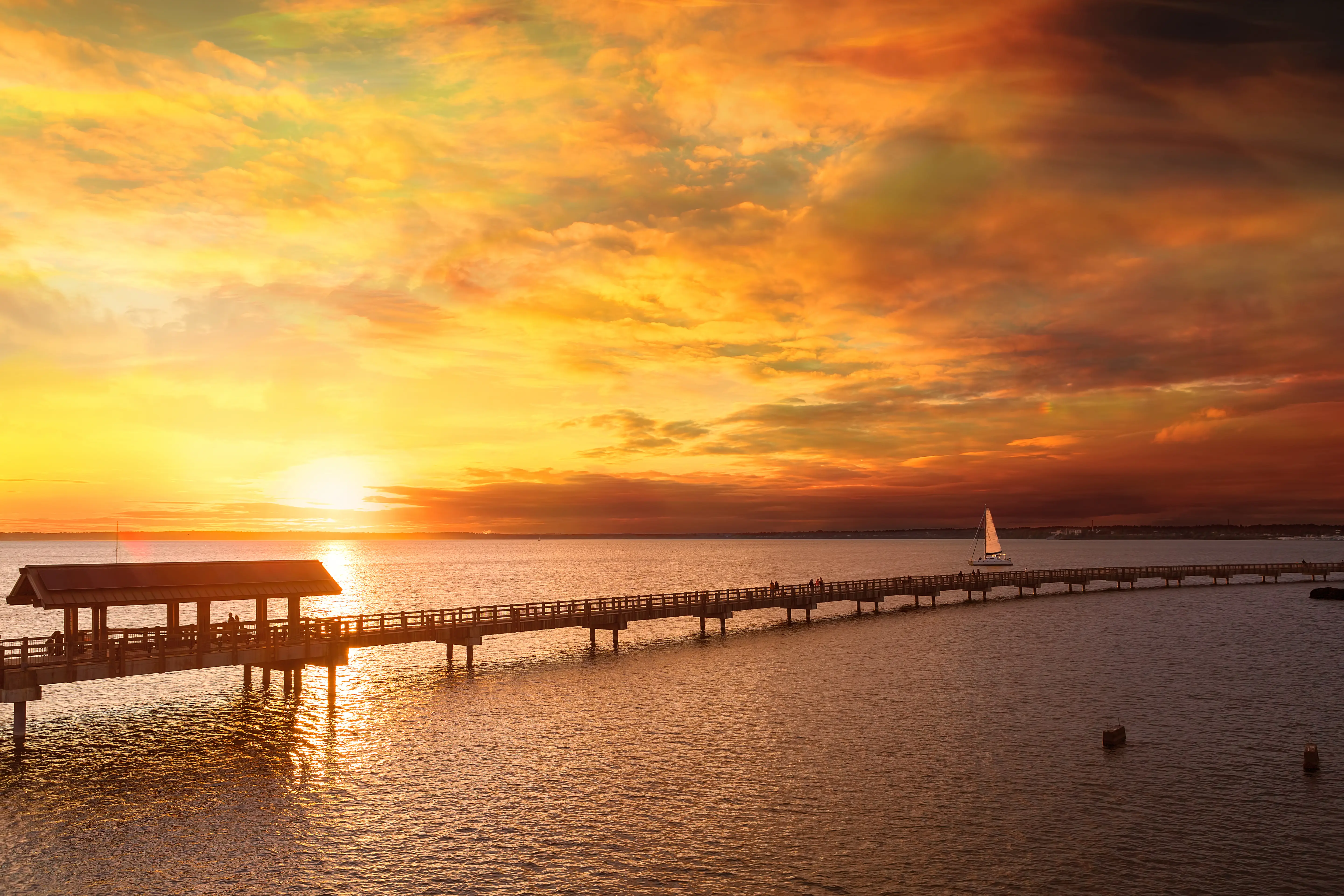
Local Expert Takeaway: If you're relocating from a California or Oregon market and arriving with equity, Bellingham delivers a quality of life that is genuinely hard to replicate at a comparable price point in the Pacific Northwest — but only if your income isn't entirely dependent on local wages. Target neighborhoods where your daily life will unfold within a 10-minute walk: Fairhaven if budget allows, Sehome or Sunnyland if you need more room, York or Alabama Hill if you're stretching to make ownership work. Get pre-approved before you start touring — homes priced correctly here are moving in roughly 30 days with multiple offers, and hesitation costs more than the negotiation saves.
✅ Bellingham delivers genuine Pacific Northwest lifestyle — outdoor access, college-town energy, clean air, and mild summers — at a price point that remains meaningfully below Seattle, Kirkland, or Bellingham, making it one of the more defensible relocation decisions in the region for remote workers and equity buyers.
⚠️ The income-to-housing gap is real. A median household income of ~$67,000 against a median sold price of $630,000 — with active market conditions pushing toward $650,000–$700,000 — means local wages alone rarely support ownership here. Know your income picture before you fall in love with the view.
📍 Neighborhood choice matters more in Bellingham than in most cities of its size. The topography, commute patterns, and lifestyle character vary dramatically between Fairhaven, Barkley, and Edgemoor. Drive each neighborhood on a weekday before you decide.
Is Bellingham a good place for families?
Yes, Bellingham offers a strong combination of outdoor access, a well-regarded school district, and a manageable pace of life that many families find compelling — particularly compared to the cost and congestion of the Seattle metro. The Bellingham School District carries a B+ rating, and the city's parks infrastructure, including Whatcom Falls Park and Lake Padden, gives kids genuine room to be outside year-round.
What is the crime rate in Bellingham?
Bellingham's violent crime rate sits at approximately 3.5 per 1,000 residents, which is relatively moderate for a Pacific Northwest city with an active college population. The property crime rate of 38 per 1,000 is more elevated and tends to concentrate in the downtown corridor; residential neighborhoods like Edgemoor, South Hill, and Fairhaven report noticeably lower property crime activity than the city average.
How does Bellingham compare to nearby cities like Ferndale or Mount Vernon?
Bellingham offers significantly more walkability, cultural infrastructure, and neighborhood variety than either Ferndale or Mount Vernon, but it prices that advantage accordingly. Ferndale and Sedro-Woolley both offer housing in the $490,000 to $540,000 range with shorter Seattle commutes for southerly commuters, while Mount Vernon sits closer to the 75-minute mark on I-5. Buyers who prioritize affordability and commute efficiency over neighborhood character often find those alternatives more practical; buyers who want the Bellingham lifestyle specifically tend to find the premium worth paying.
Explore the full Bellingham series: Living in Bellingham · Is Bellingham Safe? · Cost of Living · Best Neighborhoods · Schools & Family Life · Youth Sports · Parks & Rec · Retiring in Bellingham