
Eastern Washington · Washington
Is Kennewick Safe? Crime Rates, Safest Neighborhoods & Local Reality (2026)
Kennewick is not the safest city in Washington, and anyone telling you otherwise hasn't looked at the data. But "not the safest" and "dangerous" are not the same thing, and the distinction matters enormously if you're deciding where to buy a home. The honest picture here is layered: a city where property crime runs above national averages, where motor vehicle theft is a genuine concern, but where violent crime has been trending downward meaningfully — and where the southwest neighborhoods feel categorically different from the commercial corridors near the mall.
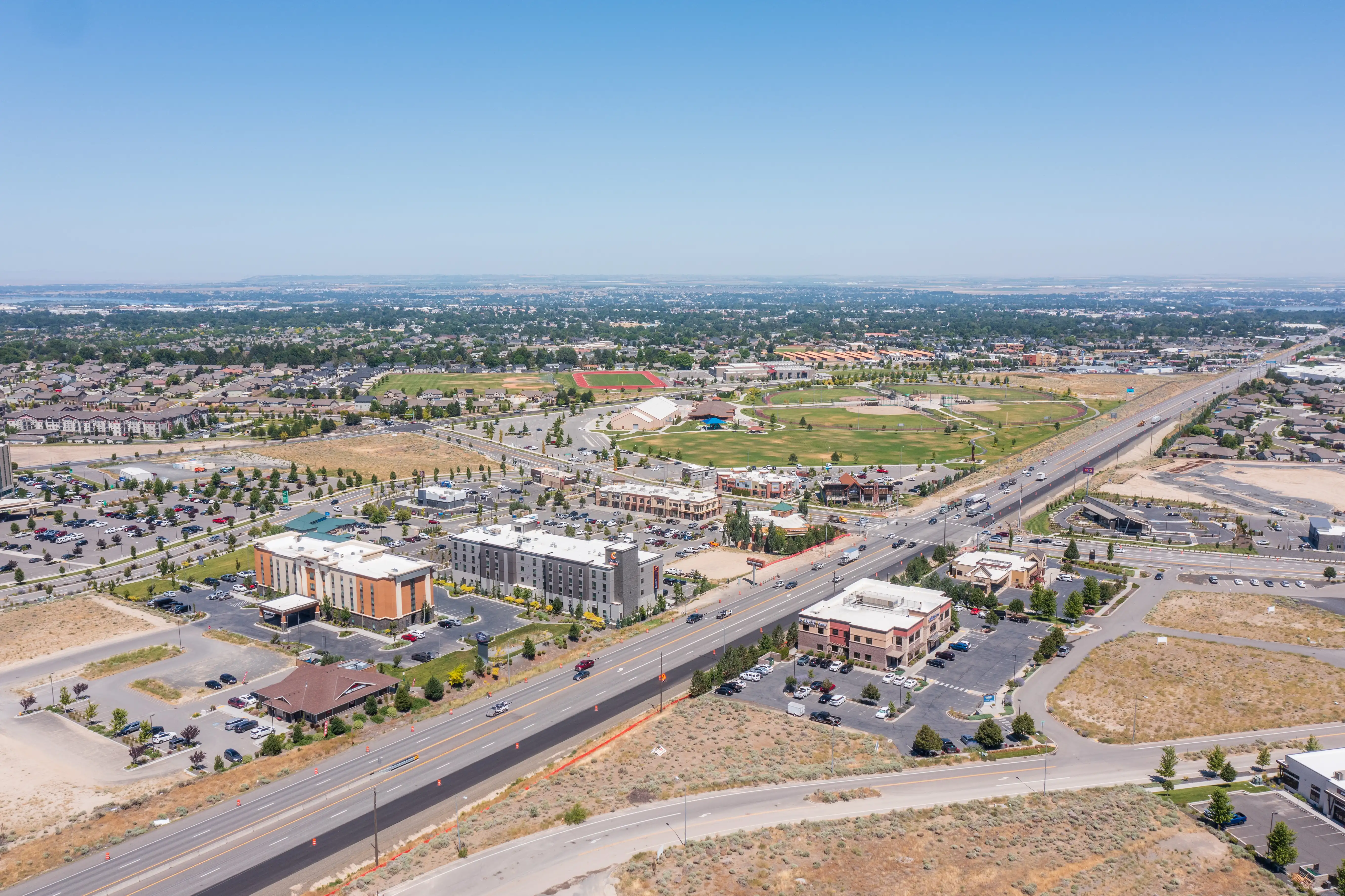
What shapes daily life in Kennewick is geography as much as statistics. The city's commercial density along the Clearwater Avenue corridor, the retail cluster around Columbia Center Mall, and the activity-heavy riverfront all generate the kind of foot traffic that inflates raw crime counts for those areas — without necessarily reflecting what life feels like in the residential neighborhoods where most buyers are actually shopping. A single set of per-1,000 numbers applied to the whole city obscures the fact that your risk profile in Southridge is genuinely different from your risk profile near the old downtown core.
This guide breaks down what the crime data actually says, where those numbers are concentrated, which neighborhoods local buyers gravitate toward for peace of mind, and how Kennewick compares to its Tri-Cities neighbors. The goal is to give you enough specificity to make a real decision — not to scare you off or sell you a soft version of reality.

Local police data and FBI-compiled figures both tell a story that is more nuanced than a single letter grade suggests. The Kennewick Police Department's 2024 annual report documented a 16% decrease in violent crime compared to the prior year, with just under 400 total violent crime reports across a city of nearly 90,000 residents. Property crime dropped slightly as well — though the department simultaneously flagged a nearly 30% spike in drug-related offenses and a continued motor vehicle theft problem that has placed Kennewick among the bottom 10% of U.S. cities for auto theft rates. That combination — improving on the violent side, struggling on the property side — is what defines Kennewick's current safety story.
When benchmarked against Washington state and national averages, the picture gets more complicated depending on which dataset you use. FBI estimates suggest Kennewick's violent crime rate runs close to 3.5 per 1,000 residents, which puts it roughly in line with the national average and only modestly above the county-level rate of 2.9 — a figure Benton-Franklin Trends data shows is actually below the state average. Property crime is the more significant gap: commonly reported around 34 per 1,000 residents, that figure outpaces both the Washington state average and the national benchmark. The northwest commercial zone and the north Kennewick retail corridor are the primary contributors to that number, not the residential southwest.
Structurally, what drives Kennewick's property crime concentration is predictable. Major retail hubs like Columbia Center Mall, the commercial stretch along Clearwater Avenue, and the density of restaurants and service businesses near the Union Street corridor all attract the opportunistic theft, vehicle break-ins, and shoplifting that skew aggregate totals. The police department itself cautions against applying citywide crime rates to residential neighborhoods for exactly this reason — areas where people shop but don't live will always look worse on paper than they feel on the ground.
Kennewick's violent crime rate — estimated around 3.5 per 1,000 residents based on KPD-reported data — puts the city close to national norms, which is a more reassuring position than the overall crime grade implies. The 2024 decline to fewer than 400 violent crime reports, including a drop in forcible sex offenses from 147 to 117 and aggravated assaults from 247 to 207, represents a meaningful shift. For daily life in the residential areas where most families buy homes, the practical reality is that violent crime is uncommon — something that occurs elsewhere in the city, not in the cul-de-sacs of Canyon Lakes or the newer subdivisions of Southridge.
Property crime is where Kennewick earns its above-average designation, and motor vehicle theft is the headline issue. Stolen vehicle rates here are among the highest in the state, with local estimates suggesting roughly one in 151 residents has a vehicle stolen in a given year — a number that concentrates heavily in the commercial north and near-downtown areas. Larceny and catalytic converter theft have been persistent problems in retail-adjacent zones. In residential areas, the more common concerns are package theft and opportunistic car break-ins, which locals largely address by keeping vehicles in garages and avoiding leaving valuables visible — not dramatic precautions, but ones worth knowing before you choose your neighborhood.
Canyon Lakes sits in the southwest corner of Kennewick, centered around a private golf course and home to a mix of single-family properties and upscale townhomes. The neighborhood falls within the portion of the city where the estimated annual crime count drops to roughly 129 incidents — the lowest tier in Kennewick — and where the chance of property crime victimization sits around 1 in 53. Residents here tend to be owner-occupied households with longer tenure, which correlates with lower opportunistic crime. It's one of the most consistently cited neighborhoods when local buyers ask where to focus their search.
Best for: Buyers prioritizing low crime density and a mature, owner-occupied neighborhood with golf course access.
Southridge is the fastest-growing residential zone in southwest Kennewick, anchored by the Southridge Sports and Events Complex on Southridge Drive. Development here is newer — most homes built in the 2000s through the present — and the neighborhood benefits from the same southwest safety profile that makes Canyon Lakes appealing. The activity-rich character of the area, with youth sports events pulling families from across the Tri-Cities, creates an organic neighborhood watch effect that residents frequently mention. Unlike Canyon Lakes, which has a more established feel, Southridge skews toward families with school-age children and has seen ongoing new construction.
Best for: Families with children who want newer construction and proximity to sports facilities without paying Richland prices.
West Highlands occupies the elevated terrain west of Canyon Lakes, offering larger lots and views across the Columbia Basin that give it a more spacious feel than most Kennewick neighborhoods. The neighborhood sits firmly within the southwest safety corridor, and its slightly elevated position — both literally and in terms of price — attracts buyers who want more land without leaving city limits. Vehicle break-ins here are less common than in flatter, more commercially adjacent areas, partly because the neighborhood lacks the drive-through accessibility that makes opportunistic crime easier in other parts of town.
Best for: Buyers wanting larger lots and views in a quiet, established southwest location.
Inspiration Estates is a newer planned community in the southwest that often surprises buyers who expect southwest Kennewick to be exclusively high-priced. The neighborhood offers well-maintained single-family homes with HOA oversight, which tends to keep the streetscape consistent and visible disorder low. Because the community is relatively self-contained with limited cut-through traffic, it doesn't attract the transient activity that affects more grid-connected neighborhoods closer to the commercial core.
Best for: Buyers who want HOA structure and a newer community in the safest part of Kennewick.
Cherry Blossom Meadows sits in the southwest and represents one of the more affordable entry points into Kennewick's safer zone. The neighborhood draws buyers who've been priced out of Canyon Lakes but still want to plant themselves in the lower-crime southwest quadrant. Home ages vary more here than in newer developments, but the crime profile benefits from the same geographic advantages — distance from the commercial corridors, residential density, and owner-occupancy rates that keep the area stable.
Best for: First-time buyers or budget-conscious families who want southwest Kennewick without the Canyon Lakes price premium.
Cottonwood Springs is a quieter residential pocket that benefits from its distance from the busiest retail zones while still offering reasonable access to US-395 for commuters. The neighborhood reflects the general pattern of southwest Kennewick — lower incident counts, more owner-occupied homes, less transient foot traffic. One thing locals mention: the neighborhood's proximity to the Zintel Canyon natural area gives it a greenbelt buffer on one edge that contributes to its quieter character.
Best for: Commuters and established families who want a lower-profile neighborhood with natural area access.

| City | Violent Crime/1K | Property Crime/1K | Overall Safety Profile |
|---|---|---|---|
| Kennewick | ~3.5 | ~34 | Above-average property crime; improving violent crime trend |
| Richland | ~1.8 | ~18 | Consistently one of the safer mid-size cities in WA |
| West Richland | ~1.2 | ~12 | Among the safest in Eastern WA; ranked 8th statewide (SafeWise 2025) |
| Pasco | ~4.1 | ~30 | Higher violent crime; ranked 45th in SafeWise WA list |
| Finley | N/A | N/A | Unincorporated; limited independent crime data |
| Burbank | N/A | N/A | Small community; crime data folded into county reporting |

When buyers ask me about Kennewick, the conversation almost always circles back to neighborhood selection and what it means for long-term value. Areas like Canyon Lakes, Southridge, and Inspiration Estates consistently draw strong buyer interest — and for good reason. Homes in these neighborhoods tend to hold their value well and move quickly when priced right. In a market where desirable properties under $750,000 can be under contract within days, knowing where you want to focus your search ahead of time matters more than most buyers realize.
That's exactly why I encourage people to connect with a lender before they start touring homes. Your approval amount and your comfortable budget are often two different numbers, and understanding the full monthly picture — loan structure, property taxes, homeowner's insurance, and any HOA dues — gives you a realistic foundation to work from. When a well-located home in a neighborhood you've already researched hits the market, you want to be ready to move with confidence, not scrambling to figure out if it actually fits your life.
The two corridors that generate the most concern among residents who've lived in Kennewick more than a year are Clearwater Avenue between US-395 and the mall, and the stretch of Washington Street running through the older commercial district near downtown. Neither of these is a neighborhood where most buyers are shopping for homes, but if your daily commute or errands route runs through them regularly, you'll notice the visible signs of the drug-related activity that KPD's 2024 report flagged — public intoxication, loitering around certain convenience stores, and the occasional police presence that comes with a 28% rise in drug offense reports. Locals who work near these corridors largely treat them as unremarkable background noise rather than active threats, but new arrivals sometimes find the contrast with the southwest neighborhoods jarring.
What most apps and crime score websites miss about Kennewick is the retail inflation problem. A neighborhood with a shopping mall, three big-box stores, and a dozen fast-food restaurants will always generate higher crime counts than a purely residential area of the same geographic size — not because residents are unsafe, but because there are simply more opportunities for opportunistic crime where more people congregate. The north and northwest parts of Kennewick aren't avoided by long-term residents; they're just areas where standard precautions apply more explicitly. Keeping your vehicle locked, parking in well-lit areas near Columbia Center Mall, and not leaving valuables visible are the habits locals adopt without much drama.
The motor vehicle theft figure is the one that genuinely warrants attention rather than dismissal. Kennewick's rate is elevated enough that parking a vehicle on the street overnight in the northern and central parts of the city carries more risk than in comparable cities. In the southwest neighborhoods, the rate is substantially lower — and residents with garages overwhelmingly use them. If you're renting or buying in a home without covered parking in one of the more commercial-adjacent areas, that specific risk is worth factoring into your insurance costs and daily habits from day one.
Local Expert Takeaway: Focus your search on the southwest quadrant — Canyon Lakes, Southridge, and West Highlands are where Kennewick's safety profile most closely matches what buyers from Richland or the Westside expect. If budget requires looking further northeast, the Cottonwood Springs and Cherry Blossom Meadows areas offer the best compromise between affordability and the lower-crime southwest corridor. Avoid buying near the Clearwater Avenue commercial strip if a quiet residential feel is your priority — the proximity to retail density means you'll feel the property crime overspill even if you're technically in a residential zone.
✅ Violent crime is improving. The 16% drop in violent incidents reported by KPD in 2024 — including fewer assaults and sex offenses — reflects a meaningful downward trend, not a blip.
⚠️ Motor vehicle theft is the standout concern. Kennewick's auto theft rate ranks among the highest in the state. Use your garage, lock your car, and don't leave valuables visible — especially outside the southwest residential neighborhoods.
📍 Southwest Kennewick is a different city in practice. Canyon Lakes, Southridge, and neighboring communities in the southwest fall within the lowest-crime zone in the city, with incident counts that are a fraction of the citywide average.
Is Kennewick a safe place to live?
The answer depends heavily on where in Kennewick you live. The southwest neighborhoods — Canyon Lakes, Southridge, West Highlands, and the surrounding communities — consistently report the lowest crime activity in the city, with annual incident counts roughly one-seventh of the highest-traffic north corridor. Kennewick's citywide numbers run above state and national averages primarily because of commercial zone density and motor vehicle theft; the residential experience, particularly in the southwest, is quieter than the aggregate score suggests.
What is the crime rate in Kennewick?
Local police data commonly cited around 3.5 violent crimes per 1,000 residents and approximately 34 property crimes per 1,000 residents. Violent crime fell 16% in 2024 per KPD's annual report, continuing a multi-year downward trend. Property crime, particularly auto theft, remains the city's most persistent challenge — with Kennewick's vehicle theft rate placing it among the highest-affected cities in Washington.
How does Kennewick compare to Richland and Pasco for safety?
Richland consistently outperforms Kennewick on both violent and property crime metrics, with roughly half the property crime rate and a lower violent crime rate. West Richland ranks even higher — SafeWise placed it 8th safest in Washington in 2025. Pasco carries a higher violent crime rate than Kennewick. For buyers where safety metrics are the deciding factor, Richland or West Richland offers a more favorable profile, though both come with higher median home prices and tighter inventory than what Kennewick's $433,734 median delivers.
Explore the full Kennewick series: Living in Kennewick · Is Kennewick Safe? · Cost of Living · Best Neighborhoods · Schools & Family Life · Youth Sports · Parks & Rec · Retiring in Kennewick