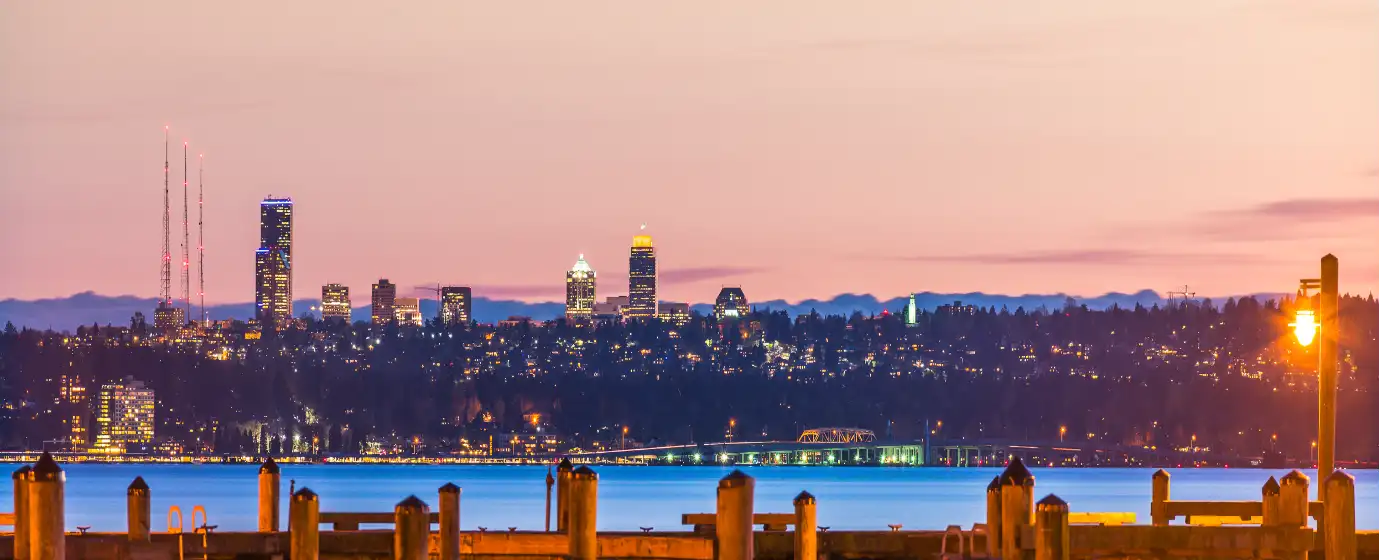
Puget Sound · Washington
Living in Kirkland: The Ultimate Relocation Guide (2026)
Maybe your offer on a Bellevue home just fell apart at $1.8 million and someone told you Kirkland is "basically the same thing for less." Maybe your company relocated you to the Eastside tech corridor and you're trying to figure out whether you want the urban density of Seattle or a bit more breathing room. Maybe you just drove along Lake Washington Boulevard on a clear afternoon, saw the water from Marina Park, and thought — wait, why haven't I looked at this city more seriously? Whatever brought you here, Kirkland has a specific identity that's easy to misread from the outside. It is not a quiet bedroom suburb. It is not a budget alternative to Bellevue. And it is not the same city it was even five years ago.
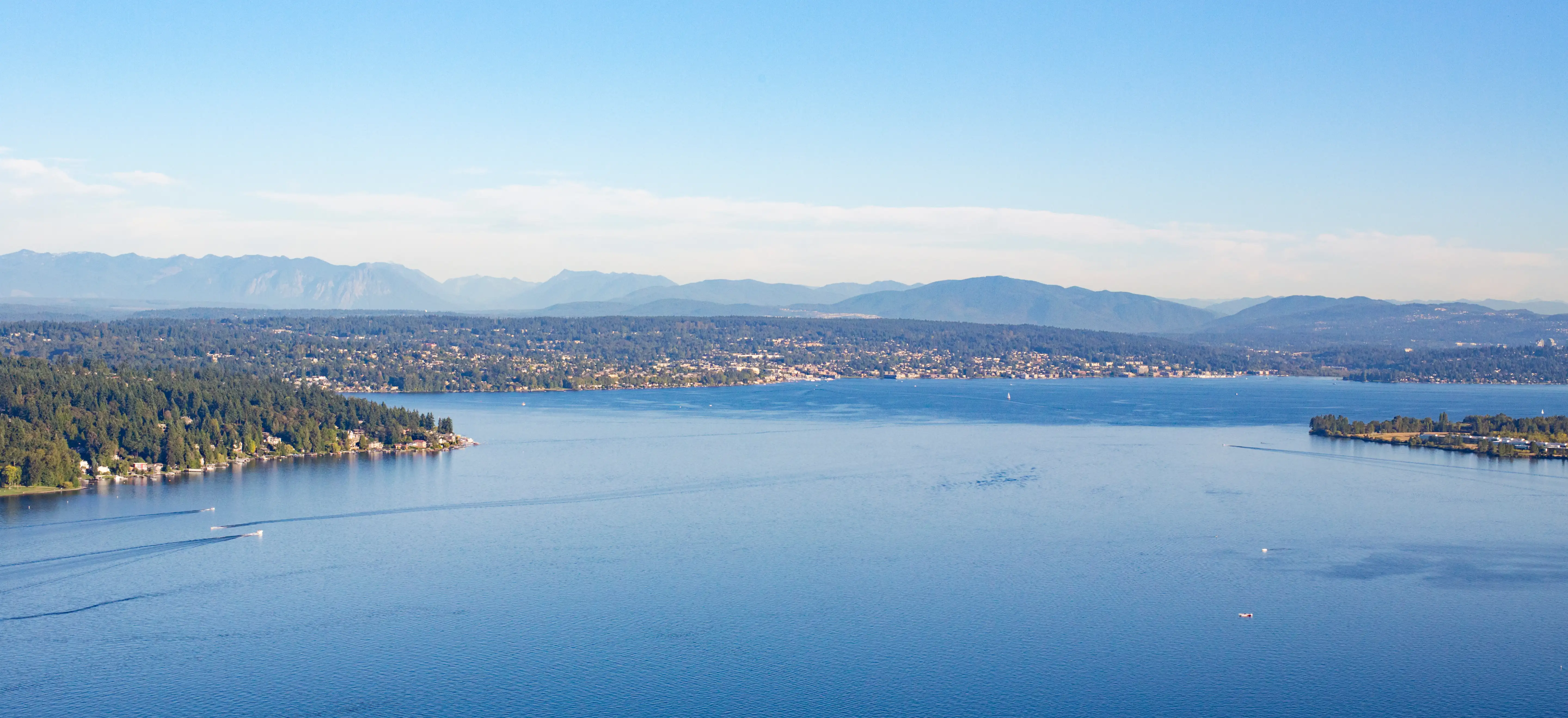
Kirkland sits on the eastern shore of Lake Washington, directly north of Bellevue and west of Redmond, occupying a position in the Eastside tech corridor that makes it one of the most sought-after addresses in the Pacific Northwest. Google's Kirkland campus anchors the downtown core. Microsoft's headquarters in Redmond is a straight shot east on NE 85th. EvergreenHealth — one of the region's most respected independent hospitals — is right here in the city. The Cross Kirkland Corridor, a 5.75-mile paved trail on an old railroad right-of-way, stitches the city's northern and southern neighborhoods together in a way that no other Eastside city can match. Daily life here orbits around the waterfront, the trail, and the commute — and all three shape where you'll want to live.
This guide is designed to answer the questions that Zillow listings and neighborhood overview articles won't. It will tell you which neighborhoods feel completely different from each other despite sharing the same zip code, why the median home price matters less than you'd think when you're actually shopping, what the genuine tradeoffs are after six months of living here, and how Kirkland stacks up against Redmond, Bellevue, and Bothell when you're running out of time to decide. By the end, you'll know whether Kirkland is genuinely your city — or whether one of its neighbors is a better fit.
Not every city works for every buyer, and Kirkland has a distinctive profile. The table below cuts through the marketing language.
| Best For | Why |
|---|---|
| Tech commuters | Kirkland is 25 minutes to Seattle, minutes from Google's campus, and 15 minutes to Microsoft in Redmond — one of the rare Eastside addresses that works for multiple employers |
| Families with school-age children | Lake Washington School District carries an A+ rating with graduation rates commonly reported above 95%, and Juanita High and Lake Washington High both have strong academic reputations |
| Remote workers with high income | The combination of waterfront lifestyle, walkable downtown, and fast fiber infrastructure makes Kirkland one of the most popular landing spots for remote tech workers in the region |
| Buyers entering the condo market | Kirkland has more condos available than virtually any other Eastside city, with entries around $630,000 — still expensive by national standards, but the most accessible price point in the city |
| Retirees seeking urban amenities | The waterfront parks, walkable dining district, arts scene, and proximity to EvergreenHealth make downtown Kirkland one of the more genuinely livable retirement destinations on the Eastside |
| First-time buyers willing to stretch | Totem Lake and Kingsgate offer the most affordable single-family options in the city, though "affordable" still means $800,000–$950,000 in this market |
The first thing people notice after moving to Kirkland — usually around month three — is how small the downtown core feels relative to how much they use it. Lake Street South is not a mile-long commercial strip. It's a concentrated few blocks of restaurants, galleries, and coffee shops that faces the water, and on a Tuesday evening in June it can feel like a weekend. Locals walk to dinner. They sit at outdoor tables at the Slip and watch the kayakers on Lake Washington. That compressed, walkable energy is genuine — but it means crowds, parking pressure, and summer tourist traffic are also genuine.
Geographically, the city is longer north-to-south than most residents expect. The distance from Juanita in the north to Houghton at the south end is significant enough that Juanita residents and Houghton residents often don't share the same shopping districts, schools, or even sense of neighborhood identity. The Cross Kirkland Corridor is the connective tissue — it runs through the middle of the city and is heavily used for both recreation and practical bike commuting. Living near the CKC is a selling point that shows up in listing descriptions for good reason.
The commute reality is more nuanced than the 25-minute Seattle number suggests. That figure represents a reasonable off-peak drive via SR-520, which is a toll road. During peak hours — roughly 7:30 to 9:00 a.m. and 4:30 to 6:30 p.m. — the drive can stretch to 45 minutes or more, and the toll adds up fast over a month. The SR-520 bridge is the primary chokepoint; Eastside residents who make this commute daily often time their departures carefully or work hybrid schedules. The good news: Google's downtown Kirkland campus means thousands of residents effectively eliminate the highway commute entirely.
Community vibe here trends toward active and outdoorsy but not aggressively so. You'll find serious cyclists on the CKC at 6 a.m., but you'll also find families in strollers and retirees walking dogs. Juanita Beach Park fills up on summer weekends in a way that feels genuinely communal — this is one of the better swimming beaches on Lake Washington, and residents treat it accordingly. The Thursday farmers market in downtown Kirkland runs spring through fall and draws a real cross-section of the city. Kirkland has an arts community anchored by the Kirkland Arts Center in the historic Peter Kirk Building, and First Friday gallery walks draw people into the downtown core on a regular rhythm.
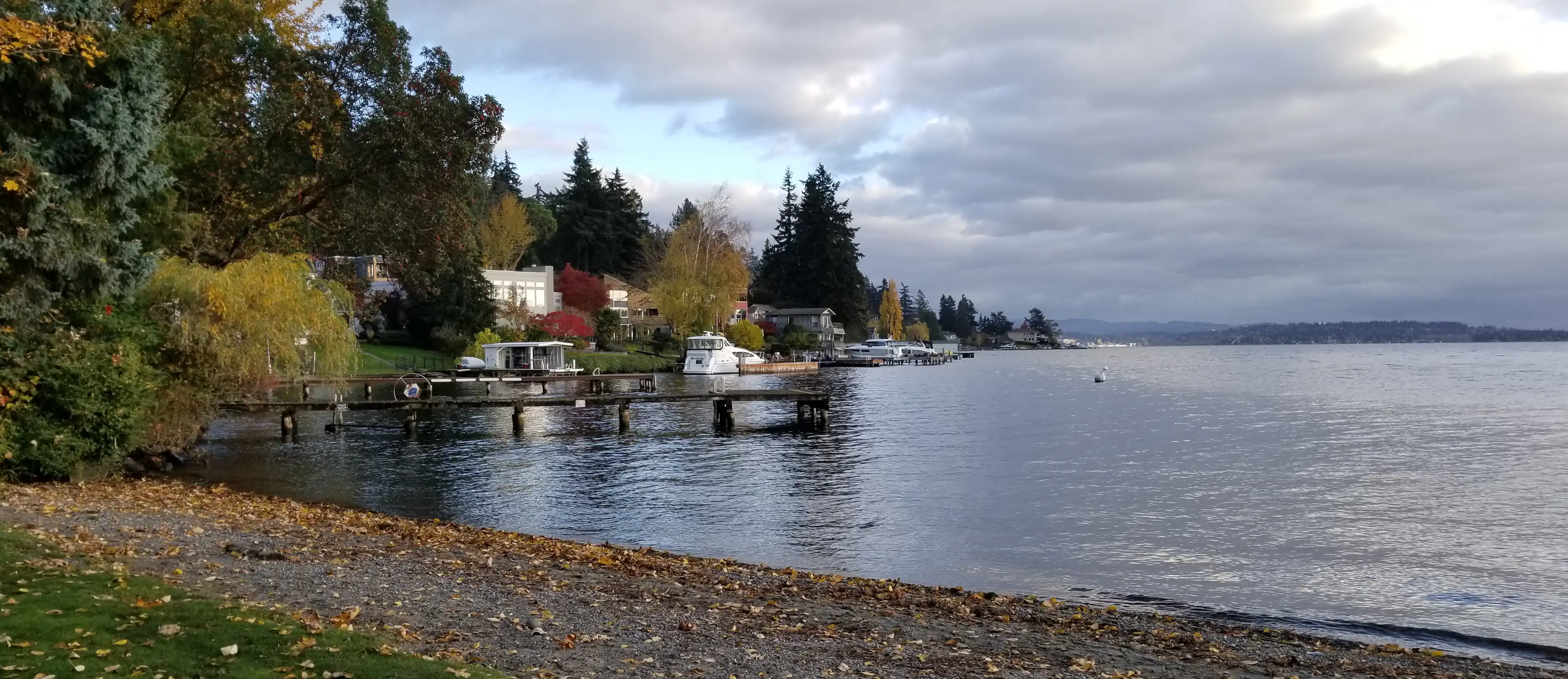
The waterfront access is not overstated. Most Eastside cities have some relationship to water; Kirkland's relationship is intimate. Marina Park, Juanita Beach Park, Houghton Beach Park, Waverly Beach Park — these are not decorative features on a map. They are heavily programmed, genuinely usable public spaces that bring residents out of their houses and onto the shore. Marina Park has a boat launch, public art installations, a sandy beach, and an open-air pavilion that hosts the July 4th Celebration and the Summer Concert Series. The fact that you can walk from a downtown restaurant to a public beach in four minutes is not something you get in Bellevue.
The school district is a legitimate draw, not just a marketing headline. Lake Washington School District — which serves Kirkland along with Redmond and several unincorporated areas — is consistently rated among the top districts in Washington State. Individual schools within Kirkland, including Juanita High School and Lake Washington High School, carry strong academic reputations and offer advanced coursework and extracurricular depth that competes with private school alternatives. For families making a significant financial commitment to buy here, the public school quality is part of what justifies that commitment.
The tech-corridor positioning means Kirkland residents tend to have exceptional employment stability and household income levels that support local businesses. This creates a self-reinforcing cycle: good restaurants stay open because people can afford to eat out regularly, retail turnover is lower than in most comparable cities, and the city has fiscal capacity to maintain parks, trails, and infrastructure at a high level. Bridle Trails State Park — a 482-acre equestrian and hiking park on Kirkland's eastern edge — is an example of what this looks like in practice: a state park with maintained trails inside a major metropolitan city.
Healthcare access is meaningfully better than most Eastside alternatives. EvergreenHealth, based in Kirkland, is one of the few remaining independent community hospitals in the region and is consistently rated highly for patient outcomes. For retirees and families with children or aging parents, having a well-regarded hospital at the center of the city rather than a 20-minute drive away is a practical daily-life advantage that shows up most clearly when you actually need it.
The median sold price in Kirkland runs approximately $1.4 million for single-family homes based on early 2026 MLS data — and that figure is a floor, not a ceiling, once you move into the waterfront neighborhoods. The Market neighborhood along the downtown lakefront had a median sold price near $3.8 million in early 2026. Moss Bay and Central Houghton both run above $2.5 million for single-family homes. If your budget is below $1.2 million and you want a yard, your realistic options in Kirkland are limited to Totem Lake, Kingsgate, and the northern edges of Finn Hill — neighborhoods that feel less like the Kirkland you saw in the listing photos and more like standard Eastside suburbia. Buying in Kirkland for the lifestyle and landing in a neighborhood that doesn't deliver it is one of the most common buyer mistakes in this market.
Traffic on NE 85th Street — the primary east-west arterial cutting across the city — is a real friction point that doesn't show up in commute calculators. The corridor connects I-405 to downtown Kirkland and serves as the main route for both local traffic and Eastside cut-throughs. During school drop-off windows and afternoon peak hours, the 85th corridor between I-405 and downtown can back up for 15–20 minutes over a stretch that should take five. Residents who live north of 85th or south of downtown often route around it via 68th Street or NE 116th, but new buyers don't know those detours yet.
The density of the downtown core, which is one of Kirkland's most appealing features, comes with genuine livability friction in summer. Marina Park and the lakefront parks attract visitors from across the region on hot weekends, and the parking situation from June through August requires either a long walk or genuine willingness to circle. Some longer-term Kirkland residents have quietly noted that the summer weekend vibe has shifted from "neighborhood beach" to "regional destination," which is a different experience depending on whether you're arriving by foot from your condo or driving in from a quieter residential neighborhood.
Why some people leave: The cost of ownership at this price level is unrelenting. At the $1.4 million median with a 20% down payment, you're looking at principal and interest payments in the range of $7,000 per month before property taxes and insurance. The income required to sustain that comfortably is well above $250,000 annually. Residents who bought a decade ago at dramatically lower prices are well-anchored; buyers entering now are making a significant long-term financial commitment that some find exhausting. Families who want more land, quieter streets, and lower carrying costs often migrate north to Kenmore or Bothell after a few years — and report minimal lifestyle sacrifice.
Downtown Kirkland is the version of the city that appears in every real estate listing photo — the waterfront parks, the restaurant row on Lake Street, the marina, the pedestrian-friendly streetscape. Google's two large engineering buildings sit within walking distance of the water, and the concentration of tech workers, restaurant-goers, and park users creates an energy that is more urban than the rest of the city. The housing mix skews heavily toward condos and townhomes, with the few single-family homes commanding significant premiums. This is the city's most walkable neighborhood by a wide margin.
Best for: Remote workers and tech employees who want urban lifestyle without Seattle density.
Moss Bay is the transitional zone between downtown's commercial core and Houghton's quieter residential streets — and it inherits the best of both. Lake Washington views, waterfront park access, and a walkable connection to downtown dining define the experience here. The median sold price hovers near $2.8 million, which reflects the combination of location, views, and the limited supply of homes that come to market. Buyers entering Moss Bay are rarely surprised by the price; they've typically already been through the downtown condo market and are stepping up.
Best for: High-income buyers who want walkable access to downtown without living above a restaurant.
Houghton is quiet, affluent, and architecturally varied — a mix of mid-century ramblers and newer custom construction on generous lots with greenbelt backing. The neighborhood has panoramic Lake Washington views from its upper elevations and a residential pace that feels genuinely removed from the downtown energy a mile away. Northwest University, a private Christian university with approximately 800 students, sits at the center of the neighborhood and adds a campus atmosphere that some residents love and others find incidental. Single-family homes average around $1.5 million, though Central Houghton's lakefront-adjacent properties run closer to $2.5 million.
Best for: Families with children who want space, greenery, and proximity to Lake Washington High School.
Juanita sits along the northern curve of Juanita Bay and combines genuine waterfront access with a neighborhood identity that feels more residential and less tourist-facing than downtown. Juanita Beach Park — legitimately one of the best swimming beaches on Lake Washington — is the social anchor of the neighborhood from late May through September. Juanita Village provides everyday retail and dining in a walkable format, and Café Juanita has long been considered one of the better restaurants in the region. Waterfront single-family homes regularly exceed $3 million; interior lots are meaningfully more accessible.
Best for: Families who want beach access and strong schools (Juanita High School) without the downtown premium.
Totem Lake has been one of Kirkland's most actively redeveloping neighborhoods for the past several years, and the transformation is tangible. The Totem Lake area — once defined primarily by a dated indoor mall — has added new mixed-use residential, expanded retail, and a more walkable urban village format. It is the most affordable entry point for single-family homes within Kirkland's city limits, with prices ranging roughly $800,000 to $950,000 for standard construction, and its proximity to EvergreenHealth makes it particularly practical for healthcare workers and retirees. The tradeoff is that it retains a more suburban, commercial feel compared to the waterfront neighborhoods.
Best for: First-time buyers and healthcare workers who prioritize value and access to EvergreenHealth over waterfront proximity.
Rose Hill occupies the elevated terrain between downtown Kirkland and the Redmond border, and its position gives it something most Kirkland neighborhoods can't offer: slightly more affordable single-family homes with easy access to both the SR-520 corridor and the downtown core. Homes here skew toward 1980s–2000s construction on standard suburban lots, with prices typically ranging from $1.1 million to $1.4 million. The neighborhood is less defined by a single anchor park or commercial hub than by its practical centrality — it's close to everything without being the most expensive version of anything.
Best for: Commuters who need quick SR-520 access and want a mid-tier price point for a single-family home.
Finn Hill is one of Kirkland's more sprawling residential neighborhoods, occupying the hilly terrain north and east of Juanita. It is characterized by winding residential streets, larger lots, and a distinctly quieter feel than the waterfront neighborhoods — buyers often describe it as the place where Kirkland's suburban reality lives alongside its aspirational lakeside identity. Prices here tend to run $900,000 to $1.3 million for single-family homes, making it one of the more attainable addresses in the city for buyers who want yards. The lack of walkable retail is the honest tradeoff: you will drive for almost everything.
Best for: Families with children who want larger lots and quieter streets and don't need walkable daily amenities.
Norkirk is a compact, primarily residential neighborhood sitting just north of downtown with an unusually high proportion of older single-family homes on smaller lots — the kind of neighborhood where you find mid-century construction that hasn't been scraped and replaced. It's quieter than downtown but close enough to walk to Lake Street for dinner. Price points run below the downtown core and well below Moss Bay, making it one of the closer-to-waterfront options that doesn't immediately push past $1.5 million for a modest home. Long-term residents have lived here for decades, which gives the neighborhood unusual stability.
Best for: Buyers who want a walkable distance to downtown and a genuine neighborhood feel without paying Moss Bay prices.

Kirkland's neighborhoods each tell a different story when it comes to long-term value. Waterfront-adjacent areas like Moss Bay and Downtown Kirkland consistently hold strong appeal, and homes there — particularly anything under $750,000 — tend to disappear within days of hitting the market. Juanita offers a slightly more accessible entry point while still delivering that coveted Lake Washington proximity, which has historically supported steady appreciation. If you're relocating and eyeing Kirkland specifically, understanding which pocket fits your lifestyle and your loan profile matters before you ever step through a door.
That's exactly why I encourage every relocation buyer to connect with a lender before the touring phase begins. Most people focus on the purchase price, but your real monthly commitment includes property taxes, homeowner's insurance, any HOA dues, and the loan structure itself — and together those layers can shift your comfortable range meaningfully from your maximum approval. In a market like Kirkland where the right home can go pending before the weekend is over, knowing your numbers cold and having your pre-approval ready isn't just helpful — it's the difference between getting the home and watching someone else get it.
| City | Best For | Median Home Price | Commute to Seattle | Vibe |
|---|---|---|---|---|
| Kirkland | Waterfront lifestyle + tech corridor access | ~$1.4M | 25 min (off-peak) | Walkable waterfront, upscale suburban |
| Bellevue | Urban amenities, luxury high-rises, shopping | ~$1.5M+ | 20 min | Dense urban, corporate, high-rise mixed with residential |
| Redmond | Microsoft proximity, family-friendly, newer construction | ~$1.2M | 30 min | Suburban tech hub, growing downtown |
| Bothell | More space, lower prices, good schools | ~$850K | 35 min | Quieter suburban, outdoor access, family-oriented |
| Kenmore | Affordability, Lake Washington access, low density | ~$780K | 35 min | Small-town feel, less polished, good value |
| Woodinville | Wine country lifestyle, acreage, rural feel | ~$950K | 40 min | Semi-rural, wine tourism, larger lots |
| Metric | Figure |
|---|---|
| Population | 96,878 (2026) |
| Median sold home price | ~$1.4M (single-family, early 2026) |
| Condo entry price | ~$630,000 |
| Median household income | $150,414 |
| Property tax rate | 0.82% |
| Commute to Seattle | 25 min (off-peak via SR-520) |
| Violent crime per 1,000 | 0.6 |
| School district | Lake Washington School District (A+) |
| Major employers | Google, EvergreenHealth, Microsoft (nearby), LWSD |
The Summer Concert Series at Marina Park is not just a calendar listing — it's a weekly ritual from July through August where locals spread blankets on the grass, bring wine, and watch live music against a backdrop of Lake Washington. It fills up earlier than you'd expect, and the unwritten rule is that you stake out your spot by 5:30 p.m. for a 7:00 p.m. show. First-year residents who show up at 6:45 learn this quickly.
The Cross Kirkland Corridor has a quiet sub-culture of its own. Serious cyclists use it as a commute route; families use it for weekend rides; and there's an informal social infrastructure of familiar faces — dog walkers, the same coffee-thermos runners every morning — that gives the corridor a neighborhood-within-a-neighborhood feeling. Homes that back up to the CKC are reliably premium-priced in listing descriptions, and buyers who've spent time on the trail understand why.
Café Juanita — which has been one of the region's most acclaimed Italian restaurants for years — holds a specific place in Kirkland's food culture. It is the kind of restaurant locals bring out-of-town guests to when they want to make a case for the Eastside, and it is rarely disappointing. It is also reliably difficult to get into, which is its own form of local tradition.
What I would not do: I would not buy in Totem Lake or Kingsgate expecting to get the "Kirkland lifestyle" you saw in listing photos of Marina Park. Those neighborhoods are part of Kirkland's city limits but are separated from the waterfront by significant distance and multiple traffic corridors. Buyers who make that mistake — drawn by the Kirkland name and the lower price point — often feel like they're living in a generic Eastside suburb and not in the city they moved to. If the waterfront and walkability matter, budget accordingly or look at Norkirk, Finn Hill's southern edges, or the Juanita area instead.
Local Expert Takeaway: Kirkland's value is concentrated in a relatively small geographic band along the lake and near downtown — if you compromise too far north or east to hit a budget target, you may find yourself in Kirkland in name only. For buyers with genuine flexibility, the Norkirk and southern Finn Hill areas offer the closest thing to downtown proximity at a step below Moss Bay pricing. And in the current market — with inventory up significantly and the sold-to-list ratio softened to the high 90s — this is the most negotiating leverage buyers have had in years. Use it.
✅ Kirkland offers genuinely rare Eastside combination of waterfront access, walkable downtown, A+ schools, and major tech employer proximity — the lifestyle is not marketing spin.
⚠️ The $1.4 million median applies to single-family homes — buyers expecting to find that price point near the waterfront will be surprised. Market and Moss Bay neighborhoods run $2.5 million and above for single-family homes.
📍 Neighborhood selection is everything here — the city spans from urban-walkable downtown condos to suburban Totem Lake to semi-rural Finn Hill. Choose your neighborhood before you choose your price range.
Is Kirkland a good place for families?
Kirkland is one of the stronger family markets on the Eastside, primarily due to Lake Washington School District's A+ rating and the density of public parks and recreational infrastructure. Juanita and Houghton are the neighborhoods most commonly associated with family buyers who want both strong schools and outdoor access. The price of entry is significant, but the quality-of-life return is consistently high.
What is the crime rate in Kirkland?
Kirkland's violent crime rate sits at approximately 0.6 incidents per 1,000 residents — well below both the Washington State average and the national average. Property crime, at around 19 per 1,000, is more consistent with a densely populated urban-adjacent city and worth being aware of in higher-traffic areas near downtown. Overall, Kirkland is considered one of the safer cities of its size in the Puget Sound region.
How does Kirkland compare to Bellevue for buyers?
The two cities share a border and a demographic profile, but they feel meaningfully different day-to-day. Bellevue has more high-rise density, a larger commercial downtown, and a more corporate atmosphere. Kirkland is lower-rise, more walkable at the neighborhood level, and more closely tied to its waterfront identity. Home prices are roughly comparable at the upper end, though Bellevue's luxury tier extends higher. Buyers who want urban amenities and don't mind a more corporate environment often choose Bellevue; buyers who prioritize the lakeside lifestyle and a more residential feel tend to land in Kirkland.
Explore the full Kirkland series: Living in Kirkland · Is Kirkland Safe? · Cost of Living · Best Neighborhoods · Schools & Family Life · Youth Sports · Parks & Rec · Retiring in Kirkland