
Southwest Washington · Washington
Living in Ridgefield: The Ultimate Relocation Guide (2026)
Maybe your company is relocating you to the Portland metro and someone in HR mentioned that half the team already lives north of the river. Maybe you've been watching Clark County home prices and noticed that Ridgefield keeps appearing at the top of every "fastest-growing city in Washington" list. Maybe you drove through on I-5, caught a glimpse of those rolling hillside neighborhoods with Mount St. Helens on the horizon, and thought: what is this place, and why doesn't anyone talk about it? The central tension of relocating to Ridgefield is this — it genuinely looks and feels like a small Pacific Northwest town that has somehow been transported into the middle of a high-growth suburban expansion. That contradiction is not a marketing pitch. It's the reality you need to understand before you make an offer.
Ridgefield sits about 15 miles north of Vancouver along Interstate 5 in northern Clark County, putting downtown Portland roughly 40 minutes south on a good day. The city covers just over 7 square miles of gently rolling terrain, with east-facing hillside homes commanding front-row views of Mount St. Helens and the Cascade foothills. Daily life is shaped by a few hard geographic realities: I-5 is both the economic lifeline and the primary frustration, the downtown core is genuinely compact and walkable by small-town standards, and the surrounding landscape — including the Ridgefield National Wildlife Refuge — gives the city a natural boundary that most fast-growing suburbs have long since paved over. Washington's absence of a state income tax adds a meaningful financial argument for households crossing the river from Oregon, and that argument shows up daily in the moving trucks heading north on I-5.
This guide will help you answer the questions that a Zillow search cannot. What does the commute actually feel like at 7:45 a.m.? Which neighborhoods are still mid-buildout and which have established character? Are the schools worth the hype? What do people get wrong about Ridgefield, and what surprises them six months after moving in? Whether you're comparing Ridgefield against Battle Ground, Vancouver, or somewhere entirely different, the information below is designed to give you an honest, ground-level read on what it's actually like to plant roots here in 2026.

Not every buyer who falls in love with Ridgefield online ends up loving it on the ground. The city rewards certain lifestyles and creates real friction for others. The table below cuts through the noise.
| Best For | Why |
|---|---|
| Portland-area commuters | 40-minute drive to Portland; no Oregon income tax on Washington wages — a meaningful annual savings for households earning six figures |
| Families with school-age children | Ridgefield School District ranks in the top 20% statewide; strong graduation rates and new facilities built to keep pace with growth |
| Remote workers | High median income community, strong neighborhood identity, quieter pace without sacrificing proximity to urban amenities |
| Move-up buyers from Vancouver | More land, newer construction, and a distinct small-town atmosphere for buyers who've outgrown Vancouver's denser corridors |
| Nature-oriented households | Wildlife refuge, Lake River waterfront trail, and Cascade mountain views accessible from within city limits |
| Buyers priced out of Lake Oswego or SW Portland | Comparable household demographics and school quality at a price point that still has room below the Portland westside premium |
The geographic reality here is that Ridgefield is a ridge town. The terrain isn't dramatic by Cascade standards, but it's enough to define the neighborhoods — homes on the east-facing slopes get the mountain views and the morning light, while lower sections near Lake River and the wildlife refuge get the wildlife, the trail access, and the particular quiet that comes from backing up to a federally protected marsh. Downtown Ridgefield is genuinely small: a few blocks of historic commercial buildings along Pioneer Street, the Old Liberty Theater anchoring the cultural identity of the district, and boutique retail that has expanded steadily but hasn't yet reached the density that would make it feel urban. That smallness is a feature for many buyers and a limitation for others.
The commute question deserves a direct answer. On a normal weekday morning, the I-5 run from Ridgefield to the Steel Bridge in Portland takes between 38 and 50 minutes depending on when you leave and how aggressively you hit the on-ramp. The chokepoint is the I-205 interchange near Vancouver — northbound return trips in the 5:00–6:30 p.m. window can add 15 to 25 minutes during peak periods, and the Salmon Creek area can stack badly when there's any incident on the bridge. Buyers who've moved here and kept hybrid schedules — three days in Portland, two remote — consistently describe the commute as manageable. Full-time in-office commuters describe it as "fine but something you stop enjoying after about a year."
What surprises most people after six months of living here is how much of daily life resolves locally without requiring a drive to Vancouver. The commercial corridor along South 45th Avenue provides most routine retail needs — grocery options, fuel, basic services — and the ilani Casino resort at the Cowlitz Indian Tribe's facility off Exit 16 functions as an unlikely regional entertainment anchor, with dining and event programming that draws visitors from across Clark County. The deeper surprise is social: Ridgefield has a measurably high proportion of owner-occupied households and a community that tends to organize around the school calendar, youth sports programs, and parks in ways that make new residents feel connected faster than expected in a city this size.
Community Park on Pioneer Street functions as the practical center of outdoor social life — summer evenings bring residents out to the fields and playground areas in numbers that feel disproportionate to the city's population, which is itself a signal about the demographic concentration of young families here. The Ridgefield National Wildlife Refuge adds a dimension that no comparable suburb in Clark County can match: a federally managed wetland and prairie habitat on the western edge of the city where residents walk, birdwatch, and decompress within minutes of their front door.
The tax math is the first reason and deserves to be stated plainly. A household earning $116,000 in Oregon pays somewhere between $7,000 and $9,000 annually in state income tax. That same household living in Ridgefield and earning the same amount pays zero Washington state income tax. Over five years, that's the equivalent of a significant down payment supplement — or a meaningful reduction in the effective cost of homeownership that doesn't show up in any mortgage calculator. For households relocating from California or Oregon, this number tends to be the financial fact that converts serious interest into a signed purchase agreement.
The school district is a genuine asset, not just a marketing bullet point. Ridgefield School District ranks in the top 20% of Washington's 306 public school districts on combined math and reading proficiency, and the high school graduation rate runs above 90% — well ahead of the state average of 84%. For families with school-age children making a long-term housing decision, that differential has real consequences. The district has also been actively building and expanding facilities to keep pace with the city's growth rate, which means the infrastructure is not being strained in the way that rapid population growth typically strains older school systems.
The natural environment is a legitimate quality-of-life differentiator. The Ridgefield National Wildlife Refuge encompasses thousands of acres of Columbia River floodplain habitat, and the Lake River Waterfront Trail provides paved and natural surface access to wetland and river views that most Pacific Northwest suburbs charge significantly more to live near. Cathlapotle Plankhouse — a full-scale reconstructed Chinookan cedar plankhouse within the refuge — is a cultural landmark that anchors the city's connection to its indigenous heritage and draws visitors from across the region. Overlook Park and Abrams Park add elevated green space with territorial views.
The community identity has held through the growth period in ways that seem to surprise people who've watched other fast-growing Clark County cities lose their character within a decade. Ridgefield still runs an active downtown events calendar, the Old Liberty Theater continues to anchor community programming, and the social fabric tends to be knit tightly enough that newer residents often describe feeling genuinely welcomed rather than simply absorbed into a faceless subdivision. The city was founded in 1909 — renamed from Union Ridge after the Civil War veterans who originally settled the terrain — and that historical thread feels present in the built environment of the downtown core in a way that matters to buyers who want more than a zip code.

The commute ceiling is real. Ridgefield works well for hybrid workers and for households with one commuter and one remote worker. It works significantly less well for two full-time Portland commuters who need to be downtown by 8:00 a.m. five days a week. The math on fuel, vehicle wear, and time compounds over a five-year ownership horizon in ways that are easy to underestimate during a spring open house when the traffic is light. The I-5 corridor does not have a meaningful transit alternative — there is no light rail, no commuter rail, and the bus options connecting to Portland are not practical for most professional schedules.
Retail and dining remain genuinely limited at the local level. There is no walkable restaurant row in Ridgefield, no independent coffee shop district, and the dining options within the city itself are modest compared to what residents of comparable-income neighborhoods in Portland's westside suburbs take for granted. The gravitational pull toward Vancouver for restaurants, specialty retail, Costco runs, and medical appointments is real and should be budgeted into your mental model of weekly life. This improves incrementally as the city grows, but the gap between Ridgefield's household income profile and its local retail amenity level is one of the most commonly cited frustrations among longer-term residents.
Why some people leave is a shorter list than why they stay, but it's worth stating honestly. The buyers most likely to regret purchasing here are those who underestimated the commute frequency they'd actually need, those who assumed the retail and dining environment would feel meaningfully different from a rural suburb within two years, and those who purchased early in a new construction phase and found the buildout timeline slower than expected. Remote workers who later return to in-office schedules sometimes find that Ridgefield's geography, which felt liberating during full-time remote work, becomes burdensome when weekly Portland trips become daily ones.
The housing market itself requires attention. Median sold prices in Ridgefield have ranged from approximately $618,000 to $688,000 depending on the data source and measurement period, with list prices frequently asking in the $750,000–$800,000 range. The $655,000 figure that often appears in citywide summaries is defensible as a sold median but can mask the reality that new construction and larger estate properties push the average sold price considerably higher. Buyers focused on a specific price point should clarify whether they're looking at MLS sold data or list prices, and whether new construction or resale inventory better matches their needs — those are two meaningfully different markets within the same zip code.
Ridgefield's neighborhoods range from established hillside communities with 15-year-old trees and finished streetscapes to active construction phases where the landscaping is still sod and mud. Understanding where a neighborhood sits in that continuum matters more here than in most markets.
Paradise Pointe occupies the elevated terrain on the city's north end and has been one of the most actively developed master-planned communities in Ridgefield over the past several years, with multiple phases completing and additional phases underway. Homes here are primarily newer single-family construction with mountain views, larger lot sizes than the denser south-end subdivisions, and a price range that runs from the mid-$600,000s into the $900,000s depending on phase, builder, and finish level. The community's location puts residents slightly farther from the downtown core and I-5 interchange, which translates to an additional few minutes on the daily commute.
Best for: Buyers who prioritize new construction, mountain views, and a neighborhood still actively growing into its identity.
Hillhurst Highlands sits on the western ridge and offers some of the more established residential character in the city — homes here tend to be larger on a per-square-foot basis and the streetscape has the matured landscaping that newer phases lack. Price points generally align with the citywide median, and the neighborhood draws buyers who want proximity to the downtown core without the density of the commercial corridor. The topography provides natural privacy between lots that flat-platted subdivisions elsewhere in the city cannot replicate.
Best for: Buyers who want established neighborhood character and natural separation between homes.
Ridgefield Junction anchors the city's I-5 interchange area and functions as the primary commercial and retail entry point for residents arriving from the freeway. The residential component here skews toward townhomes and attached product at price points below the citywide median, making it one of the more accessible entry points into Ridgefield homeownership. Proximity to the freeway is both the selling point and the tradeoff — convenience for commuters, some road noise for anyone whose yard faces south.
Best for: Commuters and first-time buyers who want lower price points and maximum freeway access.
Union Ridge carries the historical name of the city's original settlement and sits centrally within Ridgefield's residential core. The neighborhood is well-established, with a mix of mid-2000s and early 2010s construction, mature street trees, and proximity to Community Park and the downtown events district. Homes here typically sell in the $580,000–$700,000 range, and the neighborhood consistently draws families with school-age children given its walkable access to district facilities.
Best for: Families who want central location, established neighborhood feel, and direct access to parks and schools.
Heron Woods sits closer to the wildlife refuge corridor on the city's western edge, where the landscape transitions from suburban residential to wetland habitat. Lots here tend to be larger and more private, and the neighborhood attracts buyers who prioritize natural setting over urban proximity. The refuge access is a genuine daily lifestyle differentiator — morning birdwatching walks are part of the routine for many residents, not just occasional recreation.
Best for: Nature-focused households and buyers who want privacy and refuge access built into their daily routine.
Discovery Ridge is a newer community that has established itself as one of the more family-oriented neighborhoods in Ridgefield's recent buildout, with parks, walking paths, and a layout oriented around pedestrian circulation rather than just vehicle access. Homes are primarily newer single-family construction, and the neighborhood sits in the middle of Ridgefield's price range. The school access and community programming orientation make it a consistent draw for households with young children.
Best for: Families with young children who want walkable neighborhood design and newer construction.
Sanderling Park is among the most actively developing communities in Ridgefield as of 2026, with phases three and four underway in city planning records. The neighborhood will mature into one of the larger planned communities in the city, with a design framework that includes open space and trail connectivity built into the platting. Buyers considering Sanderling Park in its current state should factor in the reality that surrounding phases will be under construction for some time — the long-term vision is strong, but the short-term environment involves active building.
Best for: Buyers with patience for a community still building out who want to get into a planned neighborhood early.
Downtown Ridgefield is the smallest and most historically distinct residential and mixed-use zone in the city, centered on Pioneer Street and the blocks surrounding the Old Liberty Theater. Homes here include older Craftsman and traditional construction on smaller lots, within walking distance of the handful of local boutiques, the community event spaces, and the Lake River Waterfront Trail. The inventory is limited and turns over slowly — when homes in the core come available, they tend to attract buyers who specifically want the historic downtown character rather than new construction.
Best for: Buyers who want the small-town Main Street experience, walkable access to downtown, and established historic neighborhood character.

Ridgefield's location within Clark County continues to draw serious buyer interest, and where you land within the city can meaningfully shape your long-term equity story. Neighborhoods like Union Ridge and Heron Woods tend to attract families looking for established surroundings with room to grow, while Paradise Pointe appeals to buyers who want that newer-construction feel with trail access and open space nearby. In all three areas, well-priced homes under $750,000 are moving fast — sometimes within days — so coming in without financing lined up puts you at a real disadvantage before you even get started.
That's exactly why I encourage anyone relocating to Ridgefield to connect with a lender before scheduling a single tour. Pre-approval gives you a clear picture of your full monthly obligation — not just the loan payment, but property taxes, homeowner's insurance, and any HOA dues that apply in a given community. Your comfortable budget and your maximum approval aren't the same number, and knowing the difference lets you shop with confidence rather than stress. When the right home appears in a competitive market like this, being ready isn't optional — it's everything.
| City | Best For | Median Home Price | Commute to Portland | Vibe |
|---|---|---|---|---|
| Ridgefield | Families, commuters, nature access | ~$655,000 | ~40 min | Growing small town with strong schools |
| Battle Ground | Rural feel, larger lots, lower price entry | ~$530,000–$570,000 | ~50–55 min | Exurban, agricultural surroundings |
| Vancouver | Urban amenities, shorter commute, transit access | ~$450,000–$520,000 | ~25–30 min | Suburban city with urban core |
| La Center | Maximum rural quiet, very small community | ~$480,000–$550,000 | ~45–50 min | Very small town, farming community |
| Woodland | Affordable entry, rural-to-town feel | ~$420,000–$490,000 | ~50–60 min | Small working-class town |
| Scappoose, OR | Oregon-side alternative, rural feel | ~$430,000–$500,000 | ~30–35 min | Quiet Oregon suburb, state income tax applies |
| Metric | Detail |
|---|---|
| Population | ~17,600 (2026 estimate); growing at roughly 6.8% annually |
| Median Home Price (Sold) | ~$655,000 (citywide median; list prices frequently $750K–$800K) |
| Property Tax Rate | Approximately 0.82% of assessed value |
| Median Household Income | ~$116,389 |
| Commute to Portland | ~40 minutes via I-5 (varies with traffic and time of day) |
| School District | Ridgefield School District — top 20% in Washington state |
| Violent Crime Rate | 2.4 per 1,000 residents (well below state average) |
| Property Crime Rate | 11 per 1,000 residents |
| County | Clark County, Washington |
| No State Income Tax | Yes — Washington state |
The Wildlife Refuge changes how residents experience time. Most suburbs don't have a federally protected wetland and prairie accessible from the city limits, but Ridgefield does — and it shapes the rhythm of daily life in ways that newcomers don't anticipate. Bald eagles nest near the Lake River corridor in winter, and the Cathlapotle Plankhouse hosts regular cultural programming and guided tours that draw residents back multiple times a year rather than just during the tourist season. Locals treat the refuge trails as a genuine daily amenity, not a once-a-month outing.
The ilani effect is real. The Cowlitz Indian Tribe's ilani Casino resort at Exit 16 functions as a regional entertainment anchor that Ridgefield residents use more than most people expect — not just for gambling, but for concerts, dining, and events that would otherwise require a Vancouver or Portland trip. It's one of the better-known open secrets in Clark County: residents of a quiet, family-oriented suburb have one of the Pacific Northwest's largest entertainment complexes within 10 minutes of their front door.
The Old Liberty Theater keeps the downtown alive. The theater on Pioneer Street has operated as a community cultural venue for decades and continues to anchor Ridgefield's downtown with film screenings, community events, and programming that gives the small commercial core a reason to draw residents on evenings and weekends. For buyers who worry that small-town Ridgefield means cultural isolation, the theater is usually the first evidence that the community invests in its downtown identity.
What I would not do if moving to Ridgefield: I would not purchase in the northernmost active construction phases of a new community and assume the surrounding infrastructure — trails, parks, commercial nodes, completed streetscaping — would be ready within the first year. Specifically, buyers who've purchased in early phases of newer north Ridgefield subdivisions without asking for completion timelines on surrounding phases have sometimes found themselves living in a construction zone for 18 to 24 months longer than expected. Visit the community on a Tuesday afternoon, not a Saturday open house, and ask the sales agent which phases are fully complete.
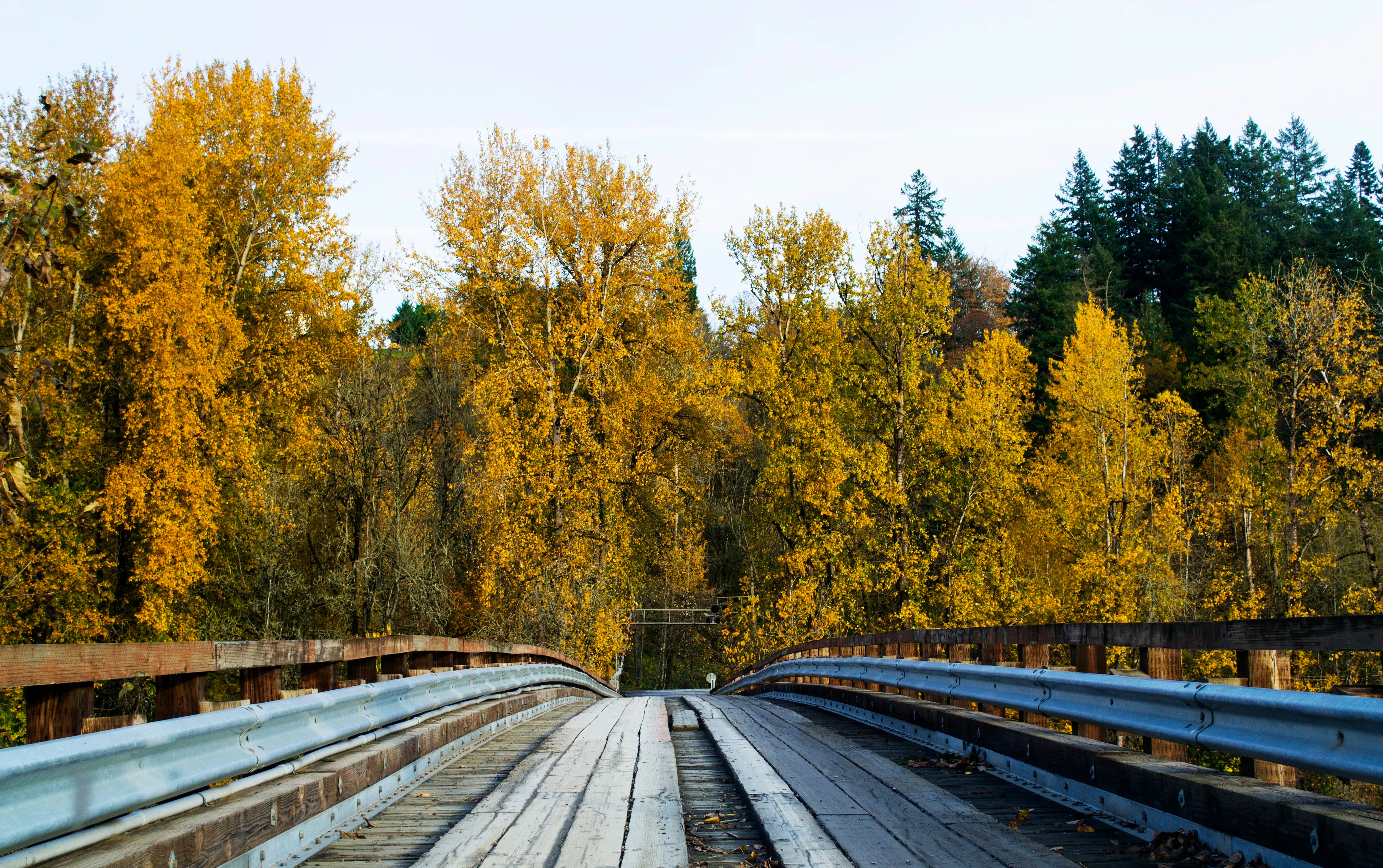
Local Expert Takeaway: If you're choosing between Ridgefield and Battle Ground, visit both on a school night and see which community calendar matches your household's rhythm — the school district quality differential is real and matters most if your children are elementary-age. If you're coming from the Oregon side, run the income tax math before you fall in love with a Portland-adjacent Vancouver property at a similar price point; the Washington tax advantage tends to more than offset the longer Ridgefield commute for most professional households. For buyers who can work remotely even two or three days per week, Ridgefield's combination of school quality, natural environment, and community identity is difficult to match at this price level anywhere in the Portland metro.
✅ Ridgefield's school district, tax advantage, and natural setting create a genuine lifestyle package that justifies the commute for the right household — particularly remote-capable workers and families with school-age children.
⚠️ The commute ceiling is real and the retail environment is still developing — buyers who need daily Portland trips or expect Vancouver-level local dining options within Ridgefield's city limits will find the adjustment more difficult than they anticipated.
📍 New construction is a significant part of the market, and understanding which phases are complete versus active buildout can make a material difference in your first two years of ownership experience.
Is Ridgefield a good place for families?
Yes — Ridgefield consistently draws families with school-age children for a specific combination of reasons. The Ridgefield School District ranks in the top 20% of Washington's 306 public school districts, the city's parks and trail network supports active outdoor family life, and the community demographic skews young with a median age of roughly 35, meaning neighbors with kids are the norm rather than the exception.
What is the crime rate in Ridgefield?
Ridgefield reports a violent crime rate of approximately 2.4 per 1,000 residents, which is well below Washington state and national averages and consistent with a low-density, high-income residential community. Property crime runs around 11 per 1,000 residents — modest by Pacific Northwest suburban standards — and reflects the relatively limited commercial density in the city.
How does Ridgefield compare to Battle Ground?
Battle Ground offers larger lot sizes and a lower median home price, typically in the $530,000–$570,000 range, with a more rural and agricultural surrounding character. Ridgefield trades some of that space and price advantage for a higher-ranked school district, better freeway access, closer proximity to Vancouver and Portland, and a more developed commercial corridor. The right choice depends on whether your household prioritizes land, commute efficiency, or school district quality.
Explore the full Ridgefield series: Living in Ridgefield · Is Ridgefield Safe? · Cost of Living · Best Neighborhoods · Schools & Family Life · Youth Sports · Parks & Rec · Retiring in Ridgefield