
Puget Sound · Washington
Moving to Shoreline from California: The Honest Comparison (2026)
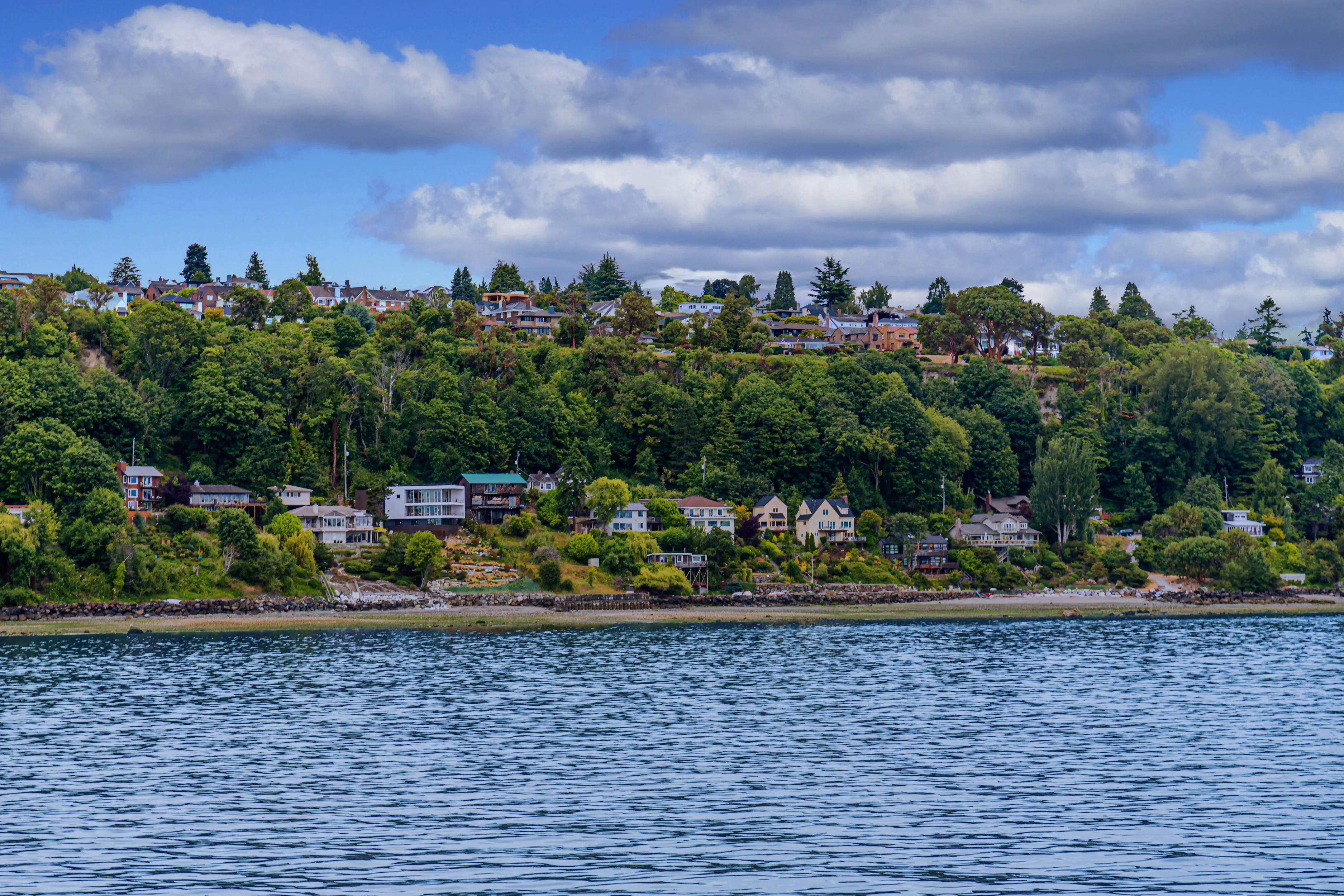
The pattern has become familiar enough that it has its own shape now. A software engineer in Walnut Creek finishes a Zoom meeting, walks to a window overlooking a postage-stamp backyard, and opens a browser tab for Shoreline home prices. A San Diego family spends August calculating how much of their income goes to cooling a house in 95-degree heat while watching wildfire maps shift on their phones. A Sacramento couple sells their 1,450-square-foot townhome for $640,000 and realizes they could buy a four-bedroom with a proper yard in a city eleven miles from downtown Seattle — and pay no state income tax on the salary they kept. Shoreline keeps showing up in these searches because it offers something specific: genuine proximity to one of the most economically dynamic cities in the country, housing that costs less than most California metros, and a neighborhood feel that isn't just a marketing phrase.
The hard part deserves equal honesty. Shoreline is not California, and the people who struggle most after the move are those who expected it to be a weather-corrected version of where they left. The gray season is real — not the dramatic storm gray of a nor'easter, but the flat, low-light overcast that parks itself over the Puget Sound corridor from November through February and doesn't always announce when it's leaving. The restaurant scene in Shoreline itself is quieter than what most California transplants are used to. The pace of social life in the Pacific Northwest takes adjustment for people coming from cities where strangers strike up conversations at coffee shops. None of this is disqualifying, but knowing it before you sign a purchase and sale agreement makes the first winter significantly easier.
This guide covers the full financial picture — a cost-of-living comparison across the major California origin markets, what different equity levels actually buy in Shoreline's current market, the tax reality in concrete dollar terms, and the lifestyle shifts that matter more than any spreadsheet. If you want to run the numbers on your specific California city, the comparison tool in Section 6 covers 120 California cities directly.
| Shoreline, WA | Bay Area | Southern CA | Sacramento Metro | Central Valley | |
|---|---|---|---|---|---|
| Median Home Price (approx. 2026) | $770,000 | $1.3M–$1.8M+ | $750K–$1.1M | $480K–$560K | $340K–$430K |
| Property Tax Rate (effective) | ~1.10% | ~1.1%–1.25% | ~1.1%–1.25% | ~1.1%–1.3% | ~1.0%–1.2% |
| State Income Tax | None | Up to 13.3% | Up to 13.3% | Up to 13.3% | Up to 13.3% |
| State Sales Tax | 10.4% (local) | 8.625%–10.75% | 7.25%–10.75% | 7.75%–8.75% | 7.25%–9% |
| Avg. Utilities (monthly est.) | ~$200/mo | $220–$320/mo | $250–$350/mo | $200–$290/mo | $220–$310/mo |
| Avg. 1BR Rent | ~$2,100–$2,300 | $2,800–$4,200 | $2,200–$3,400 | $1,500–$2,000 | $1,100–$1,600 |
Washington's no-income-tax advantage is not an abstraction — it's a monthly check you no longer write. A California household earning $150,000 was sending roughly $11,000–$13,000 per year to Sacramento in state income tax. A household earning $200,000 was paying closer to $17,000–$19,000 annually at California's progressive rates, which reach 13.3% at the top bracket. That money doesn't disappear into Washington's budget — it stays in your checking account every month, which in practical terms means the mortgage payment that looked tight on paper in California becomes manageable here without any change in lifestyle.
Washington's zero state income tax is the headline, but the full picture is worth laying out clearly, because California transplants sometimes hear "high sales tax" and assume the advantage is neutralized. It isn't, for most income levels.
| Tax Item | California | Washington | Net Impact for Transplant |
|---|---|---|---|
| State Income Tax | 1%–13.3% progressive | None | +$8K–$19K/year depending on income |
| Capital Gains Tax (LT) | Up to 13.3% (as ordinary income) | 7% on gains over ~$270K/year | Favorable for most transplants |
| State Sales Tax | 7.25% base (+local) | 6.5% base (+local, ~10.4% in Shoreline) | Slight CA advantage on goods |
| Property Tax (effective) | ~1.1%–1.25% (new purchase) | ~1.10% | Roughly equivalent |
| Senior Property Tax Exemption | Income-based, partial | Yes, 61+, income-based | Comparable programs |
| Estate/Inheritance Tax | None | WA estate tax applies 10%–20% over $2.193M | Relevant for high-net-worth buyers |
Washington does have a 7% capital gains tax, but it applies only to long-term capital gains exceeding approximately $270,000 in a single year — a threshold that affects relatively few buyers on an annual basis. If you're selling California investment property and considering a 1031 exchange into Shoreline real estate, that's a strategy worth modeling separately — the Shoreline 1031 Exchange guide covers the mechanics in detail.
A buyer leaving Palo Alto, Los Gatos, or the more expensive parts of the East Bay with $1.4 million or more in net equity after their California sale is in a genuinely rare position in the Shoreline market. At $770,000 median, they can purchase all-cash and still have equity remaining — or buy in one of the city's premium enclaves and put the rest to work elsewhere. Innis Arden, the private community on the Puget Sound bluff, is where this level of equity lands most naturally — homes there routinely list in the $1.2–$3M range, with views of the Sound and the kind of architectural quality and lot size that would cost $5–7 million in equivalent Bay Area communities. Richmond Beach, the neighborhood surrounding Shoreline's most dramatic park, offers another option in this range, with waterfront-adjacent properties and bluff-top homes listing up to $3.48M.
For the Bay Area buyer who wants to keep cash in reserve, the median-priced home in Shoreline at $770,000 is often a comfortable all-cash transaction, leaving $400,000–$600,000 in liquid capital depending on their entry point. That's a fundamentally different financial position than most of their California peers will reach in their lifetimes.
A buyer coming out of Irvine, Pasadena, or San Diego's coastal zip codes with $800,000 to $1.1 million in equity is landing in Shoreline's top quartile. This equity level puts buyers into Meridian Park — one of the most competitive submarkets in the city, with listings from $675,000 to $1.8 million and a faster-than-average selling pace — or Parkwood, which ranges from the mid-$600s to $3.25 million and offers some of the most varied lot sizes in Shoreline. A Southern California buyer in this range is unlikely to need a jumbo loan, can compete with conventional financing at a strong LTV, and will find that their monthly payment drops significantly when state income tax disappears from their budget.
The relative gain from SoCal is real, though more moderate than the Bay Area calculation. A buyer leaving a $900,000 San Diego home gains a neighborhood upgrade in Shoreline — more square footage, larger lot, quieter streets — and roughly $11,000–$13,000 per year in eliminated state income tax. Over ten years, that income tax advantage alone compounds into the equivalent of a significant home equity position.
Sacramento and Inland Empire sellers are often surprised to find that their equity lands them solidly in Shoreline's market. A buyer coming out of Elk Grove or Roseville with $500,000 in equity can purchase in Highland Terrace, Echo Lake, or Richmond Highlands with a reasonable down payment and a mortgage that, after accounting for the monthly income tax savings, often compares favorably to what they were paying in California. North City is worth particular attention at this equity level — the neighborhood has been posting stronger appreciation metrics in 2025–2026, with median sales running around $719,000 and homes moving in under two weeks in active periods.
The income tax swing for Sacramento transplants is disproportionately powerful relative to their home price gain. A household that was paying $8,000–$12,000 per year in California income tax and is now paying zero is effectively getting a meaningful mortgage subsidy — that's $650–$1,000 per month in take-home pay that simply wasn't available before the move.
Buyers from Fresno, Bakersfield, Stockton, or Modesto bring the most modest relative equity advantage, but Shoreline's market still offers options that would be unrecognizable at home. Echo Lake, with listings starting around $265,000 for smaller units and condominiums, and Hillwood, where the range runs from the mid-$300s to $1.2 million, represent entry points where Central Valley equity creates genuine purchasing power. Westminster Triangle's lower end — with listings from $350,000 — is another viable target.
The financial case for Central Valley transplants rests less on housing arbitrage and more on income. If a Central Valley buyer relocates to take a position at Amazon, Microsoft, or one of the Seattle-area tech firms that has been actively recruiting from California universities, the income increase combined with zero state income tax creates a dramatically different financial trajectory within three to five years.
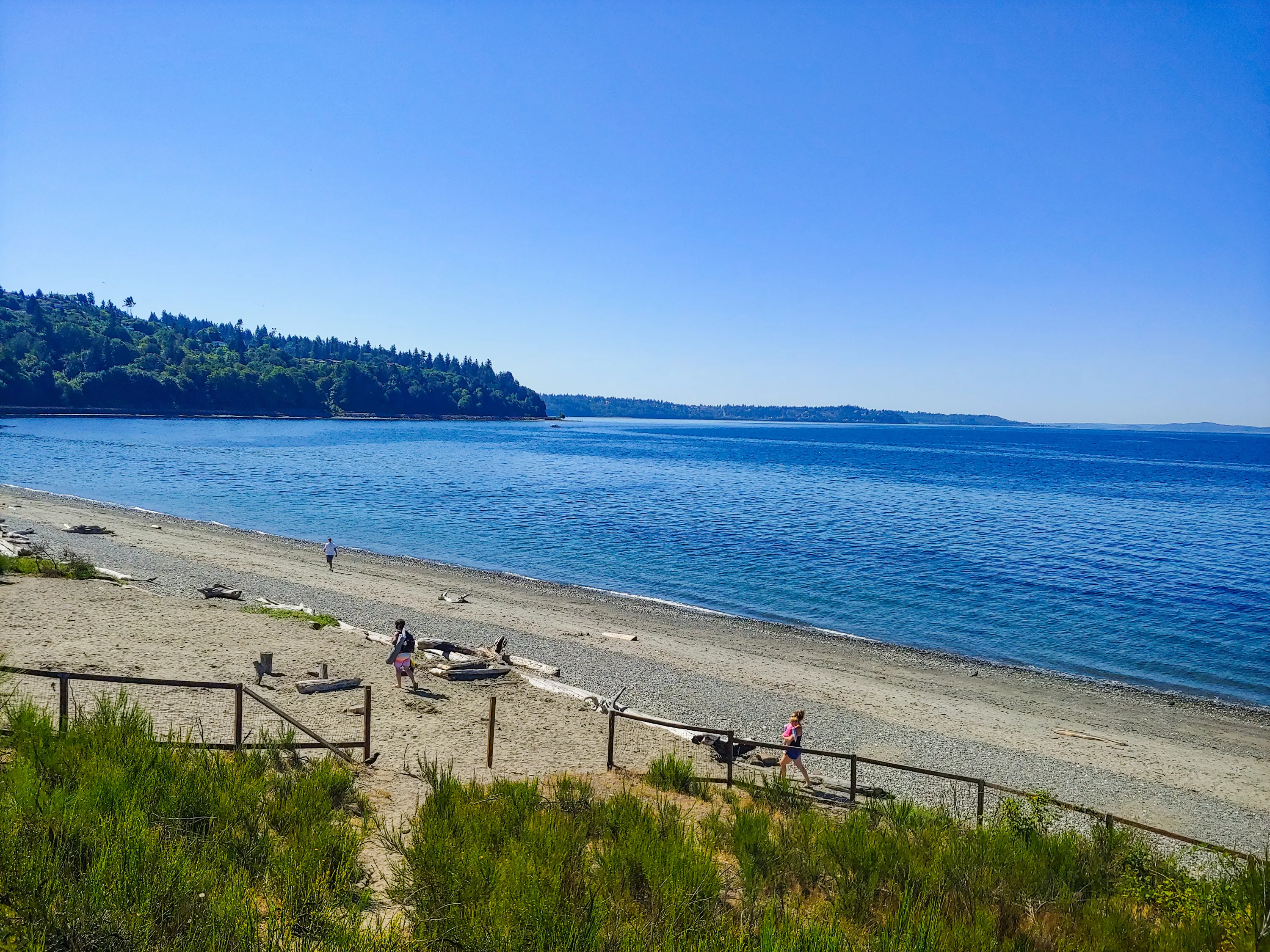
Here's what a good friend who moved from Oakland three years ago would actually tell you: the summers are genuinely spectacular, and nobody warned them how good. From late June through September, Shoreline sits in warm, dry, often cloudless weather — highs in the high 60s to mid-70s, low humidity, long evenings with light until 9:30 p.m. The outdoor culture in summer is legitimately comparable to California, with hiking, kayaking, cycling on the Interurban Trail, and evenings at Richmond Beach Saltwater Park that feel hard to improve on. The city logs roughly 152 sunny days per year, with about 2,100 hours of annual sunshine — well below the 3,257 hours Los Angeles averages, but the summer concentration means those hours land when outdoor life is most rewarding.
The November-through-February window is the honest part. Shoreline averages around 167 rainy days per year, with November alone bringing precipitation on roughly 21 days. The issue isn't usually heavy rain — it's the flat, gray sky that doesn't break for weeks at a time. Seattle and its northern suburbs like Shoreline experience about 1.8 hours of sunlight per day in December. Buyers from San Diego, where the baseline is 266 sunny days, feel this most acutely. Bay Area transplants from foggy San Francisco — which only logs about 160 sunny days annually — often adapt more naturally. Most transplants settle into one of two patterns: they invest in outdoor gear and keep moving through the winter, or they find that the cozy, stay-inside culture of the Pacific Northwest was exactly what they needed after years of feeling obligated to be outdoors year-round.
What California transplants consistently report after a year in Shoreline: the traffic is dramatically more manageable than what they left, the community feel of specific neighborhoods is more tangible than they expected, and the summers converted them. What they genuinely miss is harder to generalize but tends to cluster around a few things — year-round beach access, specific food traditions (good taquerias and authentic regional Mexican food remain a legitimate gap in Shoreline's dining scene), and the social spontaneity of larger California cities. The Pacific Northwest social style — more reserved at first contact, slower to develop friendships, centered on specific activities rather than casual public sociability — is a real cultural adjustment that a spreadsheet won't prepare you for.
If you want to see how Shoreline compares directly to the city you're leaving, use the tool below — it covers the 120 largest California cities with current housing and tax data.
Home prices: Redfin median sale data, Q1–Q2 2026. Select your city to compare.
Ready to talk through what your specific California equity could do in Shoreline? Todd can model your exact scenario in a single call.

From a lending standpoint, where you land within Shoreline genuinely matters for long-term value. Neighborhoods like Echo Lake and Highland Terrace have shown consistent buyer interest, and well-priced homes there — particularly anything under $750,000 — can draw multiple offers within days of listing. Briarcrest tends to attract buyers who want a quieter feel while staying close to the Aurora corridor, and that demand has stayed steady. If you're relocating from California, you're likely accustomed to competitive markets, but Shoreline's pace can still catch people off guard if they're not financially positioned before they start touring.
That positioning piece is exactly why I encourage California buyers to connect with a lender before falling in love with a home. Your comfortable monthly budget needs to account for the full picture — property taxes, homeowner's insurance, any HOA dues, and the loan structure itself — not just the purchase price. Maximum approval and comfortable payment are rarely the same number, and knowing the difference before you tour gives you the clarity to move decisively when the right home appears in a neighborhood like Ballinger or Fircrest.
Mistake 1: Assuming the whole city has the same character. Shoreline is not a uniform suburb. The gap between Innis Arden's private-road bluff estates and the denser, more commercial corridors along Aurora Avenue North (Highway 99) is significant — different price points, different street life, different neighborhood identities. Buyers who pick a home based on a Redfin map without understanding which side of Aurora they're landing on sometimes discover the distinction the hard way. The areas west of I-5 and closer to the Sound feel fundamentally different from the eastern and central sections of the city.
Mistake 2: Underestimating how different winter driving is from California. This isn't about snowstorms — it's about rain-slicked roads at dawn in November, reduced visibility on the stretch of 15th Avenue NE near Hamlin Park, and the way that what felt like a 22-minute commute to Seattle in September can feel meaningfully longer in January. Californians tend to check Google Maps in October and assume it holds year-round. It doesn't.
Mistake 3: Not modeling the income tax advantage as a monthly cash flow number. The no-income-tax advantage tends to be treated as a nice-to-have in the abstract. Run it as a monthly figure and it changes the conversation. For a $150,000 household, eliminating California's state income tax puts roughly $900–$1,100 per month back into take-home pay. That's a second car payment, a meaningful accelerated mortgage paydown, or the investment account contribution that wasn't happening before.
Mistake 4: Expecting the housing market to feel slow and patient. Some California transplants arrive expecting a buyers' market because Washington doesn't have the brand recognition of the Bay Area. Shoreline's market is competitive — homes in North City and Meridian Park routinely sell in under two weeks during active spring periods, and escalation clauses are not unusual in multiple-offer situations. Arriving without a pre-approval and a clear offer strategy, assuming there's time to be deliberate, is one of the most common ways California buyers lose their first two or three target properties.
Bay Area sellers with significant equity are often best served by thinking about rate and terms differently than a traditional buyer would. When your loan-to-value ratio is 30% or lower — or you're purchasing all-cash — the mortgage product becomes less about rate shopping and more about speed, terms, and flexibility. Cash offers in Shoreline carry a meaningful competitive advantage in multiple-offer situations, and for buyers who can deploy their California equity fully, that matters. If the California property was an investment holding, the Shoreline 1031 Exchange guide covers the mechanics of a tax-deferred exchange into Shoreline real estate.
Southern California sellers with $700,000–$1 million in equity are typically positioned for conventional financing at a strong down payment — often 40–50% — which keeps them below the jumbo threshold for most Shoreline properties and qualifies them for the best conventional rates without the overhead of a jumbo product. This is a straightforward transaction for an experienced lender who works with equity-rich buyers, and same-day pre-approval is realistic when documentation is organized before the first call.
Sacramento and Inland Empire buyers moving into Shoreline's middle market should know that Washington State Housing Finance Commission's Home Advantage program and similar down payment assistance options exist for buyers within income and price limits — worth a conversation even for buyers who have meaningful equity but want to preserve cash. DSCR and alternative documentation products are also worth exploring for self-employed California transplants whose tax returns don't reflect their actual earning capacity.
Local Expert Takeaway: The California transplants who do best in Shoreline's market are the ones who run the income tax math before they run the mortgage math — because once you factor in $900–$1,100 per month in eliminated state income tax at a $150K household income, the monthly payment picture in Shoreline looks fundamentally different from what a California-trained instinct would expect. If you're choosing between neighborhoods, the Richmond Beach and Innis Arden corridor rewards Bay Area equity buyers who want the Puget Sound setting without paying Bellevue prices. For Sacramento-range equity, North City is showing the strongest recent appreciation trajectory and deserves a serious look.
✅ Washington's zero state income tax is worth $8,000–$19,000 per year for most California transplants — model it as monthly cash flow, not an abstraction.
⚠️ The November–February gray season is genuinely different from California winter. Go in knowing it, not assuming it won't affect you.
📍 Shoreline's market is competitive, not sleepy — North City and Meridian Park move fast. Show up with financing ready.
Is moving from California to Shoreline worth it?
For most California households earning above $120,000, the combined effect of housing cost reduction, eliminated state income tax, and lower utility costs produces a meaningful improvement in monthly cash flow and long-term wealth accumulation. The lifestyle adjustment is real — primarily weather-related — but the financial case is strong across almost every California origin market, and buyers who factor in the tax advantage alongside the home price comparison consistently report the move exceeded their financial expectations.
How much cheaper is housing in Shoreline vs. California?
Against the Bay Area, Shoreline's $770,000 median represents savings of $500,000 to over $1 million compared to entry-level homes in San Jose, Palo Alto, or Marin County. Against Southern California, the difference is narrower but still meaningful — a comparable home in coastal San Diego or Pasadena typically runs $200,000–$400,000 more. Against Sacramento, the gap is smaller and sometimes inverted in specific neighborhoods, but the income tax advantage and Seattle job market access make the total picture compelling.
What do I need to know about moving from California to Washington?
The practical basics: Washington has no state income tax, a combined sales tax around 10.4% in Shoreline, and property taxes running approximately 1.10% of assessed value annually. You'll need to transfer your driver's license within 30 days of establishing residency and register your vehicle in Washington. For buyers selling California real estate, confirm your timeline around California's capital gains exposure before closing — the day you establish Washington residency matters for tax purposes, and a CPA familiar with interstate moves is worth the consultation.
Explore the full Shoreline series: The Ultimate Shoreline Relocation Guide · Is Shoreline Safe? · Cost of Living in Shoreline · Best Neighborhoods in Shoreline · Shoreline Schools & Family Life · Shoreline Youth Sports · Shoreline Parks & Recreation · Retiring in Shoreline · 1031 Tax-Deferred Exchange in Shoreline · Shoreline First-Time Homebuyers Guide · Shoreline Down Payment Assistance Guide · Moving to Shoreline from California