
Eastern Washington · Washington
Cost of Living in Spokane: Housing, Taxes, Utilities & Lifestyle (2026)
People moving to Spokane from Seattle, Portland, or California tend to experience the same thing in their first week of house hunting: they keep refreshing Zillow expecting to find the catch. A three-bedroom with a yard on the South Hill for $355,000 — the median sold price within the city limits — reads like a listing from a decade ago in most West Coast markets. There is no catch, but there are details that matter. The $355,000 figure is real, but your actual experience will depend heavily on which ZIP code you're searching and what you're comparing against.
What shapes Spokane's cost picture is a combination of Eastern Washington's lower land costs, a regional economy anchored by healthcare, education, and government rather than high-growth tech, and Washington State's no-income-tax structure offset by a 9% local sales tax rate. Avista Utilities keeps electric bills below the national average. Groceries run slightly above it. The city's housing shortage — estimated at more than 22,000 units needed over the next two decades — means prices are unlikely to stay this low forever, but 2026 still represents a fundamentally affordable window by any Pacific Northwest standard.
This guide will walk you through what a realistic monthly budget looks like at the median purchase price, how renting compares to buying, where property taxes actually land on your specific ZIP code, and how Spokane stacks up against its closest neighbors. If you're trying to decide whether this city makes financial sense for your household, the numbers here should help you make that call with specifics rather than assumptions.

The median sold price within the city of Spokane sits at $355,000 as of spring 2026 — roughly 17% below the national median and less than half of what you'd spend for a comparable home in Seattle. That figure gets you a solid three-bedroom, one-and-a-half bath on the South Hill or in Lincoln Heights, likely with a garage and a real backyard. At the same price point in West Central or East Central, you're often looking at older craftsman construction with more character but potentially more updating needed. The Zillow Home Value Index for the broader Spokane metro runs around $404,000, which better reflects what buyers are actually competing for across the full region, particularly in areas like Liberty Lake and portions of North Spokane.
The market is moving but not sprinting. Homes are spending about 28 days on the market on average, and the sale-to-list ratio is sitting near 99.7% — meaning most buyers are paying close to asking, with occasional room to negotiate on homes that have been sitting. At roughly $203 per square foot citywide, well-located properties near Manito Park or in Kendall Yards can push toward $280 per square foot, while older stock farther from the core tends to hold in the $190–$210 range.
The entry point for a move-in-ready single-family home is realistically around $350,000–$400,000. Buyers with more flexibility in their budget will find the $400,000–$500,000 range opens up significantly more options in terms of updates, lot size, and neighborhood location. Below is a breakdown of what different budgets deliver in Spokane's current market.
| Budget Range | What You're Likely Getting |
|---|---|
| Under $275,000 | Condos, townhomes, or fixer-uppers in transitional neighborhoods; limited single-family inventory |
| $275,000–$375,000 | Condos, older single-family homes in West Central, East Central, Hillyard; typically need updating |
| $375,000–$500,000 | Solid single-family homes in South Hill, Logan, Garland; 3 BR / 1–2 BA; move-in ready |
| $500,000–$650,000 | Updated or newer construction; South Hill, Five Mile Prairie, North Indian Trail; more space |
| $650,000+ | Premium homes in Rockwood, Manito/Cannon Hill, or newer builds in Latah Valley and South Spokane |
Spokane's effective property tax rate of 0.96% sits just below the national median of 1.02%, which sounds modest until you realize how much it varies by ZIP code. On the median $355,000 home, you're looking at roughly $3,408 per year — about $284 per month added to your housing cost. Buyers in the 99212 ZIP code face a rate closer to 1.15%, while those in 99224 pay closer to 0.86%, differences driven by overlapping taxing districts including schools, fire, parks, and EMS. Washington's levy limit system caps annual increases at 1%, which provides meaningful predictability — in 2025 Spokane County approved a 1% levy increase that translated to roughly $3 more per year for the average homeowner. Residents 61 and older may qualify for the state's senior property tax exemption program, which can freeze assessed values or reduce the taxable portion depending on household income.
Spokane's rental market offers some of the most reasonable pricing of any mid-sized Pacific Northwest city. The average rent across all unit types sits at approximately $1,417 per month as of May 2026 — 31% below the national median. That figure covers a wide range: studio and one-bedroom units typically come in between $1,274 and $1,288 per month, two-bedrooms average around $1,448, and three-bedroom units run closer to $1,848.
Roughly 41% of Spokane households rent rather than own, which keeps inventory relatively active. The majority of available units — about 61% of the market — fall in the $1,001–$1,500 range, which means most renters aren't competing for rare units at the extremes. Neighborhood makes a meaningful difference: one-bedroom apartments in Browne's Addition average around $875 per month, while South Perry units can push to $1,450 and North Hill averages near $1,690.
| Unit Type | Avg Monthly Rent | Avg Sq Footage |
|---|---|---|
| Studio | $1,288 | 474 sq ft |
| 1-Bedroom | $1,274 | 684 sq ft |
| 2-Bedroom | $1,448 | 969 sq ft |
| 3-Bedroom | $1,848 | 1,267 sq ft |
Electricity in Spokane comes primarily through Avista Utilities, and the rates here are a genuine financial advantage. At roughly 14 cents per kilowatt-hour — about 28% below the national average — monthly bills typically run around $121 in 2026. Homes with gas heat (also through Avista) tend to see higher winter bills, but the combined electric-and-gas annual cost remains well below what households pay in the Puget Sound region or on the Oregon Coast.
Car dependency is the transportation reality here. Spokane is a driving city, and most neighborhoods require a vehicle for daily errands and commuting. Spokane Transit Authority does operate a regional network with a monthly pass running around $45, and a rapid ride system connects some key corridors, but most residents rely primarily on personal vehicles. Average commute time within the city is about 24 minutes — manageable by Western Washington standards, though rush hour on I-90 near the downtown interchange and on Division Street can extend that meaningfully during peak hours.
Groceries run approximately 7% above the national average, which surprises buyers who assume everything in a smaller Eastern Washington city would be cheaper. Fred Meyer, Rosauers, Yoke's, and multiple Albertsons locations are well-distributed across the city, and the South Hill in particular has strong grocery access. Healthcare services also run about 7% above the U.S. average — partly a function of Spokane's role as the regional medical hub for Eastern Washington and North Idaho. On the other side of the ledger, dining out, entertainment, and personal services tend to run about 4% below the national average, which means discretionary spending stretches further than the grocery and healthcare lines suggest.
For families, child care is one of the more significant line items — running roughly $12,733 per year on average based on statewide estimates. That cost does not disappear in Spokane's affordable housing environment, and it deserves a dedicated place in any household budget calculation.
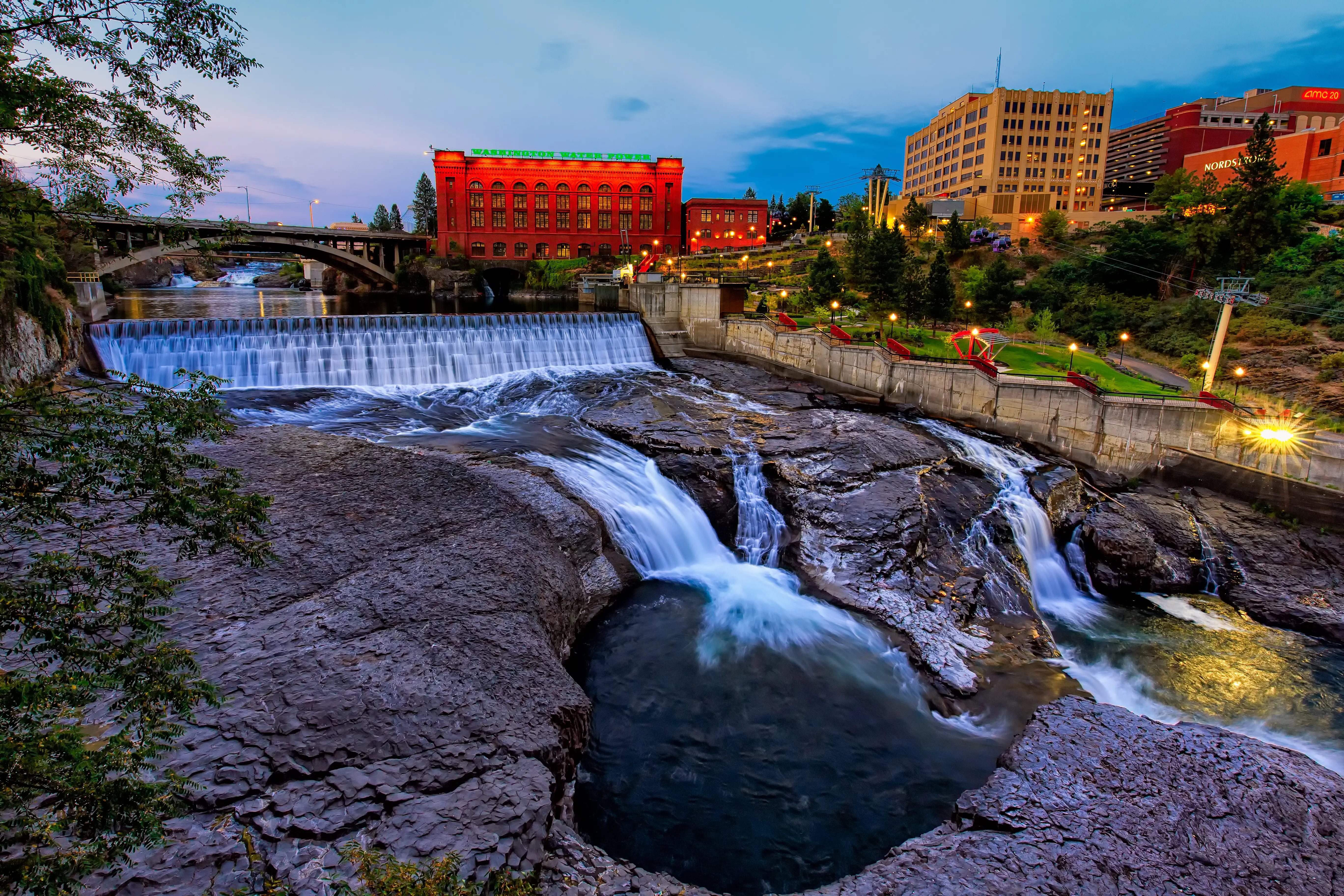
Understanding how Spokane's costs compare to its immediate neighbors helps clarify whether to buy inside city limits or look outward.
| City | Median Home Price | Avg 1-BR Rent | Property Tax Rate | Notable Factor |
|---|---|---|---|---|
| Spokane (city) | $355,000 | ~$1,274 | 0.96% | Largest regional hub; widest neighborhood range |
| Spokane Valley | ~$413,000 | ~$1,350 | ~0.96% | Suburban; newer stock; slightly higher purchase price |
| Liberty Lake | ~$478,000 | ~$1,500+ | ~0.96% | Newest development; HOA communities; premium finish |
| Cheney | ~$295,000–$320,000 | ~$950–$1,100 | ~1.00% | University town; lower prices; limited commuter appeal |
| Airway Heights | ~$310,000–$340,000 | ~$1,000–$1,200 | ~0.96% | Military-adjacent; more affordable; fewer amenities |
| Coeur d'Alene, ID | ~$490,000–$530,000 | ~$1,600+ | Lower (Idaho rates) | No WA income tax advantage; Idaho has income tax |
| Mead | ~$380,000–$430,000 | ~$1,300–$1,500 | ~0.98% | Suburban North Spokane; good schools; larger lots |

From a lending standpoint, where you buy within Spokane matters just as much as what you pay. Homes in South Hill and Browne's Addition tend to reflect stronger long-term appreciation due to walkability, established infrastructure, and consistent buyer demand. Logan and Hillyard offer more affordable entry points, though buyer interest there has been growing steadily. Across desirable pockets of the city, well-priced homes under $450,000 are moving fast — sometimes within days — so understanding your buying power before you fall in love with a listing is critical.
That's exactly why I encourage buyers to connect with a lender before they ever schedule a tour. Your mortgage approval number and your comfortable monthly budget are two very different things, and the gap matters. Taxes, homeowner's insurance, and any HOA dues all fold into your real monthly payment, and the loan structure itself affects how that number shifts over time. Knowing where you actually stand financially means that when the right home in Spokane appears, you're ready to move with confidence rather than scrambling to catch up.
This table models a realistic monthly budget for a household purchasing at the $355,000 median with 10% down ($35,500), at a 6.75% fixed rate over 30 years.
| Expense Category | Monthly Estimate |
|---|---|
| Mortgage (principal + interest) | ~$2,072 |
| Property taxes (0.96% / 12) | ~$284 |
| Homeowners insurance | ~$110 |
| Electric + gas (Avista) | ~$150–$180 |
| Water / sewer / garbage | ~$80–$110 |
| Internet (Comcast / Lumen) | ~$65–$90 |
| Groceries (household of 3) | ~$700–$850 |
| Transportation (1 vehicle + gas) | ~$450–$600 |
| Dining / entertainment | ~$300–$450 |
| Child care (if applicable) | ~$1,061 (annual avg / 12) |
| Total (no child care) | ~$4,211–$4,495/month |
| Total (with child care) | ~$5,272–$5,556/month |
Washington State's most buyer-friendly financial feature is the absence of a state income tax. That's real money — a household earning $70,000 in Oregon would pay roughly $3,700–$4,500 per year in state income taxes. In Washington, that bill is $0. For households relocating from California, the tax savings are even more substantial.
The offset is sales tax. Spokane's combined rate is 9% — the state's 6.5% base plus a 2.5% county addition. That rate applies broadly to most retail purchases, dining, and services. On a household that spends $30,000 annually on taxable goods, that's a $2,700 annual cost that buyers from income-tax states aren't always mentally accounting for when comparing Washington to, say, Idaho or Oregon. Washington also has a capital gains tax on gains above $250,000 from the sale of stocks and bonds — but that does not apply to the sale of a primary residence.
For buyers 61 and older, Washington's senior property tax deferral program allows qualifying households to defer a portion of their property taxes as a lien on the property, repaid when the home is sold or transferred. Combined with the fixed rate predictability of Washington's levy cap system, the tax environment for retirees purchasing in Spokane is genuinely favorable compared to most West Coast alternatives.

Local Expert Takeaway: The gap between Spokane's $355,000 city median and the $404,000–$413,000 figures you'll see for the broader metro reflects a real divide — buyers who anchor to the lower number and then look at South Hill or Kendall Yards will find themselves stretching. Start your search with a realistic $375,000–$450,000 working budget if you want a move-in-ready home in the neighborhoods with the most long-term value hold. And don't overlook the ZIP code difference in your property tax estimate — 99212 vs. 99224 can mean $800–$1,000 more per year on the same purchase price.
Looking to buy in Spokane? Estimate your payment.
Enter your numbers to see an estimated monthly mortgage payment.
Estimate only. Excludes HOA fees and mortgage insurance.
Is Spokane affordable compared to other Washington cities?
Spokane is significantly more affordable than the Seattle metro and most Puget Sound cities. The $355,000 median sold price within city limits is roughly 60% lower than Seattle's average, and rental costs run 31% below the national median. The trade-off is a regional economy with lower average wages than the tech-heavy west side of the state, so affordability is best understood in relation to local income levels rather than just sticker prices.
What are property taxes like in Spokane?
The effective rate in Spokane is approximately 0.96%, slightly below the national median. On a $355,000 home that works out to roughly $3,408 per year. The actual rate varies by ZIP code — buyers in 99212 pay closer to 1.15% while 99224 runs around 0.86% — so it's worth running the calculation on the specific address you're considering rather than using a single citywide estimate.
How does Washington's no-income-tax policy affect Spokane buyers?
The absence of a state income tax is one of Washington's most meaningful financial advantages over neighboring Oregon and Idaho. A household earning $70,000 to $100,000 annually can save $3,000–$7,000 per year compared to states with income taxes. Spokane buyers benefit from this at a purchase price level that's already well below Western Washington markets, which means the combined value proposition — lower home prices plus no income tax — is stronger here than almost anywhere else in the Pacific Northwest.
Explore the full Spokane series: Living in Spokane · Is Spokane Safe? · Cost of Living · Best Neighborhoods · Schools & Family Life · Youth Sports · Parks & Rec · Retiring in Spokane