Eastern Washington · Washington
Living in Spokane: The Ultimate Relocation Guide (2026)
Maybe your company is moving you east of the Cascades and Spokane keeps coming up in every conversation. Maybe you've watched Seattle prices climb past $800,000 and someone mentioned that Spokane has a median home price below $360,000 with the same state — no income tax and all. Maybe you drove through on I-90 once and the combination of basalt cliffs, a real downtown waterfall, and a university neighborhood surprised you. Whatever brought Spokane onto your radar, there's a central tension every relocating buyer eventually confronts: this is a genuinely affordable mid-size city with real culture, real seasons, and real rough edges, and understanding which of those things matter to you personally will determine whether this is the best move you've ever made or a city you leave within three years.
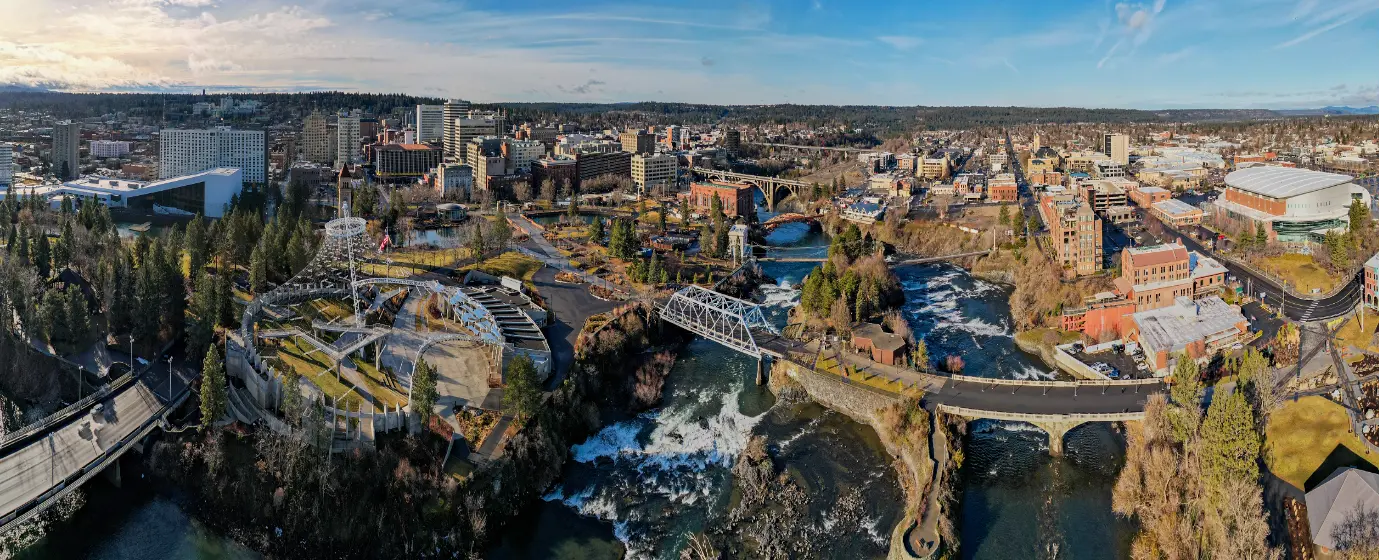
Spokane sits at the eastern edge of Washington, roughly 280 miles from Seattle and about 20 miles from the Idaho border. The Spokane River cuts through the middle of town, and the falls that give the city its identity are visible from the middle of downtown — not from a scenic overlook, but from a pedestrian bridge. The geography shapes daily life in ways that aren't obvious from a map: South Hill rises steeply from the river and carries the city's most established residential wealth, the North Side is flatter and more sprawling, and neighborhoods close to downtown are experiencing the kind of slow transformation that defines a city still figuring out what it wants to be. Average commutes run under 20 minutes, which sounds appealing until you realize that most of Spokane's employment is spread across the city rather than concentrated downtown, making neighborhood choice more about lifestyle than proximity to a single office tower.
This guide will help you work through the real questions: whether Spokane's neighborhoods match what you're actually looking for, what the housing market looks like in different price tiers, who thrives here and who tends to leave, and what the day-to-day experience feels like after the novelty of cheap real estate wears off.
Before you start touring homes, it helps to know whether Spokane is solving your actual problem. The table below cuts through the marketing language.
| Best For | Why |
|---|---|
| Remote workers priced out of Seattle or Portland | Median sold price under $360K, no state income tax, and Spokane has emerged as a genuine remote work hub with improving fiber infrastructure |
| First-time buyers | Entry-level homes in neighborhoods like West Central and Logan still start in the $150K–$250K range, rare for any western city of this size |
| Families with school-age children | Spokane Public Schools runs a 90.4% graduation rate across five high schools, and South Hill neighborhoods offer larger lots and quieter streets |
| Retirees seeking affordable four-season living | Providence Sacred Heart and MultiCare Health System provide strong regional healthcare; the cost of living runs roughly 3% below the national average |
| Military and government employees | The 92nd Air Refueling Wing at Fairchild Air Force Base sits 10 miles west; State of Washington employment anchors thousands of jobs downtown |
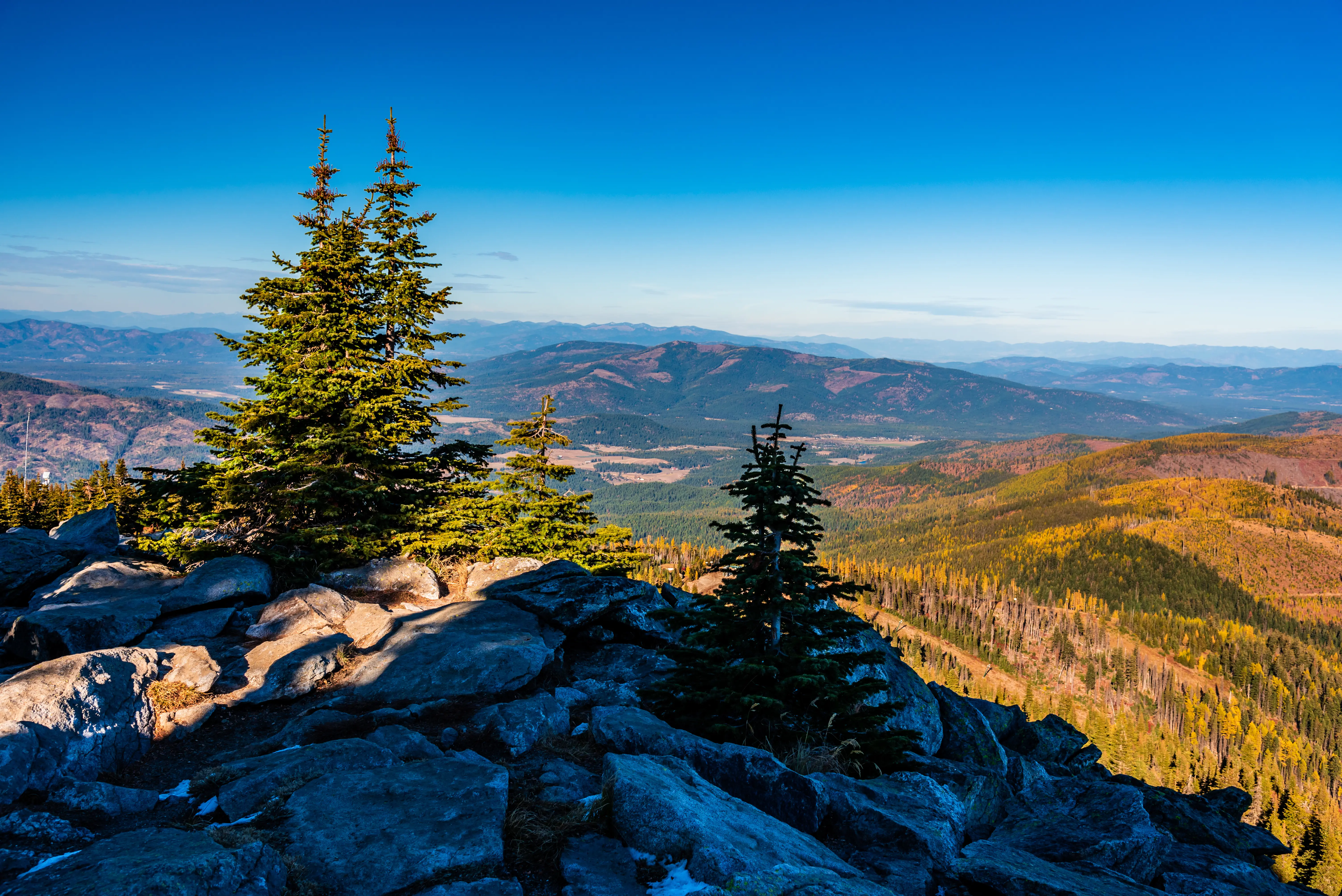
| Outdoor enthusiasts | 40 miles of Centennial Trail, Mount Spokane State Park, and Riverside State Park all within a short drive; ski season at 49° North runs November through April |
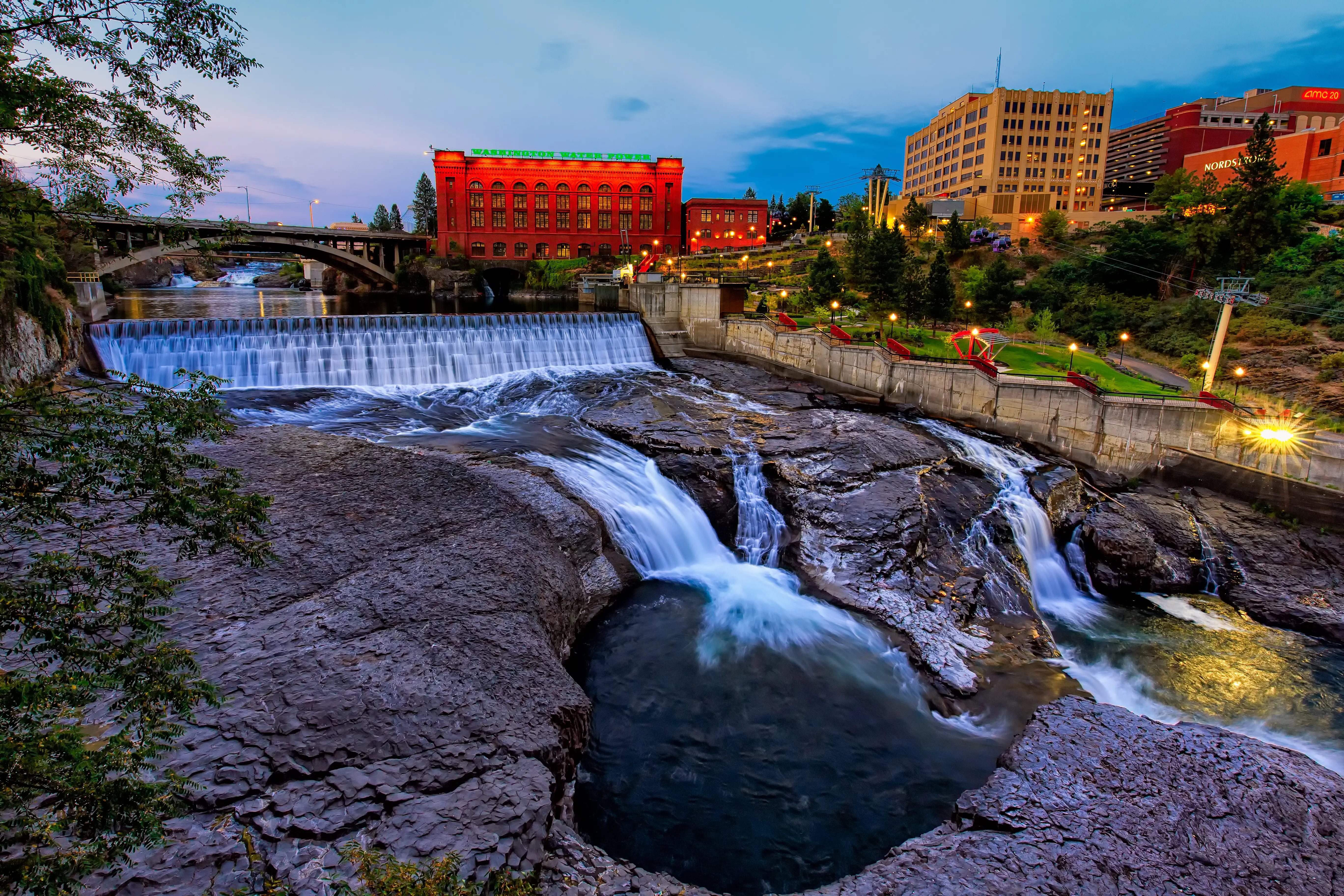
The honest first impression of Spokane for most newcomers is a kind of pleasant surprise followed by a slower adjustment. Downtown is denser and more active than outsiders expect — Riverfront Park underwent a significant renovation and anchors a genuinely usable urban core. The Spokane River runs through it loud enough to hear from the walking path, and Spokane Falls is visible in a way that no other city of this size can claim. The catch is that downtown Spokane is compact, and the city spreads outward quickly into neighborhoods that feel decidedly suburban, sometimes before you've realized you've left the interesting part.
The geographic divide that shapes daily life is the South Hill. South Hill rises sharply from the river valley and contains some of the city's most established residential areas — Rockwood, Comstock, and Manito all sit up there, connected by tree-lined streets and older craftsman homes. Getting down to downtown from South Hill is fast on a Tuesday morning; on a Friday afternoon, the Monroe Street hill and the bridges over the river can slow things noticeably. The North Side, by contrast, is flatter and more sprawling, dominated by newer construction and strip-mall corridors. It's faster to get around up there, but the trade-off is a less interesting streetscape.
The community vibe is harder to pin down because Spokane contains multitudes. Gonzaga University pulls a Catholic intellectual tradition through the east side of downtown. The arts community around the Northwest Museum of Arts & Culture and the Bing Crosby Theater holds its own for a city this size. And then there's a working-class East Side and a gentrifying South Perry that exist in the same city without much overlap. What surprises most people after six months of living here isn't the winters — the winters are fine with the right gear — it's how much the city rewards neighborhood loyalty. People who pick a block, learn their coffee shop, and join a community garden tend to find exactly what they were hoping for. People who treat Spokane like a suburb of somewhere else usually leave disappointed.
One human friction moment worth knowing before you sign anything: the I-90/Division Street interchange downtown is a genuine chokepoint in both directions during the 7–8:30 AM and 4:30–6 PM windows. If your office sits on the North Side and you're buying south of the river, budget an extra 10–15 minutes or plan to leave before 7.
The housing dollar goes further here than almost anywhere else in the Pacific Northwest. At a median sold price around $355,000, Spokane is operating at a significant discount from both Seattle and Portland — and at roughly 17% below the national median. That's not a slight edge; for a family moving from Bellevue or San Jose, the difference can mean buying a four-bedroom craftsman on a quarter-acre lot instead of a two-bedroom condo. For first-time buyers, it means a realistic path to homeownership without parental co-signers.
The outdoor access is serious. The Centennial Trail runs 40 miles from downtown Spokane east through the Spokane Valley and into Idaho, and residents use it year-round — cyclists, runners, and dog walkers have a paved corridor that would cost three times as much to access in most West Coast cities. Riverside State Park, just northwest of the city, offers 10,000 acres of basalt formations, river access, and trail networks that most locals treat as their backyard. Mount Spokane is 35 miles northeast and typically opens for skiing by late November.
The healthcare infrastructure is unusually strong for a city of this size. Providence Sacred Heart Medical Center and MultiCare Deaconess operate within a few miles of each other near the South Hill, and Washington State University maintains a medical school campus in Spokane. For retirees evaluating medium-sized cities, this combination — affordable housing, no state income tax, strong healthcare — is a genuinely rare find.
The city's culture-to-cost ratio also tends to surprise newcomers. The Bing Crosby Theater, the Spokane Symphony, the Northwest Museum of Arts & Culture, and a local food scene anchored by South Perry and the Garland District all exist within a city where the average monthly rent runs roughly $1,339. In a different time zone, that combination would cost three times as much.
The winters are real. Spokane averages around 45 inches of snowfall annually, and the cold comes earlier and stays later than in the western part of the state. That's not a dealbreaker for people who ski or who grew up with actual winters, but buyers relocating from Phoenix or the Bay Area should spend a January weekend in Spokane before making an offer. The city handles snow reasonably well, but there are years when South Hill becomes genuinely difficult to navigate for a week at a stretch.
The property crime rate warrants a frank look. At 48 incidents per 1,000 residents, it is measurably higher than what most suburban buyers are accustomed to. This isn't uniformly distributed across the city — South Hill, Five Mile Prairie, and North Indian Trail neighborhoods sit at the low end of the spectrum, while downtown-adjacent and older East Side neighborhoods carry higher exposure. Buyers who do their neighborhood-specific research will find options that align with their comfort level, but going in without knowing this number is a mistake.
The Seattle commute is effectively a non-starter. The drive across the Cascades runs about four hours and twenty minutes in favorable conditions — that's not a weekly commute scenario. Spokane-to-Seattle flights are short and the Spokane International Airport is easy to use, but anyone expecting the convenience of a 90-minute Portland commute will be disappointed. This is genuinely Eastern Washington, and the Cascades are not a small mountain range.
Why some people leave: The buyers who tend to feel most let down by Spokane are those who arrived expecting a walkable urban environment and ended up in a sprawling North Side neighborhood with a car-dependent daily life. Spokane has walkable pockets — Kendall Yards, South Perry, the Garland District — but they're pockets. Most of the city requires a car most of the time. The other exit pattern is remote workers who moved during the pandemic and found the cultural programming thinner than expected once the novelty of affordability wore off. Spokane has real culture, but it's a city of 231,000, not 800,000, and there are weeks where that ceiling is visible.
South Hill isn't a single neighborhood — it's a geographic area that contains several distinct communities — but as a purchasing destination, it functions as Spokane's most consistently high-demand residential zone. Homes range from mid-century bungalows in the $400,000s to historic estates near Manito Park that can push well past $1 million, with the Rockwood pocket carrying the city's highest median single-family prices at over $800,000. The schools, lot sizes, and tree-lined streets command the premium, and buyers here tend to stay.
Best for: Families prioritizing established neighborhoods, mature trees, and proximity to Manito Park who are comfortable with South Hill's higher price floor.
Browne's Addition sits just west of downtown and is among Spokane's oldest residential neighborhoods, with Victorian-era architecture, eclectic residents, and proximity to both Coeur d'Alene Park and the Spokane River Centennial Trail. Prices typically fall in the $250,000–$500,000 range, with substantial variation depending on whether the home has been updated. The neighborhood has genuine character but buyers should understand that it borders less stable corridors — location within Browne's Addition matters more than the neighborhood name.
Best for: Buyers who want historic architecture, walkable access to downtown, and don't need the quiet of a suburban cul-de-sac.
Kendall Yards is Spokane's most deliberate urban redevelopment story — a former industrial site above the Spokane River that's been rebuilt into a mixed-use neighborhood with new townhomes, apartments, and a small retail corridor along Summit Boulevard. Prices run $350,000–$650,000 for for-sale product, and the walkability score here is among the highest in the city. For buyers relocating from denser urban environments, this is one of the neighborhoods that feels most familiar.
Best for: Remote workers and professionals who want walkability, new construction, and river views without South Hill prices.
South Perry has evolved into one of Spokane's most talked-about neighborhoods over the past decade, centered on Perry Street's stretch of independent restaurants, coffee shops, and the South Perry Farmers Market. Homes are predominantly early 20th-century craftsman and bungalow styles, with prices generally running $280,000–$450,000. It's not without maintenance complexity — older homes require ongoing attention — but the community density and neighborhood identity are strong.
Best for: Buyers who want a walkable neighborhood identity, proximity to local food culture, and are comfortable with older home systems.
The Garland District centers on a stretch of Garland Avenue on the North Side, anchored by the historic Garland Theater and surrounded by modest single-family homes from the 1940s and 1950s. It's one of Spokane's most affordable neighborhoods with intact character, with prices often running $220,000–$380,000. The neighborhood has attracted a mix of longtime residents and younger buyers priced out of South Perry; the proximity to the Downriver Golf Course adds a green buffer to the south.
Best for: First-time buyers who want a neighborhood with actual identity rather than a newer subdivision at a comparable price point.
Five Mile Prairie sits in the northwest quadrant of Spokane on a plateau above the city, offering a suburban feel with genuine open space access. Homes tend toward larger lots and newer construction, typically in the $350,000–$550,000 range, and the area sits adjacent to Riverside State Park trails. The downside is distance from most commercial amenities — daily errands require a drive down into the city, which adds time to any routine.
Best for: Families who prioritize outdoor access, larger lots, and a quieter residential setting and don't mind the extra drive for groceries.
North Indian Trail occupies the far northwest of Spokane's city limits, with a mix of 1990s and 2000s construction, larger yards, and a distinctly suburban character. It's consistently cited as one of the lower-crime residential areas of the city, which attracts buyers from other parts of Spokane who are prioritizing safety metrics. Prices generally fall in the $350,000–$550,000 range, and the neighborhood has good access to Indian Trail Elementary and the broader school infrastructure of the North Side.
Best for: Families looking for newer construction, quieter residential streets, and strong safety profile within the Spokane city limits.
West Central sits northwest of downtown and is undergoing a slow, visible transformation. It's home to some of the most affordable housing stock in the city, with prices ranging from approximately $150,000 to $400,000 depending on condition and exact location. Kendall Yards borders it to the south and has lifted some price floors near the river, but buyers should preview the full neighborhood carefully — block-by-block variation is significant here, and the investment thesis requires patience.
Best for: Buyers willing to accept neighborhood-in-transition risk in exchange for Spokane's lowest entry prices close to downtown.

Spokane's neighborhoods each tell a different financial story, and where you plant roots here can meaningfully shape your long-term equity picture. Browne's Addition carries historic charm that tends to hold value well, while South Hill consistently draws strong buyer demand — homes there priced attractively often receive multiple offers within days of hitting the market. Logan is worth watching too, as improving infrastructure and proximity to downtown continue to attract buyers priced out of pricier pockets. If you're targeting something move-in ready under $400,000, be prepared to move quickly, because the window on well-priced homes in these areas closes fast.
Before you fall in love with a house on a tour, you really need to understand what that home costs you every single month — not just the loan payment, but property taxes, homeowner's insurance, any HOA dues, and how your loan structure affects the full picture. Getting pre-underwritten also means knowing your comfortable budget, not just your maximum approval, which are two very different numbers. When the right home appears in a competitive Spokane market, sellers notice buyers who are genuinely ready.
| City | Best For | Median Home Price | Commute Feel | Vibe |
|---|---|---|---|---|
| Spokane | Price diversity, culture, job access | ~$355,000 | 18-min avg within city | Mid-size city with rough edges and real character |
| Spokane Valley | Suburban value, newer builds | ~$413,000 | Easy I-90 east access | Quieter, car-dependent, family-oriented |
| Liberty Lake | Newer master-planned neighborhoods | ~$478,000 | 25 min to Spokane | Polished suburban, near Idaho, outdoor access |
| Cheney | College town, affordable housing | Under $310,000 | 20 min west | Eastern Washington University campus town |
| Mead | Rural-adjacent suburban, North Side | ~$400,000–440,000 | 20-25 min to downtown | Spacious lots, Mead School District draw |
| Coeur d'Alene, ID | Lake access, Idaho living | ~$525,000+ | 35 min east | Resort-adjacent, higher prices, strong outdoor culture |
| Metric | Spokane, WA (2026) |
|---|---|
| Population | ~231,061 |
| Median Sold Home Price (City) | $355,000 |
| Median Household Income | $70,064 |
| Property Tax Rate | ~0.96% |
| Average Commute (Local) | ~18.5 minutes |
| Cost of Living vs. National | ~3% below average |
| Violent Crime per 1,000 Residents | 6.7 |
| Property Crime per 1,000 Residents | 48 |
| School District | Spokane Public Schools |
| Homes Sold Above List (recent) | ~35% |
Bloomsday is not optional. The Lilac Bloomsday Run has taken place every May since 1977, drawing over 40,000 registered runners through 12K of city streets. What makes it local rather than touristy is that everyone participates — from competitive runners to families pushing strollers — and the morning essentially shuts down large sections of downtown. If you're moving to Spokane in late April, don't schedule a Saturday morning appointment for the first Sunday in May.
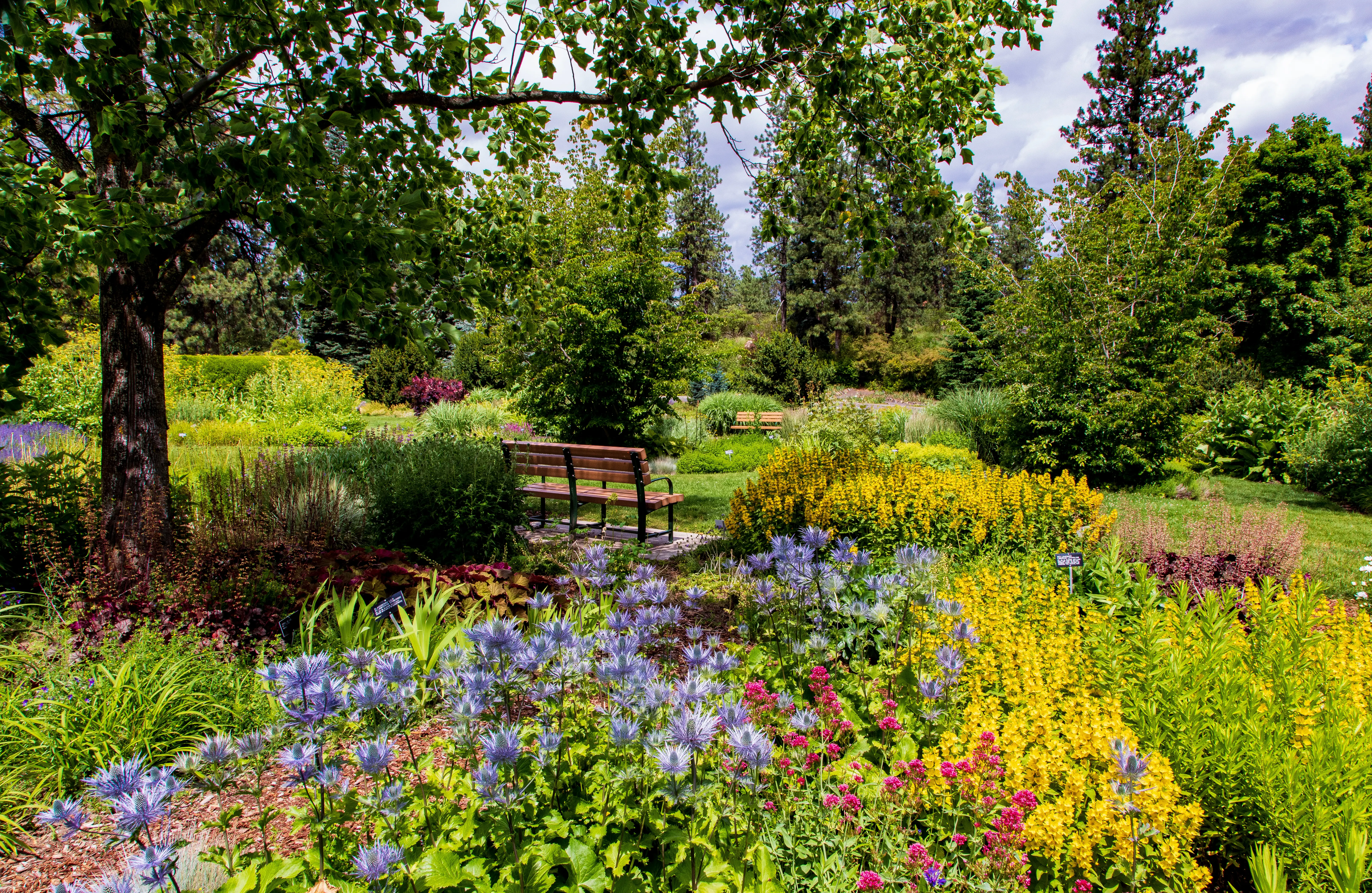
The Lilac Festival is a genuine civic tradition. The Spokane Lilac Festival happens each May and includes a torchlight parade that's been running since 1938. Manito Park's Duncan Garden is planted with hundreds of lilac varieties, and residents treat the blooming season as a genuine seasonal marker. The smell near 21st and Grand in mid-May is something that long-time residents mention unprompted when they talk about why they stayed.
River season changes the city's personality. From June through September, Spokane transforms around the river. The Centennial Trail fills with cyclists, Riverfront Park becomes the city's social center, and the kayak put-in at Sandifur Bridge sees daily use from residents who live blocks away. If you're evaluating Spokane in January or February, make a point of returning in July — it's a meaningfully different experience.
What I would not do if moving to Spokane: I would not buy in the East Central neighborhood along East Sprague Avenue without spending three evenings walking the blocks between 5 PM and 8 PM. The corridor has concentrated social service facilities and street-level challenges that don't always show up in the listing photos or the drive-by impression. That's not a permanent verdict on the neighborhood's direction, but it's information a buyer deserves before signing.
Local Expert Takeaway: If you're relocating from a higher-cost market, resist the urge to buy the most expensive thing you can afford in Spokane just because the price looks low by comparison. The neighborhoods that tend to produce the most satisfied long-term residents — South Perry, Kendall Yards, Garland, the upper South Hill — are those where buyers chose based on daily lifestyle fit, not just square footage relative to price. Start by identifying where you'll spend your mornings on foot, then work backwards to the neighborhood. In a city where the average commute is under 20 minutes, you have the luxury of optimizing for livability first.
✅ Spokane is one of the few remaining mid-size Western cities where a median income household can reasonably buy a median-priced home — the math works in a way it hasn't in Seattle or Portland for over a decade.
⚠️ Property crime is the single metric that surprises most buyers most. It doesn't mean Spokane is uniformly unsafe, but it does mean that neighborhood selection matters more here than in cities with lower baseline exposure.
📍 The Spokane that appears in relocation listicles and the Spokane that exists block-by-block are different cities. The best move is to visit in season, pick 2-3 neighborhoods to walk on a weekday evening, and treat the city as a collection of distinct communities rather than a single real estate market.
Is Spokane a good place for families?
Spokane Public Schools serves nearly 30,000 students with a district-reported graduation rate around 90%, and neighborhoods like South Hill, Five Mile Prairie, and North Indian Trail offer the quieter residential environments that families with school-age children tend to seek. The outdoor access — Riverfront Park, Riverside State Park, Mount Spokane, the Centennial Trail — gives kids and parents an unusually rich set of free and low-cost options year-round. The main consideration for families is picking the right neighborhood from the start, since the city's quality varies significantly by area.
What is the crime rate in Spokane?
Spokane's violent crime rate runs approximately 6.7 incidents per 1,000 residents and its property crime rate sits around 48 per 1,000, both higher than the national average and worth taking seriously during neighborhood research. These figures are not distributed evenly — the corridors near East Sprague and parts of East Central carry much of the elevated exposure, while South Hill, North Indian Trail, and Five Mile Prairie neighborhoods report substantially lower rates. Buyers who do block-level research rather than relying on city-wide averages typically land in areas that feel safe and stable.
How does Spokane compare to nearby cities like Spokane Valley or Coeur d'Alene?
Spokane proper offers more price diversity, more neighborhood character, and more direct access to employment than either Spokane Valley or Coeur d'Alene — but at the cost of higher crime exposure and a more complex streetscape. Spokane Valley runs a median around $413,000 for a quieter, more suburban experience with easy I-90 access; Coeur d'Alene offers lake access and Idaho living but at $525,000 and above and a longer commute back into Washington employment centers. For buyers who want to live in a real city with real amenities at a genuinely affordable price, Spokane proper is usually the right call.
Explore the full Spokane series: Living in Spokane · Is Spokane Safe? · Cost of Living · Best Neighborhoods · Schools & Family Life · Youth Sports · Parks & Rec · Retiring in Spokane