Puget Sound · Washington
Living in Bellevue: The Ultimate Relocation Guide (2026)
Maybe your employer just told you the new office is in Bellevue, or you've been eyeing the Eastside for years after watching Seattle's streets get harder to navigate. Maybe you've heard that Bellevue has better schools, cleaner sidewalks, and a downtown that doesn't feel like a compromise — and you want to know if any of that is actually true. The central tension in every Bellevue relocation conversation is the same: this is one of the most expensive residential real estate markets in the country, with median sold prices hovering around $1.5 million, and yet the demand is relentless, the tech economy keeps growing, and people who move here almost universally stay.
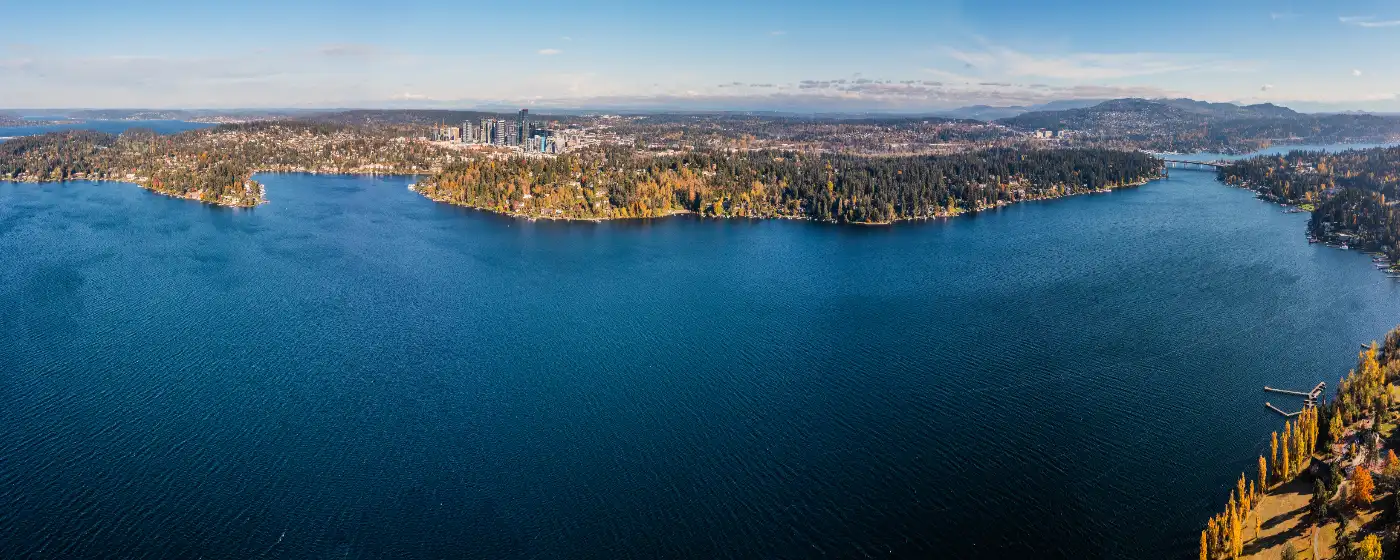
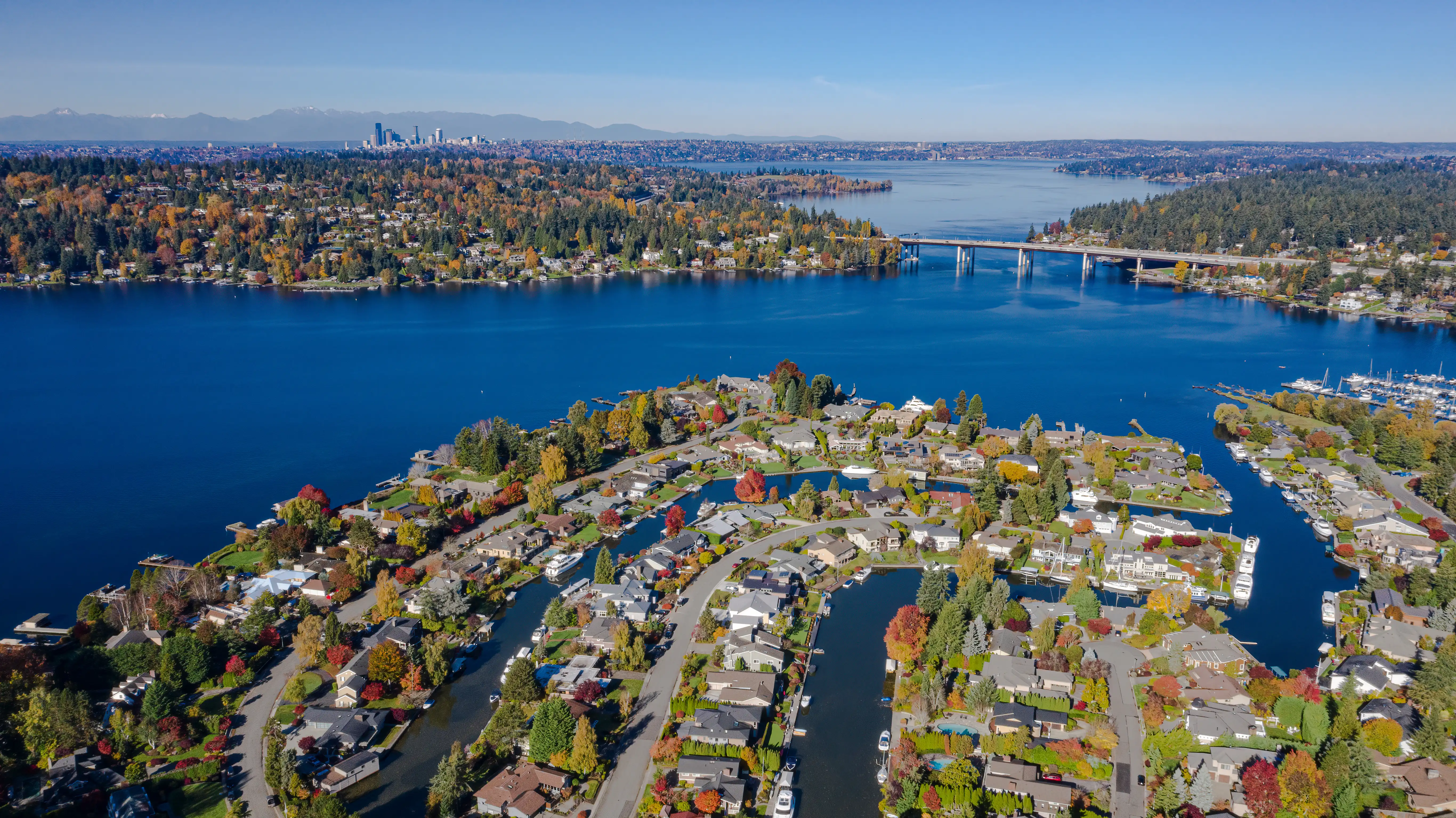
Bellevue sits on the eastern shore of Lake Washington, directly across from Seattle via I-90 or SR-520, and it functions as the capital of what locals call the Eastside. It is the third-largest city in the Seattle metro area, home to approximately 155,000 people, and it bears almost no resemblance to the quiet suburb it was thirty years ago. Downtown Bellevue now has a genuine skyline. Amazon has built out a massive campus here. OpenAI signed a 296,000-square-foot lease in early 2026. T-Mobile and PACCAR are headquartered here. The city is no longer Seattle's bedroom — it's a competing economic center with its own gravity.
This guide will help you figure out whether Bellevue makes sense for your life specifically: what the different neighborhoods actually feel like, what buyers consistently get wrong about the market, where the honest tradeoffs are, and what nobody tells you until you've already signed the lease. If you're deciding between Bellevue and one of its neighbors — Kirkland, Redmond, Mercer Island, or Renton — this guide will give you the framework to make that call with confidence.
| Best For | Why |
|---|---|
| Tech commuters | Amazon, T-Mobile, Smartsheet, and OpenAI all have major Bellevue campuses; Microsoft's Redmond HQ is 15 minutes away |
| Families with school-age children | Bellevue School District carries an A+ rating and some of the highest test scores in Washington State |
| Buyers trading up from elsewhere on the Eastside | Bellevue rewards patience — buyers who stretch now into established neighborhoods consistently see long-term appreciation |
| Walkability seekers | Downtown Bellevue and the Bel-Red corridor offer genuine on-foot access to restaurants, transit, and parks |
| Remote workers with flexible income | High-end housing stock, world-class parks, and a city that functions well make it a strong choice for high-earning remote professionals |
| Retirees with equity | No state income tax, proximity to Overlake Medical Center, and low violent crime make Bellevue one of the more livable retirement options in the Pacific Northwest |
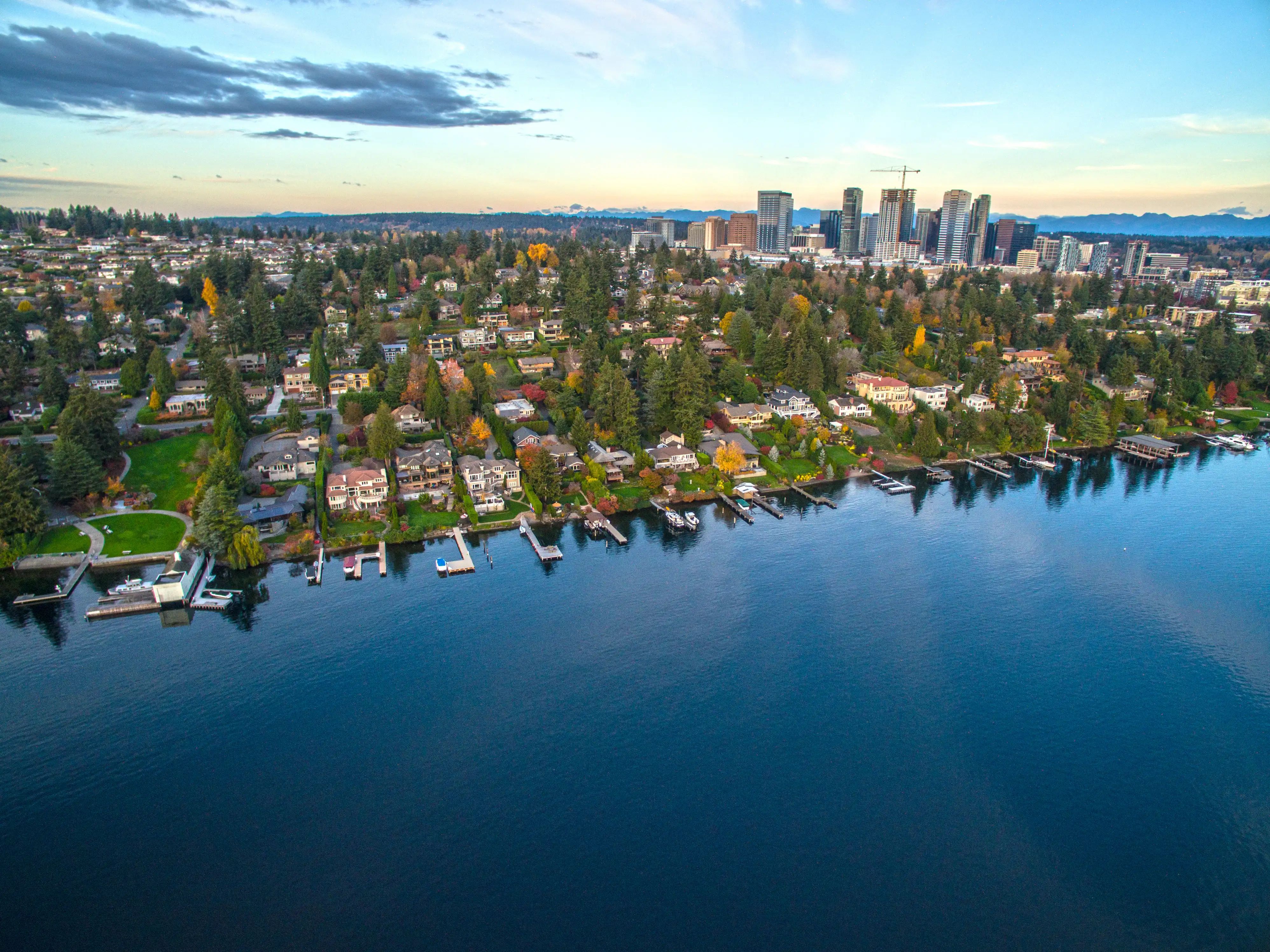
Living in Bellevue is not living in a suburb that happens to have a Nordstrom. The downtown core around Bellevue Square and the NE 8th Street corridor functions as a genuine urban center, with high-rises, an active street grid, and the kind of density that makes Seattle transplants feel at home faster than they expect. At the same time, five minutes in any direction from downtown, the city breaks into quieter residential neighborhoods — tree-lined streets, large lots, and the kind of stillness that makes you forget a city of 155,000 people exists nearby.
The commute reality depends almost entirely on which direction you're going. Crossing into Seattle via SR-520 runs about 20 minutes in normal conditions, but during peak hours that stretch can double. The reverse commute — from Seattle to Bellevue — has become one of the busier corridors on the Eastside as more employers anchor here. If your office is in Redmond, the commute is genuinely easy; if you're headed to South Lake Union in Seattle at 8:15am on a Tuesday, budget 40 minutes and don't plan back-to-back calls.
The community vibe in Bellevue is harder to characterize than Seattle's because it's more internally diverse. The downtown neighborhoods skew younger and international — Bellevue's population is approximately 41% Asian, reflecting decades of tech immigration from South and East Asia, and the cultural depth shows in the restaurant scene, the weekend markets, and the school district's multilingual programming. Head into Somerset or Bridle Trails and the feel shifts to established affluence: long-term homeowners, well-maintained properties, community identity built around schools and local parks rather than downtown nightlife.
The human friction moment that surprises most newcomers: I-405 between the NE 8th and Coal Creek interchange is one of the most consistently congested stretches of highway in Washington State during evening rush hour. If your commute requires that corridor between 4:30 and 6:30pm, factor that into your neighborhood decision — living on the east side of the city and needing to reach I-90 westbound means sitting in that specific slowdown almost daily.
The school district alone keeps a significant portion of Bellevue's resident base anchored here. Bellevue School District's A+ rating isn't marketing — it's backed by graduation rates that consistently rank among the top in Washington State, AP enrollment numbers that outpace nearly every comparable district in the region, and a pipeline to selective universities that parents with school-age children talk about openly at every neighborhood gathering. Families who buy in Bellevue often cite the schools as the primary reason they didn't leave when prices climbed, because the alternative — private school tuition on top of a Kirkland mortgage — costs nearly as much as staying.
The parks system is genuinely exceptional for a city this size. Mercer Slough Nature Park protects 320 acres of wetlands and trails directly adjacent to the urban core, a rare find in any American city at this density. Bellevue Botanical Garden in Wilburton offers 53 acres of curated gardens free to the public most of the year. Kelsey Creek Farm gives families with young children a working farm experience inside city limits. Bellevue Downtown Park, a 21-acre green space steps from the high-rises, hosts summer concerts and serves as the city's informal living room from May through September.
The economy is the third reason people stay, and it compounds. The broader Seattle-Bellevue corridor is home to the third-largest AI-specialty talent cluster in the country, and Bellevue specifically has become the landing zone for a wave of tech expansion that isn't slowing. Employers like Snowflake, Anduril, Shopify, and Walmart have all signed new Bellevue leases recently, joining long-established anchors like T-Mobile and PACCAR. For anyone in tech, finance, or professional services, being physically located in Bellevue puts you in daily proximity to a density of employers that is genuinely rare outside of San Francisco and New York.
Safety rounds out the case. Bellevue's violent crime rate of approximately 1.4 per 1,000 residents is among the lower figures of any comparably sized American city — particularly one with an urban downtown and a major economic center. Residents who moved from Seattle consistently cite the visible difference in public safety as one of the things they didn't expect to value as much as they do.
The entry price is the conversation stopper for a lot of buyers, and it should be taken seriously. With a median sold price around $1.5 million across all property types, and single-family homes in most established neighborhoods beginning closer to $2 million, Bellevue requires either significant equity from a prior home sale or a household income well above $200,000 to qualify comfortably. The math on a $1.5M purchase with 20% down puts monthly principal and interest near $8,000, before taxes or insurance — and at Bellevue's 0.71% property tax rate, annual taxes on a $1.5M home run roughly $10,650. This is a city where the financial bar is high, and pretending otherwise does no one a service.
Traffic on specific corridors is worse than most Eastside cities. The downtown core on NE 8th Street backs up badly during afternoon hours, the 520 on-ramp from Bellevue Way can stack for 15 minutes in both directions, and I-405 running north-south is a known pain point for anyone commuting to Renton or Kirkland. What makes this manageable is that most of Bellevue's largest employers are either inside the city or in adjacent Redmond — so a meaningful share of residents have short in-city commutes that never touch the freeway.
The cost of living extends well beyond the mortgage. Groceries, dining, childcare, and services in Bellevue reflect the city's high-income resident base. A dinner for two at a mid-range restaurant in downtown typically runs $100 or more before drinks. Childcare for an infant can run $2,500 to $3,000 per month at established centers. These aren't complaints unique to Bellevue, but they stack on top of housing costs in ways that surprise buyers who ran the mortgage math without stress-testing the full budget.
Why some people leave: The most common exit pattern is buyers who stretch too far into the market and find that Bellevue's lifestyle requires more than the mortgage payment. After two or three years, some families recalculate and find that Renton, Newcastle, or Issaquah offers 85% of what they loved about Bellevue at a meaningfully lower price point. The buyers who stay long-term are typically the ones who bought with genuine financial runway — or who arrived in the city with equity from a prior expensive market and treated Bellevue as a lateral move rather than a stretch.
Downtown Bellevue is the only genuinely urban neighborhood in the city — a walkable grid of high-rises, retail, and restaurants centered around Bellevue Square and the NE 8th Street corridor. Condos here range from around $800,000 for newer one-bedrooms in towers like The Mari and Avenue Bellevue up to $2 million or more for larger units with lake or mountain views. The honest tradeoff is density and parking — this is a high-rise lifestyle, and buyers who expect quiet residential streets will be disappointed.
Best for: Tech workers who want to walk to the office and don't need a yard.
West Bellevue is the city's most prestigious address, encompassing the neighborhoods closest to Lake Washington and the boundaries shared with Medina and Clyde Hill. Single-family homes here commonly list north of $2.5 million, and the most desirable waterfront properties trade at levels that make the citywide median look modest. The neighborhood has almost no commercial activity — it's quiet, private, heavily wooded on the hillside streets, and zoned fiercely to stay that way.
Best for: Buyers seeking maximum prestige, privacy, and proximity to the lake with top-tier school access.
Crossroads is Bellevue's most culturally diverse neighborhood and its most accessible price point, with condos starting below $600,000 and a commercial corridor along NE 8th Street and 156th Avenue NE anchored by Crossroads Shopping Center. The neighborhood reflects Bellevue's international character most vividly — the Crossroads community plaza hosts free outdoor concerts and a weekly farmers market that draws residents from across the Eastside. The catch is that the housing stock skews older and the neighborhood lacks the polish of pricier Bellevue addresses.
Best for: First-time buyers, recent immigrants, and buyers who want Bellevue's school district without the $1.5M entry price.
Bridle Trails takes its name seriously — equestrian properties, large wooded lots, and direct trail access to Bridle Trails State Park define this northeast Bellevue neighborhood. Homes here sit on parcels measured in acres rather than square feet, and the density is low enough that neighbors rarely see each other through the trees. Prices for single-family homes typically begin around $1.5 million and climb significantly for the larger equestrian estates. Buyers who want land, quiet, and nature access within Bellevue's city limits consistently land here.
Best for: Buyers who want acreage, equestrian access, or simply maximum distance from downtown density while staying in the BSD.
Somerset occupies the hillside terrain in southeast Bellevue, and the views it offers — of Lake Washington, the Seattle skyline, and the Cascades — are legitimately among the best residential views in the city. The neighborhood is almost entirely single-family homes on winding ridge streets, with a strong community identity built around Somerset elementary and the neighborhood's annual block events. Entry-level homes here start around $1.2 million for older construction, with updated homes on the best view lots trading closer to $2.5 million.
Best for: Families prioritizing views, community cohesion, and excellent schools in a quiet hillside setting.
Newport Hills sits just south of Somerset along the I-90 corridor, offering slightly more accessible prices than its hillside neighbor while sharing the same general school quality. The neighborhood has a community center, a small commercial cluster, and a walkable park system that makes it feel self-contained. Homes typically start in the low $1 millions, making it one of the more achievable entry points for single-family buyers in south Bellevue. The downside is proximity to I-90 traffic noise in the sections nearest the freeway.
Best for: Buyers who want south Bellevue's quality without Somerset's price premium and don't mind occasional freeway noise.
Lake Hills occupies central Bellevue and is one of the city's larger residential neighborhoods, with a mix of original mid-century single-family homes and updated properties on the quieter cul-de-sacs. The Lake Hills Greenbelt runs through the middle of the neighborhood with walking trails connecting Larsen Lake to the surrounding wetlands — a genuinely pleasant daily amenity. Prices here run roughly $1.1 million to $1.6 million for single-family homes, placing it in Bellevue's mid-tier. The neighborhood's age means some homes need updating, which creates opportunity for buyers willing to renovate.
Best for: Buyers who want central Bellevue location, trail access, and some room to buy below market and add value.
Enatai is a small, tucked-away neighborhood in southwest Bellevue with direct access to Lake Washington and a price range that reflects it. Single-family homes here typically trade above $2 million, and the waterfront properties push significantly higher. The neighborhood is quiet, the lot sizes are generous, and the proximity to both Bellevue's core and the Mercer Island bridge makes the commute geometry work in multiple directions. Inventory is extremely limited — Enatai doesn't turn over often, and when it does, homes move quickly.
Best for: Buyers with significant equity looking for a long-term hold in one of Bellevue's most stable and desirable small neighborhoods.

Bellevue's neighborhoods vary significantly in what you get for your money, and that matters when you're thinking about long-term value. Areas like Downtown and Somerset tend to attract strong buyer demand, which means well-priced homes often move within days — sometimes before a relocation buyer even has a chance to schedule a showing. West Bellevue carries some of the highest price points in the region, while neighborhoods like Crossroads can still offer entry points under $750,000, though inventory there moves quickly too. Understanding where you want to land geographically before you start shopping will help you focus your search and your financing strategy.
Getting pre-approved before you tour a single home isn't just about knowing your ceiling — it's about understanding your full monthly reality. Your loan payment is only part of the picture; property taxes, homeowner's insurance, and any HOA dues stack on top, and in Bellevue those figures can shift meaningfully by neighborhood. I always encourage buyers to identify a comfortable payment, not just a maximum approval, so nothing catches you off guard at closing. When the right home appears in a competitive market like this, being ready to move is everything.
| City | Best For | Median Home Price | Commute to Seattle | Vibe |
|---|---|---|---|---|
| Bellevue | Tech workers, top schools, urban amenities | ~$1.5M | 20 min (off-peak) | Affluent urban-suburban hybrid |
| Kirkland | Waterfront lifestyle, smaller-town feel | ~$1.2M | 30–40 min | Lakefront community, arts-forward |
| Redmond | Microsoft proximity, slightly more affordable | ~$1.1M | 25–35 min | Tech-driven, family-oriented |
| Mercer Island | Privacy, top schools, island living | ~$2.0M | 15 min | Exclusive, quiet, heavily wooded |
| Newcastle | Lower entry, Bellevue adjacency | ~$850K | 30–40 min | Suburban, newer construction |
| Renton | Affordability, Boeing access | ~$650K | 30–40 min | Working-class to middle-income mix |
| Metric | Detail |
|---|---|
| Population | ~155,672 (2026 estimate) |
| Median sold home price | ~$1.5M (all property types, Q1–Q2 2026) |
| Median household income | ~$165,576 |
| Property tax rate | 0.71% |
| Violent crime per 1,000 | 1.4 |
| Property crime per 1,000 | 33 |
| School district | Bellevue School District (A+) |
| Commute to Seattle | ~20 minutes (off-peak via SR-520) |
| State income tax | None |
Three things about Bellevue that don't make it into the listings but matter once you're living here:
The Snowflake Lane tradition is exactly what it sounds like — every evening in November and December, the block of Bellevue Way between NE 4th and NE 8th Street hosts a nightly parade with marching bands, "snowfall," and costumed characters. It started as a promotional event for Bellevue Square and has become a genuine annual tradition that draws families from across the Eastside. If you're new and wondering why the downtown blocks are suddenly gridlocked on a Tuesday night in November, now you know.
The Crossroads farmers market and outdoor stage runs on Tuesdays from spring through fall and has evolved into something that reflects Bellevue's actual demographic reality better than almost any other public event in the city — it's international, multigenerational, and genuinely local rather than curated. The free outdoor concerts bring hundreds of people to Crossroads Park on summer evenings, and the atmosphere feels nothing like the polished downtown core three miles west.
Bellevue's connection to the Pokémon franchise is something that surprises a lot of newcomers. The Pokémon Company International has its North American headquarters in downtown Bellevue, and the company is a meaningful local employer and civic presence. The annual Pokémon GO Fest events draw participants who treat downtown Bellevue as a destination, and there's a subtle but real local pride in the city's role in the franchise's global operations.
What I would not do if moving to Bellevue: I would not buy near the I-405/NE 8th Street interchange without spending significant time there on weekday afternoons first. The noise, the congestion, and the stress of that specific corridor during evening rush hour is real and daily, and it affects quality of life in ways that photos and floor plans will never show you. Drive it at 5:15pm on a Thursday before you make an offer anywhere within half a mile.
Local Expert Takeaway: If you're choosing between Bellevue and Kirkland, the decision almost always comes down to whether you're optimizing for schools and walkability or for waterfront character and lower price. Within Bellevue, the buyers who find the most satisfaction are the ones who either go all-in on a quality neighborhood — Somerset, Enatai, West Bellevue — or who embrace Crossroads and Lake Hills as genuinely livable mid-tier options rather than treating them as consolation prizes. Trying to split the difference by buying a dated home in a premium neighborhood often leaves buyers frustrated; the renovation costs in Bellevue are steep, and the carrying costs while you wait are steeper.
✅ Bellevue's combination of top-tier schools, low violent crime, and a growing tech employment base makes it one of the most consistently in-demand residential markets in the Pacific Northwest.
⚠️ The financial bar is real — single-family homes in most established neighborhoods begin near $2 million, and the full cost of living in Bellevue extends well beyond the mortgage payment.
📍 Crossroads and Lake Hills offer the most accessible entry points into the Bellevue School District; West Bellevue, Enatai, and Somerset are where buyers with equity and long-term horizons tend to land.
Is Bellevue a good place for families?
Yes — Bellevue consistently ranks among the top family destinations in Washington State, driven primarily by its school district. Bellevue School District's A+ rating reflects strong graduation rates, deep AP and IB programming, and a culture of academic achievement that parents report is visible at the elementary level. The city's park system, low violent crime rate, and abundance of organized youth activities add to that case substantially.
What is the crime rate in Bellevue?
Bellevue's violent crime rate is approximately 1.4 per 1,000 residents — among the lower figures for any comparably sized American city with a major urban core. Property crime runs higher at roughly 33 per 1,000, which is the more relevant number for homeowners; catalytic converter theft and vehicle break-ins are the most commonly reported incidents, particularly in commercial corridors and park-and-ride lots.
How does Bellevue compare to nearby cities for value?
Bellevue is the most expensive of the major Eastside cities, but it delivers the strongest combination of school quality, employment proximity, and urban amenities. Kirkland and Redmond offer similar school quality at lower price points with somewhat longer Seattle commutes. Mercer Island competes at a similar price level but with a more isolated, island-specific lifestyle. For buyers who need to stay in the Bellevue School District specifically, there is no real lower-cost substitute — that district is geographically bound to Bellevue.
Explore the full Bellevue series: Living in Bellevue · Is Bellevue Safe? · Cost of Living · Best Neighborhoods · Schools & Family Life · Youth Sports · Parks & Rec · Retiring in Bellevue