
Puget Sound · Washington
Cost of Living in Edmonds: Housing, Taxes, Utilities & Lifestyle (2026)
The sticker shock is real. Buyers who arrive in Edmonds expecting a "slightly above average" Seattle-area suburb quickly realize they're shopping in a premium waterfront market where the median sold price runs well above $900,000 — and where entry-level means something very different than it does in Lynnwood or Mountlake Terrace. The Zillow index figure that circulates on real estate apps ($855,381) reflects a smoothed algorithmic estimate, not what buyers are writing checks for at closing.
What shapes costs here is geography and reputation working together. Edmonds sits on a bluff above Puget Sound with ferry access, a walkable downtown, nationally recognized dive sites at Brackett's Landing, and a school district that draws families from across south Snohomish County. That combination creates persistent demand from buyers who have specifically chosen Edmonds over more affordable alternatives — and they've typically done the math.
This guide breaks down what you'll actually spend: housing, rent, property taxes, utilities, the full monthly budget picture, and how Edmonds stacks up against the neighboring cities most buyers are cross-shopping. If you're deciding whether Edmonds fits your budget — or which part of it does — the numbers below give you a realistic foundation.
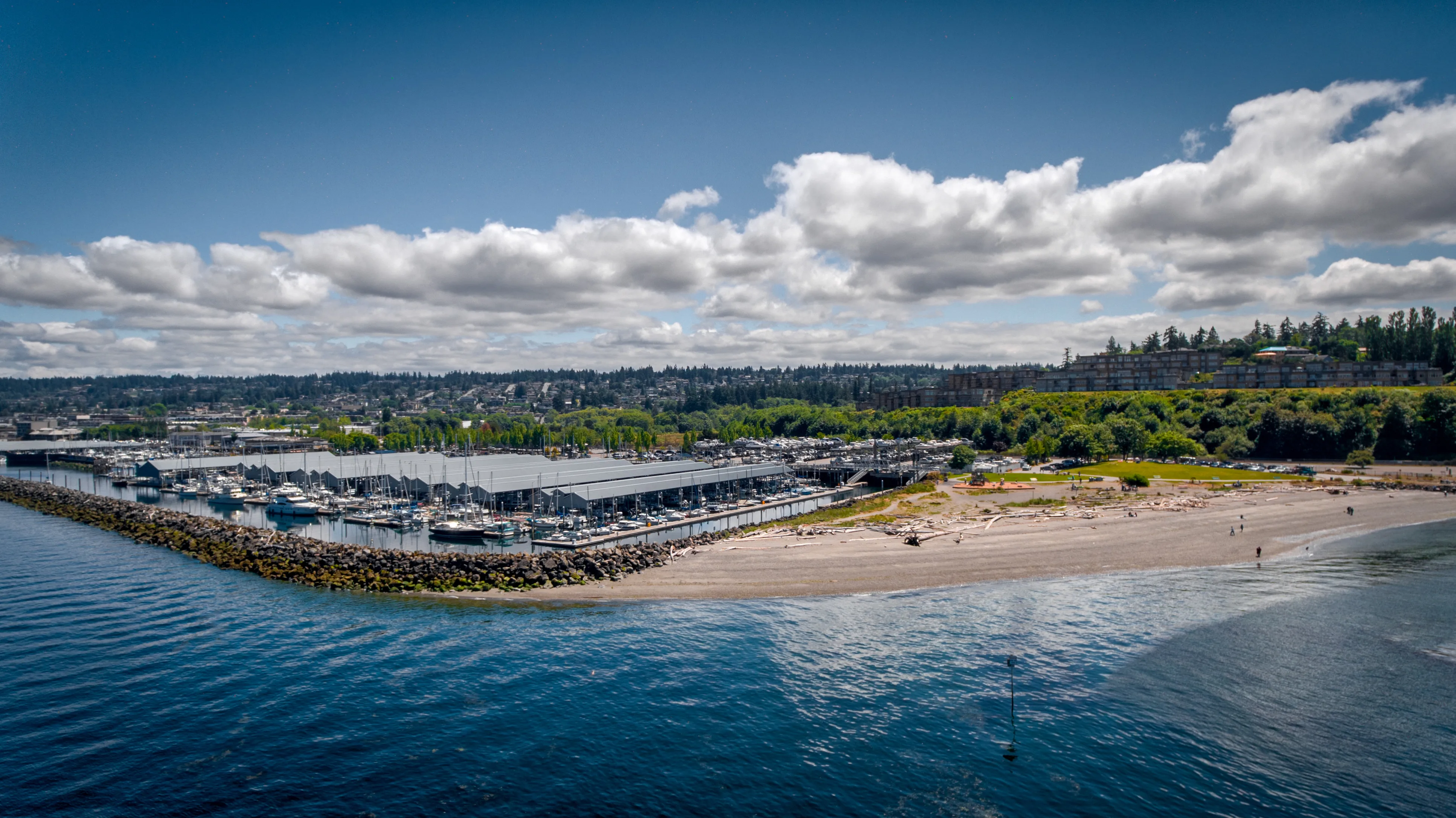
The median sold price in Edmonds has settled into the $935,000–$1,000,000 range as of spring 2026, depending on the data source and the trailing window you use. Redfin's last 90-day median clears $1.0 million with a price per square foot approaching $594. That figure moves fast depending on neighborhood: the Edmonds Bowl commands medians near $1.35 million, while areas closer to the Lake Ballinger corridor on the city's eastern edge tend to run around $770,000. The spread is real and matters enormously to how you approach your search.
What $1 million buys varies just as much as where. In Seaview or Meadowdale, that budget typically lands a four-bedroom mid-century or 1980s home with a yard, a two-car garage, and a short walk to neighborhood parks. In the Bowl, the same money may mean a smaller older home on a compact lot — but with water views and a five-minute walk to Main Street. In the Five Corners or College Place areas, you're more likely to find updated split-levels and colonials on larger parcels, with less price pressure from the ferry-proximity premium.
The market moves quickly. Homes in competitive neighborhoods average around 7 days before receiving offers, and multiple-offer situations remain common on well-priced listings. The city-wide average trends toward about 32 days, but that number is weighted by slower-moving properties at the high end. Buyers who come in expecting a deliberate, low-pressure process often find themselves needing to accelerate their decision timeline.
| Budget Range | What to Expect |
|---|---|
| Under $800,000 | Entry-level or dated homes, primarily Lake Ballinger, Esperance, or College Place corridor; limited inventory |
| $800,000–$1,000,000 | Mid-century to 1990s single-family, Seaview, Five Corners, Meadowdale; 3–4 bedrooms typical |
| $1,000,000–$1,350,000 | Updated or newer construction across most neighborhoods; good Seaview or upper Westgate options |
| $1,350,000+ | Edmonds Bowl, Talbot Park, premium waterfront-adjacent lots; newer builds, significant remodels |
Edmonds carries an effective property tax rate of 0.70% — below Washington's state median of 0.92% and meaningfully below the national median. On a home purchased at the $855,381 figure used in tax calculations, the annual bill lands at approximately $5,988. The actual median annual tax bill across current Edmonds homeowners runs closer to $5,804 to $6,275 depending on ZIP code, with properties in 98020 (the downtown and waterfront area) running slightly higher. One significant change hit in January 2026: Edmonds voters approved annexation into South County Fire in spring 2025, adding roughly $780 per year to the median homeowner's bill. Washington's 1% annual levy increase limit still applies to the base rate, but voter-approved measures like this one operate outside that cap. Homeowners 61 or older may qualify for the state's senior property tax exemption program, which can freeze or reduce assessed value obligations depending on household income.
Rental inventory in Edmonds is limited by the city's ownership-heavy housing stock — roughly 70% of households own their homes, leaving renters competing for a smaller pool of available units. The average rent across all unit types runs approximately $1,930–$2,200 per month depending on the source, which puts Edmonds about 4% above the national average for renters but well below Seattle proper.
| Unit Type | Average Monthly Rent |
|---|---|
| Studio | $1,585 |
| 1-Bedroom | $1,749 |
| 2-Bedroom | $2,206 |
| 3-Bedroom | $2,522 |
Snohomish County PUD serves most of Edmonds, and electricity costs here run significantly below national norms — roughly $170 per month for a typical household, reflecting a rate near $0.13 per kilowatt-hour. That's approximately 40% cheaper than the U.S. average, a direct benefit of the region's hydropower-heavy grid. The mild Pacific Northwest climate reduces both cooling and heating demand compared to continental climates, though wet winters mean some homes run heat pumps or baseboard heating through April.
Car ownership is effectively required for most daily errands. While downtown Edmonds is walkable once you're there — groceries, coffee, dining, and the ferry terminal are all reachable on foot — the outlying neighborhoods like Seaview, Sherwood Forest, and Meadowdale require driving to reach most services. The Highway 99 corridor through Esperance and Five Corners offers the city's best everyday retail access, including WinCo Foods, PCC Community Markets, and national chain options. Commuters heading to Seattle have two realistic options: the ferry from Edmonds Terminal to Kingston (not a direct Seattle commute route) or driving south via I-5, typically a 26-minute run under normal conditions that can stretch to 45–55 minutes during peak hours. Sound Transit's 512 bus route and Sounder train at nearby stations provide alternatives for downtown Seattle workers.
Dining in Edmonds runs the range from casual waterfront spots to upscale dinner destinations on Main Street. Expect $15–$22 for a typical lunch and $50–$80 per person for a nicer dinner outing. Grocery costs align with broader Seattle metro pricing — PCC Community Markets and Metropolitan Market serve the premium end, while WinCo and Fred Meyer offer more budget-conscious options along the 99 corridor. Edmonds' combined sales tax rate sits at 10.7% as of April 2026, one of the higher rates in the metro, applied to most goods and services. Groceries, however, are fully exempt.

Understanding what your dollar buys in Edmonds requires seeing the contrast against what the same money does in nearby cities.
| City | Median Home Price | Property Tax Rate | Commute to Seattle | Key Trade-off |
|---|---|---|---|---|
| Edmonds | ~$940,000–$1.0M | 0.70% | 26 min | Premium waterfront, strong schools |
| Lynnwood | ~$615,000 | 0.88% | 22 min | Better highway access, lower cost base |
| Shoreline | ~$775,000 | 0.90% | 18 min | Closer to Seattle, urban feel |
| Mountlake Terrace | ~$625,000 | 0.89% | 24 min | Affordability, light rail access |
| Mukilteo | ~$835,000 | 0.81% | 28 min | Similar vibe, waterfront, ferry access |
| Woodway | $2.0M+ | 0.65% | 30 min | Ultra-premium enclave, no commercial |
| Kenmore | ~$790,000 | 0.85% | 30 min | Lake access, quieter, good schools |

Edmonds is one of those markets where location within the city genuinely shapes long-term value. Homes in Downtown Edmonds and Meadowdale tend to generate the most competition — walkability, water views, and community character drive consistent demand. Seaview also draws serious buyers looking for a quieter feel without sacrificing access. In all three areas, well-priced homes under $750,000 routinely see multiple offers within days of listing, so understanding your purchasing position before you fall in love with a property matters more than most buyers expect.
That's exactly why I encourage anyone exploring Edmonds to connect with a lender before touring homes. Your full monthly payment includes not just principal and interest — property taxes, homeowner's insurance, any HOA dues, and loan structure all factor in, and together they can shift your comfortable range meaningfully from what a pre-approval maximum suggests. There's a real difference between what you qualify for and what lets you sleep at night financially. When the right home appears in a fast market like Edmonds, being prepared isn't just helpful — it's often the deciding factor.
This table models costs for a household purchasing at the $855,381 price point with a 10% down payment.
| Expense Category | Monthly Cost |
|---|---|
| Mortgage (6.8% rate, 30-year, 10% down) | $5,025 |
| Property Taxes (0.70% annualized) | $499 |
| Homeowner's Insurance | $175 |
| Electricity (Snohomish PUD) | $170 |
| Internet (Comcast/Xfinity or Ziply Fiber) | $75 |
| Water & Sewer (City of Edmonds) | $120 |
| Groceries (2-adult household) | $800 |
| Transportation (1 car + gas + insurance) | $600 |
| Dining & Entertainment | $500 |
| Childcare or School-Related Costs | $0–$1,500 |
| Total (without childcare) | $7,964 |
| Total (with childcare) | $9,464 |
Washington's no-income-tax structure is one of the most misunderstood relocation advantages in the country. There is no state personal income tax, no corporate income tax, and no capital gains tax on primary home sales that fall under the federal exclusion limit. Edmonds also does not collect a city-level Business & Occupation Tax or employee head tax, which matters for remote workers and self-employed households. The tradeoff is a higher sales tax — 10.7% in Edmonds — and a reliance on property taxes and business taxes to fund state services.
For buyers coming from California, Oregon, or other high-income-tax states, the practical impact can be substantial. A household earning $200,000 per year in California might pay $10,000–$15,000 annually in state income tax; in Washington, that same income generates zero state income tax liability. That difference changes the cost-of-living calculus significantly, especially when combined with Edmonds' below-average property tax rate. Retirees and seniors have an additional layer of protection: Washington's senior property tax deferral and exemption programs allow qualified homeowners 61 or older to reduce or defer property taxes based on income thresholds — one of the more meaningful retirement financial tools available in the state.
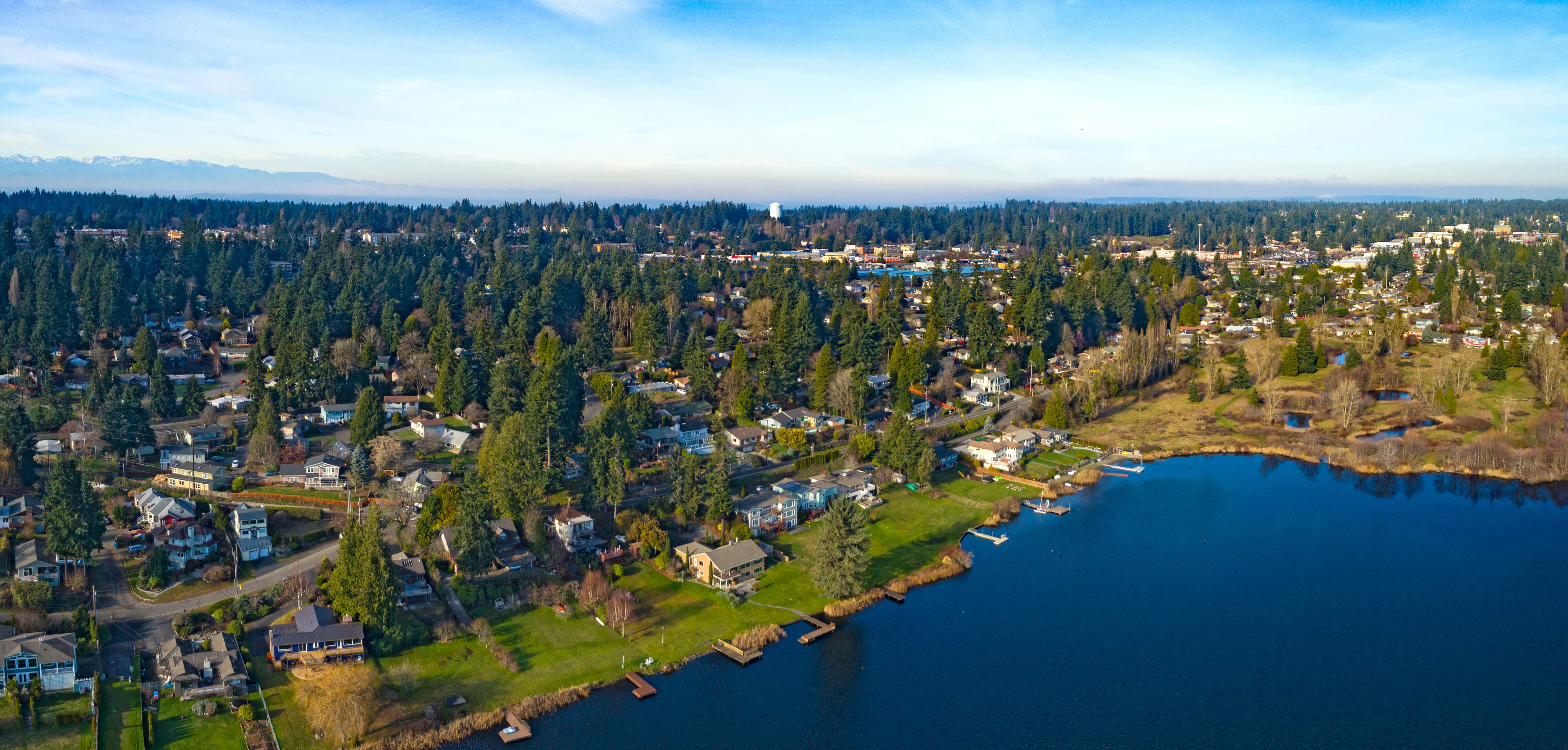
Local Expert Takeaway: Buyers focused purely on the sticker price often miss the tax math that makes Edmonds more competitive than it first appears. A household moving from California that's used to paying state income tax will often recoup $8,000–$15,000 annually from Washington's no-income-tax structure — which meaningfully offsets the housing premium over comparable California coastal markets. The neighborhoods to watch for value right now are Seaview and the Five Corners corridor: both offer the Edmonds school district and community feel at a $150,000–$300,000 discount to the Bowl or Talbot Park. If you're a first-time buyer trying to enter the market, the Lake Ballinger edge of Edmonds is where the most realistic entry points exist.
Looking to buy in Edmonds? Estimate your payment.
Enter your numbers to see an estimated monthly mortgage payment.
Estimate only. Excludes HOA fees and mortgage insurance.
Is Edmonds expensive to live in compared to the rest of Washington?
Yes, Edmonds sits at the premium end of Washington's cost spectrum. Housing costs are the dominant driver — median sold prices approaching $1.0 million put it well above the state median — but utilities, property taxes, and everyday expenses are close to or below regional averages. The no-income-tax environment partially offsets the housing premium for households relocating from high-tax states.
How much are property taxes in Edmonds?
The effective property tax rate is 0.70%, below both the Washington state median and the national median. On a home assessed at approximately $855,000, that produces an annual bill near $5,988. January 2026 brought a modest increase tied to the South County Fire annexation, adding roughly $780 per year for the median homeowner — a change worth factoring into any budget projection.
What is the most affordable neighborhood in Edmonds?
The Lake Ballinger area on the city's eastern edge consistently offers the lowest entry points in Edmonds, with median prices around $770,000 — roughly $170,000 to $230,000 below the city-wide median. Esperance and the College Place corridor also offer relatively accessible pricing, with the added benefit of proximity to the Highway 99 retail corridor and easy I-5 access.
Explore the full Edmonds series: The Ultimate Edmonds Relocation Guide · Is Edmonds Safe? · Cost of Living in Edmonds · Best Neighborhoods in Edmonds · Edmonds Schools & Family Life · Edmonds Youth Sports · Edmonds Parks & Recreation · Retiring in Edmonds · 1031 Tax-Deferred Exchange in Edmonds · Edmonds First-Time Homebuyers Guide · Edmonds Down Payment Assistance Guide · Moving to Edmonds from California