
Puget Sound · Washington
Best Neighborhoods in Federal Way: Where to Buy or Rent (2026)
Federal Way is one of those cities where the neighborhood you choose matters more than the city itself. The difference between buying in Marine Hills and buying near the City Center isn't just a question of budget — it's a question of views versus commute access, lot size versus walkability, and whether your kids will be in one school boundary or another. Buyers who treat Federal Way as a uniform market tend to end up compromising on things they didn't realize were negotiable.
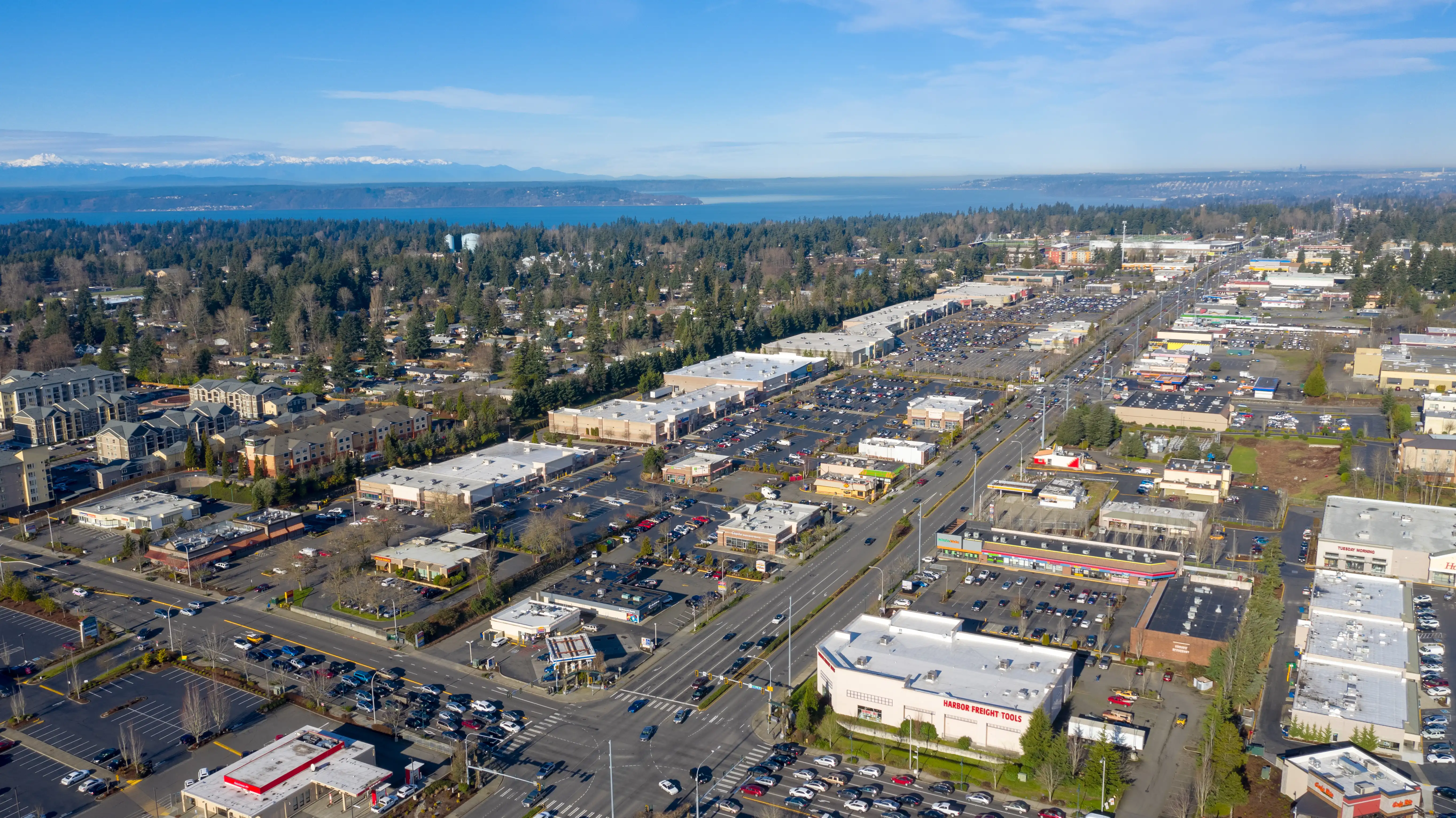
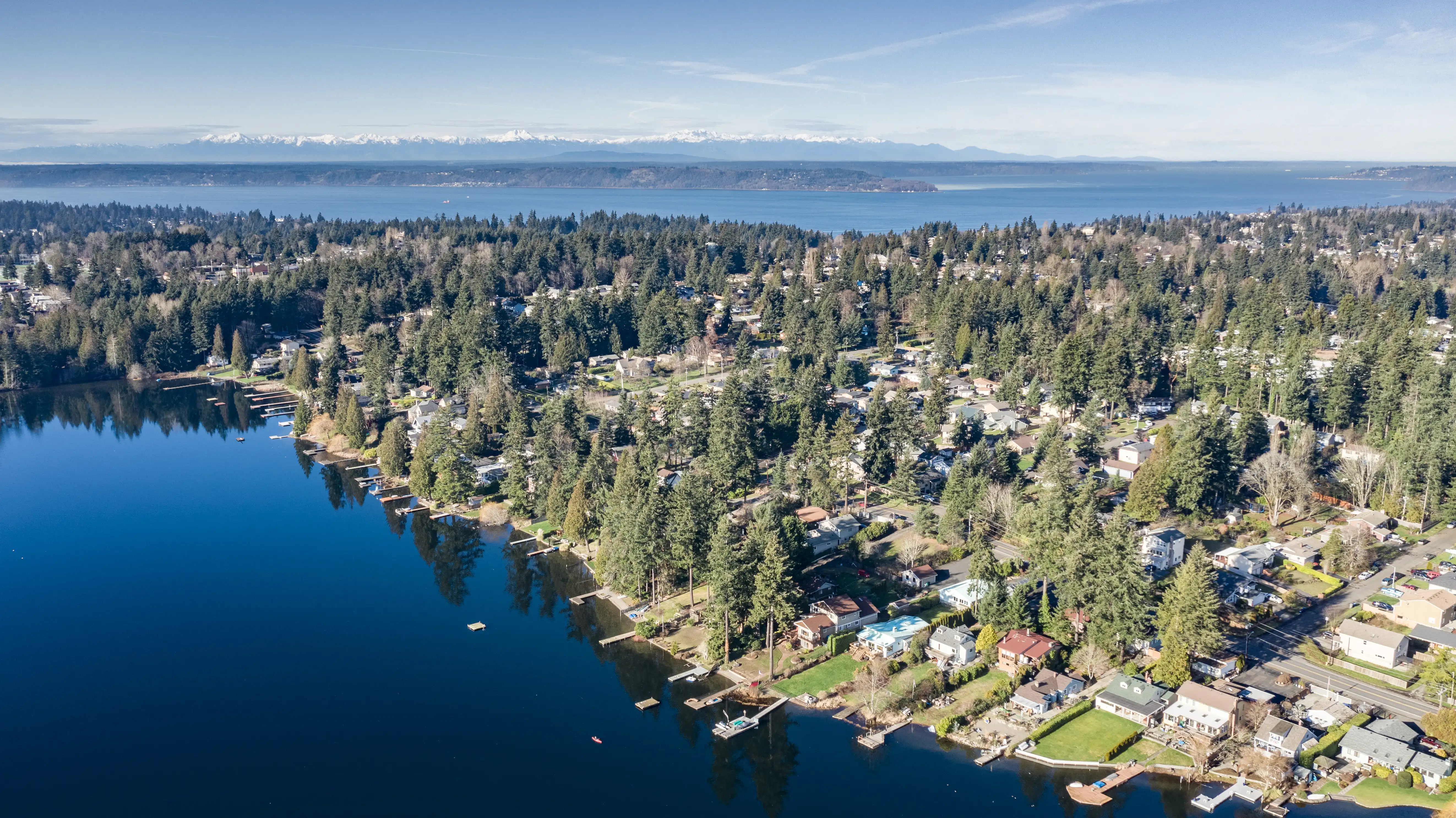
The city runs roughly from Puget Sound in the west to the Green River Valley plateau in the east, and that geography creates a real divide in how neighborhoods feel. The western edge — Marine Hills, Twin Lakes, Redondo — carries Puget Sound views, larger lots, and premium prices. The eastern and central corridors around City Center and West Campus run cooler in price but hotter in convenience, sitting closer to transit, retail, and the 2026 Sound Transit Link light rail extension at Federal Way Transit Center. Understanding which side of that divide fits your life is the first decision to make.
This guide breaks down the best neighborhoods in Federal Way for buyers and renters across every budget and lifestyle — with honest trade-offs, real price ranges, and the specific details that don't show up in Zillow thumbnails.
| Neighborhood | Best For | Price Range | Vibe |
|---|---|---|---|
| Marine Hills | Luxury buyers, Puget Sound views | $800K–$1.2M+ | Custom homes, elevated, scenic |
| Adelaide | Established families, lake access | $680K–$800K | Upscale, wooded, residential |
| Twin Lakes | Planned community feel, recreation | $600K–$700K | Mid-century, family-friendly, lakeside |
| Steel Lake | Value buyers, park access | $530K–$640K | Laid-back, mid-century, family-oriented |
| Alderbrook | Move-up buyers, established feel | $600K–$720K | Suburban, quiet, well-kept |
| Mirror Lake | Affordability near City Center | $470K–$600K | Quiet, residential, near retail/transit |
| West Campus | First-time buyers, commuters | $420K–$530K | Accessible, convenient, no-frills |
| Redondo | Coastal lifestyle, mixed budgets | $450K–$800K+ | Waterfront-adjacent, eclectic |
| Kitts Corner | Budget-conscious buyers, renters | $300K–$400K | Dense, urban-adjacent, transit-friendly |
| Twin Lakes / Campus Highlands | Families seeking newer finishes | $700K–$800K | Elevated, newer builds, suburban |
| Buyer Type | Best Neighborhood | Why |
|---|---|---|
| First-time buyer | West Campus | Most accessible price point near transit, entry-level SFH available |
| Luxury buyer | Marine Hills | Puget Sound views, largest lots, custom home stock |
| Walkability seeker | Mirror Lake / City Center | Closest on-foot access to retail, light rail, services |
| Families with kids | Twin Lakes | Park proximity, planned community layout, family-scaled homes |
| Commuters | West Campus / Mirror Lake | Direct access to Federal Way Transit Center, I-5, Link light rail |
| Large lot buyers | Marine Hills / Adelaide | Largest residential parcels in the city |
| Renters | Kitts Corner / West Campus | Most rental inventory, most competitive price-per-square-foot |
Adelaide sits in the higher tier of Federal Way's price ladder, with listing values typically running from the upper $600s to around $800,000. The neighborhood draws its appeal from Adelaide Lake access, large established lots, and a residential character that feels more tucked-away than much of the city. Homes here lean toward 1970s and 1980s construction — which means buyers should budget for updates on mechanical systems and kitchens, and some properties are clearly priced with a full remodel in mind. The catch is that Adelaide's premium pricing doesn't always come with proportionally premium finishes; you're paying for the land, the lot size, and the location, not necessarily turnkey condition.
Best for: Established-family buyers who want privacy, lake proximity, and room to renovate on their own timeline.
Alderbrook occupies a comfortable middle ground — established enough to feel settled, priced high enough to attract serious buyers, but without the prestige premium of Marine Hills or the waterfront drama of Redondo. Listing prices typically run between $600,000 and $720,000, and the housing stock reflects Federal Way's dominant building era of the 1970s through the 1990s. The neighborhood is quiet and well-kept, with a suburban feel that parents with school-age children often prefer. The trade-off is limited walkability — like most of Federal Way's residential interior, Alderbrook is firmly car-dependent, and on-foot access to retail or dining is essentially nonexistent.
Best for: Buyers relocating from denser cities who want a quiet residential feel at a mid-range price point.
Steel Lake Park is the neighborhood's defining asset — a genuine swimming beach and boating facility that gives this area a recreational quality you don't find at many comparable price points in King County. Homes generally list in the $530,000 to $640,000 range, making it one of the more accessible single-family neighborhoods in Federal Way without sliding into the City Center density. The housing stock runs from 1960s ramblers to 1980s two-story tract homes, and value-driven buyers willing to take on cosmetic work can find solid bones here. The downside is that some blocks closer to Pacific Highway feel the effects of highway noise and commercial spillover — location within the neighborhood matters more than the neighborhood name alone.
Best for: Families with kids who want park and lake access at a price point below the city's western neighborhoods.
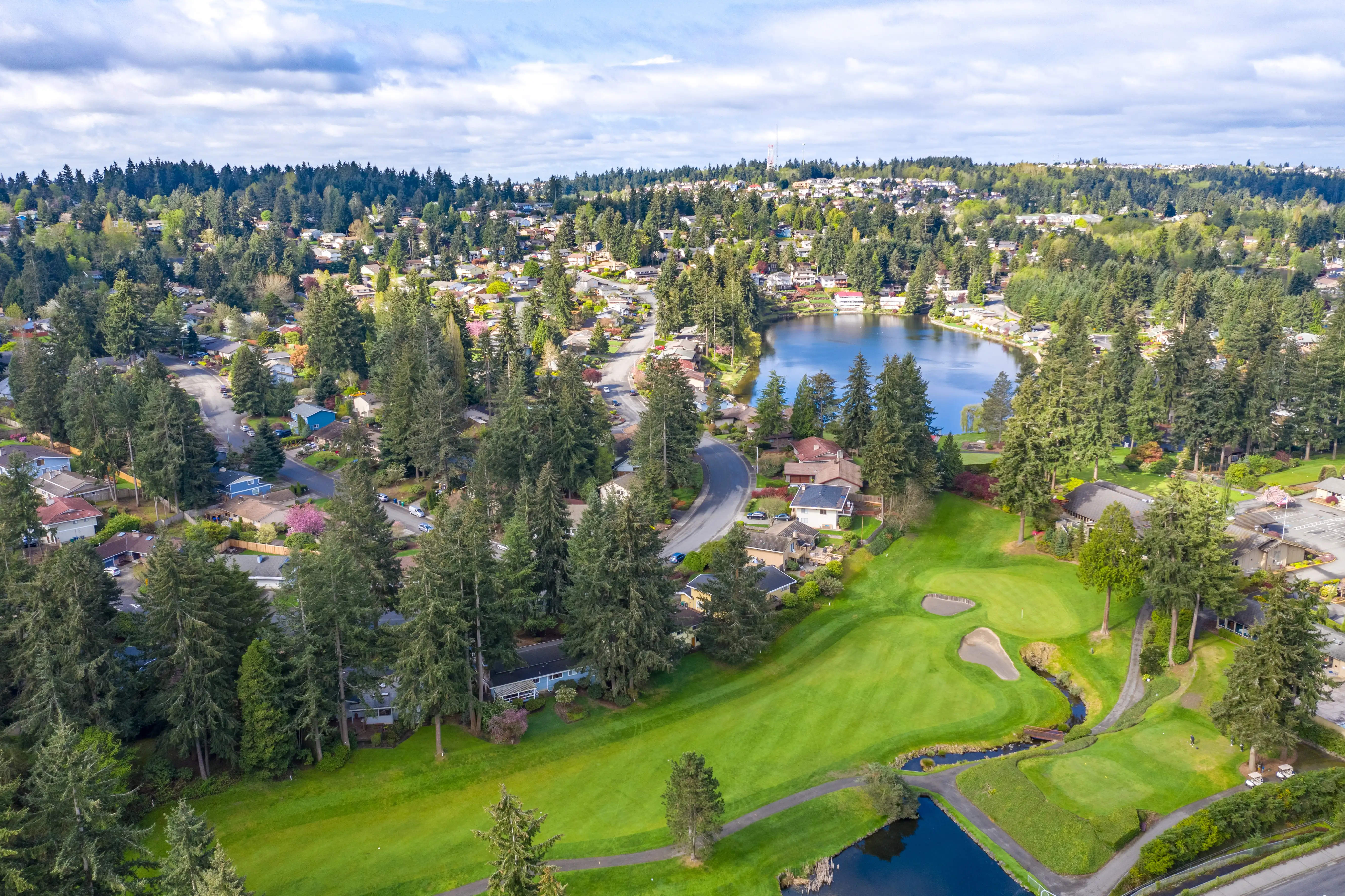
Few neighborhoods in Federal Way have a clearer identity than Twin Lakes. Originally developed as a planned community in the 1960s, it's built around Lakes Lorene and Jeane, with a layout that prioritizes residential cohesion over the strip-mall sprawl common elsewhere in the city. The Twin Lakes Golf and Country Club anchors the recreational side, and Dash Point State Park — 461 acres with beach access and over 11 miles of hiking — is practically at the back door. Listing prices sit roughly between $600,000 and $700,000, placing it near the city median while delivering well above average lifestyle infrastructure. The real limitation is transit — Twin Lakes is car-dependent, with bus access on 320th Street being the primary public option, and the light rail extension serves City Center more directly than this western corridor.
Best for: Households with kids who want a planned community feel, outdoor recreation access, and mid-range pricing.
Madrona Meadows offers a quieter residential character with listing values running in the low-to-mid $600,000 range, landing near the city median without the waterfront premium of the west side neighborhoods. The area tends to attract buyers who want a settled neighborhood feel without the renovation burden common in Federal Way's older stock — many homes here are in solid condition with updated interiors. Getting to downtown Seattle or SeaTac by car runs through the same I-5 and SR-99 chokepoints that affect most of Federal Way, so commute timing matters. Buyers who expect walkable errands will be disappointed; this is a strictly residential pocket.
Best for: Mid-range buyers who want move-in-ready condition and a low-drama residential environment.
Mirror Lake is one of the more strategically positioned neighborhoods for buyers who care about commute and convenience. Listing prices in the $470,000 to $600,000 range make it one of the more affordable residential areas near Federal Way City Center, and the proximity to the Federal Way Transit Center — and the 2026 Link light rail extension — gives it a commuter appeal that purely residential neighborhoods like Twin Lakes can't match. Mirror Lake Park adds wooded trail access without the premium that lakefront neighborhoods command. The neighborhood skews quieter and less identity-forward than Twin Lakes or Marine Hills; it's a practical choice more than an aspirational one.
Best for: Commuters and value buyers who want single-family housing without paying the western-side premium.
West Campus is Federal Way's most accessible neighborhood for buyers entering the market, with listings typically in the $420,000 to $530,000 range — meaningfully below the $610,000 city median. Its position near City Center gives it better on-foot access to retail and services than most of Federal Way's residential neighborhoods, and transit connections are among the strongest in the city. The housing stock trends toward smaller footprints and denser configurations, and the neighborhood doesn't carry the scenic or recreational appeal of the western side. Buyers who prioritize square footage over commute access will find the trade-off uncomfortable here — but for first-time buyers and commuters, the math is hard to argue with.
Best for: First-time buyers and daily commuters who want the lowest reasonable entry point into Federal Way's single-family market.
Redondo splits into two distinct price tiers that catch buyers off guard. Inland Redondo properties list closer to the mid-$400,000s, while Redondo Highlands and waterfront-adjacent homes push past $750,000 — and both carry the "Redondo" label in listings. The neighborhood sits on Federal Way's western edge along Puget Sound, giving it a coastal character that's genuinely different from the city's interior. Salt air exposure is a real maintenance factor here; buyers considering older construction should expect accelerated wear on roofing, siding, and metalwork. The Redondo Park and Ride gives commuters a useful option, and the beach access is among the most accessible along this stretch of Puget Sound.
Best for: Buyers who want a coastal lifestyle feel without committing to full waterfront pricing — and who are comfortable with the maintenance reality of salt-air proximity.
Assuming the city is one uniform market. The gap between a Marine Hills home at $900,000 and a West Campus home at $460,000 isn't just price — it's school proximity, lot size, noise exposure, and commute pattern. Buyers who shop the city broadly without locking down a geographic priority often end up making offers in neighborhoods that don't actually fit their daily life.
Underestimating SR-99's impact on livability. Pacific Highway South (SR-99) runs through Federal Way's commercial core, and neighborhoods east of it feel materially different from neighborhoods west of it. Homes within a few blocks of the highway carry noise and traffic patterns that don't show up on a listing sheet. Buyers who don't drive the block at 5 PM on a weekday before making an offer frequently express surprise after closing.
Overlooking the school boundary question. Federal Way Public Schools encompasses the entire city, but individual school assignments vary by exact address. Buyers who assume a desirable neighborhood automatically delivers a specific elementary school are sometimes wrong by one block. Checking the district's boundary tool — not just the neighborhood name — before making an offer is non-negotiable for families with kids.
Conflating "waterfront adjacent" with "waterfront." Several neighborhoods in Federal Way's west side market themselves informally around Puget Sound proximity, but actual beach access and genuine water views are concentrated in Marine Hills and the Redondo shoreline. Buyers who pay a premium expecting Sound views and end up with a home that requires a five-minute drive to see the water are a consistent pattern in this market.

Neighborhoods like Twin Lakes, Steel Lake, and Adelaide have shown consistent buyer demand over the years, and that demand directly shapes what you'll face at the offer table. Homes in these areas — particularly those priced under $750,000 — often move within days of listing, not weeks. That kind of pace means buyers who haven't done their homework ahead of time frequently lose out to someone who has. Location matters here not just for lifestyle, but for long-term equity — waterfront proximity in Twin Lakes and the established feel of Steel Lake tend to hold value well even when the broader market softens.
Before you tour a single home, sit down with a lender and get honest about the full monthly picture. Your mortgage payment is just one piece — property taxes, homeowner's insurance, and any HOA dues all stack on top, and they can shift your comfortable range considerably. There's also a difference between what a lender will approve you for and what actually fits your life. Being pre-underwritten before you fall in love with a home in Lakota or Adelaide means you can move quickly and confidently when the right one appears.
| Area | Ideal For | Typical Rent Range | Trade-off |
|---|---|---|---|
| City Center / Federal Way Transit Center | Commuters, solo renters | $1,400–$1,900/mo (1BR–2BR) | Limited green space, commercial feel |
| West Campus | First-time renters, students | $1,300–$1,750/mo | Car-dependent for anything beyond basics |
| Kitts Corner | Budget renters, families | $1,200–$1,650/mo | Older stock, limited amenities |
| Steel Lake area | Families, park-adjacent renters | $1,600–$2,100/mo | Tighter inventory, higher competition |
| Redondo / Pacific Highway corridor | Coastal seekers, flexible workers | $1,500–$2,000/mo | Salt-air maintenance, variable neighborhood quality |
Local Expert Takeaway: If you're choosing between Federal Way's west side and its central corridor, be honest about whether you drive to work or take transit — that single variable changes the right neighborhood entirely. Marine Hills and Twin Lakes deliver lifestyle; Mirror Lake and West Campus deliver practicality. And before making any offer, drive the specific block at commute hour, check the school boundary by address, and look at the SR-99 proximity on a satellite view — those three steps catch the mistakes that cost buyers the most in this market.
Looking to buy in Federal Way? Estimate your payment.
Enter your numbers to see an estimated monthly mortgage payment.
Estimate only. Excludes HOA fees and mortgage insurance.
What are the best neighborhoods in Federal Way for families?
Twin Lakes and Steel Lake are the two neighborhoods families most consistently gravitate toward. Twin Lakes offers the planned community layout, lake access, and proximity to Dash Point State Park; Steel Lake delivers park and beach access at a slightly lower price point. Both sit near the city median and offer larger lot sizes than Federal Way's central corridor.
Is Federal Way a good place to buy a home in 2026?
Federal Way offers one of the more accessible entry points in King County, with a median sold price around $610,000 — roughly 29% below Seattle's median. The 2026 Link light rail extension to Federal Way Transit Center adds long-term appreciation potential for neighborhoods near City Center. Buyers should move with a clear sense of which neighborhood fits their lifestyle, since the gap between the city's west-side premium market and its central value corridor is significant.
How do Federal Way neighborhoods compare to nearby cities like Des Moines or Auburn?
Federal Way generally prices comparably to Auburn and slightly below Des Moines for single-family homes, while offering stronger recreational infrastructure — Dash Point State Park, Steel Lake, the Rhododendron Species Botanical Garden — than either. The 2026 light rail connection gives Federal Way a transit edge over Auburn for Seattle commuters, though Des Moines maintains a closer-to-Seattle positioning that some buyers prefer.
Explore the full Federal Way series: Living in Federal Way · Is Federal Way Safe? · Cost of Living · Best Neighborhoods · Schools & Family Life · Youth Sports · Parks & Rec · Retiring in Federal Way