
Puget Sound · Washington
Is Federal Way Safe? Crime Rates, Safest Neighborhoods & Local Reality (2026)
Federal Way carries a reputation that often precedes it — and that reputation isn't entirely wrong, but it isn't the whole story either. The city's crime figures land above national averages, and anyone doing serious homework before a move here will find numbers that prompt real questions. What those numbers don't capture is the meaningful downward trajectory in overall crime over the past two years, or the fact that safety in Federal Way is far less uniform than a single statistic suggests.
What shapes daily safety here is geography as much as anything else. Federal Way stretches roughly eight miles north to south along the I-5 corridor, and the experience of living in its northern residential neighborhoods versus its commercial eastern corridors is genuinely different. Property crime clusters around retail density; quieter residential pockets to the north and west post numbers that compete favorably with state averages. That geographic reality matters more than the headline crime index.
This guide breaks down what local police data actually shows, where the safer pockets of the city sit, how Federal Way compares to its neighbors, and what residents actually do day-to-day to live comfortably here.
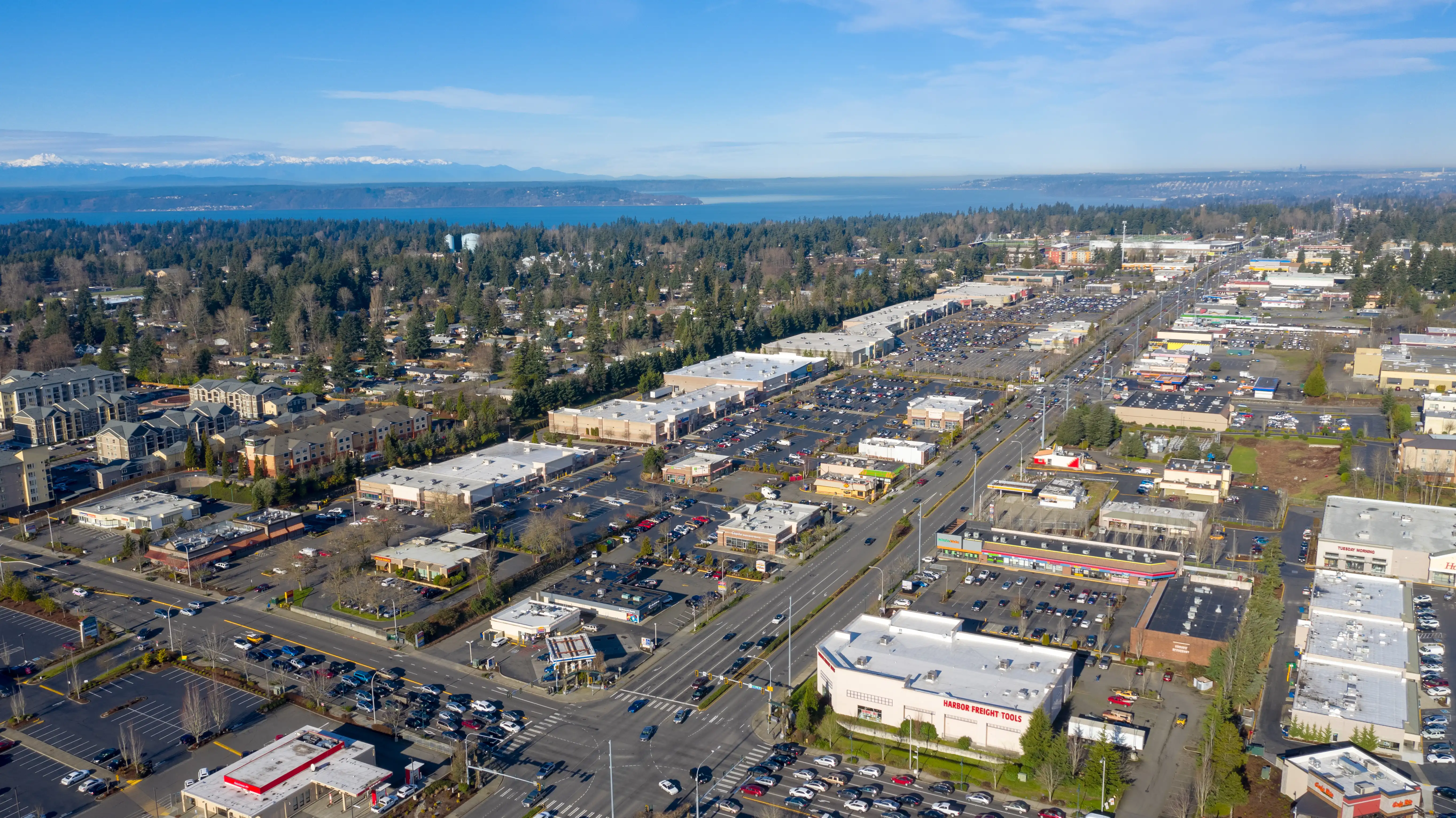
The top-line figures deserve an honest look before anything else. Local police data and FBI-compiled estimates commonly report Federal Way's combined crime rate at roughly 47 to 53 incidents per 1,000 residents annually — well above both the state and national averages. The city's property crime rate, widely estimated at around 33 to 42 per 1,000 residents depending on the source and methodology, is the primary driver of that number. The violent crime rate, commonly reported around 3.2 per 1,000 residents, is elevated relative to national norms but remains a fraction of the property crime figure. The distinction matters: the risk profile for most residents is primarily about protecting vehicles and property, not personal safety.
What makes the current moment genuinely different is the trajectory. Federal Way Police Department data shows overall crime dropped roughly 11% in 2024 compared to 2023, and a year-over-year comparison through mid-2025 shows another 25% reduction in overall crime from the same period in 2024. That kind of movement in such a short window is meaningful. Much of the credit goes to a change in state law that restored officers' ability to pursue stolen vehicle crimes — a policy shift that, per FWPD, created a direct ripple effect on burglaries, robberies, and other crimes that frequently involved stolen vehicles as tools. Motor vehicle theft alone dropped over 55% in the first eight months of 2025 compared to the prior year.
Context against regional peers also matters. Washington state overall carries higher crime rates than many assume — particularly for property crime — and Federal Way's figures reflect some of the same patterns seen in other mid-sized South King County and Pierce County cities. The city is not an outlier in the way that a casual national comparison might suggest; it occupies a specific band of the suburban crime spectrum that also includes parts of Kent, Auburn, and portions of Tacoma.
Federal Way's violent crime rate sits at approximately 3.2 per 1,000 residents — above the state average, but well below what the word "violent" tends to conjure for prospective residents. FWPD data from 2025 shows aggravated assaults down 33% and robberies cut nearly in half compared to the prior year. Homicides remain the most alarming data point — eight occurred in the first eight months of 2025 — but FWPD has been explicit that roughly half were domestic violence-related and none were random. For someone living or working in the city's residential neighborhoods, the day-to-day reality of violent crime risk is considerably lower than the aggregate rate implies.
Property crime is where Federal Way's numbers become harder to minimize. Larceny and theft account for the largest share of incidents, and motor vehicle theft has historically been a defining feature of the city's crime profile — though the dramatic decline in auto theft through 2025 signals real progress. The commercial corridors along Pacific Highway South and around the Enchanted Parkway retail zone see a disproportionate share of incidents, which structurally inflates citywide statistics. Residents in quieter neighborhoods well away from these retail concentrations typically experience far less exposure than the city average suggests.
Twin Lakes sits among Federal Way's more stable residential areas, with a crime rate commonly estimated around 30 per 1,000 residents — meaningfully below the city average and roughly in line with Washington state norms overall. The neighborhood's relatively high homeownership rates and distance from the commercial corridors along Pacific Highway are the structural factors that keep those numbers lower. Violent crime here tends to rate a B+ grade in most available neighborhood assessments. Families with school-age children who want Federal Way's price point without the elevated crime exposure of the city's eastern edge consistently look here first.
Best for: Buyers who want Federal Way's value without the crime exposure of the commercial corridors.
Among the neighborhoods that consistently score at the top of Federal Way's safety rankings, Madrona Meadows is the standout. Median household income in the neighborhood runs above $100,000, and the combination of owner-occupied single-family homes and minimal retail activity keeps property crime incidents low. This is the kind of neighborhood where residents are more likely to discuss the coyote sighting on the trail than a car break-in. Its safety profile reflects the broader pattern that the northern and quieter residential sections of Federal Way operate on a fundamentally different risk level than the rest of the city.
Best for: Buyers prioritizing residential quiet and strong neighborhood-level safety data.
Enchanted Village posts some of the highest median household incomes in the city — commonly reported above $140,000 — and the safety grades follow. Residents here describe an environment where property crime feels distant from daily life. The neighborhood's cohesion and home values create natural deterrence, and its location away from the I-5 commercial strip further reduces exposure. Its safety profile is closer to what you'd find in higher-income pockets of Des Moines or Federal Way's western fringe than to the city's statistical average.
Best for: Buyers seeking the city's most established, high-income residential enclave with top safety metrics.
Marine Hills tends to track alongside Madrona Meadows and Buenna in neighborhood safety assessments, consistently earning A-range grades in available crime analysis. The western positioning of the neighborhood, closer to Dash Point State Park than to Pacific Highway, matters for crime exposure. Residents here benefit from a buffer of green space and the lower retail density that comes with the western side of the city. It is one of the areas where long-time Federal Way residents land when they want to stay in the city but move toward quieter conditions.
Best for: Buyers who want established western Federal Way with lower property crime exposure and proximity to Dash Point.
Steel Lake's safety profile is more mixed than the city's western neighborhoods, reflecting its more central position and proximity to busier commercial activity. It's not among the city's highest-crime areas, but residents here tend to be more attentive to vehicle security than those in the quieter western neighborhoods. The neighborhood's draw — Steel Lake Park itself, with its beach and summer crowds — brings activity that cuts both ways. For buyers focused on lifestyle amenities and willing to take reasonable precautions, Steel Lake offers a strong value proposition; for those prioritizing the lowest possible crime exposure, the western neighborhoods offer a cleaner picture.
Best for: Buyers who want park-front lifestyle access and accept a slightly more active property crime environment.
Kitts Corner represents the most honest conversation about Federal Way's safety gradient. Available neighborhood assessments grade it notably lower than the city's western and northern neighborhoods — a C-range in most analyses — reflecting its proximity to commercial corridors and higher traffic volume. This doesn't mean it's dangerous in a visceral sense, but it does mean residents report more awareness of property security, particularly vehicle-related incidents. Buyers considering Kitts Corner because of its affordability relative to nearby neighborhoods should factor the crime differential into their decision and spend time there at various times of day before committing.
Best for: Value-focused buyers who do their due diligence and are comfortable with a higher-activity neighborhood environment.

| City | Violent Crime/1K | Property Crime/1K | Overall Safety Profile |
|---|---|---|---|
| Federal Way | ~3.2 | ~33.4 | Below average; improving trajectory |
| Kent | ~4.1 | ~40.2 | Similar profile; comparable commercial density |
| Auburn | ~4.6 | ~38.7 | Comparable; higher violent crime rate |
| Des Moines | ~2.1 | ~22.5 | Moderately safer; smaller city footprint |
| Burien | ~3.8 | ~31.0 | Similar range; comparable suburban challenges |
| Tacoma | ~5.5 | ~45.0 | Higher across both categories |
| Seattle | ~6.1 | ~42.0 | Significantly higher violent crime |

Neighborhood safety perceptions directly shape property values and how fast homes sell in Federal Way. Areas like Twin Lakes and Adelaide consistently attract buyers who prioritize lower-crime environments, and well-priced homes there — often under $650,000 — can receive multiple offers within days of listing. Steel Lake draws similar interest, particularly from families who've done their homework on local crime statistics. When buyer demand clusters around specific neighborhoods for safety and livability reasons, you're looking at stronger long-term appreciation potential, which matters as much as the purchase price itself.
That's exactly why I encourage buyers to connect with a lender before they ever schedule a tour. Knowing your comfortable budget — not just your maximum approval — means understanding the full monthly picture, including property taxes, homeowner's insurance, any HOA dues, and how your loan structure affects what you're actually paying each month. In competitive pockets of Federal Way, sellers favor buyers who are already prepared. Getting your financing sorted early means that when the right home in the right neighborhood appears, you're ready to move with confidence rather than scrambling to catch up.
The corridor that runs along Pacific Highway South — from roughly South 312th Street down through the South 348th area — is where Federal Way's crime concentrations are most visible. This stretch has historically carried higher incidents of theft, vehicle prowls, and occasional more serious activity, and it's the area locals think about when the city's reputation comes up. Residents avoid leaving anything visible in parked vehicles anywhere near this corridor. The same sensibility applies around the transit center on South 317th Street, which generates foot traffic and, historically, some associated property crime — though FWPD's enhanced enforcement posture through 2025 has reduced incidents noticeably even here.
What apps like NeighborhoodScout and Niche don't fully capture is the hyper-local texture of Federal Way's safety. A buyer who lands a home on a cul-de-sac in Adelaide near 1st Avenue South is living a fundamentally different daily experience than someone on a commercial block near Pacific Highway. The mistake most relocating buyers make is reading the city-level crime index and applying it uniformly to every neighborhood. Long-time residents have a much more granular mental map: west of I-5 and north of South 320th Street is generally calmer; the eastern commercial zones require more situational awareness.
The practical habits of Federal Way residents aren't dramatic. Locking cars every time, not leaving packages on porches during delivery windows, using a garage if the home has one, knowing neighbors' faces — these are the baseline behaviors locals adopt. FWPD's dual CALEA and WASPC accreditation is a meaningful indicator that the department operates to a serious professional standard, and the department's 70,000 annual calls for service reflect a genuine community responsiveness model. The improvement trajectory since 2024 is real, and residents who've been here for a decade describe the current period as one of the more tangible shifts they've seen.
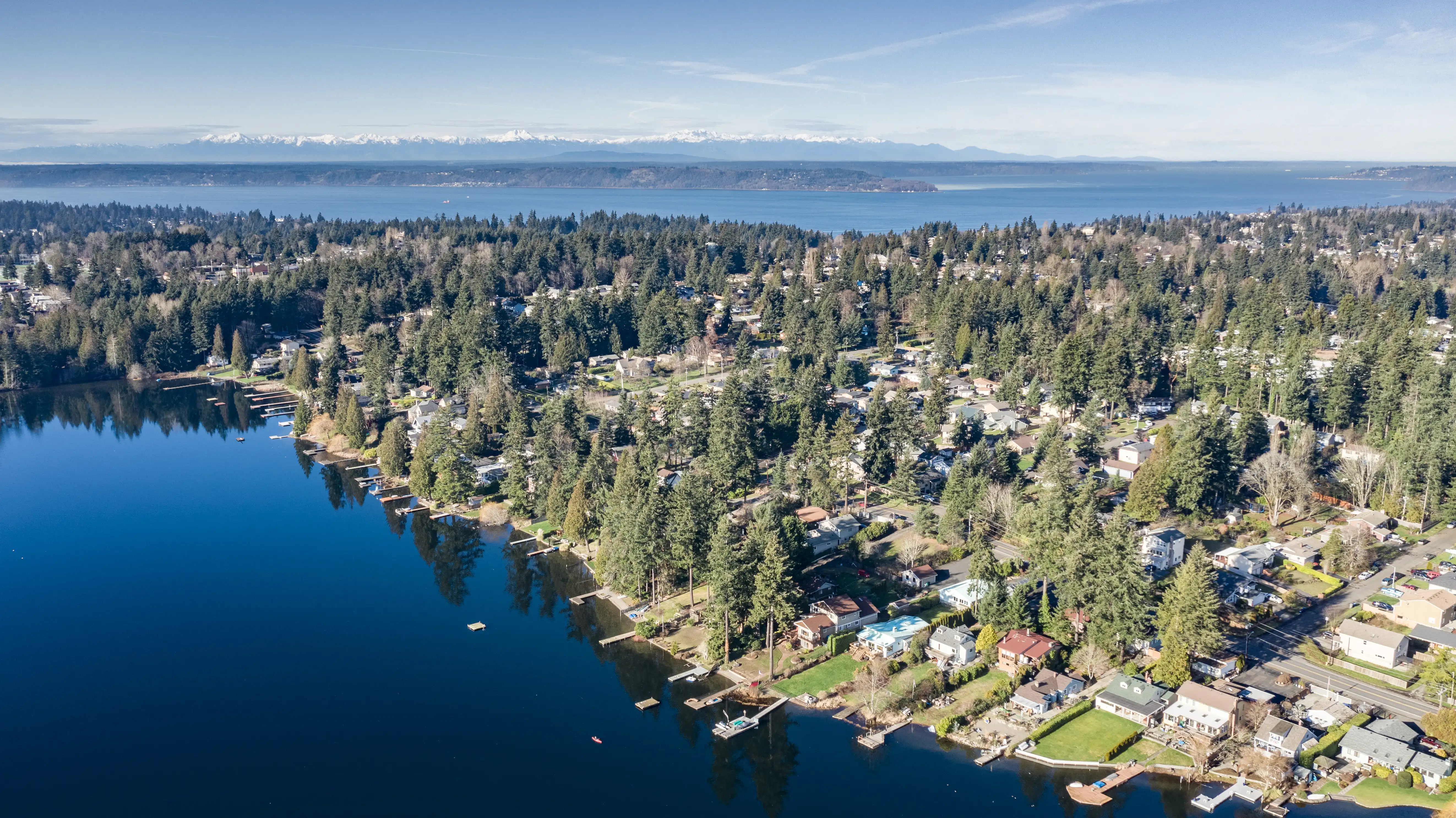
Local Expert Takeaway: If you're evaluating Federal Way on safety, draw a mental line along Pacific Highway South and understand that most of the city's headline crime data comes from the retail and transit zones east of I-5. Buyers targeting Twin Lakes, Marine Hills, Madrona Meadows, or the Adelaide corridor will find a residential environment that competes favorably with comparable price points in Des Moines or Burien. Avoid leaving vehicles unsecured anywhere in the city, and spend time in any specific neighborhood at different times of day before making an offer — the difference between Federal Way's safest and least safe blocks is larger than in most suburban cities its size.
✅ The city's crime is improving. Overall crime dropped roughly 25% year-over-year in 2025, with motor vehicle theft, robbery, and burglary all posting significant declines.
⚠️ Property crime remains the primary concern. Theft and vehicle-related incidents concentrate along the Pacific Highway South corridor and near commercial zones — not uniformly across residential neighborhoods.
📍 Neighborhood selection matters more here than in most comparably-priced cities. The gap between Federal Way's safest western neighborhoods and its most active eastern corridors is wide enough to make neighborhood research a non-negotiable part of the buying process.
Is Federal Way a safe place to live?
The honest answer is: it depends significantly on where in Federal Way you live. The city's aggregate crime statistics sit above state and national averages, but neighborhoods like Twin Lakes, Madrona Meadows, Marine Hills, and Enchanted Village post numbers that compare favorably to the broader South King County region. For buyers willing to research specific streets and neighborhoods rather than relying on city-level averages, Federal Way offers livable, comfortable residential options at a median home price of $610,000 that would be difficult to match in northern King County.
What is the crime rate in Federal Way?
Local police data and FBI-compiled estimates commonly place Federal Way's overall crime rate in the range of 47 to 53 incidents per 1,000 residents, with the violent crime component sitting around 3.2 per 1,000. Property crime — particularly larceny, vehicle theft, and burglary — accounts for the majority of incidents and concentrates disproportionately along commercial corridors. The city saw a documented 25% reduction in overall crime through the first eight months of 2025 compared to the same period in 2024.
How does Federal Way compare to nearby cities for safety?
Federal Way's crime profile is broadly comparable to Kent and Auburn, and substantially safer than Tacoma or Seattle on violent crime metrics. Des Moines posts lower crime rates overall, partly due to its smaller size and less commercial density. The framing that Federal Way is uniquely dangerous relative to its South King County peers is not supported by the available data — it occupies a similar tier to several of its neighbors while offering a larger city's worth of amenities and employment access.
Explore the full Federal Way series: Living in Federal Way · Is Federal Way Safe? · Cost of Living · Best Neighborhoods · Schools & Family Life · Youth Sports · Parks & Rec · Retiring in Federal Way