
Eastern Washington · Washington
1031 Exchange & Investment Real Estate in Kennewick (2026)
Not everyone doing a 1031 exchange is a professional investor managing a portfolio of twelve properties. A lot of the capital flowing into Kennewick right now comes from California homeowners who finally sold a house they've lived in for twenty years, walked away with $800,000 to $1.4 million in proceeds, and are now staring down a significant tax bill unless they act. Kennewick earns a serious look as a replacement property market because the numbers work at entry-level prices that haven't existed in California for a generation — a city with a median sold price in the $415,000 to $425,000 range, a landlord-friendly state, no income tax, and a rental base that doesn't evaporate when the tech sector sneezes.
Kennewick's rental market is grounded in something durable: working households employed at Trios Health, Tyson Foods, Lamb Weston, and the Kennewick School District. Roughly 37% of the city's real estate is renter-occupied, and those renters skew toward families — half of rental households are family units, with nearly a third including children under 18. That kind of tenant profile supports stable, multi-year tenancies rather than the high-turnover churn that plagues student or transient markets. The property types that move most often as investment vehicles are single-family rentals in the $350,000 to $500,000 range and small multifamily — duplexes and four-plexes — where yield margins tend to run higher than on the west side of the Cascades.
This guide walks through 1031 exchange mechanics, the Kennewick investment property market in 2026, why California capital specifically keeps landing here, Washington's tax structure for investors, the realities of out-of-state ownership, and a due diligence checklist built for buyers on a 45-day clock.

The core structure is straightforward. When you sell an investment property, you have 45 calendar days from closing to identify your replacement property in writing to your qualified intermediary. The clock does not pause for weekends, holidays, or escrow delays. You then have 180 calendar days total from that same closing date to actually close on the replacement. The 45-day window is the constraint most investors underestimate — in a market like Kennewick where well-priced rentals are moving in under 40 days, you cannot afford to spend the first three weeks of your identification window casually browsing listings.
The like-kind rule is broader than most people expect. Any real property held for investment or business use qualifies as like-kind to any other real property held for the same purpose — a single-family rental in Sacramento can exchange into a duplex in Kennewick, a commercial strip can become a four-plex, and bare land can become an apartment building. What triggers taxable "boot" is receiving cash or non-like-kind property as part of the transaction, or failing to reinvest the full amount of your net proceeds. If your relinquished property sold for $900,000 and you only deploy $750,000 into the replacement, the $150,000 difference is taxable in the year of the exchange.
The qualified intermediary is non-negotiable. You cannot receive the proceeds from your sale, even briefly — the funds must go directly to a QI who holds them and disburses to the closing on the replacement side. Choosing a QI before you list your relinquished property is best practice; choosing one after you've already signed a purchase agreement is cutting it close.
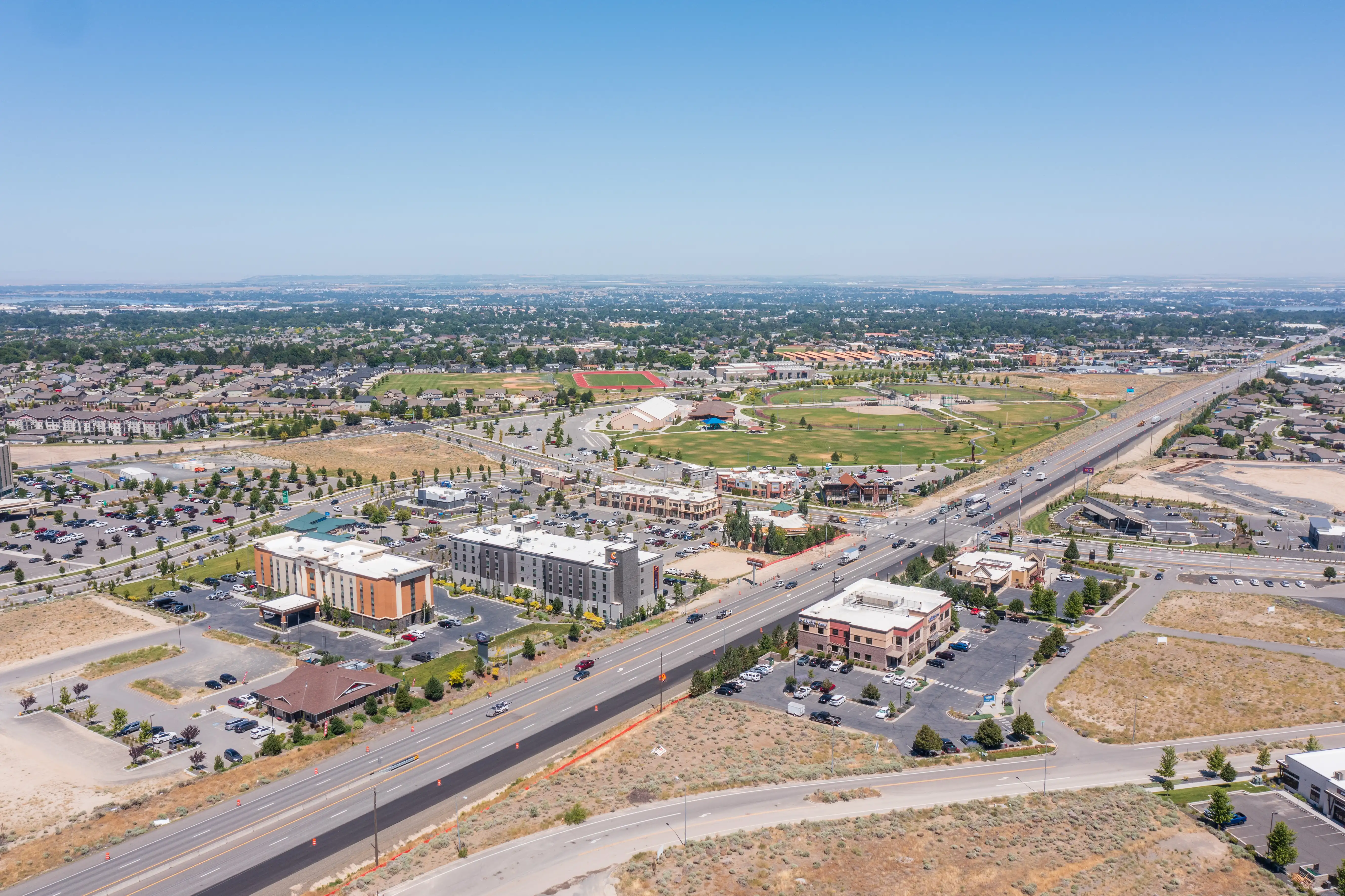
Kennewick is the most active transaction market in the Tri-Cities. Month over month, it consistently posts the highest number of listings and the most closings among Kennewick, Richland, and Pasco — which matters when you're on a 45-day identification deadline and need real inventory to choose from. The city absorbed 129 home sales in a single month in mid-2025, up significantly from the prior year, and inventory has been expanding modestly, giving investors more options than they had during the 2021–2022 peak.
| Property Type | Typical Price Range | Est. Cap Rate | Avg Days to Close |
|---|---|---|---|
| Single-Family Rental (SFR) | $320,000 – $500,000 | 5.0% – 6.5% | 35 – 45 days |
| Duplex / Small Multifamily | $450,000 – $650,000 | 5.5% – 7.5% | 40 – 55 days |
| Small Strip / Retail | $700,000 – $1.5M | 6.4% – 6.8% | 45 – 70 days |
| Single-Tenant Net Lease | $1.0M – $2.5M+ | 6.5% – 7.5% | 60 – 90 days |

The comparison that keeps coming up in conversations with out-of-state buyers is straightforward: California capital stretches dramatically further here. A Bay Area investor who just sold a house for $1.4 million can buy a duplex and a single-family rental in Kennewick at roughly $550,000 and $400,000, respectively — both free and clear — and still have exchange proceeds left over. That is not a hypothetical; it reflects what properties in those price bands currently look like on the ground here.
A Bay Area homeowner selling at $1.4 million is carrying a gain that makes reinvesting the full proceeds into California real estate almost impossible without going deep into debt again. Kennewick's median sold price in the $415,000 to $425,000 range means a single Bay Area property often funds two replacement assets here, spreading risk and generating monthly income on both. The Bay Area investor who has been a landlord also appreciates Washington's landlord-tenant framework compared to the increasingly restrictive California regulatory environment.
The Los Angeles and San Diego markets have seen median prices stretch well above $800,000 in most submarkets, meaning a Southern California investor selling a mid-tier rental carries significant gain. Kennewick's price-to-rent dynamics — where a $420,000 SFR can generate $1,800 to $2,200 per month in rent — produce a gross rent multiplier that hasn't been achievable in SoCal for years. The added pull is Washington's zero state income tax, which changes the after-tax math on rental income immediately.
Sacramento and Inland Empire investors are geographically and psychologically closer to making this move — Eastern Washington feels familiar in climate and character, and the drive from Sacramento to Kennewick is under ten hours. These buyers tend to be more pragmatic about property management costs and less surprised by the market dynamics than coastal investors. The yield gap between a Sacramento SFR and a Kennewick SFR is narrower than the Bay Area comparison, but Washington's tax structure still creates a meaningful long-term advantage.
Washington is one of nine states with no state income tax. Every dollar of net rental income generated from a Kennewick property stays in the investor's pocket — it is not subject to the 13.3% top marginal rate that California applies to ordinary income including rental profits. For an investor netting $30,000 annually from a Kennewick duplex, the difference between a California tax treatment and a Washington one is real money every year, compounding over a ten or twenty-year hold.
| Tax Item | California | Washington |
|---|---|---|
| State income tax on rental income | Up to 13.3% | None |
| Property tax rate (new purchase) | 1.0%–1.2% (effective, post-Prop 13 reassessment) | ~0.80% (Benton County) |
| State sales tax | 7.25% base | 6.5% state + local (approx. 9.43% combined in Kennewick) |
| Capital gains on investment property sale | Ordinary income rate (up to 13.3%) | 7% on gains over ~$262,000/year (long-term only) |
Depreciation basis does not reset in a 1031 exchange — the adjusted basis from your relinquished property carries into the replacement, which affects your annual depreciation deduction going forward. Investors who want the income stream without the management responsibility should also know that Delaware Statutory Trusts (DSTs) qualify as like-kind replacement properties under IRC 1031, allowing passive ownership in institutional-grade assets without landlord duties.

Investment properties in Kennewick's established neighborhoods tend to hold and build value well, which matters a lot when you're planning a 1031 exchange and need a replacement property that makes long-term sense. Areas like Canyon Lakes and Southridge consistently attract tenants and buyers alike, with well-maintained homes that don't sit on the market long — desirable listings in these neighborhoods can move within days, sometimes before investors who aren't prepared even get a showing scheduled. West Highlands is another area worth watching for replacement property opportunities, generally with options available under $750,000 depending on the property type and current inventory.
Before you start touring potential replacement properties, please talk to a lender first — and I mean before, not during. A 1031 exchange already has tight timelines, and the last thing you want is to identify the right property and then scramble to figure out your financing. Understanding your full monthly payment picture — loan structure, taxes, insurance, and any HOA dues — helps you find a comfortable investment budget, not just a maximum approval number you'd regret stretching toward.
Washington's landlord-tenant law is functional but not a blank check for landlords. The state has specific notice requirements for rent increases and lease terminations, and while there is no statewide rent control as of 2026, several Washington cities have explored local caps. Kennewick itself has not enacted rent control, and Benton County has historically been resistant to that type of regulation. The practical day-to-day framework here is more landlord-friendly than Seattle, Portland, or any California jurisdiction.
Out-of-state owners consistently underestimate the value of a local property manager. Kennewick is a 12-to-15-hour drive from the Bay Area and a flight with a connection from most California airports — a plumbing emergency at midnight is not something you can handle remotely. Local property management typically runs 8% to 10% of gross monthly rent. That cost should be baked into every cap rate calculation from the beginning, not treated as optional.
Vacancy in Kennewick runs tighter than the national average. Eastern Washington markets, where Kennewick sits, tend to track closer to the statewide "rest of state" figure of around 4% to 5%, compared to the national Q2 2025 vacancy rate of 7.0%. The durable employment base — healthcare, food processing, utilities, education — keeps tenant demand steady across economic cycles, which is exactly what a 1031 investor holding for ten or more years wants to underwrite.
| Item | What to Verify | Local Resource |
|---|---|---|
| Title search | Clear title, no undisclosed liens | Benton County title company |
| Sewer/septic status | Connected to municipal sewer or on septic | City of Kennewick Public Works |
| Flood zone determination | FEMA flood map zone; Columbia River adjacency | FEMA Flood Map Service Center |
| Rental permit requirements | City of Kennewick business license for rentals | City of Kennewick licensing dept. |
| HOA restrictions on rentals | Rental caps, minimum lease terms, STR prohibitions | HOA CC&Rs / management company |
| ADU potential | Washington state ADU law (strong — most SFR lots qualify) | City of Kennewick planning & zoning |
| Zoning classification | Residential vs. mixed-use; permitted uses confirmed | Benton County GIS / city planning |
| School district boundaries | Kennewick School District zone affects tenant pool | Kennewick School District |
| Current lease status | Month-to-month vs. fixed term; rent rolls current | Request from seller prior to inspection |
| Full property inspection | Deferred maintenance, roof age, HVAC, foundation | Licensed WA home inspector |
| Short-term rental ordinances | City rules on Airbnb / VRBO if STR strategy planned | City of Kennewick code enforcement |
| Property management referral | Vetted local PM company before close | Local agent network |
| Qualified intermediary confirmation | QI appointed before relinquished property closes | National or regional QI firm |
| Insurance quote | Landlord policy; wind/hail coverage for Eastern WA | Local independent insurance broker |
| Title company coordination | Same title company handles both legs if possible | Benton County-based title office |
Local Expert Takeaway: The most common mistake California 1031 investors make in Kennewick is underwriting cap rates without factoring in professional property management from day one. A Kennewick SFR that pencils at 6.2% gross yield drops to 5.4% net once you account for 9% management fees, vacancy, and maintenance reserves — and that's before a major repair year. Run your numbers on net yield before you identify the property, not after you've already used two of your three identification slots.
Todd works with out-of-state 1031 buyers regularly and understands the pressure of finding the right property before your identification window closes. If you're entering the Kennewick market on a 1031 clock, getting pre-approved on a DSCR loan before your relinquished property closes is the move — it keeps the transaction off your personal debt-to-income ratio and gives you the ability to make a competitive offer the day you find the right asset. Reach out now and have your financing structure ready before day one of the 45-day window.
Does a 1031 exchange work for out-of-state property?
Yes — a 1031 exchange has no residency or location requirement. Your relinquished property can be in California, Florida, or anywhere in the U.S., and your replacement property can be in Washington. The only requirements are that both properties are held for investment or business use, the exchange is structured through a qualified intermediary, and you meet the 45-day identification and 180-day closing deadlines.
What is the cap rate on rental property in Kennewick?
Single-family rentals in Kennewick typically yield in the 5.0% to 6.5% gross cap rate range based on current price levels and prevailing rents of $1,800 to $2,200 per month for a three-bedroom home. Small multifamily — duplexes and four-plexes — can push into the 5.5% to 7.5% range depending on age, location, and whether units are currently occupied at market rent. Net cap rates after management fees and reserves typically run 1.0% to 1.5% below those gross figures.
Do I need a local property manager for a 1031 investment in Washington?
You are not legally required to hire a property manager, but for an out-of-state owner, attempting to self-manage a Kennewick rental from California is a practical problem, not just a convenience question. Washington landlord-tenant law has specific notice and procedural requirements that are easy to violate unintentionally from a distance, and maintenance response times directly affect tenant retention. Budgeting 8% to 10% of gross rent for a local manager is the right call from the start.
Explore the full Kennewick series: The Ultimate Kennewick Relocation Guide · Is Kennewick Safe? · Cost of Living in Kennewick · Best Neighborhoods in Kennewick · Kennewick Schools & Family Life · Kennewick Youth Sports · Kennewick Parks & Recreation · Retiring in Kennewick · 1031 Tax-Deferred Exchange in Kennewick · Kennewick First-Time Homebuyers Guide · Kennewick Down Payment Assistance Guide · Moving to Kennewick from California