
Eastern Washington · Washington
Living in Kennewick: The Ultimate Relocation Guide (2026)
Maybe your employer is transferring you to the Tri-Cities and you've been told to "check out Kennewick." Maybe you've been watching home prices in Seattle or Spokane climb past what you can justify, and someone in a Facebook group dropped Kennewick's name with a shrug, like the answer was obvious. Or maybe you drove through on US-395 and thought it looked like every other mid-sized Eastern Washington city — a strip of fast food, a river, and a lot of sun. That impression is wrong, and this guide exists to correct it. Kennewick is the largest of the Tri-Cities, a metro area that has expanded by more than 131,000 residents since 2000, and it carries a contradiction worth understanding before you buy: it offers more space, more sunshine, and lower costs than nearly anywhere west of the Cascades — but it also asks you to give up certain conveniences, urban amenities, and cultural density that some people only realize they needed after they've signed the paperwork.
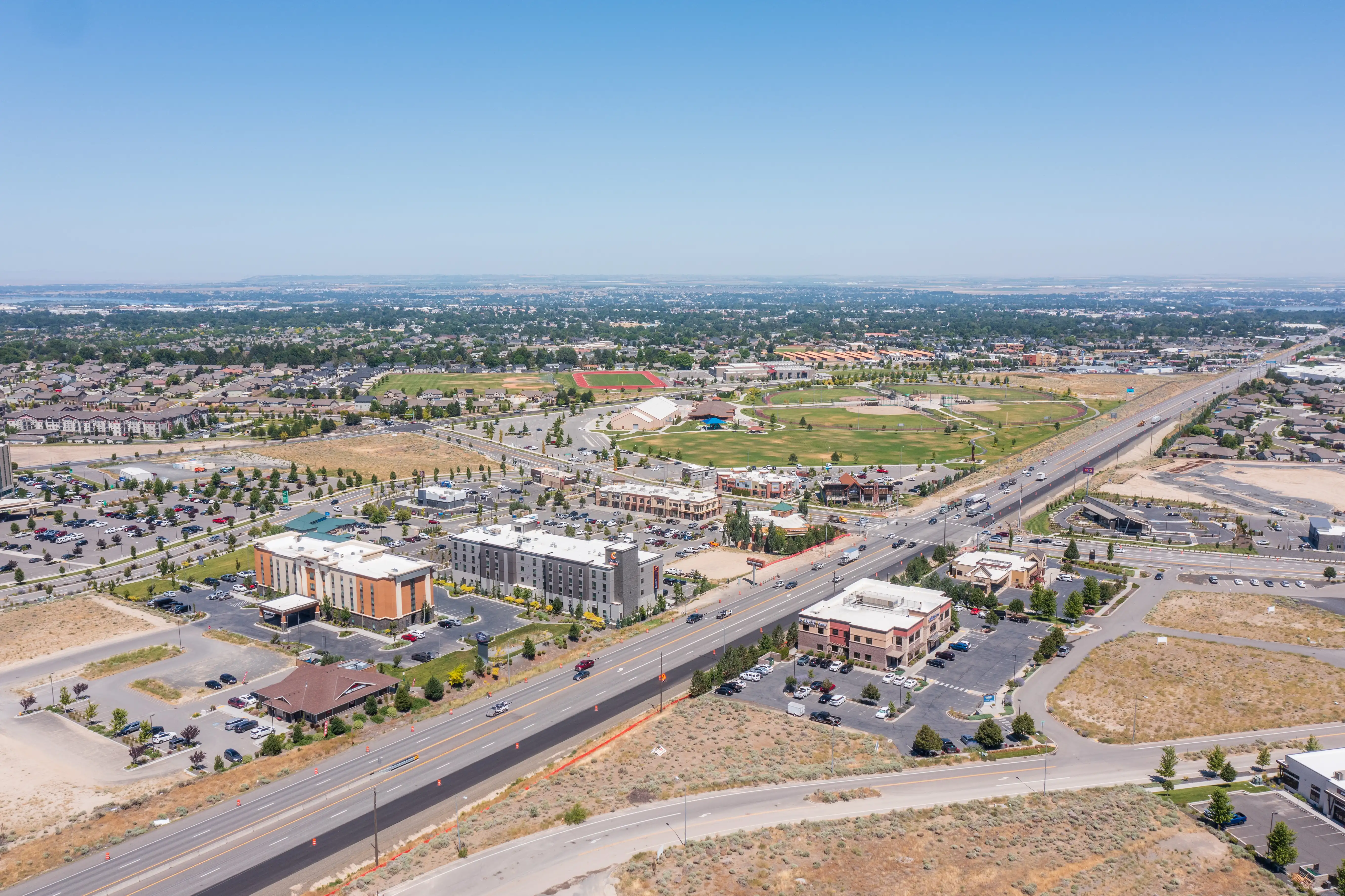
Geographically, Kennewick anchors the southwest corner of the Tri-Cities, sitting along the Columbia River's southwest bank near the confluence of the Columbia, Yakima, and Snake rivers. That geography shapes daily life more than any city statistic. The Columbia runs like a spine through the region, dividing Kennewick from Richland to the north and Pasco to the east, and the bridges that connect them determine everything — your commute, your Saturday errands, and which hospital your kids go to. The surrounding terrain is high desert, semi-arid and sun-drenched, with more than 300 days of sunshine annually and roughly eight inches of rain per year. The climate is one of Kennewick's most legitimate selling points, and also one of its more underappreciated challenges — summer highs push well past 100°F, wildfire smoke can settle over the city for weeks at a time, and the wind off the Columbia carries a particular kind of grit that makes your car perpetually dusty.
This guide will help you answer the questions that matter before you commit: Which neighborhoods match your budget and lifestyle? What do commutes actually look like? Where do families end up staying long-term versus burning out and leaving? And what does a $433,000 home actually get you here compared to what you'd pay in Richland or Spokane? If you're deciding between Kennewick and anywhere else, read the whole thing — the upsides are real, but so are the tradeoffs.

Not every city works for every buyer, and Kennewick is no exception. The table below cuts to the intent-based verdict for the buyer types who most commonly consider this market.
| Best For | Why |
|---|---|
| First-time buyers | Median home prices around $433,000 and a price-to-income ratio that's nearly 15% below the Washington state average make ownership achievable here in a way it simply isn't in most of the state |
| Commuters to Richland | The average drive to Richland runs about 21 minutes, and PNNL's 4,000-plus jobs are a realistic daily commute from most Kennewick neighborhoods |
| Families with school-age children | 32-school Kennewick School District, affordable family-sized homes in Southridge and Canyon Lakes, and youth sports infrastructure that competes with cities twice the size |
| Remote workers | Low cost of living, 300-plus days of sunshine, and outdoor recreation within arm's reach make this a legitimate Pacific Northwest remote-work base without the Seattle price tag |
| Retirees | No state income tax, mild winters by Eastern Washington standards, walkable riverfront at Columbia Park, and healthcare anchored by both Trios Health and Kadlec Regional |
| Affordability-driven relocators from the west side | Buyers priced out of the Puget Sound region routinely discover that Kennewick's home prices run about 14.5% below the Washington state average — without giving up most quality-of-life fundamentals |
Living in Kennewick means living in genuine sunshine. The number sounds like a Chamber of Commerce line until your first February, when you realize you haven't seen persistent cloud cover in three weeks and your neighbors are already grilling. That climate shapes the rhythm of daily life here in ways that take about six months to fully appreciate — outdoor dining runs from March through October, the Columbia Park trail system gets used year-round, and the city doesn't hibernate the way northwest-side Washington towns do.
The commute reality is better than it looks on paper. The average commute within Kennewick is commonly reported around 17 minutes, and the drive to Richland — where a significant portion of the region's professional-class jobs are located — typically runs 21 minutes in normal traffic. The main friction points are the Columbia River bridges during morning rush hours, particularly the Blue Bridge corridor, which can add 10-15 minutes during the 7:30-8:30 a.m. window. If your daily route crosses the river, living in west Kennewick or Southridge shaves a meaningful amount of time off that commute compared to Creekstone or neighborhoods farther east.
The community vibe reads as unpretentious, practical, and increasingly younger. The median age sits around 35, and the influx of remote workers over the past few years has introduced a layer of wine-bar-and-coffee-shop culture that didn't exist a decade ago. Columbia Gardens Wine Village along the waterfront has become something of a weekend social anchor — not the kind of place that makes national press, but the kind that locals actually use every Friday in September. Downtown Kennewick proper still has the feel of a mid-renovation main street, with genuine local businesses interspersed among the predictable vacancies, but the trajectory is pointed in the right direction.
What surprises most people after six months of living here is the wind. Eastern Washington residents know it, but newcomers from the west side aren't prepared for how consistent and aggressive it gets — especially in spring, when dust storms can reduce visibility on Highway 395 and cover your deck furniture in a film of fine grit within hours. It's not a dealbreaker, but it's the one environmental detail that almost nobody mentions in relocation conversations and almost everyone notices by May.
The sun is the top-line draw, and it's earned. More than 300 sunny days per year isn't a rounding error — it's a fundamentally different relationship with outdoor space than most of Washington allows. Columbia Park's 400-plus acres along the river provide trails, boat launches, picnic areas, and the Gesa Carousel of Dreams, which draws families from across the Tri-Cities on weekends. The Sacagawea Heritage Trail extends for more than 23 miles along the Columbia and Snake rivers, connecting Kennewick to Richland and Pasco on foot and by bike. Residents who move here from Portland or Seattle for work often report that their physical activity doubles within the first year simply because the weather cooperates.
The cost picture is genuinely compelling by Washington standards. A city with a median household income around $73,000 and a median home price near $433,000 carries a price-to-income ratio that is manageable in a way that Bellevue, Kirkland, or even Spokane's Southgate neighborhoods are not. Average rent runs around $1,298 per month — roughly 20% below the national average. Washington's absence of a state income tax amplifies every paycheck, and at a property tax rate of approximately 0.80%, the annual carrying cost on a typical Kennewick home is notably lower than comparable properties in Oregon or California.
The wine country access is a quality-of-life perk that surprises people who don't think of Eastern Washington as wine country. More than 200 wineries operate within an hour of Kennewick, concentrated in the Walla Walla, Red Mountain, and Horse Heaven Hills AVAs. Columbia Gardens Wine Village sits right along the waterfront in the city itself — a walkable cluster of tasting rooms that doubles as the de facto Friday-evening social spot for a wide cross-section of Kennewick residents from late spring through fall.
For families with children, the combination of affordable family-sized homes and a major sports and events complex is a practical upside that rarely shows up in livability indices. The Southridge Sports and Events Complex is one of the more impressive multi-sport facilities in the region, hosting tournaments that bring families from across the Pacific Northwest. The Toyota Center — the city's main event arena — keeps a regular schedule of concerts, Tri-Cities Americans hockey games, and family shows that gives the city a cultural calendar that outlasts what most comparably sized cities can sustain.

The grocery and grocery-adjacent situation is real. Kennewick is a car city in the truest sense — 89% of residents drive to work, and on-foot access to daily errands is limited to a handful of neighborhoods near Columbia Center Mall and the area around Clearwater Avenue. Residents who move here expecting to replicate any version of a walkable lifestyle are routinely disappointed within the first few months. The west side of the city and Southridge neighborhoods have strong retail and grocery access; the further east or north you go, the more every trip requires the car.
The heat is not a fun talking point for everyone. Summer highs regularly push past 100°F for weeks at a stretch, and homes without central air conditioning — still common in some older neighborhoods — become genuinely uncomfortable. Wildfire smoke compounds the issue: approximately 69% of properties carry some level of wildfire risk over the next 30 years, and smoke events from regional fires have become a near-annual occurrence that can keep the city indoors for 10-14 days during August or September. Buyers with respiratory conditions or young children with sensitivities should factor this into the location decision.
The school district's graduation rate deserves an honest look. The Kennewick School District serves just over 19,000 students across 32 schools and earns a solid B rating overall, but the four-year cohort graduation rate reported through the state's strictest measurement sits lower than the Washington statewide average. Families who prioritize academic outcomes tend to research individual schools carefully rather than relying on district-level averages — and the variation between schools within KSD can be significant.
Why some people leave Kennewick comes down to one of two things: career ceiling or cultural appetite. The local job market is strong in healthcare, food processing, education, and utilities, but professionals in technology, finance, law, or arts who exhaust local opportunities tend to find the path to advancement requires leaving the region. Separately, residents who move here from mid-to-large metros and expect a robust live-music scene, diverse restaurant culture, or a walkable entertainment district often find that Kennewick doesn't fully scratch that itch — and that gap tends to calcify over time rather than resolve.
Canyon Lakes sits in the southern portion of Kennewick, centered around the Canyon Lakes Golf Course, and it represents one of the city's most polished residential environments. Homes in this established community range from the low $400,000s for older single-family construction up to $605,000 and beyond for updated or larger properties — making it one of the city's higher-median neighborhoods. The tradeoff is the HOA structure and the fact that its car-dependent location means every errand is a drive.
Best for: Established buyers who want a maintained, golf-adjacent neighborhood with strong property values and don't need walkable amenities.
Creekstone is a newer planned community in west Kennewick that appeals to buyers who want fresh construction and neighborhood cohesion without a premium zip code. Homes here typically fall in the $380,000–$470,000 range and often include modern floor plans, open-concept layouts, and HOA-managed green space. The community tends to skew younger, with many households in their first or second home, and the access to Highway 395 keeps commutes manageable.
Best for: First-time buyers or young families seeking newer construction at approachable prices without sacrificing westside commute access.
Southridge is arguably Kennewick's most family-oriented neighborhood cluster, anchored by the Southridge Sports and Events Complex and surrounded by strong retail access along Queensgate Drive. Homes generally range from the low $400,000s into the upper $500,000s depending on lot size and age, and the area feeds into some of Kennewick's stronger elementary and middle school options. The only real downside is that Southridge's popularity has pushed prices up steadily, and inventory moves quickly when it hits the market.
Best for: Families with school-age children who want strong sports infrastructure, retail access, and newer-vintage homes in a community-minded setting.
West Highlands occupies the western edge of the city and offers a mix of established mid-century homes and infill construction at price points slightly below Southridge. The neighborhood's proximity to the Blue Bridge and Highway 395 makes it one of the better-positioned areas for cross-river commuters to Richland or Pasco. Homes here typically run in the $350,000–$450,000 range, and the neighborhood's mature tree canopy distinguishes it visually from the newer bare-lot developments on the city's southern fringe.
Best for: Commuters to Richland who want an established neighborhood feel at a moderate price point.
Inspiration Estates is a premium development in the south Kennewick hills, where larger lots and higher-end construction push prices into the $500,000–$700,000+ range. The elevation provides notable views of the Columbia basin, and the streets are quiet and low-traffic. Buyers come here specifically for the space and the sense of separation from Kennewick's more densely developed flatlands — which also means the drive to groceries or schools is not short.
Best for: Move-up buyers prioritizing lot size, views, and privacy who are comfortable with a car-dependent lifestyle.
Cherry Blossom Meadows is a mid-range residential neighborhood that draws buyers who want established streets, reasonable HOA oversight, and proximity to the Southridge retail corridor without paying Southridge's top-tier prices. Homes typically fall in the $360,000–$450,000 range. The neighborhood is family-friendly in demographic composition, with a visible mix of young children and established homeowners who've been here for a decade or more.
Best for: Families seeking Southridge-adjacent lifestyle at a slightly lower price point.
Cottonwood Springs is a quieter, more suburban neighborhood in north-central Kennewick with a mix of ranch-style homes and two-story family housing in the $320,000–$420,000 range. The area doesn't carry the brand-name recognition of Canyon Lakes or Southridge, which has historically kept prices slightly more accessible. Proximity to Clearwater Avenue's retail and dining options adds practical daily convenience.
Best for: Budget-conscious buyers who want a quiet, established neighborhood with retail access and don't need prestige-address cachet.
Hansen Park is one of Kennewick's more mature, tree-canopied residential neighborhoods, and it consistently surprises buyers who expect Eastern Washington neighborhoods to look dusty and new. The median sold price for single-family homes in this area runs near $597,500, reflecting both the larger lot sizes and the established landscape. The neighborhood's street layout and proximity to the river corridor make it feel more like a classic Pacific Northwest suburb than most of Kennewick's newer developments.
Best for: Buyers willing to pay a premium for mature landscaping, larger lots, and a neighborhood that feels established rather than recently platted.

If you're relocating to Kennewick, where you plant roots within the city genuinely matters for long-term value. Neighborhoods like Canyon Lakes and Southridge have shown consistent buyer demand, and well-priced homes in Inspiration Estates tend to move fast — sometimes within days of listing. Most of what I see buyers targeting in these areas falls under $750,000, though entry points vary depending on lot size, age, and finishes. Understanding those distinctions early helps you move with confidence rather than scrambling once you find something you love.
That's exactly why I encourage anyone relocating to connect with a lender before you start touring homes. Pre-approval is one piece, but the more valuable conversation is about your full monthly payment reality — that means factoring in property taxes, homeowner's insurance, any HOA dues, and how your loan structure affects what lands in your account each month. Max approval and comfortable budget are rarely the same number. Knowing the difference before you fall in love with a home is what keeps the process from becoming stressful.
| City | Best For | Median Home Price | Commute to Major Employers | Vibe |
|---|---|---|---|---|
| Kennewick | Affordability + amenities | ~$433,000 | 17 min internal; 21 min to Richland | Suburban, commercial, sun-forward |
| Richland | PNNL professionals, top schools | ~$470,000–$490,000 | 5–10 min to PNNL | Quieter, more polished, government-adjacent |
| Pasco | Affordability, Hispanic cultural scene | ~$340,000–$360,000 | 15–20 min to Kennewick | Growing, more working-class, affordable |
| West Richland | Space + semi-rural quiet | ~$450,000–$475,000 | 15 min to Richland | Suburban-rural edge, winery access |
| Burbank | Rural space, Horse Heaven Hills proximity | ~$300,000–$350,000 | 25–35 min to Kennewick | Rural, isolated, deeply quiet |
| Finley | Maximum affordability on Tri-Cities edge | ~$280,000–$320,000 | 20–30 min to Kennewick | Exurban, rural-residential |
| Category | Detail |
|---|---|
| Population | ~89,136 (2026 projection) |
| Median Home Price | $433,734 (Zillow Home Value Index, mid-2026) |
| Median Sold Price Range | $415,000–$430,000 (recent sales data) |
| Median Household Income | ~$73,576 |
| Property Tax Rate | ~0.80% |
| Sales Tax Rate | 8.8% (2026 combined rate) |
| State Income Tax | None — Washington has no state income tax |
| Average Commute | ~17 minutes internal; ~21 minutes to Richland |
| Annual Sunshine Days | 300+ |
| Annual Rainfall | ~8–10 inches |
| School District | Kennewick School District (32 schools, B rating) |
| Violent Crime per 1,000 | 3.5 |
| Major Employers | Tyson Foods, Kadlec Regional, Lamb Weston, KSD, Benton PUD |
The Columbia Cup hydroplane races are genuinely a local institution. Every summer, the Tri-Cities Water Follies brings unlimited hydroplane racing to the Columbia River along the Kennewick waterfront — one of the largest such events in the country and an event that's been running continuously since 1966. If you move here and don't understand why half the city seems to disappear toward the river one weekend in late July, now you know.
Columbia Gardens Wine Village isn't a tourist attraction — it's where residents actually spend Friday nights. The cluster of tasting rooms along the Kennewick waterfront functions as the city's de facto social center from late spring through the harvest season. It has a relaxed, unpretentious energy that reflects Kennewick's personality more accurately than any headline description of "wine country" suggests.
The Gesa Carousel of Dreams at Columbia Park is a point of genuine civic pride. The hand-carved, antique-style carousel has been a community gathering point for families across the Tri-Cities since it opened, and it operates on weekends during the warmer months. It sounds like a small detail, but it's the kind of place that locals quietly love and visitors consistently mention as an unexpected find.
What I would not do if moving to Kennewick: Buy in east Kennewick along the Columbia Center Boulevard corridor before spending a few weekday afternoons there first. The commercial density — fast food, big box retail, high-volume traffic — makes the area convenient for errands but genuinely unpleasant for everyday residential life. Homes near that strip are priced attractively for a reason, and buyers who choose convenience without accounting for the noise and traffic environment frequently list within two years.
Local Expert Takeaway: If you're choosing between Kennewick and Richland, the honest decision usually comes down to this: Richland's schools are stronger on measurable outcomes, but Kennewick's price point opens up significantly more home for the same mortgage payment. Buyers who don't have kids in school right now — or who've done the research and landed at a specific KSD school they're happy with — routinely find that Kennewick's west side and Southridge neighborhoods deliver more value per dollar than anything comparable in Richland. Don't buy near the Columbia Center Boulevard commercial corridor unless walkable retail is your priority; for long-term residential satisfaction, Southridge, Hansen Park, and West Highlands are the neighborhoods that consistently hold their value and hold their residents.
✅ Kennewick delivers legitimate affordability by Washington standards — a median home price of $433,734 against a price-to-income ratio nearly 15% below the state average, combined with no state income tax and a property tax rate of 0.80%, makes ownership here financially achievable for a wide range of buyers.
⚠️ The heat, wind, and wildfire smoke are not background noise — summer temperatures routinely exceed 100°F, spring dust events are real, and smoke from regional wildfires can effectively close outdoor life for 1-2 weeks each August or September. Factor these into your decision if respiratory health or outdoor lifestyle is central to your quality of life.
📍 Neighborhood selection matters more here than in most cities — the experience of living in Southridge near the sports complex is categorically different from living near the Columbia Center Mall corridor or in east Kennewick, even at similar price points. Drive the neighborhoods you're considering at different times of day before committing.
Is Kennewick a good place to raise a family?
Yes, with clear-eyed expectations. Kennewick offers affordable family-sized homes, strong youth sports infrastructure through the Southridge Sports and Events Complex, and a growing community of families who've made long-term commitments to the city. The Kennewick School District carries a B rating overall, and individual school quality varies enough within the district that researching specific schools before choosing a neighborhood is worth the time.
What is the crime rate in Kennewick?
Kennewick's violent crime rate sits at approximately 3.5 incidents per 1,000 residents — a figure that tends to track below many similarly sized Pacific Northwest cities. Property crime, at 34 per 1,000, is more notable and reflects a pattern common to cities with high commercial traffic and transient populations along major highway corridors. Southridge, Canyon Lakes, and West Highlands consistently rank among the quieter residential areas in this regard.
How does Kennewick compare to Richland or Pasco?
Kennewick is the largest of the three, with the most commercial infrastructure, the widest range of neighborhoods, and the most varied price spectrum. Richland tends to attract buyers prioritizing schools and a quieter, more professionally homogenous feel, often at a slight price premium. Pasco offers the most affordability of the three and a strong and growing Hispanic community, but less retail density and a longer runway to full neighborhood maturity. Most buyers who genuinely compare all three end up in Kennewick for the practical reason that it offers the broadest combination of price range, amenities, and location.
Explore the full Kennewick series: Living in Kennewick · Is Kennewick Safe? · Cost of Living · Best Neighborhoods · Schools & Family Life · Youth Sports · Parks & Rec · Retiring in Kennewick