
Puget Sound · Washington
Moving to Mill Creek from California: The Honest Comparison (2026)
The Bay Area software engineer who packed up a 1,100-square-foot condo in Sunnyvale and landed in Mill Creek with a four-bedroom home, a yard that backs up to a trail, and a salary that didn't move — that story is real, and it's playing out regularly in Snohomish County. The Sacramento family who sold their townhome for $580,000 and bought a larger, newer home in Mill Creek without stretching their budget. The San Diego couple who stopped dreading the August utility bill, the October smoke advisory, and the freeway commute that ate 90 minutes of every workday. Mill Creek specifically draws this crowd because it packages top-rated schools, genuine suburban quiet, a planned-community feel that California buyers recognize, and a location that puts Seattle within 34 minutes on a good morning.
The hard part is what the listings don't show. Mill Creek is not California, and the transplants who struggle most are the ones who expected a Pacific Northwest version of the suburb they left. The gray starts in October and doesn't really release until late April, and that is not an exaggeration. The food scene is genuinely limited compared to any major California metro. The pace is slower in ways that feel peaceful for about six months and then occasionally frustrating. These are the things a friend who moved three years ago would tell you over coffee — and this guide will tell you before you make an offer.
What follows covers the full picture: a detailed cost comparison by California region, what your equity actually buys in Mill Creek's current market, the tax math that changes your monthly cash flow, the weather and lifestyle reality from someone who isn't trying to sell you on it, and an interactive tool to compare your specific California city directly.

| Mill Creek, WA | Bay Area | Southern CA | Sacramento Metro | Central Valley | |
|---|---|---|---|---|---|
| Median Home Price (approx. 2026) | $830,000 | $1.4M–$1.8M+ | $800K–$1.1M | $520K–$620K | $380K–$480K |
| Property Tax Rate (effective) | ~0.88% | ~1.1–1.25% | ~1.1–1.25% | ~1.1–1.25% | ~1.1–1.25% |
| State Income Tax | None | Up to 13.3% | Up to 13.3% | Up to 13.3% | Up to 13.3% |
| State Sales Tax | 6.5% + local (~10.1% in Mill Creek area) | 7.25–10.75% | 7.25–10.5% | 7.25–8.75% | 7.25–8.75% |
| Avg Utilities (monthly est.) | $180–$230 | $250–$350 | $280–$380 | $220–$300 | $230–$320 |
| Avg 1BR Rent | $1,900–$2,300 | $3,200–$4,500+ | $2,400–$3,400 | $1,600–$2,000 | $1,200–$1,600 |
A buyer leaving Walnut Creek with $1.4 million in proceeds and purchasing in Mill Creek at $830,000 isn't just downsizing their mortgage — in many scenarios they're eliminating it entirely and banking the difference. Even the buyer who reinvests the full amount into a Mill Creek home is working with a dramatically lower principal than anything comparable in the Bay Area, which means the monthly payment picture changes before you even factor in the tax environment.
The no-income-tax advantage deserves its own headline. Washington is one of only nine states with no state income tax, and for a California household earning $150,000 per year, the difference in take-home pay compared to paying California's progressive rates runs between $10,000 and $15,000 annually. That is not a rounding error — that is a car payment, a college savings contribution, or a meaningful chunk of mortgage principal every single year. Buyers who focus only on the home price comparison and miss this number are leaving real money on the table before they even close.
Washington's no-income-tax advantage is the single largest financial shift most California transplants experience, and for high earners it compounds quickly. A California household earning $120,000 per year pays roughly $8,000–$9,500 in state income tax depending on filing status and deductions. At $150,000, that figure climbs to approximately $12,000–$13,000. At $200,000, California's top marginal brackets push the liability to $18,000 or more annually. In Washington, all of those dollars stay in your pocket.
Washington does carry a higher sales tax than most California jurisdictions — the combined state and local rate in the Mill Creek area runs approximately 10.1%, which is real and applies to everyday purchases. On a household that spends $60,000 per year on taxable goods and services, the difference between California's 7.25–10% blended rate and Washington's rate is relatively modest. The net advantage of eliminating state income tax almost always outweighs the marginal sales tax difference for middle and upper-income households.
| Tax Item | California | Washington | Net Impact for Transplant |
|---|---|---|---|
| State Income Tax | 1–13.3% (progressive) | None | Strong positive — $8K–$18K+/yr savings depending on income |
| State Sales Tax | 7.25% base (up to 10.75%) | 6.5% base (~10.1% locally) | Roughly neutral to slight WA advantage |
| Capital Gains Tax | Taxed as ordinary income | 7% on LT gains over $262K/yr | Neutral for most wage earners |
| Property Tax (effective) | ~1.1–1.25% on purchase price | ~0.88% | Moderate positive — lower on comparable purchase price |
| Senior Property Tax Exemption | Limited, income-based | Yes, 61+ income-based | Positive for retirees |
Property tax in Snohomish County runs approximately 0.88% of assessed value. On an $830,000 home, that is roughly $7,300 per year — compared to a California buyer who just purchased a $1.4 million Bay Area home and is resetting their Prop 13 basis at a 1.1–1.25% effective rate, generating an $15,000–$17,500 annual tax bill. The Snohomish County figure isn't dramatically lower on a dollar-per-dollar home comparison, but when you're buying significantly more home for the price, the total tax burden still comes out favorably.
A buyer leaving Palo Alto, Los Altos, or Cupertino with $1.5 million in equity is looking at a fundamentally different transaction in Mill Creek than anything they've experienced in California. At the $830,000 median, a full-cash purchase is entirely viable, leaving capital available for investment, renovation, or a meaningful cash reserve. The golf course communities — Fairway, Country Club Estates, and Fairway Village — represent the crown jewel addresses in Mill Creek, with homes along the Mill Creek Country Club course frequently pricing from $950,000 into the low seven figures. A Bay Area buyer with strong equity who wants the best Mill Creek has to offer can purchase these properties outright or with a very small loan, eliminating the rate sensitivity that currently plagues most buyers.
For this equity tier, the meaningful question isn't whether they can afford Mill Creek — it's whether Mill Creek is the right scale of city for someone who built their social and professional life around San Francisco or San Jose. The dining scene here is limited. The cultural calendar is quiet. What Mill Creek delivers instead is space, safety, consistently excellent schools through Northshore, and a neighborhood feel that Bay Area buyers consistently describe as the thing they didn't know they were missing.
A buyer leaving Irvine, Pasadena, or Thousand Oaks with $900,000 in equity is walking into Mill Creek's top tier of inventory. That equity level covers the full purchase price of most Mill Creek single-family homes with money to spare — or funds a substantial down payment on one of the larger executive homes in Sweetwater Ranch or The Highlands, which trade in the $900,000–$1.1 million range. Families with school-age children in particular tend to land in these neighborhoods for the combination of square footage, lot size, and proximity to Northshore schools.
Southern California buyers often have the smoothest psychological adjustment to Mill Creek's pace — the suburban format is familiar, the commute distances are similar, and the expectation of driving everywhere is already baked in. What catches them is the weather shift, which is covered separately, and the discovery that the grocery and restaurant options near Mill Creek Town Center, while solid, don't match the density of a Trader Joe's every half-mile that Southern California normalizes.
This is the equity range where the move becomes a genuine financial recalibration rather than a luxury upgrade. A buyer leaving Roseville, Folsom, or Rancho Cucamonga with $550,000 in equity can purchase a well-priced Mill Creek townhome or condominium in Amberleigh or Pembrook — walkable to Mill Creek Town Center and priced in the $600,000–$800,000 range — with a very manageable mortgage. The no-income-tax advantage is what seals the math here. A Sacramento household earning $120,000 and paying $8,000–$9,500 annually in California state income tax effectively gets a substantial raise by crossing the state line, which offsets the higher home price meaningfully when modeled over five or ten years.
Sacramento buyers also tend to arrive with the clearest expectations of anyone in this guide — they've already priced out of the Bay Area, they understand regional variation in California costs, and they're motivated by the tax picture and school quality as much as pure housing value. The practical advice for this equity tier: focus on Mill Creek Town Center-adjacent properties and established neighborhoods like Cottonwood or Laurel, where the price-per-square-foot is more competitive and the community is mature.
A buyer leaving Fresno, Stockton, or Modesto with $350,000–$420,000 in equity faces the tightest math in this group, but the move can still work. In Mill Creek's current market, that equity funds a meaningful down payment on a Town Center condo or a smaller townhome — homes that would have been inaccessible in a Bay Area or Los Angeles market at the same price point. The no-income-tax savings matter even more at this income level because they directly affect monthly cash flow rather than annual tax planning.
Central Valley buyers also arrive having experienced California's most punishing summer climate — the triple-digit heat, the air quality alerts, the utility bills that run $400–$600 in August. Mill Creek's summer cap of around 76°F and PNW air quality is a genuine quality-of-life upgrade that doesn't show up in any spreadsheet but shows up in every conversation with transplants six months after the move.

Here is what a friend who moved from San Jose three years ago would actually tell you: the winters are longer and darker than you are prepared for. Mill Creek averages around 160 sunny days per year, compared to 257–259 in San Jose or San Francisco and 280+ in Sacramento. From October through March, you will spend most days under gray skies. The rain is rarely dramatic — it comes as persistent drizzle rather than downpours, and the annual total of about 44.5 inches is comparable to parts of the Southeast — but the psychological weight of seven months of overcast is a real adjustment that antidepressant prescriptions and expensive light therapy lamps partially address.
The flip side is one of the most genuinely underappreciated things about living here: the summers are extraordinary. June through September in Mill Creek brings temperatures in the comfortable 65–76°F range, 10+ hours of daily sunshine in peak summer, and some of the longest days you'll experience at this latitude — up to 16 hours of daylight near the solstice. The outdoor culture explodes. North Creek Trail sees families and cyclists every morning. The Mill Creek Community Association Nature Preserve fills up. Weekend trips to the Cascades, the San Juan Islands, and the Olympic Peninsula are genuinely accessible in a way that no California suburb can match for alpine and coastal variety within a 90-minute drive.
What transplants genuinely miss after a year: year-round beach access is the most commonly cited loss, and it's legitimate — Puget Sound beaches exist but they're not the Pacific Coast experience. Specific food scenes take longer to rebuild in a smaller city. The social energy of a dense urban area — the feeling that something is always happening nearby — is quieter here in ways that are restful for some and isolating for others. What they consistently love: the space they bought, the school district, the traffic that is difficult by Pacific Northwest standards but routine by Southern California or Bay Area standards, and the discovery that the community's planned nature means the parks, trails, and amenities are genuinely well-maintained and accessible year-round.
If you want to see how Mill Creek compares directly to the city you're leaving, use the tool below — it covers the 120 largest California cities with current housing and tax data.
Home prices: Redfin median sale data, Q1–Q2 2026. Select your city to compare.
Ready to talk through what your specific California equity could do in Mill Creek? Todd can model your exact scenario in a single call.

Neighborhoods like Evergreen, Cottonwood, and Cypress tend to hold their value particularly well in Mill Creek, partly because of school access and how established the streetscapes feel. If you're relocating from California, you'll notice that well-maintained homes here — especially those under $750,000 — don't sit long. I've seen buyers lose out simply because they needed a few extra days to get financing sorted. That lag is avoidable, and in a market like this one, it matters.
The bigger conversation I have with California transplants isn't about what they qualify for — it's about what they're actually comfortable spending each month. Your full payment includes property taxes, homeowner's insurance, any HOA dues, and your loan structure, and that number can look meaningfully different from your pre-approval ceiling. Getting clear on that before you start touring saves a lot of frustration. When the right home in Mill Creek shows up, and it will move fast, you want to be the buyer who's already had that conversation.
Assuming the whole city feels uniform. Mill Creek is a planned community, but the neighborhoods have real character differences that matter to daily life. The Town Center-adjacent areas — Amberleigh, Pembrook, The Station at Mill Creek — are walkable, denser, and accessible to Central Market and the restaurant cluster on 164th Street SE. The golf course communities along the country club are quieter, more private, and priced accordingly. Buyers who pick a neighborhood based on commute time and price alone, without understanding these distinctions, sometimes end up in a location that doesn't match how they actually want to live.
Not accounting for winter commuting. California buyers are accustomed to predictable roads. The stretch of Highway 527 through Mill Creek and the SR-96 and I-5 approaches to Seattle behave very differently in November ice and December freezing fog than they do on a September Tuesday. The 34-minute Seattle commute is a fair average, but it doesn't describe what happens when Snohomish County gets a winter weather event and the hill grades around the 164th Street SE and Mill Creek Road corridor turn hazardous. If you're buying in Mill Creek specifically for a Seattle commute, plan for winter flexibility — remote work days, adjusted departure times, a car with good all-season tires.
Underestimating the income tax savings on monthly cash flow. Most California buyers run their Mill Creek numbers as a housing cost comparison. The ones who do the full calculation — including the monthly equivalent of $10,000–$15,000 in annual state income tax savings — discover that their month-to-month financial position is stronger here than a home-price-only comparison would suggest. A family earning $160,000 in California and moving to Washington without a salary change effectively gets a raise of roughly $900–$1,100 per month in take-home pay. That changes what's comfortable and what's aggressive in a mortgage payment.
Expecting California-speed market dynamics to persist. The Mill Creek market has moderated from its 2021–2022 frenzy — homes are spending 16 to 42 days on market and selling near list price, but not routinely above it. California buyers who went through Bay Area bidding wars sometimes over-prepare for combat that isn't always necessary here. The catch is that well-priced homes in the best Northshore school zones and the golf course neighborhoods still move quickly. The right posture is prepared but not panicked — have your pre-approval in hand, know your number, and don't assume a 30-day deliberation period on a home that checks every box.
Bay Area sellers with large equity are often best served by exploring all-cash or low-LTV strategies that prioritize speed and terms over rate optimization. In a market where a seller chooses between a cash offer with a 15-day close and a financed offer at a higher price, the cash offer wins most of the time in desirable Mill Creek neighborhoods. If you're selling an investment property rather than a primary residence, a 1031 tax-deferred exchange may allow you to roll California equity into a Mill Creek investment property without triggering federal capital gains — that process has strict timelines and is worth reviewing before you list your California property. You can read more in the Mill Creek 1031 Exchange guide.
Southern California sellers arriving with $700,000–$1.2 million in equity are typically looking at conventional financing if they choose to finance at all. Most Mill Creek homes price below Snohomish County's conforming loan limits, so jumbo products are often unnecessary — a straightforward conventional loan with a 30–50% down payment is the typical structure for this equity tier. Sacramento and Inland Empire buyers with more modest equity may qualify for Washington State Housing Finance Commission programs like Home Advantage, which offers down payment assistance and competitive rates for buyers within income and purchase price thresholds. These programs are worth a conversation before defaulting to a conventional structure.
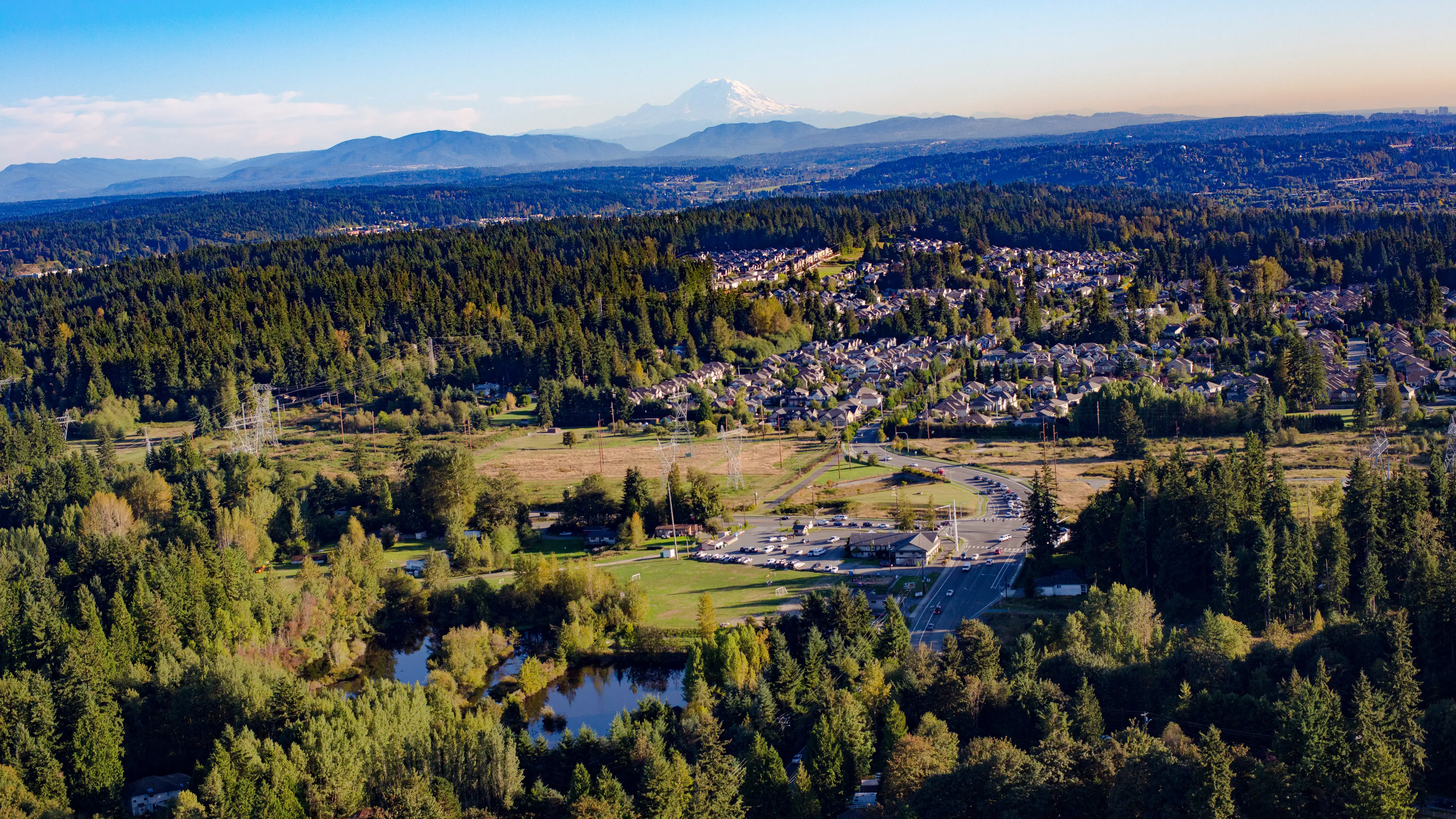
Local Expert Takeaway: The number that changes everything for California buyers in Mill Creek isn't the home price — it's the monthly cash flow after factoring in no state income tax. A household earning $150,000 leaving California picks up $900–$1,100 per month in take-home pay without a single change to their salary. Run that number against your mortgage payment before you decide what you can afford in Mill Creek, because the answer is usually better than your first calculation suggested. And if you're coming from a golf course community in Southern California, look seriously at the Fairway and Country Club Estates neighborhoods before settling on anything else — those streets have the feel, the lot sizes, and the views that California buyers recognize immediately.
✅ The no-income-tax advantage is worth $8,000–$18,000+ annually depending on household income — this is the financial shift most California buyers underestimate when comparing home prices alone.
⚠️ The winter adjustment is real. From October through March, Mill Creek averages significantly fewer sunny days than any major California market. Buyers who underestimate the psychological weight of a Pacific Northwest winter are the ones who move back.
📍 Your equity tier determines your Mill Creek neighborhood. Bay Area equity buys outright in the golf course communities. Southern California equity puts you in the top tier of single-family inventory. Sacramento and Inland buyers are looking at Town Center-adjacent properties with strong fundamentals and competitive pricing.
Is moving from California to Mill Creek worth it?
For most households, yes — particularly those earning above $100,000 annually, where the state income tax savings compound meaningfully year over year. The combination of top-rated Northshore schools, a safe, planned community with genuine park and trail infrastructure, and home prices that are dramatically lower than Bay Area or Southern California comparables makes Mill Creek one of the most financially rational moves in the Pacific Northwest. The honest caveats are the weather adjustment and the smaller-city lifestyle relative to California metro areas.
How much cheaper is housing in Mill Creek vs. California?
Compared to the Bay Area, the gap is dramatic — the median sold price in Mill Creek sits at $830,000 against Bay Area single-family home medians that run $1.4 million to $1.8 million or more in most desirable suburbs. Against Southern California, the gap is meaningful but narrower — Los Angeles suburbs in the $900,000–$1.1 million range are genuinely comparable to Mill Creek pricing, though the income tax savings shift the long-term math in Washington's favor. Sacramento is the most comparable market on price, where the Mill Creek premium is real but offset significantly by the tax environment.
What do I need to know about moving from California to Washington?
Washington has no state income tax, a sales tax that runs approximately 10.1% in the Mill Creek area, and a capital gains tax that applies only to gains exceeding $262,000 per year — not to primary residence sales. You'll want all-season tires by October. You'll need to update your driver's license and vehicle registration within 30 days of establishing Washington residency. And you should expect the school enrollment process through Northshore School District to move quickly — families moving in summer should contact the district in June rather than waiting until August.
Explore the full Mill Creek series: The Ultimate Mill Creek Relocation Guide · Is Mill Creek Safe? · Cost of Living in Mill Creek · Best Neighborhoods in Mill Creek · Mill Creek Schools & Family Life · Mill Creek Youth Sports · Mill Creek Parks & Recreation · Retiring in Mill Creek · 1031 Tax-Deferred Exchange in Mill Creek · Mill Creek First-Time Homebuyers Guide · Mill Creek Down Payment Assistance Guide · Moving to Mill Creek from California