
Puget Sound · Washington
Is Mill Creek Safe? Crime Rates, Safest Neighborhoods & Local Reality (2026)
Mill Creek has a reputation in the Seattle suburbs that outpaces its actual crime numbers — and in this case, the reputation is mostly earned. With a violent crime rate commonly reported around 2.2 per 1,000 residents, this Snohomish County city sits well below both Washington state averages and national benchmarks. That doesn't mean crime doesn't happen here, but the day-to-day experience for most residents is one of quiet streets, trail walks, and unlocked garage doors — not active concern.
What makes Mill Creek's safety picture genuinely interesting is where the numbers get complicated. Property crime rates run higher than violent crime rates by a significant margin, and a large share of that activity clusters around Mill Creek Town Center — a regional retail destination that draws shoppers from across southern Snohomish County. When crime statistics are calculated per resident, that visitor-heavy commercial corridor inflates the per-capita figure considerably. Understanding this distinction matters because it changes what you actually need to think about as a homeowner versus what the aggregate number implies.
This guide breaks down what the data actually shows, which neighborhoods locals consider the calmest, how Mill Creek compares to its neighbors, and what practical precautions residents have quietly adopted over the years. If you're deciding between Mill Creek and another Snohomish County city — or just trying to figure out whether the safety reputation matches daily reality — this is the honest read.

Mill Creek's crime index sits well below the U.S. average on most commonly used metrics. FBI-sourced data suggests around 36 violent crimes reported in a recent year, translating to roughly 172 per 100,000 residents — a figure approximately 53% lower than the national average. Local police data and city-data analysis consistently show Mill Creek performing better than the broader county, and notably better than nearby Everett on violent crime measures. The city's crime index, as commonly reported, runs around 126 against a U.S. average closer to 235.
One structural factor that shapes Mill Creek's favorable standing: the city is predominantly owner-occupied single-family residential, with high household incomes and a tight-knit community association model. The Mill Creek Community Association oversees a substantial private trail network and enforces neighborhood standards that tend to discourage the kind of transient activity that drives opportunistic crime in denser cities. The planned-community DNA of Mill Creek — which dates to its incorporation in 1983 — created a layout that naturally limits through-traffic in residential areas.
Where the numbers get more nuanced is property crime. Theft-related incidents run at roughly 20 per 1,000 residents by police department estimates, which is above average compared to national benchmarks. That figure is heavily influenced by commercial activity near the Town Center on Main Street — a concentration of retail, dining, and services that pulls significant regional traffic. Buyers sometimes read a high property crime rate and imagine residential break-ins throughout the city; the more accurate picture is that most incidents are opportunistic retail theft and vehicle break-ins near commercial zones, not residential burglaries spread evenly across neighborhoods.
Violent crime in Mill Creek is genuinely low by any reasonable benchmark. The rate commonly cited around 2.2 per 1,000 residents puts the city in roughly the 71st percentile for safety on violent crime specifically — meaning it outperforms the majority of American cities on this measure. For daily life, that translates to a city where residents regularly walk evening trails, leave kids at parks unsupervised, and don't think twice about answering the door. The Mill Creek Police Department's commissioned staff of 23 officers — including two school resource officers and a dedicated detective unit — maintains a visible presence across a relatively compact city footprint.
Motor vehicle theft is the category that stands out most in Mill Creek's property crime data. FBI analysis places the city's car theft rate among the higher figures in the region, with roughly a 1-in-266 chance of vehicle theft in a given year. The Town Center corridor on Main Street accounts for a disproportionate share of this activity — parking lots serving AMC Theatres and the broader retail hub see the bulk of opportunistic theft. Residential neighborhoods, particularly those on the east side of the city, report far fewer incidents. Porch theft and storage unit break-ins appear in Nextdoor discussions with some regularity, but residents generally describe these as intermittent annoyances rather than persistent threats.
Emerald Heights sits in the northeastern quadrant of Mill Creek, which residents and local data consistently identify as the city's safest corridor for violent crime specifically. The homes here tend toward larger lots and higher price points, with the kind of low-turnover, owner-occupied character that correlates with low incident rates. Evening walks on nearby trail connections feel routine here, not cautious.
Best for: Buyers prioritizing residential quiet with easy trail access and above-average neighbor stability.
Tucked near the Mill Creek Golf Course, Country Club Estates carries the additional insulation of a golf course buffer and limited through-traffic. One long-time resident note worth keeping in mind: some crime statistics attributed to this area include data from properties technically outside city limits, which can distort aggregate readings. The on-the-ground experience here is among the quieter in the city.
Best for: Households seeking a well-established, low-traffic residential environment near the golf course.
The Highlands occupies higher ground in the eastern portion of Mill Creek, and its position away from the Town Center corridor means limited commercial spillover on crime figures. The neighborhood sees consistent demand from families with school-age children, partly because of its proximity to Northshore School District campuses and partly because the streets simply feel settled and calm.
Best for: Families with children who prioritize residential safety and school proximity over walkable retail.
Neighborhoods immediately bordering Mill Creek Town Center — including The Station at Mill Creek and Fairway Village — carry the highest exposure to the property crime activity that clusters in the commercial zone. This isn't a reason to avoid these areas; the trade-off is walkable access to every retailer and restaurant the city offers. But buyers should know that car break-ins and package theft are more commonly reported here than in the eastern residential sections, and taking basic precautions — parking in well-lit areas, using a garage — makes a meaningful difference.
Best for: Buyers who prioritize walkability to the Town Center and accept slightly more commercial-adjacent activity as the compromise.
Sweetwater Ranch sits in the western portion of Mill Creek with a mix of newer construction and established tree cover that signals long-term, stable occupancy. The neighborhood maintains a quiet residential character, and its distance from the Main Street commercial corridor keeps property crime exposure lower than Town Center–adjacent areas. Local conversations on community platforms describe it as one of the more under-the-radar pockets in the city.
Best for: Buyers seeking newer construction in a calmer western corridor without the premium of the northeast.
Webster's Pond takes its name from the small natural feature at its center, and the neighborhood's layout — oriented inward around that amenity — naturally limits cut-through traffic. Lower traffic volume correlates with fewer opportunistic incidents, and the pocket feels genuinely insulated from the commercial activity on the city's main arterials. It's a smaller neighborhood by unit count, which tends to produce tighter informal watching-out-for-each-other dynamics.
Best for: Buyers who value a tight-knit pocket community with natural amenity at the center.

| City | Violent Crime/1K | Property Crime/1K | Overall Safety Profile |
|---|---|---|---|
| Mill Creek | ~2.2 | ~20 | Well below county average; residential sections very low |
| Bothell | ~2.8 | ~22 | Comparable overall; more commercial density |
| Lynnwood | ~5.1 | ~38 | Notably higher across both categories |
| Everett | ~7.4 | ~45 | Significantly higher; urban core dynamics |
| Mukilteo | ~1.9 | ~15 | Slightly lower; smaller, less commercial |
| Woodinville | ~2.0 | ~18 | Comparable; lower property crime |
| Edmonds | ~2.1 | ~17 | Similar profile; coastal city premium |

Neighborhoods like Cottonwood and Evergreen tend to hold their value exceptionally well in Mill Creek, largely because buyers associate these areas with lower crime, strong schools, and well-maintained streets — exactly the factors that drive long-term appreciation. When desirable homes hit the market in these neighborhoods, they rarely sit more than a few days, and buyers hoping to stay under $750,000 often find themselves competing. That perceived safety and community stability isn't just a lifestyle consideration; it directly influences resale potential and buyer demand years down the road.
Before you start touring homes in Mill Creek, have a real conversation with a lender — not just about what you're approved for, but about what your full monthly payment actually looks like once property taxes, homeowner's insurance, and any HOA dues are layered in alongside your loan. That number is almost always higher than people expect, and your comfortable budget and your maximum approval are two very different things. Knowing where you stand before the right home appears means you can move with confidence instead of scrambling.
The one specific precaution that experienced Mill Creek residents take almost universally: they don't leave anything visible in parked cars, particularly near Town Center. The AMC Theatres parking lot and the retail stretches along Main Street between 164th Street SE and the Town Center core see a disproportionate share of the city's vehicle break-ins. It's not a dangerous corridor to walk or shop in — it's just a commercial zone with commercial-zone theft dynamics, and locals treat it accordingly.
What neighborhood safety apps tend to miss about Mill Creek is the geography of the city's trail network. The over-23-mile private trail system maintained by the Mill Creek Community Association runs through residential areas and is well-used through all but the darkest winter evenings. That level of consistent foot traffic — neighbors walking dogs, families on bikes, joggers on routine routes — creates informal surveillance that genuinely affects incident rates in residential sections. Neighborhoods with direct trail access tend to have the most active street presence and, anecdotally, the fewest residential property crime complaints.
One thing that surprises many people after six months of living here: how rarely the local crime concerns translate into actual personal experience. Residents who moved from denser Seattle neighborhoods often remark that the Nextdoor notifications about suspicious activity feel alarming at first, then gradually reveal themselves to be a very low baseline — a package missing from a porch, a catalytic converter theft from a parking lot, a bike left unlocked. The city's sex offender registry sits at exceptionally low numbers, the police department has maintained a clean record on use-of-force incidents, and the overall character of the residential fabric remains stable. Mill Creek doesn't feel like a city managing a crime problem. It feels like a suburb where people occasionally have bad days.
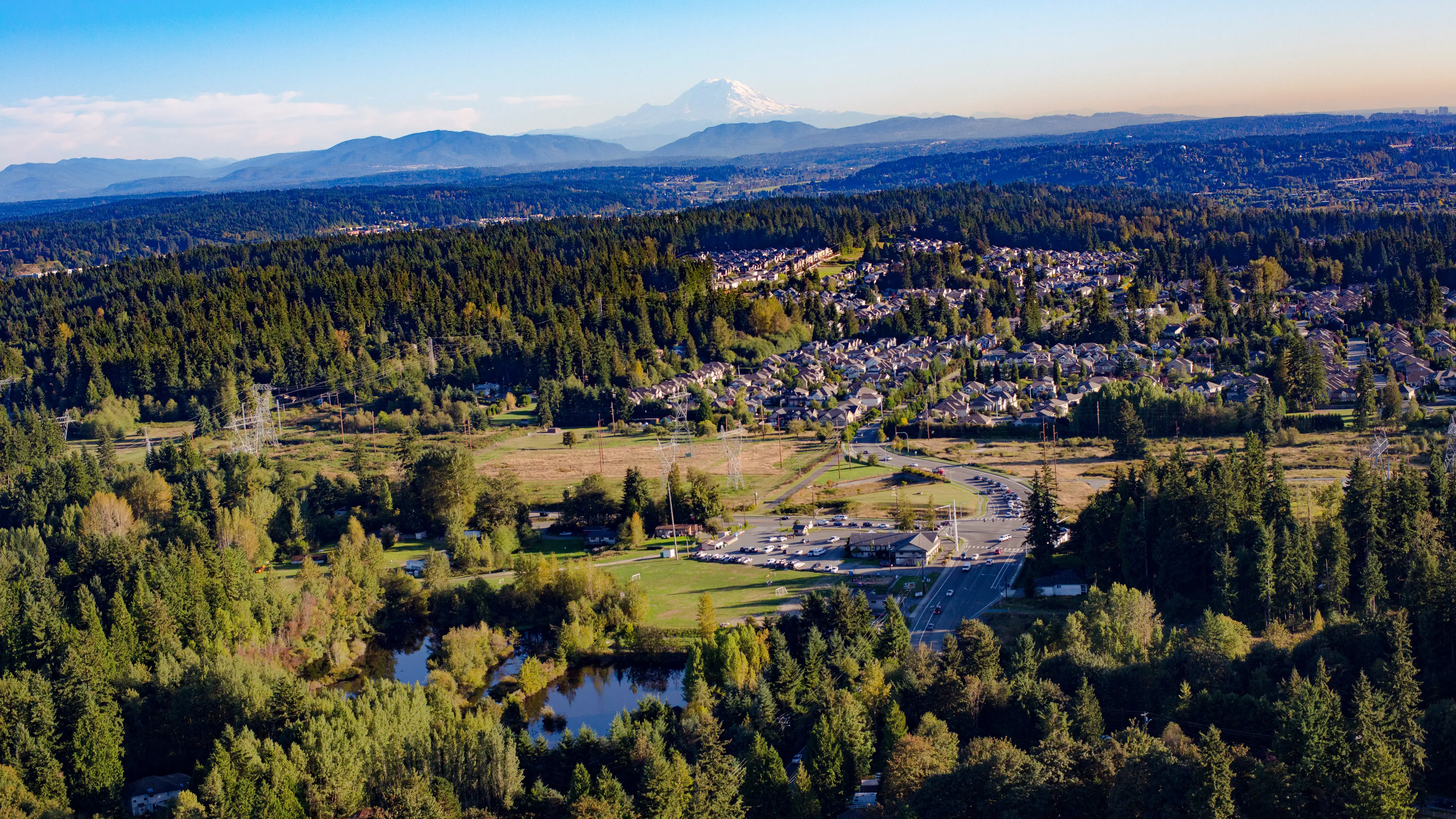
Local Expert Takeaway: If you're comparing neighborhoods within Mill Creek, prioritize anything east of SR-527 for the lowest residential crime exposure — Emerald Heights, Country Club Estates, and The Highlands are the corridors where the calm reputation most consistently matches reality. Near Town Center, the walkability is real, but leave nothing visible in your car and use your garage. The aggregate crime statistics make Mill Creek look average at a glance; the residential experience, particularly in the eastern sections, is well above average for Snohomish County.
✅ Violent crime is genuinely low — Mill Creek's rate of roughly 2.2 per 1,000 residents is well below the national average and places it in the top third of American cities for violent crime safety specifically.
⚠️ Property crime is the real watch area — Motor vehicle theft and retail-adjacent theft near Town Center drive above-average property crime figures. Residential neighborhoods, especially on the east side, are substantially calmer than aggregate stats suggest.
📍 East of SR-527 is the consistently quietest corridor — Neighborhoods like Emerald Heights and Country Club Estates represent Mill Creek's safest residential experience, backed by both local perception and data patterns.
Is Mill Creek a safe place to live?
By most measures, yes. Violent crime runs well below national averages, and residential neighborhoods — particularly in the eastern and northeastern sections — see very low incident rates. The city's property crime figures are higher than national benchmarks, but much of that activity clusters around the commercial Town Center corridor rather than spreading evenly across residential areas.
What type of crime is most common in Mill Creek?
Property crime, and specifically motor vehicle theft, is the most commonly reported category. Theft from vehicles parked near Town Center and the retail corridor on Main Street accounts for a significant portion of incidents. Residential burglaries and violent crimes are relatively rare by regional standards.
How does Mill Creek's crime rate compare to nearby Everett and Lynnwood?
Mill Creek compares favorably to both. Everett's violent crime rate runs roughly three times higher than Mill Creek's, and Lynnwood's property crime rate is nearly double. Buyers relocating from those cities will generally notice a meaningful difference in the day-to-day residential environment.
Explore the full Mill Creek series: The Ultimate Mill Creek Relocation Guide · Is Mill Creek Safe? · Cost of Living in Mill Creek · Best Neighborhoods in Mill Creek · Mill Creek Schools & Family Life · Mill Creek Youth Sports · Mill Creek Parks & Recreation · Retiring in Mill Creek · 1031 Tax-Deferred Exchange in Mill Creek · Mill Creek First-Time Homebuyers Guide · Mill Creek Down Payment Assistance Guide · Moving to Mill Creek from California