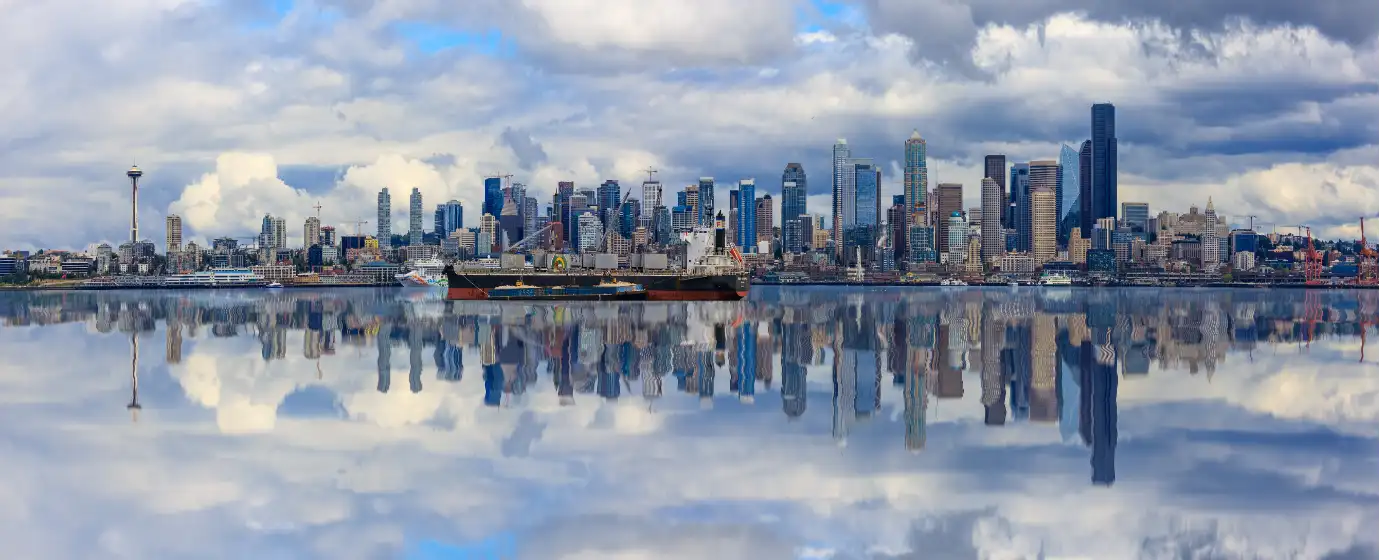
Puget Sound · Washington
Best Neighborhoods in Seattle: Where to Buy or Rent (2026)
Choosing where to live within Seattle matters more than choosing Seattle itself. The city spans roughly 84 square miles of hills, water, and wildly distinct urban personalities — and a buyer who locks in on a neighborhood without understanding its trade-offs is one of the most common regrets in this market. Two homes priced identically at Seattle's $850,000 median can deliver completely different commute times, school options, walkability scores, and daily rhythms depending on which side of a ridge they sit on.
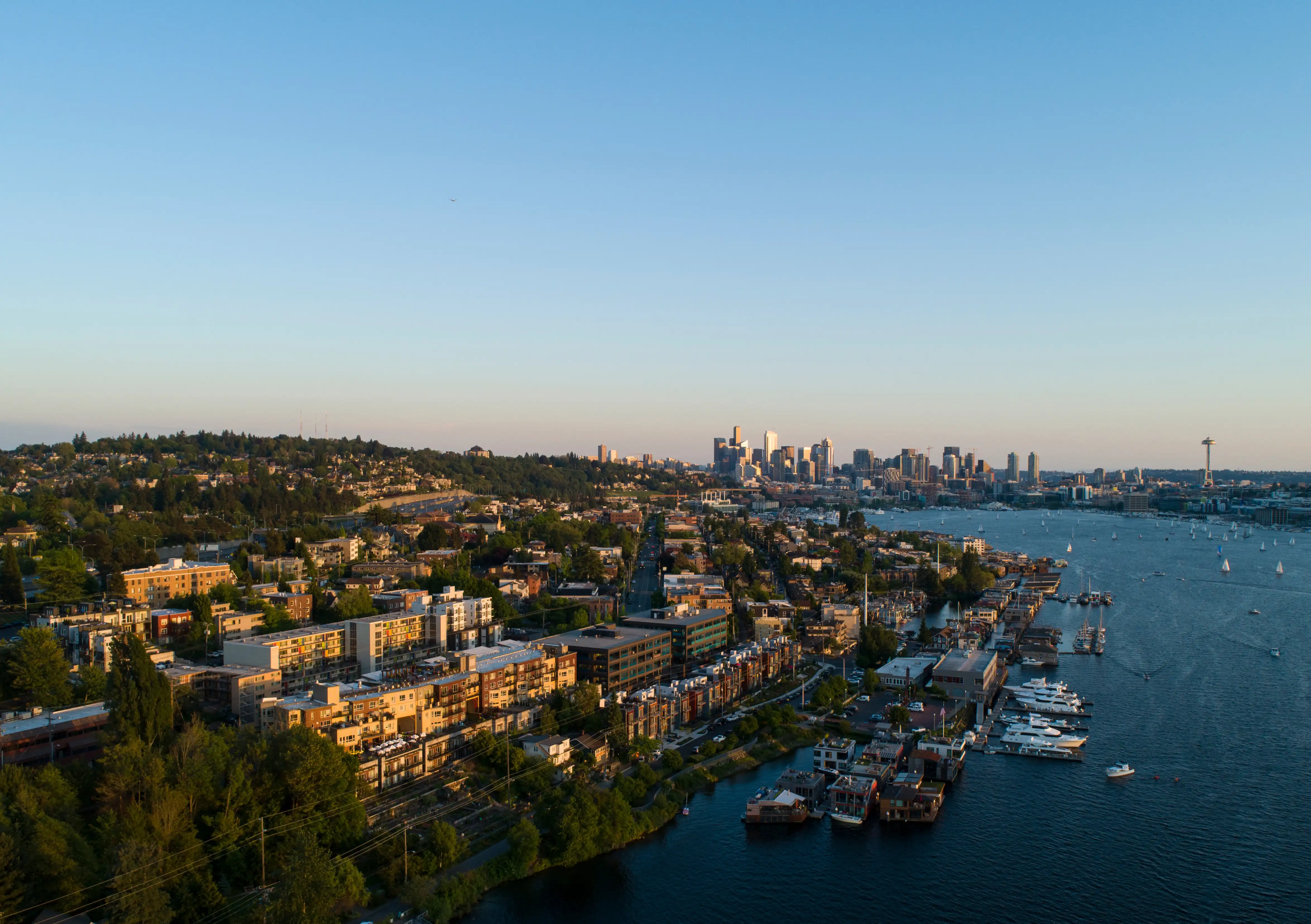
Seattle's defining geographic reality is that water defines everything. Puget Sound to the west and Lake Washington to the east create a natural pinch point that limits where roads go, where density builds, and where prices soften. The neighborhoods clustered along the Sound's eastern bluff — Queen Anne, Magnolia, West Seattle — operate by different rules than the dense urban corridors of Capitol Hill and Ballard or the quieter residential pockets of Wallingford and Green Lake. Understanding which zone fits your life is the only framework that matters here.
This guide covers Seattle's most significant neighborhoods with honest price data, character descriptions, and the trade-offs that real estate listings never mention. Whether you're deciding between walkable urban living and a quieter pocket near a good school, or trying to figure out where your rental budget actually goes farthest, the goal is to give you a picture of each neighborhood that holds up on move-in day.
| Neighborhood | Best For | Price Range | Vibe |
|---|---|---|---|
| Ballard | Young professionals, walkability, breweries | $850K–$975K | Converted fishing village meets craft beer corridor |
| Capitol Hill | Urbanists, renters, walkability seekers | $850K–$950K | Dense, walkable, arts-forward |
| Queen Anne | Views, families, established feel | $900K–$1.1M | Hilltop residential with downtown proximity |
| Madison Park | Luxury buyers, lake access | $1.4M–$1.6M+ | Quiet, upscale, waterfront |
| Madrona | Move-up buyers, community feel | $1.1M–$1.3M | Compact, walkable, competitive |
| Magnolia | Families wanting quiet, larger lots | $1.0M–$1.2M | Secluded, residential, limited nightlife |
| West Seattle | Families, outdoor access, value | $800K–$950K | Neighborhood-scale with a "town within a city" feel |
| Columbia City | Families, light rail access, diversity | $750K–$900K | Mixed-use corridor with strong community identity |
| South Lake Union | Amazon employees, renters, condo buyers | $750K–$900K | Glass towers, tech workers, limited charm |
| Downtown / Belltown | Renters, condo buyers, nightlife | $559K–$650K | High-density urban; slower recovery post-pandemic |
| Buyer Type | Best Neighborhood | Why |
|---|---|---|
| First-time buyer | Columbia City | Light rail access, sub-$900K entry points, competitive but not impossible |
| Luxury buyer | Madison Park | $1.6M median, lake access, quiet streets, top-end finishes |
| Walkability seeker | Capitol Hill | 93 Walk Score, dense transit, restaurants and coffee within steps |
| Families with kids | West Seattle | Neighborhood feel, parks, beach access, slightly below citywide median |
| Amazon/tech commuter | South Lake Union or Capitol Hill | Walking or biking distance to Amazon HQ and the tech corridor |
| Large lot buyer | Magnolia | Larger parcels, fewer townhomes, quieter streets — at a price premium |
| Renter | Ballard or University District | Diverse rental stock, strong transit, competitive pricing |
Ballard spent decades as Seattle's Scandinavian fishing neighborhood before the tech economy turned it into one of the city's most competitive real estate markets. The median sold price sits around $850,000 to $975,000 depending on property type, with single-family Craftsman homes in quieter blocks frequently exceeding $1 million while newer townhomes along denser corridors provide a slightly lower entry point. The neighborhood's central commercial stretch on Ballard Avenue and Market Street gives residents a walkable mix of breweries — Reuben's Brews being among the most prominent locals cite — coffee shops, and weekend farmers market activity at the Ballard Farmers Market, which runs year-round on Sundays. The honest downside: Ballard's success has brought density and traffic, and Leary Way and 15th Avenue NW turn into genuine choke points during evening commutes, particularly for anyone heading toward downtown. Parking pressures have intensified with every new apartment building.
Best for: Buyers who want urban walkability without the full density of Capitol Hill, and who value weekend food and nightlife access within walking distance.
Capitol Hill posts a 93 Walk Score — the highest of any Seattle neighborhood — and it shows in daily life. The median sold price runs approximately $850,000 to $950,000, though the mix skews heavily toward condos and attached townhomes rather than traditional single-family houses, which are rare and command significant premiums when they appear. Broadway and Pike/Pine corridors give Capitol Hill its cultural density: independent restaurants, music venues, coffee institutions like Victrola Coffee, and one of the most active transit hubs in the city. The Seattle Light Rail Capitol Hill Station puts most of downtown and the University District within a 10-minute ride. The trade-off is one buyers often discover after moving in rather than before: the neighborhood's nightlife density means weekend noise and late-night street activity are real, and parking — if you have a car — is genuinely difficult to manage without a dedicated space.
Best for: Urban buyers who want maximum walkability, strong transit, and cultural amenities, and who have little need for a car or outdoor space.
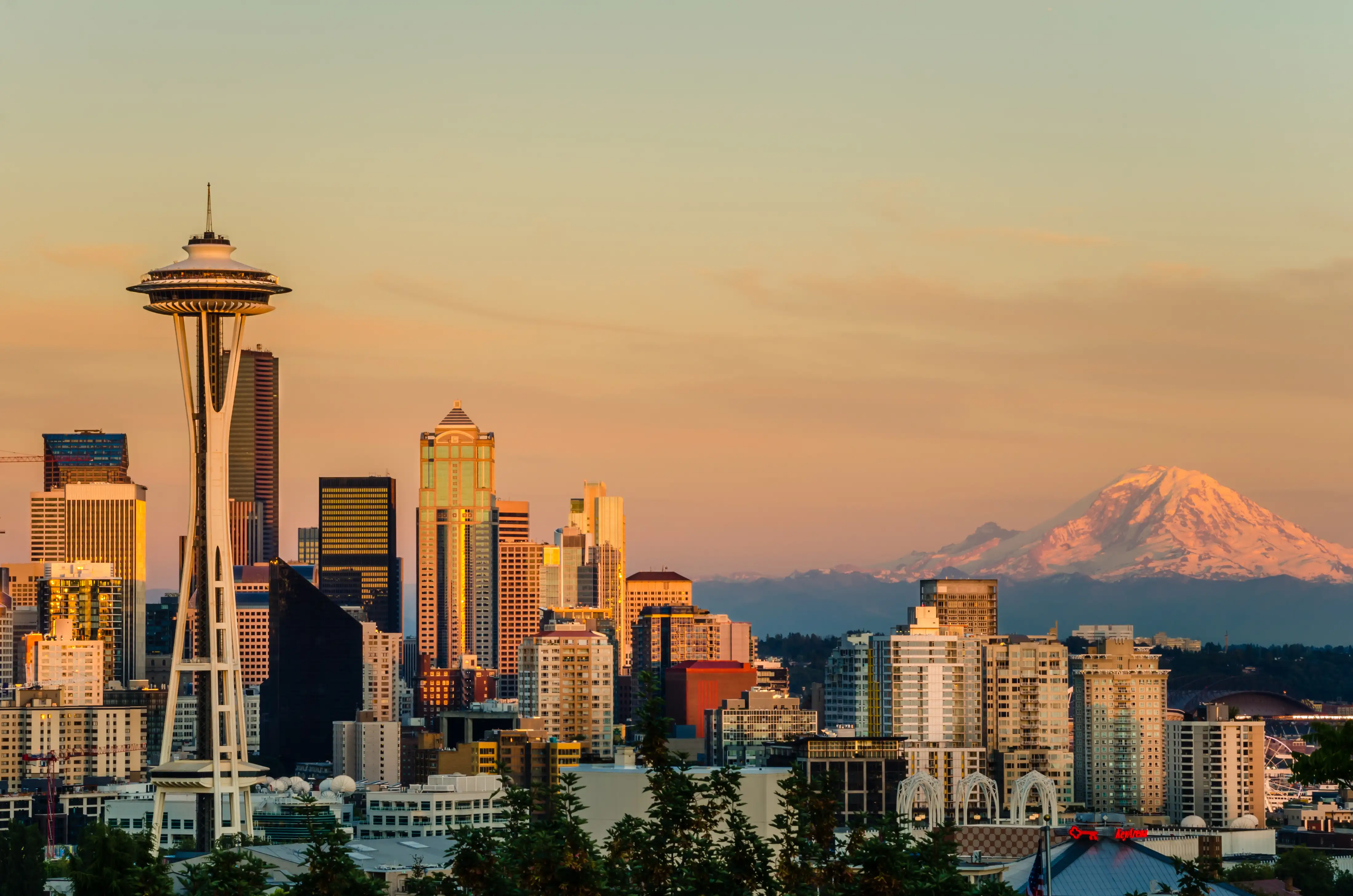
Queen Anne sits on one of Seattle's most recognizable ridgelines, with views of the Space Needle from the upper streets and Elliott Bay from the western slope. The median sold price comes in around $965,000, with the upper-hillside homes on streets like Highland Drive and Bigelow Avenue commanding premiums well above that figure. Lower Queen Anne — the flat commercial zone near Seattle Center — skews younger and denser, while the residential hilltop feels established and quieter, the kind of neighborhood where people stay for decades. The downside most buyers discover quickly: Queen Anne is notoriously hard to drive off. The steep grades and limited arterial connections mean that 5th Avenue N and Aurora Avenue N absorb enormous traffic volume during commute hours, and anyone heading east toward Capitol Hill or south toward downtown should budget extra time in the morning.
Best for: Buyers who want a residential neighborhood feel with proximity to Seattle Center, strong views, and a quieter daily pace than Capitol Hill or Ballard.
Fremont bills itself as the "Center of the Universe," which is either endearing or insufferable depending on your tolerance for neighborhood mythology — but the underlying bones are legitimately strong. Home prices run in the $850,000 to $1.0 million range for single-family properties, with the east-of-Fremont Bridge blocks near Gas Works Park among the most sought after. The Burke-Gilman Trail runs directly through the neighborhood, making it one of Seattle's better-positioned areas for bike commuters heading toward the University District or Eastlake. The Fremont Solstice Parade, held each June and famous for its painted cyclists, remains one of Seattle's most genuinely local traditions. The friction for buyers: Fremont's commercial core is excellent, but the neighborhood is bounded on multiple sides by arterials that congest heavily, and the bridge lift schedule on the Fremont Bridge can add unpredictable delays to commutes involving water crossings.
Best for: Bike commuters, outdoor-oriented buyers, and anyone who wants walkable amenities with a slightly more bohemian neighborhood culture than Ballard.
West Seattle operates as a city-within-a-city in ways that most Seattle neighborhoods don't. The Alaska Junction commercial hub gives the neighborhood its own grocery, restaurant, and retail ecosystem, and the Sunday West Seattle Farmers Market draws residents from across the peninsula year-round. Median prices run in the $800,000 to $950,000 range — a meaningful step below comparable-quality housing in Ballard or Queen Anne — and the neighborhood offers more traditional single-family lot sizes than the denser north-end neighborhoods. The West Seattle Bridge, which famously closed for emergency repairs in 2020 and re-opened in 2022, remains the single largest vulnerability in the neighborhood: if it closes again for any reason, or if construction on the new parallel crossing creates lane restrictions, West Seattle essentially becomes a peninsula accessible only by a few routes. RapidRide bus connections have improved, but most residents will tell you honestly that West Seattle requires a car.
Best for: Families who want a real neighborhood feel, beach and park access at Lincoln Park and Alki Beach, and slightly more house for their money than north-end Seattle neighborhoods.
Columbia City gives buyers something genuinely rare in Seattle: light rail access, a competitive price point, and a neighborhood with real cultural identity. The median sold price sits around $840,000, with the Columbia City Light Rail Station putting downtown Seattle within roughly 15 minutes. The neighborhood's Rainier Avenue commercial corridor has a density of independent restaurants, Ethiopian and Southeast Asian eateries, and community-focused businesses that feel organic rather than curated. Columbia City has historically been one of Seattle's most ethnically diverse neighborhoods, and that character has held through the past decade of appreciation pressure. The honest trade-off: properties near Rainier Avenue itself experience meaningful traffic noise, and some of the side streets between the commercial corridors have seen slower reinvestment, meaning condition and finishes vary significantly even within a small geographic radius.
Best for: Buyers who prioritize light rail access, neighborhood authenticity, and relative value compared to north-end Seattle markets.
Beacon Hill is the long underestimated neighborhood that patient buyers have been rewarding for the past five years. The median sold price runs in the $700,000 to $850,000 range, making it one of the more accessible entry points for buyers who want Seattle proper without a condo. The Beacon Hill Link Light Rail Station connects to downtown in roughly 8 minutes, which is a commute that buyers in Ballard and Queen Anne would pay significantly more for. The neighborhood climbs a long ridge south of downtown, with the older homes near El Centro de la Raza and Jefferson Park offering city views and genuine lot sizes. The friction: Beacon Hill's commercial amenities are limited compared to north-end neighborhoods, and the stretch of Rainier Avenue S that forms the neighborhood's eastern edge has higher crime activity than the residential blocks above the ridge suggest.
Best for: Value-oriented buyers who want a single-family home with light rail access and don't need the commercial density of Ballard or Capitol Hill.
Madrona compresses everything people claim to want from Seattle into about 10 square blocks of genuinely competitive real estate. The median sold price runs around $1.1 million to $1.3 million, homes were averaging roughly 30 days on market as of early 2026, and buyers have consistently faced multiple-offer situations on well-priced properties. The neighborhood sits above Lake Washington on a hillside of Craftsman homes, with a small commercial strip on 34th Avenue that includes a coffee shop, wine bar, and a few restaurants that serve as de facto community anchors. Madrona Beach gives residents a rare urban amenity: a designated swimming beach on Lake Washington within walking distance of single-family homes. The downside is its geography — Madrona is relatively isolated from light rail, driving to downtown requires navigating Madison Street which sees significant congestion, and the price premium for the neighborhood's character is real and unambiguous.
Best for: Buyers willing to pay for walkable lakeside access, Craftsman character, and a small-town feel within a major city — and who don't depend on transit for their commute.
Assuming the city's median price applies to the neighborhood they want. Seattle's $850,000 citywide median masks a spread that runs from $559,000 condo medians in Downtown to $1.6 million in Madison Park. Buyers who budget to the citywide median and then focus their search in Madrona or Queen Anne spend months confused about why everything they like is $300,000 above what their spreadsheet projected.
Underestimating how geography shapes commutes. Seattle's ridge-and-valley topography means that a 3-mile commute can be a 25-minute slog if it crosses the wrong elevation or bridge. The West Seattle Bridge is the most obvious vulnerability, but the Queen Anne hill routes, the Aurora Avenue merge north of the battery street tunnel, and the approaches to the I-90 floating bridge on Rainier Avenue S all have specific, predictable failure points during rush hour. Buyers who tour on weekends and never drive the commute during a Tuesday morning are consistently surprised.
Buying in Belltown for the price without understanding the context. Belltown's median condo prices in the $600,000 range look attractive relative to the rest of the city, and the location near Pike Place Market and Seattle Center is genuinely central. But the neighborhood's street-level environment — higher visible homelessness, late-night noise on 2nd and 3rd Avenues, significant vacancy in ground-floor retail — has been slow to recover from post-pandemic pressures. Buyers expecting a Downtown Vancouver or Capitol Hill level of street activation frequently find the reality disappointing.
Ignoring school boundary details in family-friendly neighborhoods. Seattle Public Schools draws school boundaries that do not always follow neighborhood lines in intuitive ways, and in-demand neighborhoods like Wallingford and Green Lake feed into different schools depending on which side of a specific street you're on. Families who buy primarily based on neighborhood name without checking the specific address against the district's current boundary map sometimes end up assigned to a school they weren't expecting.

From a lending standpoint, Seattle neighborhoods vary significantly in what your money actually buys you long-term. Areas like Ballard and Fremont have shown strong appreciation over the years, driven by walkability, local amenities, and consistent buyer demand. Queen Anne tends to attract buyers who plan to stay put, and that stability generally supports property values well. In these neighborhoods, well-priced homes under $750,000 rarely sit on the market more than a few days before drawing multiple offers, so hesitation can be costly.
Before you fall in love with a home on a tour, it really helps to sit down with a lender first. Your actual monthly obligation includes more than just principal and interest — property taxes, homeowner's insurance, and any HOA dues all factor in, and those numbers can shift your comfortable range meaningfully. Getting pre-approved also clarifies the difference between what you qualify for and what you can genuinely afford without stress. When the right place in Wallingford or Green Lake comes up, being financially prepared means you can move with confidence instead of scrambling.
| Area | Ideal For | Typical Rent Range | Trade-off |
|---|---|---|---|
| Capitol Hill | Young professionals, transit users | $1,800–$2,800/month (1BR–2BR) | Noise, limited parking, weekend crowds |
| Ballard | Professionals who want walkability | $2,000–$3,200/month (1BR–2BR) | High demand, limited availability |
| University District | Students, UW staff, budget renters | $1,400–$2,200/month (studio–2BR) | Transient community feel, some crime near The Ave |
| South Lake Union | Amazon employees, new construction | $2,200–$3,500/month (1BR–2BR) | Sterile feel, limited neighborhood amenities |
| West Seattle | Families, beach access seekers | $1,800–$2,800/month (1BR–2BR) | Car dependency, bridge risk |
Local Expert Takeaway: The single most actionable insight for buyers in 2026 is this: the light rail spine is the most underpriced commute asset in the city. Columbia City, Beacon Hill, and the Rainier Valley stations put downtown within 10–15 minutes for $200,000 to $400,000 less than comparable access in Queen Anne or Ballard. If your commute anchors to downtown or the University District and you're not looking south of I-90, you're paying a significant premium for a geography that doesn't actually serve you better.
Looking to buy in Seattle? Estimate your payment.
Enter your numbers to see an estimated monthly mortgage payment.
Estimate only. Excludes HOA fees and mortgage insurance.
Is Seattle a good place for families?
Seattle offers strong options for families, particularly in West Seattle, Green Lake, and the northeast Seattle neighborhoods near Ravenna. Seattle Public Schools holds an A- rating, and the city's park system — including Lincoln Park, Seward Park, and the 534-acre Discovery Park in Magnolia — gives families with children genuine outdoor access. The challenge is cost: at the $850,000 citywide median, getting into a detached single-family home in a family-oriented neighborhood with good school assignments requires a significant down payment and income.
What are the safest neighborhoods in Seattle?
Magnolia, Madison Park, and Madrona are consistently among the lower-crime residential neighborhoods in the city. Seattle's citywide property crime rate is elevated — roughly 50 per 1,000 residents — and that figure is driven heavily by higher-density commercial corridors and specific zones near Downtown and Belltown rather than by most residential neighborhoods. Buyers focused on safety should look at the specific block-level data for any address they're seriously considering rather than relying on neighborhood-level averages.
How does Seattle compare to nearby cities like Bellevue or Kirkland?
Seattle's $850,000 median is generally lower than Bellevue's single-family market, which runs well above $1.3 million in many neighborhoods, but significantly higher than Renton or Tacoma. What Seattle offers that its neighbors don't is neighborhood diversity and walkability: Capitol Hill's 93 Walk Score has no equivalent in Bellevue or Kirkland, and Seattle's cultural amenities — Pike Place Market, the Museum of Pop Culture, independent restaurant density — are concentrated in a way that suburban eastside cities can't replicate. The practical trade-off between Seattle proper and the Eastside usually comes down to whether Amazon, Microsoft, or another Eastside employer makes a reverse commute worth avoiding.
Explore the full Seattle series: Living in Seattle · Is Seattle Safe? · Cost of Living · Best Neighborhoods · Schools & Family Life · Youth Sports · Parks & Rec · Retiring in Seattle