Eastern Washington · Washington
Living in Walla Walla: The Ultimate Relocation Guide (2026)
Maybe your company gave you flexibility to work remotely and someone mentioned a small Eastern Washington city where $420,000 buys a Victorian with a front porch and a wine cellar within walking distance of a dozen tasting rooms. Maybe you've been grinding through Seattle's housing market and a colleague told you that Walla Walla has a legitimate college town feel, actual seasons, and a median home price roughly $190,000 below the state average. Or maybe you just drove through on a road trip, stopped for dinner on Main Street, and couldn't shake the feeling that something real was happening here — something that doesn't exist anymore in most Pacific Northwest cities. The central tension in Walla Walla is this: it is simultaneously one of Washington's most culturally sophisticated small cities and one of its most genuinely isolated ones. That combination is either a dream or a dealbreaker, depending entirely on who you are.
Geographically, Walla Walla sits in the southeastern corner of Washington, roughly six miles from the Oregon border, with the Blue Mountains rising to the east and the rolling Palouse wheat country stretching north. The nearest city of comparable size is the Tri-Cities metro — Kennewick, Richland, and Pasco — about an hour away. Portland is approximately four hours west; Seattle is closer to four and a half. Daily life here is shaped not by proximity to a major metro but by what the city itself has built: a nationally recognized historic downtown, a wine industry that draws visitors from across the country, a liberal arts college that punches well above its weight culturally, and major employers anchored in healthcare, education, and corrections that provide stable year-round employment regardless of what the tourism economy does.
This guide will help you figure out whether Walla Walla makes sense for your specific life — not just whether it's a pleasant place to visit. You'll find neighborhood-by-neighborhood context, honest tradeoffs about isolation and infrastructure, a realistic picture of what $420,000 actually buys you here, and the kind of local friction points that only matter once you're actually living somewhere.
| Best For | Why |
|---|---|
| Remote workers | Median home price of $420,000 buys significantly more space than most West Coast alternatives; reliable fiber internet available in most neighborhoods |
| Retirees | Mild four-season climate, walkable downtown, Providence St. Mary Medical Center for local healthcare, strong arts and dining scene |
| Families with kids | Stable school district, low traffic, 10-minute average commute, affordable housing with yards and space |
| Wine industry professionals | 120+ wineries within the appellation; hospitality, viticulture, and winemaking jobs concentrated locally |
| First-time buyers | Entry-level homes starting around $320,000; well below the Washington state average of $611,000 |
| College town seekers | Whitman College brings concerts, lectures, theater, and a walkable academic neighborhood without big-university chaos |
Downtown Walla Walla on a Saturday morning in September has a specific energy that's difficult to describe without sounding like a tourism brochure — so instead, consider the specifics. You can walk from the Marcus Whitman Hotel to a tasting room, to a James Beard-recognized restaurant, to a live performance at the Gesa Power House Theatre, all within about four blocks. The city earned a Great American Main Street Award back in 2001 and a Great Places in America designation a decade later, and those recognitions weren't ceremonial — the downtown genuinely functions as a civic center in a way most small American cities lost decades ago.
Daily logistics have a rhythm that surprises people used to metro living. The average commute is roughly 10 minutes, which sounds impossible until you realize the city covers only about 10.8 square miles. Providence St. Mary Medical Center, Walla Walla Public Schools, the Washington State Penitentiary, and Whitman College are all within a few minutes of each other and of most residential neighborhoods. About 77% of residents drive to work, but 7.4% walk and 2% bike — unusually high numbers for a city of this size and a direct product of that compact geography.
What surprises most people after six months of living here is how socially stratified the community feels beneath its welcoming surface. The wine industry crowd, the Whitman faculty and students, the multigenerational agricultural families, the corrections and healthcare workers — these groups coexist and intersect, but they don't always blend. If you arrive expecting a uniformly progressive college town, you'll encounter a more complicated picture. If you arrive expecting a conservative Eastern Washington farming community, the density of wine bars and artist studios will throw you off. Most long-term residents have made peace with this complexity; it's part of what makes Walla Walla more textured than most cities its size.
The one traffic chokepoint worth knowing before you buy: the Highway 12 and 9th Avenue interchange during the Friday afternoon harvest season crush — roughly August through October — when agricultural trucks and winery visitors converge simultaneously. It's not gridlock by any regional standard, but it's noticeable in a city where 10-minute commutes are the baseline expectation.
The wine and food culture is legitimately world-class for a city of 33,700 people. The Walla Walla Valley AVA now includes more than 120 wineries, and the concentration of excellent restaurants that has built up around the wine tourism economy means residents benefit from dining options that would be impressive in a city four times the size. The Walawála Plaza at the heart of downtown — with its fountains, native plantings, and summer stage — functions as a genuine public gathering space from spring through fall, hosting everything from farmers markets to outdoor concerts.
The cultural infrastructure anchored by Whitman College punches far above its weight. The college's 117-acre campus brings in touring musicians, nationally recognized speakers, and theater productions throughout the academic year. The Gesa Power House Theatre, housed in a converted 1919 gas plant, consistently books regional and national acts. Fort Walla Walla Museum and the Whitman Mission National Historic Site — a National Park Service unit just west of the city — add a layer of historical depth that most small cities simply don't have.
Housing affordability relative to the rest of Washington is the most practical upside and the one that drives the most relocations. At $420,000 median, Walla Walla sits roughly $190,000 below the statewide median. That gap buys you more than square footage — it buys yards, character architecture, and in some neighborhoods, genuine walkability. The median price per square foot of approximately $265 is among the lower figures in Washington west of the Cascades comparative tier.
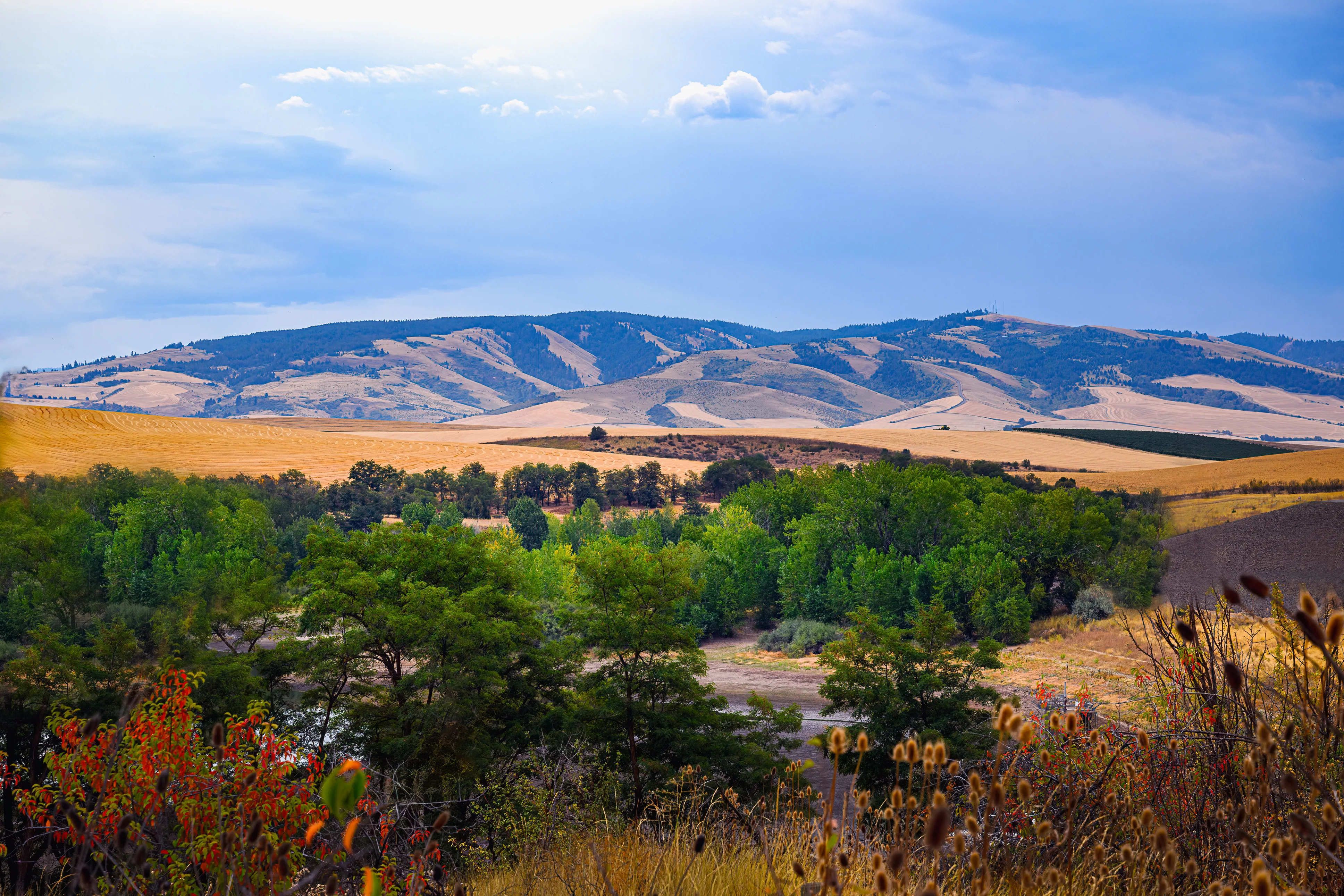
The outdoor access from the eastern edge of the city is immediate and underappreciated. Bennington Lake, managed by the U.S. Army Corps of Engineers, sits on the city's eastern fringe and offers fishing, birdwatching, and trail access. The Blue Mountains rise directly east, with hiking and hunting land accessible within 20–30 minutes of the city center. Mill Creek flows through the city itself, with walking paths that connect residential neighborhoods to green space in a way the city's Downtown Master Plan has been actively working to expand.
Isolation is the primary cost of living in Walla Walla, and it compounds in ways that don't fully reveal themselves until you've been here through a winter. Portland is four hours away; Seattle is roughly four and a half. The nearest large hospital system is in the Tri-Cities, about 55 miles northwest. Specialized medical care, major airport access — Walla Walla Regional Airport offers limited service, typically connecting through Portland or Seattle — and the shopping infrastructure most households use regularly all require either a significant drive or deliberate planning. Residents near the Oregon border do have access to tax-free shopping in Milton-Freewater and the broader Pendleton corridor, which partially offsets the inconvenience.
The housing market's competitive pockets are tighter than the 77-day average suggests. The city-wide figure is pulled upward by slower-moving inventory; the homes that local agents describe as genuinely desirable — walkable location, historic character, good school proximity — often sell faster and with less negotiating room. Roughly 55% of recent sales closed under asking price, but that aggregate includes significant variation by neighborhood and condition.
Why some people leave comes down to career ceiling and ambition. The major employers — Providence St. Mary, the school district, Washington State Penitentiary, Whitman College — offer stable employment but limited upward mobility for mid-career professionals in certain fields. Tech workers, finance professionals, and specialists in fields with thin local labor markets often find that the lifestyle appeal of Walla Walla eventually bumps against limited professional options. Remote work has extended the runway for many households, but it hasn't eliminated the constraint.
The cost-of-living picture is more nuanced than the headline affordability suggests. Housing costs sit above the national average on the index, as do health and transportation costs. The overall index comes in at approximately 105 — about 5% above the national average — even while Washington's state average sits 11% higher. Utilities run below national averages, which helps. But the combination of distance-dependent transportation costs, above-average healthcare costs, and limited retail competition means day-to-day expenses in Walla Walla aren't as low as the housing price alone implies.
The most walkable address in Walla Walla and the one with the strongest case for long-term value retention, the Downtown Historic District runs roughly from Highway 12 south to Birch and Willow streets, bounded by Park Street and 7th Avenue. Homes here span 15 architectural styles — Queen Anne, Italianate, craftsman bungalow, Renaissance revival — with multiple properties on the National Register of Historic Places. Buyers pay a premium relative to other Walla Walla neighborhoods, but the trade-off is the ability to walk to dinner, tasting rooms, the Gesa Power House Theatre, and the Walawála Plaza fountain without getting in a car.
Best for: Retirees, remote workers, and wine industry professionals who want a culturally active daily life on foot.
South Hill draws families seeking quieter residential streets without surrendering proximity to downtown — the drive is roughly five minutes. Housing here spans a wider range than most Walla Walla neighborhoods, from older homes with more square footage and lot size to newer construction with updated finishes. School access is a genuine draw, and the neighborhood has a settled, established feel that attracts buyers looking for long-term stability over architectural character.
Best for: Families with school-age children who want space, quiet, and an easy commute.
East Walla Walla is home to Walla Walla High School — locally known as "Wa-Hi" — a sprawling 60-acre open-campus school that anchors the eastern residential corridors. The housing stock leans toward Minimal Traditional, Tudor Composite, and postwar cottage styles, many clustered north of Boyer Avenue and east of North Clinton. Pricing runs generally more affordable than the downtown core, making this a practical entry point for first-time buyers who want established neighborhood character without the premium of the Historic District.
Best for: First-time buyers and families prioritizing high school proximity and value.
The West Side offers the most accessible price points in the city and has been seeing consistent new residential development. Young professionals, first-time buyers, and households prioritizing lower monthly costs tend to land here. The downside is a longer drive to the downtown core and less established neighborhood character than older sections of the city. Bus routes connect the West Side to major employment centers, and infrastructure investment has been steady.
Best for: First-time buyers and younger households where affordability takes priority over walkability.
College Hill sits adjacent to Whitman College's 117-acre campus and has a distinctly academic, unhurried quality. The housing mix includes craftsman bungalows, faculty-owned mid-century ranches, and well-maintained older homes that rarely turn over. Walkability to campus amenities — lectures, performances, the college library, and green space — is a genuine draw. Faculty, staff, and families who want proximity to the college's cultural programming without living in student rental territory tend to concentrate here.
Best for: Faculty, academics, and families seeking a quiet, intellectually engaged neighborhood with walkable campus access.
The Mill Creek corridor follows the creek east from the city center toward the foothills, and homes here carry one of Walla Walla's more distinctive lifestyle propositions: trail and nature access woven directly into a residential setting. The city's Downtown Master Plan identifies Mill Creek as one of the city's greatest natural assets and has allocated resources toward streambank restoration and expanded walking paths. Buyers here are typically trading some urban walkability for immediate outdoor access and a greener, quieter setting.
Best for: Outdoor-oriented households who want nature access without leaving city limits.
Overlapping with College Hill but concentrated more tightly around the college's immediate perimeter, the Whitman College Area carries strong rental demand from students and younger faculty. Owner-occupied homes here share blocks with well-maintained student rentals, which keeps prices competitive but introduces the typical rhythms of a college neighborhood — active during the academic year, quiet in summer. For buyers comfortable with that dynamic, the walkability and cultural access are exceptional.
Best for: Investors, younger buyers, and faculty who want maximum proximity to the Whitman campus.
Named for the 43-acre Pioneer Park established in 1908 as part of the City Beautiful movement, this neighborhood offers some of the city's best green space access in a residential setting. The park itself includes mature tree canopy, walking paths, and recreational facilities that draw families from across the city. Housing in the immediate area tends toward established single-family homes with yards, and the neighborhood's combination of park access, relative quiet, and proximity to both downtown and quality schools gives it consistent buyer demand.
Best for: Families and retirees who prioritize green space, neighborhood stability, and a classic residential feel.

Walla Walla's real estate market rewards buyers who understand how much location shapes long-term value. Neighborhoods like the Downtown Historic District and South Hill tend to hold their appeal strongly over time — one because of walkability and character, the other because of elevation, views, and proximity to quality schools. College Hill also attracts consistent demand given its connection to Whitman College and the surrounding amenities. When well-priced homes appear in these areas, they move quickly — sometimes within days — so arriving unprepared can mean watching the right house go to someone else. Most desirable single-family homes in Walla Walla are currently priced under $600,000, though certain areas and property types push higher.
Before you schedule a single tour, sit down with a lender and work through the full picture of what homeownership actually costs each month — that means your loan structure, property taxes, homeowner's insurance, and any HOA dues, not just a base payment. Your comfortable number and your maximum approval are rarely the same figure, and confusing the two leads to regret. Getting pre-approved early means that when the right home in Mill Creek or East W
| City | Best For | Median Home Price | Commute to Walla Walla | Vibe |
|---|---|---|---|---|
| Walla Walla | Wine culture, college town feel, historic character | $420,000 | — | Sophisticated small city |
| College Place | Lower costs, SDA community roots, family-oriented | ~$350,000 | 5–8 min | Quiet suburban |
| Tri-Cities (Kennewick/Richland/Pasco) | Jobs, retail, airport access | ~$380,000 | ~55 min | Growing suburban metro |
| Pendleton, OR | Affordability, small-town Western character | ~$280,000 | ~45 min | Rural Western |
| Waitsburg | Rural quiet, very low prices, small community | ~$200,000 | ~25 min | Small farming town |
| Milton-Freewater, OR | Budget housing, Oregon tax-free shopping proximity | ~$240,000 | ~20 min | Agricultural border town |
| Metric | Figure |
|---|---|
| Population | ~33,700 |
| Median Home Price | $420,000 (city, early 2026) |
| Median Household Income | ~$66,000–$69,000 |
| Property Tax Rate | ~0.89–0.97% effective |
| Average Commute | ~10 minutes |
| Violent Crime per 1,000 | 4.5 |
| Property Crime per 1,000 | 24 |
| School District | Walla Walla Public Schools (B+) |
| Distance to Tri-Cities | ~55 miles (~55 min) |
| Distance to Portland | ~240 miles (~4 hrs) |
Balloon Stampede weekend each May is one of Walla Walla's most distinctive traditions — hot air balloons launch at dawn from Howard Tietan Park, and the visual of a dozen balloons drifting over the Blue Mountain foothills while the city is still quiet is genuinely one of the more surreal and beautiful things the Pacific Northwest produces. It has been running for decades and draws visitors from across the region.
The Sweet Onion is not a joke. Walla Walla Sweet Onions have a USDA-protected growing region designation, and residents take genuine civic pride in them. Every June, the Walla Walla Sweet Onion Festival draws crowds to Memorial Park, and local grocers mark the season's first harvest with a straightforward enthusiasm that initially puzzles transplants and eventually converts most of them.
Fort Walla Walla Museum's living history program is the kind of civic institution that most small cities have let fade — a genuine multi-structure heritage campus with costumed interpreters, agricultural equipment, and a serious curatorial effort. It's on the western edge of the city off Myra Road, and it's the kind of place that locals use as their first stop for visiting family rather than a tourist trap.
What I would not do if moving to Walla Walla: Buy on the far West Side without first spending a Saturday morning in the Downtown Historic District and doing that drive. The West Side's lower prices are real, but so is the disconnection from the cultural core that makes Walla Walla worth the isolation premium in the first place. Buyers who optimize purely on price per square foot and skip the neighborhood comparison commonly report within a year that they feel like they're living in a generic small city rather than in Walla Walla specifically.
Local Expert Takeaway: If you're deciding between Walla Walla and the Tri-Cities, the honest question is whether you're buying into a commutable metro area or buying into a specific place. The Tri-Cities offers more jobs, more retail, and an airport with better connections — Walla Walla offers the Downtown Historic District, the wine economy, Whitman College, and a walkable core that the Tri-Cities doesn't replicate at any price point. Buyers who thrive here long-term tend to buy within a 10-minute walk of downtown or in established neighborhoods like College Hill and Pioneer Park Area, where the lifestyle case for the isolation premium is strongest. If you find yourself drawn to the West Side purely on price, spend more time with the downtown neighborhoods first — the gap is often smaller than it looks once you account for what you're actually getting.
✅ Walla Walla offers genuine Pacific Northwest small-city living at a median price of $420,000 — roughly $190,000 below the Washington state average — with a walkable downtown, world-class wine culture, and outdoor access that few cities of comparable size can match.
⚠️ Isolation is the real cost of living here. Portland and Seattle are both 4+ hours away, airport connections require a transfer, and specialized medical care, major retail, and career advancement in certain industries require deliberate planning or significant driving.
📍 The neighborhoods worth targeting first are the Downtown Historic District, College Hill, and Pioneer Park Area — where the lifestyle case for Walla Walla's unique character is strongest and long-term value retention tends to be most consistent.
Is Walla Walla a good place for families?
Yes, Walla Walla suits families well across several dimensions. The compact city means school commutes are short, the housing stock offers genuine yards and space at prices well below the state average, and Walla Walla Public Schools carries a B+ district rating with Wa-Hi serving as the city's single comprehensive high school on a notable 60-acre campus. The downtown's walkability and cultural programming give families with older kids meaningful options without requiring a drive to a larger city.
What is the crime rate in Walla Walla?
Walla Walla's violent crime rate runs at approximately 4.5 incidents per 1,000 residents, and the property crime rate sits around 24 per 1,000. Both figures are above the national average for small cities, which often surprises buyers who expect a wine-country tourist destination to track lower. The presence of the Washington State Penitentiary — one of the city's major employers — influences certain statistics, and crime distribution across the city varies meaningfully by neighborhood, with the downtown core and established residential areas tracking considerably calmer than the raw city-wide numbers suggest.
How does Walla Walla compare to the Tri-Cities?
The Tri-Cities metro (Kennewick, Richland, Pasco) offers a fundamentally different value proposition: more jobs, stronger retail infrastructure, a busier regional airport, and faster population growth. Walla Walla counters with a richer cultural identity, a walkable historic downtown, the Whitman College influence, and a wine industry that makes it a genuine destination rather than just a bedroom community. Median home prices in the Tri-Cities run in the $380,000 range — somewhat below Walla Walla's $420,000 — which makes the choice less about cost and more about which version of Eastern Washington life you're actually buying into.
Explore the full Walla Walla series: Living in Walla Walla · Is Walla Walla Safe? · Cost of Living · Best Neighborhoods · Schools & Family Life · Youth Sports · Parks & Rec · Retiring in Walla Walla