
Puget Sound · Washington
Cost of Living in Covington: Housing, Taxes, Utilities & Lifestyle (2026)
If you've been told Covington is "the affordable alternative" to Renton or Kent, you've been given a half-truth. The median sold price in Covington sits at $650,000 — and that's the entry point into a market where resale homes have been trending toward $700,000 and new construction communities like Eldorado Springs regularly close above $1 million. The affordability story is real, but it's relative: relative to Seattle's Eastside suburbs, relative to Bellevue, relative to neighborhoods where that same budget buys you a teardown.
What shapes the cost picture here is a combination of location, inventory mix, and King County's tax structure. Covington sits along Highway 18 in southeastern King County, about 40 minutes from Seattle on a good day, with no state income tax softening the blow of higher-than-average property assessments. The housing stock runs from 1980s ramblers to freshly built Craftsman-style homes on half-acre lots, and the gap between the two in price and character is wider than most buyers expect.
This guide will help you understand what your money actually buys in Covington across every cost category — housing, taxes, utilities, groceries, commuting, and the lifestyle expenses that add up faster than any spreadsheet captures. Whether you're comparing Covington to Maple Valley, running the rent-vs-buy math, or just trying to figure out whether $134,502 in median household income actually goes far here, the answer is ahead.
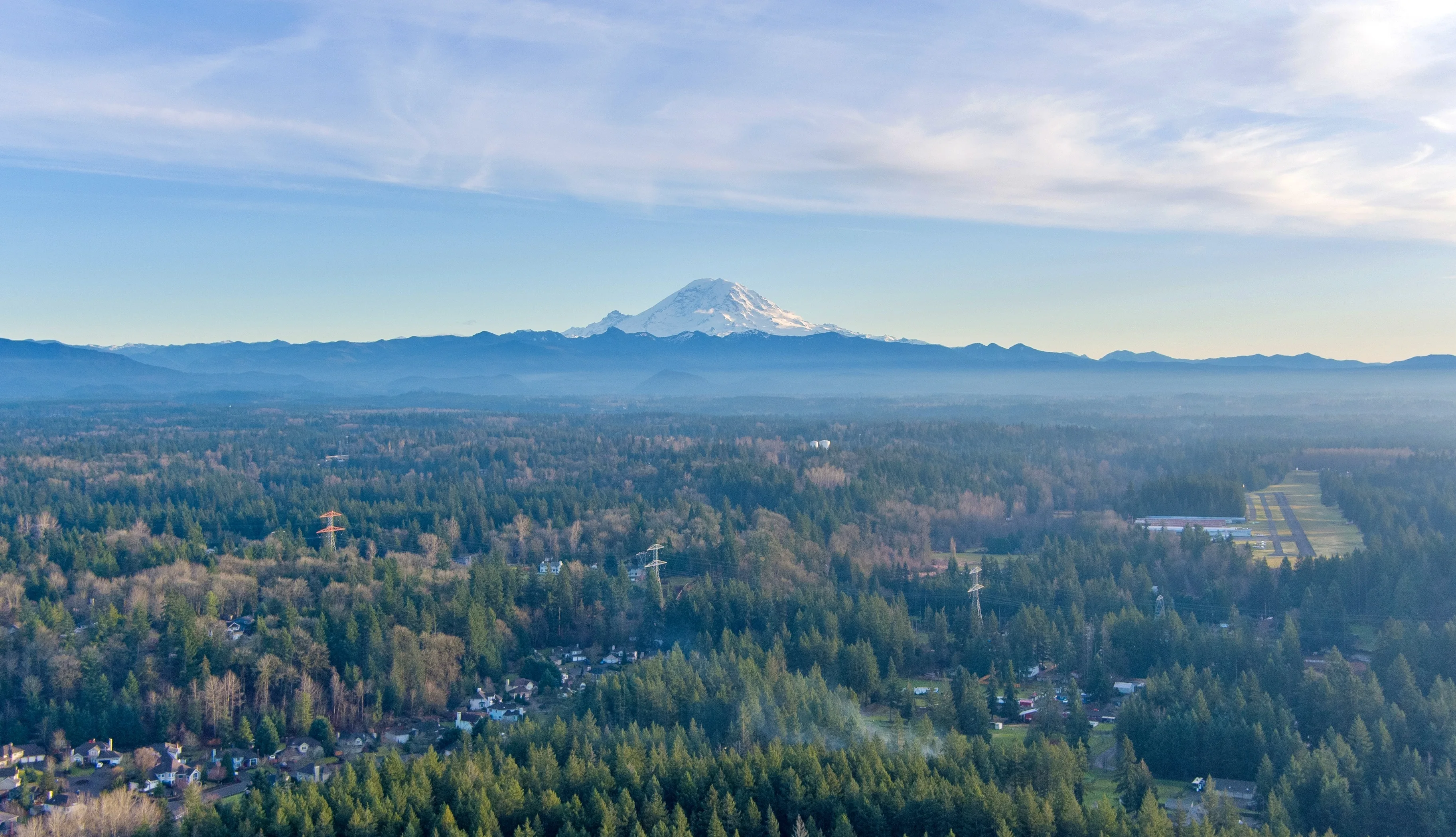
The $650,000 median anchors the conversation, but the real market has been moving. Over the trailing six months through spring 2026, closed single-family sales averaged closer to $700,000 — and April 2026 alone posted a median of $751,614 per Northwest MLS data. What that price range buys you depends enormously on the vintage of the home. In the mid-$600s, expect three or four bedrooms in a 1980s or 1990s rambler, likely with updated kitchen finishes but original bathrooms, on a lot of 7,000 to 10,000 square feet. Push toward $750,000 and you start seeing Craftsman-style builds from the 2000s with vaulted ceilings, hardwood floors, and formal living and dining rooms.
The market moves quickly for well-priced homes. In the May 2025 snapshot, 96% of homes sold within 30 days, with buyers averaging two competing offers on desirable listings. Roughly 28% of homes went over asking — meaning the listed price is genuinely a starting point in popular neighborhoods like Highpointe and Lancaster Gate. Homes priced in the $500,000 range do exist, primarily older stock in Timberlane and similar established communities, but they require buyers to accept either deferred maintenance or a smaller footprint than comparable new builds would offer.
New construction is its own tier entirely. Communities like Eldorado Springs — a Lennar development that began in 2021 — and Cascara Creek and Alpine Glen push the ceiling well past $1 million, with median closing prices around $1,030,000 for new builds averaging 3,092 square feet. These homes appeal to buyers who want energy efficiency, open-concept layouts, and warranties, but they require a substantially different budget conversation than the resale median suggests.
| Budget Range | What to Expect |
|---|---|
| $500,000–$600,000 | 3BR older rambler, 1,400–1,800 sq ft, updated finishes likely partial, established neighborhoods like Timberlane |
| $600,000–$750,000 | 3–4BR Craftsman or late-'90s two-story, 1,800–2,400 sq ft, standard Covington resale median |
| $750,000–$950,000 | 4BR newer construction or fully remodeled resale, 2,400–3,000 sq ft, neighborhoods like Highpointe and Winterwood Estates |
| $950,000–$1.2M+ | New construction communities (Eldorado Springs, Cascara Creek), 3,000–3,500 sq ft, energy-efficient, full builder warranty |
King County assesses property taxes at approximately 0.99% of assessed value — which on a $650,000 home translates to roughly $6,435 per year, or about $536 per month folded into your mortgage payment. Washington State's levy limit system caps annual increases at 1% without voter approval, which gives homeowners more predictability than buyers moving from states where reassessments can spike 20% after a sale. King County does offer a senior exemption program for homeowners 61 and older who meet income thresholds, which can meaningfully reduce the assessed value used to calculate annual taxes — worth applying for in the first year of ownership if you qualify.
Covington's rental market is thin by design — this is fundamentally an ownership community. The housing stock skews heavily toward single-family detached homes, with just a handful of condos and townhomes available in any given month. Apartment inventory is limited, and what exists tends to cluster near the Highway 18 corridor and the commercial center around Covington Way SE.
| Unit Type | Avg Monthly Rent |
|---|---|
| Studio / 1BR apartment | $1,500–$1,900 |
| 2BR apartment or townhome | $2,000–$2,500 |
| 3BR single-family home (rental) | $2,800–$3,400 |
| 4BR single-family home (rental) | $3,200–$3,900 |
Utilities in Covington run through a patchwork of providers depending on where exactly you live. Electricity comes primarily through Puget Sound Energy, with average monthly bills in the $120–$180 range for a standard single-family home — higher in winter when electric heat or heat pump supplementation kicks in. Natural gas service through Puget Sound Energy is available in many neighborhoods and meaningfully reduces winter heating costs. Water and sewer service varies by neighborhood and may be handled through the City of Covington, Soos Creek Water and Sewer District, or Covington Water District. Internet service is primarily through Comcast Xfinity, with CenturyLink/Lumen available as an alternative in some areas.
Car dependency is total. Covington's Walk Score of 17 is not a rounding error — it reflects the reality that virtually every errand, appointment, school run, and social outing requires a vehicle. There is no light rail, no commuter rail, and bus service on King County Metro routes serves the area but with limited frequency. The 40-minute Seattle commute via Highway 18 to I-405 or Highway 167 is accurate under good conditions; the Renton and Auburn interchange areas can add 20 minutes or more during peak hours. Buyers who commute to Seattle five days a week should budget $200–$280 per month in fuel costs, more for longer-range commutes to the Eastside.
Grocery access is solid for a suburb this size. A Fred Meyer anchors the main commercial corridor on Covington Way SE, covering full-service grocery, pharmacy, and general merchandise. A Walmart Supercenter handles bulk and lower-cost staples nearby. Costco is accessible in Auburn or Renton — roughly 15 to 20 minutes depending on traffic — which most Covington households treat as a monthly or bi-monthly run. Specialty grocers and ethnic markets require a trip toward Kent or Renton.
Dining skews toward chain restaurants and casual local spots clustered along the commercial corridor. The culinary variety that Seattle or Bellevue buyers are accustomed to isn't replicated here, which is one of the honest lifestyle trade-offs residents mention after six months. The Covington Days Festival — the community's signature annual event — does draw local food vendors and entertainment to Covington Community Park, but day-to-day dining options are functional rather than destination-worthy.

| City | Median Home Price | Property Tax Rate | State Income Tax | Commute to Seattle | Walkability |
|---|---|---|---|---|---|
| Covington, WA | $650,000 | ~0.99% | None | ~40 min | Very low |
| Kent, WA | $580,000 | ~1.01% | None | ~35 min | Low–moderate |
| Maple Valley, WA | $720,000 | ~0.97% | None | ~45 min | Very low |
| Auburn, WA | $540,000 | ~1.05% | None | ~40 min | Low |
| Renton, WA | $680,000 | ~1.03% | None | ~25 min | Moderate |
| Black Diamond, WA | $600,000 | ~0.95% | None | ~50 min | Very low |
| Enumclaw, WA | $480,000 | ~0.94% | None | ~55 min | Low |

Covington's cost of living story really comes down to where within the community you're looking. Neighborhoods like Highpointe and Lancaster Gate tend to hold their value well due to established infrastructure and neighborhood pride, while areas like Jenkins Creek attract buyers who want more space without stretching too far — many homes there still come in under $750,000. What I'm seeing across Covington right now is that well-maintained, move-in-ready homes don't sit long. If something checks your boxes, it's often under contract within days.
That's exactly why talking with a lender before you start touring matters more than people realize. Your approval amount and your comfortable payment are two different numbers, and the gap between them is where a lot of buyers get into trouble. The full monthly picture includes property taxes, homeowner's insurance, any HOA dues, and your loan structure — all of which shift depending on the home and the neighborhood. Getting clear on that number upfront means when the right home in Covington appears, you're ready to move with confidence rather than scrambling.
This table reflects a household purchasing at the $650,000 median price with 10% down ($65,000), financing $585,000 at a 6.75% rate over 30 years.
| Cost Category | Monthly Estimate |
|---|---|
| Mortgage principal & interest | $3,793 |
| Property taxes (~0.99% annually) | $536 |
| Homeowner's insurance | $150–$200 |
| HOA fees (if applicable) | $0–$100 |
| Electricity (PSE) | $130–$180 |
| Natural gas (if applicable) | $60–$100 |
| Water/sewer/garbage | $80–$120 |
| Internet (Comcast) | $70–$90 |
| Groceries (family of 4) | $900–$1,200 |
| Fuel / transportation | $200–$280 |
| Dining out | $300–$500 |
| Healthcare (employer-sponsored) | $400–$600 |
| Childcare or after-school programs | $0–$1,800 |
| Estimated Total Range | $6,619–$8,999/month |
Washington's most significant financial advantage for residents — particularly those relocating from California, Oregon, or other high-income-tax states — is the absence of a state income tax. A household earning $134,502 in Oregon pays approximately $9,000–$11,000 annually in state income tax at the 9.9% top marginal rate. In Washington, that same household pays zero. Over a decade of homeownership, that figure compounds into a meaningful wealth advantage that dramatically changes the real cost of living comparison between the two states.
Washington does levy a sales tax — King County's combined rate sits at 10.2% — which applies to most goods and some services. This is higher than many states and worth factoring into budget planning, particularly for large purchases like appliances, vehicles, or furniture. Real estate excise tax (REET) applies at the point of sale, currently structured on a graduated scale, which affects sellers more directly than ongoing ownership costs.
For residents 61 and older who meet income limits, Washington's senior property tax deferral program allows qualifying homeowners to defer property taxes until the home is sold — an underused benefit that meaningfully improves cash flow for fixed-income retirees. The combination of no income tax, relatively moderate property tax rates, and the deferral program makes Washington among the more retirement-friendly tax environments in the Pacific Northwest.

Local Expert Takeaway: Buyers focused on the $650,000 median sometimes overlook that Covington's resale market has been trending higher through 2026 — budget toward $680,000–$720,000 for a competitive position on a well-maintained 4BR home in established neighborhoods like Highpointe or Lancaster Gate. The no-state-income-tax advantage is real and meaningful: a dual-income household earning $200,000 combined saves $15,000–$18,000 annually versus the same family living in Portland. Run that number over five years of ownership and Covington's price tag looks materially different.
Looking to buy in Covington? Estimate your payment.
Enter your numbers to see an estimated monthly mortgage payment.
Estimate only. Excludes HOA fees and mortgage insurance.
Is Covington, WA an affordable place to live?
Covington is affordable relative to Seattle, Bellevue, and Renton — not relative to national averages. The median home price of $650,000 reflects a competitive suburban market in one of the country's most expensive regions. The absence of Washington state income tax provides meaningful ongoing savings for households earning above $100,000, which partially offsets higher housing costs compared to lower-cost states.
What are property taxes like in Covington?
King County's effective property tax rate in Covington runs approximately 0.99%, translating to about $6,435 annually on a $650,000 home. Washington caps annual levy increases at 1% without voter approval, providing more predictability than many states. Homeowners 61 and older who qualify for the senior exemption can reduce their assessed tax burden further.
How does Covington's cost of living compare to Maple Valley?
Covington comes in slightly cheaper than Maple Valley, where the median home price trends closer to $720,000. Both cities share the same car-dependent character, similar utility providers, and comparable access to King County services. The practical differences come down to specific neighborhood character and proximity to employment corridors — Maple Valley sits farther from the Highway 167 commute spine, while Covington's Highway 18 access offers a slightly more direct route toward Auburn and Federal Way employment hubs.
Explore the full Covington series: Living in Covington · Is Covington Safe? · Cost of Living · Best Neighborhoods · Schools & Family Life · Youth Sports · Parks & Rec · Retiring in Covington