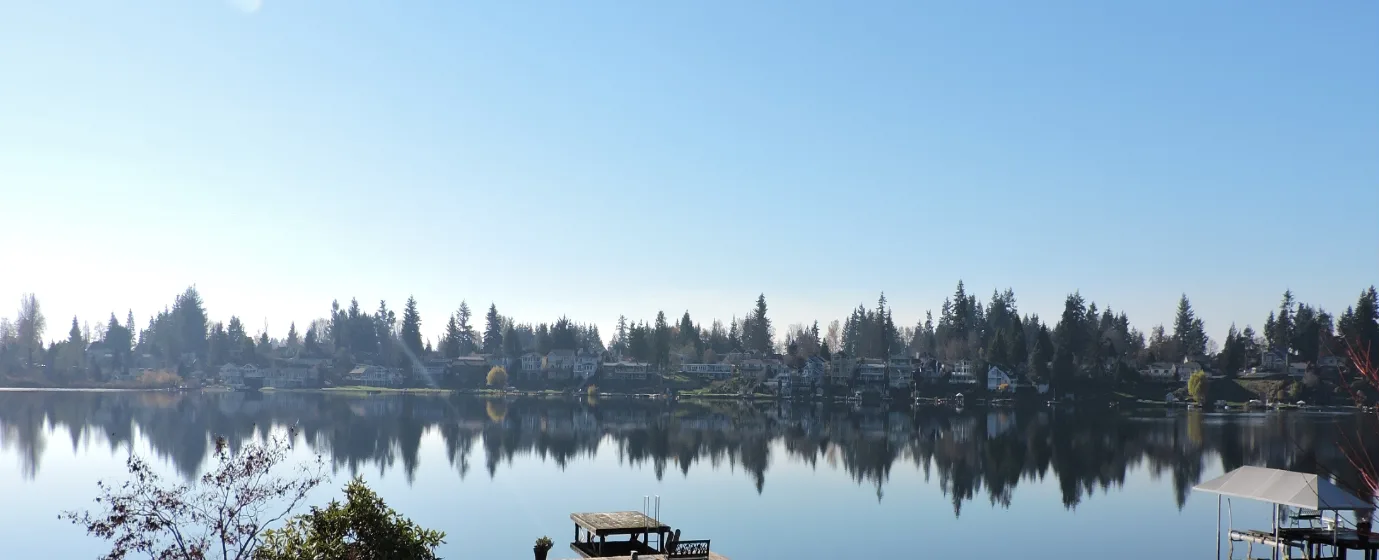
Puget Sound · Washington
Living in Covington: The Ultimate Relocation Guide (2026)
Maybe your employer is transferring you to the south King County corridor and you've been given a list of bedroom communities to evaluate. Maybe you've watched Seattle and Bellevue prices climb past what any reasonable budget allows and someone at work mentioned Covington as the alternative that doesn't feel like a compromise. Maybe you pulled off SR-516 once, looked around, and thought: this feels like a real neighborhood — but you couldn't quite figure out what the city actually is.
That tension is legitimate. Covington sits in an interesting middle position: large enough to have its own identity, incorporated only since 1997, and still in the middle of a transformation that will fundamentally reshape its town center over the next decade. It's a community of roughly 21,600 people with a median household income approaching $134,000, a housing market where the median sold price holds at $650,000, and a geographic reality that makes it genuinely excellent for certain lifestyles while being genuinely frustrating for others. The key to understanding Covington is understanding that it was built around the car — and that the Lakepointe Urban Village project now underway is the city's first serious attempt to change that.
This guide is designed to help you make an actual decision. You'll find honest takes on the commute, the neighborhoods worth understanding before you make an offer, the tradeoffs that don't show up in the Zillow listing, and the local quirks that only become obvious after six months of actually living here. If Covington is the right fit for your household, you'll know it by the end.
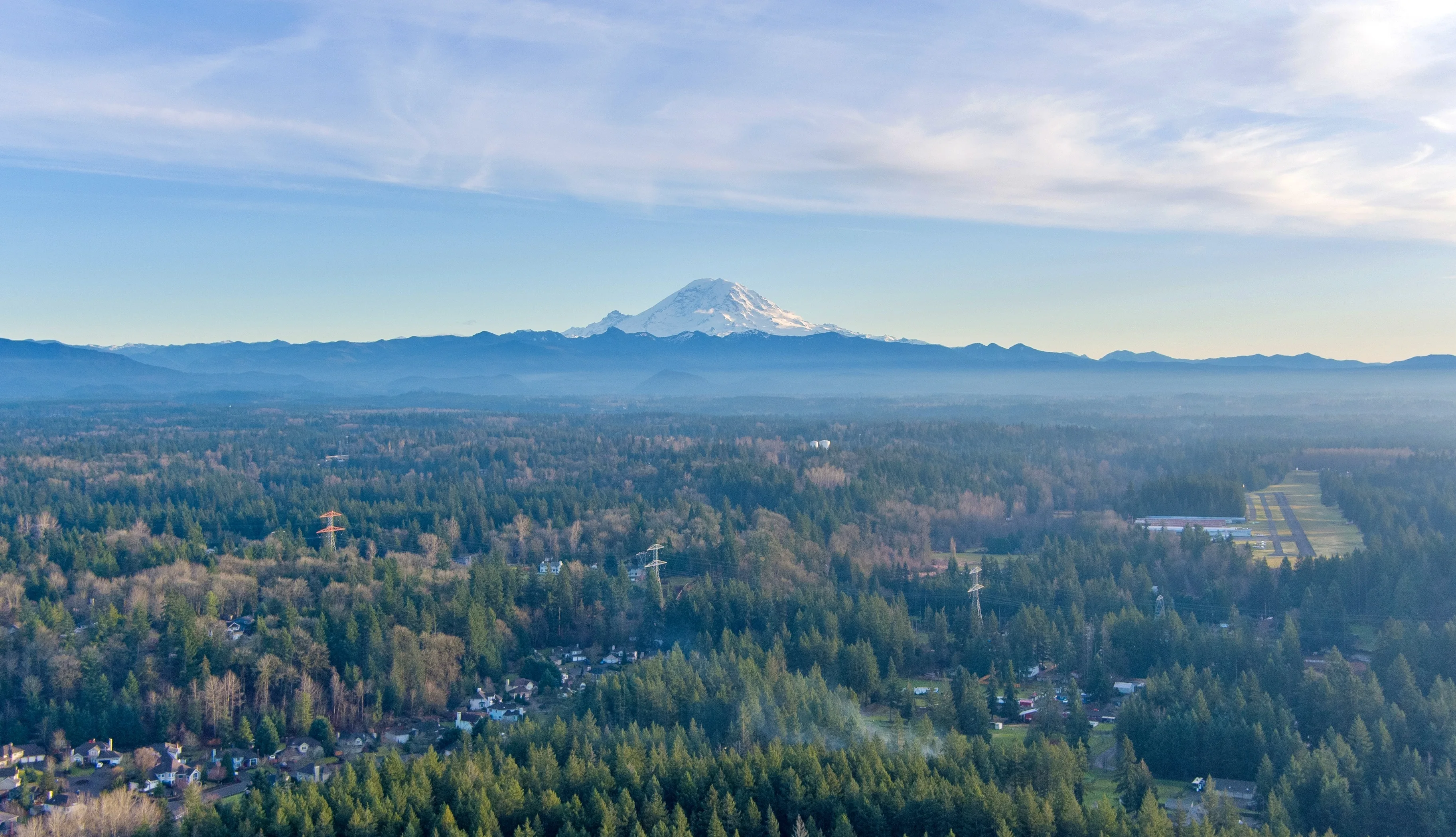
Not every city works for every buyer. Here's an honest, intent-based breakdown of who tends to thrive in Covington — and who might want to keep looking.
| Best For | Why |
|---|---|
| Commuters to Kent/Auburn/Federal Way | SR-18 and SR-516 put major employment corridors within 15–25 minutes without touching I-5 or I-405 |
| Families with school-age children | Kent School District's 90.7% graduation rate; Kentlake and Kentwood high schools both serve Covington |
| Remote workers or hybrid schedules | Strong value relative to Seattle suburbs; space for home offices; less commute pressure makes outer-ring location irrelevant |
| Healthcare workers | MultiCare Covington Medical Center is a four-story regional hospital — one of the largest local employers |
| First-time buyers priced out of Renton/Kent | Entry-level inventory starts below the city median; the $650,000 median buys more square footage than any city closer to Seattle |
| Retirees who want quiet and services nearby | Low crime rate, Covington Aquatic Center, proximity to medical care, and established neighborhoods with mature trees |
The geographic reality shapes everything. Covington occupies just over six square miles in southeast King County, tucked between Kent to the west, Auburn to the southwest, and Maple Valley to the east. The spine of the city runs along the SR-516 corridor — Kent-Kangley Road and SE 272nd Street — where the retail core developed rapidly in the 2000s. Fred Meyer, Walmart, and a dense strip of service retail define this stretch, and it handles the majority of the city's day-to-day errands. It's functional and well-stocked, if not particularly inspiring to walk through.
Daily life here is built around the car. The neighborhoods themselves are quiet, green, and well-maintained — but getting from your front door to a coffee shop or grocery store almost always involves driving. That's not unusual for a south King County community, but it's worth naming clearly if you're relocating from a walkable urban neighborhood. What Covington does offer in return is space: large lots, mature trees, the kind of quiet that disappears somewhere around Renton, and a genuine neighborhood feel in subdivisions like Highpointe and Lancaster Gate that have developed their own identity over the years.
The commute reality depends almost entirely on where you're going. Getting to Kent or Auburn on SR-18 in 15 to 20 minutes is genuinely easy. Seattle is a different calculation. The drive clocks in at roughly 40 minutes in normal conditions, but the I-5 and SR-167 corridors are unpredictable — a bad morning can push that past an hour without warning. There's no direct bus to Seattle, but King County Metro connects to Kent's Sounder station, which makes the commute workable for downtown Seattle workers on a hybrid schedule. If you're in Seattle five days a week, the honest advice is that Covington will wear on you. If you're going twice or three times a week, the math changes entirely.
One thing that surprises most people after six months of living here: how attached they get to the Soos Creek Trail. The multi-use trail runs through Covington and into neighboring communities, connecting to Jenkins Creek Park and winding through the kind of Pacific Northwest greenery that makes the whole region worth moving to in the first place. Locals who discover it early say it becomes a near-daily ritual — morning runs, after-work rides, weekend walks. It's the kind of infrastructure that doesn't appear in the listing, but ends up defining quality of life.
The most consistent reason people stay in Covington is simple: the value-to-quality ratio is difficult to beat anywhere this close to Seattle. At a median sold price of $650,000, you're buying homes that in Bellevue or Kirkland would be priced 50 to 80 percent higher. The per-square-foot cost — roughly $375, even after recent appreciation — is a number that experienced buyers find hard to walk away from once they see what it buys physically. Four-bedroom homes with finished basements, decent yards, and two-car garages are the norm here, not the exception.
The schools are a genuine draw, not just a talking point. Kent School District's four-year graduation rate has climbed for three consecutive years to 90.7% — well above the state average. Kentlake High School and Kentwood Senior High School both serve Covington households, and the district's investment is visible: 74% of teachers hold master's degrees or higher, and per-student spending runs over $17,000 annually. For households relocating from out of state with school-age children, this is a legitimately competitive public school system.
The medical infrastructure in Covington is something most bedroom communities in this region simply don't have. MultiCare opened a four-story regional hospital here in 2018 — 58 beds, a full emergency department, and a family birth center. For a city of 21,600, having that level of care local rather than a 20-minute drive away is a meaningful quality-of-life factor, particularly for families with young children or older residents managing chronic conditions.
The outdoor access compounds over time. Lake Meridian Park, Covington Community Park, Pipe Lake, and the Soos Creek Trail system give the city a genuine outdoor identity. Covington Days, the city's annual summer festival, draws the community together every year in a way that feels genuinely local rather than manufactured. These are the details that don't appear in market reports but end up being the reasons people write online reviews about why they've lived here for fifteen years.

Covington's car dependency is the most consistent friction point for new residents. The SR-516 corridor handles errands efficiently, but the city has no real walkable town center — no main street with coffee shops and restaurants that you can reach on foot from most neighborhoods. The Lakepointe Urban Village development is designed to address this directly, and when complete it will create a walkable mixed-use core the city currently lacks. But "when complete" is measured in years, not months, and buyers who need that kind of lifestyle now rather than eventually will find the current reality frustrating.
The commute to Seattle is the second major friction point, and it deserves honest framing. The 40-minute estimate is real — on a good day, driving off-peak on a Tuesday morning. During peak hours, the I-5 corridor through Kent and Federal Way can add 20 to 40 minutes. Buyers who are fully remote or hybrid two days a week will barely notice. Buyers commuting five days a week into Seattle proper often find the drive erodes the lifestyle value the suburbs are supposed to provide. This is the calculation that causes most people who leave Covington to leave — not the city itself, but the cumulative weight of daily driving.
Walkability seekers will find the current state of Covington misaligned with their expectations. The Walk Score in most neighborhoods is low, and the retail experience along SR-516 is built around parking lots and drive-throughs rather than pedestrian access. This is changing — the Lakepointe development and ongoing city planning efforts are pushing toward more mixed-use density — but right now, the honest description is that Covington is a car-first community.
The property crime rate — reported at approximately 31 incidents per 1,000 residents — is worth knowing. It's not alarming in regional context, but it's higher than what buyers from lower-density exurban communities might expect, driven largely by retail corridor activity. The violent crime rate of 2.67 per 1,000 residents is relatively low. The distinction matters: Covington's safety profile is best understood neighborhood by neighborhood rather than as a single city-wide figure.
Covington is not a city with a single dominant neighborhood. It developed across multiple subdivisions, each with its own character, price point, and relationship to the city's main corridors. Here are the eight neighborhoods that matter most for buyers doing their research.
Highpointe sits at the higher end of Covington's price spectrum, with homes that have historically listed into the low seven figures. It's the neighborhood the King County Assessor explicitly identifies as representing the city's "higher quality homes" — established architecture, larger lots, and a level of landscaping maturity that newer developments can't replicate quickly. Buyers here tend to be trading up in size and quality rather than making a first purchase, and the neighborhood's established character means it holds value well through market fluctuations.
Best for: Households looking for Covington's premium tier without crossing into the Maple Valley price range.
Timberlane represents the entry point of the Covington market — the neighborhood the King County Assessor places at the opposite end of the quality spectrum from Highpointe. Renovated ramblers here have historically appeared in the $499,000 range, making it one of the few areas in south King County where first-time buyers can find genuine affordability without sacrificing the school district or the safety profile. The housing stock is older, and buyers should budget for updates, but the value-to-location ratio is real.
Best for: First-time buyers who want into Covington's school district at the lowest available price point.
The Jenkins Creek area takes its name from the creek and adjacent park system that runs through this part of the city. Neighborhoods here tend to offer strong trail access and the kind of natural buffer that makes the Pacific Northwest feel like the Pacific Northwest rather than just another suburb. Pricing in this area generally tracks near the city median, and the combination of outdoor proximity and established residential character makes it consistently popular with households that prioritize green space.
Best for: Outdoor-oriented households who want trail access from the neighborhood rather than a drive to it.
Covington Park is one of the city's more centrally located neighborhoods, positioned near the retail corridor and community amenities including Covington Community Park itself. The proximity to services is genuinely useful — this is one of the areas where day-to-day errands require the fewest car trips. Homes here are well-suited to households where multiple people have different daily schedules and need efficient access to the city's core services.
Best for: Families with kids in activities who need quick access to community facilities and retail.
Eldorado Springs offers a quieter residential character compared to neighborhoods closer to SR-516. It attracts buyers who want Covington's school district and price point without the noise and activity of the retail corridor. The neighborhood has an established suburban feel with mature landscaping, and pricing generally stays near the city-wide median while offering more separation from commercial activity.
Best for: Buyers who want residential quiet without sacrificing proximity to the city's amenities.
Lancaster Gate has developed its own identity as one of Covington's more desirable mid-range neighborhoods. Its layout, home sizes, and community feel attract households that are past the first-time-buyer stage and looking for a long-term home rather than a starter. Pricing tends to run at or slightly above the city median, reflecting the neighborhood's established character and its reputation among local buyers.
Best for: Move-up households buying a home they intend to stay in for 10-plus years.
Parke Meadows is a planned residential community with the clean lines and consistent streetscape that planned developments typically produce. It suits buyers who prefer predictability in home quality and neighborhood aesthetics. The homes here tend to be newer construction or well-maintained near-new builds, which reduces maintenance uncertainty for buyers who don't want to inherit older systems.
Best for: Buyers who want newer construction quality without custom-build prices or timelines.
The Lake Meridian area is Covington's most distinctive residential geography. Homes near the lake access points offer water views and proximity to Lake Meridian Park — one of the region's genuinely well-regarded swimming and recreation lakes. Properties here have historically commanded premiums at the higher end of the Covington price range, with some lakefront-adjacent listings approaching $1,125,000. It's the neighborhood in Covington where the setting does the most work in the listing.
Best for: Buyers who want a Pacific Northwest lake lifestyle without traveling to the mountains to find it.

Covington has quietly built a strong track record for holding and growing home values, and where you land within the community can make a real difference long term. Neighborhoods like Highpointe and Lancaster Gate tend to draw consistent buyer interest thanks to their established feel and accessibility to major commute corridors. Covington Park attracts families looking for that balance of space and community, and well-priced homes there — generally under $750,000 — rarely sit long before receiving serious attention. In a market like this, desirable properties can be gone within days of listing.
That pace is exactly why I encourage buyers to connect with a lender before they ever walk through a front door. Most people focus on the purchase price, but your real monthly obligation includes property taxes, homeowner's insurance, any HOA dues, and your specific loan structure — and that full picture can look quite different from what a quick online calculator suggests. My goal is always to find a comfortable budget for your life, not just the maximum a lender will approve, so that when the right home in Covington appears, you're genuinely ready to move on it.
| City | Best For | Median Home Price | Commute to Seattle | Vibe |
|---|---|---|---|---|
| Covington | Families, healthcare workers, value buyers | $650,000 | ~40 min | Suburban, car-dependent, growing |
| Maple Valley | Outdoor enthusiasts, larger lots | $720,000–$750,000 | ~45 min | Rural-suburban, quieter, fewer services |
| Kent | Commuters, first-time buyers, diverse community | $575,000–$600,000 | ~35 min | More urban, higher density, more transit |
| Auburn | Budget-conscious buyers, light industrial workers | $540,000–$560,000 | ~40 min | Blue-collar, transitional, more affordable |
| Renton | Boeing/tech workers, transit access | $700,000–$730,000 | ~30 min | More urban, faster appreciation, less space |
| Black Diamond | Buyers who want rural feel with new construction | $650,000–$680,000 | ~50 min | Exurban, historic small town, longer commute |
| Metric | Value |
|---|---|
| Population | ~21,625 (2026 estimate) |
| Median Sold Home Price | $650,000 |
| Median Household Income | $126,730–$134,502 |
| Property Tax Rate | ~0.99% |
| Commute to Seattle | ~40 minutes (driving) |
| Violent Crime Rate | 2.67 per 1,000 residents |
| Property Crime Rate | 31 per 1,000 residents |
| School District | Kent School District (B+) |
| Graduation Rate (KSD) | 90.7% (2023, three-year increase) |
| Cost of Living Index | ~139 (national average = 100) |
| City Incorporated | August 31, 1997 |
| Major Development | Lakepointe Urban Village (214 acres, in progress) |
Covington Days is a genuine community event. The annual summer festival has the feel of a small-town fair rather than a city marketing exercise — local vendors, family activities, and a crowd that actually knows each other. For buyers evaluating whether a community has a real identity beyond its strip mall, Covington Days is meaningful evidence that it does.
The Meridian Valley Country Club is a quiet presence that shapes the character of nearby neighborhoods without calling attention to itself. It's not a gated-community situation, but homes in its vicinity tend to attract buyers who value that proximity, and it anchors a pocket of south Covington that feels distinctly more established than the city's newer subdivisions.
The Soos Creek Trail is the community's unofficial gathering infrastructure. On weekend mornings, the trail draws a cross-section of the city that the SR-516 corridor doesn't — runners, cyclists, dog walkers, families pushing strollers. If you want to understand whether Covington is the kind of place where you'll know your neighbors, spending a Saturday morning on this trail is a better test than any neighborhood Facebook group.
What I Would Not Do: I would not buy in the immediate SR-516 corridor without driving it on a Friday afternoon between 4:00 and 6:00 PM first. The stretch between 164th Ave SE and SE 272nd Street compresses noticeably during peak retail hours, and neighborhoods that depend on left turns onto the main arterial for their primary access can add 10 to 15 minutes to what looks like a short trip home. Buyers who find this out after moving in are the ones who mention it in every honest review.

Local Expert Takeaway: Covington's most underappreciated opportunity right now is getting into a well-priced home in the Highpointe, Lancaster Gate, or Lake Meridian area before the Lakepointe Urban Village development is priced into the surrounding market. The city is mid-transformation — the infrastructure that will define it as a destination suburb is actively being built, not just planned. Buyers who are evaluating Covington purely on what exists today are missing the city's 5-year trajectory. If you're on a hybrid or remote schedule and your commute pressure is low, the $650,000 median sold price combined with the Kent School District's graduation rate and MultiCare's local hospital creates a value case that's genuinely difficult to replicate anywhere closer to Seattle.
✅ Covington's value case is real — the $650,000 median sold price buys significantly more home than comparably located communities, and the Kent School District's rising graduation rate has made it a legitimate draw for relocating families.
⚠️ The car dependency is the lifestyle ceiling — until the Lakepointe Urban Village development matures, Covington requires a car for nearly every daily task, and buyers relocating from walkable urban environments will feel that friction daily.
📍 The commute math is binary — hybrid or remote workers who drive to Seattle two or three times a week will find Covington's 40-minute drive entirely manageable; daily commuters to downtown Seattle are likely to find it erodes the lifestyle value over time.
Is Covington a good place to raise a family?
For most families, Covington delivers a strong combination of school quality, outdoor access, and home size-per-dollar that's hard to match in the broader Seattle metro. The Kent School District serves Covington households with schools including Kentlake and Kentwood High School, and the district's 90.7% graduation rate reflects genuine investment in outcomes. Add in the Soos Creek Trail, Covington Community Park, Lake Meridian Park, and a regional hospital, and the day-to-day infrastructure for family life is well-covered.
What is the crime situation in Covington?
Covington's violent crime rate sits at approximately 2.67 incidents per 1,000 residents, which is relatively low in regional context. The property crime rate — around 31 per 1,000 — is the more relevant figure for most households, and it reflects activity concentrated near the commercial corridor rather than evenly distributed across residential neighborhoods. Buyers in established residential subdivisions away from SR-516 generally report a quiet, low-incident experience.
How does Covington compare to Maple Valley for buyers choosing between the two?
The honest answer is that it depends on commute direction and lifestyle priorities. Maple Valley offers more rural character and larger lots but fewer local services and a longer drive to regional employment centers. Covington has the MultiCare hospital, better highway access via SR-18, and denser retail — but smaller lots and a more suburban feel. For households where someone commutes to Kent, Auburn, or Federal Way, Covington is typically the more practical choice. For fully remote households who want space and quiet above all else, Maple Valley often wins.
Explore the full Covington series: Living in Covington · Is Covington Safe? · Cost of Living · Best Neighborhoods · Schools & Family Life · Youth Sports · Parks & Rec · Retiring in Covington