
Puget Sound · Washington
Covington Schools & Family Life: Top Districts, Academics & Community (2026)
The honest answer to "how are the schools in Covington?" is that it depends almost entirely on which school your child is assigned to — and that assignment is shaped by which neighborhood you buy in. Covington falls entirely within the Kent School District, a massive district of roughly 25,000 students earning a B+ on Niche's 2026 scale. That grade reflects genuine strengths in graduation rates and per-pupil investment, alongside math and reading proficiency numbers that trail state averages and are worth understanding before you make an offer.
What shapes school quality in Covington more than the district grade is the geographic reality of the elementary feeder system. A home near Crestwood Elementary places your child in one of the top-performing schools in the entire district. A home a few streets away might feed into a school performing well below the state average in both reading and math. In a city where the median home price sits at $650,000, that feeder-school gap matters enormously — and most out-of-state buyers don't discover it until after closing.
This guide is built for families making that six-month timeline decision: the ones weighing Covington against Maple Valley or Tahoma District territory, wondering whether the savings in home price justify the school trade-off, or simply trying to figure out which Covington neighborhoods feed into which schools. You'll find the district data, the specific elementary profiles, the honest gaps, and the family-life infrastructure beyond the classroom.
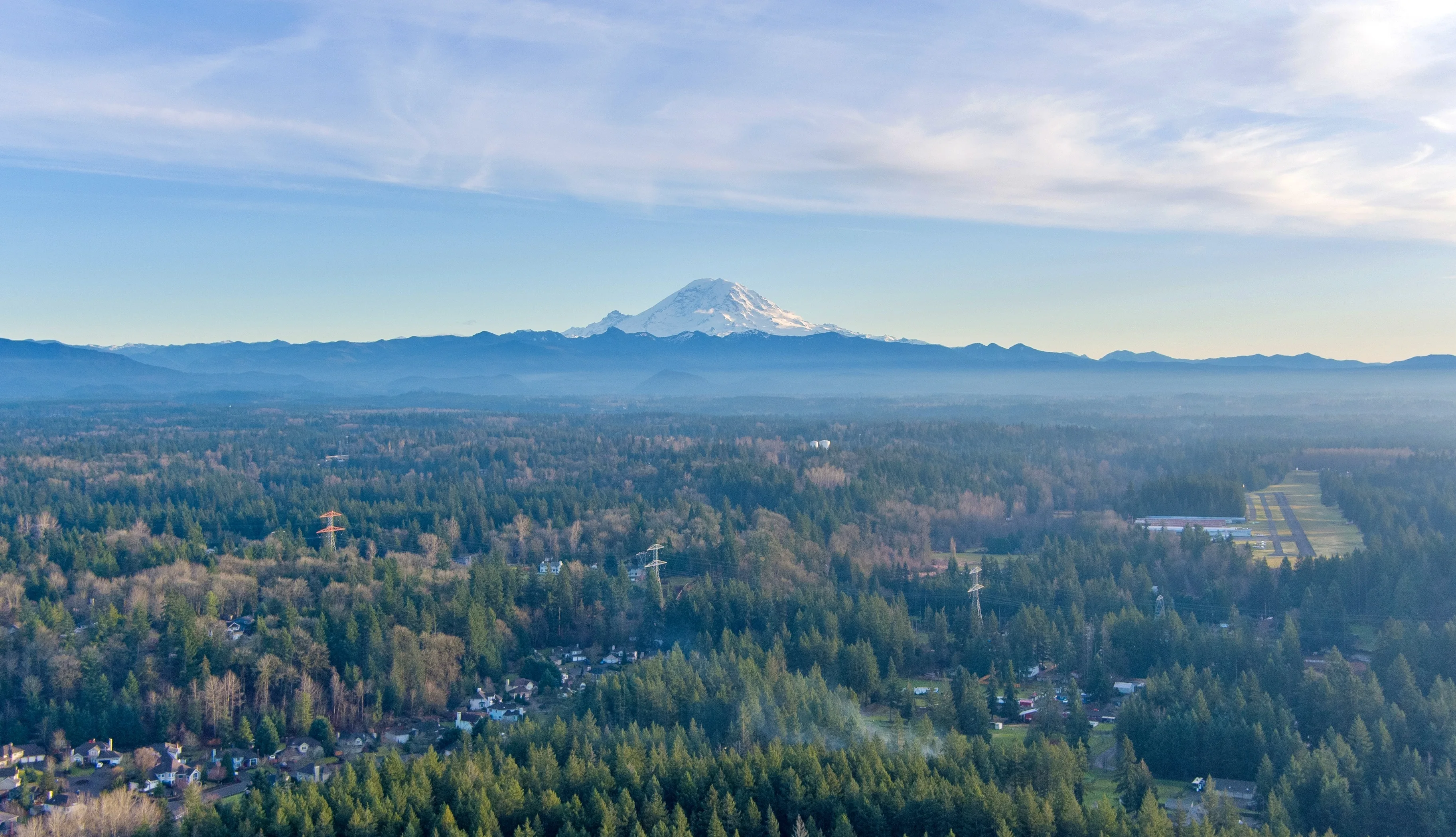
Kent School District #415 is the fourth-largest school district in Washington State, covering 73 square miles and serving communities that stretch well beyond the city of Kent — including all of Covington. The scale is both an asset and a complication. A large district can fund advanced programs, competitive athletics, and deep arts offerings that smaller districts can't sustain. It can also mean the kind of bureaucratic inertia that frustrates parents trying to navigate options, access gifted programs, or transfer between schools.
| Metric | Kent School District |
|---|---|
| Total enrollment | ~25,000 students (district-reported, 2024–25) |
| State ranking | 4th largest district in Washington |
| School breakdown | 29 elementary · 7 middle · 4 high schools · 4 academies |
| Student-teacher ratio | 17–18:1 (comparable to WA state average) |
| Average teacher experience | 11.9 years; ~74% hold a Master's degree or higher |
| Per-pupil spending | ~$19,800–$20,000 (above state median of $19,251) |
| Math proficiency (district vs. state) | 34% vs. ~43% WA state average |
| Reading/ELA proficiency (district vs. state) | 44% vs. 53% WA state average |
| Graduation rate (2023 OSPI) | 90.7% — outpaces WA state average of 83.6% |
| Diversity | 70% minority enrollment; 133 home languages spoken |
| Economically disadvantaged | ~41% of students |
| English Language Learners | 30.3% |
Six elementary schools serve Covington families within the Kent School District, and their performance varies substantially. Understanding which school a prospective home feeds into is one of the most important steps in your search.
Crestwood Elementary is the standout. In the 2024–25 school year, roughly 55% of students were proficient in reading and 58% in math — both figures above the Washington state averages and well above the district average. With a 15:1 student-teacher ratio and a ranking that puts it sixth among the district's 29 elementary schools, it's the school Covington buyers most actively seek out. The main limitation is that it still trails the top performers in the neighboring Tahoma School District, so families specifically chasing the region's highest academic ceilings may look east toward Maple Valley.
Covington Elementary sits near the center of the city and serves a broad cross-section of the community. It performs in the middle of the district pack — a reasonable option for families who aren't in the Crestwood zone but aren't in the district's bottom tier either. Class sizes trend slightly larger than at Crestwood, which is worth factoring in for families with kids who benefit from more one-on-one attention.
Jenkins Creek Elementary at 26915 186th Ave SE is the school where the district-wide averages start to feel real rather than abstract. Math proficiency comes in around 31% and reading around 36% — well below both the state and district figures. The student-teacher ratio is among the lowest in the district, around 14:1, which reflects intentional resource investment in a school serving a higher-needs population. That ratio can mean meaningful individualized support, but families with strong academic performance expectations should understand what they're comparing against.
Grass Lake Elementary serves the southeastern reaches of Covington and feeds primarily toward Kentlake High School. It performs near the district middle in reading and math, with relatively stable enrollment. It's a sound neighborhood school without the standout stats that drive relocation decisions.
Sawyer Woods Elementary sits in a newer development zone and has benefited from a more affluent enrollment mix, which tends to correlate with stronger proficiency scores. Parents frequently describe it as having an engaged PTA and active family involvement culture. It's not always on out-of-state buyers' radar, but it's worth checking whether a home you're considering falls in its boundary.
Horizon Elementary rounds out the Covington-area elementary options. It serves a diverse student body and performs comparably to Covington Elementary overall. Strong parent involvement programs and a stable teaching staff are frequently cited positives by families in its attendance zone.
Mattson Middle School is the primary feeder from Crestwood Elementary and serves much of west Covington. It performs above the district middle school average in both ELA and math, which means the academic momentum families build at Crestwood tends to carry forward here. Students who thrive in structured environments with clear expectations tend to do well; families accustomed to more progressive or project-based learning may find the approach more traditional than expected.
Cedar Heights Middle School serves a broader Covington and southeast Kent population. It's a large school by middle school standards and performs near the district average — a solid option without being a standout. The transition from a smaller elementary to a larger middle campus is something parents frequently mention as an adjustment, particularly for kids who benefited from the tight-knit feel of Sawyer Woods or Crestwood.
Kentwood High School is the primary high school for Covington's west side and is consistently the district's top-performing comprehensive high school. Its 2023 graduation rate was 95.6% — the highest among Kent School District's four high schools and a number that holds up well even compared to neighboring districts. Kentwood competes at the 4A WIAA level, offering a wide range of varsity athletics alongside robust AP and Running Start dual-enrollment options. Students looking for a large-school experience with genuine college-prep pathways tend to thrive here; those seeking the intimacy of a smaller campus may find 4A enrollment overwhelming.
Kentlake High School serves eastern Covington and feeds from the Grass Lake and Jenkins Creek zones. Its 2023 graduation rate was 87.4% — below Kentwood's but still above the Washington state average. Kentlake also competes at the 4A WIAA level and has been building its academic profile steadily over the past several years. It's a reasonable high school option for families in its zone, particularly those who prioritize athletics or who plan to leverage the Running Start program at Green River College.

The families who move to Covington specifically for the schools — and are honest about it six to twelve months in — tend to land in one of two camps. Those who bought in the Crestwood or Sawyer Woods zone are often pleasantly surprised: the classroom experience feels solid, parent involvement is high, and the feeder into Kentwood gives their kids a genuinely competitive path toward four-year university admissions. Those who bought primarily on price and ended up in a Jenkins Creek or lower-performing zone sometimes find themselves frustrated by a gap between the district's B+ marketing and the classroom-level reality.
The other thing that surprises parents most after a year is the Running Start program. Green River College, located nearby, allows juniors and seniors to take community college courses tuition-free, earning both high school and college credit simultaneously. For motivated students, this effectively extends what the district can offer — and it's a resource many families don't factor in when comparing Kent District against higher-ranked districts.
Boundary access matters, and it's worth knowing that Kent School District does allow some inter-school transfers, though approval is not guaranteed. Families who find themselves in a lower-performing elementary zone sometimes successfully request a transfer to Crestwood or Sawyer Woods, but that route requires planning, persistence, and no guarantee of acceptance each year.
If your family is relocating from a district with a robust, formally identified gifted program — the kind with dedicated pull-out classes, accelerated math tracks beginning in second grade, and a separate gifted-education coordinator — Kent School District will likely feel like a step down. The district offers some enrichment options, but there is no systemwide highly capable cohort school comparable to what Northshore, Bellevue, or Lake Washington districts offer. Families with kids who've been formally identified as highly capable should ask specifically about program availability at their assigned school before signing a purchase agreement.
The same honest assessment applies to International Baccalaureate. There is no IB program within the Kent School District's standard feeder structure. Families who've built their children's academic identity around IB progression should look north toward the Renton or Bellevue districts, or consider private options.
For students with intensive performing arts needs — the kind who've been in competitive theater, orchestra, or visual arts magnet programs — Kent District offers high school arts coursework but no dedicated arts-focused middle or elementary pathway comparable to programs in Seattle Public Schools. Kentwood and Kentlake both have active music and drama programs at the high school level, but the pipeline from elementary through high school is less structured than in arts-focused districts.
Families navigating complex IEPs or students requiring highly specialized special education support sometimes find that a smaller district can move faster and more flexibly than Kent's larger bureaucratic structure. That's not a knock on the quality of Kent's special education staff — it's a structural reality of scale.
The natural geographic alternative for families who want stronger across-the-board academics is the Tahoma School District, which serves Maple Valley and surrounding areas. Tahoma consistently ranks among the top 10–15 school districts in Washington State on Niche, with proficiency rates that significantly outpace Kent's district averages. The catch is that homes in Tahoma District territory typically run higher, and Covington's $650,000 median often represents meaningful savings over comparable Maple Valley properties.

Covington's school reputation genuinely drives buyer demand, and that pressure shows up most clearly in neighborhoods like Highpointe, Jenkins Creek, and Covington Park, where families specifically target homes for district access. Well-maintained properties in these areas regularly go under contract within days, not weeks, and most fall under $750,000 — though that ceiling has been creeping upward as more buyers discover what Covington offers. When school quality is a primary motivator, buyers tend to move decisively, which means competition can be real even in a shifting market.
That urgency is exactly why talking with a lender before you start touring makes a meaningful difference. Your full monthly obligation includes not just principal and interest, but property taxes, homeowner's insurance, any HOA dues, and how your specific loan structure affects the payment — and those layers together can shift your comfort zone significantly from whatever a pre-approval maximum suggests. The right home in a district you love can surface quickly, and you want to be in a position to act with clarity and confidence rather than scrambling to get your financing in order after the fact.
Families seeking alternatives to the public school system within or near Covington have a small but workable set of options.
| School | Type | Grades | Notes |
|---|---|---|---|
| Rainier Christian Schools | Private Christian | K–12 | Located in the broader King County area; serves Covington families |
| Kent Adventist School | Private faith-based | K–8 | Established campus with small class sizes |
| Holy Family School | Private Catholic | K–8 | Auburn-adjacent; commonly chosen by Covington Catholic families |
| Covington Learning Center | Private early childhood | PK–K | Covington-area; small-group enrichment focus |
School quality is one dimension of family life — but Covington's non-school infrastructure is genuinely strong for a city of 21,625 people. The Covington Aquatic Center is a particular asset: an indoor competition-grade pool that serves both recreational swim and club swim programs, giving families year-round aquatic access that many similarly sized cities can't match. The facility runs youth swim lessons, family open swim sessions, and fitness programming that makes it a weekly destination for a significant share of Covington families.
Covington Community Park and Lake Meridian Park are the two anchor outdoor gathering spaces. Lake Meridian in particular draws families throughout the summer — its swimming beach, boat launch, and shoreline trail create the kind of recurring community gathering point that doesn't require organizing or planning. The Soos Creek Trail extends across the broader area and connects Covington to neighboring communities via a paved multi-use path, giving families with cycling-age kids a meaningful outdoor corridor.
The Covington Days Festival remains the community's signature annual tradition — a summer event centered on local vendors, food, and live entertainment that draws participation from across the city's neighborhoods. For families relocating from out of state and looking to feel quickly embedded in a community, events like Covington Days matter more than square footage.
The King County Library System serves Covington through its regional branches, providing not just books but youth programming, homework help resources, and summer reading initiatives. The library system is genuinely well-funded by Washington State standards, and Covington families have reliable access to a level of programming that smaller or more rural communities don't receive.

Local Expert Takeaway: Before you finalize a Covington home search, pull the elementary school boundary for every property you're seriously considering — the gap between the top and bottom performers in this district is wide enough to change your decision. If Crestwood or Sawyer Woods is your priority, focus your search in the Timberlane and Highpointe corridors. If your child has been identified as highly capable or you're specifically seeking IB programming, price out Tahoma District homes in Maple Valley before assuming the difference isn't worth it — for some families, it is.
Are Covington schools good for families relocating from higher-ranked districts?
For most families, yes — particularly if you land in the Crestwood or Sawyer Woods feeder zone. The Kent School District's 90.7% graduation rate outpaces the Washington state average, per-pupil spending exceeds the state median, and Kentwood High School has a strong college-prep track. Families coming from top-ranked suburban districts in California, Texas, or the East Coast may notice the proficiency gap relative to state averages, but the school experience at the district's better-performing sites is solid.
How do Covington schools compare to Maple Valley and Tahoma District?
The Tahoma School District, which serves Maple Valley, consistently ranks among the top 10–15 districts in Washington and posts higher proficiency rates than Kent across most measures. For families where school ranking is the primary driver, Tahoma territory is worth the comparison — the catch is that comparable homes in Maple Valley often run higher than Covington's median. Many families find the price-to-school quality ratio in Covington's top feeder zones competitive enough to stay.
What is the graduation rate for Kentwood High School?
Kentwood's four-year graduation rate was 95.6% for the Class of 2023, per OSPI data — the highest among Kent School District's comprehensive high schools and well above the 83.6% Washington state average for the same year. Kentlake High School, which serves eastern Covington, reported 87.4% for the same period, also above the state average.
Explore the full Covington series: Living in Covington · Is Covington Safe? · Cost of Living · Best Neighborhoods · Schools & Family Life · Youth Sports · Parks & Rec · Retiring in Covington