
Puget Sound · Washington
First-Time Home Buyer Guide for Des Moines (2026)
There's a specific moment most first-time buyers in Des Moines describe — usually somewhere between the pre-approval call and the second open house. It's the moment the spreadsheet stops being abstract. You realize the down payment isn't just a number, the mortgage payment is something you'll think about every single month, and the neighborhood you can afford isn't quite the one you'd been picturing. That moment can feel like a wall. But buyers who push through it and stay focused on Des Moines specifically tend to find something genuinely worthwhile on the other side: a Puget Sound waterfront community with a 25-minute commute to Seattle, real neighborhood character, and a median home price that undercuts most of the cities surrounding it.
The median home price in Des Moines sits at $560,000 as of mid-2026. At that price point, you're typically looking at a 1960s or 1970s single-family home in Central Des Moines or South Des Moines — three bedrooms, one or two baths, original fixtures, a usable yard, and a commute to downtown Seattle that doesn't require leaving before 7 a.m. The gap between renting and owning here is real but not insurmountable. A two-bedroom apartment in Des Moines runs $1,800–$2,200 per month depending on the complex and location. A $560,000 home with 5% down and a competitive rate produces a monthly payment meaningfully higher than that — but you're building equity in a market where supply has stayed tight for years.
This guide walks you through the entire buying process from pre-approval through closing, with a specific focus on what first-time buyers in Des Moines get wrong and where the real opportunities exist in 2026. You'll find honest breakdowns of what different budgets actually buy here, which neighborhoods make sense as entry points, what assistance programs are available, and how to compete in a market that — despite some softening — still moves faster than buyers from out of state expect.

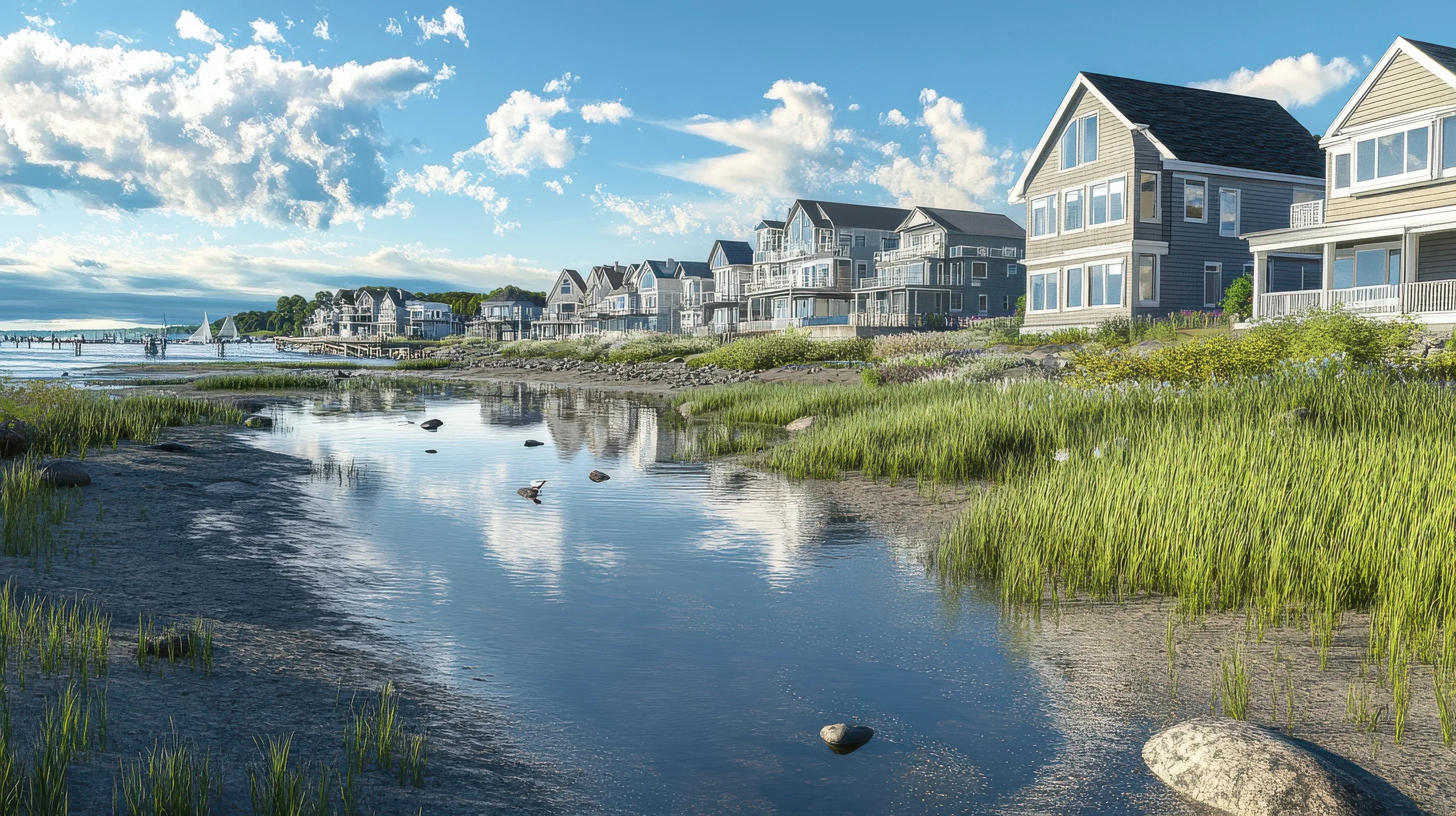
Des Moines makes a genuine case for first-time buyers, but it requires some honesty about expectations. The price point is the obvious draw: at $560,000, Des Moines sits comfortably below Burien, Normandy Park, and most neighborhoods in Federal Way that offer comparable commute times to Seattle. The waterfront corridor along Marine View Drive is a legitimate lifestyle asset — Des Moines Beach Park, Saltwater State Park, and the historic marina aren't marketing language, they're places locals actually use on weekday evenings. For buyers who've been quoted $700,000+ for comparable square footage in Renton or Tukwila, Des Moines often recalibrates the whole search.
The honest limitations are worth naming too. The Highline Public Schools district carries a C+ rating, and while individual school quality varies across the district, buyers prioritizing school rankings above other factors may find the calculus harder to justify. The housing stock skews older — a lot of what's available under $550,000 was built between 1950 and 1975, which means deferred maintenance is a real consideration, not a theoretical one. And while the market has softened from its 2022 peak, with days on market extending to around 52 days and some sellers accepting price reductions, it is not a buyer's market in the traditional sense. Well-priced homes in the $500K–$580K range still receive multiple offers.
For first-time buyers specifically, neighborhoods like Pacific Ridge, the Marina District, and parts of South Des Moines represent the most realistic entry points. Pacific Ridge, anchored near Pacific Highway South, has the lowest median list prices in the city — some condos and townhomes in the neighborhood trade below $350,000, though single-family detached homes at that price are genuinely rare anywhere in King County. The Marina District offers a step up in price with walkable access to the waterfront, making it a strong candidate for buyers who want a starter home with long-term resale appeal.
| Price Range | What You Typically Find | Neighborhood Examples | Competition Level |
|---|---|---|---|
| Under $350K | Condos, townhomes, manufactured homes; very limited inventory | Pacific Ridge | Low–Moderate |
| $350K–$450K | Small condos, older townhomes, occasional fixer SFR; tight inventory | Marina District, Lake Ota | Moderate |
| $450K–$550K | Entry-level single-family, 2–3 bed, older construction; some deferred maintenance | South Des Moines, Central Des Moines, Zenith | Moderate–High |
| $550K–$650K | 3-bed single-family with updates, better condition, larger lots | Woodmont, Central Des Moines, Zenith | High |
| $650K+ | Updated or newer SFR, premium lots, view properties, Marine Hills corridor | Marine Hills, Adelaide, Woodmont Beach | High |
The best value entry point for first-time buyers in 2026 is the $450K–$530K pocket in South Des Moines and Zenith, where the market has softened meaningfully from its peak without the quality trade-offs you encounter in Pacific Ridge's lower price ranges. Buyers willing to tolerate a 1960s kitchen and original bathrooms can find three-bedroom homes with yards, garages, and 15-minute drives to the marina. That combination — livable home, real neighborhood, functional commute, entry-level price — is harder to find in most of the South King County market right now.
| Step | What Happens | Typical Timeline | What First-Timers Get Wrong |
|---|---|---|---|
| Get finances in order | Pull credit, calculate DTI, gather income docs | 2–4 weeks before applying | Waiting until they find a house to start |
| Pre-approval | Lender reviews full file; issues conditional commitment | 1–3 business days | Confusing pre-qualification with pre-approval |
| Find an agent | Interview 1–2 local buyer's agents with King County experience | Before active search begins | Calling the listing agent on a house they love |
| Active search | MLS alerts, open houses, neighborhood tours | 4–12 weeks | Waiting for the "perfect" listing instead of acting on strong ones |
| Making offers | Purchase and sale agreement, earnest money, terms | 1–5 days per offer | Submitting at list price without understanding comparable solds |
| Under contract | Mutual acceptance; inspection and financing clock starts | Immediately after acceptance | Not reading the timeline — missing deadlines costs money |
| Inspection | Licensed inspector walks the property | Scheduled within 5–10 days | Skipping it or treating it as a formality on older homes |
| Appraisal | Lender orders appraisal to verify value | 1–2 weeks after contract | Being surprised by an appraisal gap on a soft-market home |
| Final walkthrough | Verify property condition before closing | 24–48 hours before closing | Skipping it — always do this |
| Closing | Sign documents, fund the loan, get the keys | 30–45 days after acceptance | Not having cash-to-close funds verified and ready |
Earnest money in King County typically runs 1%–3% of purchase price, which on a $560,000 home means $5,600–$16,800 deposited within 2–3 days of mutual acceptance. First-time buyers often underestimate how quickly this needs to be in their account and accessible. Closing timelines in King County generally run 30–45 days from acceptance, with 30-day closings common when lenders are prepared and files are clean.
The inspection question is critical in Des Moines. Much of the housing stock in Central Des Moines and South Des Moines was built between 1955 and 1980, which means inspectors routinely flag aging electrical panels, original cast-iron plumbing, and roofs approaching end of life. Never skip the inspection on an older Des Moines home — the $500–$600 you spend can reveal $15,000–$40,000 in deferred maintenance that changes your negotiating position entirely.

Your credit score directly determines what you'll pay every month. On a $450,000 loan, the difference between a 650 and a 740 credit score can mean a rate that's 0.75%–1.0% higher — which translates to roughly $200–$250 more per month and tens of thousands more paid over the life of the loan. FHA loans require a minimum 580 score for 3.5% down, but you'll carry mortgage insurance for the life of the loan unless you refinance later. Conventional financing becomes more competitive at 680 and significantly better above 720.
Income qualification follows the 28% front-end debt-to-income rule as a practical starting point. To buy a $400,000 home (with 5% down and a 7% rate), you need roughly $80,000–$85,000 in annual gross income to qualify comfortably. A $500,000 home pushes that figure to approximately $100,000–$105,000. At the $560,000 median with 5% down, you're looking at needing close to $115,000–$120,000 in household income, depending on other debt obligations. DTI — your total monthly debt divided by your gross monthly income — matters more than most first-time buyers realize because student loans, car payments, and credit card minimums all count against you before you've paid a dollar of mortgage.
Washington has no state income tax, which is a material advantage for buyers relocating from California, Oregon, or other income-taxing states. A household earning $95,000 in Washington keeps several thousand more per year than the same household in Oregon, which directly increases how much mortgage they can comfortably service. For Des Moines buyers who moved here from California specifically, that tax differential often closes the gap between qualifying on paper and qualifying comfortably.

As someone who works with buyers across Des Moines regularly, I can tell you that neighborhood choice plays a bigger role in long-term value than most first-timers realize. The Marina District continues to draw strong buyer interest thanks to its waterfront proximity and walkability, while Central Des Moines offers solid fundamentals for those wanting established surroundings at more accessible price points. North Hill has also been gaining traction with buyers who want room to grow. Desirable homes in these areas — many priced under $750,000 — are moving fast, often within days of listing, so hesitation can cost you.
Before you fall in love with a home on a tour, please talk to a lender first. Your pre-approval number and your comfortable monthly payment are two very different things, and the real number includes property taxes, homeowner's insurance, any HOA dues, and how your loan is actually structured. I've watched buyers get caught off guard by that gap. Knowing your true budget before you tour means when the right home appears in Woodmont or Zenith, you're ready to move — not scrambling.
Mistake 1: Shopping at the top of their qualification, not the top of their comfort. A lender approving you for $600,000 doesn't mean a $600,000 payment is a livable number. In Des Moines, the difference between a $560,000 and a $620,000 purchase is approximately $350–$400 per month — real money that shows up every month for 30 years. Build your budget around what you can pay without anxiety, then shop from there.
Mistake 2: Confusing list price with what homes actually close at. In 2022, homes closed $40,000–$60,000 over list routinely. In 2026, the dynamic has shifted — some homes close at or slightly below asking, particularly in Pacific Ridge and parts of South Des Moines where listings have sat for 30+ days. Buyers who've read about Seattle-area bidding wars from three years ago are either overbidding on soft inventory or mentally unprepared to compete on the handful of well-priced homes that still draw multiple offers. Know your comps before you write.
Mistake 3: Skipping inspection on older housing stock. A disproportionate share of Des Moines homes — particularly in Central Des Moines and around Zenith — were built in the 1960s and 1970s. Original electrical panels with known failure patterns (Federal Pacific, Zinsco) are not rare here. Deferred maintenance on roofs, foundations, and plumbing can be substantial on homes priced at $480K–$540K that look presentable at open houses. The inspection is not optional.
Mistake 4: Not understanding how school district boundaries affect resale. Des Moines sits entirely within Highline Public Schools, but buyers sometimes don't account for how that affects their buyer pool when they eventually sell. Families prioritizing school ratings will compare against Kent School District and Federal Way Public Schools when reshopping, and that affects how quickly your home moves in certain price ranges. This isn't a reason not to buy in Des Moines — it's a reason to understand what drives your future buyer's decision-making.
Mistake 5: Waiting for prices to drop significantly in a supply-constrained market. The Des Moines market has softened from its peak — price per square foot is down meaningfully from 2022 highs. But inventory in the $450K–$560K range has not collapsed, and the structural supply constraints that define King County aren't going away. Buyers who've been "waiting for prices to drop another 10%" since late 2023 have watched rates fluctuate and inventory stay tight. Timing the bottom of a supply-constrained market is a losing game for most buyers.
South Des Moines is the most practical entry point for first-time buyers who need a real single-family home. Median sold prices in early 2026 ran around $600,000, but there is inventory in the $490K–$550K range on homes that need work. The neighborhood is quieter and more residential than Central Des Moines, with decent proximity to Saltwater State Park and the 99 corridor for daily errands. Resale here tends to be steady because the fundamentals — location, lot sizes, proximity to I-5 — hold appeal across buyer types.
Zenith offers a compelling blend of price and character for first-time buyers willing to be patient. Zillow's neighborhood-level median list for Zenith runs around $580,000, but active listings and recent solds show real variance — some homes have come to market below $400,000 as fixer opportunities. Zenith has a slightly more established tree-canopy feel and connects easily to Des Moines Creek Trail for buyers who value outdoor access. It's a neighborhood that tends to reward buyers who move quickly on right-priced inventory rather than those waiting for the perfect listing.
Pacific Ridge is the entry point for buyers whose budget genuinely requires sub-$400K — but go in with clear eyes. The neighborhood runs along Pacific Highway South near Sea-Tac Airport, with a mix of ranch homes, apartments, and manufactured housing. The trade-off in price comes in neighborhood character and noise exposure. For buyers purchasing a condo or townhome as a true first step into ownership — building equity with a plan to move up in 5–7 years — Pacific Ridge is a realistic and financially defensible option.
Marina District punches slightly above a pure first-timer budget but deserves consideration for buyers who can stretch to the low-to-mid $400Ks and are comfortable with a condo or smaller townhome. The walkability to Des Moines Beach Park and the marina gives it a lifestyle quality that holds resale value well. Buyers who purchase here at entry level tend to benefit from the waterfront premium that helps the neighborhood hold value even when the broader market softens.
If coming up with cash to close is the real obstacle — not the monthly payment, but the lump sum at closing — Todd offers ONE+ by Rocket Mortgage, the only true grant program available through this office. The structure is straightforward: you put down 1% of the purchase price, and Rocket Mortgage contributes a 2% grant (up to $7,000) that is never repaid. That gets you to a 3% total down payment without requiring you to come up with all of it. The program is capped at a $350,000 loan amount, requires a 620 minimum credit score, and is available to both first-time and repeat buyers. The income limit for King County under ONE+ is $114,800. There is no second lien attached to your title, no repayment required when you sell, and no balloon waiting at the end of the term — it is a grant.
To see if ONE+ might work for your income and purchase price, check out the full program details and eligibility guide →
Local Expert Takeaway: The single most common mistake I see first-time buyers make in Des Moines is underestimating the age and condition of homes in the $480K–$540K range — particularly in Central Des Moines and Zenith. These homes photograph well and often have well-maintained landscaping, but a good inspector will frequently find aging electrical panels and plumbing that can cost $10,000–$25,000 to remediate. Build a 3%–5% renovation reserve into your budget before you start shopping, and never skip the inspection even when a seller signals they'd prefer you to.
✅ Des Moines offers a genuine first-time buyer opportunity in King County — a $560,000 median price, 25-minute Seattle commute, and real waterfront lifestyle set it apart from comparably priced cities in the region.
⚠️ Most of the housing stock under $560,000 was built between 1950 and 1975 — budget for deferred maintenance and never waive your inspection on older construction.
📍 South Des Moines, Zenith, and Pacific Ridge are the three neighborhoods where first-time buyer budgets have the most realistic shot at landing a single-family home with equity-building potential in 2026.
Can I buy a home in Des Moines as a first-time buyer?
Yes — Des Moines is one of the more accessible King County cities for first-time buyers at or near the county median income. At a $560,000 median, it sits below neighboring Burien and Normandy Park, and the softened market conditions of 2026 have given buyers more negotiating room than existed 24 months ago. Pacific Ridge, South Des Moines, and Zenith are the most realistic entry-point neighborhoods for buyers in the $400K–$560K range.
How much do I need to buy my first home in Des Moines?
With an FHA loan at 3.5% down on a $500,000 purchase, you're looking at roughly $17,500 in down payment plus $8,000–$12,000 in closing costs — a total cash-to-close figure in the $25,000–$30,000 range. Conventional financing with 5% down on the same price runs closer to $25,000 down plus closing costs. The ONE+ program can reduce the down payment portion significantly for buyers whose household income is at or below $114,800 in King County.
What credit score do I need to buy a house in Washington state?
FHA loans require a minimum 580 credit score for 3.5% down. Conventional loans start at 620 but reward borrowers meaningfully at 680 and above — better rates, lower mortgage insurance costs, and stronger offer competitiveness. In King County's market, many listing agents and sellers prefer buyers with conventional financing, so pushing your score above 680 before applying is worth the time investment if you're close to that threshold.
Explore the full Des Moines series: The Ultimate Des Moines Relocation Guide · Is Des Moines Safe? · Cost of Living in Des Moines · Best Neighborhoods in Des Moines · Des Moines Schools & Family Life · Des Moines Youth Sports · Des Moines Parks & Recreation · Retiring in Des Moines · 1031 Tax-Deferred Exchange in Des Moines · Des Moines First-Time Homebuyers Guide · Des Moines Down Payment Assistance Guide · Moving to Des Moines from California