
Puget Sound · Washington
Living in Des Moines: The Ultimate Relocation Guide (2026)
Maybe your company is moving you to the SeaTac corridor and someone suggested Des Moines as a quieter, more affordable base than Burien or Federal Way. Maybe you've been tracking Puget Sound waterfront towns and noticed that Des Moines has an actual marina — 838 berths, a fishing pier, boat launch — and you're wondering what the catch is. Or maybe you've just driven down Marine View Drive for the first time and felt something shift: this isn't what you expected from a working-class King County suburb wedged between an international airport and a freeway. The central tension in Des Moines is real and worth naming upfront: this is a city with genuine waterfront character, a walkable marina district, and sweeping views of Puget Sound and Vashon Island — sitting two miles from one of the busiest airports in the Pacific Northwest, where jet noise is a daily reality for a meaningful share of residents.
Geography shapes everything here. Des Moines runs roughly six miles from north to south along the eastern shore of Puget Sound, never more than about two miles wide, its terrain sloping gently from forested hillside neighborhoods down toward the water. Two creek valleys — Des Moines Creek and Massey Creek — cut through that slope, creating natural divides between neighborhoods that feel steeper on the ground than they look on a map. SeaTac Airport sits two miles to the northeast. The Kent Des Moines light rail station opened in December 2025, connecting residents to downtown Seattle via the Link 1 Line in roughly 42 minutes. Highline College anchors the eastern edge. And all of it — the marina, the beach parks, the trail corridors, the hillside homes with Sound views — exists in a compact 7.4-square-mile footprint shared by about 33,000 residents.
This guide will help you answer the questions that matter before you make an offer: Which neighborhoods are affected by airport noise and which aren't? What does $560,000 actually get you here? Who genuinely thrives in Des Moines, and who typically moves on after a few years? Where are the friction points in daily life — the commutes, the school options, the missing amenities — and how do locals actually navigate them? By the end, you'll have a clear picture of whether Des Moines belongs on your short list or your backup list.

Not every buyer is the right fit for Des Moines, and the city's particular mix of assets and tradeoffs makes that clarity more useful than usual. The table below cuts through the noise.
| Best For | Why |
|---|---|
| Commuters to SeaTac & South Seattle | Two miles from the airport; new Kent Des Moines Link station cuts the drive-and-park calculus entirely |
| Water-access buyers on a budget | Marina, beach parks, and Sound views at a median around $560,000 — waterfront access without Kirkland prices |
| Retirees seeking active waterfront life | Marina district walkability, Wesley Homes and Judson Park nearby, relatively flat waterfront terrain |
| First-time buyers | Among the more affordable King County cities with water access; entry-level options exist below $500,000 |
| Remote workers wanting Pacific Northwest character | Work-from-home buyers get the view and marina lifestyle without a daily freeway commute |
| Families comfortable with Highline SD | Proximity to Highline College programs, improving district graduation rates, and lower property taxes than North King County |
Living in Des Moines means holding two versions of the city in your head at once. From Marine View Drive on a clear morning, the Sound opens up to your left, Mount Rainier appears to the southeast when the clouds cooperate, and the marina below looks like a postcard from a quieter Pacific Northwest decade. Then a 737 banks overhead on its final approach to SeaTac, and you remember where you are. For residents in the northern third of the city — roughly the area from Zenith northward toward the Burien border — the airport noise is a genuine daily presence. For people in Redondo or the southernmost reaches of the city, it barely registers.
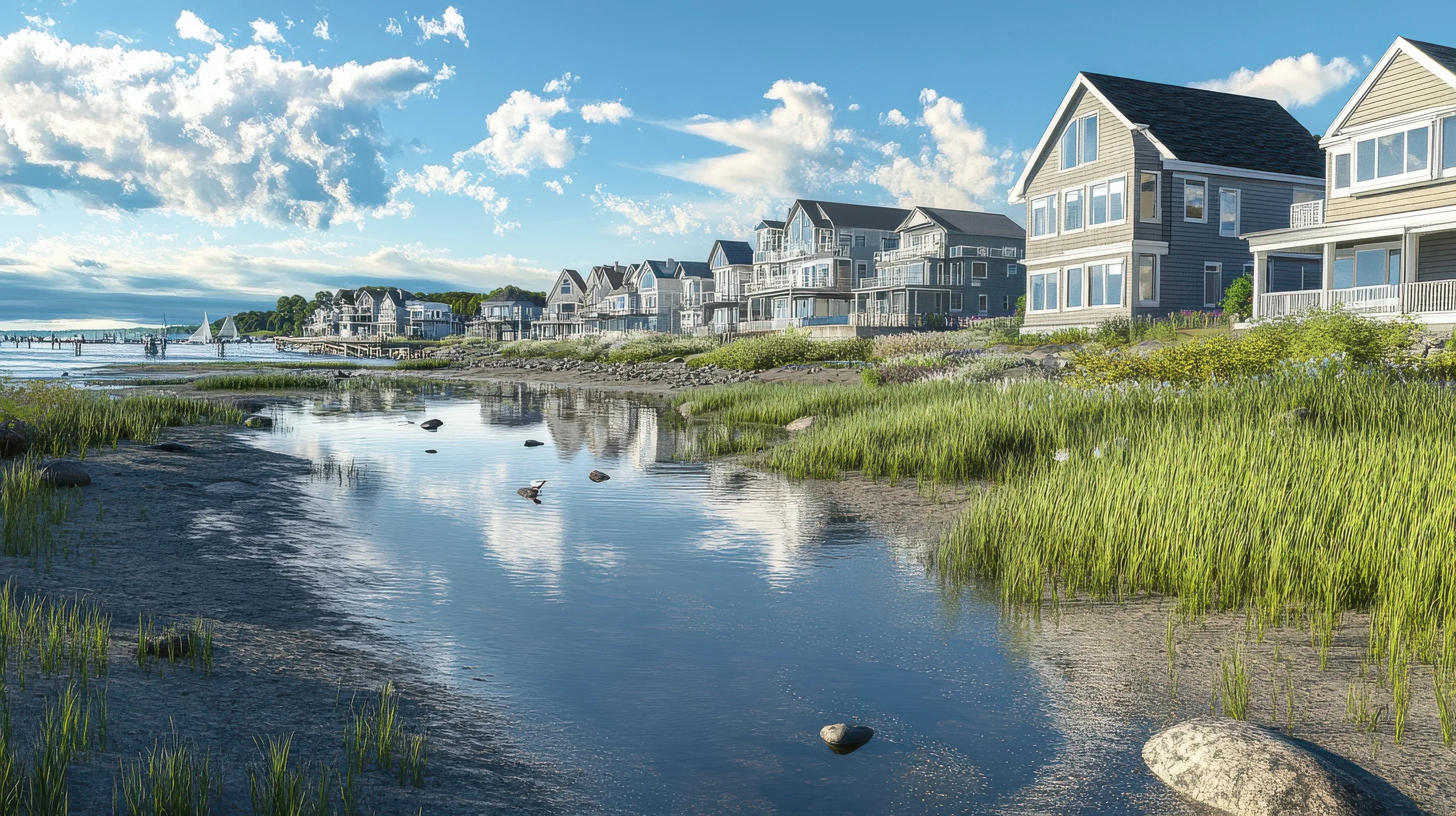
The marina district is the city's social and commercial heart, and it punches above its weight for a city of 33,000. A 670-foot fishing pier extends into the Sound, the marina itself draws boaters from across the South Sound, and Marine View Drive hosts a stretch of locally owned restaurants and shops that give the waterfront a neighborhood feel rather than a strip mall vibe. Des Moines Beach Park sits just south of the marina, and the Des Moines Creek Trail connects the waterfront to inland neighborhoods with a paved multi-use path that families actually use on weekday evenings. The city's diverse population — roughly half non-white, with about 26% of residents speaking a language other than English at home — shows up in the food options, the school communities, and the general character of daily life in ways that feel authentic rather than curated.
The commute picture improved substantially when the Kent Des Moines Link station opened. Driving to downtown Seattle takes about 25 minutes when traffic cooperates, but the I-5 and SR-99 corridors are both prone to congestion during the standard morning window. The friction point most newcomers don't anticipate is Kent-Des Moines Road itself — the east-west connector that funnels traffic between I-5 and the waterfront corridor. During school pickup hours and the 4:30-to-6:00 PM window, that road backs up in ways that add meaningful time to errands and school runs. Residents who've been here a few years learn to either avoid it entirely during those windows or to time their afternoons around it.
The community vibe trends toward unpretentious and practical. Des Moines doesn't have a walkable downtown in the traditional sense — the marina district is the closest thing, and it's more neighborhood commercial than urban grid. But the city's park system is genuinely excellent, the waterfront access is real and free, and the mix of longtime Pacific Northwest families, newer immigrant households, and younger buyers priced out of Seattle's closer suburbs creates a community that's harder to categorize than its King County neighbors.
The waterfront access is the real thing. Not a "waterfront-adjacent" park with a chain-link fence between you and the Sound — actual beach access at Des Moines Beach Park, an active marina where you can moor a boat starting at a fraction of what you'd pay in Seattle, and a fishing pier that draws crabbers and regulars year-round. Saltwater State Park, which straddles the Des Moines-Federal Way border, adds camping, underwater diving access, and a saltwater swimming beach to the mix. For buyers who moved to the Pacific Northwest specifically for this kind of outdoor access, Des Moines delivers it at a price point that other King County waterfront cities simply don't match.
The new light rail connection changes the calculus for car-optional living. The Kent Des Moines station's December 2025 opening means residents can now reach Sea-Tac Airport, Tukwila, the Rainier Valley, and downtown Seattle without touching I-5. That's a meaningful shift for a city that previously required a car for almost everything. King County Metro's Route 165 connects the station to the marina district, creating a viable chain from waterfront neighborhood to urban core that didn't exist two years ago.
Highline College is a genuine community asset. Located on the eastern edge of the city, Highline College serves roughly 17,000 students and brings cultural programming, workforce development resources, and an educated institutional anchor to a part of King County that often gets overlooked in those categories. For families with high schoolers considering community college pathways, for adults looking to retrain, and for the city's large immigrant population accessing ESL and professional programs, the college's presence matters beyond the economic jobs it creates.
The price-to-view ratio is hard to beat in King County. Homes on the hillside neighborhoods — North Hill, Pacific Ridge, parts of Central Des Moines — frequently offer clear sightlines to the Sound and Vashon Island at prices well below what those views would command in Normandy Park or Burien. A buyer willing to do some landscaping on a 1970s hillside split-level can find themselves looking at a million-dollar view from a $540,000 house.

Airport noise is not a background detail. For properties in the northern corridor — roughly everything north of 216th Street — jet noise is a consistent presence during peak flight hours, which at SeaTac run from roughly 6 AM to midnight. Some streets near the airport have gone through land buyout programs precisely because the noise levels trigger federal mitigation thresholds. Before you fall in love with a house in northern Des Moines, spend a Tuesday morning in the neighborhood between 8 and 10 AM. The experience is different from a quiet Sunday afternoon open house, and that difference matters when you're deciding where to sleep.
The Highline School District draws legitimate scrutiny. With a C+ rating and a district-wide graduation rate of roughly 84.8% — an improvement but still below the Washington state average — Highline Public Schools is the most common reason families with school-age children decide to look in Federal Way, Kent, or Normandy Park instead. Woodmont and Redondo, the southernmost Des Moines neighborhoods, fall under the Federal Way School District, which has its own profile but draws differently from Highline. This school district boundary is one of the most consequential facts in Des Moines real estate, and buyers with elementary-age children should map their target neighborhoods against it before narrowing their search.
The city's commercial core is thin. There's no walkable town center with a grocery store, coffee shops, and a hardware store within three blocks of each other. The marina district has charm and some food options, but routine errands require a car trip to Pacific Highway South, Military Road, or out toward Kent. Residents who moved from genuinely walkable Seattle neighborhoods sometimes find this an adjustment. The light rail connection helps with city access, but it doesn't solve the day-to-day "I need groceries and a prescription" run.
Why some people leave. After a few years, the buyers who move out of Des Moines tend to fall into two categories: families who outgrew the school district — either seeking stronger options for their kids or growing frustrated by the gap between Highline and neighboring districts — and younger buyers who moved here for the price point and then decided they wanted more urban walkability than the marina district alone provides. The city retains a strong core of long-term residents, but the churn among families with middle and high schoolers is real enough to factor into a long-term neighborhood stability calculation.
The Marina District is Des Moines at its most recognizable: the fishing pier, the boat slips, Marine View Drive's commercial strip, and Des Moines Beach Park all within walking distance of each other. Homes here range from modest mid-century bungalows to renovated craftsmans, with the city-wide median of around $560,000 applying broadly — though properties with direct Sound views or marina access push higher. The tradeoff is density and noise from both the waterfront activity and the northern airport corridor for some parcels.
Best for: Buyers who want walkable waterfront access and don't need a garage full of square footage to feel at home.
Central Des Moines is the city's workhorse residential core — a mix of ranchers, split-levels, and modest two-stories built largely between the 1960s and 1990s. Prices here tend to run near or slightly below the city median, making it one of the more accessible entry points for first-time buyers in King County. The neighborhood sits within Highline Public Schools and has reasonable proximity to both the waterfront parks and the Kent Des Moines Road commercial corridor.
Best for: First-time buyers and value-oriented households who want a functional King County location without waterfront premiums.
South Des Moines occupies the quieter lower half of the city, where the airport noise fades and the terrain flattens toward the water. Saltwater State Park anchors the southern waterfront, and the neighborhood's residential streets are calmer and more suburban in character than the marina-adjacent blocks. Pricing tends to be competitive with the city median, and the proximity to Federal Way gives residents access to that city's broader retail and dining corridors.
Best for: Buyers who want the Des Moines waterfront story without the airport noise, and who don't mind that the nearest grocery run is a short drive south.
North Hill is one of the city's more established hillside neighborhoods, where the topography creates the natural separation from the waterfront bustle that some buyers specifically seek. Homes here frequently offer Sound and island views from elevated lots, and the neighborhood has a settled, tree-lined quality that feels a step removed from the commercial corridors. The proximity to the northern airport zone means buyers should evaluate individual parcels carefully for noise exposure.
Best for: Buyers prioritizing views and neighborhood quiet, with the understanding that airport noise varies meaningfully by exact location within the neighborhood.
Zenith sits at the northern edge of Des Moines, bordered by Normandy Park and Burien, and carries a distinctly quieter, more insular character than the city's waterfront core. The neighborhood has some of the most elevated terrain in Des Moines, with mature trees and larger lots than you'll find closer to the water. Prices here can be slightly below the city median for comparable square footage, partly reflecting distance from the marina district amenities.
Best for: Buyers who want the King County location and Highline School District assignment but prefer a low-traffic residential setting over waterfront walkability.
Woodmont is where Des Moines transitions into a different real estate market. This neighborhood — along with adjacent Redondo — falls within the Federal Way School District rather than Highline, a distinction that meaningfully affects both demand and pricing. The median in the Woodmont/Redondo corridor runs approximately $718,000, reflecting the school district premium and the neighborhood's generally newer and larger housing stock. Buyers here get more finished square footage, better school assignment options, and a quieter setting well south of the airport corridor.
Best for: Families with school-age children who want Des Moines proximity but Federal Way School District assignment, and who have the budget to clear the Woodmont price floor.
Redondo is the waterfront jewel of southern Des Moines — a small beach community built around the Redondo Boardwalk, with restaurants, a boat launch, and the kind of low-key Puget Sound character that draws buyers who've been burned by the price tags of more famous waterfront towns. Pricing in the Redondo/Woodmont corridor sits around $718,000 at the median, but the setting delivers a corresponding level of waterfront experience. Federal Way School District assignment applies here.
Best for: Buyers willing to pay a premium for authentic waterfront character in a quiet southern setting, with the added benefit of Federal Way schools.
Pacific Ridge occupies the hillside above the southern marina zone, offering elevated views and a more residential pace than the blocks immediately adjacent to Marine View Drive. Homes here tend toward the mid-range of the city's pricing spectrum, with good access to both the waterfront parks and the Des Moines Creek Trail system. The neighborhood sits firmly within Highline Public Schools.
Best for: Buyers who want hillside views and trail access at a price point that doesn't require the Woodmont premium.

When it comes to long-term value in Des Moines, Washington, location within the city genuinely matters. Homes in the Marina District tend to hold strong appeal thanks to the waterfront access and walkable amenities, while North Hill and Woodmont attract buyers looking for more of a neighborhood feel with solid resale history. In my experience working with buyers relocating to this area, well-priced homes in these pockets — many listed under $750,000 — can move within days, not weeks. Understanding where you want to be before you start touring helps you move with purpose rather than scrambling when something good hits the market.
That's exactly why I always encourage buyers to connect with a lender before they fall in love with a home. Your pre-approval number is just a ceiling — your comfortable budget is what actually matters when you factor in property taxes, homeowner's insurance, any HOA dues, and how your loan is structured. Those pieces together tell the real monthly story, and that number can surprise people. Getting clear on it early means you tour homes with confidence, and when the right one appears, you're ready to move on it.
| City | Best For | Home Price (Approx.) | Commute to Seattle | Vibe |
|---|---|---|---|---|
| Des Moines | Waterfront access + value | ~$560,000 | 25 min drive / 42 min light rail | Diverse, marina-town character |
| Burien | Urban walkability closer to Seattle | ~$580,000 | 20 min drive | Eclectic, dense, more urban feel |
| Normandy Park | Quiet prestige waterfront | ~$700,000+ | 25 min drive | Low-key affluent, private feel |
| Federal Way | Space, value, newer construction | ~$510,000 | 35 min drive | Suburban, retail-heavy, spread out |
| Kent | Space + light rail access | ~$540,000 | 30 min drive | Working-class suburban, improving |
| SeaTac | Airport proximity, price | ~$480,000 | 15 min drive | Dense, diverse, airport-adjacent |
| Category | Detail |
|---|---|
| Population | ~33,036 (2026) |
| Median Home Price | $560,000 (early 2026) |
| Property Tax Rate | Approximately 1.13% |
| Median Household Income | $92,483 |
| Commute to Downtown Seattle | ~25 min by car; ~42 min by Link light rail |
| School District | Highline Public Schools (most areas); Federal Way SD (Woodmont/Redondo) |
| Violent Crime Rate | ~3 per 1,000 residents |
| Property Crime Rate | ~35 per 1,000 residents |
| Nearest Major Airport | Seattle-Tacoma International, ~2 miles north |
| Notable Landmarks | Des Moines Marina, Saltwater State Park, Des Moines Beach Park, Redondo Boardwalk |
The Des Moines Farmers Market runs at the marina district from June through September, drawing vendors, food trucks, and a crowd that gives the waterfront a genuinely festive weekend energy. It's held in the marina parking lot, which sounds less appealing than it is — the location puts you within walking distance of the pier and the beach park, and locals treat the combination as the city's unofficial summer social calendar. If you want to get a feel for the community before you buy, this is the right Saturday morning activity.
The marina's fishing pier is a legitimate local institution. Regulars show up year-round for crabbing, bottomfish, and the occasional salmon, and the pier culture has its own social ecosystem — the same faces in the same spots, the informal knowledge-sharing about what's running, the smell of brine and two-stroke outboard engines. For buyers who fished the piers on the East Coast or grew up crabbing in the Pacific Northwest, this is not a background amenity. It's a primary reason to be here.
The Redondo Boardwalk draws a weekend crowd from well beyond Des Moines, particularly during summer months when the combination of beach access, a boat launch, and waterfront dining pulls visitors from Federal Way, Kent, and Renton. Residents in the Redondo neighborhood know to time their parking and errands around the Saturday afternoon surge — the street access to the beach area becomes genuinely congested by midday on a sunny weekend in July.
What I Would Not Do: I would not buy a home on a block north of 216th Street without spending a Tuesday morning there between 8 AM and 10 AM, when SeaTac's morning push is in full effect. The open house you attended on a quiet Sunday afternoon does not represent the acoustic reality of weekday mornings in the northern airport corridor. The difference is dramatic enough that buyers who skip this step frequently express regret — and the northern boundary of significant noise exposure is not always obvious from a map or from the listing description.
Local Expert Takeaway: The highest-leverage decision in a Des Moines home search is the school district boundary, not the price per square foot. Woodmont and Redondo sit in Federal Way School District territory and command a premium — roughly $718,000 at the neighborhood median versus the city-wide $560,000 — that is directly tied to that assignment. Families who don't need the Federal Way option can find genuinely strong value in Pacific Ridge, Central Des Moines, and North Hill, especially for hillside homes with Sound views. Layer the airport noise map on top of your neighborhood shortlist before you schedule a single showing — it will immediately eliminate or elevate specific streets in ways that no amount of price analysis can.
✅ Des Moines delivers authentic Puget Sound waterfront access at a King County price point that comparable water-access cities simply can't match — and the December 2025 light rail opening adds a transit option that wasn't in the picture two years ago.
⚠️ Airport noise and school district quality are the two variables that define who stays and who leaves — both require neighborhood-level due diligence, not just a city-level assessment. Northern neighborhoods and the Highline District assignment are the primary reason the price gap with Normandy Park and Burien persists.
📍 The Woodmont and Redondo corridor is functionally a different market — Federal Way School District assignment, higher prices, and quieter southern location make it worth evaluating separately from the rest of Des Moines rather than lumping it into a single city comparison.
Is Des Moines, WA a good place to raise a family?
Des Moines can work well for families, depending on your school priorities and which part of the city you're considering. Families in the Woodmont and Redondo neighborhoods benefit from Federal Way School District assignment. Those in Highline Public Schools will find an improving district — the graduation rate has climbed more than 22 percentage points over the past decade — but one that still trails state averages, which pushes some families toward private options like St. Philomena Catholic School or Holy Trinity Lutheran School.
How close is Des Moines to Seattle-Tacoma International Airport?
SeaTac Airport sits approximately two miles north of the city, which means convenient access for frequent travelers and a meaningful noise factor for properties in the northern quarter of Des Moines. The proximity is genuinely useful — parking, rideshare times, and emergency flight catches are all easier here than from most South King County cities — but it requires honest evaluation at the neighborhood and parcel level before buying.
How does Des Moines compare to Burien or Normandy Park for a similar budget?
Burien offers more urban walkability and a denser commercial scene at a similar median price, while Normandy Park trades the marina energy for a quieter, more private waterfront character at a higher price point — typically $700,000 and up. Des Moines sits between them: more waterfront activity and marina access than either, lower price than Normandy Park, but thinner commercial infrastructure than Burien and a more complex school district picture than both. The right answer depends heavily on whether waterfront lifestyle or urban convenience is the priority.
Explore the full Des Moines series: The Ultimate Des Moines Relocation Guide · Is Des Moines Safe? · Cost of Living in Des Moines · Best Neighborhoods in Des Moines · Des Moines Schools & Family Life · Des Moines Youth Sports · Des Moines Parks & Recreation · Retiring in Des Moines · 1031 Tax-Deferred Exchange in Des Moines · Des Moines First-Time Homebuyers Guide · Des Moines Down Payment Assistance Guide · Moving to Des Moines from California