
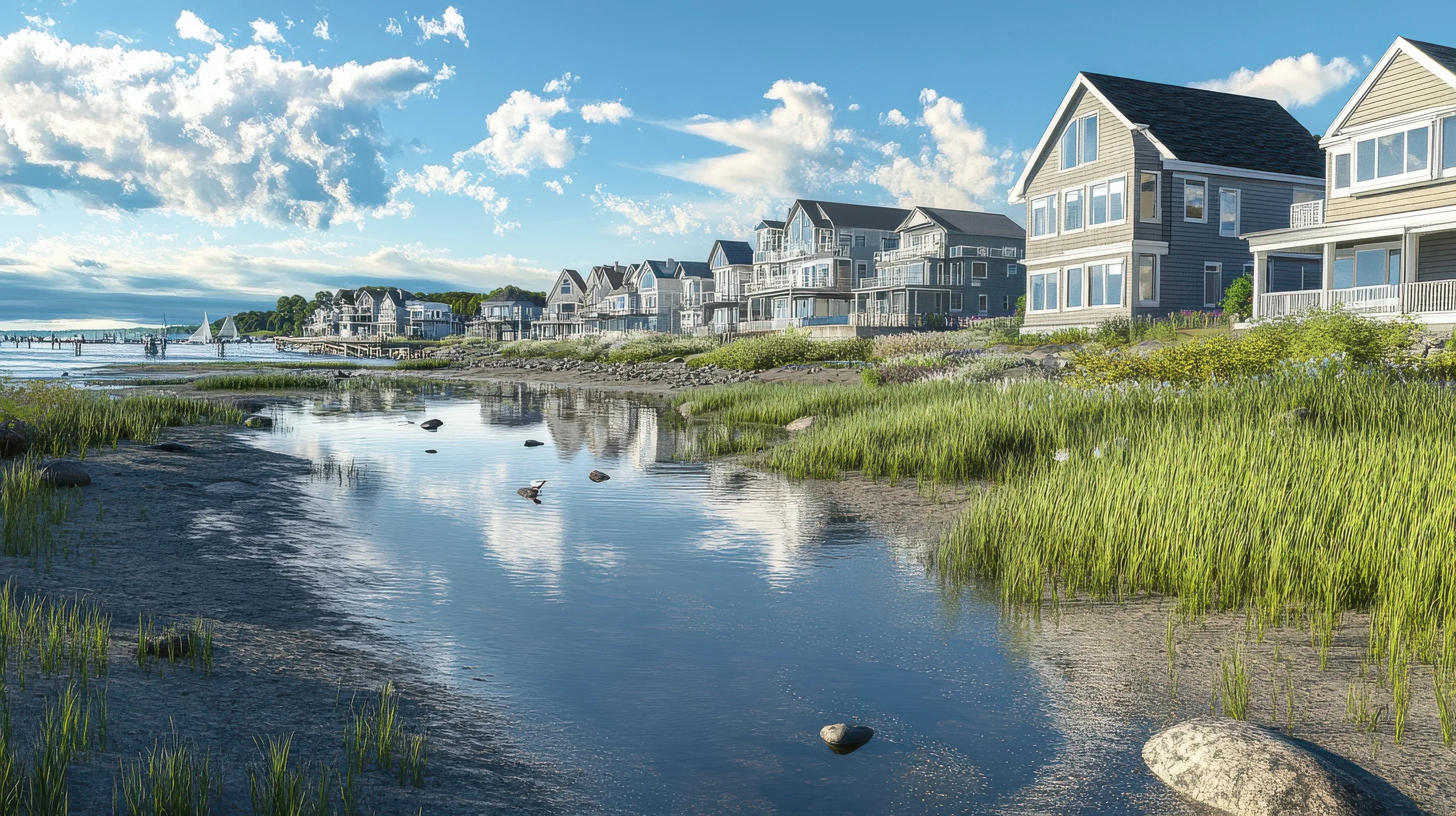
Puget Sound · Washington
Retiring in Des Moines: Is It the Right Fit for Your Next Chapter? (2026)
The honest answer is yes — but only for a specific kind of retiree. Des Moines isn't a resort retirement destination, and it doesn't try to be. What it offers instead is a genuinely livable waterfront community where Puget Sound views are part of everyday life, property values remain within reach compared to most of the Seattle metro, and a serious senior living infrastructure has been quietly building here for decades. If your retirement vision involves morning walks along a working marina, access to world-class healthcare within 15 minutes, and a Washington tax environment that treats retirement income exceptionally well, Des Moines makes a compelling case.
The retiree who thrives here tends to value access over isolation. This is a city where the outdoors is genuinely close — Saltwater State Park, the Des Moines Creek Trail, the Redondo Boardwalk — but where the suburban rhythm of South King County defines the pace. You're 25 minutes from Seattle, a few miles from major medical facilities, and within walking distance of the waterfront if you buy in the right neighborhood. Downsizers who want a slower pace without giving up urban proximity find this appealing.
This guide covers the tax picture Washington delivers for retirees, healthcare access from the neighborhoods you'd actually consider, senior living communities both on-campus and in the broader city, what day-to-day life looks like after the move-in boxes are unpacked, and an honest comparison against other regional retirement alternatives.

Washington is one of a handful of states with no income tax at all — and for retirees living on a combination of Social Security, pension distributions, IRA withdrawals, and investment income, that single fact can be worth tens of thousands of dollars annually compared to states like Oregon or California.
| Income Type | Washington State Tax Treatment |
|---|---|
| Social Security benefits | Not taxed |
| Pension income (public or private) | Not taxed |
| IRA/401(k) distributions | Not taxed |
| Capital gains (under $262,000/year threshold) | Not taxed |
| Capital gains (over threshold) | 7% state excise tax applies |
| Investment dividends & interest | Not taxed |
| Property taxes | Subject to local rates; senior exemptions available |
| Sales tax | 10.2% combined state + King County rate |
| Estate/inheritance tax | WA estate tax applies above $2.193 million |
The senior property tax exemption makes the picture even more favorable for those who buy here. Washington allows homeowners who are 61 or older and earn $84,000 or less per year to qualify for tiered property tax reductions on their primary residence. In King County, the 2026 income thresholds run from $60,000 to $84,000, with the lowest income tier exempting qualifying seniors from all regular property taxes entirely. At Des Moines' 1.13% property tax rate, that exemption on a $560,000 home represents roughly $6,300 per year in potential savings. Oregon offers its own senior deferrals, but the combination of Washington's zero income tax and these property tax reductions gives Des Moines a structural financial advantage that retirees relocating from high-tax states tend to appreciate quickly.
The closest full-service hospital to Des Moines is Highline Medical Center at 16045 1st Ave S in Burien, roughly 10 minutes by car. Operating within the Virginia Mason Franciscan Health network, Highline is a 210-bed acute care facility with procedures typically priced below the regional market average — a meaningful detail for retirees managing out-of-pocket costs. The hospital has earned accreditation as a Center of Excellence in Minimally Invasive Gynecology and offers inpatient rehabilitation services alongside its core acute care capabilities.
For more specialized cardiology and oncology needs, Virginia Mason Franciscan Health – St. Francis Hospital in Federal Way sits about 15 minutes south at 34515 Ninth Avenue South. St. Francis holds a recognized Heart Failure Center designation, houses a Franciscan Breast Center with 3D mammography and stereotactic biopsy capability, and has received state-level recognition for stroke care outcomes. Roughly 85% of patients rate it as recommendable in national surveys.
When the situation demands it, Harborview Medical Center in Seattle — the region's Level 1 Trauma Center — is approximately 25 minutes away. UW Medical Center-Montlake, recognized for gastrointestinal care and outstanding patient outcomes, is similarly accessible. Valley Medical Center in Renton, less than 20 miles northeast, holds national recognition for outpatient joint replacement — relevant for the hip and knee procedures that become more common in retirement. Des Moines itself has a HealthPoint clinic at Midway and a Franciscan Medical Clinic operating within the VMFH system, covering primary care and routine follow-up without requiring a drive out of the city.
The picture here is genuinely strong for a city of 33,000. Most retirees looking at comparably priced communities in rural or semi-rural Washington don't have this layering of local outpatient options, a Level II-equivalent community hospital within 10 minutes, and academic medical centers within 30.
Des Moines supports one of the denser concentrations of senior housing options in South King County, with approximately 80 care settings in or near the city — including 33 assisted living communities and four continuing care retirement communities (CCRCs).
| Community | Type | Location | Est. Monthly Cost |
|---|---|---|---|
| Wesley Homes Des Moines | CCRC (IL/AL/Memory/SNF) | 815 S 216th St, Des Moines | $2,280–$7,592 |
| Judson Park | CCRC (IL/AL) | 23600 Marine View Dr S, Des Moines | Contact community |
| Farrington Court | 62+ Independent Living | Des Moines | Contact community |
| Solstice Senior Living at Normandy Park | Independent Living w/ personal care | Normandy Park (adjacent) | Contact community |
| Brookdale Foundation House | Assisted Living | Des Moines area | Contact community |
Judson Park on Marine View Drive South brings a different profile. Recognized by U.S. News & World Report in its 2026 Best Senior Living awards as both a Best Independent Living and Best Assisted Living community, Judson Park offers apartments with direct Puget Sound and Olympic Mountain views. It's operated by HumanGood, a national nonprofit, and tends to attract residents who prioritize the view and the marine setting. The combination of independent living with an assisted living transition pathway on the same campus gives residents — and their adult children — significant peace of mind about aging in place.

Walkability in Des Moines is honest, not aspirational. If you buy near the Marina District or along the Historic Waterfront corridor, the waterfront walk, the fishing pier, and the cluster of small restaurants and shops are genuinely on foot. If you buy further inland — in North Hill or Pacific Ridge — you will need a car for almost everything, and there's no point pretending otherwise.
The outdoor calendar is where Des Moines consistently surprises retirees who expected a quiet suburb and got an active one. Saltwater State Park offers 1,400 feet of Puget Sound beachfront, scuba diving access, and a trail system that connects to the Des Moines Creek Trail — a paved, relatively flat corridor well-suited to walkers and cyclists. The Redondo Boardwalk adds another waterfront walk, and Zenith Gardens near the south end of town provides a quieter park setting. The Des Moines Farmers Market runs seasonally at the waterfront and draws a genuinely local crowd. The annual Marina District events — including the Waterland Festival, which has been a summer fixture for decades — give the calendar a community-event anchor that smaller South King County cities lack.
Getting around without a car is possible but not easy. King County Metro serves the city, and routes connect to the Federal Way Transit Center for Link Light Rail access to Seattle. For retirees who no longer drive, the realistic picture involves some dependence on rides or transit planning — it's not a burden if you're prepared for it, but it's worth factoring in before committing to a neighborhood that's uphill from transit lines.
For daily convenience, the QFC and Fred Meyer options near the Kent-Des Moines corridor handle grocery shopping for most residents. Specialty grocers require a short drive to Federal Way or Burien. Medical appointments — as outlined above — are well within reach. The cultural draw of Seattle is a 25-minute highway run, which means theater, major medical appointments, and airport access (SeaTac is under 10 minutes away) stay in reach even for retirees who want to reduce driving overall.
What surprises most people after six months here is how much they use the water. The marina, the pier, the beach park — retirees who moved here thinking of it as an affordable suburb end up on the waterfront several times a week. The setting that looked like a bonus on the listing sheet becomes the organizing feature of daily life.

For retirees considering Des Moines, Washington, location within the city genuinely matters for long-term value. Waterfront-adjacent areas like the Marina District tend to hold value well and attract consistent buyer interest, meaning desirable homes often move within days rather than weeks. Central Des Moines offers walkable convenience that becomes increasingly important as you settle into retirement life, while neighborhoods like Woodmont and North Hill provide a quieter residential feel that appeals to buyers looking for something more low-key. Homes in the most sought-after pockets can move quickly, and well-priced properties under $750,000 rarely sit long before drawing multiple offers.
Before you start touring homes, please talk to a lender first — not to get a number to spend up to, but to understand what a comfortable payment actually looks like when you factor in property taxes, homeowner's insurance, any HOA dues, and your specific loan structure. Maximum approval and comfortable budget are very different things, especially on a fixed retirement income. Knowing where you stand financially means that when the right home appears in Zenith or anywhere else in Des Moines, you're ready to move with confidence.
| City | Median Home Price | Nearest Hospital | Walkability | Senior Living Depth | Overall Retirement Fit |
|---|---|---|---|---|---|
| Des Moines, WA | $560,000 | Highline Med Center (10 min) | Moderate (marina area strong) | High — CCRCs + 80 options | Strong for waterfront + value |
| Normandy Park | ~$800,000+ | Highline Med Center (12 min) | Low | Limited | Quiet luxury, less infrastructure |
| Burien | ~$550,000 | Highline Med Center (5 min) | Moderate | Moderate | Slightly more urban, walkable |
| Federal Way | ~$500,000 | St. Francis Hospital (5 min) | Low–Moderate | Moderate | Lower cost, less character |
| Gig Harbor | ~$700,000+ | St. Anthony Hospital (10 min) | Moderate (downtown area) | Moderate–High | Popular but pricier, less Seattle access |
| Edmonds | ~$750,000+ | Swedish/Providence (20 min) | High (downtown core) | Moderate | Walkable waterfront, premium priced |
Local Expert Takeaway: Retirees who thrive in Des Moines tend to be buyers who want waterfront proximity without waterfront pricing, and who value having Wesley Homes or Judson Park within a few miles as a long-range care option. The Marina District and the streets closest to Marine View Drive South are the strongest retirement micro-locations — single-level homes in these areas move quickly, so buyers who know what they want should be ready to act. Retirees who need a fully walkable downtown or who are prioritizing maximum cultural amenity density within walking distance will likely find Edmonds or Burien a better fit. But for the buyer who wants a genuine Puget Sound setting, a manageable price, and a serious healthcare infrastructure around them, Des Moines consistently earns its consideration.
Is Des Moines, WA a good place to retire?
For retirees who want Puget Sound waterfront access without the premium price of Edmonds or Gig Harbor, Des Moines works well. The combination of Washington's zero income tax, a qualified senior property tax exemption for those 61 and over, serious on-campus continuing care options, and genuine outdoor amenities makes it a strong choice for buyers in the mid-$500s range who want more than a generic suburb.
What senior living options are available in Des Moines?
Des Moines supports roughly 80 senior care settings in and around the city, including four continuing care retirement communities. Wesley Homes Des Moines on S 216th Street is the anchor — a 42-acre nonprofit campus with independent cottages, assisted living, skilled nursing, and memory care that has operated since 1944. Judson Park on Marine View Drive South, recognized by U.S. News in 2026 for both independent and assisted living, offers Puget Sound views with a full continuum of care.
How close is Des Moines to major hospitals?
Highline Medical Center in Burien is roughly 10 minutes away and covers most acute care needs as part of the Virginia Mason Franciscan Health network. St. Francis Hospital in Federal Way is about 15 minutes south, with designated cardiac and cancer care services. For major trauma or complex specialty care, Harborview Medical Center and UW Medical Center in Seattle are accessible within 25–30 minutes.
Explore the full Des Moines series: The Ultimate Des Moines Relocation Guide · Is Des Moines Safe? · Cost of Living in Des Moines · Best Neighborhoods in Des Moines · Des Moines Schools & Family Life · Des Moines Youth Sports · Des Moines Parks & Recreation · Retiring in Des Moines · 1031 Tax-Deferred Exchange in Des Moines · Des Moines First-Time Homebuyers Guide · Des Moines Down Payment Assistance Guide · Moving to Des Moines from California