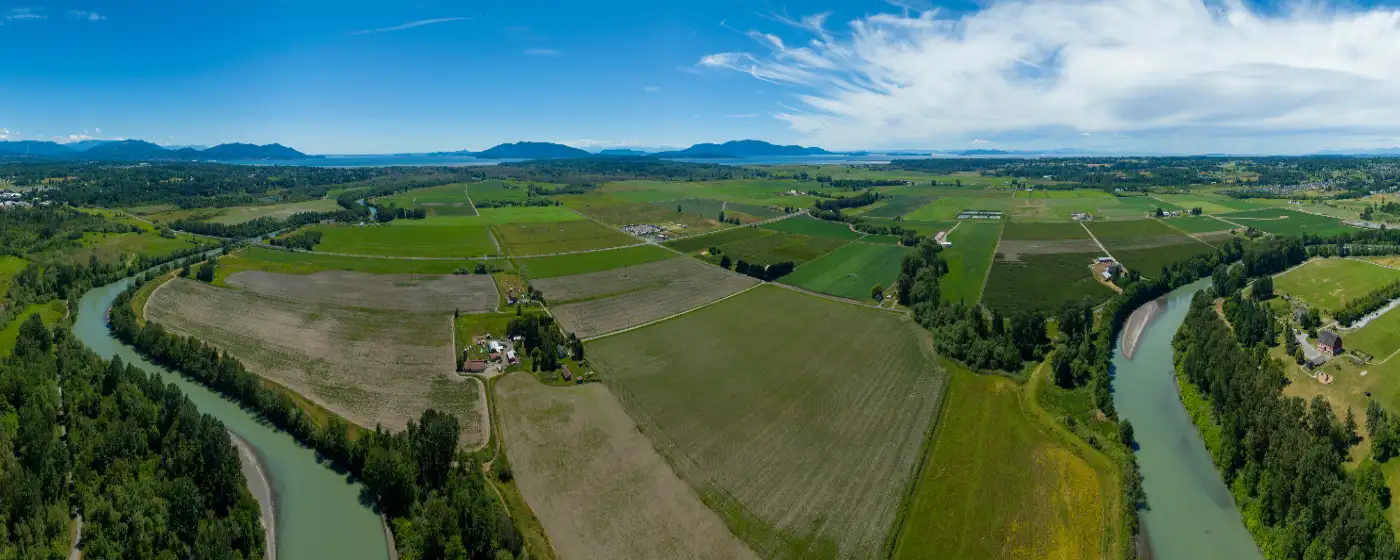
Puget Sound · Washington
Moving to Ferndale from California: The Honest Comparison (2026)
The Bay Area software engineer who finally got a yard — and kept their salary — is increasingly landing in Whatcom County. Remote work made it possible, but the math made it inevitable: a buyer leaving Walnut Creek or Palo Alto with $1.4 million in equity can purchase a home in Ferndale outright and still have money left over. The San Diego family that stopped dreading summer utility bills and wildfire smoke season found something they didn't expect — August evenings in the low 70s, no AC required, and a yard their kids actually use. The Sacramento couple who sold a modest townhome and bought a four-bedroom with a garage and a view didn't downgrade; they traded up in every measurable way except sunshine hours.
Ferndale is not California. That sentence is not a warning — it's a framing device. The winters are gray in a way that most Californians genuinely underestimate, the restaurant scene is a fraction of what you had in San Jose or Irvine, and the cultural pace runs slower in ways that some people love and some people find disorienting after a year. The transplants who thrive here come in knowing what they're trading, not assuming they can recreate their California life at a discount.
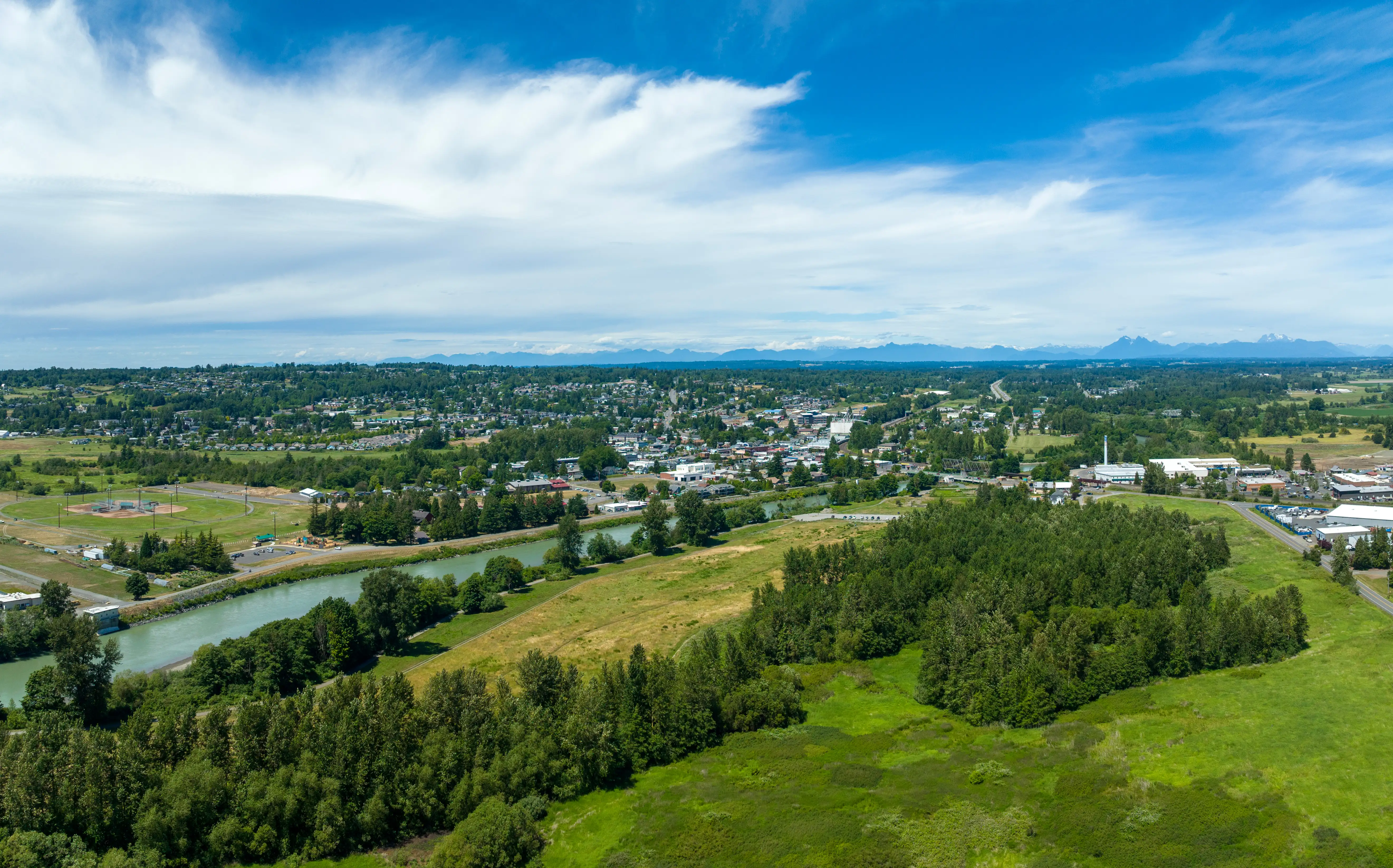
This guide covers the cost comparison across California's major regions, what your equity actually purchases in Ferndale's current market, the tax reality that changes monthly cash flow in ways a spreadsheet might understate, the honest weather picture, and an interactive tool to compare your specific California city directly.
| Ferndale, WA | Bay Area | Southern CA | Sacramento Metro | Central Valley | |
|---|---|---|---|---|---|
| Median Home Price (approx. 2026) | $665,000 | $1,300,000–$1,800,000 | $750,000–$1,100,000 | $500,000–$650,000 | $380,000–$500,000 |
| Property Tax Rate (effective) | ~0.86% | ~1.1–1.25% (new purchase) | ~1.1–1.25% (new purchase) | ~1.1–1.2% (new purchase) | ~1.0–1.2% (new purchase) |
| State Income Tax | None | Up to 13.3% | Up to 13.3% | Up to 13.3% | Up to 13.3% |
| State Sales Tax | 8.6% (Ferndale est.) | 8.625–10.25% | 7.75–10.25% | 8.75% | 7.25–9.0% |
| Avg Utilities (monthly est.) | $150–$200 | $250–$350 | $220–$320 | $200–$280 | $180–$260 |
| Avg 1BR Rent | $1,500–$1,900 | $2,900–$3,800 | $2,200–$2,900 | $1,600–$2,100 | $1,100–$1,600 |
California's property tax picture for new buyers is often misunderstood. Proposition 13 is frequently cited as a California advantage, but it applies to long-term owners, not buyers entering the market today. A new buyer in San Jose or Pasadena purchasing at current prices faces an effective property tax rate close to Washington's — and in many Bay Area counties, slightly higher on new purchases. Ferndale's 0.86% rate on a $665,000 home runs approximately $5,719 annually, which is within range of what a comparable-priced California purchase would generate in annual taxes.
Washington has no state income tax — one of only nine states in that position, and the headline financial advantage for any California transplant. The magnitude of that advantage depends directly on what you earn, and the numbers are worth making explicit rather than treating as a background footnote.
| Tax Item | California | Washington | Net Annual Impact |
|---|---|---|---|
| State Income Tax ($120K income) | ~$8,100–$9,500 | $0 | +$8,100–$9,500 |
| State Income Tax ($150K income) | ~$11,500–$13,000 | $0 | +$11,500–$13,000 |
| State Income Tax ($200K income) | ~$17,000–$20,000 | $0 | +$17,000–$20,000 |
| Capital Gains Tax (over $262K/yr LT gains) | 13.3% (ordinary rate) | 7% (LT gains only) | Varies; most buyers unaffected annually |
| Effective Property Tax (new purchase) | ~1.1–1.25% | ~0.86% | WA slightly lower |
| Sales Tax | 7.25–10.25% | 8.6% (Ferndale area) | Roughly comparable |
| Estate/Inheritance Tax | None | On estates over $2.09M | Minor factor for most |
Sales tax in Washington runs approximately 8.6% in the Ferndale area, which is higher than some inland California counties but comparable to or lower than Los Angeles County and most Bay Area municipalities. Washington also has no inheritance tax on estates below roughly $2.09 million, which matters to older buyers with significant accumulated assets. The net picture for most California transplants: the tax environment in Washington is materially more favorable, particularly for anyone earning above $100,000 or holding appreciated investment accounts.
A buyer leaving San Francisco, Palo Alto, or Cupertino with $1.4 million or more in equity doesn't need a mortgage in Ferndale. The $665,000 median price leaves $500,000 to $700,000 in liquid capital after a cash purchase — capital that can fund retirement accounts, investment property, renovations, or simply sit in instruments that generate passive income. For buyers who want to spend above the median, Sandy Point's waterfront listings can reach $800,000 to $1,000,000 and still represent less than the equity being carried out of the Bay Area. Griffintown's newer construction and the Vista Ridge neighborhood offer premium finishes without premium San Francisco price tags.
The practical reality for Bay Area sellers is that Ferndale's top-tier market is accessible without strain. A Noe Valley seller who couldn't imagine spending $2.1 million on a replacement home can purchase a 2,400-square-foot newer build near the Phillips66 Sports Complex corridor with land, a garage, and finishes they'd recognize from California luxury builds — and still have meaningful equity remaining. This equity level also opens the door to investment property: a Ferndale rental purchased alongside a primary residence, or a 1031 exchange for those selling California investment properties (see our Ferndale 1031 Exchange guide).
A buyer leaving Irvine, Pasadena, or Thousand Oaks with $900,000 in equity is firmly at the top of Ferndale's market with substantial capital remaining after purchase. At $665,000, the median Ferndale home consumes a manageable share of that equity, leaving room for a sizable down payment on something above median or an outright cash purchase in the mid-range. The neighborhoods that represent the best value for SoCal buyers at this equity level include the newer developments near Axton Road and the established residential corridors along Cherry Street, where homes in the $600,000 to $750,000 range are well-built and often larger than what $900,000 would secure in coastal Southern California.
Southern California buyers often carry expectations around year-round outdoor access and walkable commercial areas — Ferndale's Downtown corridor and Main Street District deliver more of this than most people expect for a city of 17,000, but it's a Pacific Northwest version, not a Newport Beach version. The value proposition is real; the lifestyle adjustment is real in equal measure.
Sacramento and Inland Empire buyers have a more direct financial comparison — the median home prices aren't oceans apart. What makes the move financially compelling isn't primarily the housing cost delta; it's the income tax elimination. A Sacramento teacher couple earning a combined $140,000 who moves to Ferndale keeps an additional $10,000 to $12,000 per year they were sending to Sacramento. Over ten years, that's $100,000 to $120,000 in additional household wealth, compounding alongside home appreciation.
With $450,000 to $600,000 in equity, a Sacramento-area buyer can put 60–80% down on a Ferndale home in the mid-range, keeping payments modest on a market where prices are meaningfully lower than they'd pay to stay in Elk Grove or Roseville at comparable quality. The Malloy Village neighborhood and the streets around Fulton Street offer solid housing stock in this price band without the premium that Sandy Point waterfront commands.
Central Valley buyers — Fresno, Modesto, Bakersfield — arrive with a more modest equity advantage in absolute dollars, but the quality-of-life shift is often the most dramatic in the group. A Fresno buyer selling a $400,000 home with $350,000 in equity can put 50% down on a Ferndale purchase and carry a manageable balance. The homes accessible at $580,000 to $700,000 in Ferndale — three bedrooms, a real yard, Pacific Northwest greenery — are a physical upgrade from what equivalent money builds in the San Joaquin Valley heat.
The no-income-tax advantage matters at every income level. A Central Valley buyer earning $90,000 in California and transitioning to a Washington job or remote role keeps roughly $6,000 to $7,500 more annually. Combined with Ferndale's lower cost base relative to California coastal metros, the math still works — it's a smaller margin, but it's consistent and compounding.
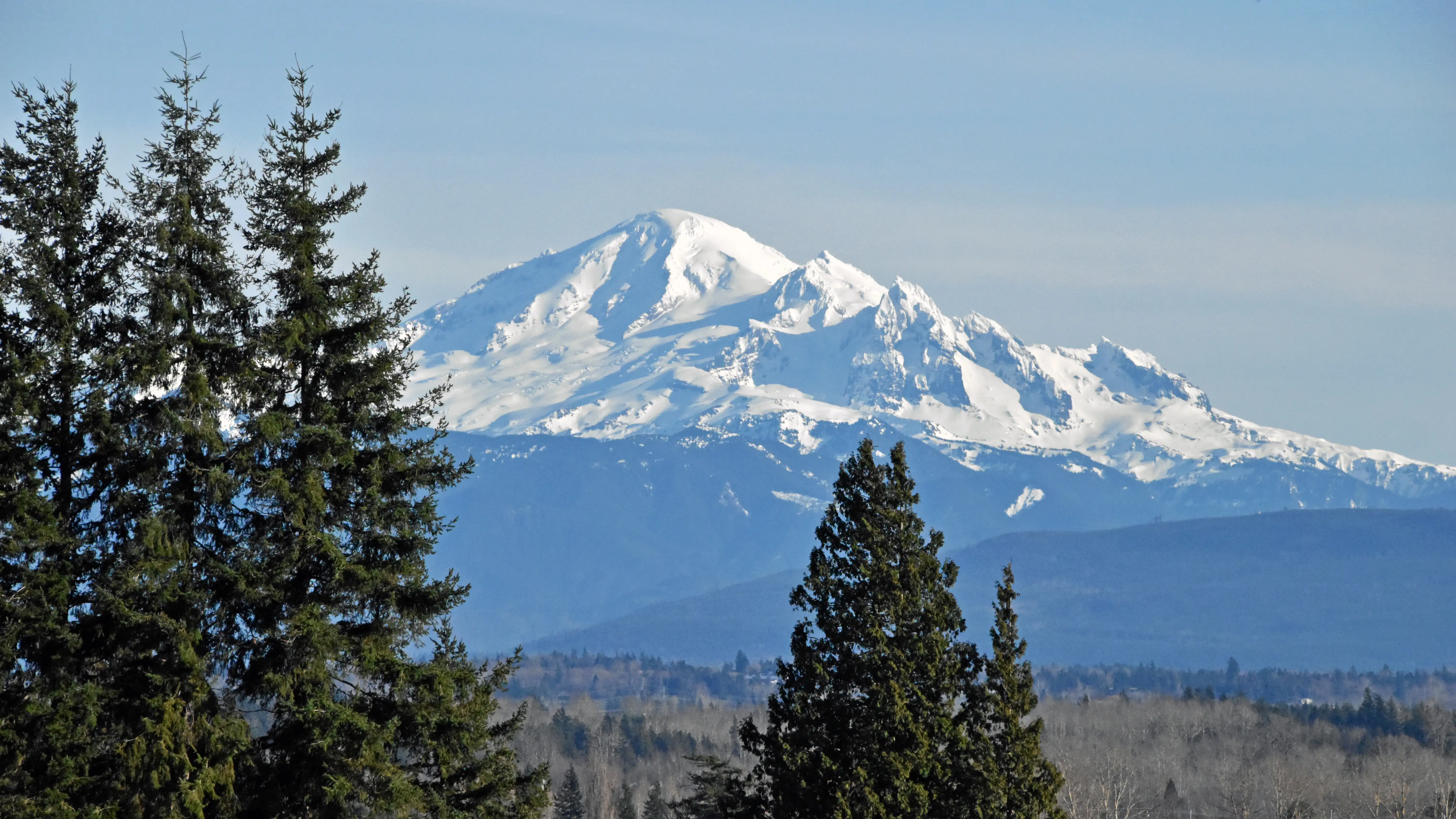
Here is what a friend who moved from San Diego three years ago would actually tell you: the summers are worth it. Ferndale runs 70–73°F from late June through August with almost no humidity, roughly 10.5 hours of sunshine per day at peak, and evenings cool enough to sleep without air conditioning. Wildfire smoke from Western Washington is dramatically less than what California's inland valleys now absorb. The outdoor culture is legitimately strong in those months — hiking access near Bellingham, water access at Sandy Point, and the kind of unhurried summer evenings that California's coastal congestion tends to eliminate.
What that same friend would also tell you: the period from November through March is genuinely gray. Ferndale sees approximately 159 sunny days per year — nearly identical to San Francisco's roughly 160, and a real surprise to buyers arriving from Los Angeles (around 280 sunny days) or Sacramento (which approaches 300+). The difference is not just sunny day count; it's the psychological weight of overcast skies from Thanksgiving through Easter that California transplants consistently name as the most underestimated adjustment. This is not a reason not to move — but walking in expecting Seattle-style darkness and finding something slightly brighter than San Francisco is still a meaningful recalibration if you're leaving San Diego.
What California transplants genuinely love after a year in Ferndale — reliably, across different demographics and origin cities — tends to cluster around the same themes: the scale of housing they now live in, the complete absence of the I-5 corridor traffic patterns they'd accepted as normal, the pace at which the community operates (slower, quieter, less status-oriented), and the way summer outdoor access in the Pacific Northwest feels earned in a way that California year-round sun never quite does. What they miss is more specific: year-round beach access, the density of dining options in a mid-size California city, the social energy of places like Oakland or San Jose, and — consistently — the sustained winter sunshine that no amount of summer hiking quite replaces.
If you want to see how Ferndale compares directly to the city you're leaving, use the tool below — it covers the 120 largest California cities with current housing and tax data.
Home prices: Redfin median sale data, Q1–Q2 2026. Select your city to compare.
Ready to talk through what your specific California equity could do in Ferndale? Todd can model your exact scenario in a single call.

Areas like Downtown Ferndale and Malloy Village tend to attract strong buyer interest from relocating Californians, partly because they offer that walkable, community-feel that's harder to find elsewhere in Whatcom County. Vista Drive properties also hold their value well given the views and access they provide. What surprises most California buyers is how quickly desirable homes move here — we're talking days, not weeks, in many cases. Homes in Ferndale are generally priced well under $750,000, which feels like a relief coming from California markets, but that affordability creates real competition among motivated buyers.
Getting pre-approved before you start touring is genuinely important, and not just as a formality. Your comfortable monthly budget needs to account for property taxes, homeowner's insurance, any HOA dues, and how your loan is structured — not just the purchase price. California buyers sometimes focus on what they're approved for rather than what feels sustainable long-term. Knowing your full payment picture before you fall in love with a home on Cherry Street or in Griffintown means you can move confidently when the right one appears.
Mistake 1: Treating Ferndale as uniform. The character difference between Sandy Point's waterfront and the developments off Axton Road is significant — not just in price, but in what daily life looks and feels like. Buyers who do a single drive-through of Main Street and make an offer in a neighborhood they haven't spent time in during winter frequently discover a mismatch. Spend a January weekend in the neighborhood you're targeting before committing.
Mistake 2: Underestimating the winter commute. The 15-minute drive to Bellingham is accurate in July. In January, with fog on the Guide Meridian and occasional icy patches on the connector roads, that same commute changes in character. California drivers who haven't navigated wet fog at 6:30 a.m. in an unfamiliar metro tend to underestimate this adjustment in their first winter. It's manageable — it's just not the same road twice.
Mistake 3: Miscalculating the income tax advantage on monthly cash flow. Most California buyers run the comparison as an annual number and then mentally file it. The correct way to model it is monthly: a household keeping an additional $900 to $1,100 per month by eliminating state income tax is functionally carrying a mortgage payment lower by that same amount. It changes the math on what purchase price makes sense, and buyers who don't run that calculation sometimes leave money on the table by shopping below their actual comfortable range.
Mistake 4: Expecting California-style food and retail density. Ferndale has grocery access (Safeway is the anchor), casual dining, and basic retail. It does not have the restaurant density of Irvine, the farmer's market culture of Berkeley, or the quick-access diversity of options that California's larger metros sustain. Bellingham is 15 minutes away and fills many of those gaps — but the mental model of "step out and find great Vietnamese food at 9pm on a Tuesday" needs to be updated before arrival, not after.
Bay Area sellers with large equity are frequently positioned to purchase in Ferndale all-cash or at very low loan-to-value ratios — sometimes 20–30% of purchase price or less. At that equity level, interest rate sensitivity decreases and what matters most is transaction speed and clean terms. Cash offers in Ferndale's market move faster than financed offers, and sellers in competitive situations respond to that difference. If the California property being sold was an investment property rather than a primary residence, the proceeds may be subject to capital gains tax in both states, and a 1031 exchange into a Ferndale investment property is worth exploring before close — see the Ferndale 1031 Exchange guide for a full walkthrough.
Southern California sellers landing in Ferndale with $700,000 to $1.1 million in equity are typically well into conventional financing territory. Most Ferndale purchases fall below the conforming jumbo threshold, meaning standard conventional products are available at competitive rates. A SoCal buyer putting 40–60% down on a $665,000 home is carrying a note in the $260,000 to $400,000 range — mortgage payments that often run meaningfully lower than California rent, before accounting for the income tax savings.
Sacramento and Inland Empire buyers working with $400,000 to $600,000 in equity may find Washington State Housing Finance Commission programs relevant depending on their income and the final purchase price. The WSHFC Home Advantage program offers below-market rates for qualifying buyers, and certain down payment assistance products stack on top for buyers with lower cash reserves. These buyers are also the ones for whom the income tax calculation matters most per dollar of income — modeling both the DPA options and the annual tax savings together can make the Ferndale purchase comfortably attainable where it might otherwise feel like a stretch.
Local Expert Takeaway: The single most underestimated factor for California transplants moving to Ferndale is the cumulative monthly impact of eliminating state income tax — not the lump-sum annual figure, but what it does to cash flow every 30 days. A household earning $150,000 and keeping an additional $950 to $1,100 per month is functionally living in a lower-cost-of-living city than their numbers suggest. Model that figure monthly before you set your purchase price ceiling, because most California buyers shop $75,000 to $100,000 below what they can actually afford comfortably after the tax picture adjusts.
Is moving from California to Ferndale worth it?
For most California buyers running a full comparison — housing cost, income tax, utilities, and space — Ferndale delivers a meaningful quality-of-life upgrade at a lower total cost of living. The trade-offs are real: fewer sunny days, a smaller dining and entertainment scene, and a slower social pace. Whether those trade-offs are acceptable depends entirely on what you valued most in California. Buyers who moved primarily for remote work flexibility and housing space tend to stay; buyers who assumed they could replicate their California social life at a discount often find the adjustment harder.
How much cheaper is housing in Ferndale vs. California?
The median home price in Ferndale sits at $665,000 — roughly half of the Bay Area median and 30–40% below Southern California coastal markets. Against Sacramento and the Inland Empire, the gap narrows to 15–25% depending on the specific submarket. The more meaningful comparison for most buyers is total cost of ownership: Ferndale's 0.86% property tax rate, zero state income tax, and lower utility costs create a monthly payment structure that's materially more favorable than the sticker price differential alone suggests.
What do I need to know about moving from California to Washington?
Washington has no state income tax, no inheritance tax on estates below roughly $2.09 million, and a sales tax rate that's comparable to most California metro areas. The capital gains tax applies only to long-term gains exceeding approximately $262,000 per year, which exempts most wage earners entirely. Vehicle registration requires a Washington title and inspection within 30 days of establishing residency, and Washington does not recognize California's vehicle emissions exemptions — smog-exempt vehicles from California may need a standard inspection. Driver's license conversion is required within 30 days of establishing domicile.
Explore the full Ferndale series: The Ultimate Ferndale Relocation Guide · Is Ferndale Safe? · Cost of Living in Ferndale · Best Neighborhoods in Ferndale · Ferndale Schools & Family Life · Ferndale Youth Sports · Ferndale Parks & Recreation · Retiring in Ferndale · 1031 Tax-Deferred Exchange in Ferndale · Ferndale First-Time Homebuyers Guide · Ferndale Down Payment Assistance Guide · Moving to Ferndale from California