Puget Sound · Washington
Living in Ferndale: The Ultimate Relocation Guide (2026)
Maybe your company is moving you to the Bellingham area and you've started Googling alternatives to paying Bellingham prices. Maybe someone in a Pacific Northwest Facebook group mentioned Ferndale as the smart move — cheaper, quieter, still close enough. Maybe you drove through on I-5 and assumed it was just a pit stop between the border and the city. All three of those impressions contain some truth, and all three miss the most important thing about Ferndale: it's a real town going through a genuine identity shift, caught between its agricultural past and a future that looks a lot more like a suburb.
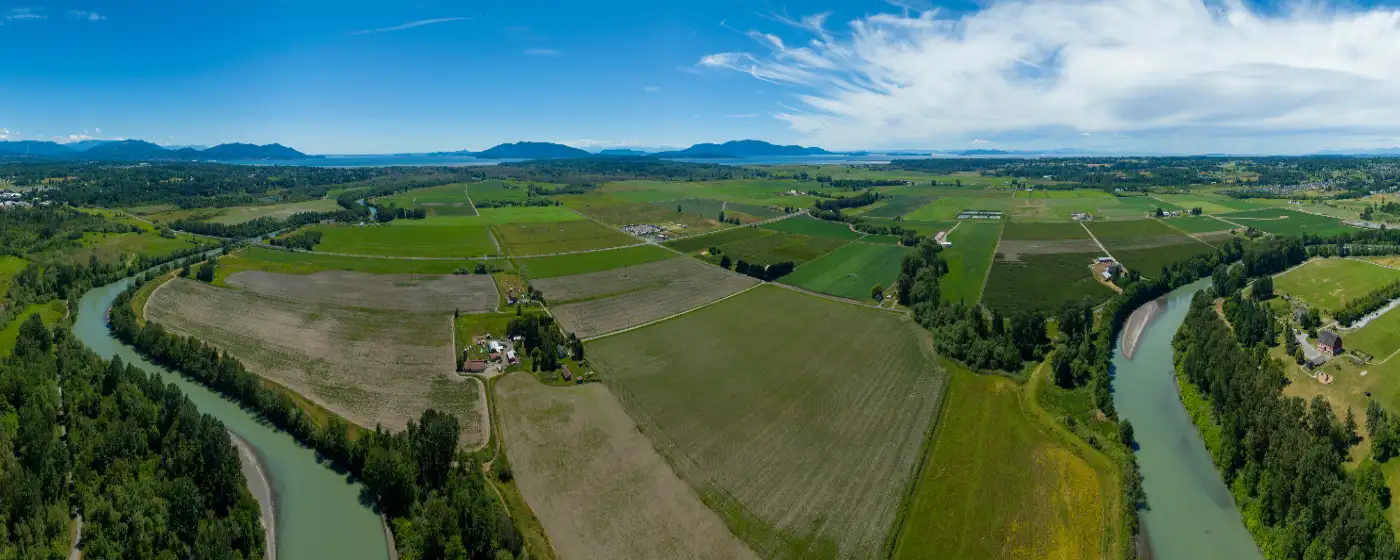
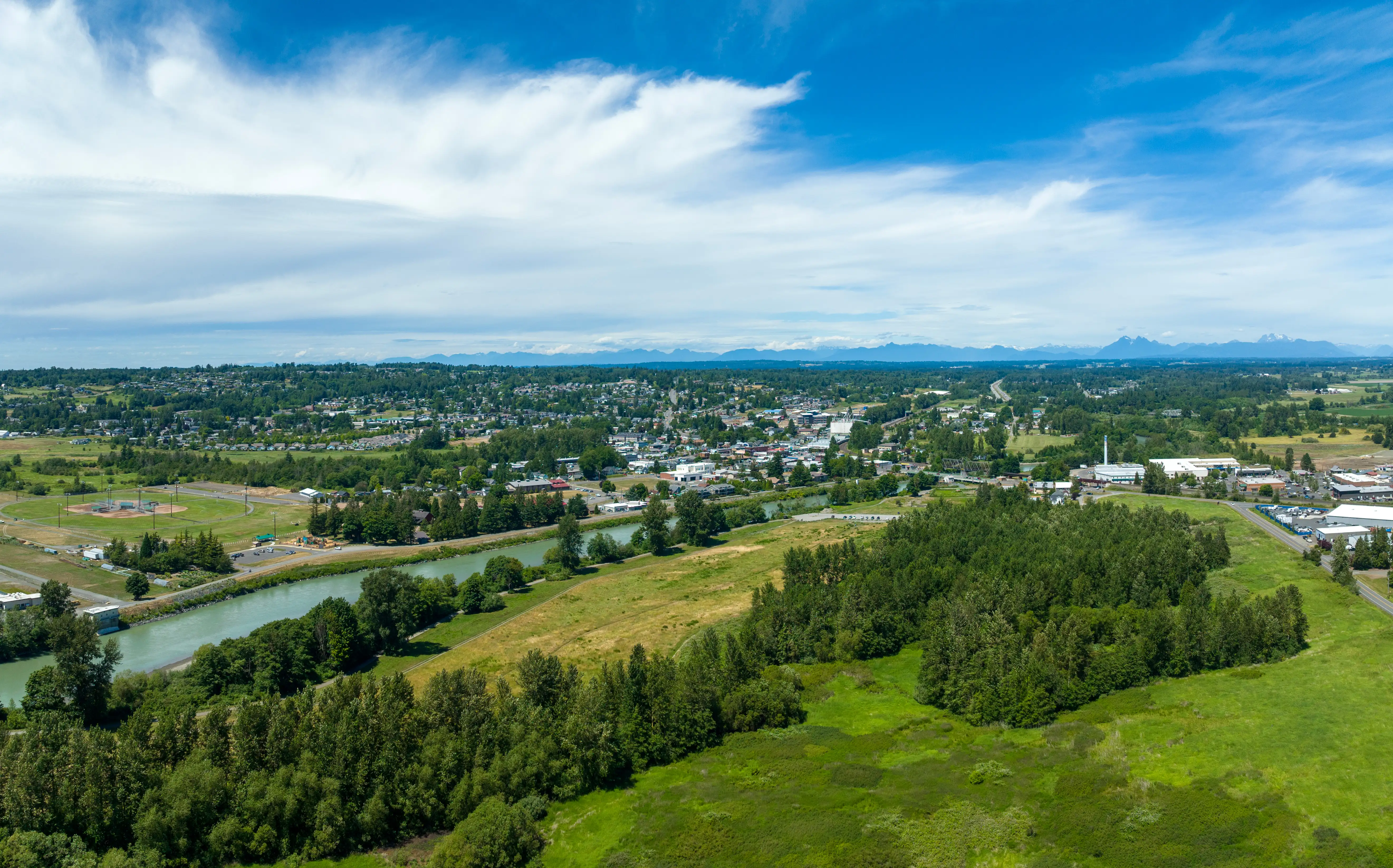
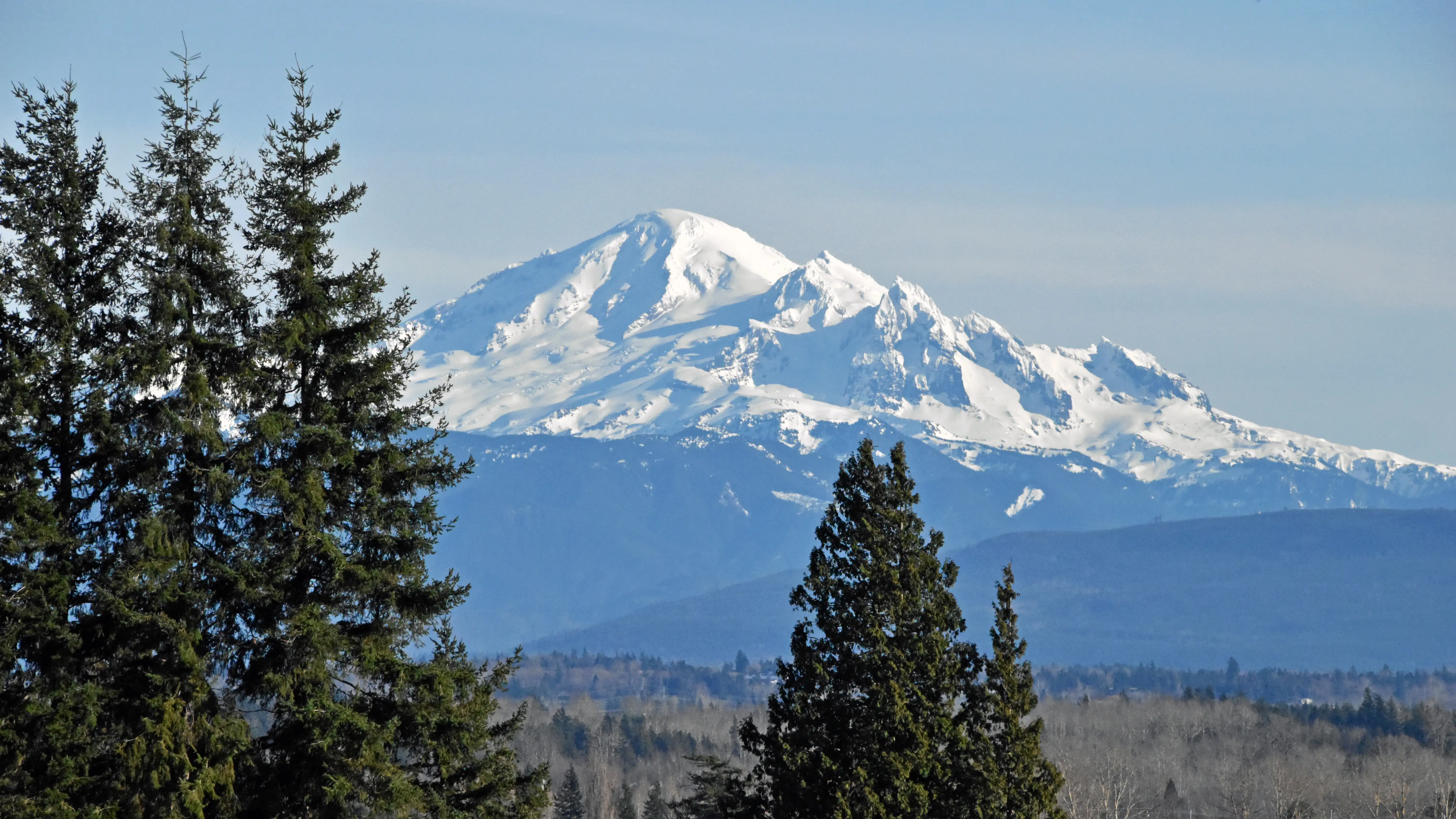
Ferndale sits six miles north of Bellingham on the I-5 corridor, close enough to feel like an extension of the city but far enough to have its own personality. The Nooksack River runs along its edges. The Lummi Nation occupies nearby land that shaped this valley long before the town had a name. Mount Baker looms on clear days to the east. In practical terms, Ferndale is a 15-minute drive from Bellingham's hospital district, university, and waterfront — and about 13 miles from the Canadian border, a fact that shapes everything from casino traffic to grocery store timing.
This guide will help you figure out whether Ferndale's specific combination of price point, community character, commute calculus, and school quality actually fits your life — or whether you'd be better served by one of its neighbors. There are no soft answers here. Ferndale has real advantages and real compromises, and the buyers who thrive here are the ones who understood both before they made an offer.
Not every city works for every buyer. Ferndale has a clear profile — and knowing whether you match it saves months of second-guessing.
| Best For | Why |
|---|---|
| Bellingham commuters | 15-minute I-5 drive puts you in Bellingham's core; Ferndale's median home price is meaningfully lower |
| Families with kids | 40% of households have children under 18; strong parks infrastructure and growing youth sports scene |
| First-time buyers | Lower entry point than Bellingham with appreciating values; significant new construction available |
| Remote workers | Access to natural recreation without paying urban premiums; slower pace suits work-from-home lifestyle |
| Retirees on a budget | No Washington state income tax, lower home prices than coastal alternatives, proximity to PeaceHealth |
| Buyers who value space | Single-family homes dominate at 66%; larger lots and newer construction common in outlying areas |
The first thing that strikes most new residents is how genuinely small-town Ferndale still feels, even as new subdivisions keep appearing on its edges. The downtown core along Main Street has a hardware store, a handful of local restaurants, and the kind of unhurried foot traffic that feels out of place in 2026. It's not a polished, boutique-ified small town — it's a working one, and that distinction matters if you're coming from a city where "downtown" means a curated collection of coffee shops and wine bars.
The commute reality is largely positive, but it depends almost entirely on I-5. On a normal weekday morning, Ferndale to downtown Bellingham runs about 15 minutes. The problem is that "normal" covers maybe 85% of mornings — the other 15% involve a backup at the Grandview Road interchange or a slowdown through the Guide Meridian merge that can stretch that to 30 minutes without warning. Buyers who work shifts at PeaceHealth St. Joseph or at Western Washington University need to test the drive at actual commute times before deciding where exactly in Ferndale to plant their household.
The community character skews young and family-oriented. The median age sits around 35, and the high proportion of households with children — roughly 41% — means that parks, school enrollment, and youth sports tend to dominate the civic conversation. Ferndale doesn't have the arts and restaurant scene of Bellingham, but it also doesn't carry Bellingham's congestion, parking frustrations, or the transient churn that a university city brings. What you're trading is urban amenity for community legibility — the ability to know your neighbors, run into familiar faces at the Safeway on Vista Drive, and feel like a participant in the town rather than a resident of a zip code.
The friction most people don't anticipate is commercial thinness. Ferndale has the essentials well covered — groceries, gas, hardware, a few solid spots for dinner — but if your Friday night involves trying a new restaurant, or your Saturday involves browsing a bookstore or catching live music, you'll be driving to Bellingham. That's a short drive, but it adds up across a year in ways that surprise people who moved from more walkable or more amenity-rich environments.
The single most compelling reason people stay in Ferndale is financial stability. A median sold price in the $650,000–$665,000 range sounds substantial until you compare it to Bellingham, where comparable homes often push into the $700,000s and beyond for similar square footage. Buyers who purchased in Ferndale five years ago have seen their equity grow dramatically — that 10-year appreciation rate hovering around 110% represents real, compounding household wealth. For buyers entering now, that trajectory doesn't feel over.
Pioneer Park is one of the genuinely underrated assets in the city. The park preserves a collection of original pioneer-era log cabins in an open green setting — it's a rare piece of living history that also functions as a neighborhood gathering point. Hovander Homestead Park and the adjacent Tennant Lake Interpretive Center add another layer of natural and historical richness that most comparably-priced suburban markets simply don't offer. On weekends, the trails around Tennant Lake attract serious birders and casual walkers in equal measure, and the farmstead setting connects Ferndale's agricultural identity to daily life in a way that feels authentic rather than staged.
The safety picture is genuinely encouraging. Violent crime in Ferndale runs at roughly one incident per 1,000 residents — significantly below both the Washington state average and national benchmarks. For families with school-age children who came from higher-crime metro areas, this is a meaningful quality-of-life upgrade, and it's a number that has been moving in the right direction over the past several years.
Ferndale's position as the second-largest city in Whatcom County gives it a degree of employment self-sufficiency that smaller bedroom communities lack. Silver Reef Casino Resort employs a significant local workforce. Janicki Industries, an aerospace composite manufacturer with a national reputation, operates here. The school district, PeaceHealth's regional presence, and municipal employment round out a base that means not every resident is commuting south. For remote workers and dual-income households, the combination of meaningful local employment options and I-5 access creates genuine flexibility.
Property crime is the number that requires honest acknowledgment. While violent crime runs well below state averages, Ferndale's property crime rate — roughly 16 incidents per 1,000 residents — sits above the national average. Vehicle break-ins and opportunistic theft have been the primary driver, concentrated in commercial parking areas and in neighborhoods closer to the I-5 interchange. This is a manageable reality for most buyers, but it's worth understanding before dismissing the statistic entirely.
The school picture is improving but still developing. The Ferndale School District's graduation rate has climbed meaningfully over the past five years, reaching 84% at Ferndale High School — matching the Washington state average. The test score profile is more uneven: reading proficiency at FHS runs above the state average, but math proficiency sits well below it. For families relocating from high-performing suburban districts, the adjustment in academic environment can be significant. The district is growing rapidly alongside the city's population, and that growth brings both investment and growing pains.
Why some people leave: The most common exit story in Ferndale involves families who moved from Bellingham expecting to feel like they'd made a lateral move and discovered they'd traded more amenity than they expected. The absence of a walkable downtown with diverse dining, the limited cultural programming, and the relative commercial thinness of the city center lead some households — particularly those without school-age children anchoring them to a neighborhood routine — to migrate back toward Bellingham within three to five years. This isn't a failure of Ferndale; it's a mismatch of expectations.
The border proximity deserves a word. Thirteen miles from Canada sounds like an exotic perk until you realize it means SR-548 and Portal Way can see elevated commercial traffic, Silver Reef Casino draws visitors from across the border on weekends, and I-5 northbound on Friday afternoons can slow unpredictably. None of this is severe, but it shapes the texture of living in this corridor in ways that buyers moving from inland or southern Washington may not anticipate.
Ferndale's residential geography spans from its walkable-ish core to sprawling newer subdivisions on its edges. The eight neighborhoods below represent the most distinct choices a buyer will realistically encounter.
The original town center along Main Street retains a genuinely historic character — a grid of older homes, local businesses, and a walkability that no other part of Ferndale can match. Homes here tend to be older, often built pre-1980, with character details that newer construction lacks. As of mid-2026, the city-wide median sold price runs approximately $665,000, and Downtown properties can come in both above and below that figure depending on lot size and condition. The honest tradeoff is that older infrastructure, smaller lots, and proximity to commercial traffic require a buyer who values character over turnkey condition.
Best for: Buyers who want to walk to coffee and dinner and don't need a three-car garage.
Vista Drive is one of Ferndale's primary residential corridors and the address where the school district's administrative offices sit. The housing stock mixes established single-family homes with newer development, and the Safeway-anchored commercial strip at the south end provides genuine convenience. The neighborhoods radiating off Vista Drive tend to attract families who want reliable access to the I-5 on-ramp and proximity to Ferndale's school cluster. Prices along this corridor track closely to the city median.
Best for: Families prioritizing school proximity and daily errands on foot or a short drive.
Griffintown sits in the northeastern part of Ferndale and represents one of the city's more established residential pockets — the kind of neighborhood where mature trees line the streets and houses have had time to settle into their landscaping. It attracts buyers who want a community feel without the HOA overhead of newer planned developments. The tradeoff is that homes here show their age more than in newer corridors, and buyers expecting move-in-ready condition will often face updating costs.
Best for: Buyers who value established neighborhood character over new construction finishes.
Cherry Street and the blocks surrounding it represent Ferndale's closest approximation to a traditional neighborhood grid — modestly sized lots, older housing stock, and a mix of owner-occupied and rental properties that gives the area a more diverse socioeconomic character than the city's newer subdivisions. Entry-level buyers who need to come in below the city median will find more options here than anywhere else in town. The honest catch is that proximity to downtown commercial activity means more foot and vehicle traffic than in outlying areas.
Best for: First-time buyers and investors looking for the city's most accessible price points.
Malloy Village is one of Ferndale's recognizable planned residential communities, offering the newer construction and neighborhood amenities that attract families relocating from suburban markets in California and the greater Seattle area. The homes here are larger, the lots tend to be more uniform, and HOA oversight maintains a consistent streetscape. Prices in planned communities like Malloy Village tend to run at or slightly above the city median. What buyers trade is the older-neighborhood charm of Griffintown or Downtown for consistency, newer systems, and neighborhood-level amenities.
Best for: Families relocating from California suburbs who want a familiar suburban environment with Pacific Northwest scenery.
The Thornton Road corridor extends into Ferndale's outer residential rings, where the housing transitions toward larger lots, rural adjacency, and newer construction on former agricultural land. Buyers who want acreage or a semi-rural buffer between themselves and their neighbors gravitate here. The tradeoff is that Thornton Road's distance from Ferndale's commercial core and from I-5 adds commute minutes that compound over a week — not dramatic, but worth measuring against the appeal of the extra space.
Best for: Buyers who want larger lots and a quieter edge-of-city setting.
Vista Ridge, anchored by Vista Ridge Park, is one of Ferndale's more elevated residential areas, with homes that benefit from views east toward the Cascades on clear days. The neighborhood has attracted buyers willing to pay a modest premium for the orientation and the park access that the community provides. The development pattern is newer, with homes built predominantly in the 2000s and beyond. The community tends to be quiet and family-oriented, which is both its appeal and its limitation for buyers wanting more walkable energy.
Best for: Families who want newer construction, park access, and mountain views without the edge-city isolation of outlying corridors.
Pacific Highlands occupies Ferndale's western residential reaches, closer to the Lummi reservation boundary and the lowland terrain that gives the area a distinctly rural-adjacent feel. The housing stock here is a mix of established single-family homes and some newer development, and the relative distance from the city center keeps prices competitive. The tradeoff is commute convenience — getting to I-5 or to Ferndale's commercial center from the western edge requires more intentional routing than the Vista Drive corridor.
Best for: Buyers who want western Ferndale's quieter character and are less dependent on daily commercial access.

Ferndale's neighborhoods each tell a different story when it comes to long-term value. Areas like Downtown Ferndale and Malloy Village tend to attract strong buyer interest because of their walkability and established character, and well-priced homes there routinely go under contract within days of hitting the market. Vista Drive offers a quieter residential feel that appeals to families planting roots, and most move-in-ready options across Ferndale are still available under $600,000 — though that window shifts quickly as more buyers discover what this community offers.
Before you fall in love with a house on Cherry Street or anywhere else in Ferndale, please talk to a lender first. Your true monthly obligation includes property taxes, homeowner's insurance, and any HOA dues on top of principal and interest — and that full picture can look meaningfully different from the number a listing website shows you. Getting pre-underwritten also means you're shopping at a number that feels genuinely comfortable, not just the maximum a lender will approve. When the right home appears, and in Ferndale it may not wait long, you want to be ready to move with confidence.
| City | Best For | Median Home Price | Commute to Bellingham | Vibe |
|---|---|---|---|---|
| Ferndale | Value-oriented families, first-time buyers | ~$665,000 | 15 min | Growing small town, suburban corridors |
| Bellingham | Walkability, amenities, university culture | $700,000–$750,000+ | 0 min | Pacific Northwest college city |
| Lynden | Conservative family community, Dutch heritage, rural feel | ~$620,000–$660,000 | 20 min | Agricultural town, tight-knit |
| Blaine | Border proximity, waterfront, quieter pace | ~$550,000–$600,000 | 30 min | Small border town, marina community |
| Everson | Rural setting, lowest price points, maximum space | ~$450,000–$520,000 | 30+ min | Farm country, very small town |
| Lummi Island | True retreat living, ferry access, natural beauty | Highly variable | 30–45 min | Remote island, limited services |
| Metric | Ferndale Data |
|---|---|
| Population | ~17,000–17,500 (2026 estimate) |
| Median Sold Home Price | $665,000 (mid-2026) |
| Property Tax Rate | ~0.86% |
| Median Household Income | $87,579 |
| Commute to Bellingham | ~15 minutes via I-5 |
| Violent Crime (per 1,000 residents) | ~1.0 |
| Property Crime (per 1,000 residents) | ~16 |
| School District | Ferndale School District |
| School District Rating | B- |
| Median Home Appreciation (10-year) | ~110% |
| Households with Children | ~41% |
| Median Age | ~35 years |
Pioneer Days is Ferndale's longest-running community tradition, an annual celebration centered on Pioneer Park that draws residents back year after year for a genuinely local — not corporate-sponsored — version of a summer festival. It's the kind of event that tells you more about a city's character than any demographic report, and it's remained a community anchor rather than an oversized regional draw.
Silver Reef Casino Resort is a fact of life in Ferndale in a way that surprises buyers from outside the Pacific Northwest. Operated by the Lummi Nation, Silver Reef sits just outside Ferndale's city limits but functions as a significant traffic and employment anchor. Weekend evenings on Portal Way and Haxton Way see notable casino-bound traffic, and the resort's entertainment and dining draw visitors from Bellingham, Blaine, and across the border. For some residents, this is a genuine local amenity — convenient dining, entertainment, and concerts without driving far. For others, the traffic pattern is a mild irritant.
The agricultural character persists in ways that distinguish Ferndale from generic suburbs. Hovander Homestead Park — a functioning farm preserved as a county park — still runs livestock and maintains working barns within city reach. The Tennant Lake Interpretive Center next door is a genuine ecological asset, not a decorative one: the fragrant plant garden and elevated boardwalk over the lake serve as a legitimate natural retreat minutes from town. On summer evenings, locals use it like a neighborhood park, which it effectively is.
What I would not do: I would not buy on the western edge of Ferndale, out toward the Axton Road corridor, without first driving the route to both I-5 and to Bellingham at 7:45 a.m. on a Tuesday. The extra distance from the I-5 interchange adds up quietly — it's not a dramatic difference on a map, but buyers who care about the 15-minute Bellingham commute that sells Ferndale need to verify it holds from their specific address, not from the city's geographic center.
Local Expert Takeaway: If you're choosing between Ferndale and Bellingham, the clearest signal to watch is your actual commute destination. If you work in south Bellingham — along Bakerview Road, near Squalicum Harbor, or at PeaceHealth — the 15-minute drive is genuinely reliable and the price differential is worth it. If your life is anchored to the Fairhaven neighborhood or to WWU's campus at the south end of town, add five to eight minutes each way and do the math on whether Ferndale's savings still justify the daily friction. The Vista Drive and Thornton Road corridors offer the best balance of price, school proximity, and I-5 access for most buyers — start your search there before looking at the city's outer edges.
✅ Ferndale delivers genuine value relative to Bellingham — a median sold price around $665,000 with a 15-minute commute and a 10-year appreciation rate that has outperformed most comparable markets in the Pacific Northwest.
⚠️ Property crime runs above the national average — vehicle break-ins and opportunistic theft are the primary driver, concentrated near commercial corridors. This doesn't disqualify the city, but it warrants attention during neighborhood selection.
📍 The Vista Drive corridor is the practical center of Ferndale life — school access, grocery access, and I-5 proximity converge here in a way that no other part of the city replicates as cleanly.
Is Ferndale a good place to raise a family?
Ferndale has a strong structural case for families: roughly 41% of households include children under 18, the city's parks infrastructure is genuinely impressive for a community of this size, and violent crime runs well below state and national averages. The school district is improving — graduation rates have climbed meaningfully over the past five years — though families coming from high-performing suburban districts should research individual school performance before assuming it matches what they left.
What is the crime rate in Ferndale?
Violent crime in Ferndale runs at approximately one incident per 1,000 residents — significantly below the Washington state average and well under the national figure. Property crime is the more relevant concern, running at roughly 16 per 1,000 residents, which is above the national average. The city's overall crime trend has been improving, with 2024 showing a notable decline from the prior year. The practical upshot is that Ferndale is a safe place to live in most residential neighborhoods, with elevated property crime concentrated in commercial zones.
How does Ferndale compare to Bellingham for home buyers?
Ferndale's median sold price comes in meaningfully below comparable Bellingham properties, and the 15-minute I-5 commute makes that gap practically exploitable for most buyers working in the Bellingham core. What you give up is Bellingham's walkable neighborhoods, restaurant and arts scene, and the energy of a university city. What you gain is more square footage for the money, a quieter community pace, newer housing stock in many corridors, and a city whose appreciation trajectory over the past decade has outperformed many of its neighbors. For buyers whose daily life doesn't require Bellingham's amenities, the math consistently favors Ferndale.
Explore the full Ferndale series: The Ultimate Ferndale Relocation Guide · Is Ferndale Safe? · Cost of Living in Ferndale · Best Neighborhoods in Ferndale · Ferndale Schools & Family Life · Ferndale Youth Sports · Ferndale Parks & Recreation · Retiring in Ferndale · 1031 Tax-Deferred Exchange in Ferndale · Ferndale First-Time Homebuyers Guide · Ferndale Down Payment Assistance Guide · Moving to Ferndale from California