
Southwest Washington · Washington
Moving to Kelso from California: The Honest Comparison (2026)
The Bay Area software engineer who bought a 4-bedroom house in Kelso and kept their San Francisco salary didn't just save money — they restructured their entire financial life. The San Diego family who moved north stopped dreading August utility bills, stopped refreshing air quality indexes during fire season, and bought twice the house for half the price. The Sacramento buyer who sold a two-bedroom townhome and walked away with enough equity to own a Kelso home free and clear. These aren't hypothetical stories — they're the pattern playing out across southwest Washington as California's net domestic out-migration climbed back toward 216,000 people in 2024–2025. Kelso sits at the center of that migration corridor: affordable, uncrowded, and positioned 50 minutes from Portland along I-5 in Cowlitz County.
The honest version of this conversation includes the parts most relocation guides skip. Kelso gets roughly 175 rainy days a year, and December delivers just over two hours of usable sunlight daily. The food scene doesn't compete with San Jose or San Diego. The pace is slower in ways that feel like relief at first and occasionally like friction later. If you're leaving Los Angeles with an expectation of coffee shops on every block and year-round farmers market energy, you will be surprised by what Kelso is and isn't. The transplants who thrive here knew what they were trading — and decided the trade was worth it.
This guide walks through the specific financial comparison by California region, what your equity actually buys at different price points, the tax picture in real dollar terms, the weather reality, and the mistakes California buyers most commonly make before and after the move. There's also an interactive comparison tool that lets you look up your specific California city against Kelso side by side.

| Kelso, Washington | Bay Area | Southern CA | Sacramento Metro | Central Valley | |
|---|---|---|---|---|---|
| Median Home Price (approx. 2026) | $367,569 | $1.2M–$1.8M+ | $750K–$1.1M | $480K–$600K | $320K–$430K |
| Property Tax Rate (effective) | ~1.01% | ~1.1–1.25% | ~1.1–1.25% | ~1.1–1.25% | ~1.0–1.2% |
| State Income Tax | None | Up to 13.3% | Up to 13.3% | Up to 13.3% | Up to 13.3% |
| State Sales Tax | 8.1% (Cowlitz Co.) | 7.25–10.25% | 7.25–10.75% | 7.25–8.75% | 7.25–8.75% |
| Avg Utilities (monthly est.) | $170–$210 | $280–$380 | $260–$360 | $200–$280 | $210–$300 |
| Avg 1BR Rent | $900–$1,150 | $2,800–$3,800 | $2,000–$2,800 | $1,400–$1,900 | $1,000–$1,400 |
Washington's no-income-tax advantage is the number that surprises California transplants most. A household earning $150,000 in California pays somewhere between $10,000 and $15,000 annually in state income tax depending on deductions and filing status. In Washington, that bill is zero. Remote workers who kept their California salaries after relocating to Kelso are effectively giving themselves a raise without changing jobs. Paired with a median home price at $367,569 — roughly one-third the cost of a median Bay Area purchase — the financial case for Kelso is straightforward to model.
Washington has no state income tax, and that single fact does more work in a California transplant's monthly budget than almost any other variable in the move. California's marginal rates climb from 1% to 13.3% — the highest state income tax rate in the country. A transplant earning $120,000 who previously filed in California was paying roughly $7,000–$9,000 in state income tax annually. At $150,000, that number climbs toward $12,000–$14,000. At $200,000, a California filer can easily owe $18,000–$22,000 in state income tax alone. In Washington: none of it.
Washington's 7% capital gains tax applies only to long-term capital gains exceeding $262,000 in a single year, and the primary home sale exclusion ($250K single / $500K married) means most residential real estate transactions don't trigger it at all. Washington's sales tax — approximately 8.1% in Cowlitz County — does offset some of the income tax advantage, but on most incomes the net benefit of leaving California remains strongly positive. Buyers who run the full-year calculation consistently find they're ahead by $8,000–$18,000 annually depending on income level.
| Tax Item | California | Washington | Net Impact for Transplant |
|---|---|---|---|
| State Income Tax | Up to 13.3% | None | Save $7K–$22K+/year depending on income |
| Sales Tax | 7.25–10.75% | 8.1% (Cowlitz Co.) | Roughly neutral; slight WA advantage in some CA counties |
| Property Tax (effective rate) | ~1.1–1.25% | ~1.01% (Cowlitz Co.) | Modest WA advantage; much larger on lower purchase price |
| Capital Gains (state) | Up to 13.3% | 7% over $262K threshold | WA advantage for most; equivalent for low-gain sales |
| Senior Property Tax Exemption | Limited circuit breaker | Yes — 61+, income-based | WA advantage for retirees |
Washington also offers a senior property tax exemption for residents 61 and older, structured as an income-based reduction in assessed value. Retirees moving from California — where property tax relief programs are more restricted — often find Washington's senior exemption meaningfully improves their fixed-income housing math.
A buyer leaving San Jose, Palo Alto, or Walnut Creek with $1.4 million in equity can purchase the highest-tier properties Kelso has to offer — cash — and still have $900,000–$1,000,000 remaining. Beacon Hill and the Highlands are where Kelso's most elevated homes sit, with views, larger lots, and newer construction. At $367,569 as the city-wide baseline, even a well-appointed $450,000 home represents a small fraction of Bay Area equity. The practical question for this buyer isn't whether they can afford Kelso — it's whether they want to invest the remainder locally, park it in a brokerage, or consider a 1031 exchange if they were selling investment property rather than a primary residence.
For Bay Area sellers, Kelso is essentially a financial reset. Monthly housing costs that were $6,000–$10,000 in the Bay Area become zero or close to it. The question shifts from affordability to lifestyle: is Kelso the right fit, or should this buyer be looking at Ridgefield, Camas, or Vancouver for more urban amenity density while still banking the no-income-tax advantage?
A buyer selling in Pasadena, Irvine, or Rancho Cucamonga with $900,000 in equity can purchase in Kelso's top tier with cash to spare — or put 40–50% down on a new construction home while investing the remainder. At $367,569 median, Southern California equity puts this buyer firmly at the top of the local market with options across every neighborhood from West Kelso to Camelot Subdivision. The lifestyle upgrade is significant: a 2,200-square-foot home on a quarter-acre lot, no commute congestion, and a monthly cost structure that frees up thousands compared to even a modest Southern California mortgage.
The buyers who come from coastal Southern California — particularly San Diego and the South Bay — are the ones most likely to genuinely miss year-round outdoor access. The tradeoff at this equity level is purely lifestyle, not financial. Financially, these buyers are in an extraordinarily strong position in the Kelso market.
Sacramento and Inland Empire buyers — think Elk Grove, Roseville, or Rancho Cucamonga sellers with $500,000–$600,000 in equity — are making a move with a closer relative gain, but the math still strongly favors Washington. They can purchase in Kelso's mid-market with a substantial down payment or buy outright at entry level. The no-income-tax benefit does its heaviest lifting for this group: a Sacramento household earning $130,000 that was paying $10,000–$12,000 annually in California income tax is now keeping that money. Over five years, that's $50,000–$60,000 in cumulative take-home pay — real money that this buyer can redirect toward their home equity, retirement, or quality of life.
Rose Valley and South Kelso neighborhoods offer good value in Kelso's $280,000–$360,000 range for this buyer, and WSHFC Home Advantage programs may supplement financing if they're not purchasing outright.
Fresno, Modesto, or Stockton sellers with $350,000–$420,000 in equity are making the move with the most modest relative financial advantage — but still a genuine one. At Kelso's median of $367,569, a Central Valley buyer with $380,000 in equity can purchase at the city-wide median with a minimal mortgage or no mortgage at all. The income tax benefit — even for a household earning $90,000–$110,000 — adds $4,000–$7,000 annually in take-home pay that California was collecting. Entry-level neighborhoods like Third Avenue and Broadway offer solid single-family homes in the $270,000–$330,000 range, and the Central Valley buyer's equity stretches meaningfully further per square foot than it would staying in-state.
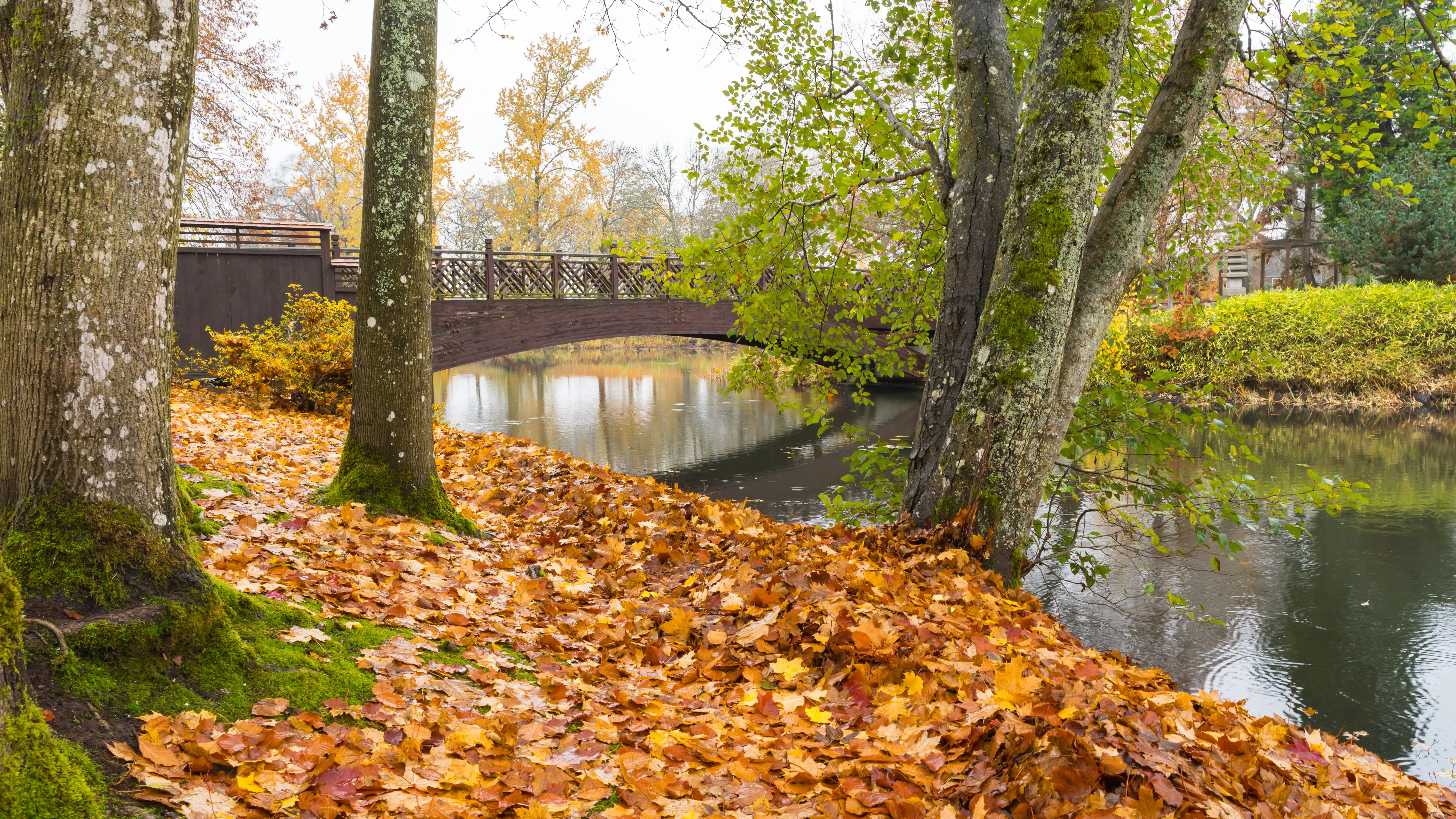
Here's what a good friend who made this move three years ago would actually tell you: the summers are genuinely spectacular. July and August in Kelso deliver warm, dry days with low humidity, clear skies, and easy access to rivers, trails, and the Columbia. If you've spent summers sweating through San Fernando Valley heat or retreating indoors from Sacramento inland heat, Kelso's summer climate feels like a gift. The Coweeman River Trail, Tam O'Shanter Park, and Three Rivers Golf Course are all legitimately enjoyable from May through September, and the Pacific Northwest outdoor culture fully activates during those months.
The winters are what California transplants underestimate most. Kelso averages roughly 175 rainy days annually, receives about 49 inches of precipitation per year, and in December delivers just over two hours of functional sunlight per day. Los Angeles, by comparison, enjoys more than 3,250 sunshine hours annually and roughly 262 sunny days. That gap isn't a minor adjustment — it's a fundamental shift in daily rhythm, mood, and how you structure your time. Buyers who grew up in the Pacific Northwest adapt without thinking about it. California transplants, particularly those from San Diego or the LA basin, typically experience a real period of seasonal adjustment in their first winter. Light therapy lamps, vitamin D, and a commitment to getting outside during midday breaks are practical strategies that long-term transplants swear by, not exaggerations.
What California transplants report loving after a year in Kelso tends to be consistent: the space, the silence, the absence of freeway commute anxiety, the fact that you can get from one end of the city to the other in 10 minutes, and the slower pace of human interaction. What they genuinely miss: beach access, the food diversity of a large California metro, year-round farmers market culture, and the social energy of a major city. Kelso is a small city — roughly 12,800 people — and it has the community warmth and the community limitations that come with that scale.
If you want to see how Kelso compares directly to the city you're leaving, use the tool below — it covers the 120 largest California cities with current housing and tax data.
Home prices: Redfin median sale data, Q1–Q2 2026. Select your city to compare.
Ready to talk through what your specific California equity could do in Kelso? Todd can model your exact scenario in a single call.

Kelso's neighborhoods each tell a different story when it comes to long-term value. Areas like the Camelot Subdivision and West Kelso tend to attract steady buyer interest because of their residential feel and relative accessibility, and well-priced homes there can move within days — sometimes faster than California buyers expect after being accustomed to slower markets or extended negotiations. The Trails has also drawn attention from relocating buyers looking for a quieter setting. Most of what's worth buying in Kelso comes in well under $400,000, which surprises a lot of people making the move from coastal California markets.
Before you start touring homes, talk to a lender first — and I mean really talk, not just get a pre-approval letter. Your full monthly payment includes property taxes, homeowner's insurance, and any HOA dues on top of principal and interest, and that number can feel meaningfully different from what you budgeted based on purchase price alone. Knowing your comfortable payment — not just your maximum approval — means when something good appears in Camelot or West Kelso, you're ready to move without second-guessing yourself.
Mistake 1: Treating Kelso as uniform. California buyers often research the median home price and picture a city where every neighborhood is equivalent. Kelso has real internal variation. Beacon Hill and the Highlands sit at the elevated, quieter end of the market with larger lots and more recent construction. The Broadway and Third Avenue corridors closer to downtown are older, more modest, and more walkable to services. West Kelso has a different suburban character than South Kelso's quieter residential pockets. Buying without understanding these distinctions — or assuming the lowest-priced listing represents the whole city — leads to buyers who overpay in one area or overlook value in another.
Mistake 2: Underestimating how different the winter commute is. California buyers who purchase in Kelso and commute to Portland are often running the 50-minute estimate on a dry-day map. November through March brings rain, occasional ice, and reduced visibility on I-5, and the Columbia River crossing can slow significantly. Buyers who choose neighborhoods on the far edges of Kelso without testing the winter commute route first sometimes find themselves recalibrating in February.
Mistake 3: Not modeling the income tax benefit into their monthly budget. This is the one that costs California buyers real money. Remote workers who keep their California salaries and move to Kelso frequently anchor their mortgage search to a budget built on California take-home pay assumptions — meaning they're calculating as if they're still losing 8–12% of gross income to state taxes. They aren't. A buyer earning $140,000 who was netting $118,000 after California income taxes is now netting $131,000–$133,000. That extra $13,000+ annually — more than $1,000/month — changes the legitimate ceiling on their mortgage budget.
Mistake 4: Expecting California-style year-round outdoor culture. Kelso has genuinely good outdoor access from May through September — river trails, parks, golf, hiking in the surrounding hills. From November through March, the outdoor culture contracts significantly. Buyers who plan to recreate exactly as they did in San Diego year-round will find that Kelso requires a different relationship with winter, one that involves more indoor time and more intentional effort to stay active during gray months. This isn't a dealbreaker — it's an adjustment — but buyers who arrive without expecting it tend to feel blindsided by their first December.
Bay Area sellers arriving with $1 million or more in equity are often best served by treating the Kelso transaction as a cash purchase or near-cash purchase, which eliminates appraisal contingencies and positions them competitively in a market where sellers still value certainty. For sellers who were liquidating California investment property rather than a primary residence, a 1031 exchange deserves a conversation before escrow closes — timing requirements are strict, and pre-planning before the California sale closes is essential. The Kelso 1031 Exchange guide covers the mechanics in detail.
Southern California sellers entering Kelso's market with $700,000–$1,000,000 in equity are well-positioned for conventional financing at low loan-to-value ratios or outright cash purchases at Kelso's median price point. Kelso home prices don't approach jumbo loan thresholds, meaning conventional conforming loan terms apply across nearly every transaction. A buyer putting 50–60% down on a $380,000 home is financing roughly $150,000–$190,000 — a payment that, combined with the elimination of California income tax, typically produces monthly housing costs well below what they were carrying in California.
Sacramento and Inland Empire buyers with $450,000–$600,000 in equity may find that WSHFC Home Advantage or ONE Mortgage programs provide useful structure for any financed portion of their purchase, particularly if they're targeting the $270,000–$340,000 entry-level range and prefer to preserve some liquidity. Kelso's median home price falls within WSHFC program limits, making first-time and moderate-income buyer programs genuinely accessible for this equity tier. The Kelso Down Payment Assistance guide walks through the current program structure.

Local Expert Takeaway: California buyers consistently underestimate how dramatically the no-income-tax benefit reshapes their monthly cash flow once they're actually living in Washington. A remote household earning $150,000 that was filing California taxes is gaining the equivalent of a $1,000–$1,200 monthly raise — without changing jobs. Before you set your Kelso price ceiling, run your full monthly picture: mortgage at your target price, 1.01% property tax, Washington zero income tax, and lower utilities. Most California buyers discover they can afford more Kelso house than they thought, or carry the same house with far less financial strain. The buyers who get this right early land in neighborhoods like Beacon Hill and Camelot Subdivision with room to breathe; the ones who don't sometimes under-buy and wish they'd gone up a tier.
✅ Washington's no-income-tax advantage is worth $7,000–$22,000+ annually depending on income — a raise you receive the day you establish residency without changing employers.
⚠️ Kelso's winters are genuinely gray. Roughly 175 rainy days a year and barely two hours of daily sunlight in December are real adjustments for buyers coming from Los Angeles or San Diego. Build this into your lifestyle math, not just your financial math.
📍 Your California equity goes further here than almost anywhere else in the Pacific Northwest. At a $367,569 median home price, Bay Area equity buys Kelso outright. Even Sacramento-level equity puts buyers in a dominant position in this market.
Is moving from California to Kelso worth it?
For buyers who can work remotely or who are retiring, the financial case is difficult to argue with — the combination of dramatically lower home prices, no state income tax, and lower property tax bills produces monthly savings that compound significantly over time. The lifestyle trade involves accepting more gray weather, a smaller city social scene, and less year-round outdoor access than California offers. Buyers who go in with clear eyes on both sides of that ledger consistently report the move was the right call.
How much cheaper is housing in Kelso vs. California?
At Kelso's median of $367,569, homes cost roughly 70–80% less than the Bay Area median, 50–65% less than coastal Southern California, and 20–30% less than the Sacramento metro. Those gaps translate into eliminating mortgages entirely for Bay Area sellers, or buying at the top of Kelso's market with substantial equity remaining for buyers leaving San Diego or Orange County.
What do I need to know about moving from California to Washington?
Establish Washington residency formally — update your driver's license, voter registration, and vehicle registration within the required windows to lock in the no-income-tax benefit. California has been known to audit former residents who claim Washington residency while maintaining significant California ties, so the documentation process matters. Beyond the administrative steps, expect a genuine weather adjustment in your first winter, budget time to explore which Kelso neighborhoods actually match your daily priorities, and model your full monthly cash flow with Washington tax assumptions before finalizing your purchase price.
Explore the full Kelso series: The Ultimate Kelso Relocation Guide · Is Kelso Safe? · Cost of Living in Kelso · Best Neighborhoods in Kelso · Kelso Schools & Family Life · Kelso Youth Sports · Kelso Parks & Recreation · Retiring in Kelso · 1031 Tax-Deferred Exchange in Kelso · Kelso First-Time Homebuyers Guide · Kelso Down Payment Assistance Guide · Moving to Kelso from California