
Puget Sound · Washington
Is Kenmore Safe? Crime Rates, Safest Neighborhoods & Local Reality (2026)
Kenmore doesn't get talked about the way Bellevue or Kirkland do when people debate safe suburbs north of Seattle — and that's partly because it doesn't need to. SafeWise ranked it the 7th safest city in Washington state in 2026, up from 9th the prior year, and local police data consistently puts violent crime well below both state and national averages. The more nuanced story isn't whether Kenmore is safe. It's understanding which parts of the city are genuinely quiet, which corridors see elevated activity, and why some crime maps make this city look worse than it actually is for residents.
On paper, Kenmore's violent crime rate runs approximately 2.8 per 1,000 residents — a figure that places it well below the national average and roughly in line with the safest suburbs in the greater Puget Sound region. Property crime at around 20.9 per 1,000 is a more meaningful number for daily life, and it's the category where buyers should pay closest attention. The gap between living in northeast Kenmore near the lake and living along the commercial corridor on Bothell Way NE is measurable — not just in feel, but in actual incident counts.
This guide breaks down what the crime data actually means for someone considering a move to Kenmore, which neighborhoods consistently post the lowest incident rates, and what practical habits locals have adopted without much second thought.
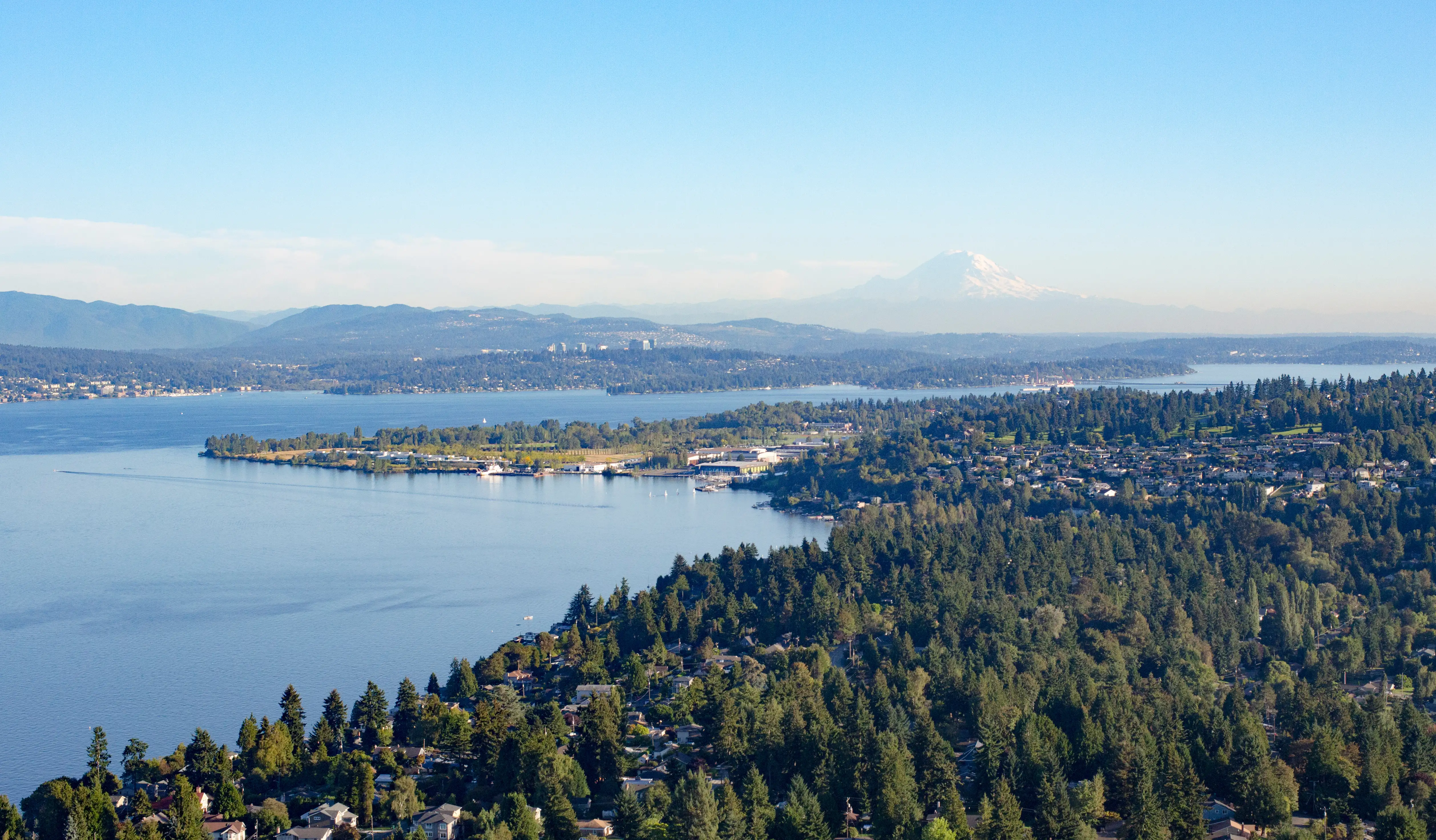
Viewed in context, Kenmore's crime profile is genuinely reassuring. FBI-compiled data from 2024 suggests the city is safer than roughly 90% of Washington municipalities, and the overall crime index is estimated to be more than twice as low as the U.S. average. That kind of spread isn't marginal — it reflects a city with strong homeownership rates, low transient population density, and a residential layout that doesn't create the foot-traffic conditions where opportunistic crime tends to cluster. The 2024 figures also represent a roughly 5% decline from 2023, which tracks with the city's ongoing investment in community policing partnerships.
What drives Kenmore's numbers structurally is worth understanding before you interpret any map or ranking. The city's commercial core — centered on Bothell Way NE near Kenmore Air Harbor — concentrates retail activity, visitor traffic, and park access into a relatively small corridor. Crime mapping tools that aggregate incidents without adjusting for population density can make this area look disproportionately risky. A reported incident at the marina or along the Burke-Gilman Trail access point doesn't carry the same residential implication as an incident in a single-family neighborhood six blocks away. Buyers relying purely on color-coded heat maps often misread this city as a result.
One honest caveat: over the past five years, Kenmore has seen a gradual rise in both categories, consistent with broader trends across the Seattle metro. That trend doesn't negate the city's strong overall standing, but it's worth acknowledging rather than glossing over. Motor vehicle theft, in particular, is a category where Kenmore's rate is higher than you might expect given its otherwise low crime profile — something local parking habits reflect.
Local police data puts Kenmore's violent crime at approximately 2.8 incidents per 1,000 residents, and FBI-compiled 2024 figures reported just 14 total violent crimes across the entire city — a number that works out to roughly 61 per 100,000 residents, far below the national average. For daily life, this translates to a city where most residents go years without any direct exposure to violent incidents. The one notable asterisk in the 2026 SafeWise ranking: among the top-10 safest Washington cities, only one murder was reported in the dataset — and it occurred in Kenmore. A single incident in a city of 24,000 doesn't define a pattern, but it's the kind of detail worth knowing rather than discovering later.
Property crime, sitting around 20.9 per 1,000 residents, is where Kenmore buyers should focus their due diligence. Motor vehicle theft stands out as the dominant category — NeighborhoodScout flags Kenmore's car theft rate as elevated relative to similarly sized cities, with an estimated 1-in-396 chance annually. Theft from vehicles, particularly in park trailheads and the Bothell Way commercial strip, accounts for a meaningful share of the overall property crime count. The southeast portion of the city — near the retail corridor and higher-traffic park access points — sees the most property crime incidents, while the southwest registers the fewest. This distribution matters when you're choosing between neighborhoods, not just when you're evaluating the city as a whole.
Uplake sits along the northeastern edge of Kenmore where the residential streets back up against Lake Washington, and it consistently ranks among the city's quietest areas. The neighborhood's low-density mix of modern and mid-century homes creates minimal through-traffic, and the proximity to Log Boom Park and the Burke-Gilman Trail draws recreational visitors rather than the retail-adjacent activity that inflates incident counts in the city's commercial core. Buyers who prioritize residential calm over urban convenience find Uplake well-positioned — the trailhead access is genuinely walkable, and the neighborhood feels distinctly removed from Bothell Way's commercial density.
Best for: Buyers who want lakeside proximity, trail access, and low residential incident rates without paying Kirkland waterfront prices.
Northshore Summit occupies elevated terrain in the northeast, with views toward Lake Washington and quick access to both Northshore Summit Park and Wallace Swamp Creek Park. The area's geography — elevated, mostly residential, and away from commercial corridors — contributes to incident rates that run well below the city average. Crime probability data suggests residents in this part of Kenmore face roughly a 1-in-545 chance of violent crime annually, compared to 1-in-225 in more central neighborhoods. The separation from Bothell Way NE is the key variable here.
Best for: Families seeking elevated terrain, park access, and some of the lowest residential crime rates in the city.
Kenmore Terrace is one of the few Kenmore neighborhoods where low crime rates are explicitly documented rather than inferred from geography. The neighborhood hugs the Lake Washington shoreline and benefits from the same northeastern positioning that makes Uplake and Northshore Summit stand out, but with slightly more established home stock and longer-tenured residents. St. Edward State Park access adds recreational draw without significantly increasing transient foot traffic through the residential streets themselves.
Best for: Buyers looking for established residential character with documented low crime and lake adjacency.
Moorlands sits northwest of Finn Hill along the Sammamish River corridor, offering a quieter buffer from both the city center and the SR-522 commuter routes. The neighborhood's riverside setting and proximity to St. Edward State Park give it a semi-rural feel that doesn't exist in the more lakefront-oriented east side neighborhoods. Arrowhead Elementary feeds the area, and the limited commercial activity nearby keeps incident rates low — southwest Kenmore as a whole records roughly 3 violent incidents and 27 property crimes annually, the lowest counts in the city.
Best for: Buyers who want a quiet, natural setting away from commuter corridors and are less focused on lake views.
Downtown Kenmore along Bothell Way NE is the commercial center and, predictably, the area where the crime heat maps run warmest. The concentration of retail, the Kenmore Air Harbor, and high park visitor traffic through Log Boom Park creates an environment where property crime counts — particularly vehicle break-ins in parking areas — are meaningfully higher than the residential neighborhoods to the north and east. This doesn't make Downtown Kenmore dangerous to live near, but buyers considering townhomes or condos in this corridor should budget for consistent vigilance around vehicle security. The commercial activity also means better lighting and more foot traffic, which cuts both ways on a practical safety assessment.
Best for: Buyers who prioritize walkable access to restaurants and services and accept that property crime rates run higher in retail-adjacent settings.
Inglewood delivers the rural-feel suburban experience that draws buyers away from denser parts of the metro. Tree-lined streets, single-family homes on larger lots, and adjacency to St. Edward State Park give the neighborhood an insulated quality that's reflected in consistently low incident counts. The neighborhood's position away from the primary commercial corridors and its strong owner-occupancy rate both contribute to stability. Buyers coming from denser Seattle neighborhoods often describe Inglewood as feeling several tax brackets quieter than it actually is.
Best for: Buyers who want large lots, tree cover, park adjacency, and a neighborhood that feels genuinely removed from urban activity patterns.

| City | Violent Crime/1K | Property Crime/1K | Overall Safety Profile |
|---|---|---|---|
| Kenmore | ~2.8 | ~20.9 | 7th safest in WA (SafeWise 2026) |
| Bothell | ~3.1 | ~24.4 | Strong suburban safety, larger commercial base |
| Lake Forest Park | ~1.9 | ~16.2 | Consistently low crime, smaller city |
| Kirkland | ~3.5 | ~28.7 | More urban activity, stronger retail corridor |
| Shoreline | ~4.1 | ~32.5 | More urban density, higher overall crime rate |
| Woodinville | ~1.8 | ~18.3 | Rural-suburban blend, very low violent crime |

When buyers ask me about Kenmore, the conversation almost always comes back to specific pockets of the city. Neighborhoods like Inglewood and Northshore Summit tend to hold their value well precisely because of their reputation for stability and community feel — and that reputation shows up in how fast homes move. In those areas, well-priced homes under $750,000 rarely sit more than a week or two before receiving multiple offers. Northlake Terrace is another area worth watching, where buyers who do their homework early tend to have a real advantage over those who wait.
What most buyers don't realize until it's too late is that your approved loan amount and your comfortable monthly payment are two very different numbers. Before you tour a single home, sit down with a lender and build out the full picture — loan principal, property taxes, homeowner's insurance, and any HOA dues all stack on top of each other in ways that can genuinely surprise people. Being pre-approved also means that when the right home in the right neighborhood appears, you're ready to move with confidence instead of scrambling.
The thing neighborhood apps like Citizen or Nextdoor can distort in Kenmore is the concentration of alerts around Bothell Way NE and the Log Boom Park parking lot. These are real incidents — mostly vehicle break-ins and occasional theft from unlocked cars — but they're heavily tied to visitor behavior at high-traffic parks, not to the residential character of surrounding streets. Locals who park at Log Boom for a Burke-Gilman Trail run have learned not to leave anything visible in a parked car. It's a habit, not a fear response, and it's the single most consistent piece of advice you'll hear from long-term Kenmore residents.
The crime map inflation around the commercial core is the other thing worth naming directly. Tools that show Kenmore's "most dangerous areas" in a heat map often light up the Bothell Way corridor simply because that's where reported incidents are filed — at retail locations, park trailheads, and the marina. Six blocks north on a residential street feeding into Uplake or Kenmore Terrace, the actual residential risk profile is dramatically different. Buyers who evaluate Kenmore based solely on aggregate city-level data or a zoomed-out heat map routinely miss this distinction.
What I would not do if moving to Kenmore: buy in the immediate Bothell Way commercial corridor expecting it to feel like the quiet lake neighborhood in the listing photos. The commute access is genuinely good and the walkability to services is real, but the ambient activity level is different from what you find even half a mile toward the lake. If the quiet residential Kenmore is what you're after, the northeast quadrant — particularly anything near Northshore Summit Park or above the Log Boom waterfront — is where that experience actually lives.

Local Expert Takeaway: If safety is a primary driver in your Kenmore search, focus your search on the northeast quadrant — Uplake, Northshore Summit, and Kenlake Vista consistently post the lowest residential incident rates in the city. Avoid evaluating the full city by crime maps that aggregate commercial and park-adjacent incidents; ask your agent to pull address-specific incident data for the specific blocks you're considering, not the broader neighborhood zone. For buyers looking at the Bothell Way corridor for convenience, the lower prices relative to the lakeside neighborhoods reflect both the commute access and the higher ambient activity — that trade-off is transparent if you know to look for it.
✅ Kenmore ranks 7th safest in Washington state (SafeWise 2026), with violent crime well below national averages and a residential northeast quadrant that posts some of the lowest incident rates in the King County suburbs.
⚠️ Motor vehicle theft and vehicle break-ins are the most relevant property crime risk — particularly at park trailheads and the Bothell Way commercial corridor. Leaving anything visible in a parked car at Log Boom Park is a reliable way to become a statistic.
📍 Northeast Kenmore (Uplake, Northshore Summit, Kenlake Vista, Kenmore Terrace) consistently outperforms the city average on safety metrics, while the Downtown corridor along Bothell Way NE sees the city's highest concentration of reported property incidents.
Is Kenmore a safe place to live?
Yes, by most measurable standards. Kenmore's violent crime rate sits around 2.8 per 1,000 residents, and FBI-compiled 2024 data places the city safer than roughly 90% of Washington municipalities. The city's consistent presence in SafeWise's top-10 safest Washington cities — ranking 7th in 2026 — reflects real investment in community policing and low underlying crime conditions, not just favorable statistics.
What part of Kenmore has the lowest crime?
Northeast Kenmore is consistently cited as the safest part of the city. Neighborhoods like Uplake, Northshore Summit, and Kenmore Terrace sit away from the commercial corridor on Bothell Way NE, benefit from strong owner-occupancy rates, and see violent crime odds closer to 1-in-545 versus 1-in-225 in the more central areas. If low residential incident rates are a priority, this is where to focus your search.
How does Kenmore's crime rate compare to the rest of the Seattle metro?
Kenmore compares favorably to most Seattle-area suburbs of similar size. It posts lower violent crime than Kirkland and Shoreline, and sits roughly in line with Bothell — while Lake Forest Park and Woodinville edge it out slightly due to lower population density and less commercial activity. For buyers benchmarking against the broader metro, Kenmore consistently lands in the safer half of the comparison set.
Explore the full Kenmore series: The Ultimate Kenmore Relocation Guide · Is Kenmore Safe? · Cost of Living in Kenmore · Best Neighborhoods in Kenmore · Kenmore Schools & Family Life · Kenmore Youth Sports · Kenmore Parks & Recreation · Retiring in Kenmore · 1031 Tax-Deferred Exchange in Kenmore · Kenmore First-Time Homebuyers Guide · Kenmore Down Payment Assistance Guide · Moving to Kenmore from California