
Puget Sound · Washington
1031 Exchange & Investment Real Estate in Kirkland (2026)
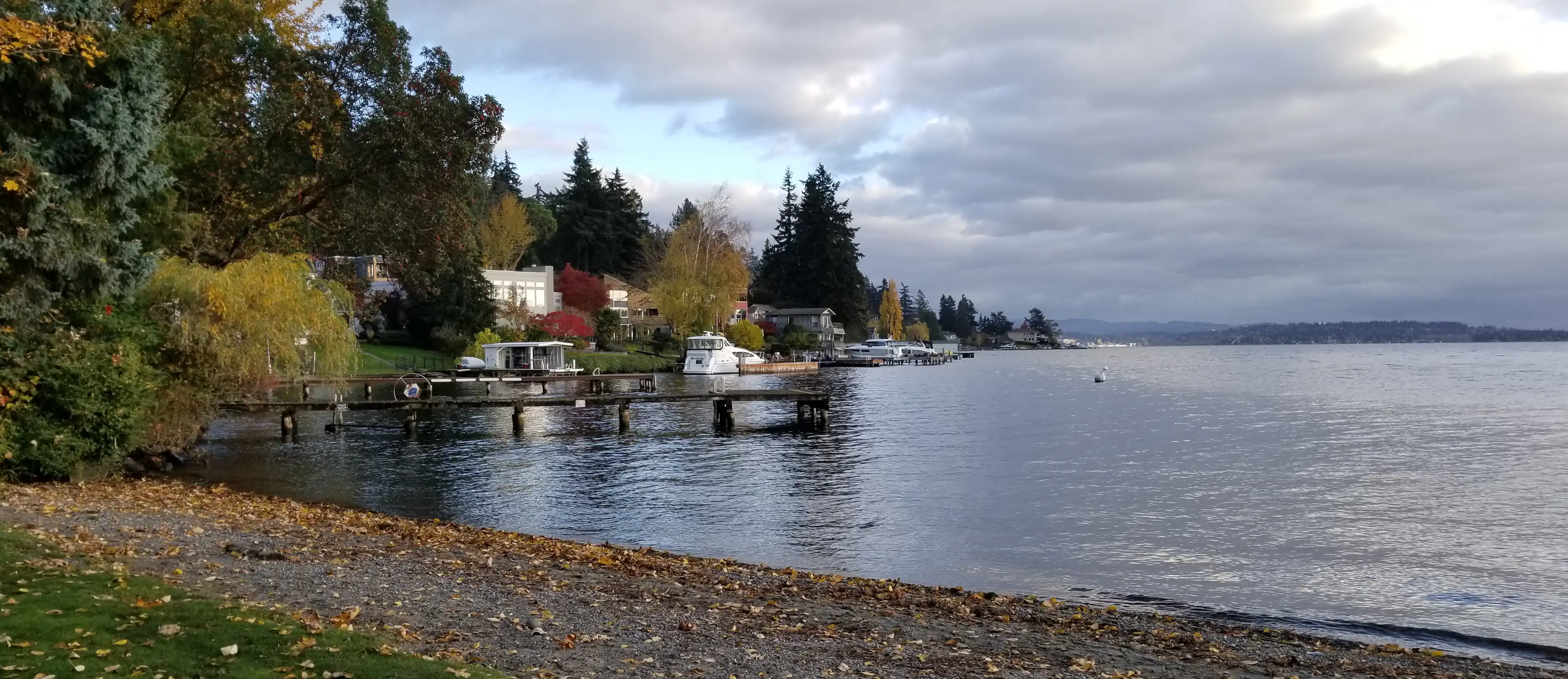
Not everyone reading a 1031 exchange guide is a full-time investor with a portfolio of apartment buildings. Many of the people landing on this page are California homeowners who spent 20 years watching a single-family home appreciate to $1.8 million and are now sitting on a taxable gain that would hurt. They want to redeploy those proceeds into a market that is landlord-friendlier, lower-priced, and still positioned for long-term appreciation. Kirkland, Washington checks those boxes — a city of nearly 97,000 on the eastern shore of Lake Washington, anchored by Google, Microsoft, EvergreenHealth, and a tenant pool of tech professionals who pay rent reliably and stay.
Rental demand here is durable for reasons that have nothing to do with hype. Kirkland sits 25 minutes from Seattle and even closer to the Eastside tech corridor, making it a natural landing spot for employees who can't afford — or don't want — Bellevue pricing. Roughly 38% of Kirkland households are renter-occupied, and vacancy rates consistently track well below the national average. The property types that trade most often as investment vehicles are single-family rentals, small multifamily (duplex through fourplex), and a modest condo inventory that appeals to individual investors looking for lower management overhead.
This guide covers the mechanics of a 1031 exchange, what the Kirkland investment market actually looks like in 2026, the specific tax advantages of buying in Washington versus holding California real estate, the property management reality for out-of-state owners, and a due diligence checklist built for investors working a 45-day identification clock. If you're serious about Kirkland as a replacement property market, read it before you talk to a broker.

The core mechanic is straightforward: sell a qualifying investment property, and instead of paying capital gains tax on the proceeds, roll those proceeds into a like-kind replacement property. "Like-kind" is broader than most people assume — it means real property for real property. A bare land parcel can become an apartment building. A California rental house can become a Washington commercial property. What matters is that both properties are held for investment or business use, not personal residence.
The timeline is where investors get into trouble. From the day you close on the sale of your relinquished property, you have exactly 45 days to identify replacement properties in writing to your qualified intermediary. You can name up to three properties without restriction, or more under the 200% rule, but the identification must be in writing and delivered on time — no extensions, no grace periods. The closing on your replacement property must happen within 180 days of the sale of the relinquished property, or by your tax filing deadline for that year, whichever comes first.
A qualified intermediary is not optional — the IRS requires one. You cannot touch the sale proceeds. If the funds pass through your hands at any point, the exchange is disqualified. The intermediary holds the proceeds in an escrow-like account and releases them to the closing of your replacement property. One more trap worth knowing: if the replacement property costs less than what you sold, the difference — called "boot" — becomes taxable in the year of the exchange. Buying equal or up in value is the clean play. Washington adds one wrinkle specific to this state: a Real Estate Excise Tax affidavit is required at each transfer in the exchange, and the REET itself is not deferred by the 1031 structure — it is due at closing regardless.
The first thing out-of-state investors need to recalibrate is their expectation of cash flow. Kirkland is an appreciation market. With a median sold price ranging from approximately $1,230,000 to $1,450,000 depending on property type and location — and single-family rentals typically grossing $3,500 to $4,500 per month — gross cap rates on SFR investment here run in the 2.5% to 3.5% range. That number surprises buyers coming from secondary California markets where cap rates on similar residential assets run higher. The trade here is not monthly cash flow — it's long-term equity growth in a supply-constrained, tech-employment-anchored market where Kirkland's appreciation rate outpaces more than 80% of other Washington cities.
Small multifamily is the most sought-after investment category and the hardest to find. As of mid-2026, only a handful of duplex-through-fourplex properties are active on the market, with asking prices ranging from roughly $1.25 million to nearly $3 million. That thin inventory means 1031 buyers on a 45-day clock face a real risk of running out of time before an acceptable property comes available. This is exactly where a reverse exchange structure — acquiring the replacement property before selling the relinquished property — becomes worth the added complexity and cost.
| Property Type | Typical Price Range | Est. Cap Rate | Avg Days to Close |
|---|---|---|---|
| Single-Family Rental | $1,230,000–$1,800,000 | 2.5%–3.5% | 21–30 days |
| Duplex / Triplex | $1,250,000–$2,200,000 | 3.0%–4.0% | 25–35 days |
| Small Multifamily (4–10 units) | $2,200,000–$3,500,000 | 3.5%–5.0% | 30–45 days |
| Condo / Townhome (investor) | $600,000–$950,000 | 2.5%–3.5% | 20–30 days |

A Bay Area homeowner selling a San Jose or Fremont property in the $1.6 million to $2.2 million range can often buy a Kirkland duplex outright — debt-free — and still have proceeds left to identify a second replacement property within the three-property rule. The price gap that feels abstract on paper becomes concrete at the closing table: a duplex that would cost $2.8 million in Palo Alto trades for $1.4 million in Kirkland with comparable tech-tenant demand and a dramatically lower basis for ongoing property tax.
Los Angeles and Orange County investors are often trading out of SFR rentals that appreciated from $400,000 purchase prices into $1.3 to $1.8 million assets generating cap rates well under 3%. Kirkland isn't a dramatic cap rate improvement, but the underlying economics are different — lower property taxes, no state income tax on rental income, and a tenant base with strong employment anchors. The transition from California landlord-tenant law to Washington's framework is also a meaningful quality-of-life improvement for many landlords.
Investors from Sacramento, Riverside, and the broader Inland Empire are often working with smaller exchange proceeds — $600,000 to $1.1 million in equity — and Kirkland's condo and townhome inventory is the most accessible entry point. A well-located two-bedroom condo in the Totem Lake corridor or near the Google campus can be acquired in the $650,000 to $900,000 range and rented to young tech professionals at $2,700 to $3,200 per month. It's not a cash flow windfall, but it's a stable, professionally tenanted asset with strong underlying demand.
The most immediate advantage is the one that compounds every year you hold the property: Washington has no state income tax. Every dollar of net rental income you collect stays in your pocket rather than being split with Sacramento at rates up to 13.3%. For a California investor netting $30,000 annually from a rental property, that's roughly $4,000 per year that no longer goes to the state — and it's not a deduction, it's simply gone from the tax calculation.
| Tax Item | California | Washington |
|---|---|---|
| State income tax on rental income | Up to 13.3% | None |
| Property tax rate (new purchase) | ~1.1%–1.2% (Prop 13 resets on sale) | ~0.82% (King County) |
| Sales tax on materials/rehab | ~7.25%–10.5% | 6.5% + local (typically ~10%) |
| Long-term capital gains (state) | Up to 13.3% | 7% on gains over $262,000/year |
| Rental income: local gross receipts tax | None statewide | None statewide |
Washington does assess sales tax on materials and furnishings for a rental rehab, typically running around 10% combined state and local. Factor that into any renovation budget. On the depreciation side, a 1031 exchange carries over your existing depreciation basis rather than stepping it up — the deferred tax liability stays embedded in the replacement property until you eventually sell outside of a 1031 or pass it to heirs at a stepped-up basis. For investors who want the tax benefits of real estate without the management burden, a Delaware Statutory Trust structured as a fractional real estate vehicle can satisfy a 1031 identification requirement while keeping the investor completely passive — worth discussing with a qualified intermediary if you're exchanging a large gain and have no appetite for landlord responsibilities.

When investors are executing a 1031 exchange in Kirkland, location within the city really does shape long-term appreciation and rental demand. Properties in Downtown Kirkland and Moss Bay consistently attract tenants willing to pay premium rents because of walkability, waterfront access, and the overall lifestyle those areas offer. Totem Lake has also drawn serious investor attention lately as redevelopment continues to change the character of that corridor. Well-priced investment properties in desirable pockets — even those listed under $750,000 — routinely see multiple offers within days, so timing your identification window carefully against market pace is genuinely important.
Before you start touring replacement properties, please talk with a lender first. A 1031 exchange already runs on tight deadlines, and the last thing you want is to identify the right duplex in Juanita and then discover the full monthly payment — loan principal and interest, property taxes, insurance, and any HOA dues — stretches you past a comfortable operating margin. Max approval and comfortable approval are two very different numbers for an investment property. Knowing your real budget before the clock starts keeps the whole exchange from becoming unnecessarily stressful
Washington's landlord-tenant code is balanced but substantive, and it has evolved in recent years. As of 2026, there is no statewide rent control, though proposals surface periodically at the legislative level. Notice requirements for lease terminations, rent increases, and entry have become more structured — landlords who manage remotely without a local property manager and without staying current on the code run into compliance problems that are expensive to fix after the fact. The single most common mistake out-of-state owners make is treating Washington like Texas or Florida, where landlord flexibility is broader.
Typical professional property management fees in the Kirkland market run 8% to 10% of gross monthly rent. For a single-family rental generating $4,000 per month, that's $320 to $400 monthly — a real cost, but one that typically pays for itself in reduced vacancy and avoided legal exposure. Local management companies that have established reputations in the Kirkland and broader Eastside market include Orsini Property Management and Renters Warehouse, among others with coverage in King County. Verify current availability and coverage areas before signing a management agreement.
Vacancy in Kirkland has historically tracked below the statewide average of 3% to 5%, and well below the national figure. The tenant pool is deep — tech workers, healthcare professionals from EvergreenHealth, educators from Lake Washington School District — and turnover tends to be lower than in college-town or transient markets. What out-of-state owners consistently underestimate is how quickly a vacant unit in this market can be re-tenanted when priced correctly, and how badly a poorly maintained unit in a $1.3 million SFR damages both your tenant quality and your property value when it sits dark for 60 days.
| Item | What to Verify | Local Resource |
|---|---|---|
| Title search | Clean title, no undisclosed liens or encumbrances | Washington-licensed title company (e.g., Pacific Northwest Title) |
| Sewer/septic status | Connected to City of Kirkland sewer or private septic | City of Kirkland Public Works |
| Flood zone status | FEMA flood map check — especially near Lake Washington corridors | FEMA Flood Map Service Center |
| Rental permit requirements | City of Kirkland business license; no current rental registration program, but verify | City of Kirkland Business Licensing |
| HOA restrictions on rentals | Some communities prohibit or cap rental units — verify CC&Rs | HOA documents via listing disclosure |
| ADU / DADU potential | Washington has strong statewide ADU allowances — verify lot size and zoning | City of Kirkland Planning Department |
| School district boundary | Confirm Lake Washington School District assignment — affects tenant pool | LWSD boundary maps |
| Current lease status | Month-to-month vs. fixed-term, any rent concessions in place | Request via seller disclosure |
| Deferred maintenance inspection | Full inspection with sewer scope — many 1960s–1980s homes have aging laterals | Licensed Washington home inspector |
| Zoning for intended use | Confirm residential zoning classification supports investor use type | City of Kirkland GIS portal |
| Short-term rental ordinance | Kirkland has STR registration requirements — verify current rules if Airbnb is the plan | City of Kirkland Code Compliance |
| Property management referral | Confirm management company covers this zip code before closing | Interview minimum 2 local firms |
| REET affidavit requirement | Washington-specific 1031 requirement — each exchange leg triggers a REET filing | Washington State DOR; your QI |
| Qualified intermediary in place | Must be engaged before close of relinquished property | Use a WA-experienced QI, not national-only |
| Insurance quote | Obtain a landlord policy quote before closing — factor into NOI | Local independent insurance broker |
Local Expert Takeaway: The most common mistake California investors make when buying into the Kirkland market is sizing the deal based on Bay Area cap rate expectations — then walking away from strong appreciation assets because the monthly cash flow looks thin. Kirkland SFRs in Juanita, Houghton, and Rose Hill are not yield vehicles; they are equity compounders in a market where land is constrained, school district quality drives tenant demand, and a 10-year hold has rewarded patient investors far more than the year-one numbers suggest. Identify your replacement property before your 45-day window opens, have a property manager lined up before you close, and treat the Washington cap gains threshold as the floor, not the ceiling — a properly structured reverse exchange can eliminate the timeline pressure entirely.
✅ Kirkland is a long-term appreciation market, not a cash-flow market — gross cap rates on SFR run 2.5% to 3.5%, but the equity case in a supply-constrained tech corridor is strong over a 7-to-10-year hold.
⚠️ The 45-day identification clock is the biggest operational risk in this market — small multifamily inventory is thin, well-priced SFRs move in under three weeks, and out-of-state buyers who start the clock before they've identified targets commonly end up overpaying or missing the window entirely.
📍 Washington's lack of state income tax is not a small benefit — on a $30,000 annual net rental income, the differential versus California's top bracket is real money every single year, compounding across the full hold period before a future 1031 or step-up at death.
Does a 1031 exchange work for out-of-state property?
Yes — a 1031 exchange works regardless of where the relinquished and replacement properties are located, as long as both are held for investment or business use. A California investor can sell a Los Angeles rental and use the proceeds to acquire a Kirkland replacement property with full federal tax deferral. Washington's REET affidavit requirement adds a state-specific filing step at each leg of the exchange, but it does not affect the federal deferral.
What is the cap rate on rental property in Kirkland?
Single-family rentals in Kirkland typically generate gross cap rates in the 2.5% to 3.5% range given median prices in the $1,230,000 to $1,450,000 range and monthly rents of $3,500 to $4,500 for a three-bedroom home. Small multifamily trades slightly better, in the 3.5% to 5.0% range depending on unit mix and condition. Kirkland is an appreciation-driven market — investors expecting cash-flow yields comparable to secondary markets in Texas or the Inland Empire will need to recalibrate.
Do I need a local property manager for a 1031 investment in Washington?
You are not legally required to use one, but out-of-state owners who self-manage in Washington consistently underestimate the complexity of the state's landlord-tenant code and the importance of local market knowledge for pricing and tenant screening. Washington's notice requirements have become more specific in recent years, and compliance failures are costly. For a $1.3 million asset, paying 8% to 10% of gross rent to a qualified local manager is a reasonable operating expense that protects both your tenancy quality and your legal standing.
Explore the full Kirkland series: The Ultimate Kirkland Relocation Guide · Is Kirkland Safe? · Cost of Living in Kirkland · Best Neighborhoods in Kirkland · Kirkland Schools & Family Life · Kirkland Youth Sports · Kirkland Parks & Recreation · Retiring in Kirkland · 1031 Tax-Deferred Exchange in Kirkland · Kirkland First-Time Homebuyers Guide · Kirkland Down Payment Assistance Guide · Moving to Kirkland from California