
Puget Sound · Washington
Moving to Kirkland from California: The Honest Comparison (2026)
The Bay Area software engineer who kept their $210,000 salary, went fully remote, and bought a four-bedroom house with a yard in Kirkland tells a story that spreadsheets can't fully capture. The San Diego family who got through their first Pacific Northwest summer and realized they'd traded wildfire smoke seasons and $600 utility bills for sixty-five-degree evenings on a Lake Washington beach. The Sacramento couple who sold their $680,000 townhome and bought more square footage in a quieter neighborhood — and banked the difference. California-to-Washington migration isn't really about housing costs in isolation. It's about the full equation: what you stop paying, what you start gaining, and whether the trade feels worth it twelve months after the move. Kirkland keeps showing up as the answer for a specific type of California buyer — one who wants proximity to tech employment, access to water, real neighborhood character, and a school district that doesn't require private school as a backup plan.
The hard part deserves naming upfront. Kirkland is not California. The winters are gray in a way that's genuinely difficult to prepare for if you've spent forty years in Southern California or the Central Valley. The food scene, while legitimately good, doesn't have the depth of Los Angeles or the density of the Bay Area. Kirkland moves at a pace that feels deliberately quieter — the social energy is different, the spontaneous outdoor culture of a year-round warm climate simply doesn't translate, and the cultural mix is less varied than most California metros. These aren't dealbreakers. They are things worth knowing before you pack the moving truck.
This guide walks through the full picture: cost comparisons by California region, what different levels of California equity actually buy in Kirkland's market, the tax math that makes Washington compelling, the lifestyle reality from people who've already made this move, and an interactive comparison tool where you can look up your specific California city.

| Kirkland, WA | Bay Area | Southern CA | Sacramento Metro | Central Valley | |
|---|---|---|---|---|---|
| Median Home Price (approx. 2026) | $1,220,000 | $1.18M–$1.63M | $895K–$975K | $520K–$580K | $360K–$420K |
| Property Tax Rate (effective) | ~0.82% | ~1.1–1.2% | ~1.0–1.2% | ~1.0–1.1% | ~1.0–1.1% |
| State Income Tax | None | Up to 13.3% | Up to 13.3% | Up to 13.3% | Up to 13.3% |
| State Sales Tax | 6.5% + local (~10.2% in Kirkland) | 7.25% + local (up to 10.75%) | 7.25% + local (up to 10.75%) | 7.25% + local (~8.75%) | 7.25% + local (~8.75%) |
| Avg Utilities (monthly est.) | $180–$220 | $250–$350 | $280–$400 | $200–$280 | $220–$310 |
| Avg 1BR Rent | $2,100–$2,600 | $3,200–$4,500 | $2,400–$3,200 | $1,600–$2,000 | $1,100–$1,500 |
Sales tax in Kirkland runs approximately 10.2%, which is real. But on most income levels, the sales tax differential doesn't come close to offsetting the income tax advantage — you'd need to spend roughly $150,000 a year on taxable purchases just to break even. For the overwhelming majority of California transplants, the net tax position in Washington is substantially better than what they left behind.
Washington has no state income tax — one of only nine states in the country that can say that. For a California transplant, this is the single most financially significant change in their daily life, and most people underestimate it until they see their first full-year W-2 from their new address.
| Tax Item | California | Washington | Net Impact for Transplant |
|---|---|---|---|
| State Income Tax ($120K earner) | ~$8,400/yr | $0 | +$700/month take-home |
| State Income Tax ($150K earner) | ~$11,800/yr | $0 | +$980/month take-home |
| State Income Tax ($200K earner) | ~$17,200/yr | $0 | +$1,430/month take-home |
| Capital Gains Tax (under $262K/yr LT gains) | Up to 13.3% | $0 | Full exemption for most buyers |
| Capital Gains Tax (over $262K/yr LT gains) | Up to 13.3% | 7% on excess | Significant savings vs. CA |
| Property Tax Rate | ~1.0–1.2% (newly purchased) | ~0.82% | Lower annual bill in WA |
| Sales Tax | Up to 10.75% | ~10.2% (Kirkland) | Roughly comparable |
| Senior Property Tax Exemption | Limited | Yes, for 61+ (income-based) | Meaningful for retirees |
Property taxes in King County run approximately 0.82% of assessed value — notably lower than what California buyers pay on a newly purchased property. A California buyer purchasing a $900,000 home in the Bay Area faces an effective property tax rate close to 1.1–1.2% on that purchase price, because Prop 13 protections only apply if you've held the property for years. In Kirkland, 0.82% on the $1,220,000 median works out to roughly $10,000 annually — a number that feels large until you run the income tax math alongside it.
A buyer leaving San Jose — where the median home price sits above $1.6 million — and arriving in Kirkland with $1.4 million in equity is often in a position to purchase all-cash or carry a mortgage under $200,000. That's not a hypothetical edge case; it's a pattern that Kirkland real estate agents see regularly from the South Bay. At that equity level, the top tier of Kirkland's market opens entirely: the Market neighborhood along the lakefront, where waterfront single-family homes carry medians around $3.5 million, is realistically within reach when combined with strong tech income. More commonly, Bay Area equity buyers are landing in Moss Bay or Central Houghton — where medians run $2.5 million to $2.8 million — carrying modest mortgages and watching their monthly housing cost drop by several thousand dollars even while buying a more impressive property.
For buyers leaving San Francisco proper, the calculus is similarly favorable. San Francisco's median sits around $1.18 million, meaning a long-term homeowner with 60–70% equity is arriving in Kirkland with enough to purchase outright or to put 50–60% down on a downtown Kirkland property. The $1.6 million median in ZIP 98033 — which covers Downtown, Moss Bay, and Houghton — is accessible territory for this buyer without the financial strain that same price point would create for someone without California equity behind them.
A buyer leaving Irvine, Pasadena, or Torrance with $800,000 in equity is arriving in Kirkland's market with enough for a full 20% down payment on a $1.6 million home, or enough to buy at the city-wide median outright with cash to spare. That positions them well across most of Kirkland's ZIP 98033 corridor — Rose Hill, Norkirk, and established Houghton addresses all sit within range. Southern California buyers at the higher end of this equity band — those leaving Newport Beach or Santa Monica with $1.1 million or more — are effectively Bay Area buyers in terms of Kirkland purchasing power, with the waterfront neighborhoods becoming realistic targets.
The income tax advantage hits differently for Southern California buyers than it does for Bay Area sellers. Many SoCal buyers are leaving markets where they were house-rich but cash-flow stressed — the combination of California income taxes, high utility bills, and HOA-heavy condo living had compressed their monthly discretionary income. Arriving in Kirkland with no state income tax, lower property tax rates, and a home that doesn't require a $500/month HOA payment creates a lifestyle shift that surprises people even when they expected it.
Sacramento and Inland Empire buyers face a different math. The median in Sacramento runs around $520,000–$580,000, meaning a long-term owner with substantial equity might arrive with $400,000–$550,000 — enough for a strong down payment but not a cash purchase at Kirkland's price levels. That puts them in the Totem Lake and North Juanita corridor, where ZIP 98034 median sold prices have been running closer to $1 million, and where condos and townhomes in the $750,000–$900,000 range still exist. The monthly savings on income tax — roughly $700 to $980 per month for someone earning $120,000 to $150,000 — materially offset the higher housing cost they're carrying compared to what they left.
The honest version for this buyer group: you are not moving to Kirkland to save money on housing. You are moving to be closer to Seattle-area tech employment, to access Lake Washington School District's A+ schools for your kids, and to trade California's cost-of-living trajectory for Washington's. The financial case is real but it runs through the tax picture and the income side of the ledger, not through the housing price itself.
Central Valley buyers — Fresno, Bakersfield, Stockton — arrive in Kirkland's market with the most modest relative advantage of any California origin. At $300,000–$450,000 in equity, this buyer is putting 25–35% down on a Totem Lake condo or a dated single-family home in the Inglewood-Finn Hill area, where prices run below the city average. The financial case here is almost entirely built on the income tax advantage and career opportunity: if this buyer is moving for a Google, Microsoft, or EvergreenHealth position earning $140,000 or more, the Washington income tax savings alone can represent 10–12% of their gross compensation — a raise without a promotion. The housing premium over what they left is real, but for buyers with employment driving the move, it's typically offset within two to three years of take-home pay improvement.
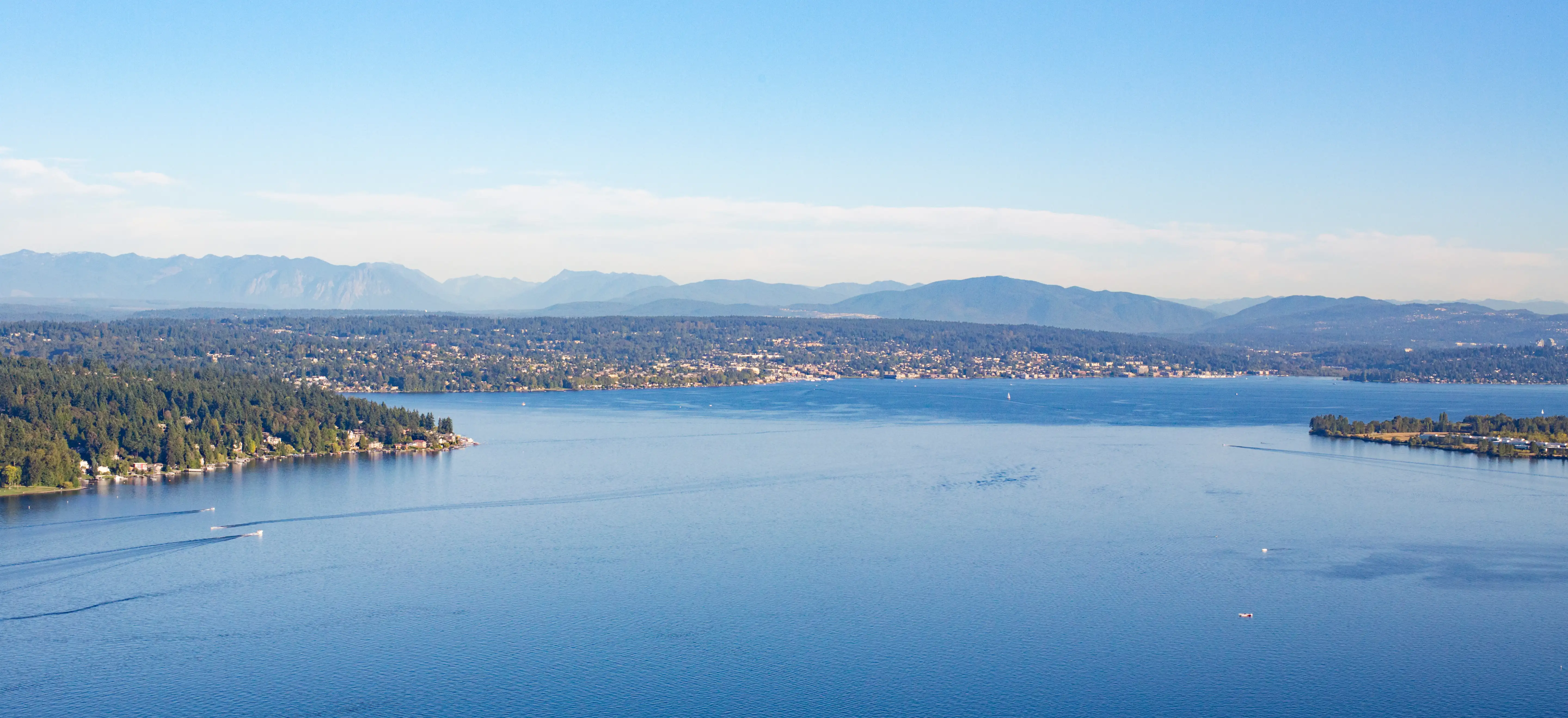
Kirkland averages 153 sunny days per year — about 52 fewer than the national average, and roughly half what San Diego or the Central Valley sees. The rain isn't dramatic in the way Pacific storms make news; it's more of a persistent low-grade gray from October through April that some people adapt to quickly and others never fully reconcile with. Kirkland gets about four inches of snow annually, which is enough to cause real disruption for a week or two each winter but not enough to require the lifestyle recalibration that comes with living in actual snow country. The honest advice from California transplants who've been here three years: buy good rain gear in the first week, build an indoor hobby infrastructure before November, and book a warm-weather trip in February.
The summers genuinely earn their reputation. From late June through September, Kirkland delivers weather that many California transplants describe as better than what they left — low humidity, consistent mid-70s temperatures, long evenings, and a waterfront culture centered on Marina Park, Juanita Beach Park, and the Cross Kirkland Corridor trail. The outdoor social scene in summer is real and well-attended: paddleboarding off the downtown waterfront, the Juanita farmers market on weekends, and evening walks along the lakefront that feel like a reward for surviving winter. People who move here from the Bay Area frequently say the summers exceeded their expectations. People who move from San Diego frequently say they still miss January.
What California transplants consistently miss after twelve months: reliable December sunshine, spontaneous weekend beach days, the density of their home city's restaurant and bar scene, and — most specifically — the social ease of a culture that's been building those networks for decades. Kirkland is friendly but not immediately warm in the way that Southern California social culture tends to be. The community bonds here are real; they form more slowly. What they consistently gain: space, quiet, a genuine sense of neighborhood, schools that don't require supplemental tutoring programs to stay competitive, and a monthly budget that no longer feels like it's fighting the state of California for survival.
If you want to see how Kirkland compares directly to the city you're leaving, use the tool below — it covers the 120 largest California cities with current housing and tax data.
Home prices: Redfin median sale data, Q1–Q2 2026. Select your city to compare.
Ready to talk through what your specific California equity could do in Kirkland? Todd can model your exact scenario in a single call.

Kirkland's neighborhoods aren't created equal from a long-term value standpoint, and that matters when you're relocating from California with equity to deploy strategically. Downtown Kirkland and Moss Bay tend to hold value exceptionally well given their walkability, lake access, and sustained buyer demand — homes priced under $1.2 million in those areas routinely see multiple offers within days of listing. Juanita offers a slightly quieter entry point while still delivering strong appreciation history, and buyers sometimes find more breathing room there. Wherever you're looking, "I'll think about it overnight" rarely works in Kirkland's market.
Before you tour a single home, sit down with a lender and map out your complete monthly obligation — not just principal and interest, but property taxes, homeowner's insurance, any HOA dues, and how your loan structure affects the full picture. California transplants are sometimes surprised that maximum approval and comfortable budget are very different numbers. Getting pre-underwritten before you fall in love with a home means you can move with confidence when the right property appears, and in Kirkland, that window can close faster than most buyers expect.
Mistake 1: Treating Kirkland as a uniform market. The difference between a home in the Market neighborhood on the lakefront and a home in Totem Lake isn't just price — it's an entirely different daily life. Buyers who search "Kirkland, WA homes for sale" and sort by price see a $3.5 million waterfront property and a $950,000 Totem Lake condo in the same results and assume the city is coherent. It isn't. ZIP 98033 (Downtown, Moss Bay, Houghton, Rose Hill) and ZIP 98034 (Juanita, Totem Lake, Finn Hill, North Juanita) are genuinely different communities in terms of walkability, commute patterns, and daily life. Buying without understanding this distinction is one of the most common errors California buyers make in their first Kirkland search.
Mistake 2: Underestimating the income tax impact on monthly cash flow. Most California buyers intellectually understand that Washington has no income tax before they move. Almost none of them have actually recalculated their monthly budget to reflect it. A buyer earning $180,000 who was paying California state income tax is seeing something in the range of $1,100–$1,300 per month added to their take-home pay the first full year in Washington. That's a material mortgage payment in itself. Buyers who run their Kirkland purchase analysis without internalizing this number consistently conclude the move is tighter than it actually is.
Mistake 3: Expecting California-style year-round commute predictability. SR-520 across Lake Washington and I-405 through the Eastside corridor behave differently in October through March than they do in summer. Winter weather events — even modest ones — create gridlock on routes that seem straightforward on a July visit. The 25-minute commute to Seattle from Kirkland is real in the right conditions. It's also a 55-minute commute if you're on 520 westbound on a wet Tuesday morning in November and there's an accident near the Montlake interchange. California transplants who haven't experienced Seattle-area winter traffic patterns routinely underestimate this.
Mistake 4: Assuming they'll replicate their California social infrastructure quickly. This is the least financial and most human mistake. California buyers who move to Kirkland with an existing network — colleagues at Microsoft or Google, a church community, kids in the same school — settle in relatively quickly. Those who arrive without a social anchor and expect the city to provide one the way a dense urban California neighborhood might are often surprised by how long the adjustment period takes. Kirkland is genuinely welcoming, but the social culture here builds through proximity and repetition — youth sports leagues, neighborhood associations, regular spots along the waterfront — rather than through the spontaneous density that defines most California urban cores.
Bay Area sellers with substantial equity frequently arrive in Kirkland's market as cash buyers or near-cash buyers, and the strategic question shifts from qualification to speed and terms. An all-cash offer in Kirkland's competitive waterfront and near-waterfront neighborhoods closes faster and cleaner than a financed offer at the same price — sellers respond to certainty. Buyers with enough equity to pay cash but who prefer to preserve liquidity have a strong alternative in a short-term bridge structure or a delayed-finance refinance after closing. If the California property was an investment or rental, a 1031 exchange into Kirkland real estate is worth exploring early — the 1031 exchange guide for Kirkland covers the mechanics and timeline requirements in detail.
Southern California sellers with $700,000 to $1.1 million in equity typically land in conventional jumbo territory for Kirkland purchases. The conforming loan limit in King County for 2026 sits above $977,000, meaning most Kirkland purchases above that threshold require jumbo financing — but buyers with 20–30% down and strong tech-sector income histories are well-positioned with most lenders. The rate environment in this loan category rewards buyers who can document W-2 income clearly; remote workers with California employers and Washington addresses should confirm their employment documentation strategy with a lender before shopping.
Sacramento and Inland Empire buyers arriving with $400,000–$550,000 in equity may find that certain entry-level Kirkland properties — particularly condos and townhomes in the Totem Lake corridor priced under $800,000 — qualify for Washington State Housing Finance Commission programs including Home Advantage, which offers below-market rate financing and down payment assistance for eligible buyers. Income limits apply, and qualifying price points in Kirkland are near the top of program thresholds, but for buyers at the lower end of the California equity spectrum it's worth a conversation with a Washington-licensed lender before assuming the conventional jumbo path is the only option.

Local Expert Takeaway: The number that California buyers consistently fail to internalize before making an offer in Kirkland is the monthly income tax delta. A dual-income household earning $240,000 combined that was paying California state income tax is gaining roughly $1,800–$2,000 per month in take-home pay the moment they establish Washington residency. That figure changes which mortgage payment is genuinely comfortable — and it means buyers who run their Kirkland budget against their California take-home numbers are almost always underestimating what they can actually afford here. Run the Washington take-home calculation first, then look at the homes.
✅ Washington's no-income-tax advantage is worth $8,000–$25,000+ annually for most California transplant households — the single most underestimated financial shift in the move.
⚠️ Kirkland is not a uniform market — the difference between the waterfront Market neighborhood ($3.5M median SFH) and the Totem Lake corridor (~$1M median) is significant, and buying without understanding the city's geographic character is one of the most common California buyer mistakes.
📍 Summers on Lake Washington genuinely exceed what most transplants expected; winters require intentional planning that most California residents are not prepared for on arrival.
Is moving from California to Kirkland worth it?
For most California transplants with tech-sector income or substantial home equity, the answer after two years in Kirkland is yes — but the reasons are more specific than "it's cheaper." The income tax elimination, the school district quality, and the genuine outdoor culture in summer collectively create a quality-of-life package that a pure housing cost comparison doesn't capture. The buyers who regret the move most often are those who underestimated the winter adjustment or arrived without a social foundation.
How much cheaper is housing in Kirkland vs. California?
Compared to San Jose and San Francisco, Kirkland is modestly less expensive at the median — the city-wide median sits at $1,220,000, compared to San Jose's $1.6 million and San Francisco's $1.18 million. Compared to Los Angeles ($975K median) and San Diego ($895K median), Kirkland is actually more expensive on a pure headline number. The financial case for the move runs primarily through the income tax picture and the equity-unlocking math for long-term California homeowners, not through a raw price comparison.
What do I need to know about moving from California to Washington?
Establishing Washington residency requires updating your driver's license and vehicle registration within 30 days of moving, and it's the trigger for ending your California tax obligation. Washington has no state income tax but levies sales tax around 10.2% in Kirkland. The state's capital gains tax applies only to long-term gains over $262,000 in a single year — a threshold that doesn't affect most buyers' earned income. Climate adjustment is real: build an indoor social life before your first November and plan a warm-weather trip in February.
Explore the full Kirkland series: The Ultimate Kirkland Relocation Guide · Is Kirkland Safe? · Cost of Living in Kirkland · Best Neighborhoods in Kirkland · Kirkland Schools & Family Life · Kirkland Youth Sports · Kirkland Parks & Recreation · Retiring in Kirkland · 1031 Tax-Deferred Exchange in Kirkland · Kirkland First-Time Homebuyers Guide · Kirkland Down Payment Assistance Guide · Moving to Kirkland from California