
Puget Sound · Washington
Best Neighborhoods in Lacey: Where to Buy or Rent (2026)
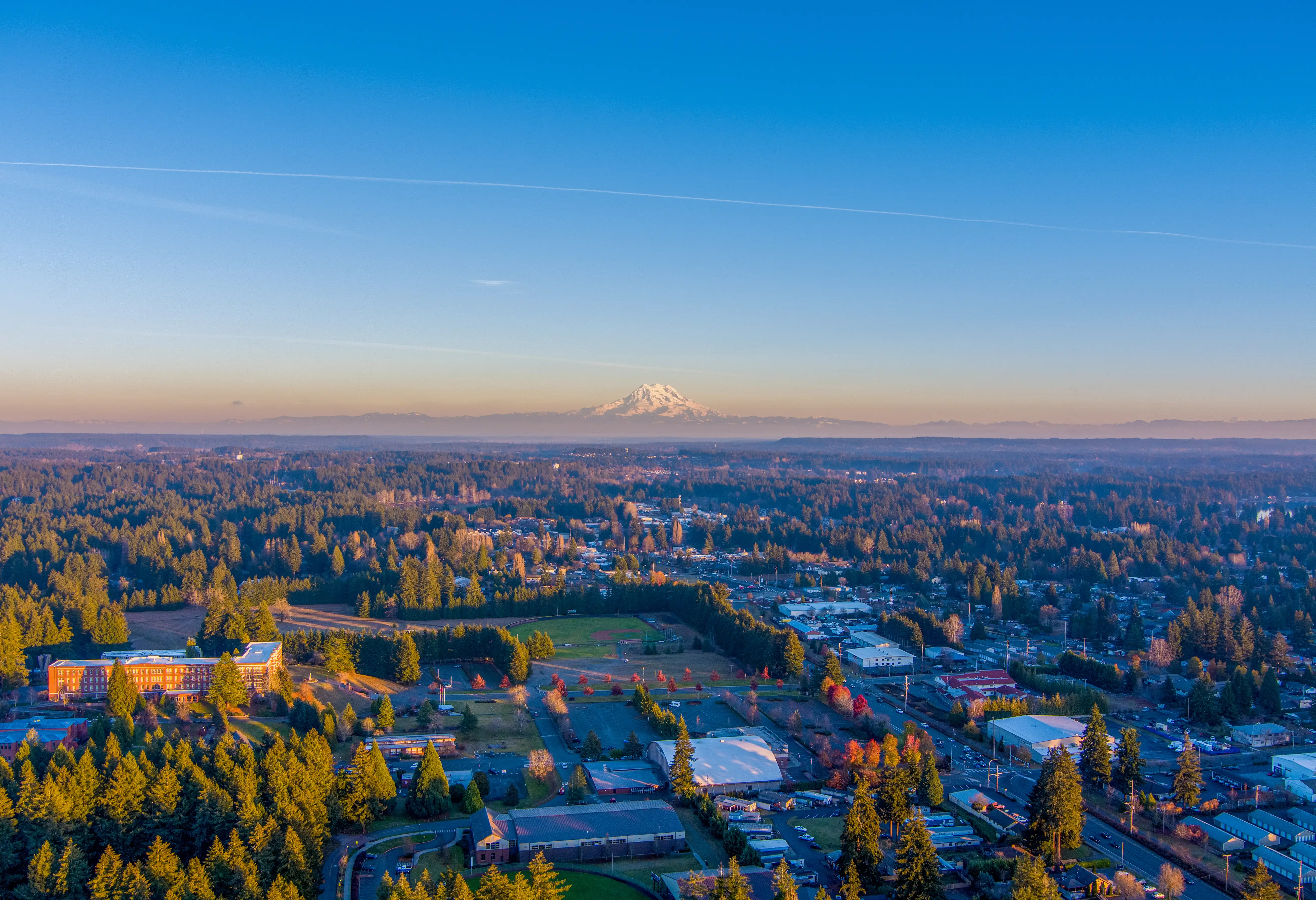
Choosing the wrong neighborhood in Lacey is easier than it sounds. The city spans more than 16 square miles, and the difference between a quiet cul-de-sac near a golf course and a busy apartment complex beside the I-5 interchange can come down to a single street. With a citywide median home price right around $516,000, buyers often assume Lacey is relatively uniform — same price band, same suburban feel throughout. It isn't.
The clearest geographic divide runs roughly along Martin Way and the I-5 corridor. North Lacey — anchored by Hawks Prairie, Meridian Campus, and Edgewater — is newer, faster-growing, and increasingly commercial. South and central Lacey holds older established neighborhoods with more tree cover, larger lots, and a quieter day-to-day rhythm. Neither side is strictly better, but buying in the wrong one for your lifestyle is one of the most common relocation missteps in this market.
This guide breaks down exactly where buyers and renters should be looking in 2026 — by price point, lifestyle, and what you're actually willing to trade off to get there.
| Neighborhood | Best For | Price Range | Vibe |
|---|---|---|---|
| Hawks Prairie | Families, commuters to JBLM | $400,000–$650,000 | Master-planned, commercial-adjacent, growing fast |
| Indian Summer | Golf-course living, move-up buyers | $770,000–$850,000+ | Upscale, established, country club feel |
| Meridian Campus | NE Lacey buyers, wildlife access | $450,000–$700,000 | Suburban-modern, quiet, near Nisqually Refuge |
| Edgewater | Low-maintenance homeowners | $450,000–$560,000 | Craftsman-style, safe, compact lots |
| Woodland Creek | Families wanting trails and parks | $480,000–$580,000 | Park-centric, walkable, mature landscaping |
| Tanglewilde | Affordable entry-level SFH | $380,000–$480,000 | Older stock, established, close-in location |
| Central Lacey | Renters and first-time buyers | $340,000–$480,000 | Mixed-use, transit-accessible, walkable core |
| The Lakes | Waterfront and nature seekers | $500,000–$700,000+ | Scenic, quieter, lake-adjacent |
| Campus Highlands | Budget-conscious families | $400,000–$520,000 | Near Saint Martin's University, lower density |
| Pleasant Glade | Large lots, rural feel | $440,000–$600,000 | Spacious, semi-rural edges, wooded pockets |
| Buyer Type | Best Neighborhood | Why |
|---|---|---|
| First-time buyer | Tanglewilde / Central Lacey | Most affordable entry points in the city; older but solid housing stock |
| Luxury buyer | Indian Summer | Golf-course homes, premium finishes, established prestige neighborhood |
| Walkability seeker | Central Lacey | Closest to transit, Martin Way commercial, on-foot daily errands possible |
| Families with kids | Hawks Prairie / Woodland Creek | Newer schools, trail access, parks, family-oriented street layout |
| Commuters to JBLM | Hawks Prairie / Meridian Campus | Fastest I-5 on-ramp access; 10–20 minutes to main gate |
| Large lot buyers | Pleasant Glade / The Lakes | Most likely to find half-acre+ lots within Lacey's footprint |
| Renters | Central Lacey / Hawks Prairie | Highest apartment inventory; best mix of price points and amenities |
Hawks Prairie is the commercial and residential engine of north Lacey, built almost entirely within the last 25 years in a master-planned format that delivers Craftsman-style homes, consistent streetscaping, and an almost overwhelming density of retail within a short drive. The Golf Club at Hawks Prairie anchors the area's recreational identity, and the proximity to Costco, Cabela's, WinCo, and Safeway along Pacific Avenue means daily errands never require leaving the neighborhood ecosystem. The catch is that same density — Martin Way and Pacific Avenue corridors carry real traffic load during morning and evening peaks, and buyers hoping for a quiet suburban feel can find the commercial adjacency harder to ignore than the listing photos suggest.
Best for: Families with kids, JBLM commuters, buyers who want amenity density within a few minutes of home.
Sitting between Hawks Prairie and the Billy Frank Jr. Nisqually National Wildlife Refuge, Meridian Campus offers a noticeably quieter suburban texture than its northern neighbor — two-story homes on slightly larger lots, less commercial intrusion, and a CAP Index crime score that registers well below the national average. Median sale prices over the last twelve months have settled around $564,000, with upper-end homes near the golf corridor reaching toward $700,000. The catch is that Meridian Campus sits far enough northeast that south Lacey and Olympia errands add meaningful drive time.
Best for: Buyers prioritizing low crime, nature access, and newer construction without the traffic of Hawks Prairie's core commercial strip.
Indian Summer is Lacey's premium address, built around an 18-hole golf course designed by Peter Thompson and developed through the mid-1990s into a neighborhood of 2,000–3,000 square foot homes, many backing directly onto the fairways. Average household incomes here run close to $120,000, homeownership tops 83%, and the Indian Summer Golf & Country Club gives residents access to tennis, a fitness center, and a pool that most Lacey neighborhoods simply don't offer. Median sale prices have climbed to around $770,000 — up roughly 6% year-over-year — making this the steepest entry point in the city and one where buyers need to move with conviction when the right home surfaces.
Best for: Move-up buyers, golf enthusiasts, households seeking a true country club neighborhood within Lacey's footprint.
Edgewater is one of Lacey's most consistently safe neighborhoods — a crime score that registers near the floor of the city's index — built out in the early 2000s with Craftsman-style homes on compact, zero-lot-line parcels that keep exterior maintenance minimal. Median sale prices have come in around $497,000 over the last twelve months, making it one of the more accessible established neighborhoods in the northern part of the city. What buyers give up is yard space: the reduced lot sizes mean outdoor living areas are noticeably smaller than what you'd find in Tanglewilde or Pleasant Glade, and that trade-off frustrates buyers who discover it after moving in rather than before.
Best for: Homeowners who want safety, low maintenance, and a walkable suburban street feel without the premium of Indian Summer.
Woodland Creek is organized around the Woodland Creek Community Park, one of Lacey's largest and most-used community spaces, and the neighborhood's layout reflects that orientation — streets angle toward trail access, and the mature landscaping gives it a finished, settled character that newer planned developments lack. Prices typically run between $480,000 and $580,000 for single-family homes, landing comfortably near the citywide median. The one consistent friction point for commuters is that Woodland Creek's internal street network feeds back to a limited number of arterial exits, which can add minutes during peak traffic windows on Lacey Boulevard and College Street.
Best for: Families with school-age children who want park-adjacent living and a neighborhood that feels established rather than newly built.
Tanglewilde is where buyers who've been outbid elsewhere in Lacey eventually land — and more often than not, they're glad they did. Older housing stock from the 1970s and 1980s keeps entry prices in the $380,000–$480,000 range, genuinely the most affordable single-family corridor in the city for buyers seeking detached homes. The neighborhood is close-in, with easy access to Martin Way and the central Lacey commercial zone, but the age of the homes means buyers should budget for updates: older roofs, original windows, and dated kitchens are common realities that inspections surface quickly.
Best for: First-time buyers, investors seeking established neighborhoods with upside from renovation, and households prioritizing price over finishes.
Central Lacey functions as the city's most walkable and transit-accessible zone, organized around Martin Way East and the commercial corridor that connects Lacey to Olympia's eastern edge. Housing here spans a wide range — older single-family homes, townhomes around $390,000, and condos in the $320,000 range — making it the most accessible price point for buyers entering the Lacey market without significant equity from a previous home. The honest limitation is that Central Lacey carries more urban friction than the planned developments north of town: busier arterials, older apartment stock, and a mix of commercial and residential uses that creates noise and activity that some buyers underestimate until they're living with it daily.
Best for: First-time buyers, renters transitioning to ownership, and households who need walkable access to transit and daily services.
The Lakes neighborhood delivers the closest thing to waterfront living that Lacey offers within city limits, with homes positioned near Long Lake and the quieter southern edges of the city's developed footprint. Prices run from roughly $500,000 into the low $700,000s depending on lot position and lake access, and the homes here tend to sit on larger parcels than anything available in the northern master-planned developments. The downside for commuters is real: reaching I-5 from The Lakes adds meaningful time compared to Hawks Prairie or Meridian Campus, and the southern Lacey arterial network can stack up during peak hours.
Best for: Nature-oriented buyers, households seeking larger lots and lake adjacency, and buyers who can tolerate a slightly longer commute window.
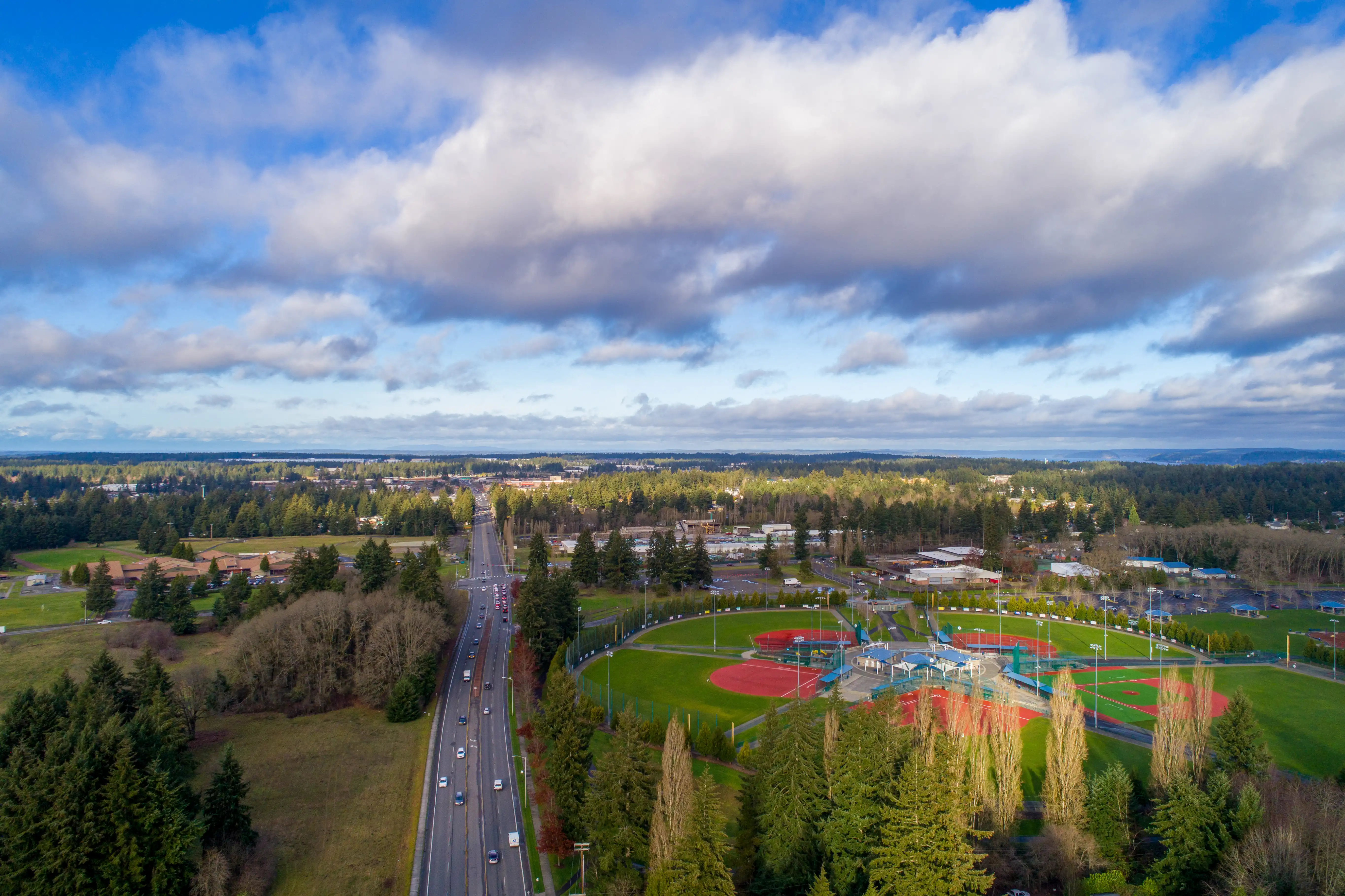
Assuming north Lacey and south Lacey are the same market. They aren't. The neighborhoods clustered around Hawks Prairie and Pacific Avenue deliver newer construction, more commercial density, and faster I-5 access — but they carry more traffic and a less settled neighborhood feel. Buyers who tour a Hawks Prairie listing in the morning and compare it to a Tanglewilde home on the same afternoon often feel like they're evaluating two different cities. Understanding which side of Martin Way you actually want to live on is a decision that should happen before offers, not after move-in.
Underestimating the Pacific Avenue / Marvin Road interchange during peak hours. Buyers who commute to Joint Base Lewis-McChord learn quickly that northbound I-5 from the Hawks Prairie on-ramps between 6:30 and 8:00 a.m. is a different road than the one they drove during their weekend house tours. That 10–20 minute drive to JBLM's main gate is accurate during off-peak hours. During weekday morning rush, add 15 to 20 minutes, particularly if your home feeds through the Marvin Road intersection.
Buying for square footage without checking lot size. Edgewater and parts of Hawks Prairie offer some of the best price-per-square-foot figures in Lacey — but the zero-lot-line configurations mean your side yard may be measured in feet, not in meaningful usable space. Buyers who discover this after closing, after they've already planted the mental image of a backyard for kids or dogs, tend to be the most frustrated. Always walk the property perimeter, not just the interior.
Overlooking school boundary lines. North Thurston Public Schools operates multiple elementary campuses across the city, and Lacey's neighborhood boundaries don't always align neatly with school attendance zones. A home on one side of a particular street may feed into a B+ rated elementary while the home across from it falls in a different catchment. If school assignment matters to your family, verify the specific attendance zone with the district before you're in contract.

Lacey has some genuinely strong neighborhoods for long-term value, and where you buy within the city matters more than people often realize. Hawks Prairie has seen consistent demand because of its proximity to major employers and easy freeway access, and well-priced homes there rarely sit long — sometimes just days. Lake Forest and Horizon Pointe attract buyers looking for established communities with good schools nearby, and that steady interest tends to support resale value over time. If your budget is under $650,000, you'll have options in these areas, but you'll want to move with intention rather than hesitation.
That's exactly why I always encourage buyers to connect with a lender before they start touring homes. Your pre-approval number is a ceiling, not a target — and once you layer in property taxes, homeowner's insurance, any HOA dues, and the loan structure itself, your comfortable monthly reality can look quite different from what the listing price suggests. Knowing that full picture ahead of time means you can make a confident offer when the right home in Hawks Prairie or Lake Forest comes along, rather than scrambling to catch up.
| Area | Ideal For | Typical Rent Range | Trade-off |
|---|---|---|---|
| Hawks Prairie | JBLM personnel, families | $1,600–$2,100/mo | Higher rents, traffic on Pacific Ave |
| Central Lacey (Martin Way) | Budget renters, transit users | $1,200–$1,700/mo | Older stock, busier corridor |
| Woodland Creek / College St | Families wanting park access | $1,500–$1,900/mo | Limited inventory, low vacancy |
| Meridian Campus area | Professionals, quiet seekers | $1,700–$2,100/mo | Fewer rental units, may require waitlist |
| South Lacey / Tumwater border | Affordable alternatives | $1,100–$1,600/mo | Farther from north Lacey amenities |
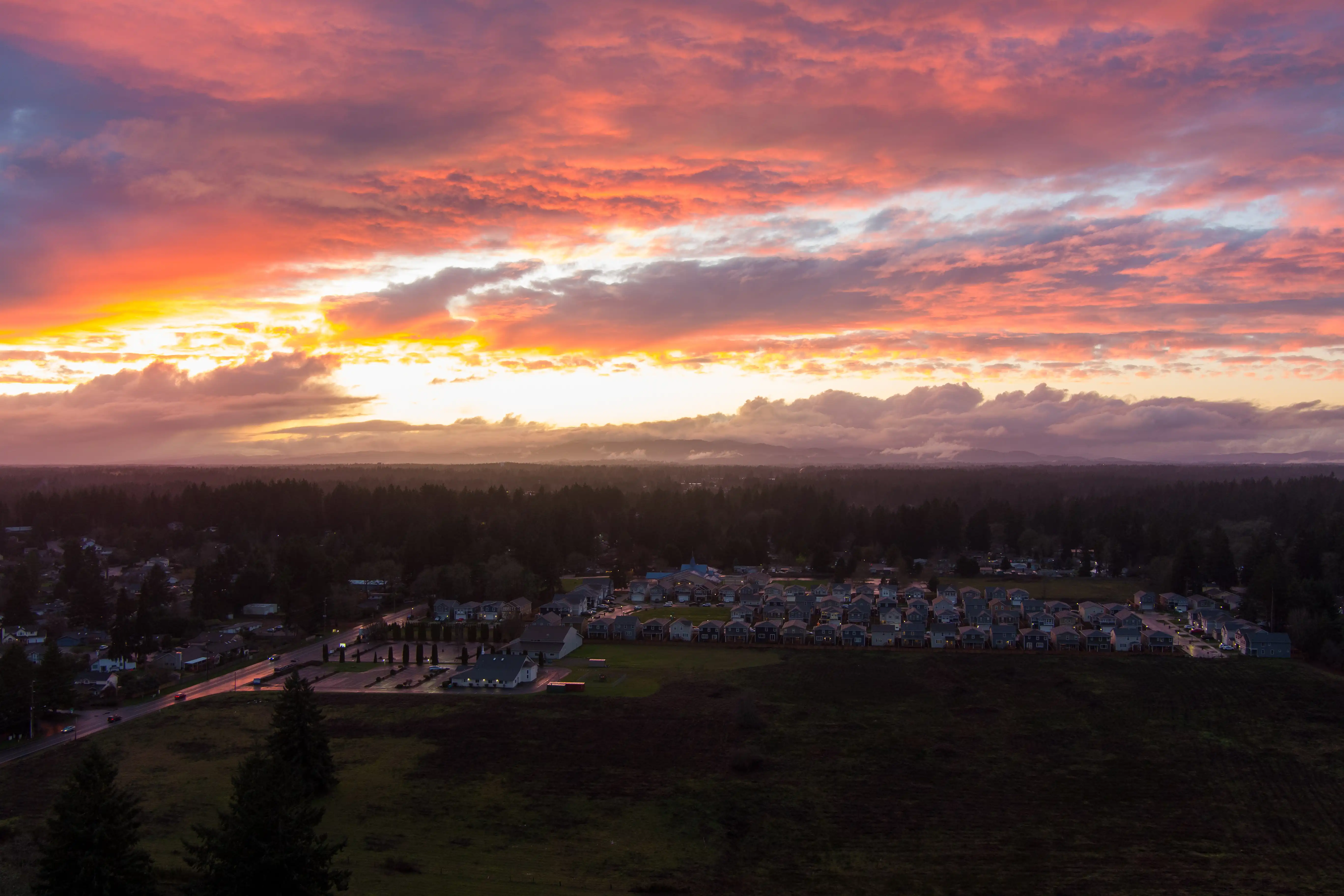
Local Expert Takeaway: If you're buying in Lacey in 2026 and you haven't yet decided between Hawks Prairie and one of the more established neighborhoods south of Martin Way, drive both at 7:30 a.m. on a Tuesday — not on a Saturday afternoon. The northern corridor's commercial density is a genuine asset for daily convenience, but it comes with traffic and noise patterns that don't show up during weekend tours. Indian Summer remains the city's clearest value at the $770,000–$850,000 level if you're comparing against equivalent golf-course communities anywhere else in the South Sound. And if your budget anchors near $450,000, Edgewater's safety profile and lower maintenance burden make it one of the most overlooked smart buys in this city right now.
Looking to buy in Lacey? Estimate your payment.
Enter your numbers to see an estimated monthly mortgage payment.
Estimate only. Excludes HOA fees and mortgage insurance.
What is the most affordable neighborhood in Lacey to buy a home?
Tanglewilde offers Lacey's most accessible single-family home prices, typically ranging from $380,000 to $480,000. Central Lacey is similarly affordable, with condos in the $320,000 range and townhomes around $390,000 — both options well below the citywide median.
Is Lacey a good place for families?
Yes — Lacey consistently ranks among the safer cities in Washington, with a violent crime rate of 2 per 1,000 residents, and neighborhoods like Woodland Creek and Hawks Prairie offer strong park access, trail systems, and newer school facilities within North Thurston Public Schools. Families with school-age children should verify specific attendance zone boundaries before purchasing, as catchment areas vary meaningfully across neighborhoods.
How does Lacey compare to nearby Olympia for home prices?
Lacey's citywide median sits at $516,000, which generally runs somewhat below equivalent neighborhoods in Olympia proper. Buyers who've been priced out of Olympia's westside or Capitol Hill neighborhoods often find Lacey's newer construction and lower price floor a compelling alternative — with the added benefit of faster I-5 access and a growing commercial corridor that Olympia's older core doesn't replicate.
Explore the full Lacey series: Living in Lacey · Is Lacey Safe? · Cost of Living · Best Neighborhoods · Schools & Family Life · Youth Sports · Parks & Rec · Retiring in Lacey