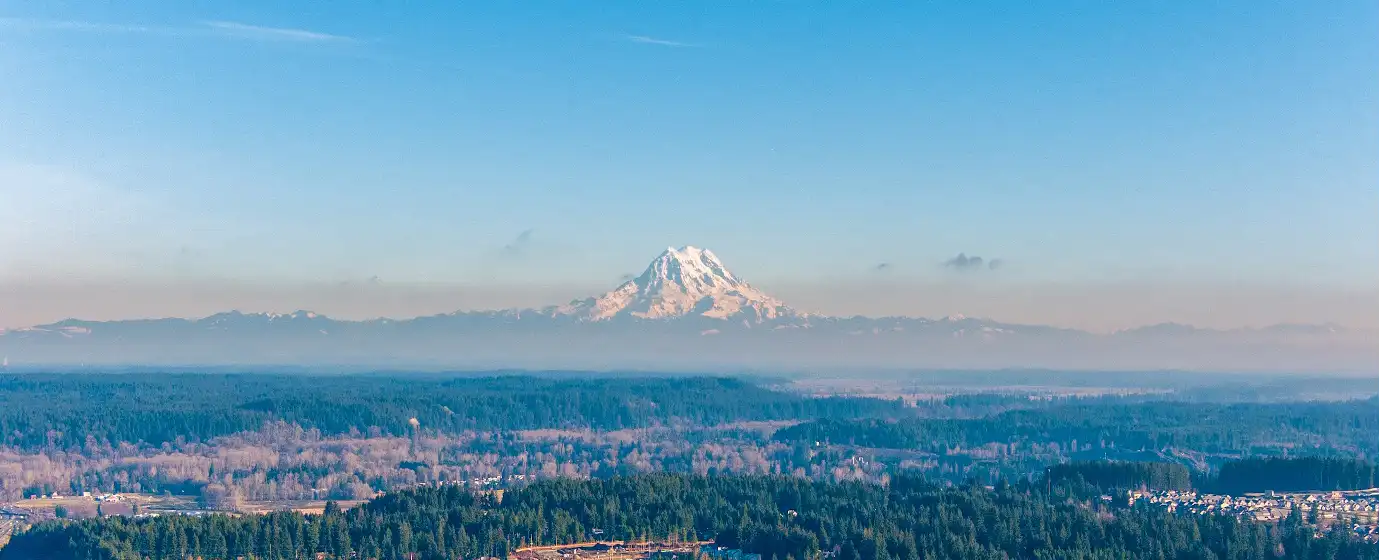
Puget Sound · Washington
Is Lacey Safe? Crime Rates, Safest Neighborhoods & Local Reality (2026)
Lacey doesn't fit the mold of either a troubled city or a spotless suburb — and that's exactly what makes it worth understanding before you make a move. The crime numbers are genuinely mixed: violent crime sits well below the national average, which matters for daily quality of life, while property crime runs higher than most buyers hope to hear. The honest answer to "is Lacey safe?" depends on where you land in the city and what kind of risk you're most concerned about.
In practical terms, most residents go years without a serious incident. The violent crime rate here — roughly 2 per 1,000 residents based on FBI estimates — is meaningfully lower than Washington State's own average, which means the fear of personal harm is not the dominant concern. What does show up more often is property-related frustration: package theft, car break-ins near commercial corridors, and the occasional vehicle theft. These are the realities that neighborhood apps like Nextdoor surface regularly, and they reflect the city's retail density more than any deeper dysfunction.
This guide breaks down what the crime data actually means, which areas of Lacey tend to see more incidents and why, and what practical steps locals take to protect themselves. Whether you're choosing between Lacey and Olympia or trying to figure out which neighborhood fits your family's comfort level, the information below gives you a grounded, honest picture.
The headline statistic that concerns most prospective buyers is Lacey's property crime rate — commonly reported around 25 per 1,000 residents based on FBI UCR data, which places the city above the national average for that category. But that number doesn't distribute evenly across the city. The northeast quadrant, dense with retail corridors along Martin Way and near South Sound Center, accounts for a disproportionate share of reported incidents simply because more people pass through those areas each day. A high-traffic commercial zone generating theft and vehicle break-in reports tells a different story than a quiet residential neighborhood with the same per-capita figure.
The violent crime picture is considerably more reassuring. Local police data suggests the violent crime rate has held around 2 per 1,000 residents, which is roughly 43% below Washington State's own violent crime rate and nearly 48% below the national average. The Lacey Police Department reported a 10% overall crime decrease in 2024, with Chief Robert Almada's public safety update noting the overall rate had dropped from 56 to 50 incidents per 1,000 — a trend that moved in the right direction even as the city's population continued to grow. Only 2 homicides were recorded in the most recent reporting year, a figure that underscores how rare violent crime remains in a city of nearly 60,000.
Structurally, Lacey's property crime challenge is partly a byproduct of its own success. The city's role as a regional retail and employment hub pulls in traffic from surrounding communities — Yelm, Rainier, and unincorporated Thurston County — and that transient population creates more opportunity for opportunistic theft. Higher homeownership rates in established residential neighborhoods correlate with lower crime in those areas, while apartment-dense zones near commercial hubs see higher incident counts. This geographic pattern explains more about Lacey's crime profile than any cultural or demographic factor.
Based on FBI estimates, Lacey's violent crime rate of approximately 186 incidents per 100,000 people puts the city well below both state and national benchmarks. In daily life, this translates to a city where residents walk dogs after dark, leave kids at the park, and generally don't structure their routines around personal safety fears. The most serious incidents — assaults, robberies — tend to cluster near commercial areas rather than residential neighborhoods, and the overall count of 110 violent crimes citywide in the last reporting year reflects a city that, by any reasonable measure, does not have a violent crime problem.
Property crime is where Lacey's numbers diverge from the rosy picture. With roughly 1,453 property crimes recorded in the most recent year — a rate of about 25 per 1,000 residents — theft and vehicle-related incidents are the most common concerns locals raise. Larceny and package theft dominate the incident types, and the highest concentrations appear in the northeast retail belt near Cabela's, Costco, and the surrounding big-box corridors. South Lacey neighborhoods see dramatically fewer incidents, with the southeast portion of the city recording roughly 100 crimes annually compared to approximately 614 in the northeast — a gap that reflects geography and commercial density far more than neighborhood character.
Sitting in the northern part of the city near Interstate 5, Hawks Prairie is one of Lacey's most consistently well-regarded neighborhoods from a safety standpoint. The area's master-planned layout, higher homeownership rates, and concentration of executive and professional households create the kind of social cohesion that tends to suppress opportunistic crime. NeighborhoodScout data ranks the Hawks Prairie and Beachcrest corridor among the top eight percent of retiree-friendly neighborhoods in Washington for safety and peace — a designation driven largely by low incident counts and strong community engagement. Homes here generally sell in the $400,000 to $650,000 range, and the neighborhood's proximity to outdoor spaces like the Chehalis Western Trail keeps foot traffic healthy without the risks that come with commercial density.
Best for: Families and professionals who want suburban quiet with I-5 access and strong neighborhood stability.
Tanglewilde sits southwest of central Lacey and carries one of the stronger safety reputations in the city among established residents. The neighborhood has a genuine sparse suburban character — most residents own their homes, the streets are quiet, and the area lacks the retail density that drives incident reports in the northeast. Resident accounts consistently describe a neighborhood where police response is reliable and crime concerns are minimal day-to-day. It's the kind of area where longtime locals tend to stay put, which itself is a meaningful safety indicator.
Best for: Buyers who prioritize residential quiet and don't need to be near commercial corridors.
Indian Summer is a planned community in south Lacey that benefits directly from its location in what locals and crime mapping services consistently identify as the city's safest geographic zone. The southeast portion of the city records the fewest annual incidents across all categories, and Indian Summer sits within that corridor. The neighborhood's design — curved streets, limited through-traffic, and a strong HOA presence — creates natural deterrents to the kind of opportunistic property crime that shows up in higher-traffic areas. Residents tend to be owner-occupants with long tenure in the neighborhood, which reinforces the stable, lower-crime environment.
Best for: Families with school-age children and buyers who want the safety numbers that match the suburban feel.
The Woodland and Woodland Creek areas occupy a middle ground on Lacey's safety spectrum. Cited by Nextdoor neighbors as among Lacey's generally considered safe areas, these neighborhoods benefit from proximity to Woodland Creek Community Park and the community activity that comes with it. The safety profile here is solid without being exceptional — it's a neighborhood where residents feel comfortable and report few serious incidents, but it lacks the geographic isolation from commercial zones that makes areas like Indian Summer or Tanglewilde stand out. Package theft is the most commonly raised concern among residents who post to neighborhood apps.
Best for: Buyers who want established neighborhood character and easy park access without paying for a master-planned premium.
Central Lacey — particularly the stretch along Martin Way East — is where Lacey's property crime numbers are most visible in daily life. This is the city's commercial spine, and its high volume of retail traffic, parking lots, and mixed-use density creates the conditions where vehicle break-ins, theft, and other opportunistic incidents concentrate. Residents who live in the adjacent neighborhoods understand this dynamic and treat it accordingly: locking vehicles, not leaving valuables visible, and treating the corridor as a convenience rather than a neighborhood anchor. The area isn't dangerous in a violent-crime sense, but it accounts for a meaningful share of the city's property crime statistics.
Best for: Buyers who need retail access and accept the trade-off on property crime visibility — not the right fit for buyers who weight neighborhood tranquility heavily.
The northeast quadrant — encompassing Meridian Campus and the commercial areas near South Sound Center — generates the city's highest incident counts, largely for the same structural reason as Central Lacey: dense retail, high visitor traffic, and more parking lots per square mile than anywhere else in the city. Crime mapping data puts the northwest and northeast neighborhoods at the higher end of the city's property crime distribution, with victim odds roughly 1 in 19 for property crime compared to 1 in 51 in the south. Residents in the residential pockets within this zone generally feel safe at home; the elevated numbers reflect what happens in parking lots and commercial areas, not on residential streets.
Best for: Buyers prioritizing retail walkability and access to major employers — with realistic expectations about the surrounding commercial environment.
| City | Violent Crime/1K | Property Crime/1K | Overall Safety Profile |
|---|---|---|---|
| Lacey | ~2.0 | ~25.1 | Mixed — low violent, elevated property |
| Olympia | ~5.5 | ~52.0 | Higher across both categories |
| Tumwater | ~2.2 | ~22.0 | Comparable violent, slightly lower property |
| Lakewood | ~4.8 | ~38.0 | Higher violent, significantly more property crime |
| Tacoma | ~7.2 | ~45.0 | Above average in both categories |
| Centralia | ~5.0 | ~48.0 | Elevated in both, smaller city dynamics |
| Yelm | ~1.8 | ~18.0 | Lower in both, rural character |

When buyers start researching safety in Lacey, they're really starting to think seriously about where they want to put down roots — and that directly shapes long-term value. Neighborhoods like Hawks Prairie and Horizon Pointe consistently attract strong buyer demand, partly because of their reputation for being quieter, more established communities. Woodland draws similar interest. What I see in practice is that well-priced homes in these areas move fast — sometimes within days of hitting the market — so being hesitant or unprepared can mean missing out entirely. Most desirable single-family homes in these neighborhoods are generally priced under $650,000, though inventory shifts constantly.
That's exactly why I encourage buyers to talk with a lender before they ever schedule a tour. Your actual monthly payment includes more than principal and interest — property taxes, homeowner's insurance, any HOA dues, and your loan structure all factor in, and the total can look meaningfully different than people expect. Getting pre-approved helps you understand a comfortable budget, not just a maximum approval, so when the right home in the right neighborhood appears, you're ready to move with confidence.
The most useful reframe for understanding Lacey's safety is to stop thinking about the city as a single unit. The northwest corner near the retail clusters around Martin Way and the Lacey Crossings shopping area operates at a different risk level than the residential south. Locals who've lived here a few years know that Martin Way East between College Street and Marvin Road is where you don't leave a bag visible on your car seat — not because the area is dangerous in a physical sense, but because the volume of commercial traffic makes parking lots a target of choice for opportunistic theft. That same precaution that feels obvious in Seattle or Tacoma is simply good practice here.
What neighborhood apps sometimes miss is how much of Lacey's reported crime is displacement rather than community-generated. The city draws shoppers and visitors from a wide surrounding region, and incidents that happen in parking lots at Cabela's or near South Sound Center get mapped as Lacey crimes even when neither the victim nor the perpetrator lives here. Residents in the southern neighborhoods — around Long Lake, Indian Summer, and the Chehalis Western Trail corridor — often go years between notable incidents, and that disconnect from the aggregate statistics is real and meaningful.
Practical habits among longtime locals: garage your cars if you live near any commercial zone, use Ring or similar cameras at the front door, and engage with your neighborhood association if one exists. The Lacey Police Department runs community programs and responds actively to neighborhood requests for increased patrol presence in areas experiencing upticks in theft. The city's overall trajectory — a documented 19% drop in overall crime in 2024 compared to the prior year — suggests that the institutional response is working, even if the numbers haven't yet reached the level that would satisfy every buyer's comfort threshold.
Local Expert Takeaway: If safety is a primary driver in your Lacey home search, focus your energy south of Lacey Boulevard — the Indian Summer, Lake Forest, and Pleasant Glade corridors consistently show the lowest incident counts in the city. Avoid anchoring your decision on the city-wide property crime figure without understanding that Martin Way and the northeast retail belt are driving that number disproportionately. A home in south Lacey at the $516,000 median price point puts you in a significantly different safety environment than the aggregate stats suggest.
✅ Violent crime is well below average. Lacey's violent crime rate runs roughly 48% below the national figure — personal safety in residential areas is not the primary concern here.
⚠️ Property crime is the real issue. At around 25 per 1,000 residents, theft and vehicle-related incidents are more common than in comparable suburban markets, and they concentrate in the northeast commercial corridor.
📍 South Lacey is the safest zone. The southeast portion of the city records the fewest annual incidents — roughly 100 per year — compared to 614 in the northeast, making neighborhood selection the most important safety decision you'll make.
Is Lacey a safe place to live?
For the majority of residents, yes — particularly those in the southern and established residential neighborhoods. The violent crime rate is meaningfully lower than Washington State's average, and most residents report feeling safe in their daily routines. Property crime, especially near commercial corridors, is the more realistic concern for homeowners.
What is the safest neighborhood in Lacey?
South Lacey neighborhoods — including Indian Summer, Lake Forest, and the Pleasant Glade area — are consistently identified as the lowest-crime parts of the city. NeighborhoodScout data also places the Hawks Prairie and Beachcrest corridor among the top tier for safety in Washington. Geographic location within the city matters more than any single neighborhood brand.
How does Lacey compare to Olympia for safety?
Lacey compares favorably on most metrics. Olympia carries higher property and violent crime rates by most available estimates, which surprises buyers who assume the state capital would be the quieter option. Tumwater, immediately south, runs slightly lower on property crime than Lacey — but the difference is modest, and Lacey's southernmost neighborhoods are competitive with Tumwater's numbers.
Explore the full Lacey series: Living in Lacey · Is Lacey Safe? · Cost of Living · Best Neighborhoods · Schools & Family Life · Youth Sports · Parks & Rec · Retiring in Lacey