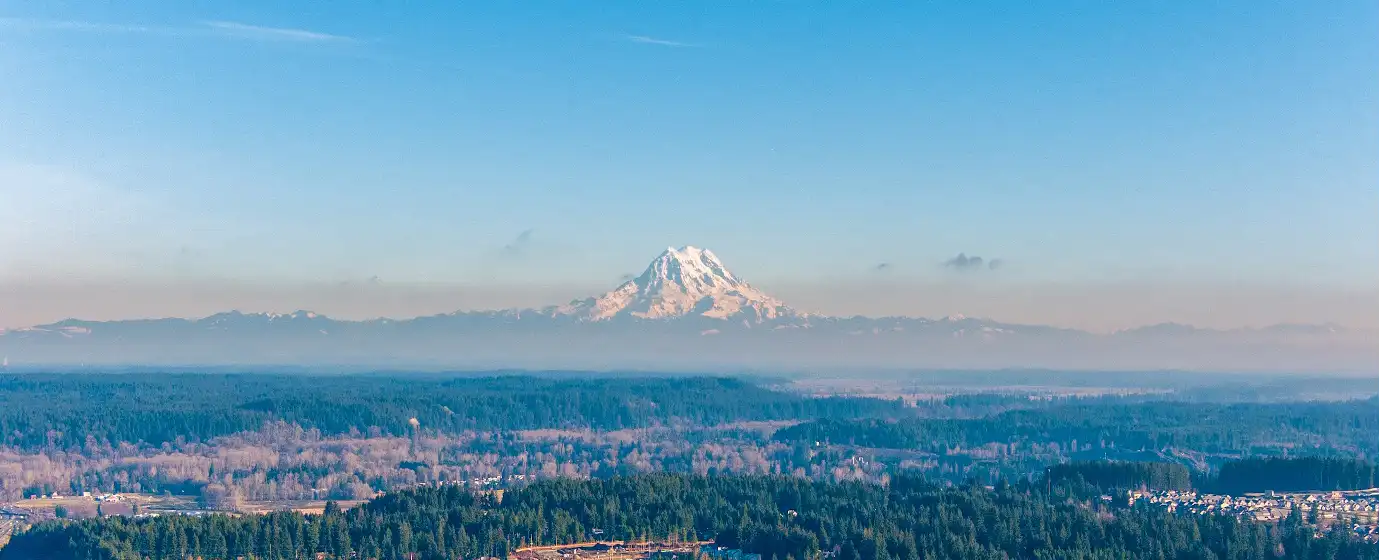
Puget Sound · Washington
Living in Lacey: The Ultimate Relocation Guide (2026)
Maybe your employer is moving you to Joint Base Lewis-McChord and you're trying to figure out where military families actually put down roots. Maybe you've been watching Olympia's quirky downtown energy from a distance and discovered that Lacey — just a few miles east — offers similar access at lower prices and a quieter daily rhythm. Or maybe you ran the numbers, saw a $516,000 median home price for a city of nearly 60,000 people with a 4-star school district and no state income tax, and you're wondering what the catch is. There isn't a hidden catch, exactly. But there is a central tension in Lacey that every buyer should understand before making an offer: this is a city that functions brilliantly as a base of operations and somewhat less brilliantly as a destination in itself.
Lacey sits in the southern reach of the Puget Sound region, anchored to Interstate 5 and sandwiched between Olympia to the west and the long, rural stretch toward Centralia to the south. It shares a metro area with Olympia and Tumwater but plays a distinct role in the regional ecosystem — newer housing stock, more retail infrastructure, a larger military-adjacent population, and a suburban character that some buyers find refreshing and others find limiting. Joint Base Lewis-McChord is roughly 20 minutes north, Tacoma is an hour up I-5, and Seattle is around 90 minutes on a good day. Daily life in Lacey is shaped by that geography: it's a city organized around the car, the commute, and the cul-de-sac, with natural beauty woven in at the edges.
This guide will help you figure out whether Lacey's particular mix of affordability, access, and suburban stability actually fits your life — or whether a neighboring city serves you better. We'll dig into the neighborhoods worth understanding, the schools, the honest tradeoffs, and the local texture that doesn't show up on comparison spreadsheets.
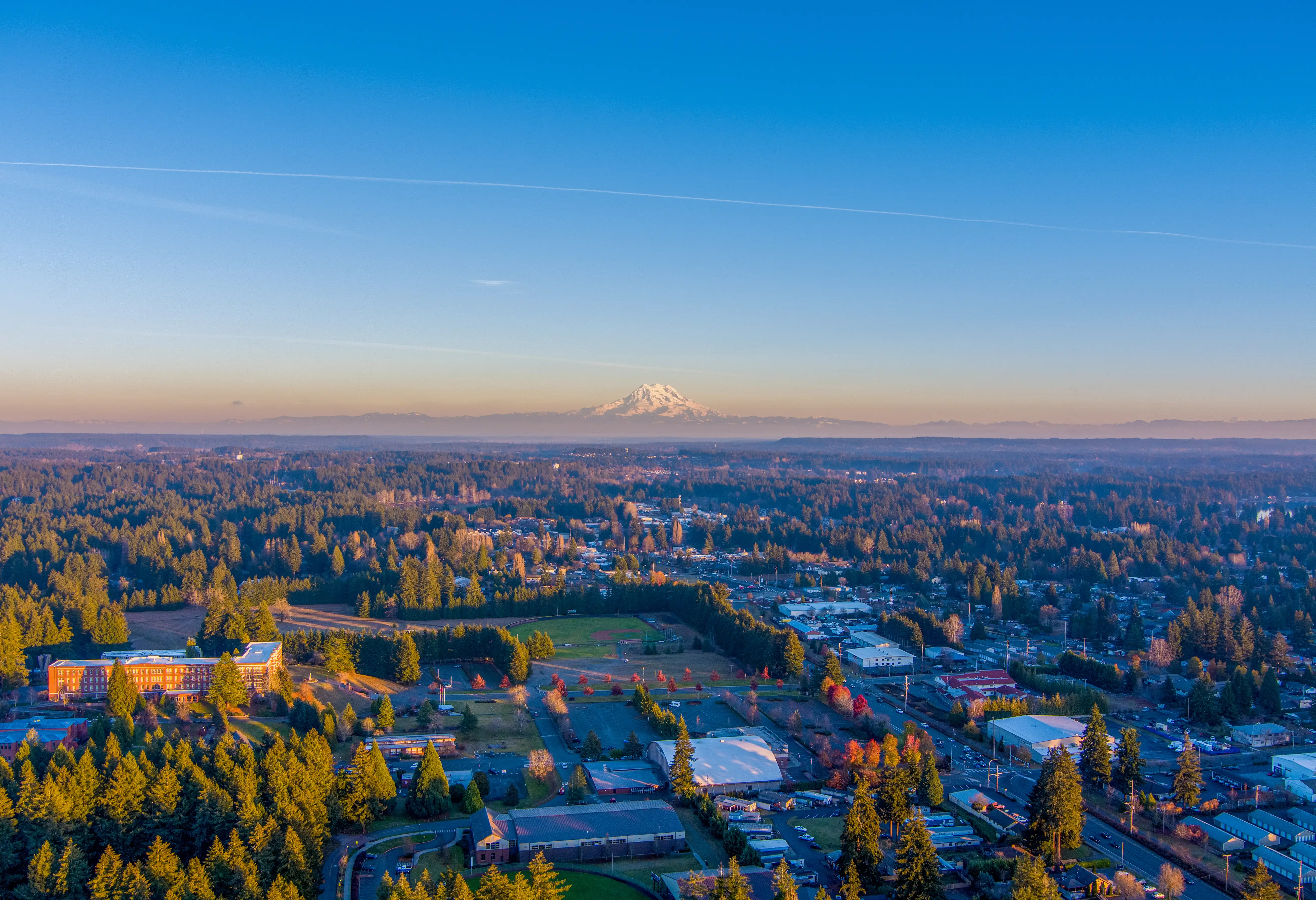
Not every city works for every buyer. Lacey has a clear profile of who thrives here — and being honest about that upfront saves everyone time.
| Best For | Why |
|---|---|
| Military families | ~30% of residents have JBLM ties; established military community, short commute to base, competitive home prices |
| Families with school-age children | North Thurston Public Schools carries a solid B rating; newer master-planned neighborhoods built around family infrastructure |
| First-time buyers | Entry-level condos around $320,000, townhomes near $390,000 — rare price points for the Pacific Northwest |
| Commuters to Olympia or Tumwater | Fast highway access; Olympia is minutes away for state government workers |
| Remote workers | Affordable housing, quiet neighborhoods, good regional connectivity without Seattle rent |
| Retirees seeking accessibility | Panorama City retirement community, Chehalis Western Trail, flat terrain in many neighborhoods |
Living in Lacey means accepting that your city's identity is partly geographical convenience and partly genuine community. The bones of the place are suburban — wide arterials, retail corridors, master-planned subdivisions with HOA-maintained landscaping — but the natural edges are surprisingly rich. The Nisqually National Wildlife Refuge sits just minutes from the northern neighborhoods, the Chehalis Western Trail gives cyclists and walkers a long off-road corridor, and Long Lake anchors the southern residential pockets with real quiet. Residents who find their outdoor footing early tend to stay and love it.
The commute reality deserves honest framing. Getting to downtown Olympia takes 15 minutes on a normal day — but I-5 through the Lacey-Tumwater stretch is legitimately brutal during the 7–8:30 AM window, and the Exit 111 interchange at Pacific Avenue backs up reliably. If you're commuting north toward JBLM or Tacoma, budget 45–60 minutes in peak traffic regardless of what mapping apps promise at 9 PM. Working from home or on a flex schedule makes Lacey's geography feel completely different than it does on a 7 AM mandatory start.
The community vibe is best described as unpretentious and functional. South Sound Center anchors the retail experience along Lacey Boulevard, Cabela's draws a certain weekend crowd, and the Thurston County Fairgrounds hosts events throughout the year that pull the broader region in. Lacey doesn't have a historic downtown square with boutique coffee shops and wine bars — that experience is in Olympia, 15 minutes west. What Lacey has instead is comfortable, affordable daily infrastructure: newer grocery stores, easy parking, and master-planned neighborhoods where neighbors actually meet each other at the community pool.
The Regional Athletic Complex near Woodland Creek Community Park is where you'll find yourself on Saturday mornings if you have kids in youth sports — multiple fields, consistent scheduling, and a level of facility investment that reflects how seriously this community takes organized recreation. For a city of under 60,000, the recreational infrastructure is notably strong.
Affordability relative to the region is the obvious starting point. A $516,000 median home price for a Pacific Northwest city with this level of amenity access is genuinely competitive — comparable homes in Tacoma's better neighborhoods or Olympia's west side regularly push $575,000–$650,000. Lacey gives buyers something increasingly rare: actual square footage, a garage, and a yard without requiring a six-figure income stretch.
Washington's lack of a state income tax amplifies that affordability in ways that out-of-state buyers often underestimate. Combined with Lacey's property tax rate of approximately 1.04%, the total tax profile compares favorably to most of California, Oregon, and the Rocky Mountain metros that feed Pacific Northwest migration. A state worker or dual-income household in Lacey can build equity meaningfully in a way that's become nearly impossible in the northern Puget Sound corridor.
The outdoor access is closer and more diverse than newcomers expect. The Nisqually National Wildlife Refuge — a federally protected estuary system just north of the city — offers birding, wildlife observation, and trail walks that feel nothing like suburban Washington. The Chehalis Western Trail runs 22 miles and is well-maintained for cycling and walking. Long Lake, accessible through the Lake Forest neighborhood, supports kayaking and canoeing with a community launch point. None of this requires a 90-minute drive.
The military community gives Lacey a social infrastructure that benefits everyone, not just service members. The population turns over regularly enough to keep neighborhoods dynamic, but the civic institutions — schools, recreation programs, community organizations — remain stable because the infrastructure is built to support it. That combination of transient energy and institutional permanence is a specific Pacific Northwest quality that Lacey does unusually well.
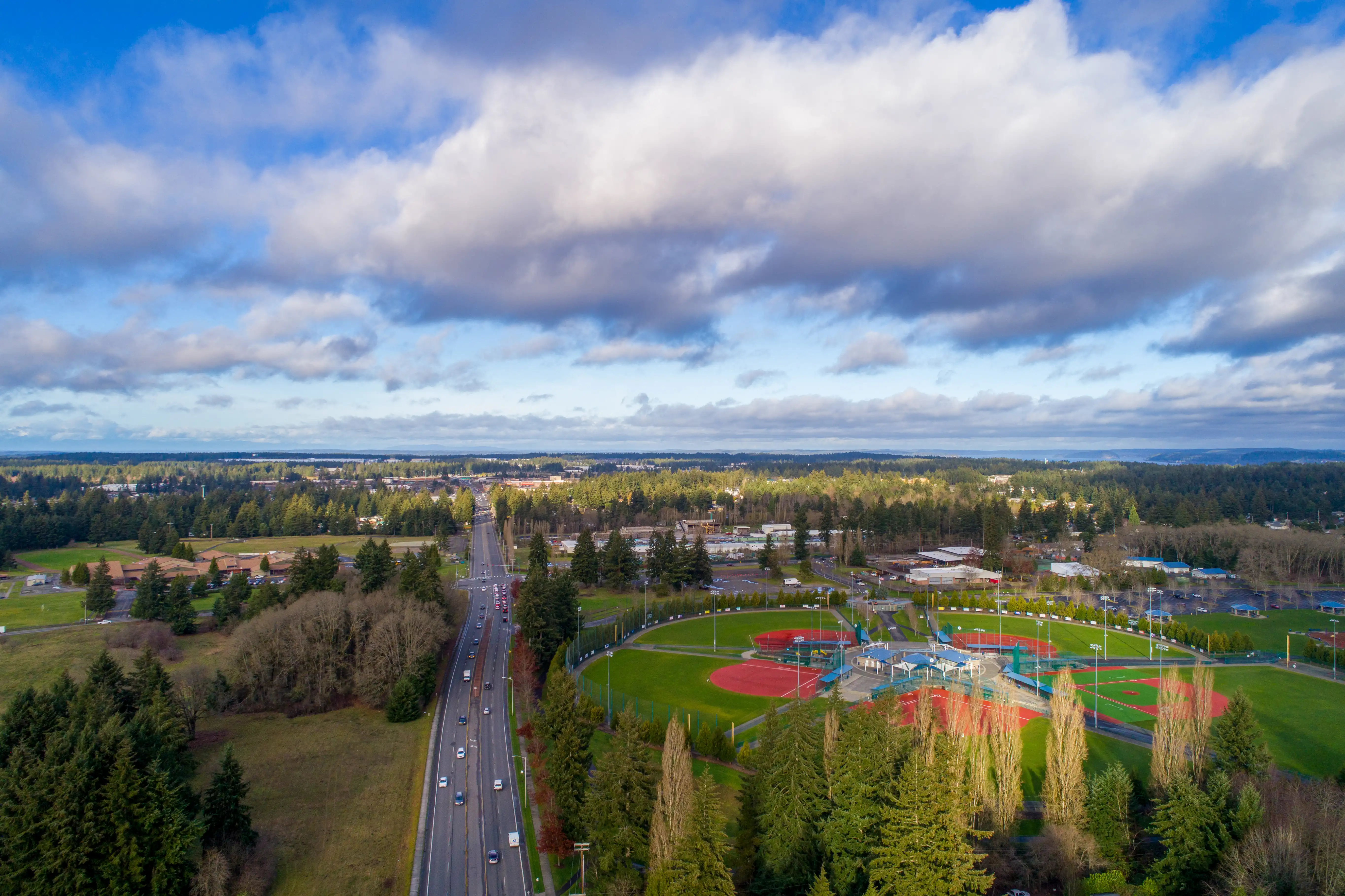
Lacey is a car city, full stop. The walkability scores in most neighborhoods are low, and that's not a knock — it's just accurate. If you're coming from a West Coast city where you walked to coffee and groceries, Lacey's layout will require a mental adjustment. The most walkable pocket is near the South Sound Center corridor, but even there, the experience is retail-strip rather than urban-neighborhood. Buyers who prioritize walkable streets will be better served in downtown Olympia, even at a higher price point.
The lack of a distinct downtown identity is a recurring complaint among long-term residents and newcomers alike. Lacey has commercial nodes — Pacific Avenue, Lacey Boulevard, the Martin Way corridor — but nothing that functions as a true town center where people gather by choice rather than errand. Cultural events, farmers markets with real community draw, and the independent restaurant scene that makes a place feel alive are all happening in Olympia. Lacey residents generally make peace with this by thinking of Olympia as their cultural backyard, but if you were hoping to walk to dinner, the gap between expectation and reality can sting.
Traffic on I-5 is the defining friction point for anyone commuting north. The stretch between Lacey and Lakewood has improved incrementally with HOV lane extensions, but peak-hour congestion between 7:00 and 8:30 AM and 4:30 and 6:00 PM is consistent and significant. The back-road alternative through Yelm Highway or Pacific Avenue parallel routes helps marginally — locals figure out their preferred workarounds within the first few months.
Why some people leave Lacey: The most common reason is the desire for a more defined community identity. After five or six years, some residents feel the city hasn't developed the cultural texture they hoped would emerge. Others leave when JBLM reassignments pull them to other installations. A smaller group moves to Olympia specifically for the walkable downtown access or to Yelm and the rural southeastern corridor when space and land become the priority. These are specific, honest reasons — not evidence that Lacey is a poor choice, but worth weighing against your own priorities.
Hawks Prairie is Lacey's most active real estate submarket, and the pace of competition there reflects it. Located in the city's northern quadrant near I-5, this master-planned corridor features Craftsman and modern suburban homes built largely in the last 25 years — most with attached garages, HOA amenities, and access to a community clubhouse with a pool and tennis courts. The median sold price in Hawks Prairie ran approximately $589,000 through mid-2025, with homes averaging just seven days on market at peak season. The honest catch: HOA fees and the sheer volume of new development mean the neighborhood has a planned-community sameness that some buyers find comforting and others find sterile.
Best for: Military families and dual-income households who want turnkey homes, strong school access, and proximity to JBLM without sacrificing retail convenience.
Woodland carries a piece of Lacey's origin story — the city was actually called Woodland when the Wood family settled here in 1870 and established what would become Washington's first brewery. That historical thread runs forward into the present: the Producers District in this area continues a craft beverage tradition, with wineries and breweries clustered near the Hawks Prairie Industrial Park. Residentially, Woodland blends older single-family stock with pockets of newer infill; pricing generally tracks the citywide range, with single-family homes in the $460,000–$530,000 corridor. It's a neighborhood with more character and history than most of Lacey's master-planned alternatives.
Best for: Buyers who want established neighborhood character, proximity to craft beverage culture, and a sense of Lacey's deeper identity.
Horizon Pointe occupies a quieter slice of Lacey's central-to-northeast residential fabric — single-family homes on conventional lots, served by North Thurston Public Schools, without the HOA overlay common in newer master-planned developments. Pricing falls within the city's typical single-family range, roughly $470,000–$530,000. The neighborhood lacks the amenity infrastructure of Hawks Prairie but also lacks the associated fees and covenants, which matters to buyers who want control over their property.
Best for: Buyers who want established single-family lots without HOA restrictions and don't need resort-style community amenities.
Lake Forest sits in Lacey's southern tier, just east of Long Lake, and it has something genuinely unusual for a suburban Washington neighborhood: a private 4.5-acre community park with direct lake access, wooded trails, a canoe and kayak launch, and a pavilion. The neighborhood encompasses roughly 400 homes on large lots, surrounded by 22 acres of natural greenbelt that insulates residents from the commercial density closer to I-5. Pricing reflects the desirability — expect the upper end of Lacey's single-family range — but the lakefront lifestyle access without a lakefront premium is the real draw.
Best for: Families and nature-oriented buyers who want genuine outdoor access and privacy woven into daily life, not just proximity to a park on a map.
Meridian Campus benefits from its adjacency to Saint Martin's University, giving the neighborhood an educational-institution energy distinct from Lacey's more militarily influenced corridors. Single-family homes here tend to attract households connected to the university, healthcare, and state government sectors. The neighborhood sits in a central location with reasonable access to both the South Sound Center retail cluster and Olympia's downtown. Pricing aligns with the citywide median.
Best for: Academic and professional households who want a quieter, established neighborhood with university-adjacent culture.
Indian Summer is a well-regarded residential pocket known for its mature landscaping, established lots, and long-term homeowner stability — turnover is lower here than in Lacey's newer master-planned areas. The neighborhood has a cohesive residential identity without aggressive HOA oversight, and the tree canopy on many streets gives it a more settled Pacific Northwest feel. Home prices generally fall in the mid-range of Lacey's single-family market.
Best for: Buyers prioritizing neighborhood stability and established character over new construction and amenity packages.
Tanglewilde is one of Lacey's more affordable established neighborhoods, with a mix of older single-family homes and a community character that reflects decades of working-class and middle-income family ownership. It's not the flashiest address in the city, but buyers who focus on value per square foot often find it the most practical choice in Lacey's market. The Chehalis Western Trail is accessible from this area, and the commute to central Lacey amenities is minimal.
Best for: First-time buyers and value-oriented purchasers who want established neighborhoods at the lower end of the single-family price spectrum.
Central Lacey is the functional heart of the city — home to municipal services, South Sound Center, and the commercial corridors along Pacific Avenue and Lacey Boulevard. Residentially, the area is a patchwork of older housing stock, some multifamily development, and proximity to retail that makes daily errands genuinely convenient. This is where Lacey comes closest to walkability, though "close" is relative. Home prices trend below the citywide median given the older inventory, making this one of the more accessible entry points to Lacey homeownership.
Best for: Buyers who prioritize retail proximity and lower price points and are comfortable with older home inventory and mixed-use surroundings.

Lacey has some genuinely strong pockets for long-term value, and where you land within the city matters more than people expect. Hawks Prairie continues to attract buyers because of its access to I-5 and retail corridor, and well-priced homes there — typically under $600,000 — move fast, often within days of listing. Horizon Pointe and Lake Forest tend to draw families looking for that balance of established neighborhoods and proximity to good schools, and inventory in those areas rarely sits long either. If you're relocating from out of state, don't underestimate how quickly the market can move on you.
That's exactly why I always encourage buyers to connect with a lender before they ever step into an open house. Your approval amount and your comfortable budget are two very different numbers, and the gap between them becomes real the moment you factor in property taxes, homeowner's insurance, any HOA dues, and how your loan is structured. Knowing your full monthly picture ahead of time means you're not scrambling when the right home in Woodland or Indian Summer suddenly hits the market — you're ready to move with confidence.
| City | Best For | Median Home Price | Commute to Major Employer | Vibe |
|---|---|---|---|---|
| Lacey | Military families, first-time buyers, suburban stability | $516,000 | 20 min to JBLM | Suburban, functional, family-oriented |
| Olympia | Walkability seekers, state government workers, urban texture | $520,000–$560,000 | 15 min to Capitol Campus | Quirky, walkable, politically engaged |
| Tumwater | Budget buyers, small-town quiet, Olympia access | $460,000–$490,000 | 10 min to Olympia | Quiet, unpretentious, limited amenities |
| Lakewood | JBLM-adjacent living, lower prices, military culture | $440,000–$480,000 | 5 min to JBLM | Military-heavy, transitional, affordable |
| Yelm | Rural lifestyle, land, space | $380,000–$430,000 | 40 min to Lacey | Rural, tight-knit, slower pace |
| Centralia | Maximum affordability, rural access | $340,000–$380,000 | 45 min to Lacey | Small city, economically transitional |
| Category | Detail |
|---|---|
| Population | 59,584 (growing at ~0.8% annually) |
| Median Home Price | $516,000 (single-family; mid-2026) |
| Median Household Income | $90,625 |
| Property Tax Rate | ~1.04% ($10.37 per $1,000 assessed value) |
| School District | North Thurston Public Schools (B rating) |
| Violent Crime per 1,000 | 2.0 |
| Property Crime per 1,000 | 25.1 |
| Median Age | 37.3 years |
| Commute to Olympia | ~15 minutes (off-peak); 25–35 min peak hour |
| State Income Tax | None |
| Days on Market (typical) | 16–30 days |
The Thurston County Fair is a bigger deal than it sounds. The Thurston County Fairgrounds in Lacey hosts an annual fair that genuinely draws regional attendance — this is not a quiet county fair with four rides and a pie contest. It's a late-summer event that brings in significant crowds from across the South Sound, and the surrounding neighborhood traffic on fair weekends is real. If you live near the fairgrounds, budget for that a few days per year.
Lacey was called Woodland for good reason. The city's founding identity as a timber and agricultural settlement — and specifically as the home of Washington's first brewery, operated by the Wood family — gives the modern Producers District near Hawks Prairie an authentic rather than manufactured craft beverage identity. Local residents navigate the area's wineries and breweries with a sense of ownership that feels earned rather than trendy.
The Nisqually National Wildlife Refuge is not just a pretty name on a map. The refuge — a 3,000-acre estuary restoration project at the delta of the Nisqually River — is one of the most significant wildlife habitats in Western Washington, and it's five minutes from the northern edge of Lacey. Bald eagle sightings are routine. Waterfowl migration seasons draw birders from across the region. Longtime Lacey residents treat the refuge the way Seattle residents treat Discovery Park — as a civic treasure that out-of-towners consistently underestimate.
What I would not do if moving to Lacey: I would not buy a home on the Pacific Avenue commercial corridor without driving that stretch during the Thursday–Saturday evening window. The retail and restaurant cluster near South Sound Center creates traffic patterns that feel fine on a Tuesday afternoon and significantly less fine on a Friday night, particularly near the Cabela's and major grocery anchors. Buyers drawn to the retail convenience of that corridor should verify the noise and traffic profile before committing to an adjacent residential street.
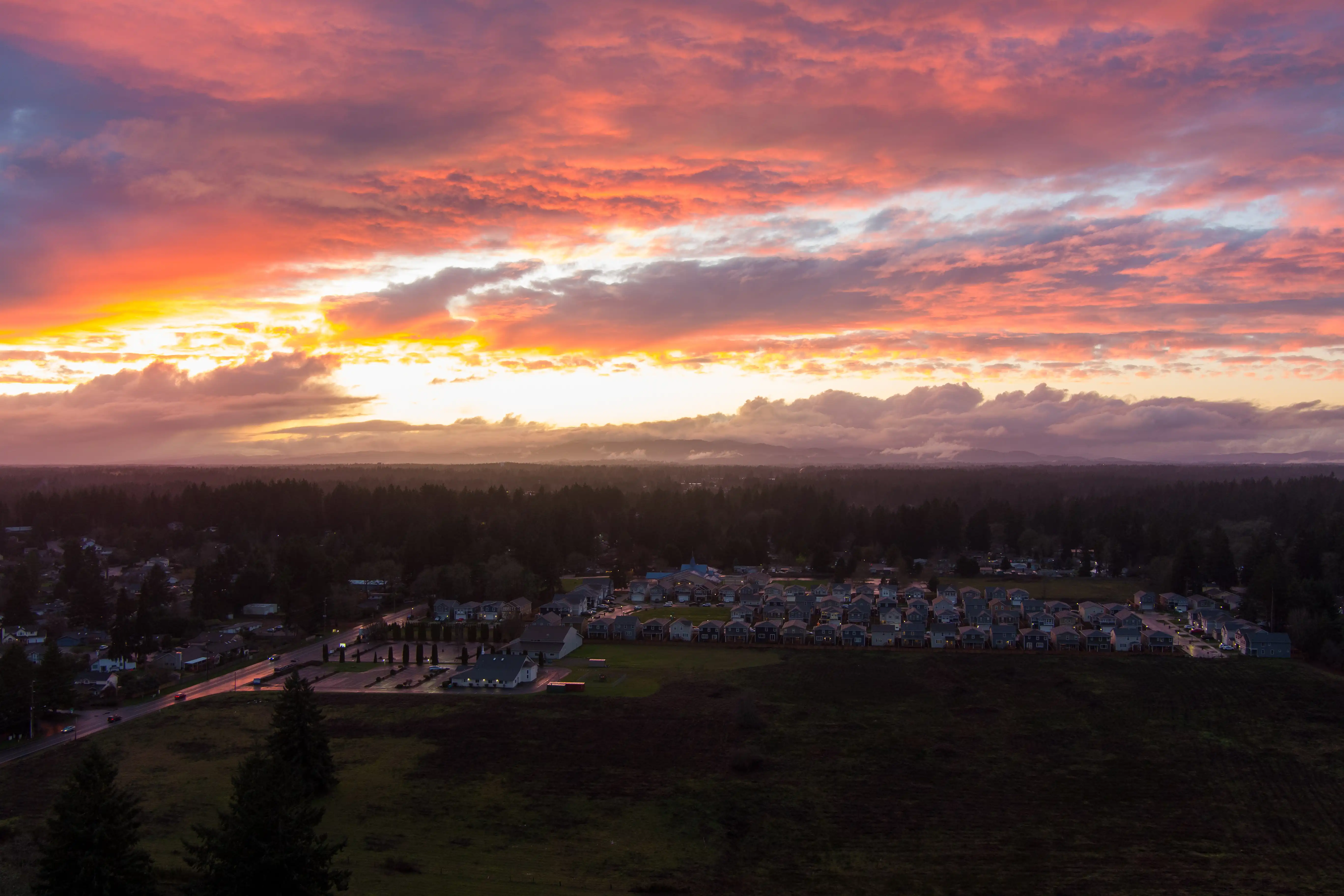
Local Expert Takeaway: In Lacey's current market, the buyers who move fastest tend to win — homes are averaging 16–30 days on market citywide, and in Hawks Prairie, that number compresses to a week during strong seasons. If you're relocating from out of state, prioritize a pre-approval and a clear neighborhood priority list before your visit, not after. The Lake Forest neighborhood specifically is worth a serious look for buyers who want long-term livability: the private lake access and greenbelt buffer create a quality-of-life premium that the price tag doesn't fully reflect yet. And if schools are your primary filter, map the North Thurston attendance boundaries before you fall in love with an address — the district covers a large area, and boundary differences matter for resale.
✅ Lacey delivers rare Pacific Northwest affordability — a $516,000 median home price with no state income tax, competitive schools, and genuine outdoor access within the city footprint.
⚠️ The car-dependent layout and limited downtown identity are real constraints — if walkable neighborhood texture is a non-negotiable, Olympia is worth the price premium.
📍 Know your neighborhood before your address — Hawks Prairie, Lake Forest, and Indian Summer each serve different buyer profiles, and the differences in school zones, HOA structures, and daily lifestyle are meaningful.
Is Lacey a good place for families?
Yes, Lacey is a strong choice for families with children. North Thurston Public Schools carries a solid B rating, the Regional Athletic Complex provides substantial organized youth sports infrastructure, and the master-planned neighborhoods throughout Hawks Prairie and surrounding areas are built around family-oriented amenities. The combination of relatively affordable single-family homes and a community that skews young — median age of 37.3 years — means your kids will have plenty of peers in the neighborhood.
What is the crime rate in Lacey?
Lacey's violent crime rate sits at approximately 2.0 incidents per 1,000 residents, which compares favorably to Washington state averages and is well below major metro benchmarks. Property crime runs higher, at approximately 25.1 per 1,000 — a figure consistent with most suburban retail-heavy cities in the Pacific Northwest. The retail corridors along Pacific Avenue and South Sound Center drive a disproportionate share of property crime statistics, meaning residential neighborhoods tend to feel meaningfully safer than the citywide number suggests.
How does Lacey compare to nearby Olympia?
The practical comparison comes down to lifestyle versus price. Lacey offers newer housing stock, more retail convenience, and a slightly lower median home price — typically $20,000–$40,000 below comparable Olympia homes. Olympia offers a walkable downtown, an independent restaurant and arts scene, and a distinct civic identity that Lacey hasn't yet developed. Both cities access the same natural environment, the same school district quality tier, and roughly the same regional employment base. Most buyers who end up in Lacey made a conscious choice toward suburban functionality; most who chose Olympia made a conscious choice toward urban texture.
Explore the full Lacey series: Living in Lacey · Is Lacey Safe? · Cost of Living · Best Neighborhoods · Schools & Family Life · Youth Sports · Parks & Rec · Retiring in Lacey