
Puget Sound · Washington
1031 Exchange & Investment Real Estate in Mercer Island (2026)
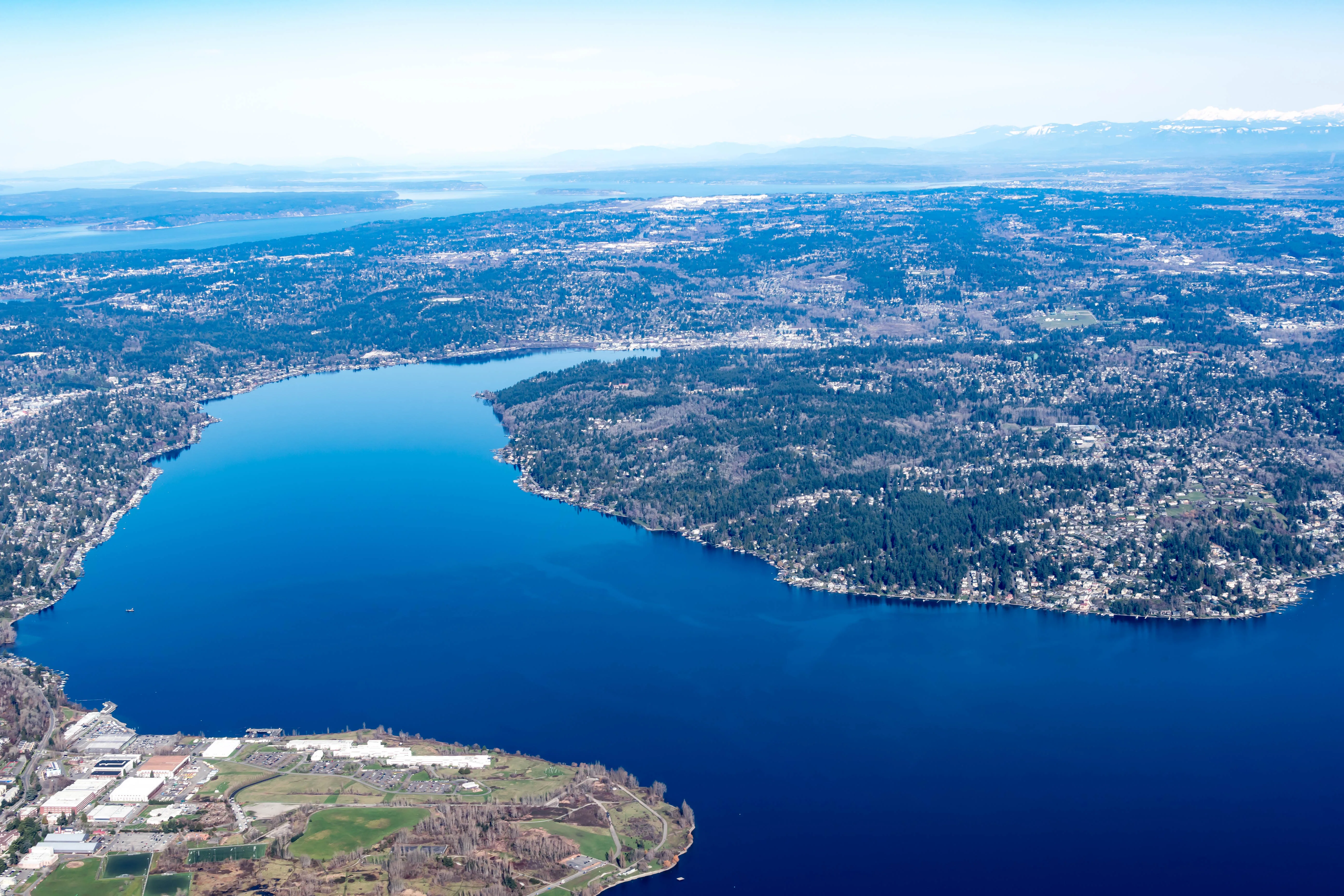
Not everyone reading this is a professional investor with a portfolio of rentals. A large share of the people researching 1031 exchanges into Mercer Island are California homeowners who finally sold a house they've owned for 20 years — and now face a capital gains bill that makes them want to find somewhere else to put that equity fast. Mercer Island is showing up on those shortlists for a reason. It sits 15 minutes from downtown Seattle, surrounded entirely by Lake Washington, with no room to build outward — a structural supply constraint that keeps values stable in ways that spreadsheet-friendly Sun Belt markets simply cannot replicate.
The rental market here is driven by a specific kind of tenant: dual-income households relocating for Amazon, Microsoft, or one of the dozens of tech and healthcare employers in the Seattle-Bellevue corridor. These tenants expect a premium product, pay on time, and tend to stay. Roughly 34% of Mercer Island households are renter-occupied — a meaningful share for an island community where the median home price sits at $2,082,588. The downtown Town Center corridor and Mid-Island neighborhoods generate the most consistent rental demand, with apartment rents averaging around $2,622 per month and median rents for all property types running closer to $2,750.
This guide walks through the mechanics of a 1031 exchange, the Mercer Island investment property landscape in 2026, why California capital is flowing toward the Pacific Northwest, Washington's tax advantages, the management reality of owning here from out of state, and a due diligence checklist built for investors on a 45-day identification clock.
The core of a 1031 exchange is straightforward: sell a qualifying investment property, park the proceeds with a qualified intermediary (QI) — never touch that money yourself — and identify a replacement property within 45 days of closing. You then have 180 days total from your sale date to close on the replacement. Miss either deadline by a single day and the entire deferral collapses. The IRS does not grant extensions for buyer's remorse or slow escrow.
The "like-kind" rule is more flexible than most people assume. Selling a commercial building in Sacramento and buying a single-family rental in Mercer Island qualifies. Selling a duplex in Fremont and buying a vacant lot in King County qualifies. Real property exchanging for real property — nearly any combination works, as long as both properties are held for investment or business use. Your primary residence does not qualify, and neither does property you intend to flip.
The boot trap catches investors who don't run the math carefully before closing. If your replacement property's purchase price, equity, and debt don't meet or exceed what you sold, the shortfall — the "boot" — becomes taxable. Buying a $1.8 million property to replace a $2.1 million sale without matching the debt load triggers a taxable event on the difference. Work with your QI and a CPA to model this before you identify, not after.
Mercer Island is not a cash-flow market in the traditional sense. With a median sold price of $2,082,588 and apartment rents averaging around $2,750 per month, the gross yield on a median-priced single-family rental runs roughly 1.3% — implying cap rates in the 1% to 2% range after expenses for SFR product. Investors who arrive expecting the same cap rates they'd find in Tacoma or Renton will leave frustrated. The investment thesis here is appreciation and durability, not yield. The island's complete inability to expand its housing supply — it's surrounded by water on all sides — creates a scarcity premium that has protected values through multiple cycles.
Multifamily and duplex inventory on the island is near-zero. Investors sourcing replacement properties through a 1031 who need income-producing multifamily often end up pairing a Mercer Island SFR with a replacement property in Renton, South Seattle, or the Bellevue fringe to hit their yield targets. Small commercial properties and townhomes in the Town Center corridor offer slightly better income characteristics than waterfront SFR, but they trade infrequently and command premium pricing.
| Property Type | Typical Price Range | Est. Cap Rate | Avg Days to Close |
|---|---|---|---|
| Luxury SFR (waterfront) | $4,500,000–$10,000,000+ | 0.5%–1% | 30–45 days |
| SFR (interior, non-waterfront) | $1,800,000–$3,500,000 | 1%–2% | 21–35 days |
| Townhome / Condo (Town Center) | $750,000–$1,400,000 | 2%–3% | 21–30 days |
| Small Multifamily / Duplex | Extremely limited; $1,500,000+ when available | 2%–3.5% | 30–45 days |

The calculation starts with where the money comes from. Most of the California capital entering the Mercer Island market traces back to long-held residential investment properties — houses bought in 2001 for $450,000 that sold in 2024 or 2025 for $1.3 million to $2.1 million, with embedded gains that make writing a check to the FTB genuinely painful.
A Bay Area investor selling a rental property in San Jose or Oakland for $1.4 million arrives in the Mercer Island market with enough equity to purchase a Town Center townhome or a mid-island SFR outright — or to make a substantial down payment on a $2 million property while carrying a modest mortgage. The Seattle tech corridor employment base mirrors what they know: high-income tenants, low tolerance for deferred maintenance, and strong lease renewal rates. The no-state-income-tax environment is the first thing Bay Area investors mention when they model out the numbers.
Investors liquidating long-held rentals in Los Angeles, Orange County, or San Diego are frequently selling into a market where $1.8 million to $2.5 million for a single-family rental is common. That purchase price buys a meaningfully different product on Mercer Island — often with better tenant stability and a landlord-tenant legal environment that, while balanced toward tenants, is less restrictive than California's. The 15-minute commute to Seattle and the island's school district quality (rated A by Niche) are tenant draws that translate directly to lower vacancy.
The Sacramento or Riverside County investor selling a portfolio of two or three SFRs for a combined $900,000 to $1.3 million faces a different calculation. Mercer Island's entry point stretches that equity, but the Town Center condo corridor — with units in the $750,000 to $1,100,000 range — offers a viable replacement property at scale. Pairing a Mercer Island condo with a replacement property in a higher-yielding Eastside market is a structure some 1031 advisors recommend for this investor profile.
Washington's zero state income tax is the headline, and it's genuinely significant. California's top marginal rate on ordinary income sits at 13.3% — every dollar of net rental income earned by a California resident landlord owning property in California gets taxed at the state level. A Washington-based or Washington-property investor pays nothing to the state on that rental income. On a $36,000 annual net rental income, that's $4,788 a year in state tax that simply doesn't exist in Washington.
Washington does impose a 7% capital gains tax on long-term capital gains exceeding $262,000 in a single year, effective since 2023. For most individual investors collecting rental income rather than flipping properties, this threshold rarely applies to annual operations — but it's relevant if you're planning a future sale of the Mercer Island property without a 1031. The property tax rate on a new purchase in King County runs approximately 0.61%, compared to California's Proposition 13 effective rates on newly purchased properties, which typically land in the 1.1% to 1.25% range.
| Tax Item | California | Washington |
|---|---|---|
| State income tax on rental income | Up to 13.3% | $0 |
| Property tax rate (new purchase) | ~1.1%–1.25% (Prop 13 on new basis) | ~0.61% |
| Sales tax on rehab materials | Varies by county (~9%–10.25%) | 6.5% + local (~9.5% in King County) |
| Capital gains tax (state level) | Up to 13.3% (ordinary income rate) | 7% on gains over $262,000/yr |
| Local rent control | Yes (many CA jurisdictions) | No statewide rent control (2026) |

When it comes to 1031 exchanges on Mercer Island, location within the island genuinely shapes long-term investment value. Properties in West Mercer and the North End tend to attract strong buyer demand due to waterfront access and views, while Mid-Island offers a bit more accessibility to Town Center amenities that renters and future buyers consistently prioritize. Replacement properties in these areas rarely sit long — well-positioned investment homes can move in days, not weeks — so having your financing squared away before you're deep in a 1031 timeline isn't just smart, it's often the difference between completing the exchange and missing out entirely. Realistic replacement property budgets on Mercer Island typically start well above $1.5 million.
Before you start touring potential replacement properties, please talk with a lender first. Your true monthly obligation includes the loan payment, property taxes, insurance, and any HOA dues — and that full picture often looks different than the purchase price suggests. I'd rather help you identify a comfortable budget than hand you a maximum approval number that stretches you thin. When the right property surfaces, and on Mercer Island it moves fast, you want to be ready
Washington's landlord-tenant code is more balanced than California's, but it is not a free-for-all for landlords. As of 2026, Washington requires 20 days' written notice for most rent increases, 14 days for pay-or-vacate notices, and 20 days for non-renewal of a month-to-month tenancy. There is no statewide rent control, though tenant advocates have pushed for local ordinances in several King County cities — Mercer Island has not enacted one, but investors should monitor this space. Out-of-state owners who try to self-manage from California routinely underestimate how much notice and documentation Washington requires, and a single procedural misstep in an eviction filing can add months to the timeline.
Local property management companies serving Mercer Island include Windermere Property Management and Kinetic Property Management, both of which operate across the greater Seattle-Eastside market and have island-area experience. Typical management fees run 8% to 10% of gross monthly rent, with leasing fees adding another half to one month's rent for placement. On a $3,000/month rental, that's $240 to $300 per month in management costs before maintenance reserves — factor that into your cap rate model before you close.
The vacancy reality on Mercer Island is tighter than most markets: the island runs at roughly 6.7% vacancy, slightly below the national average. High-quality properties in the Town Center and Mid-Island neighborhoods tend to re-lease quickly to the next round of tech and healthcare transplants. The tenant pool here is genuinely strong — but they expect the property to be in excellent condition, and deferred maintenance will cost you a lease renewal at this price point.
| Item | What to Verify | Local Resource |
|---|---|---|
| Title search | Clean title, no undisclosed liens or easements | King County title companies (First American, Chicago Title) |
| Sewer vs. septic status | Most island properties on public sewer; verify with seller disclosure | City of Mercer Island Public Works |
| Flood zone status | FEMA flood map — verify lakefront and low-elevation parcels | FEMA Flood Map Service Center |
| Rental permit requirements | Mercer Island does not require a separate rental license but verify zoning allows rental use | City of Mercer Island Planning Dept |
| HOA restrictions on rentals | Many island HOAs restrict short-term rentals; verify lease term minimums | HOA governing documents / CC&Rs |
| Short-term rental ordinance | Mercer Island has not enacted a formal STR ban but verify current status before targeting Airbnb income | City of Mercer Island Municipal Code |
| ADU potential | Washington state ADU laws are investor-friendly; verify lot size and zoning for second unit | City of Mercer Island Building Dept |
| Current lease status | Obtain and review existing lease, security deposit, rent rolls | Seller disclosure / listing agent |
| School district confirmation | All Mercer Island addresses served by Mercer Island School District (A-rated) | MISD enrollment office |
| Deferred maintenance inspection | Full inspection including roof, deck systems, lakefront bulkheads (waterfront properties) | Licensed WA inspector |
| Property management referral | Secure management agreement before closing to avoid vacancy gap | Windermere PM, Kinetic PM |
| Zoning verification | Confirm R-9.6 or applicable residential zone; verify no pending rezoning actions | King County GIS / City zoning map |
| Depreciation basis review | Confirm carryover basis with QI and CPA before closing | Your qualified intermediary / CPA |
| Comparative rental analysis | Confirm achievable rent vs. model assumptions using current Town Center comps | Local PM company or Zillow Rent Zestimate |

Local Expert Takeaway: The single most common mistake California 1031 buyers make in the Mercer Island market is modeling rental income against Seattle apartment averages rather than island-specific comps. A $2 million interior SFR here will realistically rent for $4,500 to $5,500 per month — not the $7,000 figure some buyers assume based on luxury comparables. Run your numbers against Town Center rental comps and verified PM quotes before you identify the property, not after. The 45-day clock does not accommodate late-stage underwriting surprises.
If you're entering a 1031 identification window and Mercer Island is on your target list, the most important call you make before day one is getting pre-approved for an investment property loan. DSCR loans (Debt Service Coverage Ratio lending) are a strong tool here — they underwrite to the property's rental income rather than your personal income, which keeps the transaction off your personal DTI and simplifies qualification for investors with complex tax returns. Todd can connect you with lenders who specialize in DSCR and 1031 structures across the Pacific Northwest. Don't let financing uncertainty compress your identification window.
✅ Washington's zero state income tax is a genuine, calculable advantage — every dollar of net rental income stays out of the state's hands, a direct comparison to California's 13.3% top bracket.
⚠️ Cap rates on Mercer Island SFR run 1%–2% — this is an appreciation and durability play, not a yield play. Investors expecting 5%+ cap rates should extend their search to Renton or South Seattle.
📍 The 45-day identification window moves fast here. With 56% of homes selling within 10 days on market, pre-market relationships and pre-approved financing are the only reliable ways to close before the deadline.
Does a 1031 exchange work for out-of-state property?
Yes — the IRS does not require that your relinquished property and replacement property be in the same state. A California investor can sell a rental in Los Angeles and use the proceeds to purchase a replacement property on Mercer Island, provided both properties meet the investment use requirement and the 45-day and 180-day deadlines are met.
What is the cap rate on rental property in Mercer Island?
Single-family rentals on the island typically generate cap rates in the 1% to 2% range, reflecting a median home price of $2,082,588 against monthly rents in the $2,750 to $5,500 range depending on property type and size. Townhomes and condos in the Town Center corridor run slightly higher at 2% to 3%. Mercer Island is a long-term appreciation market — investors prioritizing yield should factor in neighboring markets as part of a broader 1031 strategy.
Do I need a local property manager for a 1031 investment in Washington?
It is not legally required, but out-of-state owners who self-manage Washington rentals face meaningful compliance risk. Washington's landlord-tenant code has specific notice periods and documentation requirements that differ from California's, and errors in the eviction process can be costly. Hiring a local manager at 8% to 10% of gross rent is the most reliable way to protect the asset and maintain compliance from across state lines.
Explore the full Mercer Island series: The Ultimate Mercer Island Relocation Guide · Is Mercer Island Safe? · Cost of Living in Mercer Island · Best Neighborhoods in Mercer Island · Mercer Island Schools & Family Life · Mercer Island Youth Sports · Mercer Island Parks & Recreation · Retiring in Mercer Island · 1031 Tax-Deferred Exchange in Mercer Island · Mercer Island First-Time Homebuyers Guide · Mercer Island Down Payment Assistance Guide · Moving to Mercer Island from California