
Puget Sound · Washington
Moving to Mercer Island from California: The Honest Comparison (2026)
The Bay Area software engineer who finally got a yard didn't move to Mercer Island because they gave up. They moved because their company went fully remote, their $1.6M Walnut Creek townhome sold in eight days, and they landed a four-bedroom house on a quiet island in Lake Washington without a mortgage. The San Diego family who kept watching PG&E bills climb and scanning air quality alerts every August discovered that Mercer Island's summers are legitimately gorgeous — low humidity, clear skies, 78-degree highs — and that their utility bills dropped to a fraction of what they'd been paying. California-to-Washington migration isn't a retreat from success. For many buyers, it's the move that finally made the math work.
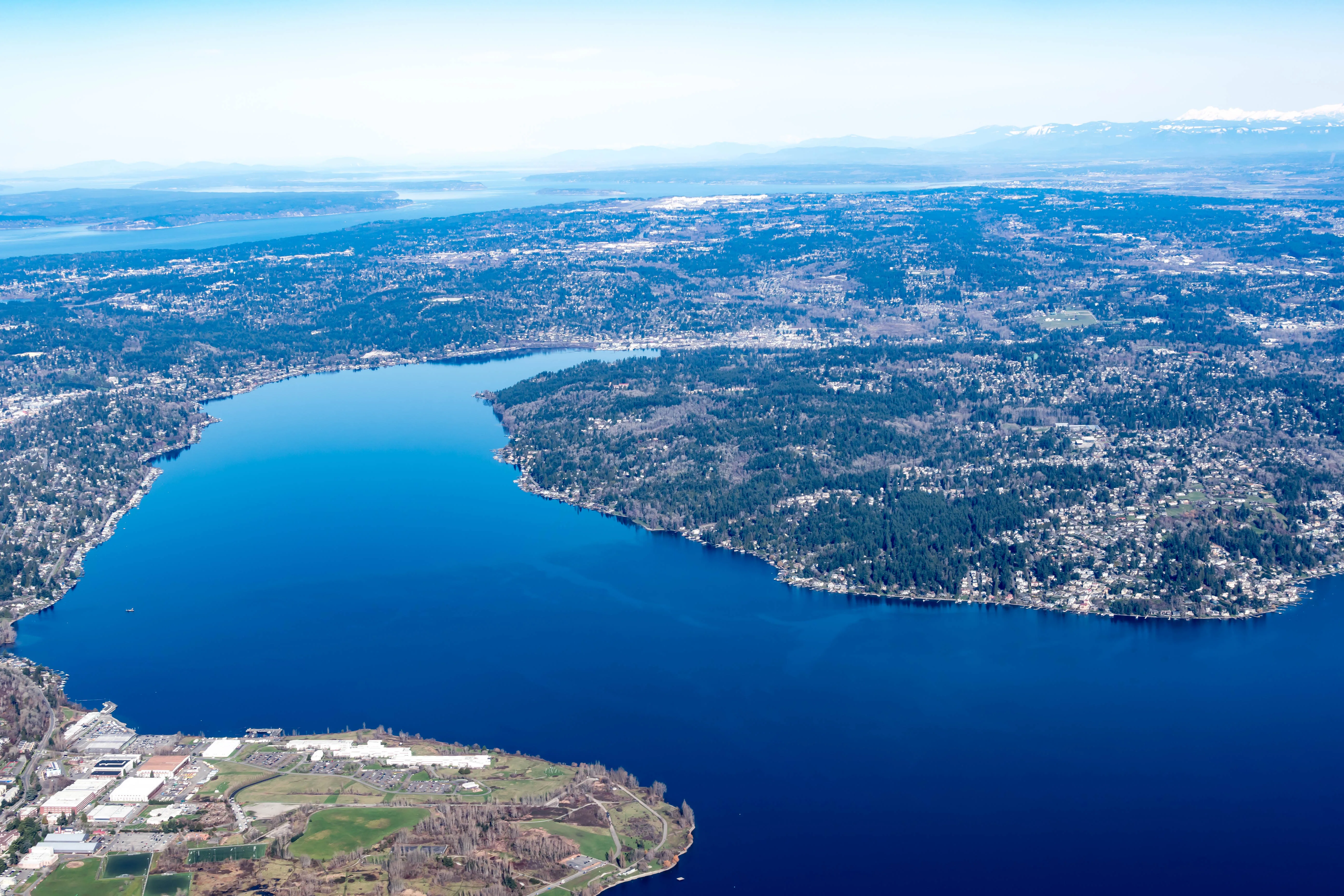
Mercer Island is not a consolation prize, but it's also not California. The island sits in the middle of Lake Washington, connected to Seattle and Bellevue by I-90, home to roughly 25,000 people, and among the wealthiest ZIP codes in the country. What California transplants encounter here is a tightly held, supply-constrained real estate market where the median home has crossed $2.5 million, winters are long and gray in ways that genuinely surprise people who've lived their whole lives in the sunshine belt, and the social rhythms are quieter than what most major California cities offer. The guide that tells you both sides honestly is worth more than any sales pitch.
This post walks through the full cost comparison by California region, what your California equity can realistically buy here, the tax picture in granular dollar terms, the weather reality with actual numbers, and four specific mistakes California buyers make in this market. An interactive comparison tool at the bottom lets you run your specific city against Mercer Island directly.
| Mercer Island, WA | Bay Area | Southern CA | Sacramento Metro | Central Valley | |
|---|---|---|---|---|---|
| Median Home Price (approx. 2026) | $2,550,000 | $1,300,000–$1,800,000 | $850,000–$1,100,000 | $520,000–$650,000 | $380,000–$480,000 |
| Property Tax Rate (effective) | ~0.61% | ~1.1–1.2% | ~1.1–1.2% | ~1.1–1.2% | ~1.1–1.2% |
| State Income Tax | None | Up to 13.3% | Up to 13.3% | Up to 13.3% | Up to 13.3% |
| State Sales Tax | 10.1% (King Co.) | 8.625–10.25% | 7.25–10.5% | 8.75–8.975% | 7.25–8.25% |
| Avg Utilities (monthly est.) | $180–$220 | $250–$350 | $280–$400 | $220–$300 | $240–$340 |
| Avg 1BR Rent | $2,400–$2,900 | $2,800–$3,800 | $2,200–$3,200 | $1,500–$1,900 | $1,100–$1,500 |
The Washington no-income-tax advantage is the most consistently underestimated piece of this move. A California household earning $150,000 in wages is paying roughly $11,000–$12,000 per year in state income tax at California's rates. In Washington, that number is exactly zero — every dollar goes directly to take-home pay. At $200,000 in household income, the annual savings climb to approximately $16,000–$18,000. Sales tax in King County runs around 10.1%, which partially offsets the income tax advantage, but only on spending — it doesn't touch investment income, salary, or savings. For most transplants earning above $120K, the net annual financial shift from the tax picture alone is significantly positive.
Washington has no state income tax — one of only nine states in the country that levies zero on wages and salaries. For a California transplant, this is the single largest financial change on day one of residency, and it tends to take several months before people fully absorb what it means to their monthly cash flow.
| Tax Item | California | Washington | Net Impact for Transplant |
|---|---|---|---|
| State Income Tax | 1–13.3% (graduated) | 0% | +$8K–$18K+/year depending on income |
| Capital Gains Tax | Up to 13.3% (ordinary income rate) | 7% on LT gains over $262K threshold | Favorable for most wage earners; watch for high-gain years |
| Property Tax (on $2.55M home) | ~$28,050–$30,600/yr (at 1.1–1.2%) | ~$15,555/yr (at 0.61%) | ~$12,000–$15,000/year in savings |
| State Sales Tax | 7.25–10.5% (varies by county) | 10.1% (King County) | Roughly comparable; slight WA disadvantage on purchases |
| Estate / Inheritance Tax | None | WA estate tax applies to estates over $2.193M | Factor in for high-net-worth estate planning |
| Senior Property Tax Exemption | Limited circuit breaker program | Yes — available at 61+ (income-based) | Meaningful benefit for retirees |
The property tax comparison is equally striking for buyers coming from recently purchased California homes. California's Proposition 13 protects long-tenured homeowners with artificially low assessed values, but anyone buying today at $2.5M faces a California tax bill approximately double what they'd pay in Mercer Island on the same purchase price. The senior exemption in Washington — available at age 61 and above for qualifying incomes — adds further value for buyers in the early retirement window, reducing or eliminating a portion of that already-modest property tax bill.
A buyer selling in Atherton, Menlo Park, or the inner East Bay and clearing $1.8M or more after taxes and transaction costs is looking at an all-cash purchase of a well-maintained, three-to-four-bedroom single-family home in most of Mercer Island's established residential neighborhoods. At $1.5M in equity, that same buyer is putting 60% down on a $2.55M home — monthly carrying costs well below what they were paying on the California property. The neighborhoods that represent the best value at this equity level tend to be East Mercer and Mid-Island, where lots run larger and the homes offer more square footage per dollar than the lakefront and North End properties that push well above $4M.
A buyer clearing north of $2M in Bay Area equity is genuinely in the market for Mercer Island's upper tier — waterfront lots in the $4M–$8M range, or the newer construction in West Mercer where homes move between $3M and $5M. At this equity level, the question isn't "can I afford Mercer Island" — it's which neighborhood and which property type best matches how they actually want to live.
A household selling in Irvine, Pasadena, or Westwood and netting $900K after closing costs has a compelling entry into Mercer Island's market. That equity places a 35–40% down payment on a $2.3M–$2.5M home, locking in a mortgage in the $1.4M–$1.6M range — a jumbo product, but one that's offset almost immediately by the elimination of California state income tax. For a household earning $175,000 jointly, that income tax savings covers roughly 12–14 months of the additional interest carry over a California mortgage at comparable rates. The neighborhoods that make the most sense at this equity level are Mid-Island and the South End, where entry-level single-family homes start closer to $1.8M–$2M and the lots tend to be more established with mature landscaping.
A buyer from San Diego's coastal neighborhoods — Encinitas, La Jolla, Del Mar — who sold at the top of their market is often surprised to discover that $1.1M in equity goes much further here than they assumed. The Southern California buyer frequently has a shorter timeline to reach full ownership than the transplant who stayed in California and continued carrying both a high mortgage and a meaningful state income tax bill.
The Sacramento or Riverside buyer with $500,000 in equity is entering Mercer Island's market at a different angle. That equity doesn't cover a down payment on a median-priced single-family home outright, but it provides a strong 20–25% down on a home in the $1.8M–$2.2M range — meaning this buyer is primarily looking at Mercer Island's lower-tier SFR market, which is still exceptional product. The cash flow benefit from eliminating California's income tax is particularly impactful here: a Sacramento household earning $130,000 was paying approximately $9,000–$10,000 per year to the state. In Washington, that's an extra $750–$800 per month in take-home pay — real money that changes mortgage qualification and monthly comfort.
A buyer at the upper end of this equity range — $600K–$650K — has meaningful flexibility. With a conventional 30-year structure and strong income, they can compete credibly in East Mercer or the South End's less competitive pockets. The one honest note: at this equity level, Mercer Island's median price means a significant ongoing mortgage. Buyers coming from Sacramento who owned a $600,000 home free and clear are not going debt-free in Mercer Island unless they buy into the condo tier downtown.
The Central Valley buyer — Fresno, Stockton, Bakersfield — with $400K in equity is working with the most modest relative advantage of any California cohort. At Mercer Island's price points, that equity represents 15–20% down on entry-level product, which in practical terms means a small condo in Downtown Mercer Island's market, where two-bedroom units trade in the $600K–$800K range. The single-family home market on the island starts around $1.75M and climbs quickly from there. For this buyer, the honest conversation is whether Mercer Island proper is the right landing spot — nearby Bellevue, Renton, or Newcastle offers comparable school quality and Eastside access at significantly lower price points, with the same Washington income tax advantage.
That said, a Central Valley buyer with strong combined household income who can carry a larger mortgage than their prior California home may find the trade surprisingly favorable. The no-income-tax savings, lower property taxes on an equivalent-priced home, and often lower utility costs create a different monthly financial reality than the sticker shock of the purchase price suggests.

Here is what a good friend who moved from San Jose three years ago would actually tell you: the summers on Mercer Island are better than advertised. July averages 10.5 hours of sunshine per day, the highs sit in the mid-to-upper 70s, humidity is negligible, and the lake access makes it feel like a resort. The problem is that summer runs from roughly late June through early September — twelve to fourteen weeks — and then the sky closes. November through February averages fewer than four sunshine hours per day. Mercer Island sees roughly 144 rainy days per year compared to about 34 in Los Angeles, 40 in San Diego, and 71 in San Francisco. Sacramento — the sunniest major California metro — logs approximately 3,608 sunshine hours annually. Mercer Island gets around 2,180. That gap is real, and it affects mood, motivation, and social patterns in ways that California transplants consistently underestimate in years one and two.
What California transplants reliably love after twelve months here: the housing space, the absence of wildfire smoke, lower utility bills, the community cohesion of a genuine island town, and the proximity to world-class hiking and skiing that feels like a novelty but quickly becomes normal. Mercer Island's Town Center has a walkability that feels different from sprawling California suburbs — everything is close, neighbors know each other, and the elementary school pickup line has a neighborhood-meeting energy that transplants from Los Angeles or the Inland Empire often find genuinely surprising. The Pacific Northwest food scene has matured significantly in the last decade, and Seattle's restaurant and cultural access is fifteen minutes away.
What they miss: year-round beach access, the ease of January in San Diego, and for Bay Area transplants specifically, the density of their professional peer networks. The Mercer Island social scene is quieter and more family-centered than most California cities at comparable wealth levels. People who thrived in the energy of San Francisco's social culture or Los Angeles's entertainment scene sometimes find the island's pace too calm in year one. Most of them stay anyway — but the adjustment is real, and it's worth naming.
If you want to see how Mercer Island compares directly to the city you're leaving, use the tool below — it covers the 120 largest California cities with current housing and tax data.
Home prices: Redfin median sale data, Q1–Q2 2026. Select your city to compare.
Ready to talk through what your specific California equity could do in Mercer Island? Todd can model your exact scenario in a single call.

Mercer Island is a small island with surprisingly distinct micro-markets, and where you land matters for long-term value. North End and West Mercer properties tend to attract the most competitive interest — think multiple offers within days on anything priced reasonably for the area. South End offers a slightly different pace but has been quietly appreciating as buyers priced out of other pockets look there. If you're coming from California expecting to find something under $1.5 million with waterfront or territorial views, the inventory moves fast enough that hesitation usually means losing the house.
What I see trip up California buyers specifically is underestimating the full monthly payment picture. The loan approval number your lender gives you isn't the number you should build your life around — property taxes, homeowners insurance, and any HOA dues stack on top, and on Mercer Island those figures are meaningful. Before you tour a single home, sit down with a lender and build a payment you'd actually be comfortable with long-term, not just one you'd technically qualify for. When the right place appears, and it will go quickly, you want to move with confidence.
Mistake 1: Assuming the island is uniform. Mercer Island has significant character variation that a day-trip drive-through doesn't reveal. The North End near I-90 has more condominium inventory and an urban-adjacent feel that surprises buyers expecting the residential calm of East Mercer or the South End. West Mercer, along the lake, has premium pricing and higher turnover — it looks like the island's highlight reel. If you spend your showing weekend in one area and write an offer in another, you're buying a neighborhood you haven't actually experienced.
Mistake 2: Underestimating winter commuting from the island. I-90 is Mercer Island's one connection to the mainland in each direction — eastbound to Bellevue, westbound to Seattle. In normal conditions, that 15-minute commute to Seattle is accurate. In winter rain events, accidents on the floating bridge section, or during Seahawks game traffic, the island's single-chokepoint access creates backups that trap residents for 40–60 minutes. California drivers are not accustomed to a single bridge controlling their entire commute, and the psychological reality of that constraint is different from what the map suggests.
Mistake 3: Expecting California-style year-round outdoor access. California transplants who hiked every weekend year-round often arrive with the same expectation and discover that November through March involves mud, limited daylight, and trail conditions that require different gear and different expectations. The outdoor culture here is strong, but it's a different season-oriented rhythm — summer on the lake, fall hiking before the rains hit, and a winter that rewards ski trips and indoor social investment. Buyers who frame this as a cycling and hiking paradise year-round are setting themselves up for the most common Mercer Island transplant disappointment.
Mistake 4: Not running the no-income-tax math before making an offer. California buyers often absorb the income tax advantage intellectually but don't actually run their household numbers before structuring their offer. A joint-filing household earning $220,000 — roughly Mercer Island's median household income — was paying approximately $17,000–$19,000 per year to California's Franchise Tax Board. In Washington, that's zero. That's $1,400–$1,600 per month back in their pocket, which directly affects how much mortgage they can comfortably carry. Buyers who model their Washington cash flow before making an offer bid differently — and more confidently — than those who calculate it afterward.
Bay Area sellers with significant equity are often surprised to discover they don't need a traditional mortgage product at all. A buyer clearing $2M+ from a Palo Alto or Berkeley Hills sale who purchases at Mercer Island's median can either go all-cash or structure a minimal-balance jumbo loan where rate matters far less than speed and terms. In a market where well-priced homes go pending in two to seven days, the ability to close in 14–21 days — or make an all-cash offer — is worth more than saving 0.25% on a rate. If the California property being sold was an investment or rental, a 1031 exchange deserves a conversation before closing; details are in our Mercer Island 1031 Exchange guide.
Southern California sellers entering at $700K–$1.1M in equity are typically looking at a well-structured conventional jumbo product. Most Mercer Island purchases exceed the conforming loan limit, which means lenders are evaluating full income documentation, DTI, and reserves more rigorously than on a standard conventional file. Having 30–45 days of reserves documented and a clean income picture before beginning the search is standard practice in this market — surprises in underwriting on a Mercer Island contract tend to be expensive mistakes.
Sacramento and Inland Empire buyers in the $400K–$650K equity range may qualify for Washington State Housing Finance Commission programs if their purchase price and income fall within eligible thresholds — the WSHFC Home Advantage program and its DPA layer are worth reviewing before assuming the condo tier is out of reach. Buyers in this cohort who are stretching toward entry-level Mercer Island single-family homes should also explore whether ONE Mortgage or similar products apply to their scenario; a pre-approval conversation with a lender familiar with both jumbo and agency products in King County is the right first step.

Local Expert Takeaway: The single thing most California buyers underestimate about Mercer Island is how quickly the no-income-tax savings reshapes their monthly cash flow — and how that changes what mortgage they can actually afford. A household earning $180,000 jointly, arriving from the Bay Area, picks up roughly $14,000–$16,000 per year in state income tax savings on day one of Washington residency. That's $1,200+ per month that didn't exist before. Buyers who model this before writing an offer bid at the right number with real confidence; buyers who calculate it afterward often realize they were too conservative. Run the math first, then tour the North End.
✅ Washington's no-income-tax advantage is worth $8,000–$18,000+ per year for most California transplant households — this is real money that changes monthly cash flow immediately upon establishing Washington residency.
⚠️ Mercer Island's median home price sits at $2,550,000, and the single-family market entry point is around $1.75M — buyers expecting mid-tier California prices to translate into Mercer Island square footage will need to recalibrate, though the property tax rate at 0.61% is roughly half of California's effective rate on a new purchase.
📍 Summers on Mercer Island are legitimately excellent, but the gap from California's sunshine volume is real — roughly 1,000 fewer annual sunshine hours than Los Angeles, with 144 rainy days per year versus 34. Plan for it and the adjustment is smooth; arrive without expecting it and year one is harder.
Is moving from California to Mercer Island worth it?
For most households earning above $150,000 with meaningful California equity, the financial case is strong. The elimination of state income tax, significantly lower property tax rates on new purchases, and a structural supply constraint that has historically supported Mercer Island home values all point in the same direction. The honest counterweight is purchase price — the island's median has crossed $2.55 million, which means buyers without substantial equity are taking on significant mortgage debt in a high-cost market.
How much cheaper is housing in Mercer Island vs. California?
Mercer Island is not cheaper than California in absolute terms — its median home price exceeds that of most California metros. The financial advantage is in the ongoing cost structure: property taxes run roughly 0.61% versus California's 1.1–1.2% effective rate on new purchases, state income tax is zero compared to up to 13.3% in California, and utility costs tend to run lower than Southern California. A Bay Area buyer with substantial equity can end up with lower total monthly housing costs in Mercer Island than in the market they left, despite a higher purchase price.
What do I need to know about moving from California to Washington?
Establish Washington residency correctly and promptly — this means updating your driver's license within 30 days, registering your vehicle, and updating voter registration. California's Franchise Tax Board has been known to pursue former residents who left mid-year without establishing a clear residency break date, so documenting your move-out date matters. Washington has no income tax, but does have estate tax on estates above roughly $2.193 million and a 7% capital gains tax on long-term gains above $262,000 per year — relevant for high-net-worth transplants doing year-of-move planning.
Explore the full Mercer Island series: The Ultimate Mercer Island Relocation Guide · Is Mercer Island Safe? · Cost of Living in Mercer Island · Best Neighborhoods in Mercer Island · Mercer Island Schools & Family Life · Mercer Island Youth Sports · Mercer Island Parks & Recreation · Retiring in Mercer Island · 1031 Tax-Deferred Exchange in Mercer Island · Mercer Island First-Time Homebuyers Guide · Mercer Island Down Payment Assistance Guide · Moving to Mercer Island from California