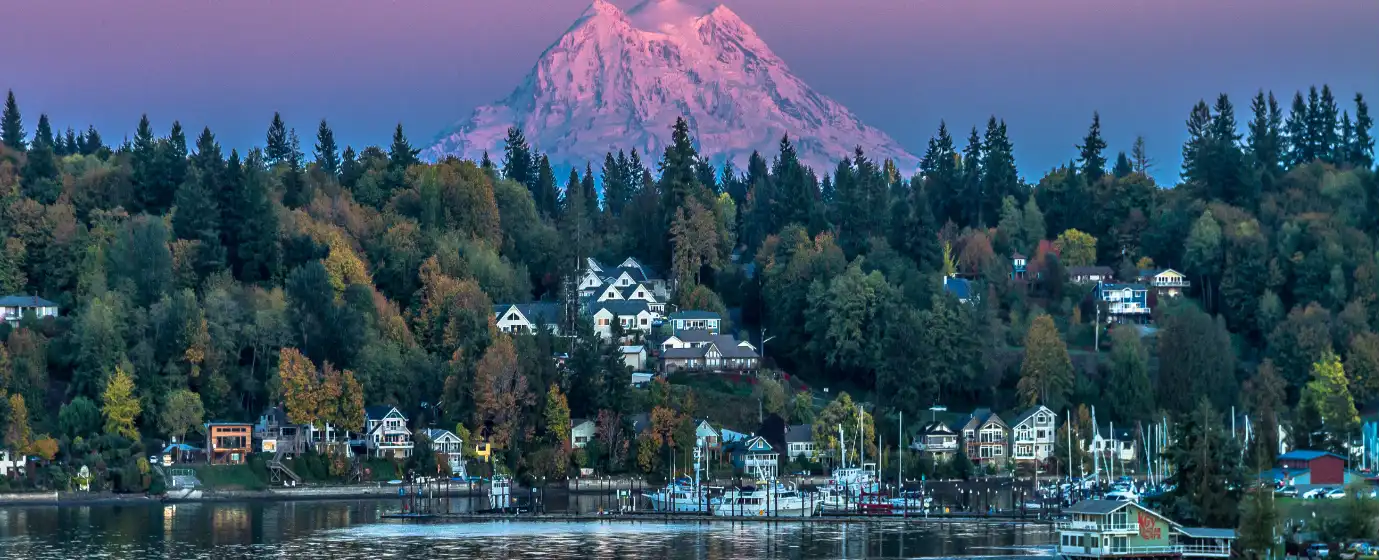
Puget Sound · Washington
Olympia Schools & Family Life: Top Districts, Academics & Community (2026)
The Olympia School District doesn't just serve a state capital — it reflects one. Ranked among the top 15 school districts in Washington by Niche's 2026 ratings and pulling a district-wide graduation rate of 94.2%, OSD consistently outperforms the state average in reading, math, and science. For families relocating from out of state, that A rating isn't a marketing claim — it holds up when you dig into the numbers.
What shapes that quality runs deeper than funding. The district serves roughly 9,500 students across 20 schools, with a student-teacher ratio matching the state average at 18:1 and per-pupil spending that sits just below the state median. The real differentiators are concentration of state-employed professional households, proximity to two universities, and a culture where parent involvement has a long track record. Not every school in the district performs equally — the gap between Boston Harbor Elementary and Garfield Elementary is real — but the floor is higher here than in most comparable Washington cities.
This guide will help you understand which schools serve which neighborhoods, what "top-rated" actually means when your kid walks through the door on day one, where the honest gaps are, and whether Olympia's school system fits your family's specific needs — not just the spreadsheet version of them.
| Metric | Olympia School District |
|---|---|
| District Grade (Niche 2026) | A |
| State Ranking | #14 in Washington |
| Total Students | ~9,556 |
| Schools | 20 (11 elementary, 4 middle, 4 high, 1 alternative) |
| Student-Teacher Ratio | 18:1 |
| 4-Year Graduation Rate | 94.2% (Class of 2024) |
| Math Proficiency | 50% (state avg: 41%) |
| Reading Proficiency | 64% (state avg: 53%) |
| Free/Reduced Lunch | 35% (national avg: 52%) |
| Per-Pupil Spending | ~$18,455 |
| Charter Schools | None |
The eleven elementary schools in OSD serve distinct corners of the city, and where you live determines where your kids go — with one important exception. Lincoln Options Elementary runs primarily by lottery and draws families citywide who want its open-classroom, project-based approach. That single fact changes how some buyers approach their home search: if Lincoln is the target, your neighborhood address matters less than securing a spot.
Boston Harbor Elementary sits at the northern edge of the district near the Puget Sound shoreline and consistently ranks among the highest-performing elementary schools in OSD. It draws from a smaller, tighter residential zone, and that community feel — combined with strong test scores — makes it one of the more sought-after feeder schools in the district. The catch is geography: it's genuinely far from the city center, and families without roots in that pocket often don't consider it.
Centennial Elementary feeds into Washington Middle, which is one of the district's strongest middle schools, and that pipeline draws real attention from buyers researching school pathways. Parent involvement rates here tend to run high, and the school sits in the northeast quadrant of the city where newer residential development has brought in a steady stream of engaged, professional households. If there's a limitation, it's that the school is growing into its demand and classroom capacity has occasionally been a topic in district planning discussions.
Lincoln Elementary operates out of a historic building and functions as the district's primary options school — its lottery enrollment model means you'll find students from across Olympia, not just the surrounding blocks. Families who land a spot tend to be deeply committed to its instructional philosophy. The honest downside is predictability: lottery admissions make it difficult to plan around when you're buying a home six months before your child starts kindergarten.
Madison Elementary and Roosevelt Elementary both feed into Reeves Middle School and serve neighborhoods on the eastside and near the waterfront. They perform in the solid mid-range of district elementary schools — reliable, community-connected, and without the academic ceiling of Boston Harbor or the options-school cachet of Lincoln. Families who aren't caught up in rankings often find these schools excellent fits precisely because the parent community is less competitive and more relaxed.
McKenny Elementary is one of the newer additions to the district (early 1990s construction) and sits in the northeast, also feeding Washington Middle. It draws from neighborhoods where the median household demographics skew toward dual-income professional families, which shows up in parent volunteer hours and extracurricular program funding. The school doesn't have the name recognition of Boston Harbor, but buyers who dig into test scores often find it punching at a similar level.
McLane Elementary serves the western part of the district and feeds into Marshall Middle. It carries the historical identity of what used to be an independent district before consolidation into OSD, and that legacy gives the school a distinct community character — locals take it seriously. The tradeoff is that Marshall Middle's overall performance metrics are somewhat lower than Washington Middle, which matters to families tracking the full K-8 pipeline.
Pioneer Elementary feeds Washington Middle and covers neighborhoods in the central-north part of the city. It consistently performs near the top of the district's elementary cohort and benefits from proximity to neighborhoods with high rates of state-employed professional households. Class sizes here are typically reported around district average, and the school has a reputation for strong foundational literacy programming.
Garfield Elementary and L.P. Brown Elementary both feed Jefferson Middle and serve neighborhoods with higher concentrations of lower-income households. Proficiency scores at both schools run below the district median, and per-student funding at these schools is actually higher than average — a deliberate resource allocation the district has maintained for several years. Families choosing these schools because of neighborhood or affordability will find committed teachers, but should set realistic expectations about academic enrichment programming compared to Boston Harbor or Pioneer.
Hansen Elementary (Julia Butler Hansen) and its feeder pathway into Marshall Middle mirror the Garfield/Jefferson dynamic in some respects — the school serves a more economically diverse population than the northeast corridor schools and reflects that in proficiency data. It was added in the early 1990s to serve growing west-of-downtown neighborhoods, and the community around it tends to be stable and engaged even if the headline test scores are more modest.
The middle school tier is where Olympia's internal equity gaps become most visible, and where families who've done the research start making housing decisions based on boundary lines rather than just neighborhood feel.
Washington Middle School is the clear standout among OSD's four middle schools. It serves the northeast quadrant — drawing from Centennial, Lincoln, McKenny, and Pioneer elementary zones — and consistently posts the highest test scores of any middle school in the district. The student body here reflects the professional households concentrated in northeast Olympia, and the school offers a range of elective and enrichment options that families coming from high-performing suburban districts will recognize as competitive. If Washington Middle is on your list, plan your housing search around its boundary.
Reeves Middle School draws from the Boston Harbor, Madison, and Roosevelt zones and performs solidly in the district's middle tier. It doesn't have Washington's headline numbers, but the school benefits from a geographically diverse student body and a faculty that has been relatively stable. Families who've experienced it tend to describe it positively in terms of school culture even when they acknowledge the academic gap with Washington.
Jefferson Middle and Marshall Middle serve the district's western and southern zones, respectively, drawing from the elementary schools that also post lower proficiency rates. Both schools receive additional district resources and have active improvement frameworks in place, but the performance gap with Washington Middle is real and persistent. Families who want to live in west or southwest Olympia for affordability reasons — and the median home price of $513,000 is meaningfully lower on the west side — should go in with clear eyes about what the middle school trajectory looks like.
Olympia High School, known locally as "Oly," sits on a 40-acre campus on North Street in the southeast part of the city, on land that was a dairy farm before the district purchased it in 1949. With nearly 1,940 students, it's the larger of the two comprehensive high schools, and it carries the district's strongest academic profile — ranked in the top 6.6% of Washington high schools by SchoolDigger and #40 in the state by US News. A graduation rate in the range of 92-94%, AP course participation at around 35%, and proficiency scores above 80% in both English and science put it well above most comparable 4A schools in the state. OHS competes in the WIAA 4A classification and has a genuine athletics pedigree — state championships in boys' basketball, girls' soccer, baseball, and tennis across multiple decades. The student who thrives here is comfortable in a large-school environment, motivated to self-advocate for rigorous coursework, and interested in at least sampling the AP or honors track. Students who need close individualized attention sometimes find the 22.9:1 classroom ratio — the highest among OSD's four high schools — a real friction point.
Capital High School on Conger Ave NW serves Olympia's west side and draws students from both OSD and the Griffin School District, making it a genuinely regional school. With about 1,320 students, it's smaller and carries a somewhat different community feel than Oly — more west-side neighborhood identity, slightly more intimate. It ranks #77 in Washington by US News, which is strong but meaningfully below OHS's #40. The student who gravitates toward Capital often values that smaller community context, and west-side families who have their choice tend to describe the school culture as cohesive.

The question families ask after living here for a year isn't "was the district rating accurate" — it's "why didn't anyone tell me about the boundary lines." The OSD A rating is real, but it's an average across a district with genuine internal variation. A family buying in the Washington Middle zone is getting a different academic trajectory than a family buying in the Jefferson Middle zone, even though both are in the same "A-rated" district.
What surprises most newcomers after six months is how much the community-level variables matter more than the district-level ones. School culture, parent network density, and principal stability vary school to school, and those factors often determine a child's daily experience more than proficiency percentages. Parents who moved here specifically for the school district tend to report positive surprise at teacher quality and negative surprise at how much enrichment programming requires parent-driven fundraising to sustain.
The top schools — Boston Harbor, Washington Middle, Olympia High — are genuinely accessible to buyers who do the boundary research before making an offer. They aren't locked behind a price point the way elite suburban districts in the Seattle metro often are. The median home price of $513,000 is achievable in strong-school zones, particularly the northeast corridor, which is not something you can say about comparable-quality schools in Bellevue or Kirkland.
OSD doesn't operate a dedicated gifted and talented program in the traditional pull-out model that families from California or Texas suburban districts often expect. Differentiated instruction exists, and high-performing students can access honors and AP coursework at the high school level, but a parent expecting a formal GATE or identified-gifted program from elementary school forward will not find that here. Nearby North Thurston Public Schools and private options like Olympia Christian School serve some of that demand, but the honest answer is that the South Sound doesn't have a district-level gifted program that matches what exists in some larger metro districts.
There is no International Baccalaureate program in OSD. Families who specifically want IB for high school will need to look at Tumwater School District or consider private options in the Tacoma corridor. OSD's advanced academic pathway runs through AP courses, not IB, and AP access is strongest at Olympia High — Capital's AP offerings are more limited by enrollment size.
For families with students who need robust special education services, OSD provides legally required services but doesn't have a reputation as a district that goes substantially beyond compliance in terms of structured programs or staffing depth. Families with complex IEP needs should speak directly with the district's special education office before making a housing decision, and should ask specifically about caseload ratios and program availability at their neighborhood school.
Competitive club athletics at the high school level is real at OHS, but 4A competition is the ceiling — this isn't a 4A powerhouse in every sport every year. Families with elite-level athletes who are specifically seeking a district with a history of producing college recruits in a specific sport should research OHS's recent performance in that sport rather than relying on the district's general reputation.

Homes near top-rated schools in Olympia tend to hold their value well and attract consistent demand, which matters when you're thinking about this as a long-term investment for your family. Neighborhoods like South Capitol, Northwest Olympia, and Northeast Olympia draw particular interest from buyers prioritizing school quality and community feel. When well-priced homes appear in these areas, they often move within days rather than weeks, so being financially prepared before you start touring isn't just advice — it's genuinely necessary to compete.
Before you fall in love with a house, sit down with a lender and work through what the full monthly payment actually looks like, not just the loan portion. Property taxes, homeowner's insurance, and any HOA dues can meaningfully shift what feels comfortable versus what's simply the maximum you qualify for. Those are two very different numbers, and the gap between them affects your family's quality of life for years. Knowing your real budget before you walk through that first door puts you in a much stronger position when the right home comes along.
| School | Type | Grades | Notes |
|---|---|---|---|
| Olympia Christian School | Private, Christian | K–12 | Longstanding west-side campus, traditional academic model |
| Saint Michael Catholic School | Private, Catholic | K–8 | Located in Olympia, affiliated with Saint Michael Parish |
| The Evergreen State College Children's Center | Campus Lab School | Preschool | College-affiliated, project-based, limited enrollment |
| Tumwater's Heritage Christian School | Private, Christian | K–12 | Short drive from south Olympia neighborhoods |
| Olympia Waldorf School | Private, Waldorf | K–8 | Small enrollment, alternative pedagogy, arts-integrated |
Head Start services for income-qualifying families are administered through the Thurston County Community Action Council, which operates several sites across the district. For families relocating with toddlers, reaching out to the district's early childhood office at (360) 596-6100 before your move date is worth doing — the Special Services preschool program has limited slots and runs on a rolling enrollment basis.
The Timberland Regional Library system serves Olympia through the downtown branch on 8th Avenue SE, and it functions as more than a library — it's an active community space with dedicated children's programming, summer reading challenges that many local schools formally promote, and one of the more robust early literacy event calendars in Thurston County. Families who arrive in Olympia with kids under eight tend to treat the library as a weekly destination, not an occasional one.
The Olympia Farmers Market on Capitol Way operates Thursday through Sunday from April through October, and it's become one of the genuine family gathering spots in the city. Saturday mornings in particular have a social gravity for parents with school-age kids — it's where you'll run into your neighbors, your kid's teacher, and the parents from your child's soccer team in the same 45 minutes. The market isn't a tourist experience; it's a functional community institution that Olympia families treat as a weekly ritual.
The Hands On Children's Museum on Franklin Street downtown is one of the better children's museums in the South Sound for its size — interactive, well-maintained, and heavily used by both local families and school groups on field trips. For families with kids between three and ten, a membership here pays for itself quickly. Youth athletic programming runs primarily through the Olympia Parks, Arts & Recreation department, which administers youth leagues in soccer, basketball, and baseball across city parks including Yauger Park and East Bay Park. The South Sound YMCA runs parallel programming and tends to offer more year-round options than the city's seasonal leagues.
Local Expert Takeaway: If you're buying in Olympia specifically for the schools, make the middle school boundary your first filter — not the district grade, not the elementary school name. Homes in the Washington Middle zone (Centennial, McKenny, and Pioneer elementary areas in northeast Olympia) hold their value and give your kids the strongest K-8 academic pathway the district offers. The median $513,000 price point is achievable in that zone, but you'll compete with other informed buyers. If budget requires the west side, go in knowing Marshall Middle serves that area and plan to supplement accordingly — there are strong options through tutoring networks and Capitol High's community programs.
Are Olympia schools good for families relocating from high-performing suburban districts?
Yes, with realistic expectations. Olympia School District ranks in the top 15 school districts in Washington and graduates students at a rate significantly above the state average. Families coming from high-performing California or Texas suburban districts will find the academics genuinely competitive, particularly at Olympia High School and in the Washington Middle feeder zone — though dedicated gifted programs and IB are not part of OSD's structure.
What is the graduation rate at Olympia High School?
Olympia High School's graduation rate is typically reported in the range of 92–94%, consistent with the district's Class of 2024 on-time rate of 94.2%. That figure outperforms both the Washington state average and the national average by a meaningful margin, and reflects a school culture where academic completion is treated as a baseline expectation rather than an achievement.
How does Olympia School District compare to neighboring Tumwater and North Thurston?
Olympia School District generally outranks both Tumwater and North Thurston Public Schools on overall academic metrics and Niche ratings. North Thurston serves a larger, more economically diverse student population and faces steeper achievement gap challenges. Tumwater is a solid district with comparable community character but fewer AP and enrichment options at the high school level. Families prioritizing academic programs and graduation outcomes consistently favor OSD when comparing the three Thurston County districts.
Explore the full Olympia series: Living in Olympia · Is Olympia Safe? · Cost of Living · Best Neighborhoods · Schools & Family Life · Youth Sports · Parks & Rec · Retiring in Olympia