
Puget Sound · Washington
Retiring in Olympia: Is It the Right Fit for Your Next Chapter? (2026)
Olympia gives an honest answer faster than most retirement destinations: it works exceptionally well for a specific type of retiree and struggles for others. The no-income-tax advantage is real, the healthcare infrastructure is solid for a city of 56,000, and the natural setting — water, trails, and the Capitol campus — provides daily texture that most comparably priced cities can't match. But if you're arriving expecting the walkable, car-free retirement lifestyle of a dense urban core, Olympia will push back.
The retiree who thrives here tends to be someone who wants engagement without chaos. They show up at the Saturday Farmers Market, they join a hiking group for the Capitol Forest trails, and they find genuine satisfaction in a mid-size city where the mayor is someone they've met. They're often leaving Seattle or the Bay Area with equity to deploy, looking for a place where $513,000 buys a real house with a real yard — not a compromise condo.
This guide covers everything a prospective retiree needs to evaluate Olympia seriously: Washington's remarkable tax advantages, healthcare access and its honest limits, senior living options across the spectrum, and what a typical Tuesday actually feels like here in 2026.

| Income Type | Washington State Tax Treatment |
|---|---|
| Social Security benefits | No state tax |
| Pension income (public or private) | No state tax |
| 401(k) / IRA withdrawals | No state tax |
| Investment dividends and capital gains | Capital gains tax applies above $270K threshold (2026) |
| Military retirement pay | No state tax |
| Rental income | No state tax (subject to federal only) |
| Property taxes | Taxed at approximately 0.96% of assessed value |
| Sales tax | Statewide 8.9% + local (Olympia total: ~9.5%) |
Washington does compensate through sales tax — Olympia residents pay a combined rate of approximately 9.5%, which matters for daily spending. But for retirees with fixed income streams, the property tax picture is equally relevant. At 0.96%, Olympia's effective property tax rate is among the more favorable in the Puget Sound region. Washington also offers a meaningful senior exemption program: homeowners aged 61 and older who meet income thresholds qualify for a property tax reduction on their primary residence, which can substantially lower the annual bill on a home in the $513,000 range. For a retiree on a fixed income, that exemption deserves serious attention when running the numbers.
For a city of Olympia's size, the healthcare infrastructure is genuinely strong. Providence St. Peter Hospital at 413 Lilly Road NE stands as the region's primary anchor — a 372-bed non-profit facility founded in 1887 that holds Magnet nursing recognition and earns U.S. News High Performing designations in abdominal aortic aneurysm repair and spinal fusion. It serves as the dominant referral center for Thurston, Lewis, Mason, Grays Harbor, and Pacific counties, which means specialists and surgical capacity that many comparably sized cities lack.
The second hospital, MultiCare Capital Medical Center at 3900 Capital Mall Drive SW, adds meaningful redundancy. Operating at 110 beds with 24-hour emergency services, it holds DNV Certified Primary Stroke Center status and received the American Heart Association's 2025 Get With The Guidelines Silver Plus award — a distinction that matters directly for retirees, given that stroke response time is often the difference between full recovery and lasting impairment. Capital Medical also runs a Joint and Spine Center, which addresses one of the most common surgical needs in the 65-and-older population.
The honest limitation: Olympia does not have a Level I Trauma Center or a major academic medical center. Complex cardiac surgeries, rare oncological cases, and advanced neurological interventions will require travel to Seattle — typically around 65 minutes without traffic, which stretches considerably longer during peak hours. For most routine and moderately complex care, the two local hospitals are more than adequate. For retirees with serious or chronic cardiac, oncological, or neurological conditions, that Seattle corridor access becomes a real planning consideration.
Olympia has roughly 50 senior living communities across all care levels when including facilities in the broader metro area — a respectable number for a city of this size, though less depth than you'd find in larger metros. The concentration of facilities tends to cluster in the western neighborhoods near Highway 101 and the Lilly Road medical corridor to the east.
| Community | Type | Location | Est. Monthly Cost |
|---|---|---|---|
| The Firs (MBK Senior Living) | Independent Living | Lakeside neighborhood, near Chehalis-Western Trail | From $2,500/month |
| Brookdale Olympia East | Independent + Assisted Living | 616 Lilly Road NE | $3,500–$5,200/month |
| The Sequoia Assisted Living | Assisted Living | 825 Lilly Road NE | $4,200–$6,000/month |
| Artesian Place Assisted Living | Assisted Living | 828 McPhee Road SW | $4,000–$5,800/month |
| Fieldstone Cooper Point | Assisted Living | 810 Fieldstone Drive SW | $4,500–$6,500/month |
| Fieldstone Olympia Memory Care | Memory Care | West Olympia | $5,500–$7,500/month |
| Holiday Capital Place | Independent Living | Central Olympia | $3,200–$4,500/month |
| Cooper Point Village | Independent Living | 4125 Capital Mall Dr SW | $3,000–$4,200/month |
| Boardwalk Apartments | Independent Living | 410 Capitol Way N (Downtown) | $2,800–$3,800/month |
| Panorama City (Lacey) | CCRC (all care levels) | Nearby Lacey, WA | $3,500–$7,000+/month |

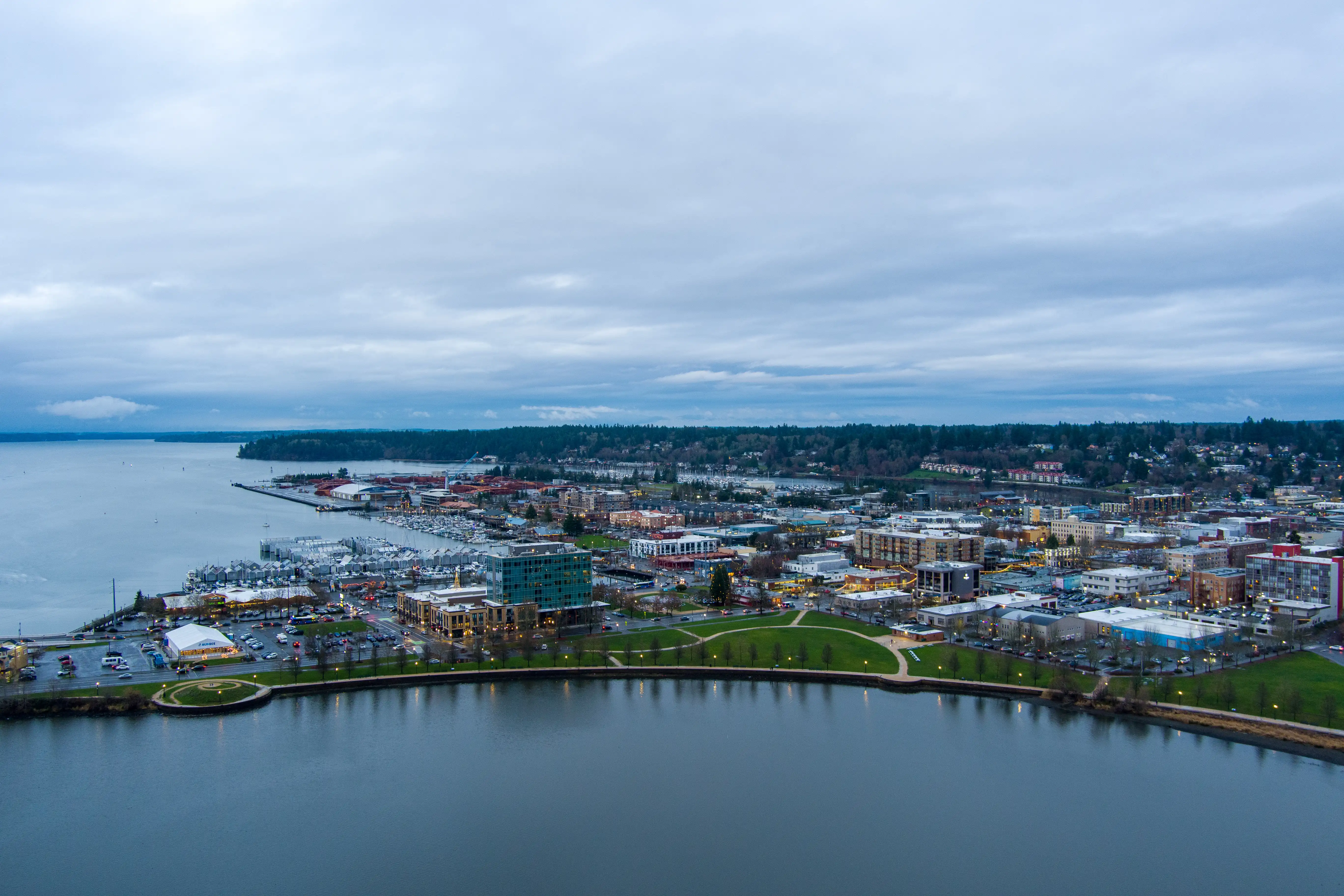
Walkability is real in pockets, not citywide. Downtown Olympia and the South Capitol neighborhood deliver genuine on-foot quality of life — the Farmers Market at 401 N Capitol Way runs Thursdays and Saturdays from April through December, Percival Landing gives you a waterfront boardwalk within ten minutes of most downtown addresses, and coffee shops, restaurants, and the State Capitol grounds are all accessible without a car. Outside those corridors, Olympia is a driving city, and retirees who live in Westside or Northwest Olympia will find that most errands require wheels.
The cultural calendar runs deeper than most people expect from a city this size. The Washington Center for the Performing Arts brings touring productions and local performances to 5th Avenue SE year-round. The Olympia Film Society runs programming at multiple venues. Hands On Children's Museum draws grandparents regularly, and the Capitol Campus itself — with its formal gardens and year-round public access — provides a kind of civic anchor that retirees from less politically engaged cities find genuinely energizing. Olympia's identity as the state capital means public life, community meetings, and civic engagement are available at unusually high density.
Getting around without a car is doable but not effortless. Intercity Transit covers Olympia reasonably well and is free to ride — a genuine benefit on a fixed income. The Dial-A-Lift program provides paratransit for seniors and those with disabilities. For medical appointments within the Lilly Road corridor or downtown, the transit connections work. For anything requiring the Highway 101 corridor or the Westside commercial strips, most retirees find a car is practically necessary.
The social scene rewards engagement. Retirees who join the Olympia Senior Center on Eastside Street, participate in the Chehalis-Western Trail walking groups, or volunteer with the Washington State Legislature's public programs tend to find community quickly. Those who wait for the city to come to them often find Olympia quieter than expected.

Olympia's neighborhoods each tell a different story when it comes to long-term value for retirees. South Capitol's walkable streets and historic character make it consistently popular, and well-priced homes there rarely sit more than a few days before drawing multiple offers. Downtown and the Eastside have also seen steady interest from buyers wanting proximity to the waterfront, farmers markets, and medical facilities — all things that matter more as the years go on. If you're flexible on location, Northwest Olympia tends to offer more breathing room pricewise, with solid single-level options often available under $600,000, though that continues to shift with the market.
Before you fall in love with a house on a tour, sit down with a lender first. Your true monthly obligation includes property taxes, homeowner's insurance, any HOA dues, and the loan structure itself — and that full picture can look meaningfully different from the purchase price alone. I always encourage retirees to think about a comfortable payment, not just the maximum they qualify for, because peace of mind in retirement matters as much as the home itself. Being financially ready also means you can move quickly when the right place appears.
| City | Median Home Price | Hospital Access | Walkability | Senior Living Depth | Overall Retirement Fit |
|---|---|---|---|---|---|
| Olympia, WA | $513,000 | Two hospitals, 65 min to Seattle | Good in downtown/South Capitol | Moderate (~50 communities) | Strong — best for engaged, active retirees |
| Lacey, WA | $490,000 | Shares Providence St. Peter | Car-dependent | Strong (Panorama City CCRC) | Good — more suburban feel |
| Tumwater, WA | $475,000 | Same hospital access | Very car-dependent | Limited | Budget-focused buyers only |
| Tacoma, WA | $460,000 | MultiCare Tacoma + St. Joseph | Moderate walkability | Strong | Solid alternative, grittier character |
| Shelton, WA | $340,000 | Limited (Mason General) | Very low | Very limited | Affordable but isolated |
| Seattle, WA | $850,000+ | Full academic medical system | Excellent | Extensive | Strong care, tough affordability |
Local Expert Takeaway: Retirees who thrive in Olympia are typically those who want walkable access to arts, politics, and the outdoors — and South Capitol and Downtown are the two neighborhoods where that combination actually exists at street level. If you need a full continuum of care on one campus, look hard at Panorama City in Lacey before committing to an Olympia address. And if your retirement income comes primarily from pension, IRA, or Social Security draws, the zero-income-tax calculation here is not a marketing point — it's real money that changes what you can afford.
Is Olympia a good place to retire?
Olympia is a strong retirement choice for people who value engagement, natural beauty, and Washington's zero-income-tax environment. The city rewards retirees who want to be involved — in arts, civic life, outdoor recreation — and the $513,000 median home price offers meaningful value compared to Seattle or Portland.
What healthcare is available in Olympia for retirees?
Olympia has two hospitals: Providence St. Peter Hospital with 372 beds and Magnet nursing recognition, and MultiCare Capital Medical Center, a DNV-certified Primary Stroke Center. Both offer 24-hour emergency care and cover the most common senior health needs. Complex specialized care typically requires a trip to Seattle.
How does Olympia compare to nearby retirement options like Lacey or Tacoma?
Olympia offers more walkability and cultural density than Lacey at a similar price point, but Lacey's Panorama City CCRC is the stronger option for couples planning a long-term continuum of care. Tacoma is roughly $50,000 cheaper on median home price and has stronger hospital infrastructure, but trades Olympia's walkable downtown character for a larger, denser urban environment.
Explore the full Olympia series: Living in Olympia · Is Olympia Safe? · Cost of Living · Best Neighborhoods · Schools & Family Life · Youth Sports · Parks & Rec · Retiring in Olympia