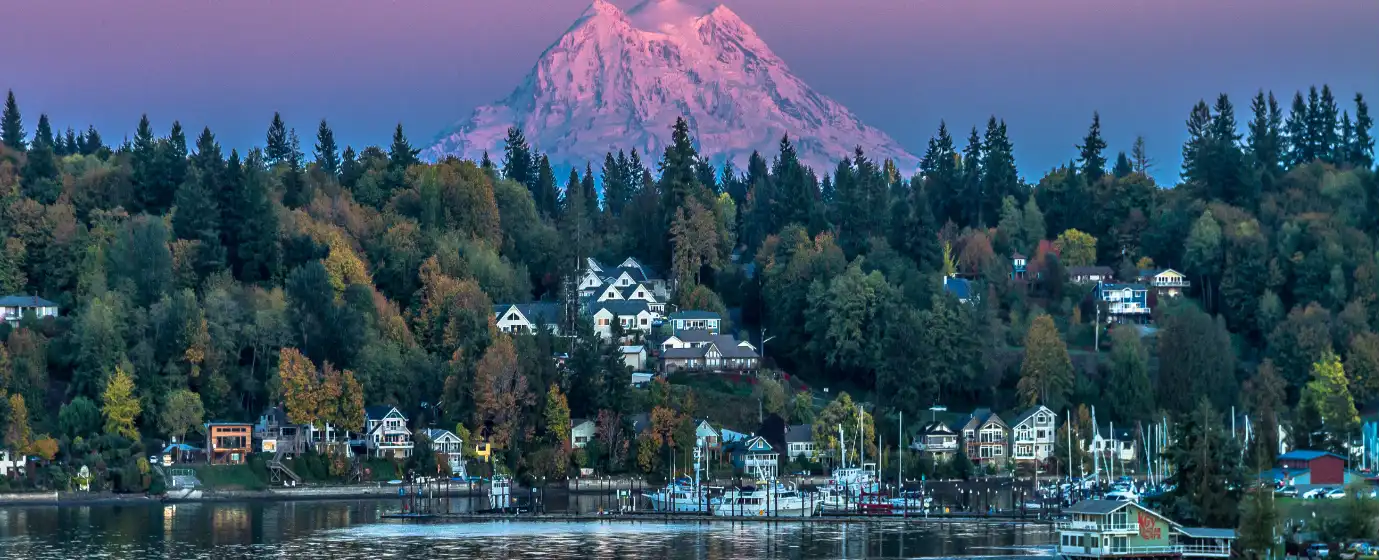
Puget Sound · Washington
Living in Olympia: The Ultimate Relocation Guide (2026)
Maybe your company has given you the flexibility to leave Seattle, and someone at the office mentioned Olympia as the place where you can actually afford a house with a yard. Maybe you've been watching Thurston County on Zillow for six months, cross-referencing school ratings and commute times, and now you're trying to figure out if the reality matches what the numbers suggest. Maybe you just drove through on I-5, saw the Capitol dome rising above the treeline, and thought — wait, this place is more interesting than I expected.
Olympia sits at the southern tip of Puget Sound, roughly 65 minutes from Seattle on a good day, and functions as Washington's state capital in the most literal sense: government is the economic engine here, the Capitol campus shapes the physical and cultural identity of downtown, and the rhythms of the legislative session genuinely affect daily life. The city is small enough — around 56,600 residents — that you'll recognize faces at the farmers market within a month of moving here, but large enough to have real neighborhoods with distinct personalities, a genuine arts scene, and enough dining variety to avoid cooking every night. Thurston County's wider metro, anchored by Olympia, Lacey, and Tumwater, reaches roughly 304,000 people, giving the area genuine critical mass without the congestion of a major metro.
This guide will help you figure out whether Olympia fits your actual life — not just your spreadsheet. You'll find honest neighborhood breakdowns, a realistic portrait of the commute, the tradeoffs that get glossed over in most relocation content, and the local quirks that only show up after you've lived somewhere for six months. The goal is to help you make a confident decision, not just a well-marketed one.
Not every city works for every buyer, and Olympia is no exception. The table below cuts through the noise.
| Best For | Why |
|---|---|
| State & government workers | Direct proximity to the Capitol campus eliminates the commute entirely; many agencies are walkable from South Capitol and downtown neighborhoods |
| Seattle refugees seeking affordability | At a $513,000 median sold price, Olympia offers a genuine entry point for buyers priced out of King County — often for comparable or better square footage |
| Families with school-age children | Olympia School District earns consistent A-level ratings; the city is compact enough that kids can reasonably get around independently |
| Retirees drawn to outdoor access | Priest Point Park, Capitol Lake trails, and proximity to Hood Canal and the Olympic Peninsula create an active outdoor retirement without the mountain-town isolation |
| Remote workers wanting lifestyle over metro convenience | Fast fiber internet is accessible across most of the city; the trade-off is a 65-minute drive if you ever need to be in Seattle in person |
| First-time buyers | Eastside and parts of the Westside offer entry-level homes in the $300,000s–$400,000s that remain largely invisible to out-of-state buyers chasing the waterfront listings |
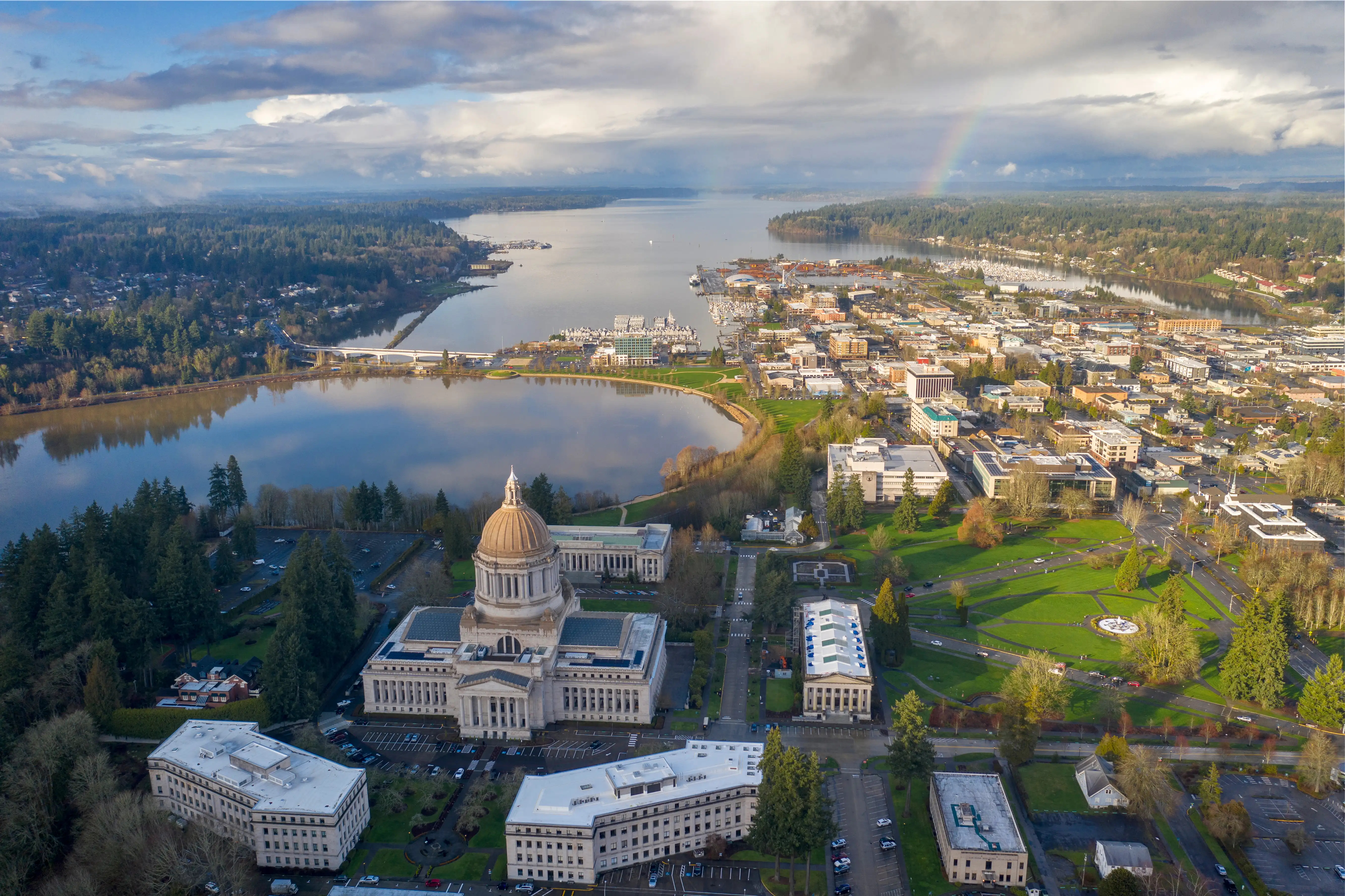
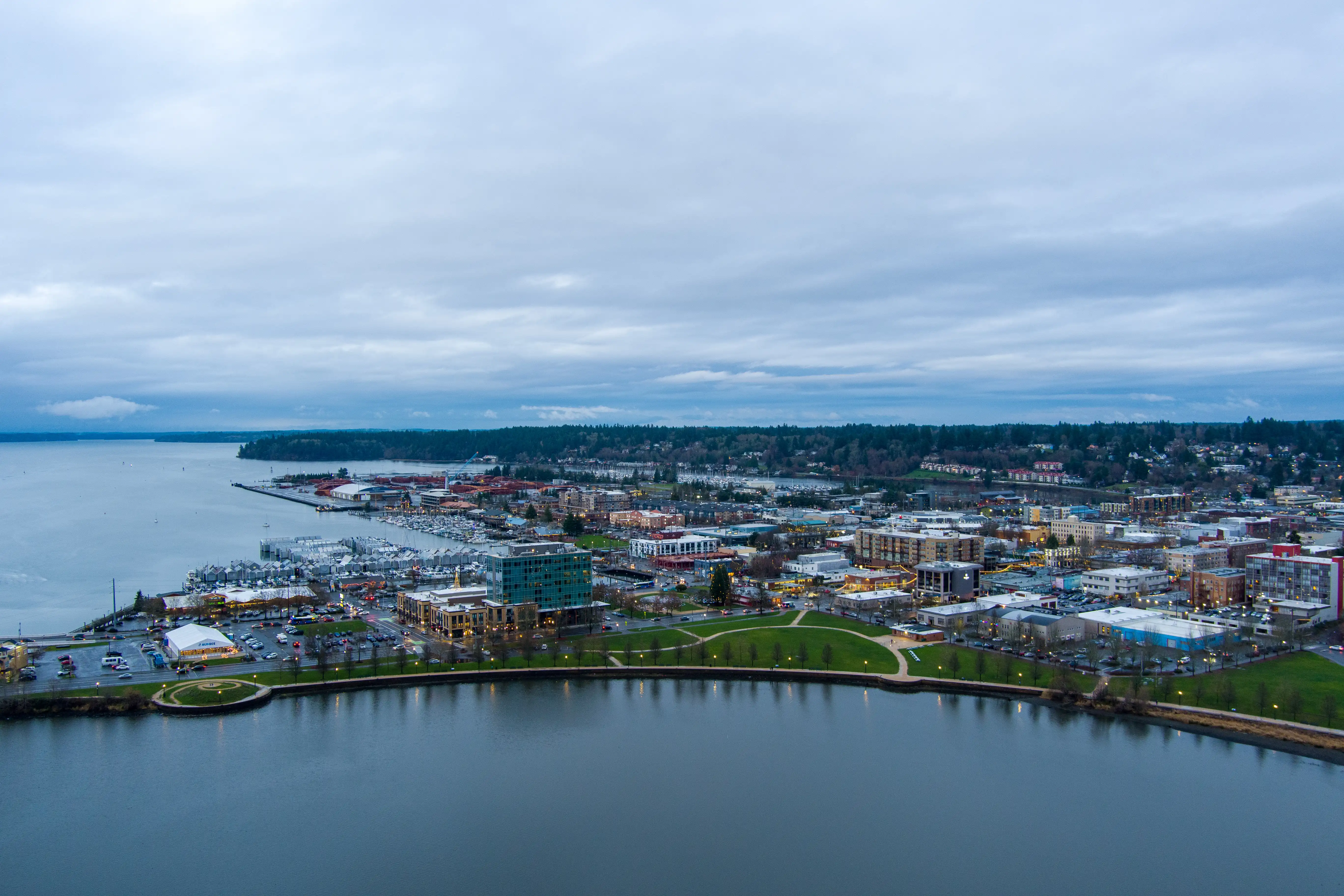
Olympia is the kind of place that rewards people who actually engage with it. The downtown core is genuinely walkable — the Percival Landing boardwalk runs a full mile along the waterfront with views of Budd Inlet and, on clear days, the Olympic Mountains rising behind the water in a way that never quite becomes ordinary. Capitol Lake sits between downtown and the South Capitol neighborhood, and the trails around it handle a surprising amount of foot traffic from government workers on lunch breaks and families on weekend mornings.
The commute reality deserves honesty. Driving to Seattle takes 65 minutes without traffic — and "without traffic" is doing a lot of work in that sentence. During peak morning hours on I-5 northbound, 90 minutes is more typical, and on Fridays heading into any holiday weekend, plan for longer. Olympia's own internal traffic is a different story: the city is compact enough that most cross-town trips take under 15 minutes, and Intercity Transit covers the major corridors reasonably well for a city of this size. The daily friction is Olympia to Lacey along Pacific Avenue, which can bottleneck badly between 4:30 and 6:00 PM.
The community vibe leans progressive, artsy, and somewhat self-aware about both of those things. The Olympia Farmers Market — operating spring through fall at the waterfront on 4th Avenue — functions as a genuine neighborhood gathering point rather than a tourist attraction, drawing regulars who know the vendors by name and show up weekly regardless of the weather. The city has a history of independent music, a legacy tied to the early 1990s Olympia underground scene, and that ethos still shows up in the number of small venues, zine shops, and locally owned coffee houses that survive here when they'd struggle elsewhere.
What surprises most people after six months of living here is how much the state government calendar shapes everything. When the legislature is in session — roughly January through April in odd years — downtown restaurants fill, parking around the Capitol campus becomes genuinely difficult, and the energy in the city shifts noticeably. When the session ends, things quiet down in a way that feels abrupt if you're not expecting it. This isn't a negative so much as a rhythm you learn to anticipate.
The price-to-quality ratio on housing is the most compelling argument for Olympia in 2026. At a $513,000 median sold price, you're getting a single-family home in a walkable Pacific Northwest city with a functional downtown, good schools, and water access — a combination that costs roughly twice as much in most of King County. Entry-level fixer-uppers on the Eastside can start around $250,000, while waterfront estates on East Bay Drive and West Bay Drive push past $1.7 million. The range is real, and the middle of that range buys considerably more house than the Seattle equivalent.
Outdoor access here is genuinely exceptional for a capital city. Priest Point Park covers over 300 acres of forest trails running along the Puget Sound shoreline — it's the kind of park that residents take for granted until they try to explain it to friends visiting from other state capitals. Watershed Park adds old-growth forest walks within city limits. The Olympic Peninsula, with Hurricane Ridge and the Hoh Rain Forest, is under two hours by car. For buyers who factor outdoor access into quality of life, Olympia's location is a legitimate selling point, not just a nice-to-have.
The public school situation is stronger than the city's modest size might suggest. The Olympia School District consistently earns top-tier ratings in state assessments, and the presence of The Evergreen State College and St. Martin's University gives the city an intellectual texture that many similarly sized cities lack. That college-town influence shows up in the restaurant scene, the lecture series at the Washington Center for the Performing Arts, and the general tolerance for the unconventional that makes Olympia distinctly itself.
Washington's lack of a state income tax remains one of the most underappreciated elements of living here, particularly for remote workers relocating from California or Oregon. Combined with a property tax rate of approximately 0.96% and utility costs running below the national average — average monthly gas and electric runs around $150 through Puget Sound Energy — the ongoing cost of ownership is more manageable than the home price headline might suggest. For buyers coming from states with 9–13% income tax brackets, the savings are immediate and substantial.
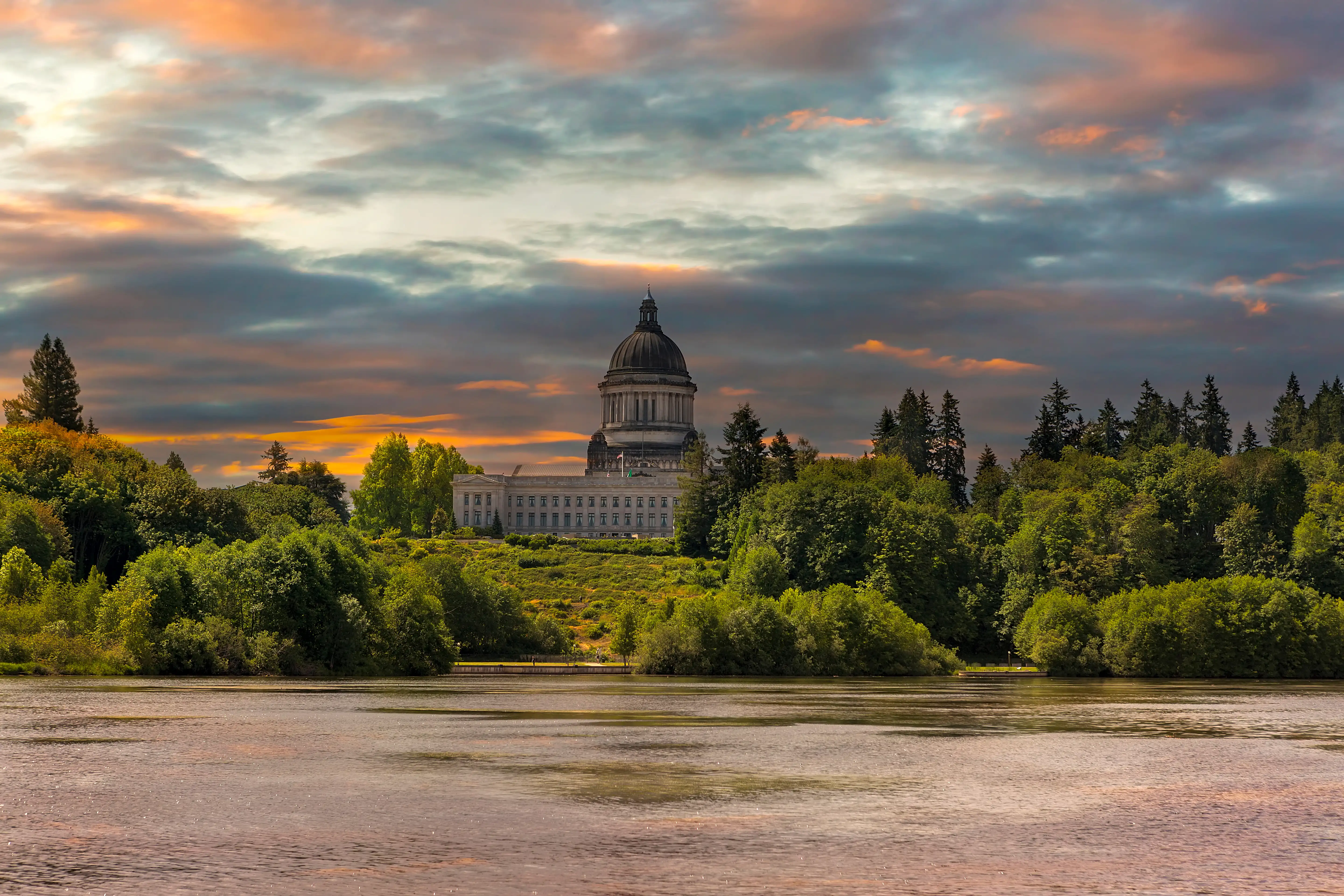
The rain is real, and no amount of Pacific Northwest evangelism changes the meteorological facts. Olympia is one of the cloudier cities in an already cloudy region — the sky stays gray from October through April with enough consistency that seasonal affective disorder is a legitimate concern for people who haven't lived under this kind of cloud cover before. The payoff is genuinely green summers with low humidity, but the entry cost is five or six months of gray that takes adjustment.
The property crime rate warrants real attention. At 34 incidents per 1,000 residents, it sits meaningfully above national averages and is something buyers who prioritize that metric need to weigh honestly. This doesn't translate uniformly across neighborhoods — downtown and parts of the Eastside experience the bulk of it, while South Capitol and the northwest neighborhoods are considerably quieter — but dismissing it as a non-issue would be inaccurate. The violent crime rate of 3.4 per 1,000 is more moderate and closer to what comparable Pacific Northwest cities report.
Olympia's economy is heavily dependent on state government, which creates a stability floor but also a ceiling. Private sector job diversity is limited compared to Tacoma or Bellevue — if you're a remote worker or a government employee, this is irrelevant. If you're planning to job-search locally in tech, finance, or corporate sectors, the options are genuinely narrower than in larger metros. Providence St. Peter Hospital is the most significant non-government employer, and the education sector (Evergreen, St. Martin's, the school district) adds meaningful employment, but the private sector bench is thin.
Why some people leave: The most common exit story involves career pivots that the local job market simply can't accommodate. Younger professionals in their 30s who've built equity in an Olympia home often find themselves trading up to Tacoma or returning to the Seattle area when their industry demands proximity to a larger talent pool. Others leave because the Seattle commute — manageable as a once-a-week trip — becomes untenable when hybrid schedules shift back toward three or four days in-office. Neither of these is a failure of Olympia; they're the natural limits of a small capital city that was always better suited to certain life stages than others.
Downtown Olympia is the city's cultural and civic core, anchored by the Washington State Capitol campus to the south and the Percival Landing boardwalk to the north. Housing runs primarily toward townhouses and condominiums, many with Capitol Lake views, and the median sold price in early 2026 was approximately $549,000 — though that figure reflects a small, volatile sample. The lifestyle advantage is real: walkable access to the farmers market, Capitol Theater, independent restaurants, and coffee shops means owning a car becomes genuinely optional for daily life.
Best for: Young professionals and government workers who want walkability and don't need a yard.
South Capitol is the neighborhood most longtime Olympia residents point to when asked where they'd choose to live if money were no object. Early 20th-century bungalows and craftsman homes line tree-shaded streets within a short walk of both the Capitol campus and Capitol Lake's trail system. The boundaries run roughly from downtown's southern edge to I-5, making it extraordinarily convenient for state workers while remaining insulated from the traffic noise that affects areas immediately adjacent to the freeway.
Best for: State government employees and established families who want historic character within walking distance of downtown.
The Eastside is Olympia's most historically layered residential neighborhood — formerly known as Swantown, its streets date to the mid-1800s and the housing stock reflects that, with early 20th-century homes, massive old-growth street trees, and narrow streets that were never designed for the SUVs now parked along them. It's one of the more affordable entry points in the city, with fixer-uppers available well below the city-wide median, and its proximity to Pacific Avenue makes the commute to Lacey and southward access to I-5 straightforward. The honest tradeoff is that some Eastside streets lack sidewalks and the commercial corridor along Eastside Street is functional rather than polished.
Best for: First-time buyers and urban homesteaders who want affordability and character over amenities.
The Westside is a broad swath of west Olympia covering everything from older ranch homes near West Bay Park to newer construction closer to Capital Mall and the Olympia Country & Golf Club. It draws a wide demographic precisely because it doesn't have a single dominant identity — the areas near Evergreen skew younger and more artistic, while the neighborhoods closer to Cooper Point lean toward families with school-age children and buyers prioritizing square footage over walkability. Highway 101 access makes northbound commutes toward Bremerton and the Kitsap Peninsula more manageable from here than from anywhere else in the city.
Best for: Buyers who want flexibility — more square footage, good schools, and easy freeway access — without paying waterfront premiums.
Northwest Olympia is the neighborhood where Olympia's value proposition becomes most visible to buyers coming from Seattle. Homes built primarily before 1950 — many single-level, with mature landscaping and established lots — sit close enough to downtown that biking to the Capitol campus is realistic. The median sold price in early 2026 was approximately $565,000, which represents meaningful appreciation, yet the neighborhood still underprices comparable walkable neighborhoods in Tacoma. Homes here were moving in around 12 days on market, which tells you everything about local demand.
Best for: Remote workers and government employees who want close-in walkability without the condo lifestyle.
Northeast Olympia sits between the more established northwest neighborhoods and the suburban growth corridor pushing toward Lacey. Housing here tends toward mid-century single-family homes on larger lots, and the price point typically runs below the city-wide median, making it one of the better values for buyers who need more bedrooms than downtown condos can provide. The neighborhood is served by Intercity Transit and has reasonable access to both I-5 and Pacific Avenue, though the trade-off is fewer walkable amenities compared to the western and southern neighborhoods.
Best for: Growing families who need space and value over prestige address.
Bigelow Highlands occupies elevated ground on Olympia's northwest side, giving it the kind of territorial views — Budd Inlet, the Capitol dome, the Olympics on clear days — that buyers expect to pay a significant premium for, and they do. Homes here are larger on average than much of the city, with prices trending toward and occasionally above the city-wide median. The neighborhood has a quiet, established feel that appeals to buyers who want proximity to downtown without living in it.
Best for: Professionals and empty-nesters who prioritize views and neighborhood stability over active street life.
Cooper Point extends along the peninsula west of downtown, where newer residential development sits alongside natural areas and Puget Sound shoreline access. The Evergreen State College anchors the southern end of the peninsula, giving the area an academic and environmentally conscious character that doesn't feel forced — it's genuine. Properties here range considerably depending on proximity to the water, and the area offers some of the largest private lots available within city limits.
Best for: Buyers who want semi-rural privacy, larger lots, and proximity to Evergreen's cultural programming without a true rural commute.

Olympia's neighborhoods each tell a different financial story, and where you land can meaningfully shape your long-term equity picture. Homes in South Capitol and Downtown tend to attract strong buyer competition given their walkability and historic character, and well-priced listings routinely go under contract within days rather than weeks. Northwest Olympia has also seen consistent buyer interest from families prioritizing newer construction and quieter streets. If you're relocating and eyeing something under $750,000, understand that the most desirable options don't sit around waiting.
Before you fall in love with a home during a tour, sit down with a lender first. Your full monthly obligation includes not just principal and interest but property taxes, homeowner's insurance, any HOA dues, and the loan structure itself — and that combined number can look quite different from what an online calculator suggests. I always encourage buyers to identify a comfortable payment rather than simply chasing the maximum they qualify for. Olympia's market moves fast enough that having your financing clearly mapped out before you start touring is the difference between being ready and being disappointed.
| City | Best For | Median Home Price | Commute to Seattle | Vibe |
|---|---|---|---|---|
| Olympia | Government workers, affordability, lifestyle | $513,000 | ~65 min (off-peak) | Progressive, artsy, capital-city civic identity |
| Lacey | Families, suburban amenities, newer construction | ~$470,000–$490,000 | ~60 min | Suburban, family-oriented, fast-growing |
| Tumwater | Budget buyers, quiet living, proximity to Olympia | ~$450,000–$470,000 | ~60 min | Residential, practical, lower profile |
| Tacoma | Job diversity, urban amenities, mid-priced market | ~$430,000–$460,000 | ~35–40 min | Gritty-creative, rapidly gentrifying, larger city feel |
| Shelton | Maximum affordability, rural character | ~$300,000–$350,000 | ~90 min | Small-town, rural, limited local employment |
| Centralia | Deep affordability, bedroom community | ~$290,000–$330,000 | ~75–80 min | Rural-suburban, limited walkability, low cost |
| Metric | Detail |
|---|---|
| Population | ~56,600 (2026 estimate) |
| Median sold home price | $513,000 (Redfin, March 2026) |
| Median household income | $81,302 |
| Property tax rate | ~0.96% |
| School district rating | A (Olympia School District) |
| Violent crime rate | 3.4 per 1,000 residents |
| Property crime rate | 34 per 1,000 residents |
| Average days on market | 46 days (March 2026) |
| Commute to Seattle | ~65 minutes off-peak |
| Washington state income tax | None |
The Farmers Market is a genuine institution, not a weekend tourist event. The Olympia Farmers Market operates at the waterfront on 4th Avenue from April through December, and the vendors here have been showing up weekly for decades. Locals know the flower stall that sells dahlias for less than grocery store prices, the specific tamale vendor whose line forms before 10 AM, and which rainy Saturdays are worth showing up for and which ones clear the crowd enough to actually browse. Within your first few months, you will develop your own version of this routine.
The legislative session changes the city. Every odd-numbered year, when the Washington State Legislature convenes for its long session from January through April, downtown Olympia transforms. Parking around the Capitol campus disappears. The restaurant reservations that were easy in December become difficult in February. Lobbyists, journalists, and staffers cycle through the city in patterns that longtime residents have internalized without thinking about it. Even-year short sessions create a milder version of the same effect. If you live near downtown, you will feel this rhythm in ways that are mostly interesting rather than annoying.
Olympia has a music and arts legacy that locals take seriously. The city's connection to the early-1990s indie and riot grrrl scene — bands like Sleater-Kinney and Beat Happening formed here — created a culture of independent creative expression that persists in the form of local labels, zine fests, and a live music scene that punches well above the city's size. The Washington Center for the Performing Arts brings national acts and touring productions to downtown, but the more distinctly Olympian cultural experiences happen in smaller venues that don't advertise much beyond word of mouth.
What I would not do if moving to Olympia: I would not buy on or immediately adjacent to Pacific Avenue SE between downtown and Lacey without spending significant time there during evening and weekend hours first. The corridor handles the bulk of cross-city traffic, has a higher concentration of the property crime that affects the city's statistics, and lacks the residential insulation that makes South Capitol and the northwest neighborhoods feel as stable as they do. There are legitimate properties along that corridor, but it's the one area where the drive-by impression and the lived experience diverge most sharply. If you're prioritizing safety and neighborhood cohesion, the extra distance from that corridor is worth the slightly longer internal commute.
Local Expert Takeaway: If your budget lands between $450,000 and $580,000 and you're relocating from Seattle or Tacoma, prioritize Northwest Olympia and South Capitol before anything else — those neighborhoods combine the walkability and neighborhood stability that justify paying above the city-wide median, and they tend to hold value better than the outlying suburban sections during slower market cycles. For buyers with more flexibility on commute and a tighter budget, the Eastside offers genuine character and affordability that's increasingly rare in a Pacific Northwest city of this quality. Whatever you do, don't wait for prices to dip significantly — the 46-day average on market and the appreciation trend in the fastest-moving neighborhoods suggest the best properties won't give you that opportunity.
✅ Olympia offers a genuinely rare combination — a walkable, culturally active Pacific Northwest city with a $513,000 median home price, no state income tax, and a school district that earns A-level ratings without the King County price tag attached.
⚠️ Property crime rates and Seattle commute times are the two metrics that filter buyers most quickly. At 34 per 1,000 residents, property crime is elevated, and the I-5 corridor to Seattle becomes unreliable beyond 65 minutes on a regular basis — both factors matter depending on your priorities.
📍 The neighborhood you choose shapes your Olympia experience more than any city-level stat. South Capitol and Northwest Olympia live like different cities than the Pacific Avenue corridor — understand which version of Olympia you're actually buying into before making an offer.
Is Olympia a good place to raise a family?
Yes — Olympia offers a strong combination of school quality, outdoor access, and community character that works well for families with school-age children. The Olympia School District consistently earns high state ratings, Priest Point Park and Watershed Park provide serious outdoor space within city limits, and the city is compact enough that kids can develop real independence as they get older. Families who have moved from larger metros often cite the scale of the city as a specific advantage.
What is the crime rate in Olympia?
Olympia's violent crime rate sits at approximately 3.4 per 1,000 residents, which is moderate for a Pacific Northwest city of its size. The more notable figure is property crime, which runs around 34 per 1,000 — elevated above national averages and concentrated primarily in the downtown corridor and along Pacific Avenue. Neighborhoods like South Capitol, Northwest Olympia, and Bigelow Highlands report considerably lower property crime and tend to be the neighborhoods where safety-conscious buyers focus their searches.
How does Olympia compare to Lacey and Tumwater?
Olympia offers more walkability, cultural depth, and neighborhood character than either Lacey or Tumwater, but at a slightly higher price point and with the elevated property crime that comes with being the urban core. Lacey, immediately to the east, has seen substantial new construction and tends to appeal to buyers who prioritize suburban amenities and newer housing stock over historic character. Tumwater, directly to the south, is the most affordable of the three but functions primarily as a bedroom community without Olympia's downtown identity. Most buyers who choose Olympia over its neighbors are specifically buying into the Capitol city lifestyle — the farmers market, the waterfront, the walkable downtown — and that distinction is worth paying for if it matters to you.
Explore the full Olympia series: Living in Olympia · Is Olympia Safe? · Cost of Living · Best Neighborhoods · Schools & Family Life · Youth Sports · Parks & Rec · Retiring in Olympia