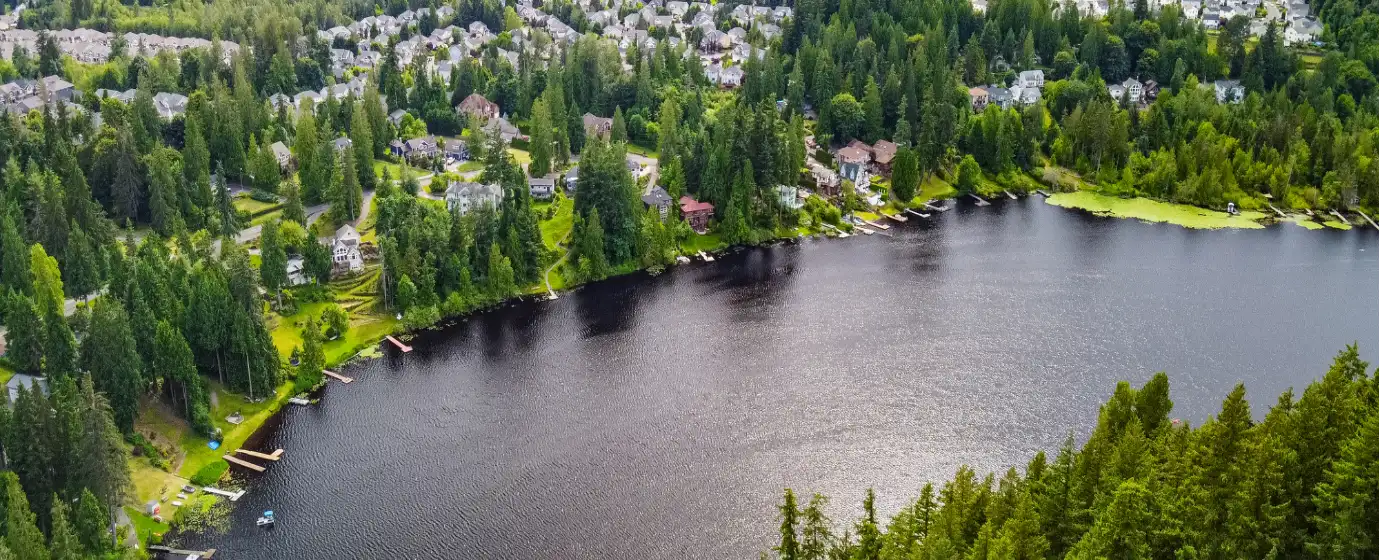
Puget Sound · Washington
First-Time Home Buyer Guide for Renton (2026)
There's a specific moment every first-time buyer in Renton eventually hits — usually sometime between getting pre-approved and losing their second offer — when the abstract idea of "buying a home" becomes uncomfortably concrete. The numbers are real. The competition is real. And the gap between what you thought this would feel like and what it actually feels like is wider than anyone warned you. That said, Renton remains one of the most compelling entry points into King County homeownership in 2026, precisely because it offers something increasingly rare in the Seattle metro: a legitimate path to ownership without moving an hour from everything you care about.
The median home price in Renton sits at $640,000 — and that number buys you different things depending on where you're looking. In pockets like Benson Hill or Maplewood Heights, $640,000 can get a first-time buyer into a three-bedroom single-family home with a yard. In Kennydale, that same budget is an entry point to a competitive condo search. The gap between renting and owning here has narrowed somewhat as rents have climbed, but the down payment and closing cost hurdle remains the primary obstacle for most buyers in this market, not income or qualification.
This guide walks you through the complete buying process specific to Renton — from what your budget realistically gets you in different neighborhoods, to what income and credit score you actually need, to the five mistakes that consistently cost first-time buyers in this market. It also covers real down payment assistance options that work in King County right now. If you've been reading general Washington real estate advice and wondering how it translates to Renton specifically, this is that translation.
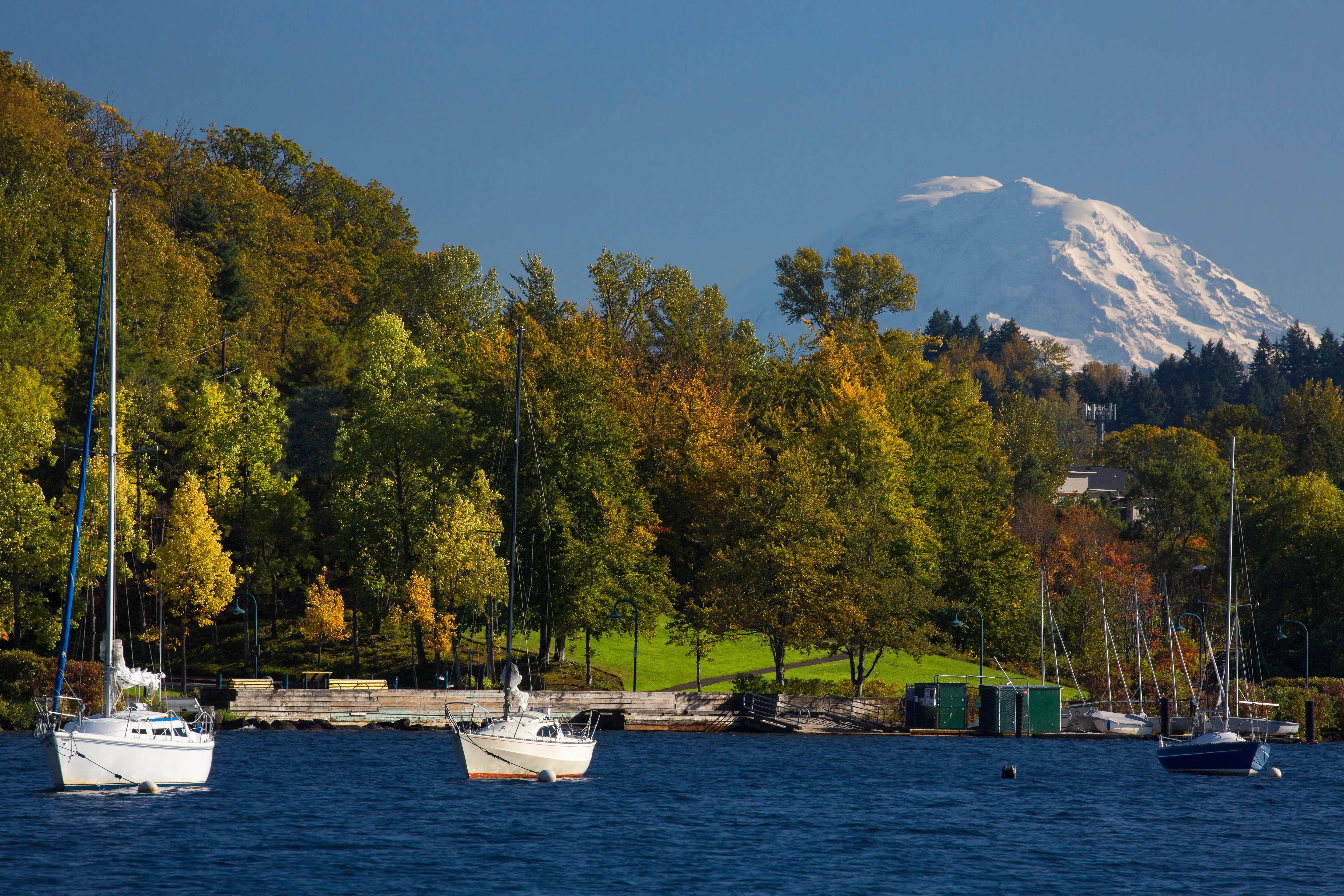
Renton makes a compelling case on nearly every variable that matters to first-time buyers. At $640,000 median, it prices well below Bellevue (where entry-level single-family homes start north of $1 million) and meaningfully below many Seattle neighborhoods where comparable square footage runs $800,000 and up. The Renton School District holds a solid B rating, the commute to downtown Seattle runs around 20 minutes on a clear day via I-405 or SR-169, and the city's employment base — Boeing, Valley Medical Center, PACCAR, Wizards of the Coast — means buyers aren't solely dependent on a Seattle salary to sustain their purchase long-term.
The honest downside is that $640,000 is still $640,000. For buyers putting 5% down, that's $32,000 before closing costs. The realistic entry point for first-time buyers who need to keep cash-to-close manageable is the condo and townhome market, where two-bedroom condos start around $370,000 and townhomes begin in the mid-$300,000s. Neighborhoods like Downtown Renton, West Hill, and parts of Benson Hill offer attached housing at price points that genuinely work for buyers coming in with modest down payments and incomes in the $80,000–$110,000 range. The key is knowing where to look rather than assuming the citywide median defines your options.
What works against first-time buyers in Renton is the same thing that works against them everywhere in King County: well-priced homes in good school pockets still move fast. The days of waiving every contingency are largely behind us — the market has softened from its 2024 peak — but sellers in sought-after areas near Kennydale or along the Cedar River corridor still see multiple offers within the first weekend. Going in without an agent who knows Renton's micro-neighborhoods, or without a pre-approval letter that's actually current, will cost you time and likely a home or two before you figure that out.
| Price Range | What You Typically Find | Neighborhood Examples | Competition Level |
|---|---|---|---|
| Under $350K | 1–2 bedroom condos, some older units needing updates | Downtown Renton, West Hill | Moderate |
| $350K–$450K | 2-bedroom condos, entry-level townhomes | Benson Hill, Sunset, Central Renton | Moderate to High |
| $450K–$550K | Townhomes, smaller older single-family homes | Renton Highlands, Cascade, Talbot Hill | High |
| $550K–$650K | 3-bedroom single-family homes, some with yards | Maplewood Heights, West Hill, Cedar River | High |
| $650K+ | Larger single-family homes, updated interiors, better lots | Kennydale, East Highlands, Fairwood | Very High |
Below $450,000, buyers are largely in the attached housing market — condos and townhomes — which is a legitimate entry point and one that many first-time buyers undervalue. A two-bedroom condo in a well-maintained building near Downtown Renton or the Sunset corridor gives you ownership, equity, and a foothold in a market where waiting typically costs more than compromising on property type.
| Step | What Happens | Typical Timeline | What First-Timers Get Wrong |
|---|---|---|---|
| Get finances in order | Pull credit, pay down debt, document income sources, build reserves | 1–6 months before searching | Starting this step the week they want to make an offer |
| Pre-approval | Lender reviews income, assets, credit; issues a letter | 1–5 business days | Shopping with an old pre-approval or one from an online lender with no local credibility |
| Find an agent | Interview 2–3 buyer's agents with verified Renton experience | Before active search | Skipping this and going direct to listing agents |
| Active search | Tour homes, analyze comps, understand neighborhood tradeoffs | 2–8 weeks average | Waiting for the "perfect" home instead of the right-value home |
| Making offers | Agent prepares CMA, you decide on price and terms | 24–72 hours from finding a home | Offering list price assuming it equals fair market value |
| Under contract | Mutual acceptance; earnest money deposited within 2 business days | Day 1–2 after acceptance | Not having earnest money liquid and ready to wire |
| Inspection | Licensed inspector evaluates property; you review report | Days 5–10 | Waiving inspection on older Renton housing stock to compete |
| Appraisal | Lender orders appraisal to confirm value supports loan | Days 7–21 | Not understanding what happens if it comes in low |
| Final walkthrough | Verify property condition matches contract terms | 24 hours before closing | Skipping it entirely |
| Closing | Sign documents, wire funds, receive keys | Day 30–45 | Being surprised by the exact cash-to-close amount |
Inspection contingencies have largely returned to Renton transactions after largely disappearing during the peak seller's market. That's good news, but buyers need to understand what they're working with in certain neighborhoods. Renton has significant older housing stock — homes built in the 1950s through 1980s are common in areas like Central Renton, Talbot Hill, and Renton Highlands. These properties can carry deferred maintenance that shows up vividly in an inspection report: aging electrical panels, older roofs, original plumbing. Waiving inspection to be competitive on an older home in this market is a financial risk that typically doesn't pay off.
Closing timelines in King County run 30–45 days on conventional loans, shorter on some cash or bridge scenarios. First-time buyers are often surprised that closing doesn't mean moving in that afternoon — coordinate your move date before you're under contract, not after.

A conventional loan requires a 620 minimum credit score, but the real threshold where your rate becomes meaningfully better is 680 and above, with the best pricing typically reserved for borrowers at 740 or higher. On a $450,000 loan, the difference between a 650 score and a 740 score translates to a rate difference that can cost $150–$200 more per month over the life of the loan — real money that affects your long-term affordability even if it doesn't change your qualification status on paper.
FHA loans remain the most accessible path for buyers with credit scores in the 580–650 range, requiring just 3.5% down. The trade-off is mortgage insurance that stays on the loan for the life of a 30-year term unless you refinance — a real cost to factor into your monthly payment math. For income qualification purposes, most lenders use a 28% front-end debt-to-income ratio as the guideline for housing costs. That means to comfortably qualify for a home in the $400,000 range, you need gross household income of roughly $80,000–$85,000. A $500,000 purchase pushes that to around $100,000, and a $600,000 home requires approximately $120,000 in gross income — assuming a reasonable down payment and no significant existing debt payments.
One factor that surprises buyers relocating from California, Oregon, or other states with income taxes: Washington has no state income tax. If you're moving from a state where you've been paying 6–9% of your income to the state, your net take-home pay increases substantially the moment you establish Washington residency. That additional income is real qualifying power — a household earning $95,000 gross in Washington keeps more of it than the same household in California, which directly affects how comfortable your mortgage payment feels month to month.
DTI — debt-to-income ratio — matters more than most first-time buyers realize going in. Lenders look at both front-end (housing costs as a percentage of income) and back-end (all debt payments including student loans, car payments, and minimum credit card payments as a percentage of income). A buyer with a $100,000 salary but $600/month in car and student loan payments has meaningfully less purchasing power than a buyer with the same salary and minimal debt. Getting your back-end DTI below 43% before applying will open more doors and better rates.

As someone who works with buyers throughout the Puget Sound region, I can tell you that where you land within Renton genuinely shapes your long-term investment. Kennydale and Renton Highlands have seen consistent buyer demand, and well-priced homes there — many still findable under $750,000 for first-timers — can draw multiple offers within days of listing. Cascade tends to offer slightly more breathing room on price while still sitting close to major employment corridors, which matters when you're thinking about resale years down the road.
Before you fall in love with a home at an open house, please sit down with a lender first. Pre-approval gives you a realistic picture of your full monthly obligation — not just principal and interest, but property taxes, homeowner's insurance, and any HOA dues that come with the property. I've seen buyers get approved for an amount that looks exciting on paper, then realize the actual payment is uncomfortable month to month. Knowing your comfortable number before touring means you can move confidently and quickly when the right home appears in Renton's competitive market.
Mistake 1: Assuming list price is market price. In Renton, homes in desirable pockets routinely close above list price — sometimes by $20,000–$50,000 — while homes in softer micro-markets sit and eventually sell below ask. Buyers who make offers based on the sticker price without pulling recent comparable sales are consistently surprised when they lose or overpay. Your agent should be pulling 90-day comps within a half-mile radius before you make any offer.
Mistake 2: Skipping inspection on older housing stock. Central Renton, Talbot Hill, and Renton Highlands have a significant number of homes built before 1980. These neighborhoods offer some of the more accessible price points in the city — and some of the highest inspection risk. Knob-and-tube wiring, galvanized pipes, and original single-pane windows are common finds in this vintage of home. Waiving inspection to compete is understandable in theory; in practice, it leads to expensive surprises that erase any perceived savings.
Mistake 3: Shopping at the top of your qualification. Lenders will qualify you for more than you should spend. A lender approval for $650,000 doesn't mean a $640,000 purchase leaves you comfortable — it leaves you house-rich and cash-poor, with no buffer for property taxes (roughly 0.97% annually in Renton), HOA fees, maintenance, or the inevitable appliance that fails six months after closing. Most financial advisors suggest keeping total housing costs at or below 28–30% of gross income, not whatever ceiling the lender approves.
Mistake 4: Underestimating how school district boundaries affect resale. Renton School District serves most of the city, but boundary lines matter for resale in ways buyers don't always anticipate. Homes that feed into higher-rated elementary schools in Kennydale or the eastern neighborhoods command a premium and hold value more consistently. Buyers focused solely on their own immediate needs — particularly those without school-age children — sometimes overlook this and end up with a harder resale down the road.
Mistake 5: Waiting for prices to drop in a supply-constrained market. Renton's housing supply is structurally limited — the city is largely built out, with infill development moving slowly. Buyers who spent 2023 and 2024 waiting for prices to fall watched the market appreciate instead. The market has softened modestly from its peak, and that window of reduced competition is real — but it's not a price-crash scenario. Every month you rent while waiting for a 10% drop is a month of equity you didn't build.
Benson Hill is one of the most consistent entry points for first-time buyers who want a single-family home without stretching to the market's upper limits. The neighborhood sits southeast of downtown with a mix of older ranch-style homes and newer construction, and it's one of the areas where buyers in the $550,000–$640,000 range can still find three-bedroom houses on real lots. Proximity to SR-515 makes the commute manageable, and the area continues to see steady demand from families priced out of Kennydale.
Maplewood Heights is another neighborhood worth serious attention for buyers in that same price band. Quieter than Benson Hill, with a more suburban residential character, Maplewood Heights offers solid resale potential given its proximity to Maplewood Golf Course and easy access to I-405. Homes here tend to sit on the market slightly longer than the city average, which gives motivated buyers a bit more room to negotiate — a rarity in King County.
For buyers who want to keep the purchase price under $450,000 and are open to attached housing, Downtown Renton has become more interesting than its reputation suggests. The Landing development brings walkable retail, dining, and entertainment options to what was once a purely commercial core. Condos in this pocket give first-time buyers genuine urban amenities without the Seattle price tag, and the proximity to the Cedar River Trail is a consistent quality-of-life benefit.
West Hill splits the difference — offering townhomes and smaller single-family homes in the $450,000–$550,000 range with a residential feel and solid access to both I-405 and SR-599 toward Tukwila. It's not the most polished neighborhood in Renton's portfolio, but the value-to-location ratio is hard to argue with for buyers prioritizing a detached structure over a condo.
If cash to close is the primary obstacle standing between you and a Renton purchase, there is one program worth knowing about directly through this office: ONE+ by Rocket Mortgage. The structure is straightforward — you put down 1% of the purchase price, and Rocket Mortgage contributes a 2% grant (up to $7,000) that is never repaid. There's no second lien, no repayment at sale, no interest accruing on a deferred balance. The grant covers the rest of your 3% down payment, which means your actual cash-to-close drops significantly. The program requires a 620 minimum credit score, is open to both first-time and repeat buyers, and has an income limit of $114,800 for King County. The loan cap is $350,000, which positions it squarely for condo and townhome buyers entering the lower end of Renton's market — exactly where many first-time buyers need the most support.
To see if ONE+ might work for your income and purchase price, check out the full program details and eligibility guide →

Local Expert Takeaway: The single most common mistake first-time buyers make in Renton is letting the citywide median price define where they search, rather than letting their actual budget and timeline drive neighborhood selection. A buyer with $50,000 liquid and $90,000 household income has a real path to ownership in Renton right now — but it runs through Benson Hill, Maplewood Heights, or the attached housing market in Downtown Renton, not Kennydale. Start with what you can comfortably close on, build equity for three to five years, and let that equity move you up. The buyers who win in this market are the ones who stop waiting for perfect and start getting specific.
✅ Renton's $640,000 median price is meaningfully below Bellevue and most Seattle neighborhoods, making it one of King County's more realistic entry points for first-time buyers with conventional financing.
⚠️ The biggest risk for first-time buyers here is shopping at the ceiling of their qualification rather than the ceiling of their comfort — property taxes at roughly 0.97%, maintenance on older housing stock, and HOA fees can turn a "qualified" purchase into a financial strain within the first year.
📍 For buyers who need to keep cash-to-close manageable, the condo and townhome market under $450,000 — particularly in Downtown Renton, West Hill, and Benson Hill — offers a genuine ownership path without requiring six figures in reserves.
Can I buy a home in Renton as a first-time buyer?
Yes — Renton is one of the more accessible entry points in King County for first-time buyers, particularly in the condo, townhome, and lower-tier single-family segments. Buyers with credit scores above 620, household incomes around $80,000–$100,000, and $30,000–$50,000 in reserves have real options here, especially with down payment assistance programs like ONE+ reducing the upfront cash requirement.
How much do I need to buy my first home in Renton?
At the $640,000 median price with 5% down, you're looking at $32,000 in down payment plus roughly $10,000–$15,000 in closing costs. But first-time buyers don't have to start at the median — two-bedroom condos start around $370,000, and townhomes begin in the mid-$300,000s, where programs like ONE+ can reduce your actual cash-to-close to well under $20,000.
What credit score do I need to buy a house in Washington state?
The minimum for FHA financing is 580 for 3.5% down; conventional loans start at 620. In practice, the buyers getting the best rates and cleanest approvals in King County are sitting at 700 and above. If your score is in the 620–660 range, it's worth spending 60–90 days actively improving it before applying — the monthly payment difference on a $450,000 loan between 650 and 740 is real enough to matter over a 30-year term.
Explore the full Renton series: The Ultimate Renton Relocation Guide · Is Renton Safe? · Cost of Living in Renton · Best Neighborhoods in Renton · Renton Schools & Family Life · Renton Youth Sports · Renton Parks & Recreation · Retiring in Renton · 1031 Tax-Deferred Exchange in Renton · Renton First-Time Homebuyers Guide · Renton Down Payment Assistance Guide · Moving to Renton from California