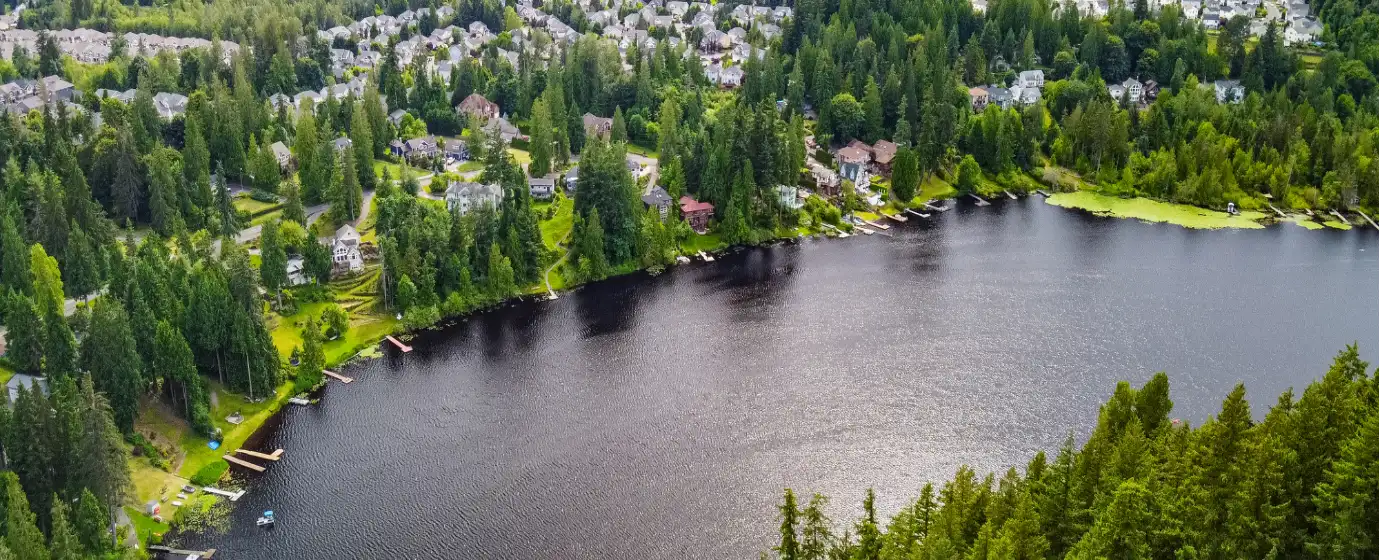
Puget Sound · Washington
Living in Renton: The Ultimate Relocation Guide (2026)
Maybe your company is relocating you to the greater Seattle area and someone in HR mentioned Renton as "a solid option." Maybe you've been watching Bellevue and Kirkland listings disappear the day they're posted, and Renton keeps coming up as the place where the math still works. Maybe you drove through on I-405 and thought it looked more industrial than suburban, and you're not sure whether to take it seriously. All three of those impressions are partially right — and partially outdated.
Renton sits at a genuine crossroads. It's a city of roughly 105,000 people anchored by Lake Washington to the north, hemmed in by the Cedar River valley, and bookended by Boeing's massive manufacturing complex on one side and the Cascade foothills on the other. That geography creates a city of real contrasts: waterfront neighborhoods that feel like they belong in Bellevue, hilltop communities that feel firmly suburban, and a downtown core still finding its identity. The median sold price of $640,000 puts it well below Seattle and most of the Eastside, which is exactly why buyers keep looking here.
This guide is designed to help you figure out whether Renton actually fits your life — not just your budget. You'll find honest assessments of the neighborhoods, the commute reality, the school system, the tradeoffs, and the local quirks that don't show up on Zillow. By the time you're done reading, you'll know whether Renton belongs on your short list or whether a nearby city is actually the better match.
Not every city is the right fit for every buyer, and Renton is more specific in its appeal than its size might suggest. Here's a quick read on who tends to thrive here.
| Best For | Why |
|---|---|
| Boeing & aerospace workers | Many live 10–15 minutes from the plant; no commute overhead |
| Seattle commuters on a budget | 20-minute drive to Seattle, with housing 20% cheaper than the city |
| Families with school-age children | Renton School District serves a diverse, growing community; newer construction in the Highlands |
| Healthcare workers | Valley Medical Center and Providence Health are major local employers |
| Remote workers | Lower price point for larger homes; quiet residential neighborhoods on the east side |
| First-time buyers | Entry-level inventory exists here when it's vanished from Bellevue and Kirkland |
Renton doesn't have the polished suburban identity of Issaquah or the tech-campus energy of Redmond. What it has instead is something harder to categorize: a working city with genuine waterfront, a tight industrial history that's been slowly giving way to retail and residential development, and a population diverse enough that no single demographic dominates the character of daily life. The city's diversity index sits around 80, which means in practical terms that your neighborhood school, your coffee shop, and your farmers market will reflect a genuine cross-section of the Pacific Northwest.
The commute reality is better than the address suggests. From most Renton neighborhoods, you're looking at 20 minutes to downtown Seattle on a good morning, with the caveat that Highway 167 and I-405 are both notorious for mid-morning and late-afternoon stacking. The SR-169 corridor through downtown Renton can also back up significantly between 7:30 and 9 AM. Buyers who choose neighborhoods on the western side of the city — North Renton, parts of West Hill — often find they can cut 5 to 10 minutes off peak commutes by timing their departure and using surface streets down Rainier Avenue South. The Sounder commuter rail stops in Renton as well, giving downtown Seattle commuters a viable alternative when the freeway is genuinely broken.
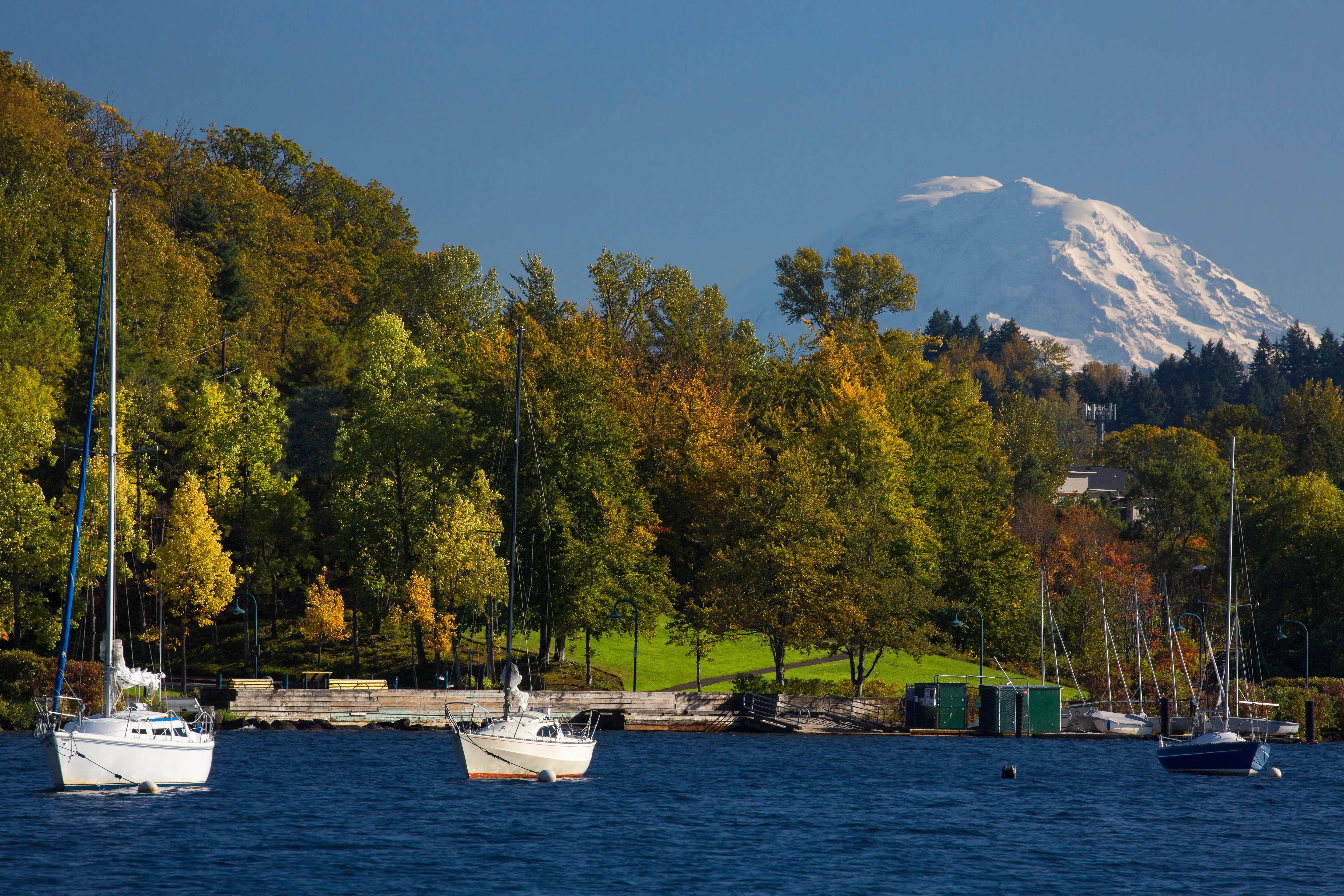
Gene Coulon Memorial Beach Park functions as Renton's informal community living room. On summer weekends, the park fills with picnickers, boaters, and families along the Lake Washington waterfront, and the adjacent boat launch draws activity year-round. The Landing, a large open-air shopping center north of downtown, handles most of the city's big-box retail and dining needs and has made downtown Renton more of a pass-through for residents than a true gathering destination. That's one of the honest tensions in Renton life: the infrastructure is solid, but the walkable town-center experience most buyers imagine when they picture a thriving suburb isn't fully there yet.
What surprises most people after six months of living here is how multicultural daily life actually is — in a way that Seattle's more gentrified neighborhoods no longer really are. Renton's Vietnamese, East African, and Filipino communities are large and visible, reflected in the restaurant options, the school population, and the neighborhood demographics. Buyers moving from more homogeneous parts of the country sometimes need a beat to recalibrate their expectations, and those who lean into it tend to find it one of Renton's most enduring strengths.
The first reason people stay in Renton is the price-to-space equation that still holds where almost nowhere else in the Seattle metro does. At a median sold price of $640,000, buyers are getting single-family homes with yards in established neighborhoods — the kind of square footage that has effectively been priced out of Bellevue and most of Seattle proper. That gap has narrowed over the years, but it hasn't closed.
Proximity to employers is the second major anchor. Boeing's Renton factory is one of the largest buildings in the world by volume and employs thousands of workers directly, plus an extensive network of suppliers and contractors in surrounding industrial areas. Valley Medical Center — part of UW Medicine — is the region's major hospital and one of Renton's largest employers, as is Providence Health. For workers in aerospace, healthcare, or manufacturing, Renton isn't a compromise commute city; it's the logical place to live.
The outdoor access is quietly exceptional. The Cedar River Trail runs from downtown Renton east into the foothills, offering flat, paved bike and pedestrian access along the river that's genuinely popular year-round. Cougar Mountain Regional Wildland Park sits just to the east, with over 3,000 acres of forested trail systems that feel nothing like a suburban park. Gene Coulon's waterfront gives swimmers, kayakers, and picnic-goers lake access without the ferry and parking logistics of other Seattle-area waterfront parks. This combination of river trail, mountain wilderness, and lake frontage in a single commutable city is something few suburban markets can match.
Renton also carries a piece of American cultural history that most residents know: Jimi Hendrix was born here, and the Jimi Hendrix Memorial at Greenwood Memorial Park draws visitors from around the world. It's a small thing in the daily calculus of where to buy a home, but it's the kind of specific local identity that creates attachment over time. Longtime residents tend to mention it as one of those Renton-specific facts they find themselves repeating at dinner parties on the Eastside.
Renton's downtown core is the most frequently cited frustration among residents who came expecting a walkable urban center. The area has improved with The Landing's development and some new residential construction, but compared to downtown Kirkland or even downtown Kent, Renton's commercial center still has gaps — closed storefronts, surface parking, and a streetscape that doesn't invite lingering. If your mental image of suburban life includes walking to a farmers market and grabbing a coffee on the way back, Renton's downtown will require recalibration.
The property crime rate is the other honest flag. At 33.1 incidents per 1,000 residents, Renton runs above state and national averages for property crime — car prowls, catalytic converter theft, and retail theft are the most commonly reported issues. Violent crime at 3.4 per 1,000 is more moderate, roughly comparable to other cities of similar size and density in the region, but the property crime number warrants attention if you're comparing Renton to Newcastle or Sammamish. The variation by neighborhood is significant: Kennydale and Maplewood Heights report meaningfully lower rates than Central Renton or parts of the Sunset corridor.
Traffic on I-405 through Renton is among the worst stretches of highway in Washington state. The interchange at SR-167 regularly ranks as one of the most congested points in the Puget Sound region, and the two-lane merge from Rainier onto 405 south can back up as far as the Grady Way interchange on bad days. Buyers who work in Bellevue and assume they can hop on 405 and be there in 12 minutes are in for an education during the first week of November.
Why some people leave Renton comes down to one of two things: they wanted better schools than the district currently delivers across all its schools, or they wanted the more polished suburban experience that Issaquah, Newcastle, or Sammamish provides at a higher price. Renton's Renton School District earns a B rating overall, which is respectable but uneven — the gap between the district's stronger and weaker schools is wider than in neighboring Issaquah School District. Families who arrive with specific school expectations and don't do neighborhood-level research sometimes find themselves moving again within a few years.
Kennydale is the neighborhood that makes Renton's overall median look low. Tucked along the Lake Washington shoreline in the city's northwest corner, it's a community of mid-century waterfront homes that have been replaced or dramatically renovated over the past two decades, pushing the median sold price well above $1 million. Access to Gene Coulon Park is walking distance for most residents, and the I-405 on-ramp puts both Seattle and Bellevue within a reasonable drive. The honest tradeoff is that entry-level inventory essentially doesn't exist here — buyers coming in under $800,000 will be looking at condos or very dated construction that's priced for land value.
Best for: Established buyers who want lake proximity without the full premium of Mercer Island.
The Highlands occupies the elevated eastern plateau above downtown Renton and covers a broad range of sub-neighborhoods, from older 1960s ranch-style homes to newer construction developments built in the past decade. The eastern ZIP code (98059) has been one of the fastest-appreciating pockets in the South King County market, with prices in some sections approaching or exceeding $900,000 on newer builds. The trade-off is distance from the waterfront and a dependence on car travel for almost everything.
Best for: Families prioritizing newer construction and school options in the Renton School District.
Cascade sits on the southeastern edge of Renton, adjacent to the Cougar Mountain foothills and the Cedar River watershed. It's a quieter, more wooded neighborhood than the Highlands, with larger lots and a feel that skews toward established homeowners who want space from the urban core. Trail access to Cougar Mountain Regional Wildland Park is one of its defining assets.
Best for: Buyers who want acreage, privacy, and trail access without leaving city limits.
Downtown Renton is in transition — which means it offers opportunity alongside uncertainty. The area closest to the Cedar River and the historic commercial core has seen new apartment development and some retail investment, but it remains a work in progress. Walkability is higher here than in most Renton neighborhoods, with access to restaurants, transit, and the river trail. Home prices run lower than in the Highlands or Kennydale, with Central Renton single-family homes in the low-to-mid $600,000 range.
Best for: Buyers or renters who want urban proximity and don't need a polished suburban streetscape.
Benson Hill was annexed by Renton in 2008 from the unincorporated King County area and retains a somewhat separate community identity from the rest of the city. It sits south of the downtown core with a predominantly residential character and a more affordable price point relative to the Highlands or Kennydale. The area is popular with first-time buyers and families who want suburban density without the premium zip codes.
Best for: First-time buyers and budget-conscious families looking for value in South Renton.
Talbot Hill is a hillside neighborhood south of downtown with sweeping views of the Cedar River valley and a mix of mid-century homes and more recent infill construction. It's quieter than the commercial corridors and offers a genuine neighborhood feel without the price tag of Kennydale. Residents here are typically within a 10-minute drive of Valley Medical Center, which makes it a natural fit for healthcare workers.
Best for: Healthcare workers and buyers who want hill views and established neighborhood character.
Maplewood Heights sits in the eastern foothills above Renton, adjacent to Maplewood Golf Course, and offers a residential environment that feels more separated from the city's busier corridors. Larger lots, mature trees, and quieter streets give it a semi-rural feel that's genuinely unusual for a city this close to Seattle. Crime rates here tend to run below the citywide average.
Best for: Buyers who want the Renton price point with a quieter, more semi-rural atmosphere.
West Hill occupies the ridge west of downtown, overlooking Tukwila and the Duwamish Valley. It's one of the more affordable single-family areas in Renton, with a median around $735,000 and a mix of mid-century homes and modest newer construction. The catch is that daily errands require driving — the area isn't particularly walkable — and some sections have higher property crime exposure than the eastern hillside neighborhoods.
Best for: Buyers on the lower end of the Renton price range who don't mind a car-dependent lifestyle.

Renton's neighborhoods each tell a different story when it comes to long-term value. Kennydale consistently draws strong buyer interest thanks to its lake views and proximity to the 405 corridor, and well-priced homes there rarely sit more than a few days before attracting multiple offers. Renton Highlands has seen steady appreciation as buyers priced out of Seattle and Bellevue look east for more space, with many solid options still available under $750,000. Cascade offers a quieter, more established feel that tends to hold value well over time — something worth weighing as you think beyond the purchase price to resale potential years down the road.
Before you fall in love with a home during a tour, it's worth having a real conversation with a lender first. Your actual monthly obligation includes not just principal and interest, but property taxes, homeowners insurance, any HOA dues, and how your loan is structured — and that full picture can look quite different from the number you might see on a listing site. I always encourage buyers to focus on a comfortable payment, not just the maximum they qualify for. Knowing where you stand before touring means you can move quickly and confidently
| City | Best For | Median Home Price | Commute to Seattle | Vibe |
|---|---|---|---|---|
| Renton | Value + employer proximity | $640,000 | ~20 min | Working-class roots, increasingly diverse |
| Bellevue | Eastside prestige, tech workers | ~$1.4M | ~20–30 min | Corporate, polished, competitive |
| Newcastle | Quiet suburbs, Bellevue access | ~$1.0M | ~25 min | Newer construction, family-focused |
| Kent | Maximum affordability, South County | ~$580,000 | ~30–35 min | Industrial, budget-friendly |
| Issaquah | Top-tier schools, outdoor lifestyle | ~$1.1M | ~30 min | Trail-focused, affluent suburban |
| Tukwila | Airport workers, rentals | ~$550,000 | ~15 min | Dense, transit-accessible |
| Metric | Data |
|---|---|
| Population | ~104,947 (2026 estimate) |
| Median Sold Home Price | $640,000 (Redfin, Feb 2026) |
| Median Household Income | $100,432 |
| Property Tax Rate | ~0.97% |
| Sales Tax | 10.1% |
| Commute to Seattle | ~20 minutes (off-peak) |
| Violent Crime per 1,000 | 3.4 |
| Property Crime per 1,000 | 33.1 |
| School District | Renton School District (B rating) |
| Major Employers | Boeing, Valley Medical Center, PACCAR, Wizards of the Coast |
| Cost of Living vs. National Avg | ~45% higher |
Renton residents have a genuine and specific civic pride around Jimi Hendrix. The annual Renton River Days festival — held each summer along the Cedar River — has been a community fixture for decades, drawing tens of thousands of people for live music, carnival events, and the popular rubber duck race on the river. It's one of those events that locals attend out of actual enthusiasm, not obligation, and it reflects something real about how the community sees itself: unpretentious, accessible, and not trying too hard to be something it's not.
The Boeing factory tour deserves mention not just as a tourist attraction but as a community anchor. The Renton plant — one of the largest structures in the world by volume — produces 737 aircraft, and the facility has shaped the city's identity, economy, and physical footprint for generations. Many longtime Renton families have at least one Boeing connection, and the plant's visible presence along the north end of the city is one of those local-specific realities that shapes everything from housing demand to the type of restaurants that do well downtown.
The Cedar River salmon run in October is the kind of thing new residents discover by accident and then tell everyone about. Chinook and coho salmon return to the Cedar River every fall to spawn, and the city has built a viewing path along the river in downtown Renton where you can watch hundreds of salmon making the journey upstream. On a clear October morning, this is genuinely extraordinary — and it happens in the middle of a city of 105,000 people, which is the part that surprises newcomers most.
What I would not do if moving to Renton: I would not buy in the Sunset corridor without spending a few evenings there first, at different times of day. The area has seen investment and improvement, but property crime exposure and block-to-block variation in neighborhood character make it one of those situations where two houses a quarter-mile apart can represent genuinely different living experiences. Drive the specific streets. Do not rely on the neighborhood name alone.
Local Expert Takeaway: Renton's biggest mistake is being thought of as one market. Kennydale and Central Renton are essentially different cities in terms of price, crime exposure, and daily life. If your budget is under $750,000, focus your search on Benson Hill, Talbot Hill, and the western Highlands — that's where the value relative to condition and neighborhood quality is most consistent. If you have flexibility above $900,000 and waterfront or views are important, Kennydale deserves serious attention before you default to spending $400,000 more for the same thing in Bellevue.
✅ Renton offers genuine Seattle-metro access at a 20% discount to Seattle home prices, with strong employer anchors in aerospace and healthcare that create real housing demand stability.
⚠️ Property crime rates run above regional averages, and neighborhood quality varies significantly — doing block-level research before making an offer is not optional.
📍 The eastern Renton Highlands and Kennydale are the two highest-appreciation sub-markets within the city, and they're being discovered by buyers priced out of Bellevue and Issaquah.
Is Renton a good place to live for families?
Renton works well for families who do their homework at the neighborhood level. The Renton School District carries a B rating overall, with stronger options concentrated in certain attendance areas. Outdoor access — between the Cedar River Trail, Cougar Mountain, and Coulon Beach Park — is legitimately excellent, and the city's price point relative to top-tier Eastside suburbs allows families to buy more home and more yard for the same budget.
What is the crime rate in Renton?
Renton's violent crime rate of 3.4 incidents per 1,000 residents is moderate for a city of its size in the Seattle metro. The property crime rate of 33.1 per 1,000 is the more relevant number for most buyers — it runs above the Washington state average and varies considerably by neighborhood, with Kennydale and Maplewood Heights reporting lower rates than the downtown core and parts of the Sunset corridor.
How does Renton compare to nearby cities like Kent or Bellevue?
Renton sits roughly in the middle of the South King County affordability spectrum. Kent runs cheaper — with a median around $580,000 — and generally trades lower prices for longer commutes and a more industrial character. Bellevue commands roughly double Renton's median home price for a more polished suburban experience and a stronger school district. Renton's specific value proposition is employer proximity (particularly Boeing and Valley Medical), waterfront access at a non-waterfront price in some neighborhoods, and a commute corridor to Seattle that works better than its address on a map might suggest.
Explore the full Renton series: Living in Renton · Is Renton Safe? · Cost of Living · Best Neighborhoods · Schools & Family Life · Youth Sports · Parks & Rec · Retiring in Renton