
Eastern Washington · Washington
1031 Exchange & Investment Real Estate in Richland (2026)
Not every investor doing a 1031 exchange is a seasoned portfolio operator. A surprising number are California homeowners who sold a long-held primary residence, rolled the proceeds into a replacement property under Section 1031, and are now asking themselves where that capital should go next. Richland, Washington keeps coming up in those conversations — and not by accident. With a government and research workforce anchored by Pacific Northwest National Laboratory and the Hanford Site, a median home price of $510,000, and no Washington state income tax on rental earnings, Richland offers a rare combination of employment stability and relative affordability that Sacramento or the Inland Empire simply cannot match on price-to-rent fundamentals.
The rental market here is driven primarily by a highly educated, professionally employed tenant base. PNNL and Hanford together employ thousands of scientists, engineers, and contractors — many of whom are on multi-year contracts and prefer renting to buying. Roughly 35% of Richland households are renter-occupied, and nearly 40% of renters hold at least a bachelor's degree. That demographic keeps vacancy rates low and minimizes the screening friction that landlords in other markets face. Single-family rentals and small duplexes dominate the investor transaction pipeline, though the occasional garden-style apartment complex changes hands — as it did in January 2025 when Richland Court, an 88-unit asset on George Washington Way, sold for just under $20 million as part of a multi-leg 1031 exchange.
This guide covers the mechanics of a 1031 exchange in plain English, a realistic picture of local cap rates and property types, Washington's tax advantages compared to California, the landlord-tenant landscape after HB 1217, and a due diligence checklist built specifically for out-of-state buyers working against a 45-day clock.

The foundation of any 1031 exchange is the like-kind rule — and it's broader than most people realize. "Like-kind" means real property for real property, anywhere in the United States. A California rental condo can be exchanged for a Richland duplex, a strip of raw land, or a small commercial building. The IRS does not care about property type, only that investment property replaces investment property.
The two deadlines are the ones that kill deals. From the day you close on your relinquished property, you have 45 calendar days to formally identify your replacement property in writing — not to close on it, but to name it to your qualified intermediary (QI). The 180-day deadline is when you must actually close. These clocks run concurrently and are not extended for weekends or holidays. Most experienced QIs will tell you that investors who wait until day 30 to start seriously shopping replacement properties are the ones who end up accepting a second-choice asset or paying unnecessary boot.
Boot is the term for any cash or non-like-kind value you receive in the exchange that doesn't get reinvested. If you sold for $900,000 and only reinvest $800,000 into the replacement property, that $100,000 difference is taxable in the year of the exchange — at ordinary income rates for depreciation recapture and capital gains rates for the rest. To defer the full gain, your replacement property purchase price must equal or exceed the net sales price of the relinquished property, and all equity must roll through the QI without touching your hands.
Richland's investment market is anchored by single-family rentals because that's largely what the city is built on. Inventory for small multifamily runs thin — as of late 2025, roughly 11 multifamily properties were listed at any given time, priced between $449,500 and $1.5 million. For a 1031 buyer on a 45-day identification window, that tightness is the single most important operational reality to understand before you close on your California property.
SFR cap rates in Richland are honest but not exciting. With a median sold price at $510,000 and average rents for a three-bedroom running in the $1,800–$2,000 range, gross yields land around 4.0% — which translates to an estimated net cap rate of roughly 2.5% after expenses on a stabilized single-family asset. That's an appreciation-driven market, not a cash-flow-first market. Small multifamily and value-add properties push cap rates into the 4.5%–5.5% range, which is where most serious 1031 investors focus their attention.
| Property Type | Typical Price Range | Est. Cap Rate | Avg Days to Close |
|---|---|---|---|
| Single-Family Rental (3BR) | $450,000–$575,000 | 2.4%–2.8% | 45–60 days |
| Duplex / Small Multifamily | $449,500–$750,000 | 4.5%–5.5% | 50–65 days |
| Garden Apartment (12–88 units) | $1.5M–$20M+ | 5.0%–6.0% | 60–90 days |
| Commercial / Mixed-Use | $800,000–$3M | 5.5%–7.0% | 60–90 days |
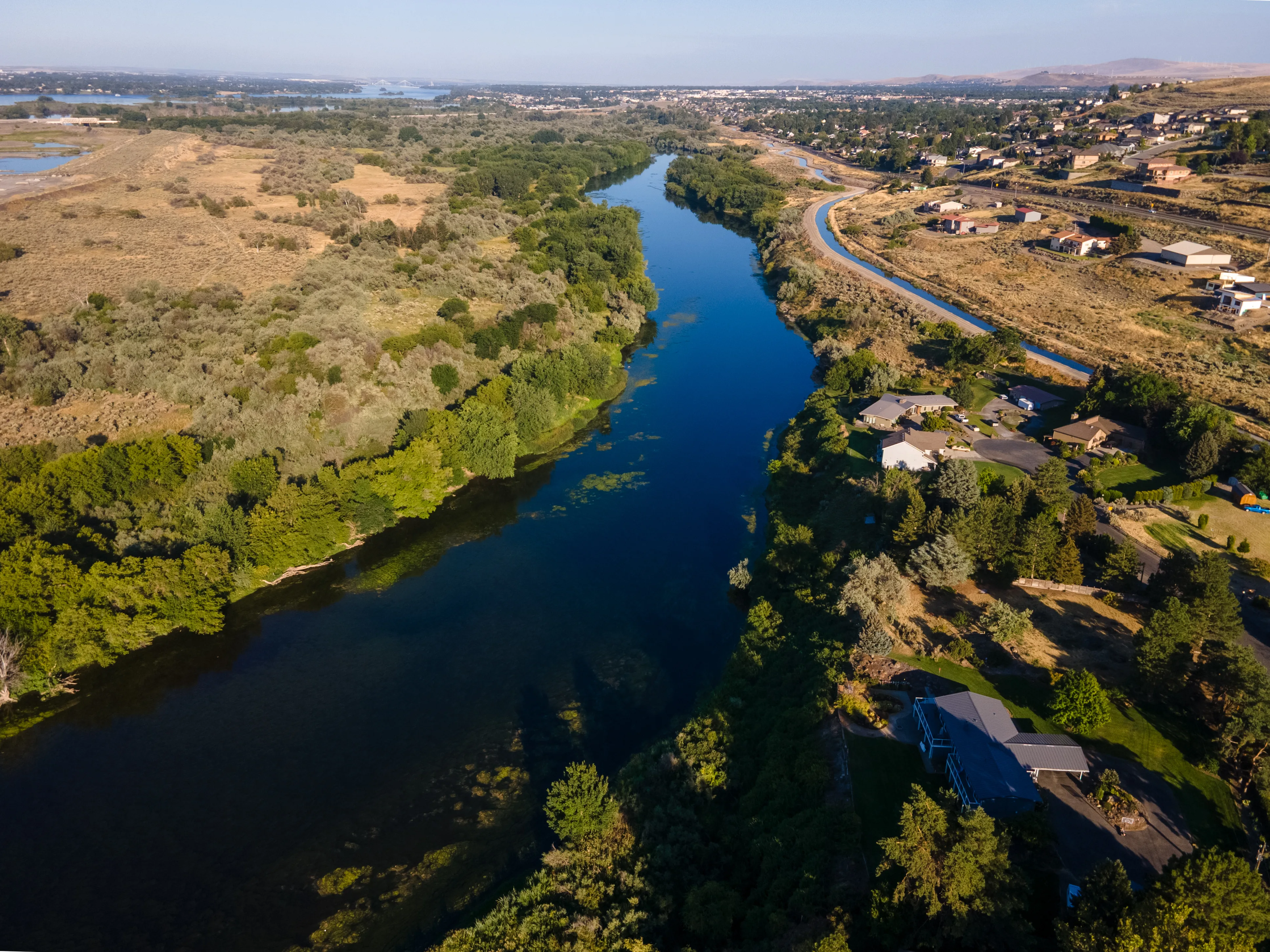
The math starts in California and ends in the Tri-Cities. California capital gains taxes, property taxes on a new purchase, and tight rent control ordinances have been steadily pushing long-term investors to ask where their 1031 proceeds can work harder with less friction.
A Bay Area investor who just sold a rental property at $1.4 million has enough proceeds to acquire a Richland duplex outright and still have capital remaining for a second SFR — potentially retiring two properties debt-free at a price point that would barely cover a down payment back home. Bay Area investors tend to prioritize the quality of the tenant base and low management friction over raw cash-flow yield, and Richland's professional renter demographic delivers exactly that.
Southern California investors — particularly those exiting the Los Angeles or San Diego markets — often arrive with proceeds in the $700,000–$1.1 million range from a condo or small rental. That's a direct trade into a stabilized Richland duplex or a well-located SFR in Horn Rapids or Badger Mountain, markets where tenant demand from PNNL researchers and Hanford contractors stays steady regardless of rate cycles. The rent control environment in SoCal has pushed many operators to look for markets with lighter regulatory overhead.
Sacramento and Inland Empire investors are the closest comp to the Richland market in terms of price range and property type. They're often selling in the $450,000–$650,000 band and looking for a like-for-like swap that actually improves their tax position. Richland's $510,000 median and its absence of state income tax make this a nearly one-to-one replacement — with the added benefit of a landlord-tenant framework that, even with HB 1217's new rent cap, remains less restrictive than anything operating in the Sacramento metro.
The income tax advantage is the headline and it's real: Washington has no state income tax, making it one of only nine states to offer that structure. Every dollar of net rental income an investor collects in Richland stays whole — it isn't split with a state that takes up to 13.3% off the top, as California does at the highest bracket. For an investor netting $40,000 annually from a Richland rental, that's potentially $5,000–$5,300 per year in preserved income compared to operating the same asset in California.
Washington does have a 7% capital gains tax, but it applies only to long-term capital gains exceeding $262,000 in a single tax year — a threshold that most small investors won't approach from annual rental operations alone. The sales tax (6.5% state plus local) applies to materials and furnishings during a renovation, which is worth factoring into rehab budgets. It's a real cost that Bay Area investors sometimes overlook on their first Washington deal.
Property taxes in Benton County run approximately 1.00% of assessed value. On a $510,000 purchase, that's roughly $5,100 annually — a meaningful contrast to the effective rates a California buyer would face on a newly purchased asset under Prop 13 reassessment, which can land closer to 1.1%–1.2% with special assessments stacked in. The difference isn't dramatic, but it's additive when combined with the income tax savings.
| Tax Item | California | Washington |
|---|---|---|
| State income tax on net rental income | Up to 13.3% | None |
| Property tax rate (new purchase) | ~1.1%–1.2% (varies with assessments) | ~1.00% |
| Sales tax | None (services/materials vary) | 6.5% + local (~8.7% in Benton County) |
| Capital gains tax (state) | Up to 13.3% on all gains | 7% on gains over $262,000/year |

When you're doing a 1031 exchange into Richland investment property, location within the city matters more than most investors initially realize. Neighborhoods like Horn Rapids and Badger Mountain tend to attract strong rental demand and hold value well over time, while North Richland offers entry points that can still make sense for investors working within tighter exchange timelines and replacement property budgets. Desirable properties in these areas — particularly those priced under $600,000 — move fast, sometimes within days of hitting the market. If you're mid-exchange and operating under the 45-day identification window, that pace can create real pressure if your financing isn't already lined up.
That's exactly why talking to a lender before you start touring replacement properties is so important. Your full monthly payment includes not just principal and interest, but also taxes, insurance, HOA dues if applicable, and how the loan itself is structured — all of which affect whether a property actually cash-flows the way you need it to. I always encourage investors to think in terms of a comfortable budget, not just maximum approval, so when the right property appears, you can move with confidence rather than scrambling.
Washington's landlord-tenant law changed significantly in May 2025 when HB 1217 took effect. Statewide rent control is now law. For 2026, landlords may increase rent by a maximum of 9.683% — the Department of Commerce recalculates the cap annually using Seattle-area inflation data. Rent can only be raised once per year, requires 90 days' written notice, and cannot be increased during the first 12 months of a tenancy. The cap does not apply to units with a certificate of occupancy issued within the last 12 years, which creates a meaningful distinction between newer construction and the city's older alphabet home and post-war rental stock.
For most buy-and-hold investors at Richland's price point, the 9.683% ceiling won't be a binding constraint in a normal market — it's more restrictive if you're acquiring a significantly under-market asset and planning aggressive rent normalization in year one. Value-add buyers need to model their rent step-up timeline carefully and factor in the 12-month freeze on new tenancies.
Out-of-state owners almost universally underestimate the importance of local property management. Richland has established property management firms operating in the Tri-Cities market, and a professionally managed property typically runs 8–10% of gross monthly rents plus leasing fees. That cost is real but is often the difference between a smooth, passive hold and a deferred-maintenance problem that eats into your exchange equity. Investors who try to self-manage from out of state consistently report that the first major maintenance issue — a failed HVAC in a Richland summer that tops 100°F — costs more in tenant relations than the management fee ever would have.
| Item | What to Verify | Local Resource |
|---|---|---|
| Title Search | Clear title, no easements, judgment liens | Benton County Auditor; local title company |
| Sewer / Septic Status | City sewer connection vs. private septic — older areas vary | City of Richland Public Works |
| Flood Zone Status | FEMA flood map check for Columbia River-adjacent properties | FEMA Flood Map Service Center |
| Rental Permit Requirements | Richland requires rental registration/inspection for some units | City of Richland Development Services |
| HOA Rental Restrictions | Many newer subdivisions limit rentals or require HOA approval | HOA governing documents; CC&Rs |
| ADU Zoning Potential | Washington law broadly permits ADUs — verify lot size and setbacks | City of Richland zoning code |
| Short-Term Rental Ordinance | City of Richland has STR regulations — verify if Airbnb/VRBO use is intended | City of Richland code enforcement |
| School District Confirmation | All Richland city properties feed Richland School District (A- rated) | Richland School District |
| Current Lease Status | Review lease terms, rent amount, tenant history, security deposit | Seller disclosure + current PM |
| Deferred Maintenance Inspection | HVAC, roof, plumbing — Richland summers are extreme heat; HVAC is critical | Licensed WA home inspector |
| Rent Cap Compliance (HB 1217) | Verify last rent increase date and amount — 9.683% cap applies in 2026 | Washington Dept. of Commerce |
| Property Management Referral | Establish PM contact before or during due diligence — don't arrive at closing without one | Local RE agent referral |
| Title Company Selection | Use a Tri-Cities-based title company familiar with WA 1031 requirements | Benton County-based escrow |
| Comparative Rent Analysis | Verify asking rents against current market — some listings use pre-HB 1217 projections | Local PM; Zillow; Apartments.com |
| QI Coordination | Confirm QI has experience with WA transactions and can wire to a Benton County escrow | Your existing QI or local referral |

Local Expert Takeaway: The most common mistake California 1031 buyers make entering the Richland market is identifying a single-family rental in the $480,000–$520,000 range and modeling it like a cash-flow asset. At that price point and current rents, you're buying for appreciation and tenant quality — not yield. If cash flow is your priority, redirect your search toward duplexes in the North Richland corridor or older multifamily near George Washington Way, where the price-to-rent ratio is meaningfully better and you have room to work within HB 1217's annual cap without compressing your returns.
✅ Washington's zero state income tax is the single largest structural advantage for California investors — every dollar of net rental income stays whole, without a state split.
⚠️ HB 1217 changed the game in 2025. Washington now has statewide rent control at 9.683% for 2026. Value-add buyers need to model their rent step-up timeline carefully — particularly the 12-month freeze on new tenancies.
📍 Richland's SFR cap rates are thin (2.4%–2.8%) but its tenant base is unusually stable. Small multifamily and value-add properties in the $450,000–$750,000 range offer cap rates in the 4.5%–5.5% range and are the primary target for serious 1031 investors.
Does a 1031 exchange work for out-of-state replacement property?
Yes — completely. The IRS like-kind rule applies nationally, and there is no requirement that your replacement property be in the same state as your relinquished property. A California investor can sell in Los Angeles and close a Richland duplex as the replacement property, provided all standard 1031 rules are followed, including using a qualified intermediary and meeting the 45-day identification and 180-day closing deadlines.
What is the cap rate on rental property in Richland?
It depends on property type. Single-family rentals at the city's $510,000 median typically yield estimated net cap rates in the 2.4%–2.8% range — an appreciation-driven return profile. Small multifamily and value-add properties push that figure into the 4.5%–5.5% range. Larger garden apartment assets benchmark closer to multifamily market cap rates of 5.0%–6.0% for the Kennewick-Richland MSA.
Do I need a local property manager for a 1031 investment in Washington?
Technically no — but practically, yes for out-of-state owners. Richland summers regularly exceed 100°F, which means HVAC calls are frequent and time-sensitive. Washington's landlord-tenant law now includes specific notice requirements, annual rent increase caps, and first-year tenancy restrictions that are easy to violate from a distance. A local property manager running 8–10% of gross rents is the most cost-effective insurance an out-of-state investor can buy.
Explore the full Richland series: The Ultimate Richland Relocation Guide · Is Richland Safe? · Cost of Living in Richland · Best Neighborhoods in Richland · Richland Schools & Family Life · Richland Youth Sports · Richland Parks & Recreation · Retiring in Richland · 1031 Tax-Deferred Exchange in Richland · Richland First-Time Homebuyers Guide · Richland Down Payment Assistance Guide · Moving to Richland from California