Eastern Washington · Washington
Living in Richland: The Ultimate Relocation Guide (2026)
Maybe your employer is sending you to work at Pacific Northwest National Laboratory and you've never heard of the Tri-Cities. Maybe you've priced yourself out of Seattle and someone mentioned Richland as the place where PhD-level scientists own four-bedroom homes on median incomes. Maybe you drove through on a road trip, looked at the flat desert horizon stretching toward the Columbia River, and wondered how this quiet city consistently produces one of the most educated workforces in the Pacific Northwest. Whatever brought you here, Richland is not the city most people expect — and the gap between expectation and reality is large enough to matter before you make an offer.
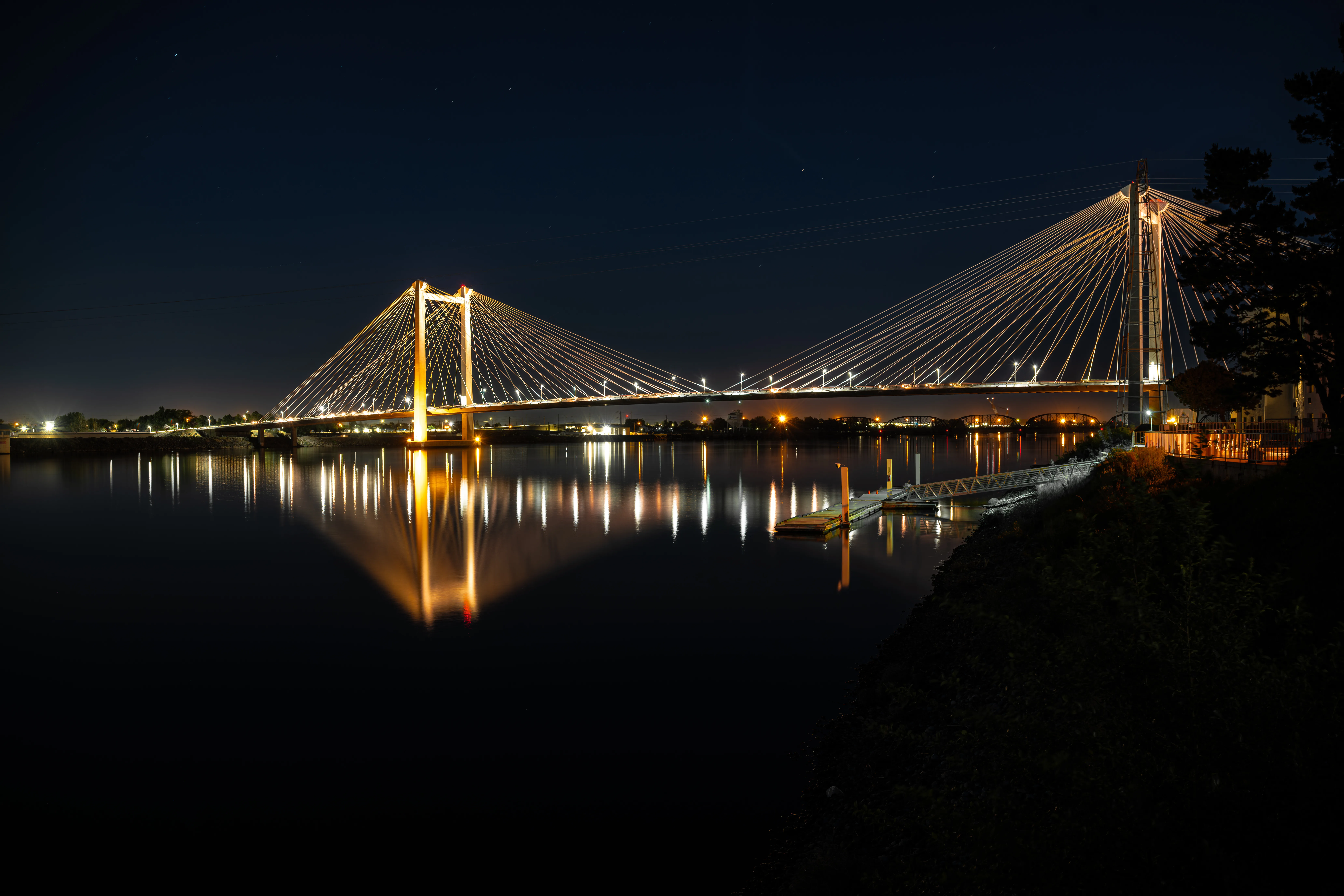
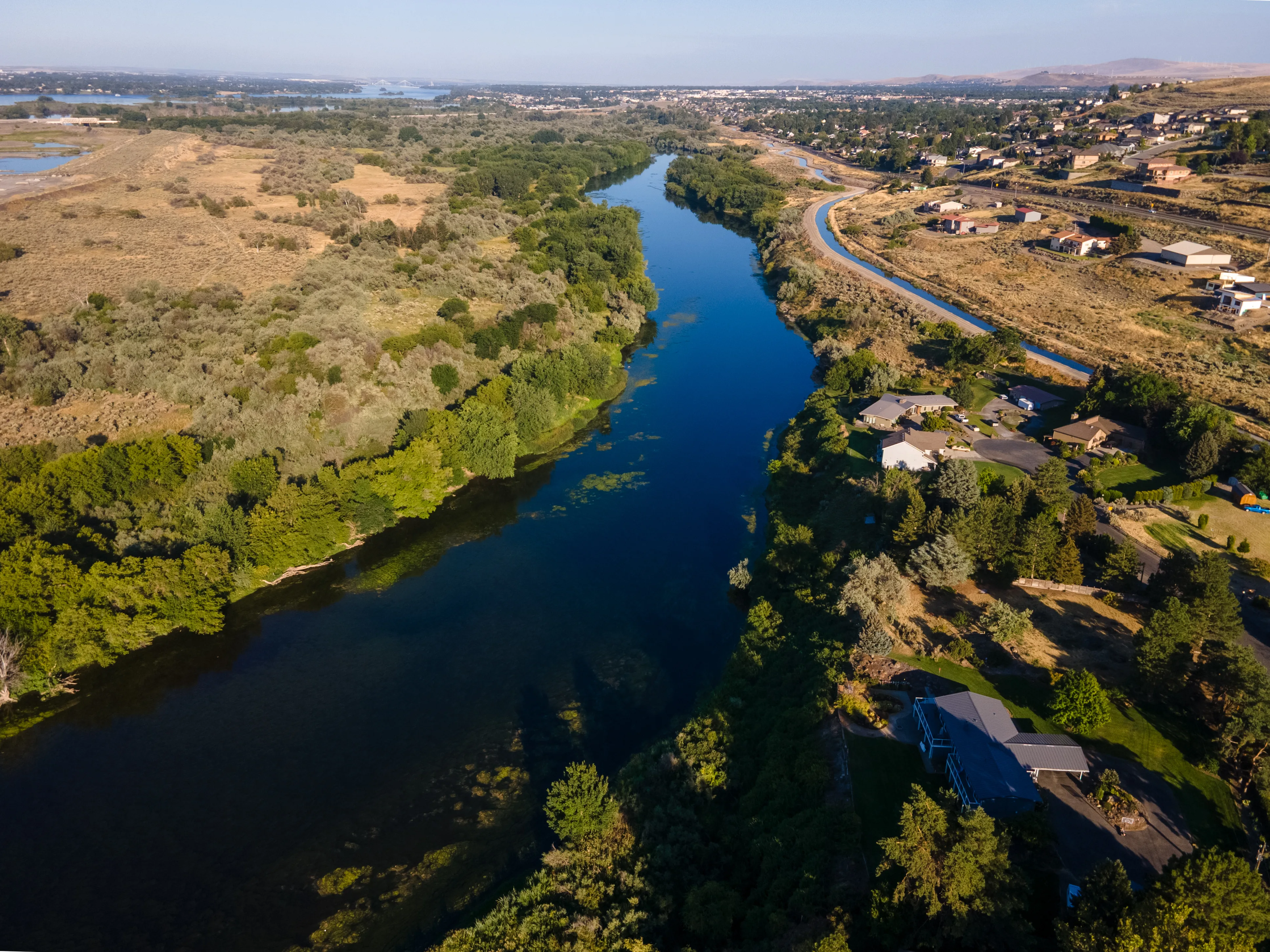
The central tension in Richland is this: it is a government science town in the middle of the eastern Washington desert, which means it punches well above its weight in income, education, and civic stability — but it also means its economy is tied to federal funding in ways that create real vulnerability. The Hanford Site cleanup and PNNL research budgets are the financial engine of this community. When those budgets fluctuate, Richland feels it. The city sits in Benton County along the Columbia River, flanked by Kennewick to the south and West Richland to the west. Summers are hot and dry, winters are mild compared to most of the region, and the geographic anchor of the river gives the city a physical beauty that catches newcomers off guard.
This guide will help you figure out whether Richland fits your life. You'll find honest takes on the housing market, neighborhood-by-neighborhood breakdowns, school district realities, employer risk factors, and the social texture that makes this city genuinely different from any other mid-sized Washington town. No boosterism, no glossing over the tradeoffs — just the information you'd want from a friend who's lived here long enough to know where not to buy.
| Best For | Why |
|---|---|
| STEM professionals & researchers | PNNL, Hanford, and supporting contractors offer concentrated science/engineering employment you won't find in most cities this size |
| Families with school-age children | Richland School District ranks in the top 20% statewide; strong elementary options and two high schools with above-average graduation rates |
| Buyers priced out of Western Washington | A median sold price of $510,000 with a household income around $95,000 produces a price-to-income ratio of 3.6 — about 16% more favorable than the state average |
| Retirees seeking affordable desert living | No state income tax, mild winters, strong healthcare access at Kadlec Regional, and a slow-paced outdoor lifestyle along the river |
| Remote workers wanting space | Low cost per square foot ($260 median), fast-growing infrastructure, and no Seattle price penalty — but verify internet reliability neighborhood by neighborhood |
| First-time buyers from Western WA | Entry-level options exist below the median in neighborhoods like North Richland and South Center; the market is slower-paced than Western Washington with more room to negotiate |
Richland has the bones of a planned government town — because it is one. It was effectively built to house the workers of the Manhattan Project-era Hanford Site, and that origin still shows in the older neighborhoods, the street grid, and the sense of civic order that runs through the community. But the city has grown well beyond that legacy. The newer southern and western neighborhoods feel like any well-funded Western suburb, with the grocery stores, coffee shops, and box retail corridors you'd expect from a city approaching 66,000 people.
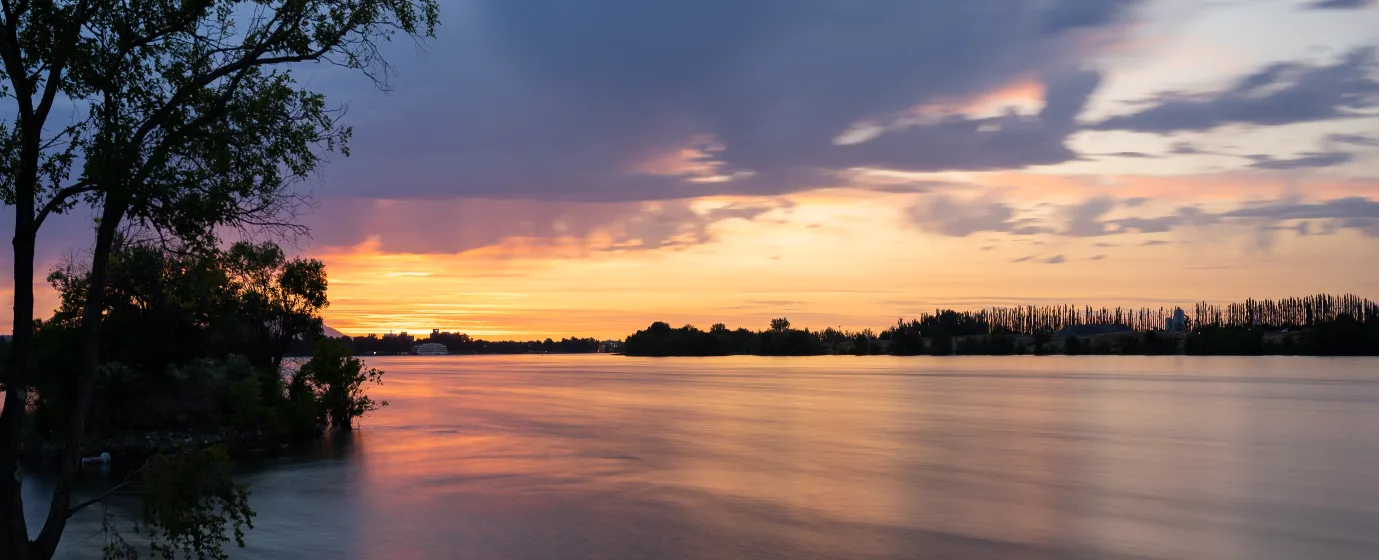
Daily life centers heavily on the Columbia River. Howard Amon Park runs along the waterfront and functions as the community's shared backyard — people jog its paths in the morning, kayak off its banks in the afternoon, and watch the water at dusk. Leslie Groves Park adds sports fields and a beachfront area that fills up on summer weekends. The river is not a weekend amenity here; it's the organizing feature of the city's social life.
The commute reality within Richland itself is mostly painless — getting from a north-end neighborhood to the PNNL campus on Stevens Drive rarely takes more than fifteen minutes. The friction comes if your work takes you to Kennewick or the Hanford Site's more remote areas, where Highway 240 can back up during shift changes and construction seasons. Getting to Seattle — roughly 197 minutes in normal conditions — is a full road trip, not a day trip, which matters if you have family or professional ties to the west side.
What surprises most people after six months here is how quickly the desert becomes the point. Badger Mountain's trails become a morning ritual. The Hanford Reach National Monument, just north of the city, offers some of the most genuinely remote river scenery in the state. People who moved here expecting to miss Seattle's outdoors find themselves hiking coulees and watching sunsets over the Columbia without the crowds that define most western Washington green spaces.
The economy is specialized in a way that pays well. A concentration of PNNL, Hanford cleanup contractors, Energy Northwest, and Battelle means Richland has an outsized number of engineers, scientists, and technical professionals relative to its size. That employment base translates directly into the median household income of approximately $95,800 — well above national averages for a city this size. The city's per capita income ranks highest in Benton County and places it in the top tier across Washington outside of tech-saturated western metro areas.
Washington's lack of a personal income tax is not a trivial benefit when your household earns near six figures. Combined with property taxes running approximately 1.00% and a home price-to-income ratio that is materially more favorable than anything west of the Cascades, Richland offers a standard of living that is genuinely difficult to replicate in Seattle, Bellevue, or Kirkland at comparable salary levels. Families report being able to afford the school district, the home, and the lifestyle simultaneously — a combination that has become rare in Western Washington.
The school district is a legitimate selling point. Richland School District's ranking in the top 20% statewide for combined proficiency is borne out by individual school performance: Leona Libby Middle School consistently rates in the top 10% of Washington middle schools, and Richland High School carries a graduation rate of approximately 89%, above the state average. For families with children, this level of public school quality without private school tuition is one of the primary reasons people choose Richland over cheaper alternatives in the region.
Outdoor access is abundant and genuinely underutilized by Pacific Northwest standards. Badger Mountain, Horn Rapids Off-Road Vehicle Area, the Hanford Reach, and roughly 80 miles of paved trail throughout the Tri-Cities give residents the feeling of a much larger outdoor hub. The Columbia River is clean and accessible for swimming, paddling, and fishing. Summer temperatures that routinely hit the high 90s push people toward the water, and the city's parks infrastructure has kept pace with that demand.
Federal budget exposure is real and worth understanding before you buy. PNNL experienced staffing reductions in late 2025 — approximately 400 positions cut across directorates — tied to federal spending pressures. Hanford's contractor network is similarly subject to congressional appropriations and administrative priorities. If your household income depends on one of these employers, you are exposed to risks that don't affect most American cities of this size. That exposure doesn't make Richland a poor choice, but buying a $510,000 home on a single PNNL salary without a financial cushion is a risk profile worth examining honestly.
The heat is not for everyone. Summer temperatures in Richland regularly hit the upper 90s and occasionally exceed 100°F for stretches of a week or more. The desert climate means low humidity, which makes the heat more tolerable than the South, but it also means wildfires, smoke events, and air quality alerts in August that can confine outdoor-oriented people indoors for days at a time. Buyers relocating from the mild marine climate of Western Washington consistently underestimate how significant this adjustment is.
Getting to Seattle requires genuine planning. At 197 minutes under normal conditions — and more with mountain pass delays or holiday traffic on I-82 — Richland is not a weekend commuter city from the west side. For remote workers with quarterly all-hands in Seattle or families with aging parents in the Puget Sound area, that distance is a real quality-of-life factor. Yakima is closer, but the retail, cultural, and airport options there are limited. The Pasco airport (Tri-Cities Airport) handles Delta, Alaska, and United routes, but direct flights to Seattle fill quickly and connecting options remain limited compared to SeaTac.
Why some people leave Richland, after years of loving it, tends to come down to the same two things: their federal employer relocates or reorganizes them out, or the summer heat finally wins. The desert landscape that feels striking in year one can feel monotonous by year five for people who grew up with forests and rain. This is worth knowing before you fall in love with the home and ignore the climate.
The Alphabet Homes neighborhood is Richland's clearest window into its Manhattan Project past. Built in the 1940s to house Hanford workers, these single-family homes — named for their street pattern along alphabetically ordered avenues — are compact, generally 900 to 1,400 square feet, and priced well below the citywide median, often in the $300,000 to $390,000 range. The tradeoff is age: these homes need ongoing maintenance, and the lots are modest. What buyers get in return is a walkable grid, proximity to Howard Amon Park and the riverfront, and a neighborhood with genuine historical character that newer subdivisions can't manufacture.
Best for: First-time buyers or buyers prioritizing river access and neighborhood walkability over square footage.
Badger Mountain — and specifically its southern expansion, Badger Mountain South — is where Richland's newer growth has concentrated over the past decade. Homes here are primarily 2015-and-newer construction, with prices commonly ranging from $550,000 to $700,000+ for larger or view-oriented lots. The trail system up Badger Mountain itself is the neighborhood's lifestyle anchor: residents walk or run to the trailhead from their front doors. The downside is that parts of the neighborhood are still actively developing, which means construction traffic, incomplete amenities, and some HOA restrictions on property use.
Best for: Buyers who want newer construction, proximity to trails, and a neighborhood with strong long-term appreciation fundamentals.
Horn Rapids sits in the northern part of Richland and is anchored by the Horn Rapids Golf Course, giving the neighborhood a distinctly recreational identity. Homes here tend to be newer builds — many from the 2000s through 2010s — with prices generally in the $450,000 to $600,000 range depending on lot size and proximity to the golf course. The area also sits near the Horn Rapids Off-Road Vehicle recreation area, which makes it popular with outdoor recreation households. The catch is that Horn Rapids is one of the more isolated pockets in Richland — grocery runs and school commutes require more driving than neighborhoods closer to the city center.
Best for: Households that prioritize golf, outdoor recreation, and a quieter low-traffic neighborhood over urban convenience.
North Richland is one of the more affordable and underrated pockets in the city, with many homes priced in the $350,000 to $450,000 range. The housing stock is a mix of ranch-style homes from the 1970s and 80s alongside some more recent infill construction. The neighborhood is closer to the Hanford Site than most of Richland, which matters for commute times. It lacks some of the retail walkability of the city's southern corridors, but families who don't need walkability and want more house for their money consistently find value here that the city's newer neighborhoods can't offer.
Best for: Buyers looking for lower-entry price points with room to renovate, or Hanford workers minimizing their commute.
South Center — loosely centered around Jadwin Avenue and the southern retail corridor — is one of Richland's most functional daily-living neighborhoods. Grocery stores, restaurants, the Richland Public Library, and medical offices are all within easy reach, making this one of the more practical areas in the city for households without two cars or with a parent who needs walkable errand access. Homes range from modest postwar construction to mid-century ranches, with prices generally in the $380,000 to $490,000 range. It's not the flashiest neighborhood in the city, but its convenience is real.
Best for: Households that value daily errands on foot or short drives, and buyers who don't want to pay Badger Mountain premiums.
Meadow Springs is one of Richland's more established upper-middle neighborhoods, developed largely in the 1990s and 2000s with spacious lots, mature trees, and a neighborhood feel that the city's newest subdivisions haven't yet cultivated. Prices typically run in the $500,000 to $650,000 range, with larger or updated homes pushing higher. It's a popular landing spot for PNNL professionals and families who want established landscaping, good schools, and proximity to both the city's southern retail and the river park system. The neighborhood doesn't have a dramatic landmark identity — it's quiet and consistent, which is exactly what its residents value.
Best for: Families with school-age children who want established neighborhood character and mid-to-upper price range stability.
Queensgate is Richland's primary destination for buyers in the $550,000 to $750,000 range who want newer construction with premium finishes, larger lots, and a suburban neighborhood aesthetic. Developed primarily in the 2010s, Queensgate sits in the southwestern part of the city with relatively easy access to the Queensgate Drive commercial corridor. The neighborhood has HOAs, maintained common spaces, and a demographic that skews toward dual-income professional households. The honest tradeoff is that Queensgate's newer-subdivision character — wide streets, minimal tree cover, similar rooflines — may feel generic to buyers who prioritize neighborhood uniqueness.
Best for: Professional households who want newer construction and larger square footage and are comfortable with HOA governance.
Columbia Point is Richland's most dramatically situated neighborhood — a peninsula extending into the Columbia River with views that are genuinely difficult to find elsewhere in the Tri-Cities. Columbia Point Marina anchors the southern tip, and homes here often feature river or vineyard views. Prices vary widely depending on lot position and home age, but waterfront-adjacent or marina-view properties regularly trade in the $600,000 to $900,000+ range. Inventory is sparse — this is one of the neighborhoods that longtime Richland families hold onto — and when properties do come available, they tend to move faster than the 119-day citywide average.
Best for: Buyers seeking long-term equity and lifestyle premium, willing to wait for inventory and pay for irreplaceable location.

Richland's neighborhoods each tell a different story when it comes to long-term value. Badger Mountain and Meadow Springs consistently attract strong buyer interest, and well-priced homes there often receive multiple offers within days of hitting the market. Horn Rapids appeals to buyers who want newer construction with more space, and that demand has held steady. Most desirable homes in these areas are priced under $750,000, though entry points vary quite a bit depending on size and condition. Understanding where you want to land geographically before you start financing conversations will help you focus your budget in the right direction.
That brings me to why I always encourage buyers to connect with a lender before they ever walk through a front door. Your pre-approval number and your comfortable monthly payment are two very different things — once you layer in property taxes, homeowner's insurance, any HOA dues, and the actual loan structure, the picture shifts considerably. Knowing your real number ahead of time means you're not falling in love with a home that quietly stretches you too thin, and in a market like Richland, being ready to move quickly genuinely matters.
| City | Best For | Median Home Price | Commute Context | Vibe |
|---|---|---|---|---|
| Richland | STEM professionals, families | $510,000 | Short to PNNL/Hanford; 197 min to Seattle | Educated, suburban, government-science town |
| Kennewick | Value buyers, retail access | ~$390,000–$420,000 | 10–15 min to Richland; Tri-Cities hub | Denser, more commercial, blue-collar and professional mix |
| West Richland | Rural space, lower density | ~$430,000–$470,000 | 15–20 min to Richland core | Semi-rural, larger lots, growing bedroom community |
| Pasco | Affordability, first-time buyers | ~$340,000–$370,000 | 15–20 min to Richland; bridge dependent | Fastest-growing Tri-Cities city, diverse, lower price floor |
| Benton City | Rural lifestyle, very low prices | ~$280,000–$330,000 | 25–30 min to Richland | Small-town agricultural, wine country adjacent |
| Prosser | Wine country, small-town charm | ~$320,000–$370,000 | 35–40 min to Richland | Quiet, agricultural, strong local identity |
| Metric | Figure |
|---|---|
| Population | ~66,000 (2026 estimate) |
| Median Sold Home Price | $510,000 (mid-2026) |
| Median Household Income | ~$95,800 |
| Property Tax Rate | ~1.00% |
| Violent Crime per 1,000 | 2.6 |
| Property Crime per 1,000 | 21.1 |
| School District Rating | A- (Richland School District) |
| Commute to Seattle | ~197 minutes |
| Median Rent | ~$1,397/month |
| Median Price Per Sq Ft | ~$260 |
Richland's most distinctive civic tradition is its high school mascot: the Richland High School Bombers. Named in the aftermath of Hiroshima in 1945 — when Richland workers knew exactly what the Hanford Site had produced — the mushroom cloud logo and "Bombers" nickname have been debated nationally for decades, but they remain fiercely defended by local alumni and residents. Whether you find it thought-provoking or unsettling, you will encounter it within your first week of living here, and understanding the history behind it helps you read the community's relationship to its own origin story.
The Tri-Cities Water Follies, held annually at Columbia Park in Kennewick, is the region's signature summer event — one of the oldest APBA hydroplane races in the country. Richland residents turn out in force each summer, and the race weekend is genuinely communal in the way that big civic events rarely are in suburban communities. Combine it with Sunfair, the regional fair held in Yakima in September, and you get a sense of how Eastern Washington communities create shared seasonal identity without the entertainment infrastructure of western metro areas.
The wine corridor along the Yakima Valley and Walla Walla is closer than most relocating buyers realize. Highway 12 west will put you in Prosser's wine country in under 30 minutes. The growing Tri-Cities wine scene — tasting rooms along the Columbia and near the Kennewick airport area — has made wine tourism part of daily social life for a large segment of the Richland professional class in a way that continues to surprise newcomers from non-wine-country cities.
What I would not do if moving to Richland: I would not buy in Horn Rapids without personally driving the route to your workplace at 7:45 a.m. on a weekday. The neighborhood is appealing on paper, but the northern isolation combined with the Highway 240 corridor's tendency to back up during Hanford shift changes can add 20 to 30 minutes to what looks like a short commute on Google Maps. Test the actual commute at actual times before you commit to the address.
Local Expert Takeaway: If you're comparing Richland against Kennewick or West Richland on price alone, you're missing the more important variable: resale stability. Richland's median has held its value through the 2022–2025 correction cycle better than either neighbor, and the demand from Hanford and PNNL professionals creates a floor that purely speculative markets don't have. Badger Mountain South and Queensgate are where appreciation upside sits for buyers who can stretch above the median; the Alphabet Homes and South Center corridors offer the best entry-level value for buyers who want to get into the market without overextending. Avoid making an offer before you fully understand your employer's budget exposure — federal funding cycles matter here in ways they don't in most American cities.
✅ Richland offers a rare combination — a top-20% school district, household incomes well above national averages, and a home price-to-income ratio meaningfully more favorable than Western Washington, all in a city with genuine outdoor access and a stable federal employment base.
⚠️ Federal budget exposure is real. PNNL and Hanford contractor employment is subject to congressional appropriations and administrative priorities. Households with income concentrated in these employers should buy with financial cushion rather than maximum leverage.
📍 The neighborhood you choose matters more than the city-level average suggests. Prices range from the high $300,000s in North Richland and Alphabet Homes to $700,000+ in Columbia Point and Badger Mountain South. Get clear on your neighborhood before anchoring to the median.
Is Richland a good place to raise a family?
Yes — Richland is one of the stronger family markets in Eastern Washington by most measurable criteria. The school district ranks in the state's top 20% for academic proficiency, Richland High School carries roughly an 89% graduation rate, and the city's parks and trail infrastructure gives kids and parents genuinely good outdoor options year-round. The desert heat in July and August is an adjustment for families coming from the west side, but most families find it workable with the river parks and Badger Mountain trails accessible from most neighborhoods.
What is the crime rate in Richland?
Richland's violent crime rate runs approximately 2.6 incidents per 1,000 residents — well below national averages and significantly lower than comparably sized cities across the country. Property crime sits at 21.1 per 1,000, which is more moderate and worth being aware of in commercial corridors and parking areas. Overall, Richland is considered among the safer mid-sized cities in Washington State, a reality that reflects both the city's demographics and its community stability.
How does Richland compare to Kennewick for homebuyers?
Kennewick typically offers lower entry-level prices — often in the $390,000 to $420,000 range citywide — and better access to Tri-Cities retail, big-box stores, and the commercial core along Clearwater Avenue. Richland carries a price premium that reflects its school district quality, higher-income demographics, and generally quieter residential character. Buyers who work at PNNL and prioritize schools almost universally choose Richland; buyers who want more home for less money and don't have school-age children often land in Kennewick or West Richland instead.
Explore the full Richland series: Living in Richland · Is Richland Safe? · Cost of Living · Best Neighborhoods · Schools & Family Life · Youth Sports · Parks & Rec · Retiring in Richland