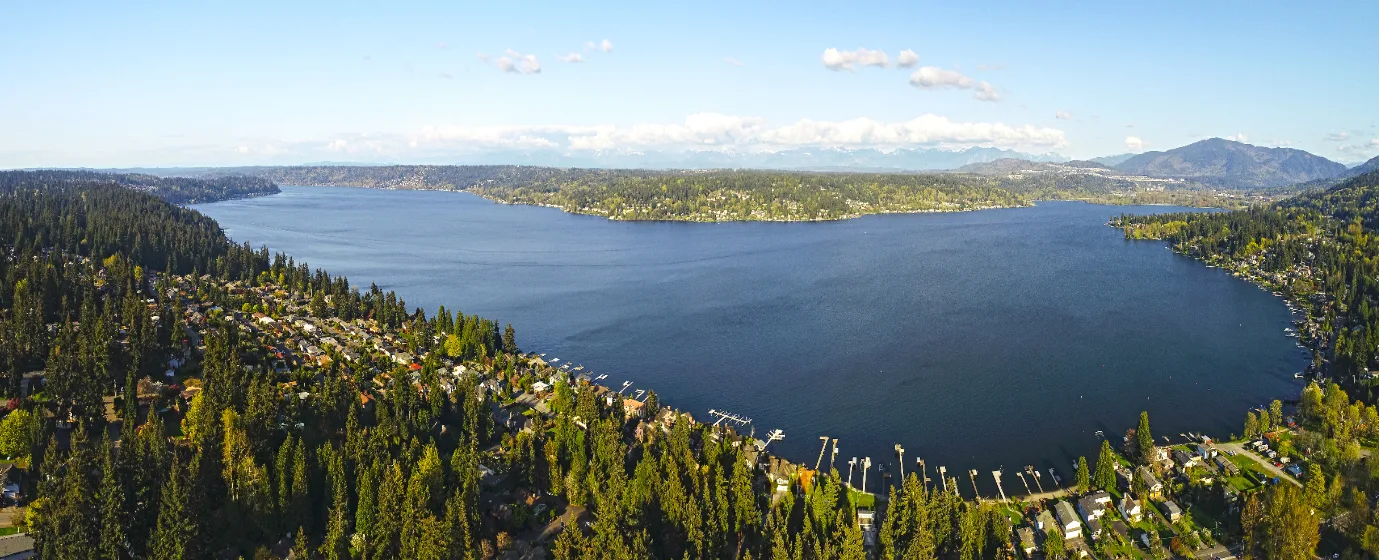
Puget Sound · Washington
Is Sammamish Safe? Crime Rates, Safest Neighborhoods & Local Reality (2026)
Sammamish doesn't just perform well on safety rankings — it routinely tops them. For three consecutive years, SafeWise named it the safest city in Washington State, and U.S. News & World Report placed it among the eight safest places to live in the entire country. For buyers weighing a $1.6 million purchase decision, that context matters. But raw rankings don't tell you where the occasional car break-in happens, which corridors generate more calls than others, or what living here actually feels like day to day.
The numbers that shape daily reality are a violent crime rate of approximately 1.7 per 1,000 residents and a property crime rate of roughly 9.2 per 1,000 — both figures well below Washington State averages and dramatically below national benchmarks. What's more notable is the structure of the city itself: Sammamish is overwhelmingly owner-occupied, heavily residential, and built across a plateau geography that limits through traffic and the transient patterns that drive opportunistic crime elsewhere. The commercial corridors that do exist are concentrated and relatively contained.
This guide breaks down what those figures mean for specific neighborhoods, how Sammamish compares to Bellevue, Redmond, and Issaquah, and what locals actually do — or don't do — to feel secure here. Whether you're narrowing your search to a specific area of the plateau or just vetting the city for the first time, this is the honest picture.
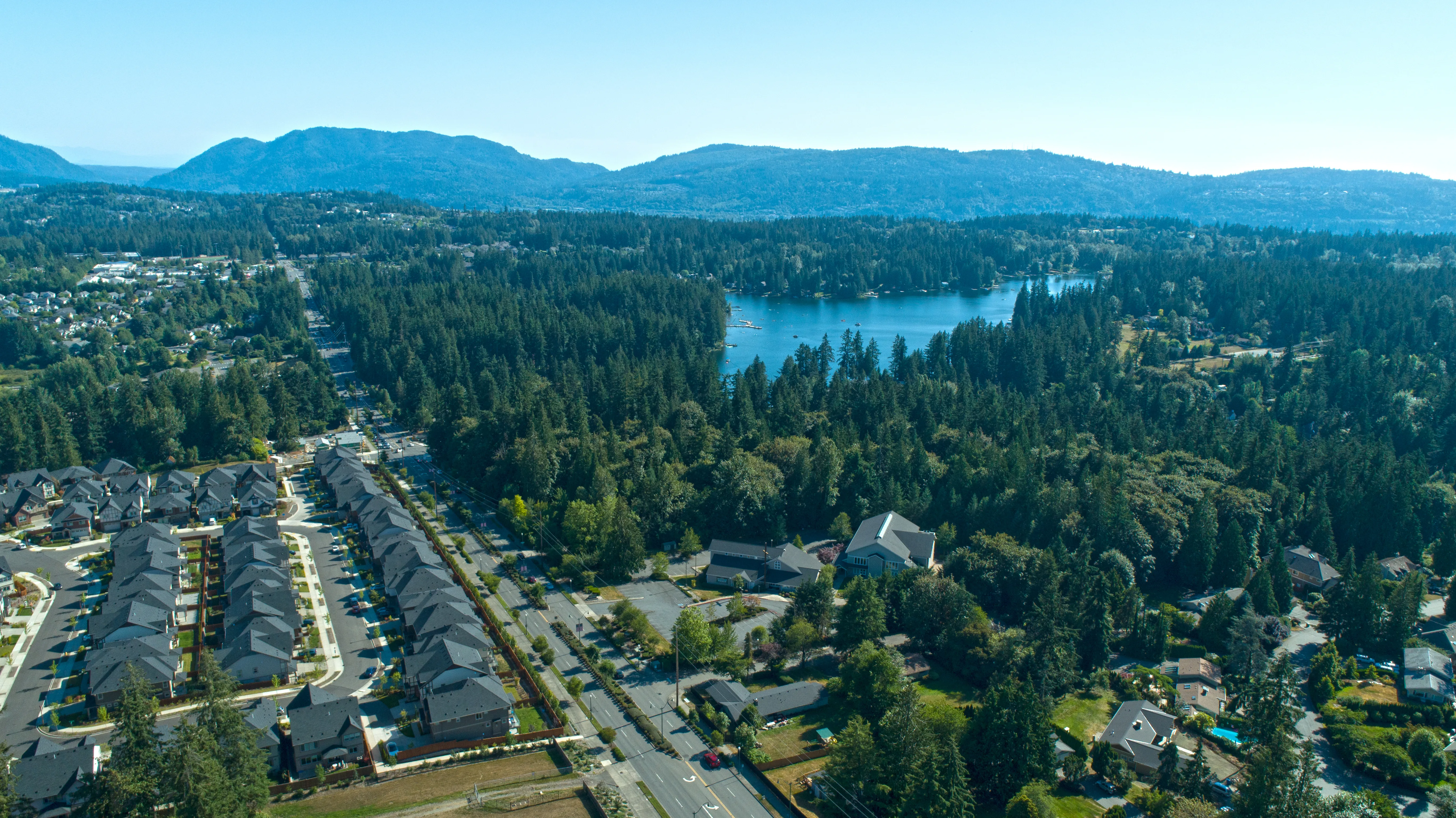
Local police data and FBI estimates consistently place Sammamish's overall crime rate roughly 58% below the national average and nearly 68% below Washington State's own average — a gap that is genuinely striking given how high Washington's state-level crime figures run. The city's total crime index sits around 40 on a scale where the U.S. average is closer to 230, and that figure dropped an estimated 15% between 2023 and 2024 alone. For a city of nearly 66,000 people, that trajectory is unusual and reflects both sustained enforcement investment and structural characteristics that don't show up in any spreadsheet.
What drives those numbers structurally isn't just good policing — it's the physical and demographic makeup of the city. Sammamish sits on an elevated plateau with limited arterial access points, which naturally reduces the kind of drive-through opportunistic crime common in cities with heavy freeway-adjacent commercial strips. Homeownership rates are extraordinarily high, median household income approaches $240,000, and the commercial footprint is modest relative to population. There are no dense transit hubs, no bar districts generating late-night activity, and no large apartment complexes concentrated in a single zone. These aren't coincidental — they're the structural conditions that make the crime data durable rather than just a snapshot.
The one honest caveat: Sammamish's police force is small by conventional standards, with roughly 32 dedicated officers — about 0.7 per 1,000 residents, well below both state and national averages. Those officers are King County Sheriff's deputies serving under a contract arrangement, not a standalone municipal department. Response times in lower-priority situations can reflect that staffing reality. The city compensates with three school resource officers, an active neighborhood watch culture, and a public-facing crime data dashboard that lets residents track activity in near real-time.
Sammamish's violent crime rate — commonly reported around 1.7 per 1,000 residents based on CrimeGrade estimates — translates to roughly one reported violent incident for every 4,000 residents in a given year. In practical terms, this is a city where violent crime is statistically rare enough that most long-term residents have never been directly affected by it. The types of incidents that do occur tend to be domestic in nature rather than stranger-involved, which is consistent with low-crime suburban communities nationwide. Walking to your car after dark, leaving kids at the park, or arriving home late from Seattle isn't something Sammamish residents typically think twice about.
Property crime is where Sammamish earns a slightly softer grade — CrimeGrade assigns it a "B" rather than an "A" for this category, and the locally reported rate of approximately 9.2 per 1,000 is the figure that shows up most in buyer conversations. The dominant type is vehicle prowl: unlocked cars with visible bags, electronics, or charging cables in parking areas near trailheads and retail centers. The East Lake Sammamish Trail corridor and the shopping centers along 228th Avenue SE and NE 8th Street see the bulk of activity. Homes themselves are rarely targeted — residential burglary rates are low, and the gated and cul-de-sac layouts in many neighborhoods add a passive deterrent that flat-grid suburban layouts don't have.
Trossachs earns an A+ crime grade and is consistently cited among the safest pockets in a city that's already the safest in Washington. With a population of roughly 1,800 residents and a median household income above $220,000, the neighborhood is almost entirely residential, with no commercial activity of its own to generate foot traffic or parking lot opportunity. Cul-de-sac streets and a strong sense of neighbor familiarity mean unusual activity tends to get noticed quickly. It's the kind of neighborhood where residents know each other's cars.
Sahalee Country Club anchors one of Sammamish's most recognizable enclaves — a private golf community where the physical layout itself acts as a security layer. The controlled-access character of the neighborhood limits external vehicle traffic significantly, and the area carries an A+ crime grade to match. Residents here report a quiet that goes beyond statistics: the streets are genuinely calm, and the community's social infrastructure through the club tends to reinforce the tight-knit character that keeps crime rates low.
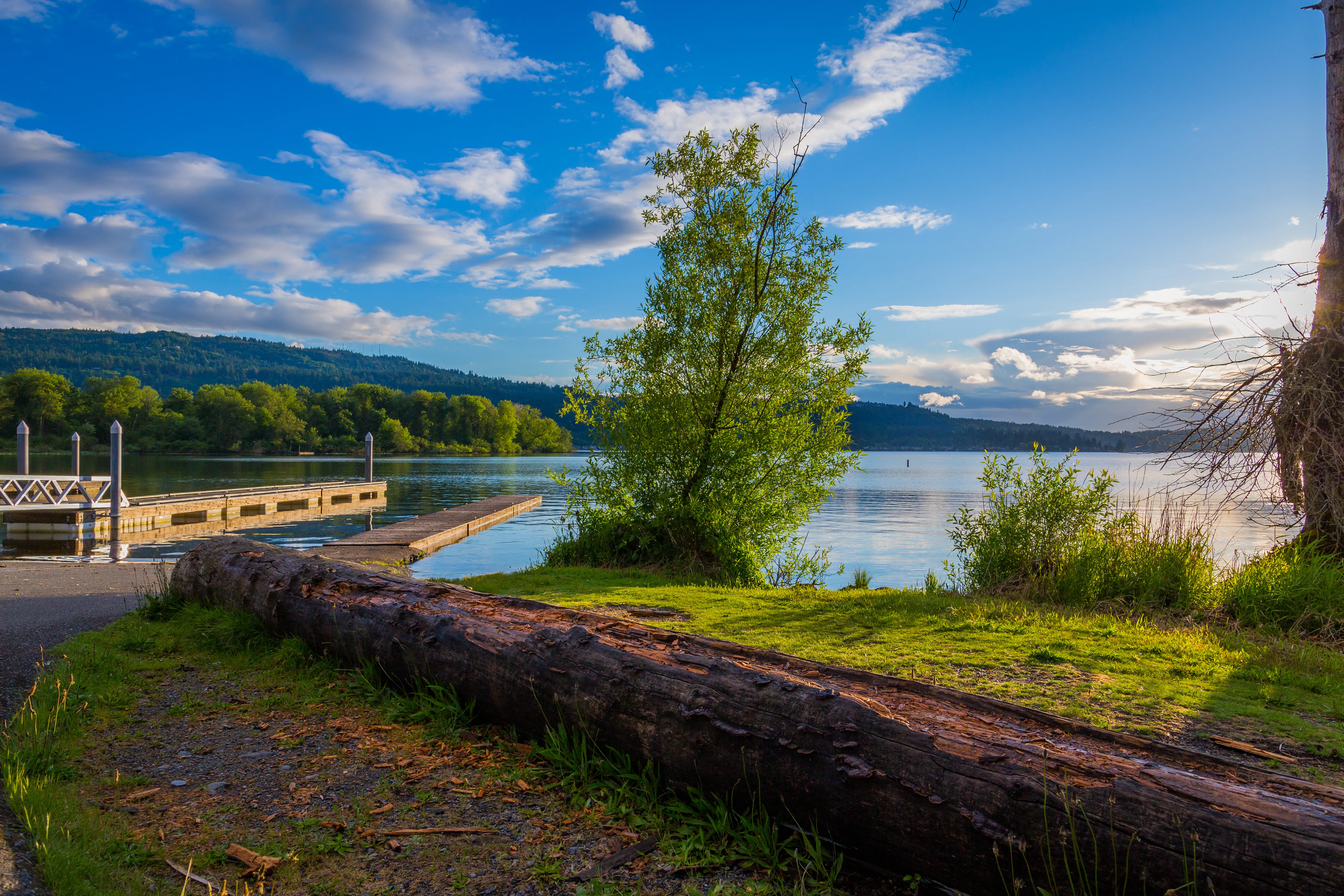
Pine Lake holds an A+ crime grade and sits around the geographic center of the plateau, giving it access to both the lake itself and the broader trail network without the commercial adjacency that generates vehicle prowl elsewhere. With roughly 1,840 residents and strong owner-occupancy rates, the neighborhood has the demographic stability that correlates with low crime in suburban markets. The park access here is a genuine community gathering point, which tends to build the neighbor familiarity that passive crime deterrence depends on.
Klahanie sits in the north end of Sammamish near the 98074 ZIP code boundary, and it's one of the more densely settled neighborhoods in the city — with its own small retail core, including restaurants and a grocery-anchored shopping center. That commercial activity brings the trailhead and parking lot dynamic into the neighborhood's immediate footprint, making it the part of Sammamish where vehicle prowl is most likely to show up in local crime data. That said, residential streets in Klahanie remain genuinely low-crime, and the neighborhood's safety profile is still strong by any regional standard. Buyers should be aware that visible-item vehicle break-ins near the commercial strip are the primary risk — a problem solved entirely by locking your car and not leaving bags visible.
Timberline carries an A+ crime grade with a smaller population of around 1,050 residents, giving it one of the more intimate neighborhood profiles in the city. The quiet here isn't engineered — it's a function of low through-traffic, high ownership stability, and limited commercial draw. Long-term residents who've been in Sammamish since before incorporation often cite Timberline as one of the plateau's most settled communities. Nothing about the day-to-day safety picture here requires any particular precaution beyond standard suburban habits.
Inglewood maintains an A+ crime grade and sits in the central-to-southeast portion of the plateau, offering a residential character similar to Trossachs without the name recognition that sometimes drives up Trossachs prices. The neighborhood generates very few police calls on a per-capita basis. For buyers who want the safety profile of Sammamish's best neighborhoods at a slightly different price point within the city's $1.6 million median market, Inglewood consistently comes up in conversations with local agents.
| City | Violent Crime / 1K | Property Crime / 1K | Overall Safety Profile |
|---|---|---|---|
| Sammamish | ~1.7 | ~9.2 | Safest in Washington State; top 10 nationally |
| Redmond | ~2.1 | ~18.4 | Strong — tech-corridor commercial activity raises property crime |
| Issaquah | ~2.3 | ~16.7 | Good overall; commercial I-90 corridor creates trailhead vehicle prowl |
| Bellevue | ~2.9 | ~28.3 | Solid for a city its size; denser urban core increases exposure |
| Kirkland | ~2.6 | ~22.1 | Good suburban profile; waterfront commercial activity concentrates property crime |
| Newcastle | ~1.9 | ~11.3 | Quiet residential; smaller population makes comparisons less stable |
| Snoqualmie | ~1.4 | ~8.8 | Comparable to Sammamish; much smaller city with limited commercial draw |

When safety is a priority — and in Sammamish it genuinely is for most buyers — neighborhood selection directly shapes long-term value. Areas like Klahanie, Pine Lake, and Sahalee consistently draw strong buyer interest precisely because of their community feel, low crime reputation, and quality of surrounding schools. That combination creates real staying power in the market. Well-maintained homes in these neighborhoods rarely sit for long; I've seen desirable listings receive multiple offers within days, which means buyers who aren't financially prepared simply miss out.
That's exactly why I encourage buyers to connect with a lender before they ever schedule a tour. Knowing your comfortable budget — not just your maximum approval — matters because your full monthly payment includes property taxes, homeowner's insurance, any HOA dues, and your loan structure all layered together. That number can look quite different from what an online calculator suggests. When a home in a neighborhood like Inglewood or Beaver Lake hits the market and checks every box, the buyers who win are almost always the ones who already did this work ahead of time.
The safety apps and ranking sites will tell you Sammamish is exceptional, and they're right — but they won't tell you where to actually pay attention. The East Lake Sammamish Trail parking lots, particularly the access points off East Lake Sammamish Parkway near the Inglewood and Klahanie connectors, generate a consistent stream of vehicle prowl reports. It's the most common crime complaint in the city, and it's entirely preventable. Locals who use the trail regularly leave nothing visible in their vehicles and often use trunk bags specifically to avoid the silhouette of a bag on a seat. It has become second-nature — not anxiety, just habit.
The commercial zone along 228th Avenue SE near the City Hall campus and the shopping centers anchoring both ends of the corridor see the most frequent property crime calls. This isn't surprising — any retail concentration with surface parking will generate some level of opportunity crime. Sammamish's version of this is mild by almost any comparison, but buyers who've been told the city is uniformly pristine are sometimes surprised to learn there's a difference between the commercial and residential experience. Living in Trossachs or Sahalee and driving to the grocery store isn't dangerous — it just means being thoughtful in the parking lot the same way you would anywhere.
One thing the rankings don't fully capture: Sammamish's neighborhood watch culture is genuinely active. The city's online crime dashboard is checked by residents who take the data seriously, and NextDoor activity reflects a community where people notice and report unusual patterns. That social infrastructure is part of what keeps the numbers where they are. New residents often mention being struck by how quickly neighbors introduce themselves — and how naturally that translates into informal eyes-on-the-street oversight across the plateau.
Local Expert Takeaway: If safety is your primary filter, the northeast plateau — Trossachs, Sahalee, and Timberline — gives you Sammamish's strongest residential crime grades with the lowest commercial adjacency. For buyers whose budget allows flexibility within the city's $1.6 million median, avoid properties with direct parking lot adjacency to the 228th corridor or East Lake Sammamish trailhead access points. Lock your car, don't leave bags visible, and take the crime dashboard seriously — it's one of the more transparent public safety tools in King County.
✅ Sammamish is among the safest cities in the country — violent crime is roughly 84% below the national average, and the overall crime rate is nearly 68% below Washington State's own figures.
⚠️ Vehicle prowl is the most common crime to watch for — trailhead parking lots and the retail corridor along 228th Avenue SE generate the bulk of property crime reports. Leaving nothing visible in your car eliminates most of the risk.
📍 The northeast plateau neighborhoods — Trossachs, Sahalee, and Timberline — carry the strongest crime grades in a city that already grades out as exceptional, making them the natural starting point for safety-focused buyers.
Is Sammamish a safe place to live?
Yes, Sammamish is consistently ranked as one of the safest cities in Washington State and one of the safest in the United States. Violent crime is statistically rare — roughly 1.7 incidents per 1,000 residents — and the city's residential layout, high homeownership rates, and active neighborhood watch culture all contribute to a safety profile that holds up year after year, not just in any single ranking cycle.
What type of crime is most common in Sammamish?
Property crime, specifically vehicle prowl, is the most frequently reported offense in Sammamish. It tends to cluster around trailhead parking areas along East Lake Sammamish Parkway and the commercial centers along 228th Avenue SE. Home burglaries are rare, and violent crime is among the lowest of any city its size in the Pacific Northwest. Standard precautions — locking vehicles and not leaving valuables visible — address the vast majority of actual risk.
How does Sammamish compare to Bellevue and Redmond for safety?
Sammamish compares favorably to both. Bellevue's property crime rate runs roughly three times higher than Sammamish's, driven by its denser urban core and more extensive commercial footprint. Redmond sits between the two, with a stronger tech-corridor commercial presence that elevates its property crime exposure. For buyers whose primary concern is day-to-day residential safety, Sammamish's plateau geography and lower commercial density give it a structural advantage that other Eastside cities don't fully replicate.
Explore the full Sammamish series: Living in Sammamish · Is Sammamish Safe? · Cost of Living · Best Neighborhoods · Schools & Family Life · Youth Sports · Parks & Rec · Retiring in Sammamish