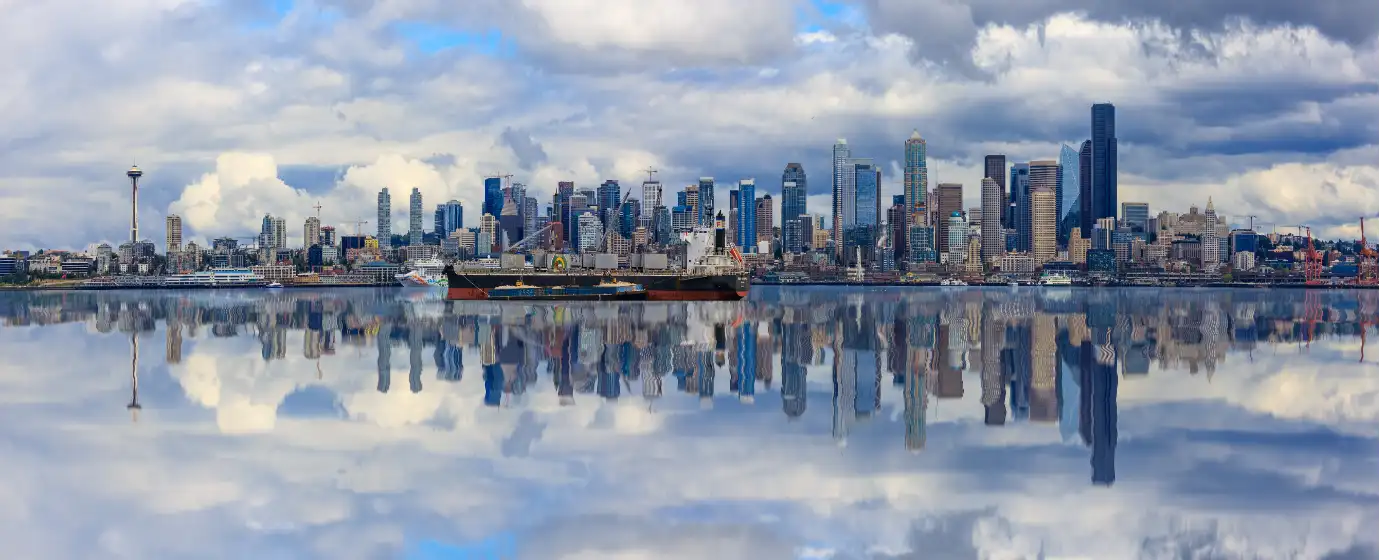
Puget Sound · Washington
Living in Seattle: The Ultimate Relocation Guide (2026)
Maybe your company just announced that your new office is in South Lake Union. Maybe you've been watching Seattle real estate from California or the Midwest, running the math on what $850,000 actually buys here versus back home. Maybe you drove through once, expected rain and grunge, and found instead a city of sharp hills, salt air, and a skyline that looks genuinely different at every angle. Whatever brought you to this search, Seattle's central tension is worth naming before anything else: this is a world-class city with world-class ambitions that still costs less than San Francisco or New York — but not by as much as people expect, and not in the ways the headlines suggest.
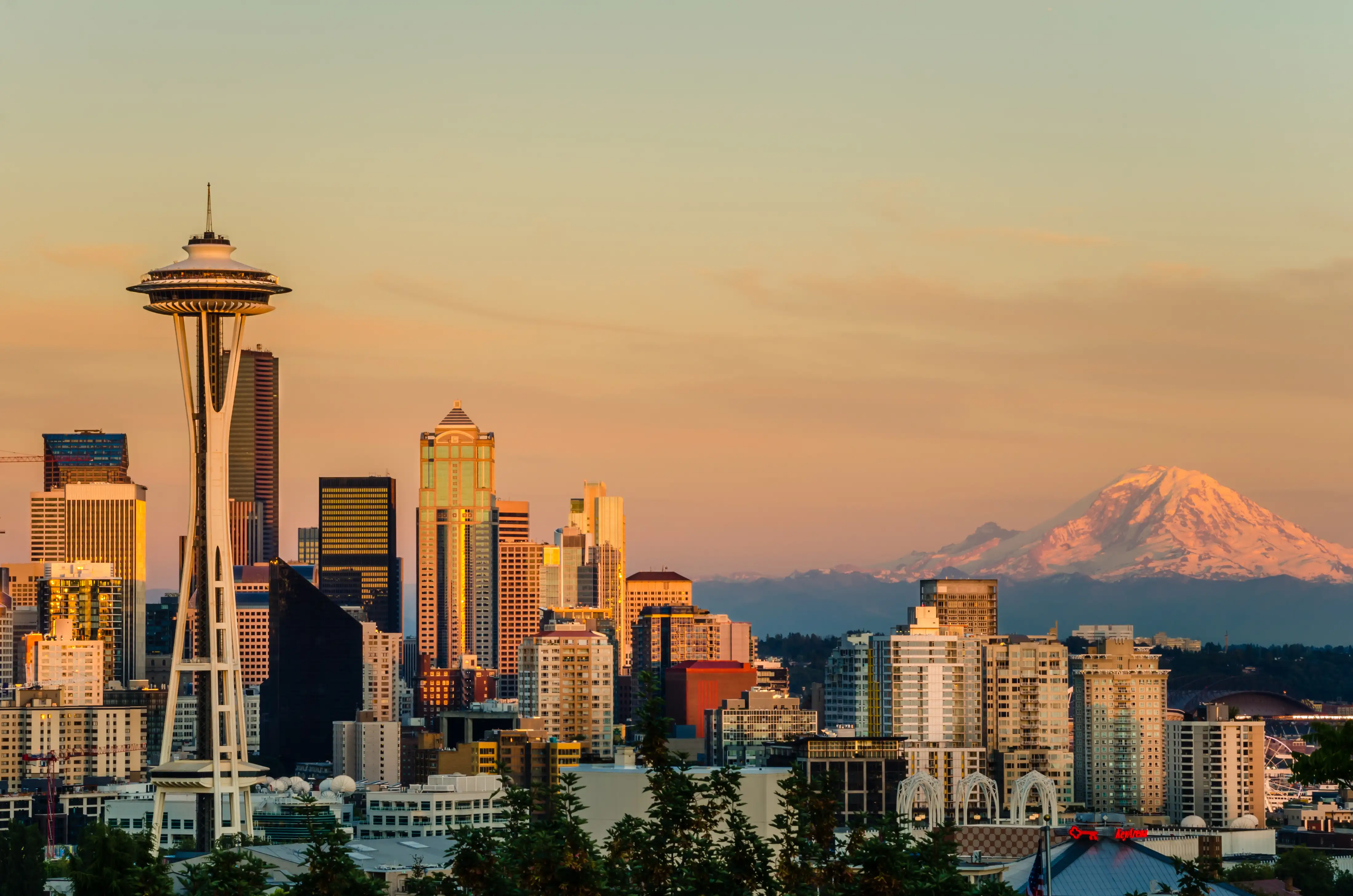
Seattle sits at the intersection of Puget Sound, the Cascades, and the Pacific Northwest's dominant tech economy. The geography isn't incidental — it shapes everything from your commute to your weekend options to the neighborhood you can actually afford. Interstate 5 cuts the city north to south. Highway 99 runs parallel underneath it, literally tunneling beneath downtown. Water surrounds the city on two sides: Elliott Bay to the west, Lake Washington to the east, with Lake Union sitting in the middle. Getting anywhere by car requires navigating hills, water crossings, and a freeway system that has no graceful answer to rush hour. Light rail is expanding, and the March 2026 connection between the International District and South Bellevue is genuinely reshaping where people choose to live relative to where they work.
This guide is built for people making an actual decision. You'll find honest neighborhood breakdowns, verified market data, the commute realities nobody puts in the brochure, and a straight look at what daily life here feels like after the novelty wears off. Whether you're weighing Seattle against Bellevue, trying to figure out which neighborhood fits your budget and your lifestyle, or just trying to understand what $850,000 actually buys in this market, this is where you start.
Not everyone who relocates here finds what they expected. The table below cuts through the generalities.
| Best For | Why |
|---|---|
| Tech workers | Amazon, Microsoft, Google, and dozens of high-growth startups are headquartered here or maintain major campuses; South Lake Union and Bellevue are both accessible |
| Young professionals | Dense, walkable neighborhoods like Capitol Hill, Fremont, and Ballard offer urban energy without Manhattan prices |
| Outdoor enthusiasts | Mountains, Sound, islands, and forests are all within 90 minutes; skiing, kayaking, and hiking are genuinely part of the weekly rhythm |
| Families with kids | Neighborhoods like Wallingford, Green Lake, and Magnolia offer strong schools, parks, and a pace that doesn't require a car for every errand |
| Remote workers | No state income tax combined with Seattle's infrastructure and airport access makes it a high-value base for remote professionals |
| Retirees | Medical infrastructure (UW Medicine, Providence Swedish), world-class cultural institutions, and mild-for-its-latitude winters attract active retirees — though the hills and home prices are real considerations |
The city doesn't unfold in a grid. Seattle is a collection of distinct urban villages connected by corridors that can feel either seamless or exhausting depending on when you're driving them. The Queen Anne hill rises so steeply that a handful of counterbalanced staircases were built a century ago just to get pedestrians from bottom to top. Beacon Hill drops toward the Rainier Valley on one side and faces downtown on the other. This verticality defines the city in ways that flat-city residents consistently underestimate when they're touring on a clear summer day and everything feels easy.
Commute reality is the most frequent surprise for new arrivals. The I-5 corridor through downtown is one of the most congested stretches of highway in the country during peak hours, and the alternatives — 99, surface streets, Aurora Avenue — each carry their own complications. The general rule locals use: anything more than five miles by car should be budgeted at double the Google Maps estimate between 7:30 and 9:30 a.m. Light rail has changed the calculus in specific corridors, particularly for anyone living near the U District, Capitol Hill, or Beacon Hill stations and working downtown or in the airport corridor. The new South Bellevue extension means that buyers who previously ruled out the east side for work-life reasons now have more options.
The daily rhythm varies enormously by neighborhood, which is part of what makes Seattle feel like multiple cities stacked inside one set of city limits. Ballard on a Saturday morning — coffee at one of the bakeries near Market Street, a walk through the Farmers Market at 22nd Ave NW, the Locks in the afternoon — feels nothing like a Saturday morning in Madison Park or the Central District. The Pike Place Market pulls tourists, yes, but it also functions as a genuine working market where locals buy fish and flowers and produce. The waterfront, recently rebuilt after the Alaskan Way Viaduct came down, has reconnected downtown to Elliott Bay in a way that actually works.
Where families gather tends to be hyperlocal. Green Lake Park draws walkers and runners from a three-neighborhood radius every morning. Gas Works Park on Lake Union fills with kite flyers and picnickers every weekend the clouds break. The Fremont Sunday Market, running since the 1990s, is where the neighborhood actually socializes — vendors, vintage goods, locals who've been going for twenty years. These aren't things you discover in the first month; they're what makes Seattle feel like home in month eight.
The no-state-income-tax reality lands differently once you've lived here a year. A household earning $123,000 — close to the Seattle median — saves roughly $7,000 to $9,000 annually compared to a comparable income in California. That math compounds over time, and it's one of the primary reasons remote workers and high-income professionals continue to choose Seattle over other coastal tech hubs. Washington does collect a capital gains tax on gains above $270,000, but for most working households, the income tax savings are real and material.
The outdoor access is not a marketing slogan. Mount Rainier is visible from the city on clear days and accessible in under two hours. The North Cascades, Olympic Peninsula, and San Juan Islands are all within a half-day's drive or ferry ride. Locals who arrive expecting to do outdoor things "eventually" typically find themselves doing them constantly — the culture here normalizes it. Ski season runs from roughly November through April at Snoqualmie Pass, which is closer to Seattle than many suburban commuters are to their downtown offices.
The food and culture infrastructure punches above its weight for a city this size. Pike Place Market has operated continuously since 1907. The James Beard–recognized restaurant scene runs deep in neighborhoods like Capitol Hill and Fremont. The Seattle Art Museum, Seattle Symphony, and Museum of Pop Culture give the city genuine cultural weight that smaller Pacific Northwest cities can't match. Amazon's investment in South Lake Union catalyzed a restaurant and retail corridor that didn't exist fifteen years ago.
The medical infrastructure is exceptional by any standard. UW Medicine operates one of the top academic medical centers in the country. Providence Swedish has multiple campuses across the metro. For families with complex medical needs — or for anyone thinking decades ahead — Seattle's healthcare depth is a meaningful quality-of-life asset that rarely appears in relocation ranking lists but matters enormously in practice.
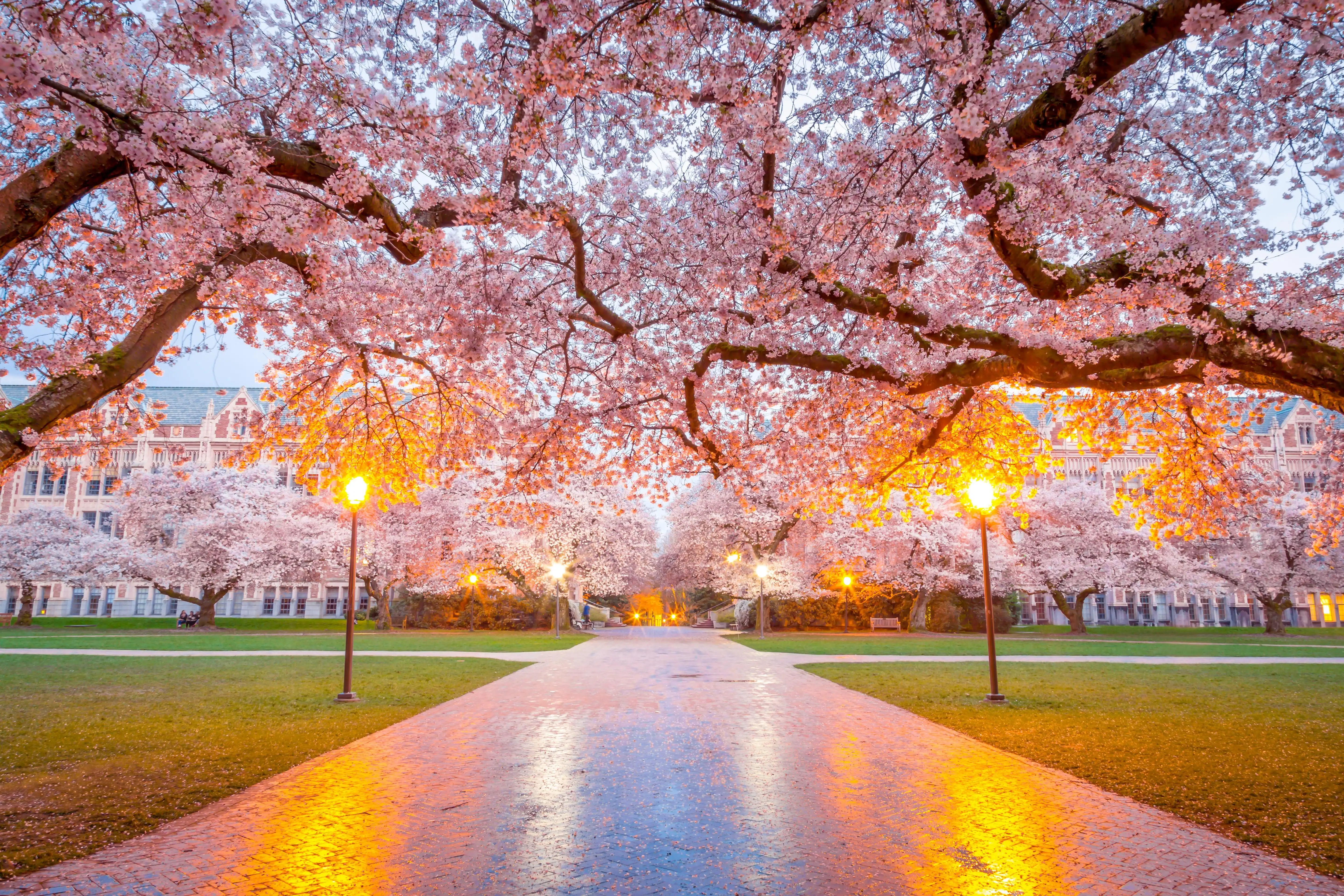
The weather requires honest treatment. Seattle averages 152 sunny days per year, compared to 205 nationally. The rain itself is mostly drizzle rather than downpour — locals don't carry umbrellas the way tourists expect — but the persistent gray from November through March affects mood in ways that first-year residents sometimes don't anticipate. The flip side is summers that are genuinely magnificent: low humidity, consistent 70s, and roughly 16 hours of daylight at the peak. People who arrive from dry climates often report that year two is much easier once they've built winter rhythms.
Housing affordability is the most practical constraint for the majority of relocating households. The citywide median sits at approximately $850,000, but buyers shopping for single-family homes encounter a different market — King County's SFH median runs closer to $975,000. A two-bedroom condo entry point starts around $728,000. That means even with Seattle's above-average incomes, the path to ownership requires either a significant down payment, a high household income, or a willingness to look at neighborhoods and property types that aren't on the surface-level shortlists.
Why some people leave is worth naming directly. The property crime rate — approximately 50 per 1,000 residents — is high by most national comparisons and is something that surfaces in daily life, particularly downtown and in certain commercial corridors. Car break-ins, retail theft, and visible homelessness concentrated in areas like downtown, the International District, and parts of Capitol Hill are realities that frustrate longtime residents. The city has made visible investments in addressing these issues, but anyone relocating with rose-colored expectations about urban livability should go in with clear eyes.
Traffic infrastructure simply hasn't kept pace with population growth. The city grew by nearly 19,000 residents between 2024 and 2025 alone, and road capacity didn't grow with it. The Mercer Street corridor, I-5 between downtown and the U District, and the West Seattle Bridge (which closed in 2020 and reopened in 2022, but left a lasting awareness of the bridge-dependency of that peninsula) all represent chokepoints that shape where people choose to live and work. Remote work has taken the edge off, but hybrid schedules mean Tuesday and Thursday peak-hour traffic is now functionally as bad as the old Monday-through-Friday pattern.
Ballard occupies the northwest corner of Seattle in a way that makes it feel semi-autonomous — residents here shop, eat, drink, and socialize largely within the neighborhood's own commercial corridors on Ballard Avenue and Market Street. The Scandinavian maritime heritage is visible at the National Nordic Museum and the Ballard Locks, where boats pass between Lake Washington and Puget Sound while locals watch from the grass. As of early 2026, the combined median sold price (condos and SFH) runs approximately $850,000, though single-family homes alone trend closer to $975,000. The catch is that the neighborhood's popularity has pushed prices steadily, and the planned light rail station (still years out as of 2026) has already been priced into some listings.
Best for: Buyers who want strong walkability, a distinct neighborhood identity, and don't mind paying for both.
Capitol Hill is the densest, most transit-connected neighborhood in Seattle outside of downtown, and it has the most active condo resale market in the city. The neighborhood's LGBTQ cultural history gives it a distinct energy that hasn't been fully smoothed away by gentrification — Broadway remains genuinely eclectic, and the bar and restaurant scene along Pike and Pine Streets is as concentrated as anywhere in the Pacific Northwest. Median listing prices run approximately $594,500, but that figure is heavily condo-weighted; buyers looking for single-family homes in Capitol Hill should expect $1.1 million and up. The light rail station makes downtown a 6-minute commute.
Best for: Urban professionals who want to walk everywhere and value cultural density over square footage.
Queen Anne divides naturally into Upper and Lower, and the distinction matters for buyers. Upper Queen Anne has the quiet, residential feel of an established upscale neighborhood — tree-lined streets, older craftsman homes, views that cost what you'd expect views to cost. Lower Queen Anne sits at the base of Seattle Center, putting residents within walking distance of the Space Needle, Museum of Pop Culture, Chihuly Garden and Glass, and KeyArena (now Climate Pledge Arena). The median sale price reached approximately $1,050,000 as of early 2026, and the neighborhood tends to attract buyers who want something closer to suburban calm without leaving the city. The compromise is that driving anywhere during event nights near Seattle Center can be genuinely painful.
Best for: Families or couples who want upscale city living with views and proximity to cultural venues.
Fremont built its identity on self-declared independence — the "Center of the Universe" signs aren't entirely ironic — and the neighborhood still earns it with the Fremont Troll under the Aurora Bridge, the Sunday Market, and public art installations that have been fixtures for decades. Average home prices sit around $1 million, with the Fremont-Wallingford corridor running $900,000 to over $1.1 million for typical single-family homes, and multiple-offer situations remain common even in the current softened market. The proximity to both Google's Fremont campus and Amazon's South Lake Union headquarters means demand here rarely softens the way it might in neighborhoods further from tech employment. The honest downside is that parking is scarce and the neighborhood draws enough weekend visitors that weekend errands can feel like navigating a festival.
Best for: Tech professionals and creative types who want walkable neighborhood culture and are willing to pay the premium that demand creates.
Wallingford is what Fremont might be if it were slightly quieter and more family-oriented — the two neighborhoods share a border and price range, but Wallingford tilts residential where Fremont tilts commercial. The housing stock runs heavily toward early-20th-century craftsman bungalows on streets that genuinely feel like a neighborhood rather than a district. Prices typically fall in the same $900,000 to $1.1 million range as Fremont, and the neighborhood feeds into some of Seattle's more sought-after public school options. Gas Works Park sits on Wallingford's southern edge along Lake Union, which functions as a de facto community gathering space year-round.
Best for: Families with school-age children who want walkable streets, good parks, and a neighborhood that feels settled rather than trendy.
Green Lake is organized around the lake itself — a 2.8-mile path around the water that functions as the neighborhood's central social infrastructure, running seven days a week regardless of weather. Housing here tends toward the higher end of the mid-market, with prices in the $900,000 to $1.1 million range for typical single-family homes and notable competition for anything with a water view or walk-to-the-path positioning. The neighborhood draws households with young children partly because of the park amenities (including a wading pool and community center) and partly because of its relatively calm traffic patterns. The catch is that parking near the lake on weekends is genuinely miserable, and residents a few blocks off the water accept that as the cost of the address.
Best for: Active households who want a daily outdoor anchor and don't mind paying for proximity to one of the city's best parks.
Beacon Hill offers something increasingly rare in Seattle: genuine affordability relative to the city median, combined with light rail access and a culturally diverse food scene that outperforms neighborhoods three times the price. The light rail station connects residents to downtown in under 10 minutes and to the airport in under 40 — a combination that makes Beacon Hill one of the best transit value propositions in the city. Home prices here typically run below the citywide median, making it one of the more realistic entry points for first-time buyers in Seattle proper. The honest tradeoff is that the commercial corridors are thinner than in Ballard or Capitol Hill, and buyers accustomed to walkable retail density will need to recalibrate their expectations.
Best for: First-time buyers and transit-dependent households who want to be inside Seattle city limits without paying the Capitol Hill or Queen Anne premium.
Columbia City sits in the Rainier Valley and has undergone the kind of gradual transformation that real estate writers usually describe with words that are on the banned list here — so instead: it's a neighborhood with genuine neighborhood bones, a main street (Rainier Avenue S) that has developed a real restaurant and retail cluster, and light rail access that makes it functionally connected to the rest of the city. Home prices run below the citywide median in most cases, and the cultural diversity of the surrounding Rainier Valley gives the neighborhood a texture that more homogeneous North Seattle neighborhoods don't have. Buyers who want to be part of a neighborhood that's still building its identity — rather than one that's already been fully discovered — often find Columbia City worth serious consideration.
Best for: Value-oriented buyers who want light rail access and neighborhood character without paying Ballard or Capitol Hill prices.

Relocating to Seattle means your neighborhood choice can significantly shape your long-term equity story. Areas like Queen Anne and Ballard have demonstrated consistent appreciation driven by walkability, strong community character, and proximity to employment corridors — factors that tend to hold value well even through market fluctuations. Fremont attracts buyers looking for that sweet spot of accessibility and neighborhood personality, though well-priced homes there routinely go under contract within days. If your budget is under $750,000, expect serious competition and limited time to deliberate once something hits the market.
Before you fall in love with a home on tour, sit down with a lender first. Your true monthly obligation includes property taxes, homeowner's insurance, any HOA dues, and your loan structure — and that full picture often looks different from what an online calculator suggests. I always encourage buyers to identify a comfortable payment rather than simply chasing maximum approval. Seattle's market moves fast, and arriving pre-approved means you're genuinely ready when the right home appears, not scrambling to catch up.
| City | Best For | Median Home Price | Commute to Seattle | Vibe |
|---|---|---|---|---|
| Seattle | Urban professionals, tech workers, cultural access | ~$850,000 | — | Dense, diverse, hilly, walkable in pockets |
| Bellevue | Tech workers (Microsoft/Amazon East), families, luxury buyers | ~$1.4M | 20–45 min via I-90 or new light rail | Polished, affluent, newer construction |
| Redmond | Microsoft employees, families, tech-adjacent buyers | ~$1.1M | 25–45 min via SR-520 | Suburban, tech-campus adjacency, quieter |
| Kirkland | Families, waterfront buyers, Google employees | ~$1.2M | 25–45 min via I-405/SR-520 | Walkable lakefront downtown, affluent, low-rise |
| Renton | Value-oriented buyers, Boeing workers, first-time buyers | ~$650,000 | 25–45 min via I-405 or I-5 | Suburban, more affordable, improving amenities |
| Everett | Budget buyers, defense/aerospace workers, commuters | ~$525,000 | 35–60 min via I-5 or Sounder train | Working-class roots, growing tech presence, ferry access |
| Metric | Data |
|---|---|
| Population | ~792,000–816,000 (2025–2026 estimates) |
| Median Home Price | ~$850,000 (citywide, all types, mid-2026) |
| SFH Median (King County) | ~$975,000 |
| Median Household Income | ~$123,860 |
| Property Tax Rate | ~0.98% (varies by parcel and levy code) |
| School District | Seattle Public Schools (rated A-) |
| Violent Crime per 1,000 | 7.75 |
| Property Crime per 1,000 | 50.08 |
| Avg. Metro Rent (1BR) | $2,100–$2,400/month |
| Major Employers | Amazon, Boeing, Microsoft, UW, Starbucks, Alaska Airlines |
| Light Rail Lines | Link Light Rail (multiple lines; Eastside connection opened March 2026) |
The Freeze is real, and it's not rudeness. The Seattle Freeze — the widely documented experience of finding Seattleites outwardly friendly but genuinely difficult to form close friendships with — is something that newcomers reliably describe as their biggest social surprise. Month one feels warm. Month six can feel oddly flat. The antidote, consistently reported by people who've successfully built community here, is joining something with a regular cadence: a running club, a community sports league, a neighborhood garden plot. Showing up consistently is what breaks through.
Seafair Week is the city's actual summer holiday. The Seafair summer festival runs across multiple weekends in July and August, culminating in the Blue Angels air show over Lake Washington and hydroplane racing on the water. Families stake out spots on the lake shore the night before; boats anchor in Genesee Park's offshore area in numbers that have to be seen to be understood. This isn't a tourist event — it's the city going outside together, and it functions as an unofficial marker that you've arrived as a Seattleite when you start planning your Seafair weekend a month in advance.
Farmers markets here are serious, not decorative. The University District Farmers Market (Saturdays, year-round) and the Ballard Farmers Market (Sundays, year-round) both run through winter with full produce and vendor participation. The Capitol Hill Farmers Market operates on Sundays. These aren't seasonal pop-ups — they're genuine community infrastructure, and longtime Seattle residents build weekly shopping routines around them in a way that surprises transplants from other cities.
What I would not do if moving here: I would not buy in the first neighborhood I toured on a sunny July day without spending a winter weekend there first. The neighborhoods that feel most alive in July — South Lake Union's restaurant patios, Capitol Hill's sidewalk scenes, the waterfront — can feel dramatically different in February. More practically: I would not buy within a half-mile of the I-5 express lanes in the Eastlake corridor without driving that stretch at 8 a.m. on a Tuesday and understanding what that sound level means year-round. The highway noise in those blocks is significant, and it rarely shows up in listing descriptions.
Local Expert Takeaway: The inventory increase of 2025–2026 has created a genuine buyer's window that may not last through 2027 — Seattle's fundamentals (tech employment, no state income tax, geographic constraints on supply) haven't changed. If your budget is between $800,000 and $1 million, focus your search on Beacon Hill, Columbia City, and the southern end of the Rainier Valley before they price through that range. Buyers coming from out of state with a tech relocation package consistently underestimate how much the neighborhood choice matters here — being in the wrong part of the city for your actual daily commute can cost you 45 minutes each way, which no house view compensates for.
✅ Seattle's no-state-income-tax advantage is real — for high-income households, the annual savings compared to California or Oregon are substantial and compound significantly over time.
⚠️ Property crime is a genuine daily reality — the rate of approximately 50 per 1,000 residents is among the highest in the country, and buyers should understand which neighborhoods and corridors see the highest concentration before choosing where to live.
📍 Light rail is reshaping the buyer geography — the March 2026 South Bellevue connection means that east-side employment is now legitimately accessible from Seattle neighborhoods for the first time, expanding where buyers can realistically live relative to where they work.
Is Seattle a good place for families?
Seattle offers strong infrastructure for families with children — Seattle Public Schools carries an A- rating, and neighborhoods like Wallingford, Green Lake, and Magnolia have reputations for engaged school communities and accessible parks. The cost of homeownership is the primary friction point; families looking for a single-family home with a yard are typically working with budgets north of $975,000 in most desirable school-zone neighborhoods.
What is the crime rate in Seattle?
Seattle's violent crime rate runs approximately 7.75 per 1,000 residents, which is above many suburban comparisons but within the range of other major West Coast cities. The property crime figure — roughly 50 per 1,000 — is the more practically relevant number for most residents, as car break-ins and retail theft are visible in daily life, particularly in the downtown core, Capitol Hill, and the International District corridor.
How does Seattle compare to Bellevue for relocation?
Seattle offers more neighborhood character, denser transit, cultural institutions, and a citywide median home price approximately $400,000 to $550,000 below Bellevue's. Bellevue counters with newer construction, the top-ranked Bellevue School District, and closer proximity to Microsoft's main Redmond campus. The March 2026 light rail extension has meaningfully narrowed the practical commute gap between the two cities, making the decision more lifestyle-driven than it's been in previous years.
Explore the full Seattle series: Living in Seattle · Is Seattle Safe? · Cost of Living · Best Neighborhoods · Schools & Family Life · Youth Sports · Parks & Rec · Retiring in Seattle