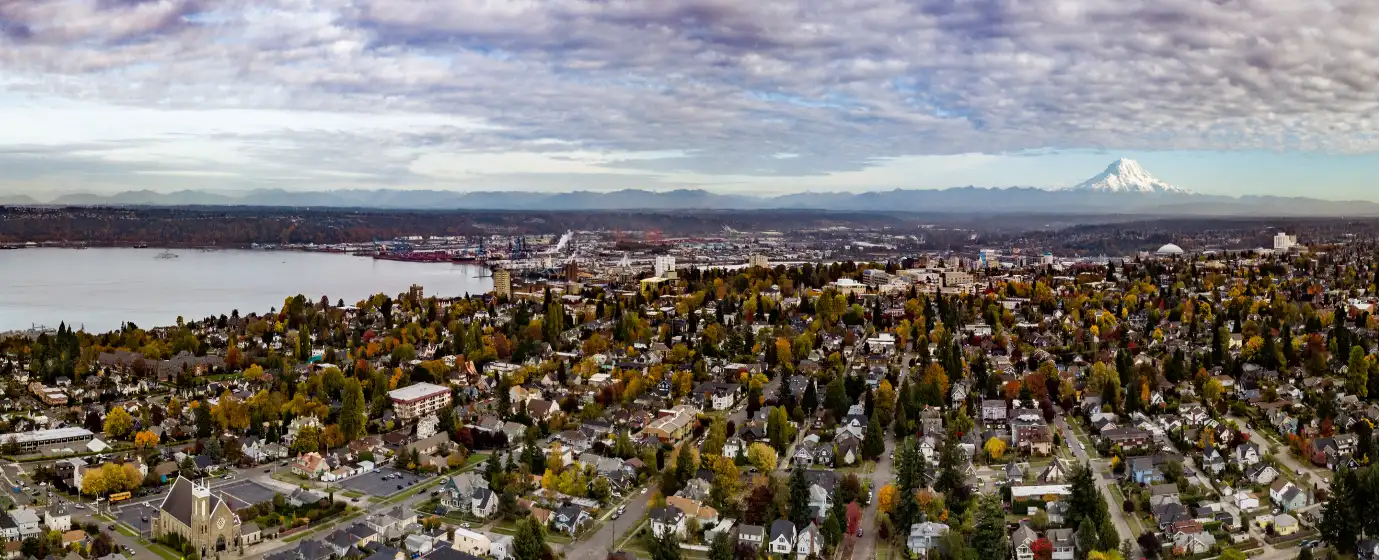
Puget Sound · Washington
Tacoma Schools & Family Life: Top Districts, Academics & Community (2026)
The honest version of the Tacoma School District pitch is this: it's a large urban district doing genuinely difficult work, and it has made measurable progress. The Class of 2024 posted a 91.7% on-time graduation rate — the highest since the state started tracking it — and the district has outpaced the Washington state average graduation rate every year since 2014. But math and reading proficiency scores still lag behind state averages, and a $30 million budget shortfall heading into 2025–26 creates real uncertainty about staffing and programs. Families who go in with clear eyes tend to find their footing faster than those who expected something else.
What shapes school quality in Tacoma isn't any single variable — it's the intersection of neighborhood, program access, and parental engagement. The district spans a genuinely diverse city of 231,000 people, from established neighborhoods like the North End and Proctor District to communities with significantly higher rates of economic stress. A student attending Crescent Heights Elementary in Northeast Tacoma is in a fundamentally different academic environment than a student at a lower-resourced school a few miles south. That geographic and socioeconomic variance is the defining reality of this district.
This guide is designed to help you answer the questions that matter before you make an offer: Which schools are driving the district's best outcomes? Which neighborhoods put your kids in front of the strongest programs? What are the honest trade-offs if you're coming from a high-performing suburban district? And if Tacoma Public Schools isn't the right fit, what are your realistic alternatives?

Before breaking down individual schools, it helps to understand the scale of what you're working with. Tacoma Public Schools is the third-largest district in Washington State — a system serving nearly every corner of a mid-sized city with all the complexity that implies.
| Metric | Data |
|---|---|
| Total enrollment | ~28,800 students (2025–26) |
| School campuses | 69 total (36 elementary, 13 middle, 11 high, 4 early learning) |
| Student-teacher ratio | ~18:1 (above WA state avg of ~16:1) |
| Average teacher experience | 15.4 years |
| Per-pupil spending | ~$20,594 (OSPI 2024–25) |
| Math proficiency (Level 3+) | ~35% (WA state avg ~40–42%) |
| ELA/Reading proficiency | ~46% (WA state avg ~50%) |
| On-time graduation rate | 91.7% — Class of 2024, district-reported |
| Student diversity | 70% students of color; 34.6% White, 23% Hispanic/Latino, 12.5% Black |
| District SchoolIntel grade | C (42.9/100), ranked ~155 of 310 WA districts |
The range of elementary school performance inside Tacoma Public Schools is wide enough that school choice is effectively a neighborhood choice. These eight schools represent the strongest options for families relocating to the city.
Grant Elementary (Grant Center for the Expressive Arts) is the most distinctive elementary school in the district. Roughly 61% of students tested proficient in ELA in 2023–24 — well above both the district average of around 46% and the state average — and math proficiency ran near 56%, roughly 20 points above the district norm. Grant operates as an arts integration school, meaning fine arts and performing arts are woven into the academic curriculum rather than treated as extras. It suits creative kids who thrive in a structured but expressive environment, and the K–5 student-teacher ratio sits around 16:1. The demographic profile skews less representative of the broader district (around 60% White students), which is worth knowing if reflecting the city's diversity is a priority.
Washington Elementary has earned a consistent reputation as one of the top academic performers in the district. Both SchoolDigger and US News regularly place it in the top tier of TSD elementary schools on state assessments, and its Niche grade sits in the A-minus range. The school serves a primarily neighborhood catchment area and tends to attract highly engaged families. It's a solid baseline choice for buyers prioritizing raw academic outcomes.
Lowell Elementary has built its identity around STEM-focused curriculum, and that specialization shows up in its US News rankings within the district. Staff dedication is a frequently cited strength among current parents. High demand for STEM programming can create capacity pressure, so families relocating mid-year should plan early.
Crescent Heights Elementary serves the Northeast Tacoma and Browns Point feeder area, earning an A-minus on Niche 2026 and ranking among the top 201 public elementary schools in Washington State. With 418 students and a 17:1 ratio, it operates at a manageable scale. It's the anchor school for one of Tacoma's most desirable residential corridors and tends to attract families who've done their research on school placement before buying.
Lister Elementary is a smaller neighborhood school with a community-oriented feel. Academic outcomes sit above the district average, and the school benefits from an active parent community. It's a strong option for families settling in the central and south-central parts of the city who want a school with genuine neighborhood character.
Sheridan Elementary draws from one of Tacoma's more stable residential areas and posts reading proficiency numbers closer to the state average than the district norm. Class sizes tend to be manageable, and the school has a history of consistent staffing — an important stability factor in a district that has faced budget headwinds.
Mason Elementary serves a diverse student body and offers dual-language programming that appeals to multilingual households and families who value language immersion early. Academic outcomes are mixed overall, but the language program specifically has strong parent reviews and tends to produce measurable biliteracy gains by fourth and fifth grade.
Point Defiance Elementary sits in the northwestern part of the city near one of Tacoma's most recognizable landmarks. It's a mid-sized K–5 school with above-average parent engagement ratings and solid ELA scores. Families drawn to the North End waterfront corridor frequently land here, and the school benefits from a neighborhood that tends to invest heavily in school community events and fundraising.
The transition from elementary to middle school is where Tacoma's academic variance becomes most visible. Families who've been in strong feeder schools sometimes feel the shift when entering larger, more heterogeneous middle campuses.
Hunt Middle School is one of the most frequently mentioned middle schools among North End and Stadium District families. It earns solid marks on Niche and benefits from above-average parent involvement and stable administrative leadership. Students coming from Grant, Washington, or Crescent Heights tend to continue performing above district averages here.
Mason Middle School offers a continuation of dual-language programming from the elementary level — a genuine differentiator for families who started their children in Spanish immersion. The program structure allows students to develop academic Spanish alongside English through eighth grade, which is a meaningful long-term asset.
Giaudrone Middle School serves the northern part of the city and has a reputation for organized athletics and extracurricular programming. Academic outcomes sit close to the district average, making it a reasonable but not exceptional academic environment. Families who prioritize sports and activity programs often view it positively.
Stadium High School is the most architecturally distinctive high school in the state — housed in a converted 1891 château-style building overlooking downtown Tacoma and Commencement Bay, it was famously used as the filming location for the 1999 film 10 Things I Hate About You. But it earns attention for more than its looks. Stadium consistently posts graduation rates above the district average and is classified in the 4A WIAA classification, competing in what was formerly the Narrows League. The school offers a range of AP courses and attracts students who are motivated and academically engaged. The on-time graduation rate for the district overall sits at 91.7%, and Stadium typically performs above that figure. Students who thrive here tend to be self-directed and comfortable in a large, historically rich campus environment. Those who need more structured support or smaller class sizes may find the scale challenging.
Wilson High School is a 4A school on the west side of the city with a strong IB (International Baccalaureate) program — one of the most notable academic differentiators in the district. The IB Diploma Programme gives motivated students access to rigorous, internationally recognized coursework and can meaningfully strengthen college applications. Wilson's graduation rate tracks closely to the district's overall 91.7% figure, and the school attracts academically serious students from across the city, not just its immediate feeder zone. Families who prioritize college prep should put Wilson's IB program near the top of their research list.
Lincoln High School completed a high-profile renovation and rebuild in recent years, reopening as one of the most modern public high school facilities in the Pacific Northwest. The new campus has drawn attention and investment, and the school serves a diverse student body with a range of CTE (Career and Technical Education) pathways alongside college prep coursework. Lincoln is classified 4A in the WIAA. Its graduation rate has been improving, tracking closer to the district norm, and the facility itself has become a point of genuine community pride. The school suits students interested in hands-on and vocational programming who want a modern, well-resourced environment.
Tacoma School of the Arts (SOTA) is an alternative high school within the district that functions as a citywide magnet for students with serious interests in visual art, theater, creative writing, music, and film. Admission is by audition or portfolio. SOTA's academic outcomes are consistently strong, and the school has a loyal, passionate alumni base. It's worth knowing about if your child is already deeply invested in creative disciplines — this school is a different experience than a traditional comprehensive high school.
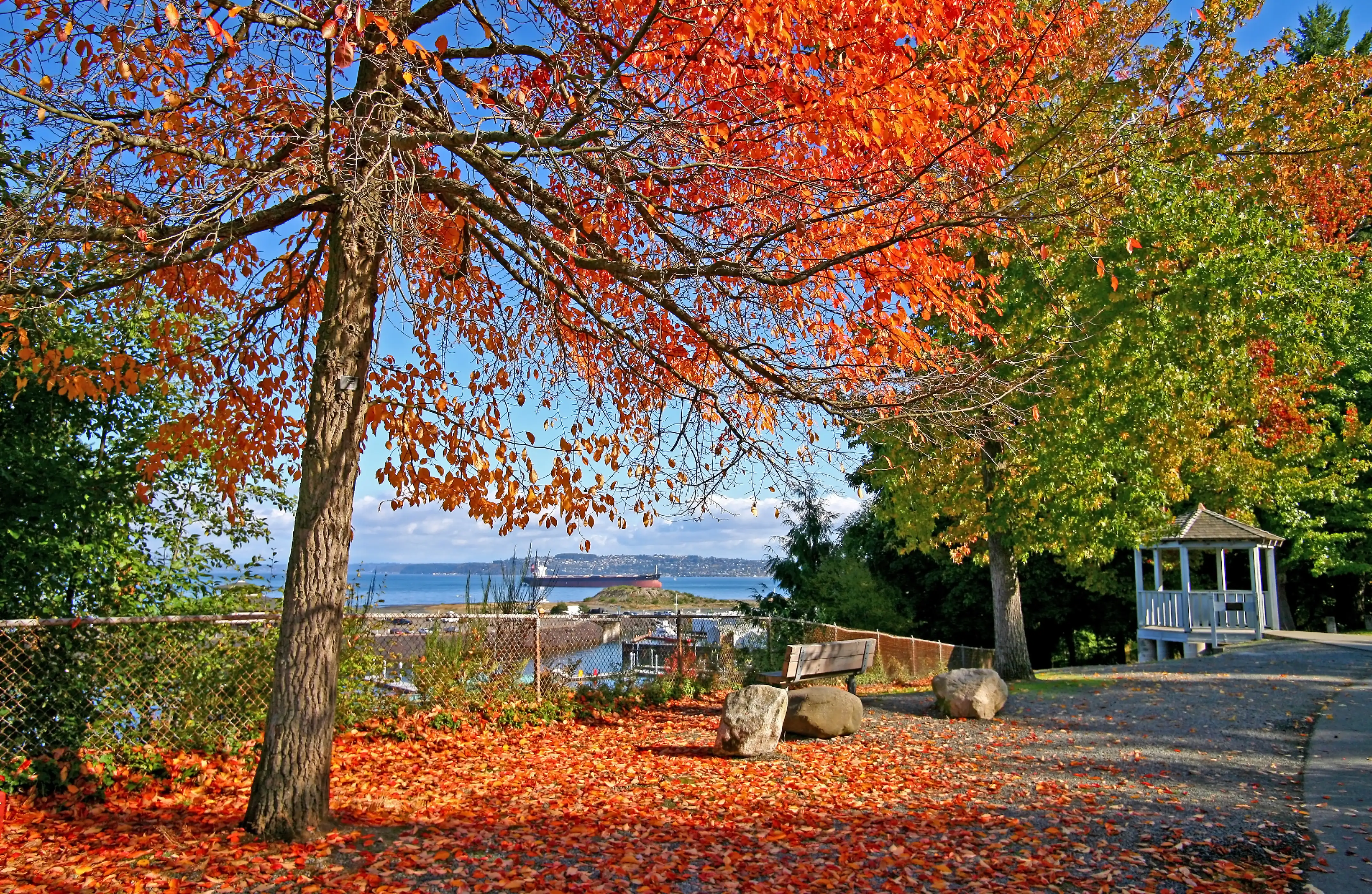
A district-wide Niche grade of B and an OSPI opportunity score below the national median can feel discouraging on paper. What they don't capture is the experience families in the right neighborhoods actually report after a year or two.
Parents who land in the North End or Northeast Tacoma feeder zones — and who choose schools like Grant, Crescent Heights, or Washington at the elementary level — often express genuine satisfaction with academic rigor, teacher quality, and community feel. The budget pressures and lower district-wide averages don't disappear, but they recede when your child is in a school that's performing at or above state norms. The district-wide average masks real school-level variation, and that variation is the operative fact for anyone buying in Tacoma specifically to get good public school placement.
What surprises most families after six months is how much neighborhood identity is bound up in school community. Tacoma's established neighborhoods — particularly the North End, Stadium District, and Proctor — have dense, active school communities with strong PTA involvement and fundraising capacity that supplements district resources in meaningful ways. The gap between a well-supported North End school and a lower-resourced south-side school isn't just academic — it's in extracurriculars, facilities maintenance, and program availability.
The other thing families consistently mention is that Tacoma's specialized programs — Grant's arts integration, Wilson's IB, SOTA's audition-based model, Mason's dual-language — create genuine options for kids who don't fit a standard academic mold. Those programs are a real asset, and they're accessible to families across the city who plan ahead and apply early.
Tacoma Public Schools is not the right fit for every family, and the honest version of this guide acknowledges that clearly.
If your child is formally identified as academically gifted and you're looking for a dedicated gifted program with accelerated coursework from elementary school onward, TSD's offerings are limited. University Place School District and Fircrest (served by a portion of TSD) both draw favorable comparisons for families prioritizing top-of-district academic consistency. Nearby Bellarmine Preparatory (a private Jesuit high school with a strong academic reputation) is worth considering for high school if rigorous college prep is the priority.
Families navigating significant special education needs should evaluate individual school support structures carefully. The district does provide special education services, but caseload pressures and the $30 million budget shortfall create a real-world constraint on support consistency. This is an area where visiting individual schools and meeting with special education coordinators before committing to a neighborhood matters more than district-level ratings.
For competitive athletics at the high school level, the 4A classification means your student-athlete is competing at a large-school level. If your family is coming from a smaller district where a student was a standout, the transition to 4A competition can be an adjustment. Steilacoom High School (2A) and Bellarmine Prep (private) are worth researching if competitive varsity athletics in a smaller-pool environment is a priority.

Families relocating to Tacoma for the schools often underestimate how much neighborhood choice shapes long-term value. Areas like the North End, Proctor District, and Stadium District consistently attract buyers who prioritize walkability, community feel, and proximity to well-regarded schools — and that demand is real. Desirable homes in these neighborhoods rarely sit on the market more than a few days, and finding something move-in ready under $750,000 requires both patience and preparation. Understanding what you're buying into locationally is just as important as the purchase price itself.
That's exactly why I encourage families to connect with a lender before they start touring homes. Your mortgage payment isn't just principal and interest — property taxes, homeowner's insurance, and any HOA dues all factor into what you'll owe each month, and those numbers can shift your comfort level significantly. I'd rather help you find a payment range that genuinely fits your life than push you toward the top of what you qualify for. When the right home appears in a competitive pocket of Tacoma, being fully prepared means you can move with confidence instead of scrambling.
Tacoma has a meaningful private school market, spanning faith-based schools, Montessori programs, and college-preparatory institutions.
| School | Type | Grades | Notes |
|---|---|---|---|
| Bellarmine Preparatory School | Jesuit / Catholic | 9–12 | One of the most respected college prep high schools in the region |
| Charles Wright Academy | Independent / Non-Denominational | PreK–12 | Strong academics, competitive athletics, significant tuition |
| Annie Wright Schools | Independent | PreK–12 (coed lower; girls upper) | Boarding and day options; IB Diploma Programme at upper school |
| Aquinas Academy | Catholic | K–8 | Proctor-area school with strong parent community |
| Tacoma Adventist School | Seventh-day Adventist | K–8 | Faith-based with small class sizes |
| St. Patrick School | Catholic | PreK–8 | Established South Tacoma faith-based option |
School quality is one piece of the picture. What Tacoma offers families beyond the classroom is genuinely strong, and it's an underrated part of the relocation calculus.
The Tacoma Public Library system includes six branches across the city, with the main branch downtown offering an extensive children's section, STEM programming, and after-school homework help that actively supplements what schools provide. The Kobetich Branch in Northeast Tacoma specifically serves one of the city's most family-dense residential areas.
Metro Parks Tacoma operates one of the most impressive urban parks systems in the Pacific Northwest. Point Defiance Park — one of the largest urban parks in the country at 760 acres — includes free-range zoo access via the Point Defiance Zoo & Aquarium, hiking trails, a rose garden, and the Fort Nisqually Living History Museum. Families with children use this park differently than tourists do; it becomes a weekly rhythm. Wright Park in the North End offers a Victorian-era arboretum and a conservatory that hosts family programming year-round.
The Tacoma Night Market, held at the Tacoma Dome Station area, has become a regular community gathering point with food vendors, local artisans, and a family-friendly atmosphere. The Proctor Farmers Market runs seasonally on Saturdays in the Proctor District and functions as one of the neighborhood's most consistent family gathering spots — the kind of place where kids from the same elementary school reliably run into each other outside of school hours. The Museum of Glass on the waterfront offers free or reduced admission days and runs hands-on glassblowing programs for school groups and families throughout the year.
For organized youth programming, Metro Parks Tacoma runs seasonal youth sports leagues, camps, and after-school programs that serve thousands of city kids annually. The Boys & Girls Clubs of South Puget Sound operates multiple Tacoma locations. The YMCA of Pierce and Kitsap Counties has a full-facility presence in the city and runs everything from swim lessons to teen leadership programs.

Local Expert Takeaway: Buy into the school boundary before you fall in love with the house. In Tacoma, the gap between a Grant, Crescent Heights, or Washington Elementary placement and a lower-resourced south-side school is significant enough to justify adjusting your neighborhood search — even if it means a slightly longer commute or a smaller yard. For high school, Wilson's IB program and Stadium's AP offerings are worth knowing about before your kids reach that age; both draw students from across the city, so proximity isn't required, but planning ahead is. If you're weighing Tacoma against University Place or Fircrest, the honest answer is that those neighboring districts post more consistent district-wide numbers — but Tacoma's top-performing schools are genuinely competitive, and the home prices reflect the perceived risk more than the actual outcome for families who do their homework.
Are Tacoma schools good for families moving from higher-performing districts?
Tacoma's top-tier schools — particularly those in the North End, Stadium, and Northeast Tacoma feeder zones — are competitive enough to satisfy most families coming from mid-tier suburban districts. Families relocating from the highest-performing Eastside Seattle suburbs may notice a gap at the average level, but the specialized programs (Wilson IB, Grant Arts, SOTA) can match or exceed what those districts offer for the right student. The key is doing neighborhood-level research, not district-level research.
What is the graduation rate for Tacoma's high schools?
The district's on-time graduation rate for the Class of 2024 came in at 91.7% — the highest figure since Washington State began tracking the metric and a consistent outperformer relative to the state average of approximately 84%. Individual high schools vary around that figure, with Stadium and Wilson typically landing above it and some alternative pathway schools pulling the average in different directions.
How does Tacoma compare to neighboring school districts like University Place or Fircrest?
University Place School District and the portions of Fircrest served by neighboring districts generally post higher district-wide proficiency averages than Tacoma Public Schools. Families prioritizing uniform academic consistency across all schools in the district will find those neighboring options more predictable. What Tacoma offers in return is greater program diversity, more specialized high school options, and home prices that — at a current median of $485,000 — remain meaningfully below what equivalent homes command in those neighboring communities.
Explore the full Tacoma series: Living in Tacoma · Is Tacoma Safe? · Cost of Living · Best Neighborhoods · Schools & Family Life · Youth Sports · Parks & Rec · Retiring in Tacoma