Eastern Washington · Washington
Best Neighborhoods in Wenatchee: Where to Buy or Rent (2026)
Wenatchee is not a city where "location within the city" is a minor consideration. The difference between buying in Sunnyslope and buying in South Wenatchee is not a $50,000 gap — it's a $580,000 gap, representing two entirely different economic realities within a city of 35,000 people. Buyers who treat Wenatchee as a uniform market and anchor their expectations to the citywide median of $528,000 often find themselves confused at open houses, either priced out of the neighborhoods they assumed were attainable or unaware of how affordable certain pockets actually are.
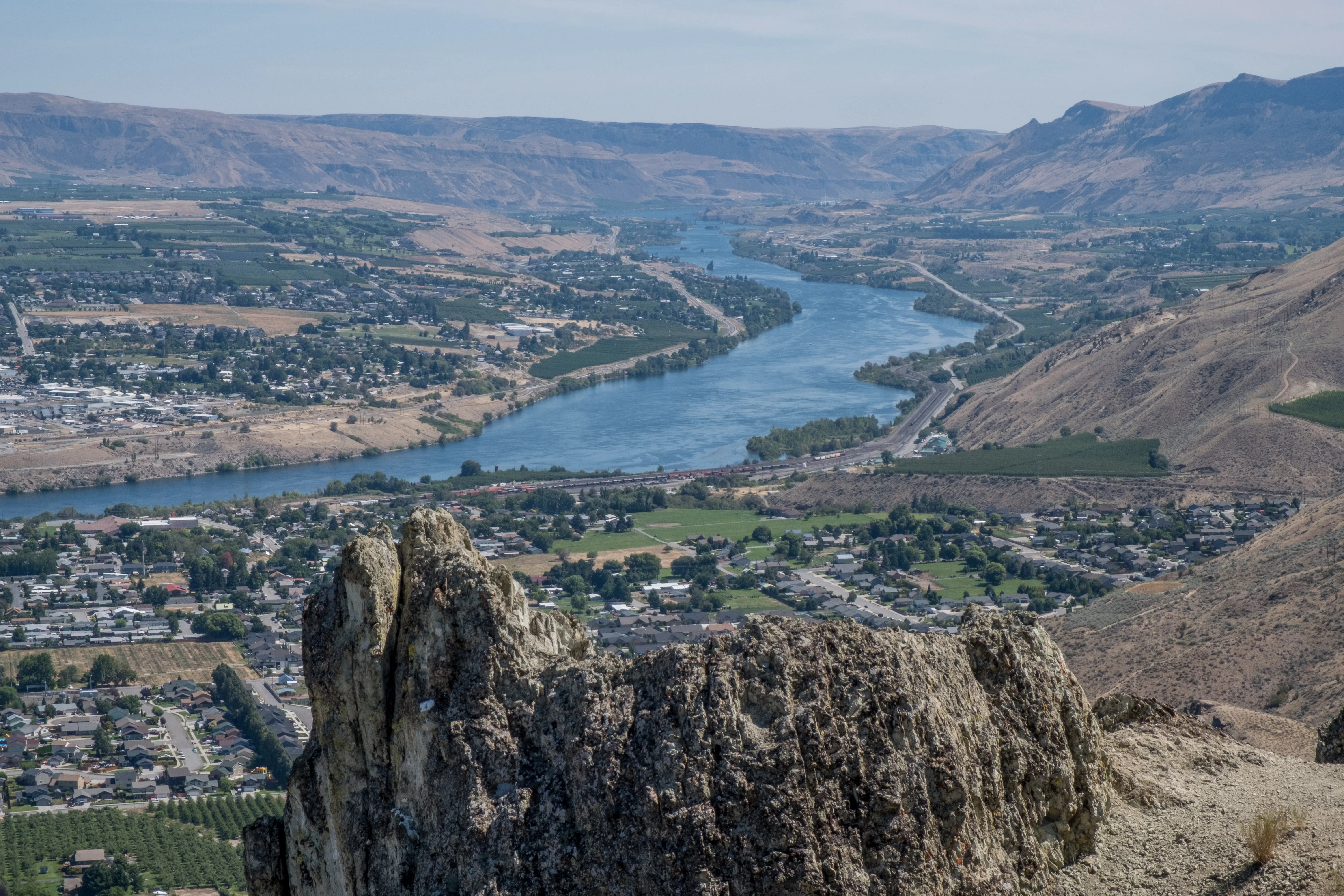
The defining geographic split is elevation and river proximity. The city climbs steeply west from the Columbia River, and that vertical rise corresponds almost directly to home prices, lot sizes, and the quieter, more rural character many buyers are specifically seeking. Lower-elevation neighborhoods near downtown and along the river corridors are denser, more affordable, and more walkable — but they also carry more traffic, some flood risk, and older housing stock. The further west and uphill you go, the more land, views, and price you encounter.
This guide breaks down every major Wenatchee neighborhood — where prices actually land, who each area suits, and what the trade-offs look like on the ground before you make an offer.
| Neighborhood | Best For | Price Range | Vibe |
|---|---|---|---|
| Downtown Wenatchee | Walkability seekers, renters | $370,000–$450,000 | Urban core, historic, pedestrian-friendly |
| Sunnyslope | Luxury buyers, large lots, views | $490,000–$1.75M | Upscale rural, acreage, horses welcome |
| Wenatchee Heights | Privacy, mountain views | $550,000–$900,000 | Elevated, custom homes, quiet |
| Olds Station | Families, suburban feel | $440,000–$580,000 | Established residential, good access |
| South Wenatchee | Entry-level buyers, renters | $290,000–$380,000 | Working-class, affordable, flood-zone aware |
| North Wenatchee | First-time buyers, commuters | $390,000–$520,000 | Mixed residential, convenient |
| Central Wenatchee | Value seekers, investors | $380,000–$500,000 | Mid-city, practical, transitional |
| Westside | Move-up buyers, newer construction | $480,000–$650,000 | Newer builds, hillside access, suburban |
| Forest Ridge | Premium views, outdoor lifestyle | $600,000–$1.1M | Custom homes, ski resort proximity |
| East Wenatchee (across river) | Value-oriented families | $390,000–$500,000 | Suburban, Douglas County taxes |
| Buyer Type | Best Neighborhood | Why |
|---|---|---|
| First-time buyer | South Wenatchee or North Wenatchee | Entry-level price points under $400K; manageable starter inventory |
| Luxury buyer | Sunnyslope | Acreage lots, river views, $800K–$1.75M custom homes |
| Walkability seeker | Downtown Wenatchee | Closest to Pybus Market, Riverfront Park, South Wenatchee Ave dining |
| Families with kids | Olds Station | Established neighborhood feel, school access, less traffic than downtown |
| Commuter (local) | Central Wenatchee | Central position cuts drive times to Confluence Health and WVC |
| Large lot buyer | Sunnyslope or Wenatchee Heights | 1.5–6 acre parcels; some with barns and outbuildings |
| Renter | Downtown or North Wenatchee | Best rental inventory concentration; lowest vacancy tensions |
Downtown is the one Wenatchee neighborhood where you can actually walk to something — Pybus Public Market, Riverfront Park, the Apple Capital Loop Trail access, and the dining and nightlife stretch along South Wenatchee Avenue are all reachable on foot from a central address. Home prices here average around $405,000, running noticeably below the citywide median and attracting both first-time buyers and investors looking at infill opportunities. The trade-off is older housing stock, denser lot configuration, and the reality that this is Wenatchee's most traffic-heavy zone — the convenience comes with noise and congestion that more residential neighborhoods don't have.
Best for: Buyers who prioritize walkability and cultural access over space and quiet.
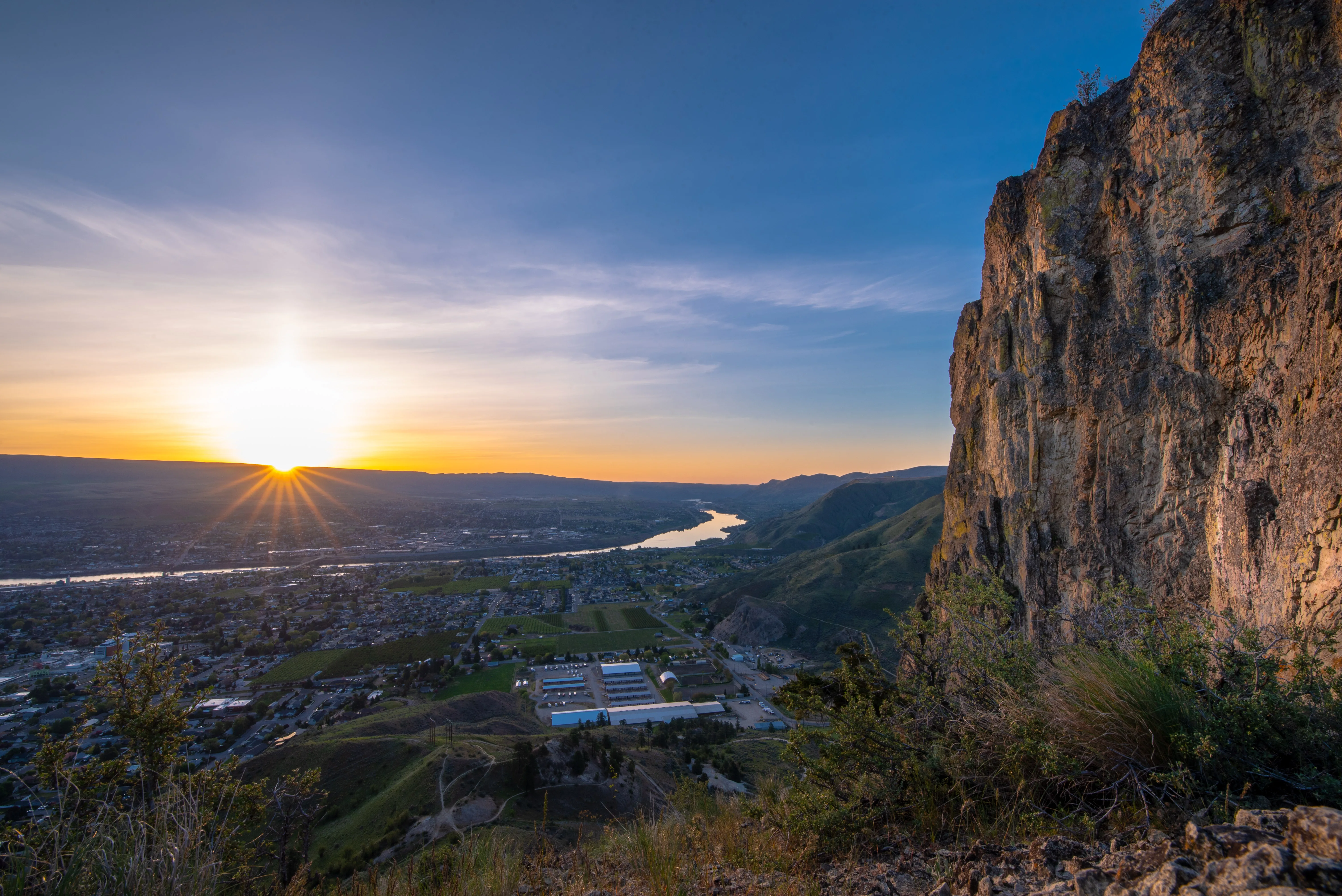
Sunnyslope sits on rolling hills north of the city proper, and the numbers here exist in a different universe than the rest of Wenatchee. The median real estate price in this area hovers around $900,000, with larger custom homes and acreage properties pushing well into seven figures. Lots typically run 1.5 to 2.5 acres, and some parcels stretch to six acres with barns and equestrian facilities — this is one of the few neighborhoods in the Wenatchee Valley where horses are a practical reality, not an expensive exception. The honest downside is the distance: getting to downtown Wenatchee, groceries, and schools requires a vehicle and a tolerance for hill driving, and the price premium means even buyers with strong budgets often find themselves working harder to justify the entry point.
Best for: Luxury buyers, retirees seeking privacy and views, and buyers with horses or large animals.
Wenatchee Heights occupies the elevated western fringe of the city, offering mountain and valley views from custom home lots that rarely become available in rapid succession. Prices in this area range from roughly $550,000 into the $900,000s depending on lot size and build quality, making it a natural step up from the mid-city neighborhoods without requiring the full Sunnyslope premium. The character here is quieter and more intentional than the denser residential zones — these are homes people sought out, not defaulted to. The catch is that Heights addresses are notably car-dependent, and the winding road access that makes the neighborhood feel private also means emergency response times and icy-winter driving warrant real consideration.
Best for: Buyers prioritizing views, privacy, and custom construction at a slightly more accessible price point than Sunnyslope.
Olds Station is where a lot of the practical, established residential demand in Wenatchee is concentrated. The neighborhood sits in the northern-to-mid-city corridor and offers the kind of conventional suburban feel — sidewalks, mature trees, reasonable lot sizes — that households with school-age children tend to gravitate toward. Prices in Olds Station typically run $440,000 to $580,000, landing right around the citywide median and reflecting genuine demand from buyers who want livability without the elevation and distance of the hillside neighborhoods. The area's primary limitation is that it isn't particularly distinctive — buyers looking for character, walkability, or standout views won't find it here, but buyers prioritizing function and access to daily life consistently land here.
Best for: Families with kids, buyers wanting established suburban infrastructure without paying the hillside premium.
South Wenatchee is the most affordable corner of the city, with median sold prices around $320,000 — a figure that stands well apart from every other neighborhood on this list. That affordability reflects a working-class character and older housing stock, and buyers shopping at this price point should approach the area with clear eyes. Flood risk is a genuine and documented concern — roughly 28% of properties in South Wenatchee face a meaningful chance of flood impact over a 30-year horizon, which makes flood insurance not optional but essential. The neighborhood suits buyers who need to get into the Wenatchee market at a lower entry point and are willing to do homework on individual property flood designations before closing.
Best for: Entry-level buyers, investors, and buyers who have researched specific property flood status carefully.
North Wenatchee functions as a practical mid-market zone with prices that generally land in the $390,000–$520,000 range — affordable by Wenatchee standards without the flood exposure concerns of South Wenatchee. The area is a mix of single-family homes, some smaller multi-family, and solid access to the northern approach routes out of the city. It attracts buyers who want to stay under $500,000 without making location compromises that will frustrate them in daily life. The tradeoff is that North Wenatchee lacks a strong neighborhood identity — it's convenient and affordable without being particularly compelling on its own terms.
Best for: First-time buyers, commuters, and renters transitioning to ownership under the $500,000 ceiling.
Central Wenatchee is the practical middle of the city in every sense — geographically central, mid-range in price, and consistently functional for buyers whose priorities are access to Confluence Health, Wenatchee Valley College, and the major commercial corridors without paying the hillside premium. Prices here sit roughly $380,000–$500,000, and the housing mix ranges from older single-family bungalows to more recent infill development. Some blocks are transitioning as investor interest increases, which creates both opportunity (underpriced homes with upside) and noise (variable block quality that matters for resale). Buyers considering Central Wenatchee should walk specific streets rather than underwriting the neighborhood as a whole.
Best for: Value-oriented buyers, healthcare and education sector employees, and investors comfortable with transitional block-by-block variation.
The Westside represents Wenatchee's newer construction corridor, where development pushed uphill and westward as the lower-elevation neighborhoods filled in. Prices typically run $480,000–$650,000, and the inventory skews toward homes built in the last two decades — better insulation, open floor plans, and attached garages that older Wenatchee stock rarely offers. Access to hillside recreation and the visual backdrop of the Cascades makes Westside addresses genuinely appealing for buyers who want newer construction without going full-custom. The limitation is that newer construction here also means less mature landscaping, more car dependency, and the occasional HOA or CC&R framework that restricts what owners can do with their lots.
Best for: Buyers prioritizing newer construction, clean finishes, and hillside access in the $500,000–$650,000 range.
Anchoring to the citywide median without understanding the range it masks. The $528,000 median figure is accurate as a market-wide average, but it describes almost no specific neighborhood well. South Wenatchee sells in the $320,000s. Sunnyslope averages closer to $900,000. Buyers who build their search around that midpoint number arrive at open houses either confused by prices or persistently outbid because they're targeting neighborhoods where demand has already pushed well above median.
Ignoring flood zone designations in South Wenatchee. South Wenatchee's affordability is real, but so is the flood exposure. Buyers drawn to the $290,000–$380,000 price range sometimes don't research individual FEMA flood map designations until they're already under contract — at which point flood insurance requirements can materially change the monthly payment math. Looking up specific parcel designations before making any offer in South Wenatchee is non-negotiable.
Underestimating the driving reality of hillside neighborhoods. Sunnyslope and Wenatchee Heights are beautiful in summer and genuinely challenging in January. North Wenatchee Avenue and the winding roads that connect upper-elevation addresses to downtown require traction control, appropriate tires, and comfort with narrow switchbacks in snow and ice. Buyers relocating from the Pacific coast lowlands sometimes don't fully internalize this until their first real winter — and some find that the hillside premium feels a lot less appealing when they're white-knuckling downhill in February.
Treating East Wenatchee as a Wenatchee neighborhood. East Wenatchee is its own city, in Douglas County, with a different tax structure and its own municipal services. It's directly across the Columbia River and closely linked to Wenatchee practically, but buyers who conflate the two and then discover the Douglas County property tax implications or a different school district boundary have often already made mental commitments that are awkward to undo. If East Wenatchee is genuinely on your list, evaluate it intentionally — not as a proxy for Wenatchee proper.

Where you buy within Wenatchee matters more than most people realize when it comes to long-term value. Neighborhoods like Wenatchee Heights and Sunnyslope have shown consistent appeal thanks to their views, established character, and proximity to outdoor recreation — factors that hold value well over time. Downtown Wenatchee continues attracting buyers who want walkability and convenience, with well-priced homes often going under contract within days. If you find something you love under $750,000 in these areas, expect competition and move accordingly.
Before you start touring homes, sit down with a lender — not to find out the maximum you qualify for, but to understand what a comfortable monthly payment actually looks like once you factor in property taxes, homeowner's insurance, any HOA dues, and your specific loan structure. Those numbers together can look very different from what a basic online calculator suggests. In a market like Wenatchee where desirable homes in Olds Station or North Wenatchee move quickly, having a full financial picture and a pre-approval in hand means you can make a confident decision without second-guessing yourself at the worst possible moment.
| Area | Ideal For | Typical Rent Range | Trade-off |
|---|---|---|---|
| Downtown Wenatchee | Young professionals, single renters | $1,200–$1,700/mo (1BR–2BR) | Parking challenges, street noise |
| North Wenatchee | Budget-conscious renters | $1,100–$1,500/mo | Less walkable, limited nightlife access |
| Central Wenatchee | Healthcare workers, WVC students | $1,200–$1,650/mo | Variable block quality |
| Olds Station area | Families renting before buying | $1,500–$1,900/mo | Tighter inventory, less turnover |
| South Wenatchee | Lowest-cost renters | $950–$1,300/mo | Older units, flood zone awareness required |
Local Expert Takeaway: Wenatchee's elevation gradient is the most important thing to understand before you start shopping. If walkability and access to Pybus Market, downtown dining, and the Apple Capital Loop Trail are priorities, stay close to the river in Downtown or Central Wenatchee and expect to pay in the $380,000–$450,000 range for older inventory. If you're willing to drive for views and acreage, the $490,000–$650,000 range in Westside and Olds Station delivers newer construction with hillside character. Sunnyslope is in its own category — reserve it for buyers who genuinely want land and are comfortable with the $800,000+ entry point that real acreage commands here.
Looking to buy in Wenatchee? Estimate your payment.
Enter your numbers to see an estimated monthly mortgage payment.
Estimate only. Excludes HOA fees and mortgage insurance.
Is Wenatchee a good place for families?
Yes, Wenatchee offers solid foundations for households with children — the Wenatchee School District serves the city with a B rating, and neighborhoods like Olds Station and Westside provide the established residential feel that families with school-age children tend to prioritize. The outdoor lifestyle access — Mission Ridge for skiing, the Apple Capital Loop Trail for year-round recreation, and Confluence State Park for summer — is genuinely exceptional for a city this size.
What are home prices like across Wenatchee's neighborhoods?
The citywide median sold price sits at $528,000, but individual neighborhoods span an enormous range. South Wenatchee can deliver homes in the $290,000–$380,000 band, while Sunnyslope regularly produces sales in the $800,000–$1.75 million range. Most practical mid-city neighborhoods — Olds Station, Central Wenatchee, Westside — cluster between $440,000 and $650,000, which is where the largest volume of buyer demand is concentrated.
How does Wenatchee compare to nearby cities for real estate value?
East Wenatchee, directly across the Columbia River, tends to run $80,000–$100,000 below Wenatchee's median — a meaningful gap that some buyers leverage deliberately, accepting the Douglas County jurisdiction in exchange for lower entry costs. Leavenworth to the northwest has stronger tourism demand that inflates values on the scenic end of the market. For buyers whose priority is getting the most livable home per dollar while remaining in the Wenatchee metro, the mid-city neighborhoods of Wenatchee proper currently represent the strongest balance of access, school district quality, and long-term appreciation potential.
Explore the full Wenatchee series: Living in Wenatchee · Is Wenatchee Safe? · Cost of Living · Best Neighborhoods · Schools & Family Life · Youth Sports · Parks & Rec · Retiring in Wenatchee