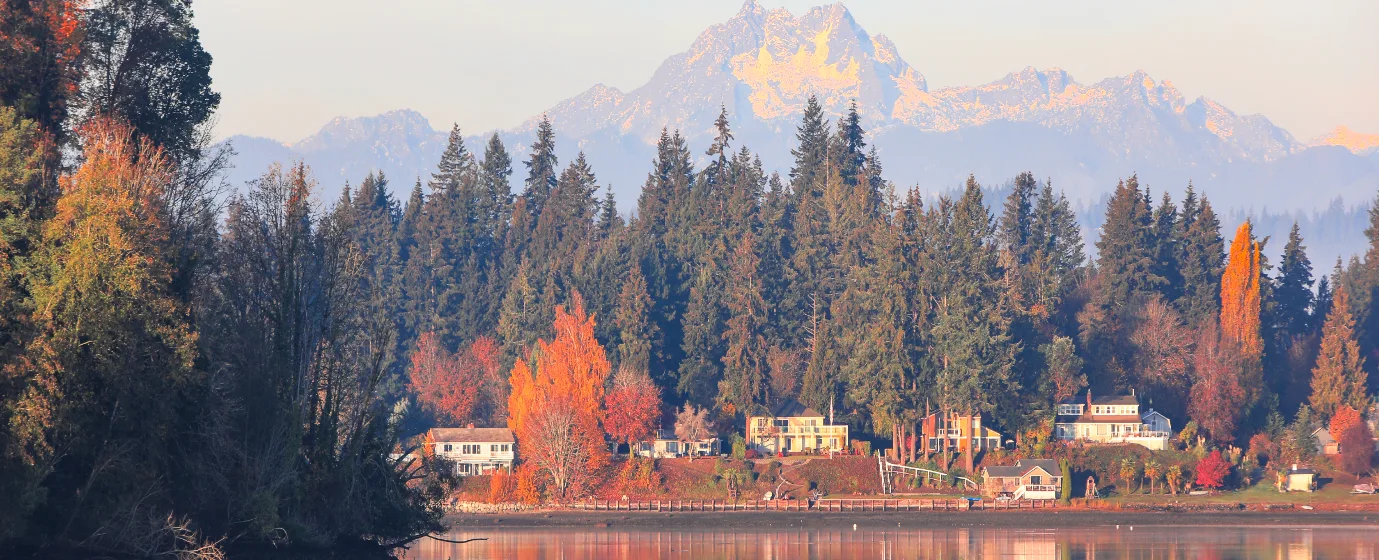
Puget Sound · Washington
1031 Exchange & Investment Real Estate in Bremerton (2026)
Not every investor doing a 1031 exchange is a seasoned portfolio operator. Many of the buyers currently looking at Bremerton are California homeowners — people who sold a primary residence or a long-held rental in the Bay Area or Southern California and are now sitting on a significant gain they'd rather not hand to the IRS. Bremerton catches their attention because the math works. A market with a median sold price around $471,000, strong military-driven rental demand, and Washington's complete absence of state income tax represents a fundamentally different financial picture than redeploying those proceeds back into California.
Bremerton's renter pool is unusually durable. With Puget Sound Naval Shipyard and Naval Base Kitsap employing tens of thousands and generating constant rotation of tenants who arrive on orders, stay two to four years, and depart reliably, the vacancy dynamic here is structurally different from most mid-size markets. Over half of Bremerton's households — roughly 51% — are renter-occupied. Two-bedroom units dominate demand, making the duplex and small multifamily segment the most natural investment vehicle in this market. Single-family rentals also move consistently, particularly in East Bremerton and Manette where the tenant pool skews toward civilian professionals and military families who want a house with a yard.
This guide walks through the mechanics of executing a 1031 exchange, what investment property actually costs and yields in Bremerton today, the tax advantages Washington offers compared to California, the landlord-tenant legal landscape as it stands in 2026, and a due diligence checklist built for out-of-state buyers on a tight 45-day clock.
The core of a 1031 exchange is simple: sell one investment property, reinvest the proceeds into another, and defer the capital gains tax indefinitely. The IRS gives you 45 calendar days from closing on your relinquished property to formally identify up to three replacement properties. That clock starts the moment you close — not when you think about starting, not when your intermediary sends paperwork. You then have 180 days total from that same closing date to complete the purchase of your replacement property.
The qualified intermediary requirement is non-negotiable. You cannot receive the sale proceeds yourself, even briefly. The funds must go directly to a QI — a third-party entity whose only role is to hold the proceeds and transfer them into the replacement purchase at closing. If the money touches your hands or your personal accounts at any point, the exchange is disqualified. Boot — the term for any cash or debt relief you receive that doesn't get reinvested — is taxable in the year of the exchange, so the goal is to reinvest all net equity and match or exceed the debt on the relinquished property. Like-kind rules are broad: any real property held for investment qualifies, meaning a California triplex can exchange into a Washington single-family rental, a duplex, or even raw land.
The 45-day identification window is where most first-time 1031 buyers make their critical mistake — they underestimate how fast it moves in a tight market like Bremerton, where median days on market have been running around 15 days. Starting your replacement property search before you close on the sale is not optional. It's the only way to avoid spending the back half of your 45-day window panicking over inventory.
Bremerton's investment property landscape in 2026 is concentrated in three primary asset types: single-family rentals, duplexes and small multifamily, and the occasional commercial or mixed-use property in the downtown core. The single-family rental segment dominates raw transaction volume — there are simply more of them, they attract the broadest buyer pool including owner-occupants, and they tend to close faster. Small multifamily is where serious yield-focused investors spend most of their time, though available inventory is thin; as of mid-2026, roughly 15 multifamily properties are listed citywide at any given time. Commercial and mixed-use properties trade more slowly and require deeper local knowledge of the downtown revitalization trajectory.
Cap rates in Bremerton reflect the broader Pacific Northwest compression. For single-family rentals, working backward from a median sold price around $471,000 and average market rents near $2,000 per month for a 3-bedroom house, gross yields run approximately 5% before expenses — netting out to a realistic cap rate in the 3% to 3.5% range after accounting for vacancy, management, taxes, insurance, and maintenance. Small multifamily properties, where rents aggregate across multiple units, can push closer to 4.5% to 5.5% on well-priced deals, particularly on value-add properties where rents are below current market. The 45-day pressure of a 1031 tends to push buyers toward move-in-ready assets rather than value-add projects, which is worth factoring into return expectations.
| Property Type | Typical Price Range | Est. Cap Rate | Avg Days to Close |
|---|---|---|---|
| Single-Family Rental (SFR) | $380,000 – $550,000 | 3.0% – 3.5% | 20 – 30 days |
| Duplex / Small Multifamily | $500,000 – $750,000 | 4.0% – 5.5% | 30 – 45 days |
| Downtown Condo (investment) | $290,000 – $600,000 | 3.5% – 4.5% | 25 – 40 days |
| Commercial / Mixed-Use | $600,000 – $1,200,000 | 4.5% – 6.5% | 45 – 90 days |
A Bay Area homeowner who sold a long-held rental or primary residence in 2024–2025 at $1.3M to $1.6M can realistically buy two replacement properties in Bremerton debt-free — perhaps a duplex in the $600,000 range and a single-family rental in East Bremerton near $400,000 — and still have proceeds left over. That's a level of diversification and cash-flow optionality that simply isn't available when redeploying Bay Area capital back into Bay Area real estate. The psychological shift of owning two income-producing properties free and clear versus one mortgaged property in a $1.5M market changes the investment calculus entirely.
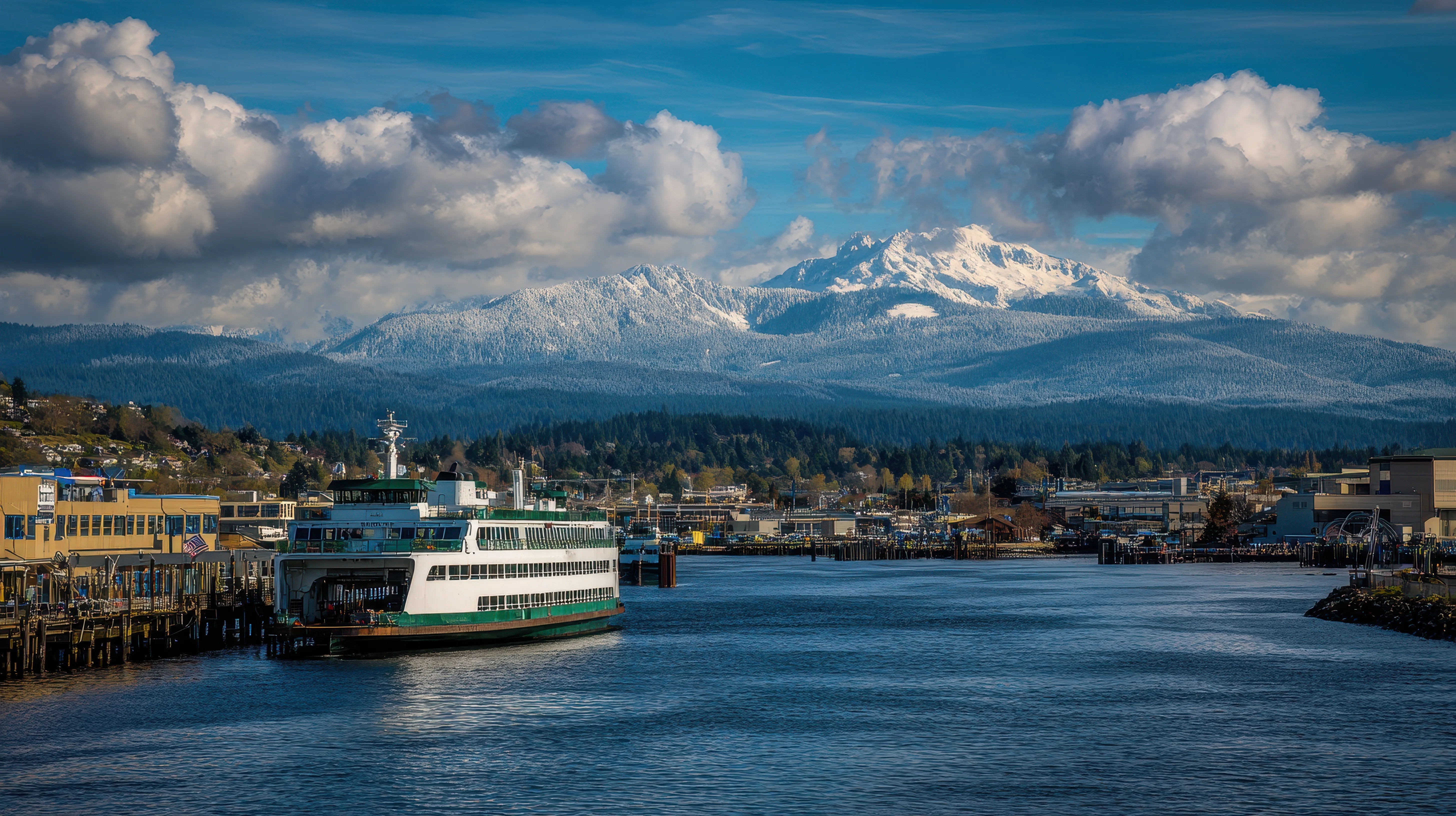
Investors coming out of Los Angeles, Orange County, or San Diego are typically selling at $900,000 to $1.3M and looking for a single replacement property with a meaningful upgrade in cash-on-cash return. Bremerton's combination of military-driven tenant demand, no state income tax, and a median price point of $471,000 creates a genuine yield improvement over what those proceeds would earn if recycled back into SoCal. The ferry commute to Seattle, which takes roughly 28 minutes on the passenger fast ferry, also makes Bremerton attractive to tenants who can't afford Seattle housing — expanding the qualified renter pool.
Sacramento and Inland Empire investors are often working with proceeds in the $500,000 to $900,000 range and looking for markets where their capital stretches further without sacrificing tenant quality. Bremerton fits that profile directly — the median price point is accessible, the military employment base means tenants with stable income and a federal background check, and the Pacific Northwest's long-term population and wage growth trends support the long-term hold thesis. Bremerton is also less discovered than the Seattle suburbs, meaning entry valuations haven't yet compressed to the point where the numbers stop working.
Washington's most important advantage for rental property investors is the one that doesn't show up on a rent roll: there is no state income tax. Every dollar of net rental income you earn in Washington stays in your pocket rather than being split with a state revenue agency. For a California investor who has been paying up to 13.3% of rental income to Sacramento, the difference on a property generating $24,000 per year in net rent is roughly $3,200 annually — compounding over a multi-decade hold, that's a meaningful number.
| Tax Item | California | Washington |
|---|---|---|
| State income tax on rental income | Up to 13.3% | None (0%) |
| Property tax rate on new purchase | ~1.1% – 1.2% effective (Prop 13 resets on purchase) | ~0.98% (Kitsap County) |
| State capital gains tax | Up to 13.3% (taxed as ordinary income) | 7% on long-term gains over $262,000/year |
| Sales tax on renovation materials | Varies by county (~8.25% in LA) | 6.5% state + local (~9% in Kitsap) |
| Inheritance step-up in depreciation | No (carried over in 1031) | No (carried over in 1031) |
One underappreciated planning tool for investors who want the tax deferral without the landlord headaches is the Delaware Statutory Trust. A DST allows a 1031 buyer to invest exchange proceeds into a fractional interest in a professionally managed commercial property, satisfying the exchange requirements while eliminating the day-to-day management burden entirely. It's worth discussing with a qualified intermediary and tax advisor for investors who are exiting active management.

From a financing standpoint, Bremerton's investment landscape varies quite a bit depending on where you're looking. Neighborhoods like Manette and Charleston tend to attract serious investors because of their proximity to the Puget Sound ferry routes and the steady rental demand that comes with that access. East Bremerton is also worth watching — properties there have been moving quickly when priced well, sometimes within days of hitting the market. For investors considering a 1031 exchange, understanding where value is heading matters as much as where it sits today, and in these pockets of Bremerton, well-positioned properties under $750,000 don't last long.
Before you start touring potential exchange properties, please talk to a lender first. A lot of investors focus on the purchase price and forget that the full monthly payment — including property taxes, insurance, any HOA dues, and how the loan itself is structured — can look quite different from what they're expecting. Getting pre-approved also tells you your comfortable budget, not just your maximum approval, so when the right duplex or rental home appears in Manette or Downtown, you're genuinely ready to move.
Washington's landlord-tenant law shifted significantly in 2025. As of May 2025, Washington enacted rent stabilization under HB 1217, which limits annual rent increases for existing tenants to 7% plus inflation, or 10%, whichever is lower. For 2026, that cap is 9.683%. The restriction applies to existing tenancies — landlords retain the right to set rent at any level when signing a lease with a new incoming tenant. New construction properties with a certificate of occupancy within the last 12 years are exempt, as are duplexes, triplexes, and fourplexes where the owner occupies one unit. Before increasing rent on an existing tenant, landlords must provide at least 90 days written notice using the standardized form published by the Washington Department of Commerce.
For out-of-state owners, property management is less a luxury than a necessity. Typical management fees in the Kitsap market run 8% to 10% of gross collected rent — on a $2,000/month rental, that's $160 to $200/month. Reputable firms operating in the Bremerton market include companies like Windermere Property Management Kitsap and other Kitsap-based property management operators. What out-of-state investors consistently underestimate is the pace of maintenance requests in an older housing stock market. Much of Bremerton's rental inventory was built pre-1990, and deferred maintenance issues — older roofing, aging electrical panels, original plumbing — surface faster than investors from newer California subdivisions expect.
Vacancy has historically been tight in Bremerton, driven by the constant rotation of military personnel and the limited housing supply relative to employment base. The rental market runs well below national vacancy norms, and 2-bedroom units — which represent about 41% of the rental market — are the fastest to lease in virtually every neighborhood. Investors who focus their acquisition criteria on 2-bedroom and 3-bedroom configurations typically see the strongest occupancy continuity.
| Item | What to Verify | Local Resource |
|---|---|---|
| Title search | Clear title, no undisclosed liens or easements | Kitsap County title companies; Old Republic, Chicago Title |
| Sewer vs. septic status | Many properties outside city core are on septic — verify system age and condition | Kitsap County Public Health District |
| Flood zone status | FEMA flood map check; waterfront and lowland properties may carry flood insurance requirement | FEMA Flood Map Service Center |
| Rental permit requirements | Bremerton requires rental registration; verify current registration and compliance | City of Bremerton Development Services |
| HOA rental restrictions | Some HOAs cap rental percentage or require owner-occupancy periods | Review CC&Rs directly; ask listing agent |
| Zoning for ADU potential | Washington's strong ADU statutes allow ADUs on most single-family lots — verify setbacks and utilities | City of Bremerton Planning Department |
| Current lease status | Verify lease terms, rent amount, security deposit held, and notice requirements before assuming a tenancy | Request copies from seller during inspection period |
| School district verification | Bremerton School District boundary vs. Central Kitsap affects tenant pool perception | Kitsap County Assessor parcel data |
| Short-term rental ordinances | Bremerton limits short-term rentals; verify zoning allows STR if that's part of your strategy | City of Bremerton |
| Deferred maintenance inspection | Hire a certified inspector familiar with Pacific Northwest housing stock — roof, crawl space, foundation | ASHI-certified inspector; request Kitsap referrals from agent |
| Property management referral | Line up management before close if you're out of state — good firms have waitlists | Interview minimum 2 local PMs before close |
| 1031-qualified title company | Not all Kitsap title companies have robust 1031 experience — confirm QI coordination capability | Verify with your QI before opening escrow |
| Cap rate / rent roll verification | Request actual lease documents and 12-month operating history, not pro forma projections | Compare to RentCafe/Apartments.com comps for market validation |
| Environmental / soil conditions | Waterfront and industrial-adjacent properties — check for contamination history | Washington State Dept. of Ecology |
Local Expert Takeaway: The single most common mistake California 1031 buyers make in Bremerton is underwriting to pro forma rents rather than verified in-place rents. Sellers of older Bremerton rentals sometimes quote "market rent" on units where the existing tenant has been in place for five or more years at a rate 15%–20% below current market — and Washington's new rent stabilization law means you can't correct that immediately if the tenancy continues. Request actual lease agreements and bank deposit records during inspection, not rent rolls prepared by the seller. If you're buying a vacant property, that's a cleaner starting point. If you're buying occupied, factor the lease-up timeline into your first-year cash flow model.
If you're entering a 1031 identification window and targeting Bremerton investment properties, the worst thing you can do is wait until you need a pre-approval to start the conversation with a lender. DSCR loans — which qualify you based on the property's rental income rather than your personal debt-to-income ratio — are the financing tool most out-of-state 1031 investors should know about, especially if you're already carrying mortgages on other properties. I can connect you with investment-focused lenders who know the Kitsap market and can move quickly when you find the right property.
✅ Bremerton's military employment base creates a rental demand floor that most comparably priced markets can't match — tenant rotation is constant, 2-bedroom units lease quickly, and vacancy runs well below national norms.
⚠️ Washington's rent stabilization law (effective May 2025) limits annual increases for existing tenants to no more than 9.683% in 2026 — factor this into cash flow projections if you're buying occupied properties.
📍 The 45-day identification clock moves faster than most 1031 buyers expect in a market where homes are going under contract in 15 days — begin your property search before your relinquished property closes, not after.
Does a 1031 exchange work for out-of-state property?
Yes, a 1031 exchange works across state lines without restriction. You can sell a property in California, Oregon, or any other state and use the proceeds to purchase a replacement property in Washington. The like-kind requirement applies to the nature of the asset — both must be real property held for investment or business use — not to geography.
What is the cap rate on rental property in Bremerton?
Cap rates in Bremerton vary by property type. Single-family rentals at current prices typically net 3% to 3.5% after expenses. Small multifamily and duplex properties — particularly those with value-add upside — can reach 4.5% to 5.5% on well-priced acquisitions. Bremerton is not a high-yield market in absolute terms, but the combination of no state income tax, low vacancy, and long-term appreciation creates a total-return picture that doesn't show up in the cap rate alone.
Do I need a local property manager for a 1031 investment in Washington?
You're not legally required to use a property manager, but for out-of-state investors it's the practical choice. Washington's landlord-tenant code has specific notice requirements — 90 days written notice before a rent increase, precise move-out documentation standards — that are easy to mishandle remotely. A local property manager typically charges 8%–10% of gross rent and handles compliance, maintenance coordination, and tenant communication. That cost is a line item worth building into your underwriting from day one.
Explore the full Bremerton series: The Ultimate Bremerton Relocation Guide · Is Bremerton Safe? · Cost of Living in Bremerton · Best Neighborhoods in Bremerton · Bremerton Schools & Family Life · Bremerton Youth Sports · Bremerton Parks & Recreation · Retiring in Bremerton · 1031 Tax-Deferred Exchange in Bremerton · Bremerton First-Time Homebuyers Guide · Bremerton Down Payment Assistance Guide · Moving to Bremerton from California