
Puget Sound · Washington
Moving to Bremerton from California: The Honest Comparison (2026)
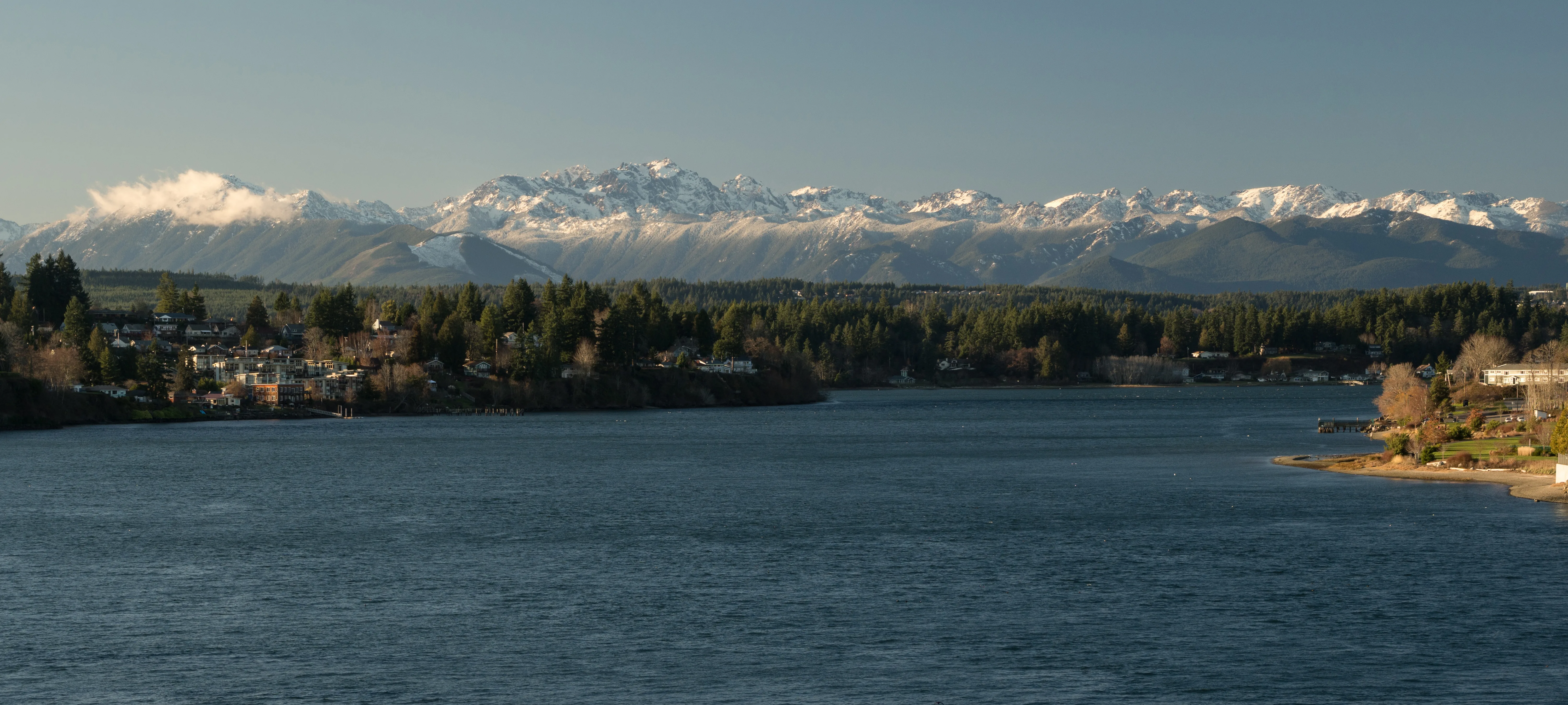
The pattern is real and it's accelerating. The Bay Area software engineer who went remote in 2020 spent two years staring at a 900-square-foot condo before someone mentioned Kitsap County. The San Diego family watching their August utility bills climb past $400 and their fire insurance renewal spike for the third consecutive year. The Sacramento buyer who sold a modest three-bedroom townhome and discovered their equity could buy a waterfront-view property in Bremerton outright. What drives California-to-Washington migration isn't just housing math — it's the accumulated fatigue of a cost structure that keeps tightening no matter how much income rises. Bremerton specifically has caught California buyers' attention for a reason that goes beyond price: it offers genuine waterfront character, a working-class authenticity, and a commute to Seattle that runs 30 minutes by ferry — something no inland suburb can claim.
The hard part deserves equal airtime. Bremerton is not California, and the gap is wider than most transplants expect before they've lived through their first November. The gray arrives in October and doesn't meaningfully lift until July. The food scene is improving but nothing like San Francisco's Mission District or San Diego's Gaslamp Quarter. The social pace is slower — not unfriendly, but quieter in ways that people coming from Los Angeles or the South Bay can find genuinely disorienting for the first six months. Understanding what you're walking into is what separates a buyer who thrives here from one who quietly lists the house two years later.
This guide covers what the move actually costs and saves you — broken down by California region, not just a vague "the Bay Area" — along with what your equity realistically buys at each price tier, the full tax picture, and an interactive comparison tool to run your specific California city against Bremerton. The goal is an honest answer to the question you're actually asking: is this worth it?
| Category | Bremerton, WA | Bay Area | Southern CA | Sacramento Metro | Central Valley |
|---|---|---|---|---|---|
| Median Home Price (approx. 2026) | $471,000 | $1,200,000–$1,800,000+ | $797,000–$920,000 | $490,000–$560,000 | $340,000–$420,000 |
| Property Tax Rate (effective) | ~0.98% | ~1.1–1.25% (new purchase) | ~1.1–1.2% | ~1.1–1.2% | ~1.0–1.2% |
| State Income Tax | None | 1–13.3% | 1–13.3% | 1–13.3% | 1–13.3% |
| State Sales Tax | 8.9% (Kitsap Co.) | 8.625–10.25% | 7.25–10.25% | 7.25–8.75% | 7.25–8.75% |
| Avg. Utilities (monthly est.) | $220–$340 | $280–$420 | $260–$450 | $200–$350 | $200–$360 |
| Avg. 1BR Rent | ~$1,712–$1,880 | $2,800–$3,600+ | $2,200–$2,900 | $1,700–$2,100 | $1,100–$1,500 |
Washington's lack of state income tax is the advantage that tends to surprise California transplants the most once they actually see their first Washington paycheck. A buyer earning $150,000 in California was paying somewhere between $12,000 and $16,000 annually to Sacramento in state income tax alone. In Washington, that entire amount stays in their household. Over a decade, the income tax savings alone can total $120,000–$160,000 — which, when added to the equity gain from the home purchase, makes the financial case for Bremerton nearly impossible to argue against on paper.
Washington has no state income tax — one of only nine states in the country — and for most California transplants, this is the single largest dollar-for-dollar financial improvement in their lives. The numbers are worth seeing plainly.
| Tax Item | California | Washington | Net Impact for Transplant |
|---|---|---|---|
| State Income Tax ($120K income) | ~$7,800–$9,600/yr | $0 | +$7,800–$9,600/yr take-home |
| State Income Tax ($150K income) | ~$11,000–$14,000/yr | $0 | +$11,000–$14,000/yr take-home |
| State Income Tax ($200K income) | ~$16,000–$20,000/yr | $0 | +$16,000–$20,000/yr take-home |
| State Sales Tax | 7.25–10.25% | 8.9% (Kitsap Co.) | Roughly comparable; slight CA advantage in some areas |
| Capital Gains Tax (over threshold) | Up to 13.3% | 7% (over ~$262K/yr) | CA worse at high incomes |
| Property Tax Rate (new purchase) | ~1.1–1.25% | ~0.98% (Kitsap Co.) | WA lower on entry |
| Property Tax: Inflation Cap | ~2%/yr (Prop 13) | Annual assessment | Prop 13 holders lose this benefit on purchase |
California's Proposition 13 is the one area where long-term California homeowners sometimes pause. If you've owned your California home since 2005 and your assessed value has been capped far below market, you are paying a lower effective property tax rate than the nominal 1.1–1.2% on new purchases. In Washington, your home is assessed at market value annually, so the 0.98% rate in Kitsap County applies to what your home is actually worth. For most California buyers, even accounting for this, the math still heavily favors Washington — but it's the one tax nuance worth running through a spreadsheet before you decide.
A buyer leaving San Jose or Redwood City with $1.5 million in equity is in a position that barely exists in California anymore: they can buy Bremerton's finest properties outright in cash and invest the remainder. The upper end of Bremerton's market — waterfront homes with Puget Sound views, newer construction in the mid-$700,000 range — represents a genuine luxury purchase by local standards. New construction in Bremerton closed at a median of $624,990 with a median size of 2,337 square feet in recent months, meaning a Bay Area buyer with full equity is purchasing at a level that represents the top 5% of the local market while carrying zero debt.
The neighborhoods that make the most sense at this equity level are Manette — where waterfront character meets renovation upside — and the upper end of East Bremerton, where newer construction delivers finishes that Bay Area buyers typically associate with the $1.5 million tier. What's left after the purchase, whether $700,000 or $1 million, can go into investment accounts, be deployed into a rental property through a 1031 exchange if the California property was held as an investment, or simply sit as a financial cushion that California homeownership never allowed.
A buyer selling in Irvine, Torrance, or Chula Vista in the $900,000–$1.1 million range and clearing $700,000–$900,000 after transaction costs arrives in Bremerton with commanding purchasing power. This equity level comfortably purchases a move-in-ready home in Bremerton's mid-to-upper tier with either minimal mortgage or none at all. The active listing market in Bremerton averages $596,020 for single-family residences, meaning a Southern California buyer at this equity level is shopping well below the upper range — with room to be selective.
Neighborhoods like Manette, upper East Bremerton, and newer pockets near the North Bremerton corridor offer the most value at this price point — properties that feel substantially more spacious and private than what the same buyer could have afforded in Orange County or the South Bay. The no-income-tax advantage on top of the equity conversion means that a Southern California dual-income household earning a combined $200,000 is seeing $16,000–$20,000 more annually in take-home pay from day one, regardless of what they paid for the house.
Sacramento and Inland Empire buyers are the cohort for whom the equity math is tightest but where the income tax advantage hits hardest. A buyer leaving Elk Grove or Roseville with $500,000 in equity — after selling a home in the $580,000–$680,000 range — can make a 20% down payment on a Bremerton home at the city-wide median and still have $380,000+ remaining. That's a meaningfully different financial position than staying in Sacramento, where price appreciation has been strong enough that the next move up is increasingly difficult to afford.
The specific price point where Sacramento buyers tend to land is in East Bremerton and Charleston, where single-family homes in the $400,000–$480,000 range deliver square footage and lot sizes that feel genuinely generous compared to what the same money bought on the other side of the Cascades. For buyers coming out of the Inland Empire — Riverside, Ontario, or San Bernardino — the relative quality-of-life shift is often more dramatic than the raw numbers suggest, particularly in terms of air quality, traffic, and summer heat.
Central Valley buyers — Fresno, Bakersfield, Stockton, Modesto — typically have the most modest equity positions of any California cohort, but the quality-of-life comparison is also the starkest. A buyer with $350,000 in equity from a Fresno sale still puts 20% down on a Bremerton home at or below the city-wide median and arrives in a market with genuine waterfront proximity, less heat, and better air quality. The neighborhoods that make the most sense at this equity level are Charleston and West Bremerton, where the city-wide median of $471,000 is realistic and starter inventory exists in the $440,000–$480,000 range.
The income tax advantage matters here too, even at incomes of $80,000–$100,000. A Central Valley household earning $90,000 was paying somewhere between $5,000 and $7,000 annually in California state income tax. In Washington, that entire amount stays in household cash flow — which, for a buyer on a tighter budget, is the difference between a comfortable mortgage and a stressful one.
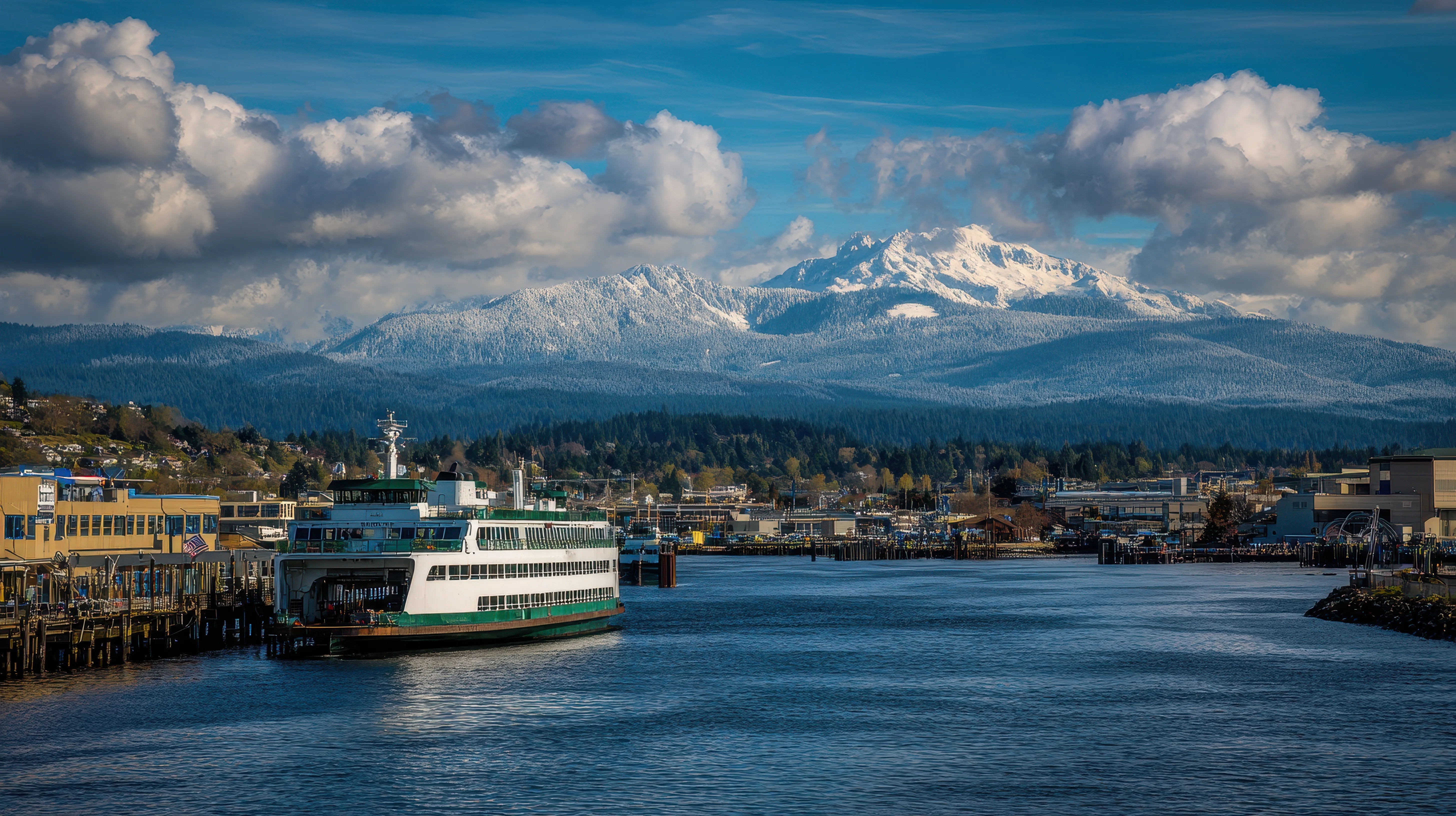
Here is what a good friend who moved from San Diego to Bremerton three years ago would actually tell you: the summers are legitimately stunning in a way that surprises almost everyone. July and August in Bremerton deliver roughly ten hours of daylight sun per day, temperatures in the mid-70s, almost no rain, and water views that Southern California reserves for people with eight-figure budgets. The outdoor culture in summer — kayaking off the Bremerton waterfront, hiking at Illahee State Park, taking the ferry into Seattle for a weekend — is genuinely excellent. That same friend would also tell you that from November through March, the difference between Bremerton and anywhere in California feels profound.
The numbers are worth stating plainly. Bremerton averages about 151 sunny days per year and roughly 2,154 hours of annual sunshine. Los Angeles averages over 3,250 sunshine hours annually. San Diego logs around 3,070. Sacramento, sitting in the Central Valley heat corridor, clocks over 3,600. The gray in Bremerton during winter isn't a drizzle — November averages 21 rainy days. December daylight drops to under two and a half hours of direct sun per day. This is the variable that most California transplants underestimate most severely, and it is the primary reason buyers who've moved here say they had to consciously adjust how they think about outdoor plans from October through June.
What California transplants consistently report loving after a year in Bremerton: the lack of traffic by California standards, the ability to actually hear themselves think in their neighborhood, the community scale of a 46,000-person city where you start recognizing faces, and — almost universally — the fact that summer is genuinely theirs in a way that California's dry season increasingly isn't. What they miss, equally consistently: year-round beach access, the specific restaurant diversity that major California metros deliver, the energy level of larger urban environments, and the ability to plan outdoor events in November with any confidence.
If you want to see how Bremerton compares directly to the city you're leaving, use the tool below — it covers the 120 largest California cities with current housing and tax data.
Home prices: Redfin median sale data, Q1–Q2 2026. Select your city to compare.
Ready to talk through what your specific California equity could do in Bremerton? Todd can model your exact scenario in a single call.

Coming from California, your dollar stretches meaningfully in Bremerton, but where you land within the city matters for long-term value. Manette and Downtown have seen consistent buyer interest as the waterfront area continues to develop, while East Bremerton offers more inventory at accessible price points — generally well under $750,000 — making it attractive for California transplants building equity from day one. Desirable homes in Manette especially don't sit long; I've seen well-priced listings generate multiple offers within a few days of hitting the market.
Before you start touring homes here, please talk to a lender first — and I mean that genuinely, not as a sales pitch. California buyers sometimes arrive with a max approval number in mind and forget that the full monthly payment includes property taxes, homeowner's insurance, any HOA dues, and a loan structure that fits your actual life, not just the best-case scenario. There's a real difference between what you're approved for and what feels comfortable month after month. Getting that clarity early means when the right home in Charleston or Union Hill appears, you're ready to move without hesitation.
Mistake 1: Treating Bremerton as a uniform market. The price variation across Bremerton's neighborhoods is significant, and buyers who don't understand it can overpay or end up in a location that doesn't match their lifestyle. East Bremerton around the 98310 ZIP code runs at a different price tier from downtown's waterfront properties, which in turn are different from West Bremerton's quieter residential streets. A California buyer used to "neighborhoods" in a Los Angeles sense — where Culver City and Inglewood feel meaningfully different — sometimes underestimates how much the Manette Bridge crossing divides the city psychologically and practically. Manette, across the inlet, feels like a different town. Downtown proper has a government-and-military energy. These distinctions matter when you're buying for ten years, not one.
Mistake 2: Assuming the ferry commute is equivalent to California driving time. The 30-minute ferry crossing to Seattle sounds better than it is until you factor in the walk to the terminal, waiting for a departure, and navigating the Seattle waterfront on arrival. For buyers commuting to downtown Seattle offices three or four days a week, the ferry is genuinely workable and arguably more pleasant than sitting in traffic. For buyers needing to drive to Bellevue, Redmond, or Kirkland regularly, the equation involves a longer land route and deserves a dry-run before you commit to a purchase in central Bremerton over Silverdale or Poulsbo.
Mistake 3: Underestimating the income tax shift in monthly cash flow terms. This is the one that catches California transplants off guard in the best way. A buyer earning $150,000 who moves from California to Washington doesn't just save money at tax time — they see the shift in every single paycheck. That monthly cash flow improvement is real and immediate, and it changes what an affordable mortgage looks like. A household that was stretched at a $2,800 monthly payment in California is suddenly comfortable with the same payment in Washington because the take-home pay is $900–$1,200 higher every month. Running your California mortgage payment against a Washington take-home pay comparison before you buy is worth twenty minutes of your time.
Mistake 4: Not accounting for how different winter driving is. California transplants who have driven in rain occasionally are often unprepared for sustained wet-road driving over multiple months, particularly on the Olympic Peninsula's back roads and on Highway 3 through Silverdale in November through February. Bremerton itself rarely sees significant snow — annual snowfall barely tops an inch — but the perpetual wet conditions on roads that aren't built or driven with Southern California habits in mind is a real adjustment. Budget for good tires and plan your morning commute differently than you would have in San Jose or Temecula.
Bay Area sellers with large equity are often the most straightforward clients in the Bremerton market, paradoxically, because their equity position eliminates the complexity of conforming loan limits, debt-to-income ratios, and jumbo underwriting standards. A buyer arriving with $1 million or more in equity can purchase all-cash — which in Bremerton's competitive market, where homes are receiving multiple offers and selling in roughly 15 days on average, delivers a meaningful speed and certainty advantage over financed buyers. For Bay Area buyers whose California property was held as a rental or investment, a 1031 tax-deferred exchange is worth exploring before the sale closes — timing requirements are strict, but the tax deferral on large capital gains can be substantial.
Southern California sellers with $700,000–$1.1 million in equity are typically well-positioned for conventional financing on any Bremerton purchase, since most Bremerton transactions fall well below the conforming jumbo threshold. A 30–40% down payment from this equity tier produces favorable loan-to-value ratios, lower monthly payments, and rate advantages that compound meaningfully over a 30-year hold. Buyers in this range rarely need down payment assistance programs, but a Washington State conventional loan through a local lender familiar with Kitsap County appraisals will outperform a California-based lender unfamiliar with the market.
Sacramento and Inland Empire buyers whose equity is in the $400,000–$650,000 range should confirm whether their target purchase price qualifies for WSHFC Home Advantage or the Bremerton down payment assistance programs — particularly if their equity is deployed as a full down payment and cash flow optimization matters more than eliminating the mortgage. Buyers in this cohort who keep some equity liquid while taking a modest mortgage often end up in a stronger financial position than those who go all-cash on a property at the top of their range.
Local Expert Takeaway: The number California buyers consistently underestimate is not the home price — it's the monthly cash flow shift from eliminating state income tax. A Bremerton buyer earning $150,000 who moved from California is looking at $900–$1,200 more in take-home pay every single month from day one. Before you run any mortgage payment scenario, run your new Washington net income first — it will change what an affordable payment looks like and may open up neighborhoods or price tiers you dismissed based on your California paycheck math. East Bremerton and Manette are the two areas where that additional cash flow most meaningfully changes what you can afford relative to the lifestyle you'll actually live.
✅ Washington has no state income tax — for a household earning $150,000, this is worth $11,000–$14,000 per year compared to California, and it shows up in every paycheck from the day you start working here.
⚠️ The weather adjustment is real — Bremerton averages only 151 sunny days per year compared to 251 in San Diego and over 270 in Sacramento. The gray winters are the primary reason California transplants report struggling in year one; plan for it deliberately.
📍 Your California equity tier determines your Bremerton neighborhood tier — Bay Area buyers with $1.2M+ in equity can purchase Bremerton's finest homes outright in cash; Sacramento-range buyers land comfortably in East Bremerton and Charleston, where the $471,000 city-wide median is realistic and starter inventory is active.
Is moving from California to Bremerton worth it?
For most California households — particularly those earning above $100,000, carrying significant home equity, or working remotely — the financial case for Bremerton is very strong. The elimination of state income tax, combined with home prices that run 40–75% below major California metros, produces a cash flow and net worth picture that is genuinely difficult to replicate by staying in California. The honest caveat is that the lifestyle shift — particularly the weather — is significant, and buyers who visit only in summer sometimes underestimate how different the November-through-March stretch feels.
How much cheaper is housing in Bremerton vs. California?
At the median, Bremerton's $471,000 sits roughly 61% below San Francisco's median, 49% below Los Angeles, and 41% below San Diego. Compared to Sacramento, the gap narrows considerably — Sacramento's metro median runs in the $490,000–$560,000 range, making it a closer comparison. For Central Valley buyers from Fresno or Bakersfield, Bremerton is actually higher in median price, though the income tax and quality-of-life factors often still make the move compelling on a total-financial-picture basis.
What do I need to know about moving from California to Washington?
Washington has no state income tax, a property tax rate of approximately 0.98% in Kitsap County, and a capital gains tax that applies only to gains above roughly $262,000 per year — not to earned income. You will need to update your driver's license within 30 days of establishing residency and register your vehicle in Washington within a similar window. California's Franchise Tax Board will pursue you for the year-of-departure if your income and residency timing are not handled cleanly, so working with a CPA familiar with cross-state transitions during your first tax year in Washington is worth the cost.
Explore the full Bremerton series: The Ultimate Bremerton Relocation Guide · Is Bremerton Safe? · Cost of Living in Bremerton · Best Neighborhoods in Bremerton · Bremerton Schools & Family Life · Bremerton Youth Sports · Bremerton Parks & Recreation · Retiring in Bremerton · 1031 Tax-Deferred Exchange in Bremerton · Bremerton First-Time Homebuyers Guide · Bremerton Down Payment Assistance Guide · Moving to Bremerton from California